Repeated UV photochemistry failures frustrate researchers—yet the flask itself is rarely questioned. That oversight costs experiments.
Selecting the wrong vessel material systematically undermines UV photochemistry outcomes. This article dissects the material-level causes of experimental failure, explains the optical physics behind quartz's superiority, and delivers a parameter-by-parameter selection framework for quartz round bottom flasks across every critical UV reaction variable.
Researchers who have exhausted troubleshooting at the reagent and protocol level will find that the answers traced here to flask material selection resolve failures that no amount of procedural refinement can fix.
Why UV Photochemistry Fails More Often at the Flask Than the Bench
Across UV photochemistry laboratories, experimental failures are habitually attributed to reagent purity, catalyst loading, or irradiation time—variables that are visible, adjustable, and culturally comfortable to blame. The flask, by contrast, sits unexamined.
This assumption is consequential. The vessel through which UV radiation must pass before reaching the reaction medium is not a passive container—it is an active optical component. Every photon that the flask wall absorbs before entering the liquid phase is a photon that cannot drive the intended photochemical transformation. When the flask material has a high UV absorption coefficient, the photon budget available to the reaction is depleted before chemistry begins.
Borosilicate glass, the default laboratory glassware material, transmits visible and near-infrared light effectively. However, its transmission drops sharply below approximately 300–320 nm, and by 254 nm—the primary emission line of low-pressure mercury lamps—borosilicate absorbs a substantial fraction of incident radiation. At wavelengths below 280 nm, transmission approaches zero. Researchers running reactions that depend on UV photons in the 185–300 nm range are, in practice, conducting experiments through an opaque wall without realizing it.
The consequence is not merely reduced efficiency. When photon flux reaching the reaction medium is inconsistent, unreproducible, or wavelength-filtered by the vessel, every downstream experimental variable becomes uncontrolled. Quantum yield calculations become meaningless. Reaction rate comparisons across laboratories using different glassware become invalid. Published protocols optimized with quartz apparatus produce different results when reproduced with borosilicate equipment.
The flask is not ancillary to UV photochemistry. It is part of the optical system. Treating it as interchangeable laboratory glassware is the single most underappreciated source of systematic experimental error in UV-driven reaction research.
Failure Patterns in UV Reactions Traced Back to Flask Material
Among the most telling signs that flask material is compromising UV photochemistry outcomes, three failure patterns appear with particular consistency across reaction types and laboratory settings.
- Inconsistent Quantum Yields Across Repeated Runs
Quantum yield is defined as the number of desired reaction events per photon absorbed by the substrate. When the vessel wall absorbs an uncharacterized and variable fraction of incident UV radiation, the actual photon flux delivered to the reaction medium differs from the nominal lamp output. Each experimental run conducted with a borosilicate flask introduces an uncontrolled attenuation variable. Batch-to-batch variation in glass composition, minor differences in wall thickness between flasks of nominally identical volume, and progressive surface degradation under UV exposure all contribute to run-to-run variation in effective photon dose. Researchers who observe quantum yields drifting between 0.15 and 0.23 across replicate experiments—when theoretical values should be tightly clustered—are frequently encountering this phenomenon without identifying it as a vessel problem.
Transitioning to a quartz round bottom flask eliminates this source of variance. Fused silica transmits UV radiation consistently across its full optical window, and its transmission characteristics do not change meaningfully between manufacturing batches or across repeated UV exposures.
- Unexpected Side Reactions from Photon Starvation
When the photon flux reaching a photoactive substrate falls below the threshold required to drive the primary excited-state pathway, the substrate accumulates in a partially activated state. Intermediate species that lack sufficient photon energy to complete the intended transition can redirect along thermally accessible side-reaction pathways, producing non-target products that are difficult to account for in mechanistic analysis. This phenomenon, termed photon starvation, is frequently misdiagnosed as substrate impurity, solvent interference, or catalyst deactivation. The distinguishing diagnostic feature is that side-product formation correlates with lamp aging or flask substitution rather than with changes in reagent preparation. Replacing the borosilicate flask with a UV-grade quartz vessel and observing the disappearance of side products without any other modification constitutes definitive evidence that photon starvation was vessel-induced.
The practical implication for reaction design is significant: reaction selectivity in UV photochemistry is not solely a function of substrate electronics and solvent polarity—it is also a function of delivered photon flux, which is determined in part by the optical transmission of the vessel.
- Progressive Data Drift Under Prolonged UV Exposure
Borosilicate glass subjected to sustained UV irradiation undergoes a phenomenon known as solarization—a photoinduced color center1 formation process in which UV photons generate point defects in the glass network that absorb visible and UV radiation. The result is a vessel whose transmission decreases measurably over the course of an experiment and progressively across repeated experimental campaigns. Researchers who observe that early-run data from a given flask is reproducible while later-run data diverges systematically are observing solarization in action. The effect is cumulative and irreversible without specialized thermal treatment. Fused silica quartz does not undergo solarization under UV photochemistry conditions. Its transmission characteristics remain stable across thousands of hours of UV exposure, making it the only vessel material that supports longitudinal experimental programs where data comparability across time is a requirement.
Optical Properties That Make a Quartz Round Bottom Flask Irreplaceable
Addressing the three failure modes described above requires understanding precisely why quartz performs where borosilicate fails—and the answer lies in three measurable optical properties.
UV Transmission Window. Fused silica quartz transmits radiation from approximately 150 nm in the vacuum UV through the near-infrared at 3,500 nm. Within the UV photochemistry working range of 185–400 nm, high-OH fused silica maintains transmission values above 90% across most of this window at standard wall thicknesses. Borosilicate glass, by contrast, has a UV transmission cutoff near 300–320 nm, with transmission falling to near zero below 280 nm. This is not a marginal difference—it is a categorical optical distinction. A quartz round bottom flask does not merely transmit more UV than borosilicate; at wavelengths below 280 nm, it transmits UV that borosilicate does not transmit at all.
Absorption Coefficient. The absorption coefficient of fused silica at 254 nm is approximately 0.001–0.003 cm⁻¹, compared to values exceeding 1.0 cm⁻¹ for standard borosilicate glass at the same wavelength. For a 2 mm vessel wall, this difference translates to a transmission through the wall of greater than 99.9% for fused silica versus less than 63% for borosilicate. Across a reaction campaign involving thousands of photons per second, the cumulative photon loss through a borosilicate wall is not negligible—it is the dominant variable in photon budget accounting.
Long-Term UV Stability. Unlike borosilicate, fused silica lacks the network modifiers (boron, sodium, aluminum oxides) that serve as precursor sites for UV-induced color center formation. Consequently, its absorption coefficient at UV wavelengths does not increase with cumulative UV dose. This property transforms a quartz round bottom flask from a mere vessel into a longitudinally stable optical component, capable of delivering consistent photon flux to the reaction medium across the full duration of a research program. For experiments where data comparability across time points is methodologically essential, this stability is not a convenience feature—it is a scientific requirement.
Selecting a Quartz Round Bottom Flask for UV Photochemistry Systems
Translating the optical and material properties described above into a concrete selection decision requires evaluating seven interdependent parameters. Each parameter represents a variable that, if mismatched to the experimental system, will partially or fully negate the advantages that quartz provides over borosilicate glass.
Volume Capacity and Photon Path Length as Primary Selection Parameters
The relationship between flask volume and photon delivery efficiency is governed by a straightforward physical principle: the longer the optical path through the reaction medium, the greater the probability that photons will be absorbed before reaching molecules in the distal portion of the liquid.
For dilute, weakly absorbing reaction systems, photon path length through the medium is less critical, and larger flask volumes (500 mL–1 L) are feasible without significant photon flux gradients across the reaction volume. However, for strongly absorbing substrates or high-concentration systems, a 250 mL flask irradiated from a single external source can exhibit a photon flux differential of greater than 80% between the illuminated face and the opposite wall. In such systems, molecules in the photon-poor region undergo thermal rather than photochemical reaction pathways, generating the mixture of products and inconsistent yields that researchers frequently attribute to substrate variability.
The optimal approach pairs flask volume selection with an understanding of the substrate's molar absorption coefficient at the irradiation wavelength. For ε values above 1,000 L·mol⁻¹·cm⁻¹ at working concentrations, flask volumes should be limited to 50–250 mL with external irradiation, or the geometry should transition to an immersion well configuration where the light source is centered within the reaction volume.
Volume and Photon Path Recommendations
| Volume (mL) | Recommended System Type | Maximum ε at Working Concentration |
|---|---|---|
| 50–100 | High-absorption, dilute substrates | > 5,000 L·mol⁻¹·cm⁻¹ |
| 100–250 | Moderate absorption, standard photocatalysis | 500–5,000 L·mol⁻¹·cm⁻¹ |
| 250–500 | Low absorption, sensitized reactions | 100–500 L·mol⁻¹·cm⁻¹ |
| 500–1,000 | Very low absorption, actinometry calibration | < 100 L·mol⁻¹·cm⁻¹ |
Fused Silica OH Content Grades and UV Wavelength Matching
The designation "quartz" encompasses a family of fused silica materials that differ substantially in their hydroxyl (OH) group content, and this difference has direct, measurable consequences for UV transmission performance.
High-OH fused silica, commercially designated as UV-grade (examples include Suprasil 300, Spectrosil 2000), contains OH concentrations in the range of 600–1,200 ppm. The hydroxyl groups suppress the formation of oxygen-deficiency defects (ODC) that absorb strongly in the 160–240 nm deep UV range. As a result, high-OH fused silica maintains transmission above 85% at 185 nm and above 92% at 254 nm. For any UV photochemistry system operating below 300 nm, high-OH UV-grade fused silica is the only appropriate material specification.
Low-OH fused silica (IR-grade, such as Infrasil 302) contains fewer than 10 ppm OH. While this reduces absorption in the 2,600–2,800 nm infrared hydroxyl overtone bands, it permits ODC formation and the associated absorption bands in the 185–250 nm range. At 185 nm, low-OH fused silica can exhibit transmission 30–40% lower than high-OH equivalents at the same wall thickness. Researchers who specify "fused silica" without the OH-grade qualifier risk procuring IR-grade material optimized for the wrong spectral region.
The practical selection rule is unambiguous: match the OH content grade to the irradiation wavelength. Near-UV systems (320–400 nm) operating with LED sources or 365 nm mercury lines have sufficient tolerance that either grade performs adequately. Deep UV systems using 185 nm or 222 nm excimer sources require UV-grade high-OH fused silica without exception.
Fused Silica Grade Selection by UV Source Wavelength
| UV Source | Wavelength (nm) | Required OH Grade | Min. Transmission at Wall |
|---|---|---|---|
| Excimer lamp (ArF) | 193 | High-OH (UV grade) | > 85% |
| Low-pressure Hg | 185 + 254 | High-OH (UV grade) | > 88% at 254 nm |
| Medium-pressure Hg | 254–365 | High-OH preferred | > 90% |
| UV-LED | 365–395 | Either grade | > 93% |
| UV-LED | 310–320 | High-OH preferred | > 88% |
Wall Thickness for Deep UV Versus Near UV Experimental Demands
Even within UV-grade fused silica, wall thickness introduces a transmission variable that becomes critical at wavelengths below 220 nm.
Beer-Lambert attenuation applies to the vessel wall itself: for a material with an absorption coefficient of α cm⁻¹, transmission through a wall of thickness d mm follows T = e^(−αd/10). At 185 nm, the absorption coefficient of high-OH fused silica is approximately 0.005–0.015 cm⁻¹ depending on OH content and batch purity. For a standard 2.5 mm wall, this produces a transmission of approximately 96–99%. However, for a 4 mm thick wall—common in heavy-duty laboratory flasks—transmission at 185 nm drops to 94–98%, and any impurity-related absorption increase compounds this loss further.
For near-UV applications (320–400 nm), standard wall thickness (2–3 mm) introduces negligible transmission penalty and is appropriate for all routine photocatalysis, photoredox, and photoisomerization reactions. The wall thickness decision at near-UV wavelengths is governed by mechanical durability requirements rather than optical performance.
For deep UV applications, wall thickness should be specified at ≤ 1.5 mm wherever mechanical constraints allow. Thin-wall fused silica flasks are mechanically more fragile and require more careful handling, but the optical benefit at 185–222 nm justifies the trade-off in research applications where deep UV photon delivery is the primary experimental variable.
Transmission Loss by Wall Thickness at Key UV Wavelengths
| Wall Thickness (mm) | Transmission at 185 nm (%) | Transmission at 254 nm (%) | Transmission at 365 nm (%) |
|---|---|---|---|
| 1.0 | 99.3 | 99.8 | 99.9 |
| 1.5 | 99.0 | 99.7 | 99.9 |
| 2.0 | 98.6 | 99.6 | 99.8 |
| 2.5 | 98.2 | 99.5 | 99.8 |
| 3.0 | 97.8 | 99.4 | 99.7 |
| 4.0 | 97.1 | 99.2 | 99.6 |
UV Light Source Wavelength and Flask Geometry Compatibility
Flask geometry selection cannot be divorced from the irradiation configuration in which it will operate.
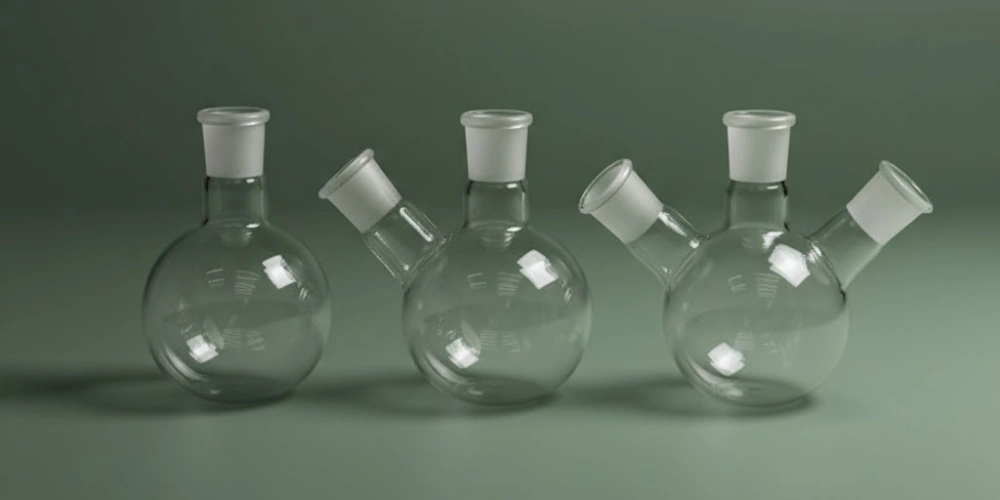
External irradiation setups, where a lamp or LED array is positioned outside and adjacent to the flask, impose a geometry requirement for maximum exposed surface area relative to reaction volume. A standard round-bottom flask provides a curved surface that focuses incident radiation toward the center of the liquid volume—this is advantageous for external irradiation, since the curved geometry reduces the incidence angle variance across the flask surface compared to a flat-walled vessel. For external setups, a standard spherical round-bottom geometry with a single central neck minimizes neck-induced light shadowing while maximizing the irradiated fraction of the flask surface.
Immersion well configurations, where the UV lamp is inserted axially into a cooling jacket at the center of the reaction vessel, require a flask geometry that accommodates the immersion well tube diameter (typically 25–50 mm) through the central neck. In this configuration, the flask neck diameter and the length of the straight-wall section above the spherical bottom are critical dimensional parameters. The neck inner diameter must exceed the immersion well outer diameter by at least 5 mm to allow insertion without contact, and the straight-wall section must be long enough to position the active lamp arc within the spherical reaction volume rather than above it.
Multi-neck configurations (two-neck or three-neck) are necessary for experiments requiring simultaneous gas sparging, temperature probe insertion, and sampling access. However, each additional neck reduces the solid angle of unobstructed flask surface available for external irradiation by approximately 8–15%, depending on neck diameter and positioning. For external irradiation systems where maximizing photon delivery is paramount, single-neck configurations are consistently preferred unless the experimental protocol mandates simultaneous access points.
Flask Configuration Selection by Irradiation Setup
| Irradiation Type | Recommended Neck Config | Critical Dimension | Typical Volume Range (mL) |
|---|---|---|---|
| External lamp array | Single neck | Maximum spherical surface area | 50–500 |
| Immersion well | Single wide-bore neck | Neck ID ≥ well OD + 5 mm | 250–1,000 |
| External with gas sparging | Two-neck | Sparger neck ≠ lamp-facing side | 100–500 |
| External with temperature probe | Two-neck | Probe neck ≤ 10 mm ID | 100–500 |
| Multi-access photoreactor | Three-neck | Total shadow area < 25% surface | 250–1,000 |
Chemical Compatibility Between Reaction Media and Quartz Surfaces
The chemical inertness of fused silica is exceptional across most photochemistry solvent systems, but several reaction media present compatibility constraints that must be evaluated before flask selection is finalized.
Fused silica demonstrates outstanding resistance to mineral acids including concentrated sulfuric, nitric, hydrochloric, and phosphoric acids at temperatures up to 150°C. It is equally resistant to most organic solvents—acetonitrile, methanol, ethanol, dichloromethane, tetrahydrofuran, and acetone are all compatible without surface degradation across extended exposures. For the vast majority of UV photocatalysis, photoredox, and photoisomerization reactions conducted in these media, chemical compatibility is not a limiting factor in flask selection.
The critical exception is hydrofluoric acid (HF) and fluoride-containing media at any concentration. Fluoride ions attack the Si-O-Si network of fused silica through nucleophilic substitution2, generating SiF₄ and SiF₆²⁻ species that dissolve the glass surface progressively. Even dilute HF (1% v/v) produces visible surface etching within minutes of contact. For any photochemical reaction involving HF, fluoride salts in acidic media, or fluorinating reagents that generate HF in situ, fused silica is chemically contraindicated, and alternative vessel materials (PTFE, platinum) must be selected.
Concentrated alkaline media (NaOH or KOH above 10% w/v) represent a secondary compatibility concern. Hydroxide ions attack silica through a similar nucleophilic mechanism, though the rate is substantially slower than HF etching. Prolonged contact with concentrated base (> 24 hours at room temperature, or > 2 hours at reflux temperatures) will introduce measurable surface erosion, increasing the surface roughness of the quartz wall and scattering UV radiation that would otherwise transmit cleanly. For alkaline photochemistry reactions, buffered aqueous systems maintained below pH 12 are compatible; strongly caustic media require either shortened contact times or alternative vessel materials.
Chemical Compatibility of Fused Silica with Common Photochemistry Media
| Medium | Compatibility | Maximum Exposure Condition | Notes |
|---|---|---|---|
| Acetonitrile, MeCN | Excellent | Unlimited | Standard photocatalysis solvent |
| Methanol / Ethanol | Excellent | Unlimited | Fully compatible |
| Dichloromethane | Excellent | Unlimited | No surface effect |
| THF | Excellent | Unlimited | Compatible including reflux |
| Concentrated H₂SO₄ | Good | < 150°C | Monitor for contamination |
| Dilute HCl / HNO₃ | Excellent | Unlimited | No surface effect |
| NaOH > 10% w/v | Limited | < 2 h at RT | Surface erosion risk |
| HF any concentration | Incompatible | None | Contraindicated categorically |
| NH₄F / fluoride salts (acidic) | Incompatible | None | Same mechanism as HF |
Neck Configuration and Joint Standards for Sealed Photoreactor Assemblies
The joint standard of a quartz round bottom flask determines its compatibility with the broader photoreactor assembly, and an incompatible joint translates directly to experimental failure regardless of how well every other selection parameter has been optimized.
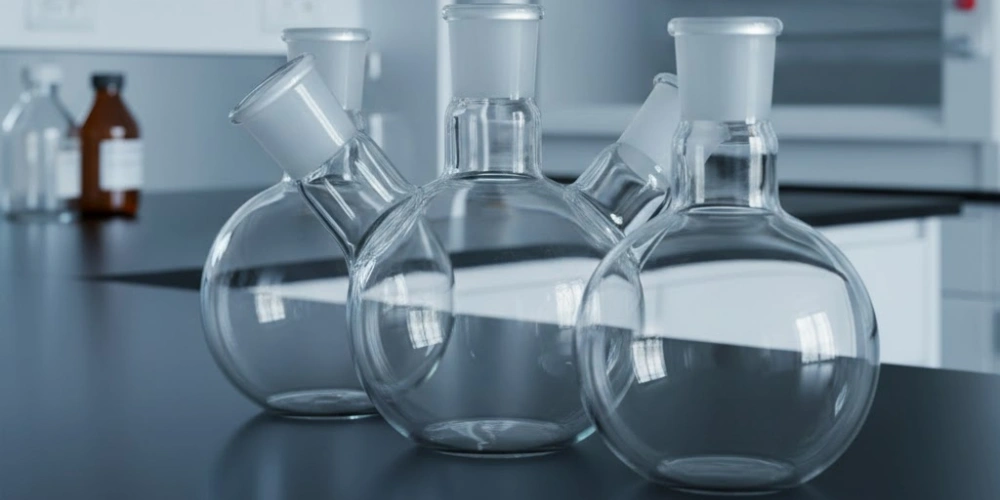
Standard taper joints (ST joints) following ISO 383 are the universal connection standard for laboratory glassware. The most common sizes encountered in UV photochemistry applications are ST 14/23 (suitable for small reaction volumes and light gas flows), ST 24/29 (the standard for most 100–500 mL photoreactor configurations), and ST 29/32 (appropriate for high-throughput gas sparging or wide-bore condenser connections in larger flask volumes). Quartz flasks with ST joints must be paired with ST adapters, condensers, and stopcocks manufactured to the same nominal taper—a 1:10 taper ratio is standard, and mixing manufacturers generally does not cause incompatibility as long as the nominal size designation matches.
For sealed photoreactor systems operating under inert atmosphere, the critical joint property is gas-tightness under mild positive pressure (typically 0.05–0.2 bar above ambient). Standard ST joints achieve adequate sealing with PTFE sleeve tape or high-vacuum grease, but the grease selection must be UV-compatible—silicone-based greases absorb UV radiation below 300 nm and will degrade under sustained UV exposure, contaminating the reaction medium and introducing variable UV attenuation at the joint interface. Fluoropolymer-based joint lubricants or PTFE sleeves are the chemically and optically appropriate sealing materials for UV photochemistry assemblies.
The number of necks also affects joint standardization. Three-neck flasks require that all three joints be of consistent standard (all ST 24/29, for example) to allow interchangeable adapter use—mismatched joints in a multi-neck configuration force researchers to use custom adapters that introduce additional dead volume and potential leak paths.
Joint Size Selection by Flask Volume and Application
| Flask Volume (mL) | Recommended Joint Size | Typical Application |
|---|---|---|
| 25–100 | ST 14/23 | Small-scale photocatalysis |
| 100–250 | ST 24/29 | Standard photoreactor, immersion well |
| 250–500 | ST 24/29 or ST 29/32 | Gas sparging, reflux photoreactions |
| 500–1,000 | ST 29/32 | High-volume photoredox, actinometry |
Surface Flatness and Geometric Tolerances Affecting Reproducibility
The final selection parameter—geometric manufacturing tolerance—addresses the reproducibility dimension that becomes critical in quantitative photochemistry, where data comparability across experimental runs is a primary output requirement.
Wall thickness uniformity directly affects the spatial distribution of UV transmission across the flask surface. A fused silica flask with wall thickness varying from 1.8 mm at the equator to 2.4 mm at the bottom hemisphere introduces a transmission gradient of approximately 0.3–0.6% at 254 nm—a difference that appears negligible but, when integrated across the full reaction volume, produces a photon flux non-uniformity of 3–8% depending on flask geometry. In actinometric experiments or quantum yield determinations, this level of non-uniformity exceeds the measurement precision of most calibrated chemical actinometers3 and introduces systematic uncertainty that cannot be corrected by post-hoc calculation.
Precision-manufactured fused silica flasks for photochemistry applications are typically specified with wall thickness tolerances of ±0.1–0.15 mm across the entire spherical surface. Standard laboratory-grade quartz flasks may carry tolerances of ±0.3–0.5 mm. The practical distinction appears during reproducibility testing: a precision-tolerance flask produces quantum yield values with a relative standard deviation below 2% across ten independent runs, while a standard-tolerance flask from the same nominal specification may produce RSD values of 5–12%.
Bottom curvature consistency is the second geometric parameter of relevance. The radius of curvature of the flask bottom determines the solid angle of reaction volume that receives direct rather than refracted UV irradiation. Flasks with irregular bottom curvature—a manufacturing defect more common in lower-grade fused silica products—scatter UV radiation at the curved surface, reducing the effective photon flux in the reaction medium by 4–15% relative to an optically smooth surface. Specifying optical surface quality (measured by surface roughness Ra ≤ 0.8 nm for the internal flask surface) eliminates this variable from the experimental error budget.
Geometric Tolerance Impact on Photochemical Reproducibility
| Tolerance Grade | Wall Thickness Tolerance (mm) | Quantum Yield RSD (%) | Suitable Application |
|---|---|---|---|
| Optical precision | ± 0.10 | < 2 | Actinometry, quantum yield determination |
| Analytical grade | ± 0.15 | 2–4 | Quantitative photocatalysis |
| Standard laboratory | ± 0.30 | 5–8 | Qualitative screening |
| General purpose | ± 0.50 | 8–15 | Method development only |
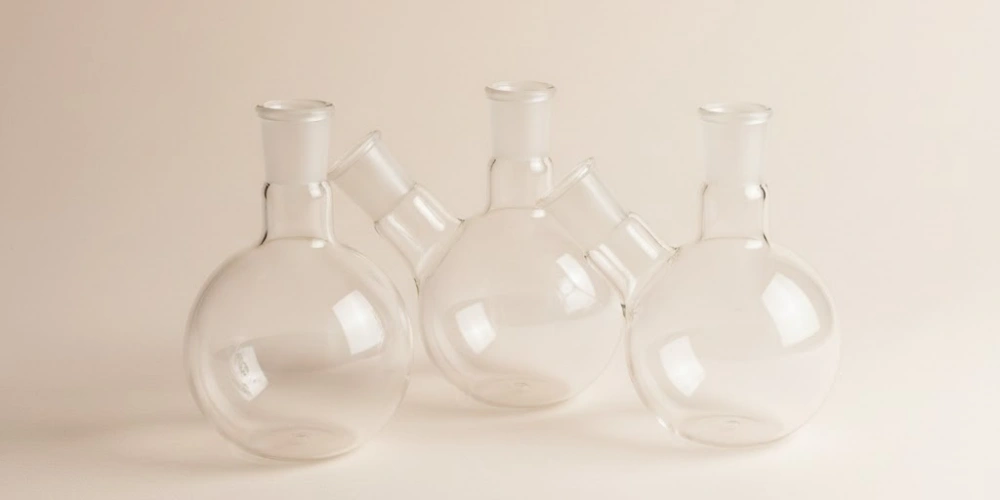
Assembling a Quartz Round Bottom Flask Into a UV Photoreactor
Once flask selection parameters have been resolved, translating those specifications into a functional photoreactor assembly introduces a further set of variables that determine whether the optical properties of the quartz vessel are fully realized in practice.
Optical axis alignment between the UV source and the flask is the first assembly variable. For external irradiation setups, the lamp arc or LED emitter surface should be positioned at a distance that maximizes the solid angle of flask surface receiving direct (non-reflected) radiation. For medium-pressure mercury lamps with a 10 cm arc length, positioning the flask center at a source-to-flask distance of 5–8 cm maximizes irradiance at the flask surface while avoiding thermal stress from proximity to the lamp envelope. Misalignment of the flask center relative to the lamp arc by more than 2 cm reduces effective irradiance at the flask surface by 15–30%, introducing exactly the type of run-to-run photon flux variability that quartz selection was intended to eliminate.
Cooling jacket configuration is essential for any UV photochemistry experiment using medium- or high-pressure mercury lamps, which emit substantial infrared radiation alongside UV. Without active cooling, the quartz flask surface can reach temperatures of 60–90°C during a 1-hour irradiation, generating thermal gradients within the reaction medium that alter reaction kinetics independently of photon effects. A water-cooled cylindrical jacket surrounding the flask, with inlet and outlet positioned to create cross-flow cooling across the flask equator, maintains the reaction medium within ±2°C of the set temperature across irradiation periods up to 4 hours. Thermal management is not a comfort feature—it is a variable isolation requirement for experiments where temperature and photon flux must be independently controlled.
Gas sparging tube positioning within the flask affects both mixing efficiency and photon delivery. A sparger inserted through a side neck and positioned at the flask bottom center generates bubble columns that rise axially through the reaction volume, creating convective mixing that homogenizes the photon flux distribution across the liquid. Positioning the sparger toward the illuminated side of the flask, however, creates a bubble curtain that scatters UV radiation before it reaches the reaction medium. Sparger tubes should be positioned on the side of the flask opposite the primary irradiation face, with bubble column rise directed away from the lamp-facing hemisphere.
Verifying the assembled system's UV delivery performance before beginning experimental runs requires a chemical actinometer measurement—potassium ferrioxalate at 254 nm or Aberchrome 540 at 366 nm—to establish the actual photon flux delivered to the reaction medium under the specific assembly geometry. This calibration value, expressed in einsteins per second (mol photons·s⁻¹), provides the reference against which all quantum yield calculations in the experimental program are normalized. A calibrated actinometric flux measurement performed at the beginning of each experimental campaign, using the assembled quartz flask in its operating configuration, is the procedural step that transforms a well-selected flask into a metrologically defensible photochemical instrument.
Conclusion
Flask material selection is not a peripheral procurement decision in UV photochemistry—it is an optical systems design choice with direct consequences for data quality and experimental reproducibility. The systematic failures traced through this article to borosilicate glass—inconsistent quantum yields, photon-starvation-induced side reactions, and progressive data drift from solarization—are eliminated by specifying a fused silica quartz round bottom flask matched to the irradiation wavelength, reaction volume, OH content grade, wall thickness, and assembly geometry of the experimental system. Researchers who apply the seven-parameter selection framework presented here will find that experimental outcomes previously attributed to reagent or protocol variability resolve into consistent, reproducible data once the flask is treated as the optical component it functionally is.
FAQ
Does a quartz round bottom flask transmit all UV wavelengths equally?
No. Transmission varies with OH content grade, wall thickness, and wavelength. High-OH UV-grade fused silica transmits above 85% at 185 nm and above 92% at 254 nm at standard 2 mm wall thickness, but low-OH IR-grade fused silica may transmit 30–40% less at 185 nm. Matching the OH grade to the irradiation wavelength is essential for accurate photon flux delivery.
What makes quartz superior to borosilicate glass for UV photochemistry below 300 nm?
Borosilicate glass has a UV transmission cutoff near 300–320 nm and absorbs nearly all radiation below 280 nm, with an absorption coefficient at 254 nm exceeding 1.0 cm⁻¹. Fused silica quartz has an absorption coefficient of 0.001–0.003 cm⁻¹ at the same wavelength, transmitting greater than 99.9% through a 2 mm wall. This is not a marginal difference—borosilicate is effectively opaque at wavelengths where quartz is fully transparent.
Can a quartz round bottom flask be used with alkaline reaction media?
Dilute alkaline media below pH 12 are compatible with fused silica for standard experimental durations. Concentrated NaOH or KOH above 10% w/v will erode the quartz surface progressively, increasing UV scattering and introducing silicon contamination into the reaction medium. For strongly alkaline photochemistry, contact time should be limited and the flask surface should be inspected for etching before each use.
How does wall thickness affect UV transmission in a quartz flask?
At 254 nm, the transmission penalty for increasing wall thickness from 1.5 mm to 3.0 mm in high-OH fused silica is less than 0.3%—negligible for near-UV applications. At 185 nm, the same thickness increase reduces transmission by approximately 0.5–1.5% depending on material purity. For deep UV experiments at 185–222 nm, specifying wall thickness ≤ 1.5 mm preserves maximum photon delivery to the reaction medium.
References:
-
It explains the point defect structures within glass networks that absorb visible and UV radiation, providing the atomic-level mechanism behind solarization in non-quartz optical materials. ↩
-
It explains the nucleophilic substitution mechanism at silicon centers, the chemical pathway through which fluoride ions and hydroxide ions attack the Si-O-Si network of fused silica, causing progressive surface dissolution. ↩
-
It defines chemical actinometry as the method of measuring photon flux using a chemical system with a known quantum yield, the calibration technique used to quantify actual UV delivery in assembled photoreactor systems. ↩