Laboratories and fabs worldwide depend on a material most people overlook — yet without it, precision science would stall at its most critical moments.
Fused quartz glassware encompasses vessels, tubes, crucibles, and optical components manufactured from amorphous silicon dioxide, distinguished from ordinary glass by its extraordinary thermal stability, broad spectral transmission, and unmatched chemical inertness. Across semiconductor fabrication, analytical chemistry, high-temperature research, and photonic systems, this material class serves where no commercially viable substitute exists.
Raw material origin is the single most consequential variable in fused quartz performance. Whether a diffusion furnace tube survives 1,100 °C cycling or a UV cuvette transmits reliably at 200 nm depends almost entirely on decisions made at the silica sourcing and melting stage — long before the glassware reaches a laboratory bench.
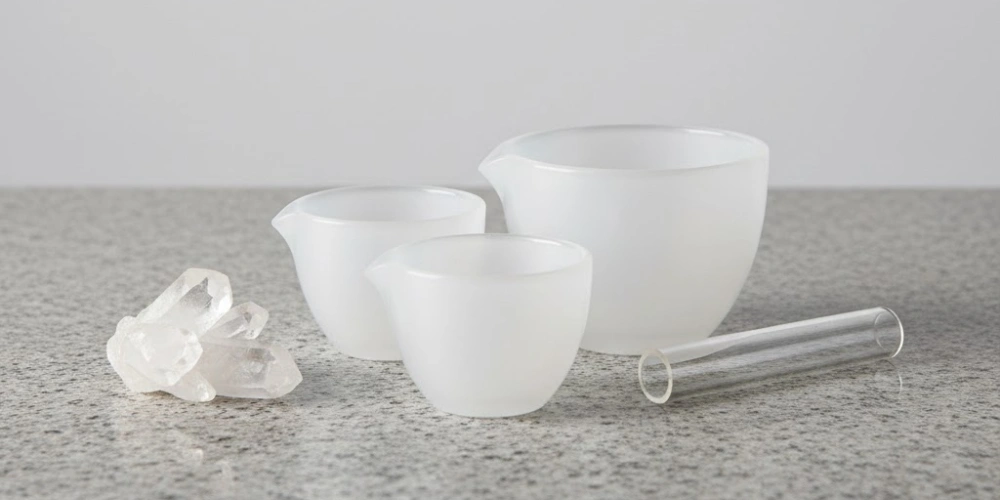
Two Raw Materials Behind Quartz Glassware
Among all the variables that govern fused quartz performance, raw material origin carries the most decisive weight, setting absolute ceilings on purity, optical behavior, and thermal endurance before any forming or finishing step begins.
The entire category of fused quartz glassware traces back to two fundamentally distinct raw material pathways: natural quartz crystal and synthetic silicon dioxide. Both yield an amorphous, non-crystalline SiO₂ structure upon melting, yet the differences in impurity profiles, hydroxyl content, and achievable purity levels between the two are substantial enough to place them in separate performance tiers for demanding applications.
Natural Quartz Crystal — Origin, Purity, and Structural Constraints
Natural quartz crystal forms over geological timescales through hydrothermal processes, with the highest-grade deposits concentrated in Brazil, Madagascar, and parts of China. Mined crystals selected for optical and industrial use are classified as lascas — large, visually clear fragments with minimal inclusions — and represent only a small fraction of total quartz ore production.
The SiO₂ purity of natural quartz used for glassware manufacture typically falls between 99.9% and 99.99%, with the remaining fraction occupied by trace substitutional impurities including aluminum (Al³⁺), iron (Fe²⁺/Fe³⁺), titanium (Ti⁴⁺), and lithium (Li⁺). These elements enter the crystal lattice during geological crystallization and cannot be entirely removed by physical sorting or standard acid washing. At concentrations as low as a few parts per million, aluminum and alkali metal impurities reduce viscosity at high temperatures and introduce absorption bands in the UV range, directly limiting the performance ceiling of natural fused quartz in high-purity and optical applications.
Natural quartz also carries a structurally significant feature: crystallinity. In its mined state, quartz is a crystalline solid with a well-ordered Si–O–Si lattice. Melting this crystalline structure at temperatures above 1,710 °C converts it into the disordered, amorphous glass network that defines fused quartz — a transformation that is irreversible under normal processing conditions.
Synthetic Silica — Chemical Vapor Deposition and Flame Fusion Explained
Synthetic fused silica bypasses geological impurity constraints entirely by building silicon dioxide from high-purity chemical precursors. Two principal manufacturing routes are used at industrial scale, and each produces a material with distinct hydroxyl (OH) content that has direct consequences for optical and thermal performance.
The chemical vapor deposition (CVD) route — specifically flame hydrolysis — involves the combustion of silicon tetrachloride (SiCl₄) or organosilicon compounds such as octamethylcyclotetrasiloxane (OMCTS) in an oxygen-hydrogen flame. The reaction produces ultra-fine SiO₂ soot particles that are deposited onto a rotating mandrel and then sintered into a transparent glass blank. This process yields purities exceeding 99.9999% SiO₂, with metallic impurity levels measured in the sub-parts-per-billion range. The hydrogen flame, however, incorporates significant OH into the glass network, producing what is classified as "wet" synthetic silica with OH concentrations typically between 800 and 1,200 ppm.
The flame fusion (Verneuil-type) route melts high-purity SiO₂ powder directly in an oxygen-hydrogen burner, consolidating material into a boule. Electric fusion in vacuum or inert atmosphere — used for producing "dry" synthetic silica — eliminates hydrogen exposure and reduces OH content to below 1 ppm. This OH distinction is not cosmetic: high-OH silica absorbs infrared radiation at approximately 2,730 nm, making dry grades mandatory for near-infrared optical applications, while wet grades offer superior UV transparency due to their reduced metallic impurity levels.
Fused Quartz vs Fused Silica — the Distinction That Actually Matters
The terms "fused quartz" and "fused silica" appear interchangeably in many product catalogs, yet within materials science and precision manufacturing they refer to two chemically and performatively distinct materials. Clarifying this distinction is essential before specifying any component for a demanding application.
Fused quartz is produced by melting natural quartz crystal. Its purity is constrained by geological impurity levels, its OH content is moderate (typically 150–300 ppm), and its UV transmission cutoff falls at approximately 250 nm due to residual metallic absorbers. Fused silica, by contrast, is produced from synthetic SiO₂ precursors and achieves metallic purities in the sub-ppb range, with UV cutoffs extending to 150–180 nm depending on OH content and grade.
Both materials share the same amorphous SiO₂ network structure, the same approximate softening point of 1,665 °C, and the same thermal expansion coefficient of approximately 0.55 × 10⁻⁶/°C. The divergence lies in spectral performance and contamination risk — parameters that become decisive in semiconductor-grade wafer processing and UV spectroscopic measurement, where even trace metallic contamination or a shifted UV cutoff renders a component unacceptable.
Fused Quartz vs Fused Silica — Core Differentiators
| Property | Fused Quartz (Natural) | Fused Silica (Synthetic) |
|---|---|---|
| SiO₂ Purity (%) | 99.9 – 99.99 | 99.9999+ |
| OH Content (ppm) | 150 – 300 | <1 (dry) / 800–1,200 (wet) |
| UV Cutoff (nm) | ~250 | ~150–180 |
| Metallic Impurities | Low (ppm range) | Ultra-low (sub-ppb) |
| Primary Raw Material | Mined quartz crystal | SiCl₄ / organosilane |
| Typical Application Tier | Industrial, general lab | Semiconductor, UV optics |
Physical and Chemical Properties That Set Quartz Glassware Apart
Grasping what quartz glassware is made of provides only half the picture — understanding the measurable physical and chemical properties that emerge from its amorphous SiO₂ structure explains precisely why it occupies an irreplaceable position wherever glass-based materials are pushed to their performance limits.
No single property in isolation accounts for the wide adoption of fused quartz across such varied industries. Rather, it is the simultaneous combination of extreme thermal stability, broad optical transmission spanning UV through near-infrared, and resistance to chemically aggressive media that renders this material class categorically superior to borosilicate and soda-lime alternatives in high-performance settings. Each property reinforces the case for the others, and together they define the performance envelope within which quartz glassware operates.
Thermal Performance — Service Temperature and Thermal Shock Resistance
Fused quartz sustains continuous service at temperatures up to approximately 1,100 °C, with a softening point of 1,665 °C — values that place it far beyond the reach of borosilicate glass, which softens at around 820 °C. Short-term excursions to 1,300 °C are tolerable without catastrophic deformation, provided mechanical loads are minimal.
The thermal shock resistance of fused quartz derives directly from its exceptionally low coefficient of thermal expansion (CTE) of approximately 0.55 × 10⁻⁶/°C — roughly six times lower than borosilicate glass at 3.3 × 10⁻⁶/°C and nearly fourteen times lower than standard soda-lime glass at 7.5 × 10⁻⁶/°C. When a fused quartz tube is withdrawn from a furnace operating at 1,000 °C and exposed to ambient air, the thermal gradient across the wall generates proportionally smaller tensile stresses compared to any commercial glass alternative, making fracture under rapid thermal cycling far less probable. This low-CTE behavior is a structural consequence of the amorphous Si–O–Si network, which accommodates temperature changes through network distortion rather than lattice expansion.
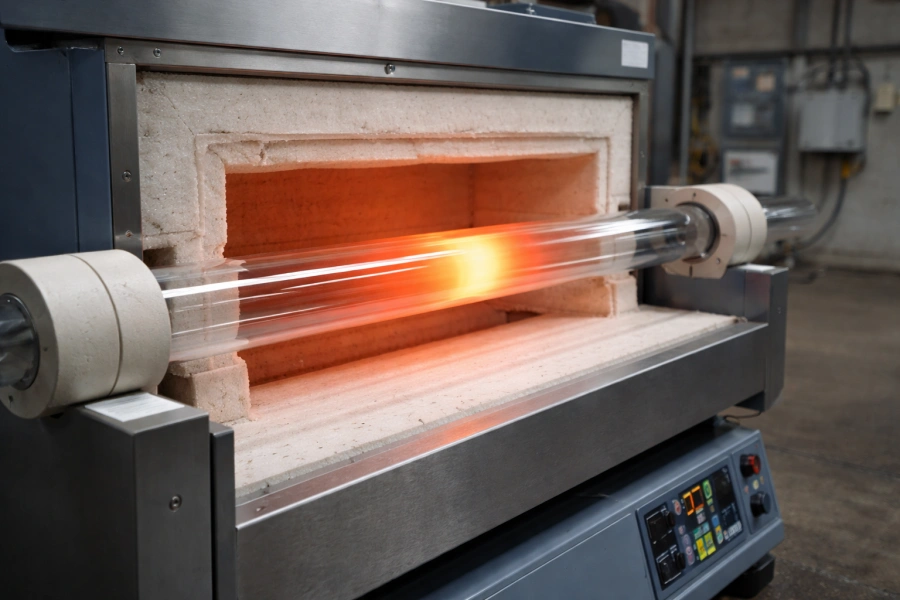
In tube furnace applications, quartz reaction tubes are routinely cycled between room temperature and 1,000 °C multiple times daily over operational lifetimes measured in years — a demand profile that would destroy borosilicate components within days.
Optical Transparency Across UV, Visible and Infrared Wavelengths
The spectral transmission window of fused quartz extends from approximately 150 nm in the vacuum ultraviolet to 3,500 nm in the mid-infrared, covering a range that no common oxide glass approaches. Borosilicate glass, by comparison, becomes essentially opaque below approximately 310 nm, rendering it useless for UV spectroscopy, UV photochemistry, and deep-UV laser optics.
Within this window, transmission efficiency depends critically on OH content. Wet synthetic silica grades transmit efficiently in the UV range down to 160–180 nm, owing to their ultra-low metallic impurity content, but exhibit a strong absorption band centered at approximately 2,730 nm caused by Si–OH stretching vibrations. Dry synthetic silica grades suppress this band by reducing OH to below 1 ppm, enabling broadband near-infrared transmission at the cost of a slightly elevated UV cutoff. Selecting the correct OH-content grade for a specific wavelength range is therefore not a refinement — it is a fundamental specification decision. For UV-Vis spectrophotometry below 250 nm, only high-purity synthetic fused silica with low metallic impurities delivers reliable, reproducible baseline transmission.
Natural fused quartz occupies the middle ground, transmitting adequately across the visible range and into the near-UV, making it suitable for high-temperature laboratory work where optical performance is secondary to thermal and chemical resistance.
Chemical Durability Against Acids, Solvents and High-Purity Process Fluids
Fused quartz demonstrates exceptional resistance to nearly all inorganic acids at elevated temperatures. Hydrochloric acid (HCl), sulfuric acid (H₂SO₄), nitric acid (HNO₃), and phosphoric acid (H₃PO₄) — including concentrated forms at temperatures approaching 300 °C — produce negligible surface dissolution or leaching of contaminants from quartz vessels. This chemical inertness stems from the fully cross-linked Si–O–Si network, which presents no easily hydrolyzable bonds to acidic aqueous media under most laboratory conditions.
The primary chemical vulnerability of fused quartz is attack by hydrofluoric acid (HF) and by hot concentrated alkali solutions (NaOH, KOH) above approximately 100 °C. HF reacts directly with silica to form soluble hexafluorosilicic acid (H₂SiF₆)1, while hot alkalis promote hydroxide-catalyzed network dissolution. Both attack mechanisms are well understood and are accounted for in laboratory protocols — quartz is never specified for HF-containing streams or strongly basic digestion procedures.
In trace element analysis, the contamination contribution from quartz vessel walls is orders of magnitude lower than from borosilicate glass, where boron, sodium, and aluminum leach into acidic solutions at measurable concentrations. For ICP-MS and ICP-OES sample preparation, this difference in background blank contribution is directly measurable and analytically significant.
Quartz Glassware Thermal and Chemical Properties
| Property | Fused Quartz | Borosilicate Glass | Soda-Lime Glass |
|---|---|---|---|
| Continuous Use Temp. (°C) | 1,100 | 500 | 300 |
| Softening Point (°C) | 1,665 | 820 | 730 |
| CTE (×10⁻⁶/°C) | 0.55 | 3.3 | 7.5 |
| UV Cutoff (nm) | ~250 (natural) / ~150 (synthetic) | ~310 | ~320 |
| HF Resistance | Poor | Poor | Poor |
| Hot Acid Resistance | Excellent | Good | Moderate |
| Hot Alkali Resistance | Poor | Moderate | Poor |
Quartz Glassware versus Borosilicate Glass — a Property-by-Property Comparison
Borosilicate glass occupies the majority of general laboratory glassware by volume, yet fused quartz consistently displaces it wherever temperature, spectral transmission, or contamination thresholds exceed borosilicate's capability envelope.
Thermal ceiling represents the most immediate differentiator. Borosilicate glass softens at approximately 820 °C and is rated for continuous use up to around 500 °C in standard laboratory grades. Quartz glassware sustains continuous service at 1,100 °C and withstands short-term exposure to 1,300 °C — a thermal margin of more than double that of borosilicate. This gap is not incremental; it is categorical, separating the two materials into distinct application domains in any process operating above 600 °C.
Spectral transmission presents an equally decisive divide. Borosilicate glass transmits visible and near-UV light adequately but becomes opaque below approximately 310 nm. Any application requiring UV transmission — spectrophotometry below 300 nm, UV photocatalysis, excimer laser optics — mandates fused quartz or synthetic fused silica, for which borosilicate offers no functional substitute.
Chemical purity and leaching behavior complete the comparison. Borosilicate glass releases measurable concentrations of boron, sodium, and silicon into hot acidic solutions — a contamination source that is unacceptable in trace element analysis at sub-ppb concentration levels. Fused quartz contributes negligible ionic contamination to even the most aggressive acid media, maintaining sample integrity in analytical workflows where background blank suppression is a primary analytical objective.
Common Forms of Quartz Glassware and Their Structural Features
Fused quartz is fabricated into a range of standardized vessel and component geometries, each shaped to serve specific functional requirements rather than aesthetic conventions.
-
Quartz crucibles are thick-walled, cylindrical or tapered open vessels used for high-temperature fusion, calcination, and material melting. Wall thickness typically ranges from 2 to 5 mm depending on volume and thermal duty, with volumes spanning 10 mL to several liters in laboratory grades.
-
Quartz beakers and flasks mirror the form of standard borosilicate laboratory ware but are manufactured with tighter wall uniformity tolerances and fire-polished rim finishes to minimize particulate shedding. Flat-bottom and round-bottom variants serve acid digestion and solution preparation duties.
-
Quartz tubes constitute one of the highest-volume product forms, produced in outer diameters from 1 mm to over 300 mm and wall thicknesses calibrated for pressure and thermal duty. Straight tubes, bend sections, and flanged assemblies all derive from drawn or centrifugally cast tube stock.
-
Quartz rods, discs, and plates serve as structural, optical, and electrical isolation components rather than vessels. Rods function as stirring elements or susceptor supports; discs and plates serve as windows, substrates, and cover plates in furnace and reactor assemblies.
-
Quartz evaporating dishes feature shallow, wide-diameter profiles optimized for solvent evaporation and acid dissolution of solid samples at elevated temperatures. Their large surface-to-volume ratio accelerates evaporation under controlled heating.
These forms share a defining structural characteristic: the absence of any crystalline order in the glass matrix. Regardless of shape, all fused quartz components are amorphous, isotropic, and free of the grain boundaries that would otherwise create sites for thermally and chemically preferential attack.
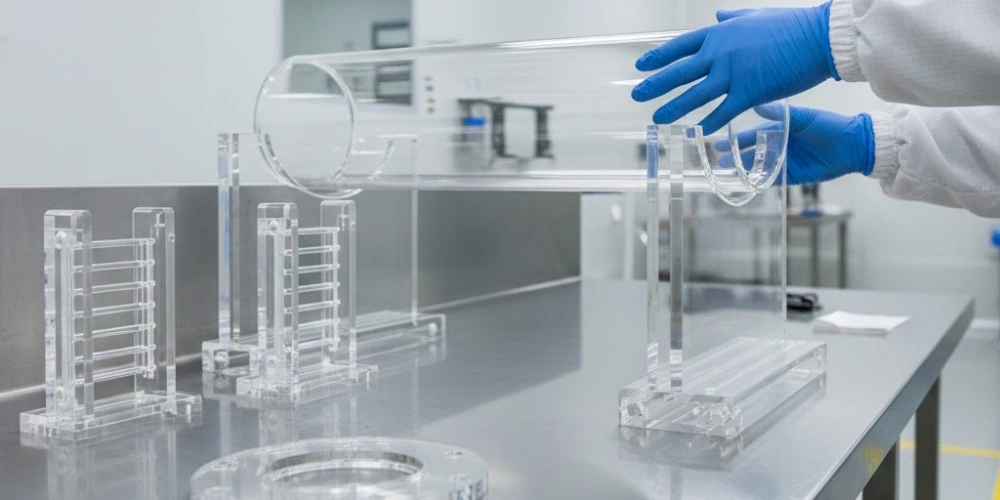
Applications of Quartz Glassware in Semiconductor Fabrication
Semiconductor manufacturing subjects materials to a combination of extreme temperature, ultra-high purity requirements, and aggressive chemical exposure that eliminates virtually every glass alternative — placing fused quartz at the structural and chemical center of modern wafer processing infrastructure.
Within a silicon wafer fabrication facility, quartz glassware and quartz-based components appear at nearly every thermal and wet chemical processing stage. The purity requirements in this context are not laboratory-grade but semiconductor-grade: metallic contamination at even single-digit parts-per-trillion concentrations on wafer surfaces can alter carrier lifetimes, introduce gate oxide defects, and reduce device yields. Every quartz component in contact with wafers or process gases must therefore meet stringent specifications that go beyond standard industrial fused quartz into semiconductor-grade and electronic-grade classifications.
Diffusion Furnace Tubes and Boat Assemblies in Wafer Processing
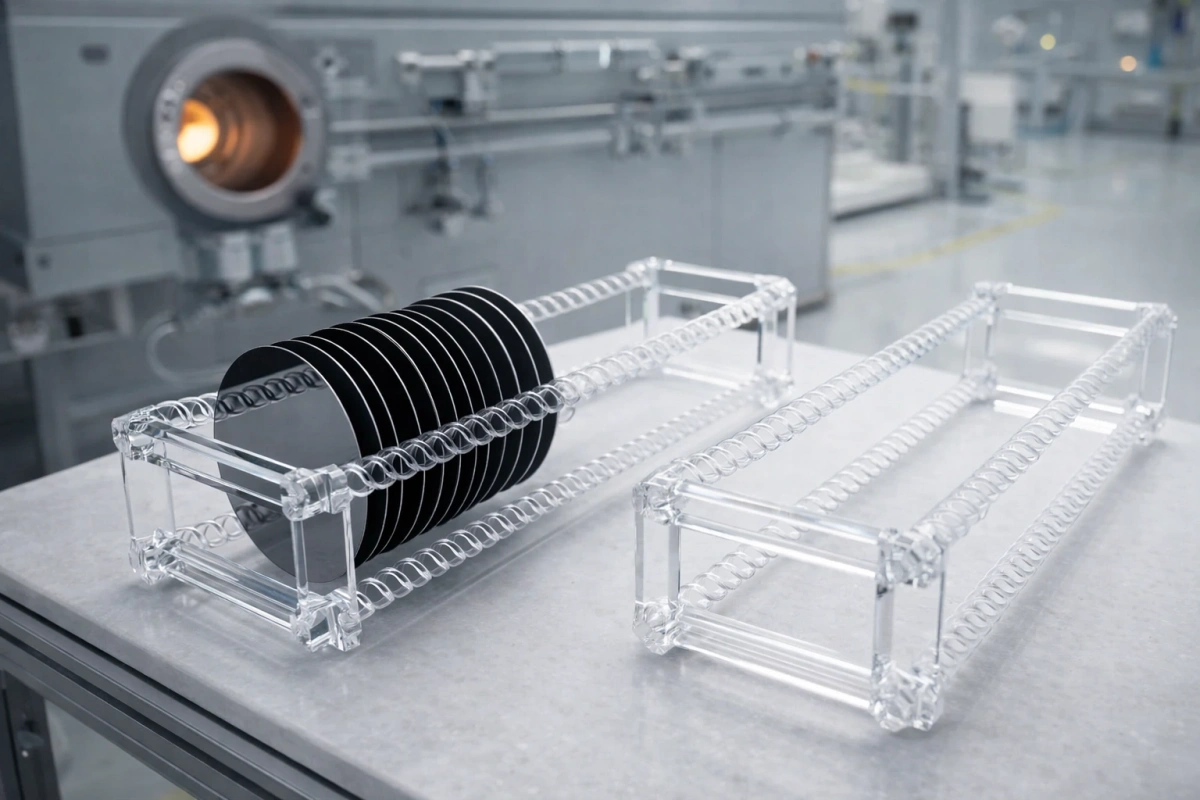
Diffusion furnace tubes represent the highest-volume and most thermally demanding application of quartz glassware in semiconductor manufacturing. These large-diameter tubes — typically 150 mm to 300 mm outer diameter, with lengths up to 1,500 mm — house silicon wafers during thermal oxidation, dopant diffusion, and anneal processes conducted between 800 °C and 1,200 °C in controlled atmospheres of oxygen, nitrogen, or hydrogen.
The quartz used for semiconductor diffusion tubes must meet electronic-grade purity specifications, with total metallic impurity content below 20 parts per billion and, in leading-edge fabs, below 5 ppb for critical elements including iron, copper, nickel, and aluminum. A single iron atom diffusing from a contaminated furnace tube wall into a silicon wafer at 1,000 °C creates a deep-level trap state that measurably degrades minority carrier lifetime — a defect directly traceable to material quality. Wafer boats (carriers that hold wafers in vertical or horizontal arrays within the tube) are similarly manufactured from high-purity fused quartz, with slot geometries machined to micron-level tolerances to ensure uniform wafer spacing and reproducible gas flow distribution.
Furnace tube lifetimes in production fabs are carefully tracked, as prolonged thermal cycling gradually induces devitrification — a surface crystallization phenomenon observable as a milky opacity — that increases particulate shedding risk and prompts scheduled tube replacement.
Wet Bench Etching Trays and Chemical-Resistant Process Vessels
Wet chemical processing stations — known in semiconductor manufacturing as wet benches — use immersion tanks, overflow weirs, and transfer trays fabricated from fused quartz to expose wafers to sequential chemical baths. The RCA cleaning2 sequence, developed at RCA Laboratories and still fundamental to silicon surface preparation, cycles wafers through SC-1 (NH₄OH/H₂O₂/H₂O), SC-2 (HCl/H₂O₂/H₂O), and dilute HF solutions at temperatures between 25 °C and 80 °C.
Quartz tanks and carriers withstand the full RCA chemical sequence without contributing ionic contamination to the cleaning solutions — a requirement that disqualifies most polymer tank materials at elevated temperatures due to outgassing and metallic additive leaching. In sulfuric acid/hydrogen peroxide mixtures (SPM or piranha solution) at temperatures exceeding 120 °C, quartz demonstrates superior chemical resistance compared to PTFE, which softens and deforms under sustained thermal and oxidative stress at these conditions. The mechanical rigidity of quartz at operating temperature also maintains dimensional precision in wafer carrier slot geometry, preventing wafer-to-wafer contact during chemical immersion — a contact event that would introduce cross-contamination and yield loss.
Cleanroom-grade quartz wet bench components are produced with surface finishes specified in Ra values, typically below 0.8 μm, to minimize particle adhesion and facilitate complete chemical rinsing between process steps.
Quartz Components in CVD and Epitaxial Growth Chambers
Chemical vapor deposition and epitaxial growth processes demand quartz components that simultaneously withstand high temperatures, corrosive deposition precursor gases, and the requirement for zero metallic contamination of the growing film. Quartz reaction tubes, liner tubes, and susceptor components appear across low-pressure CVD (LPCVD), atmospheric-pressure CVD (APCVD), and silicon epitaxial reactors operating between 600 °C and 1,200 °C.
In LPCVD systems depositing silicon nitride from dichlorosilane (SiH₂Cl₂) and ammonia (NH₃), or depositing polysilicon from silane (SiH₄), the quartz tube serves as the primary reaction envelope. The tube must remain chemically inert to deposition precursors, carrier gases, and etch-back chemistries including chlorine and HCl used for in-situ cleaning between deposition cycles. Any reaction between the tube wall and process chemistry would introduce silicon oxide or contamination species into the growing film. In epitaxial growth chambers, quartz liner tubes and bell jars provide a clean, thermally transparent enclosure around the susceptor and substrate, allowing infrared heating lamps — typically tungsten-halogen — to transmit energy through the quartz walls with minimal absorption loss.
Quartz Glassware in Semiconductor Process Applications
| Process | Quartz Component | Operating Temp. (°C) | Purity Grade |
|---|---|---|---|
| Thermal Oxidation | Diffusion tube | 900–1,100 | Electronic grade |
| Dopant Diffusion | Furnace tube + wafer boat | 800–1,200 | Electronic grade |
| RCA Wet Cleaning | Immersion tank, carrier | 25–80 | Semiconductor grade |
| SPM Strip | Process vessel | 120–150 | Semiconductor grade |
| LPCVD | Reaction tube | 600–900 | High-purity grade |
| Epitaxial Growth | Bell jar, liner tube | 900–1,200 | Electronic grade |
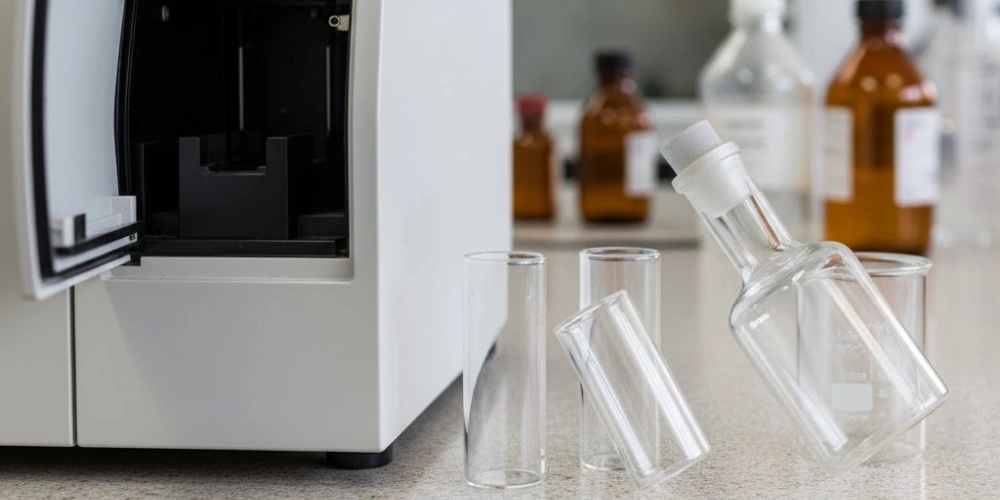
Quartz Glassware for Analytical Chemistry and Spectroscopic Measurement
Analytical chemistry places a dual demand on its glassware: spectral transparency across the measurement wavelength range and chemical inertness sufficient to preserve analyte concentrations at ultra-trace levels — a combination that consistently directs instrument designers and method developers toward fused quartz.
The connection between optical properties and analytical performance is direct and quantifiable. A vessel that absorbs UV radiation at the measurement wavelength introduces systematic error in every absorbance reading; a digestion flask that leaches silicon, boron, or sodium into an acid matrix raises the analytical blank and degrades detection limits. Fused quartz addresses both failure modes simultaneously, which explains its mandatory status in UV spectrophotometry and trace element sample preparation — fields where analytical credibility depends on the behavior of every material in contact with the sample.
UV-Vis Spectrophotometry Cuvettes — Why Optical-Grade Quartz Is Non-Negotiable
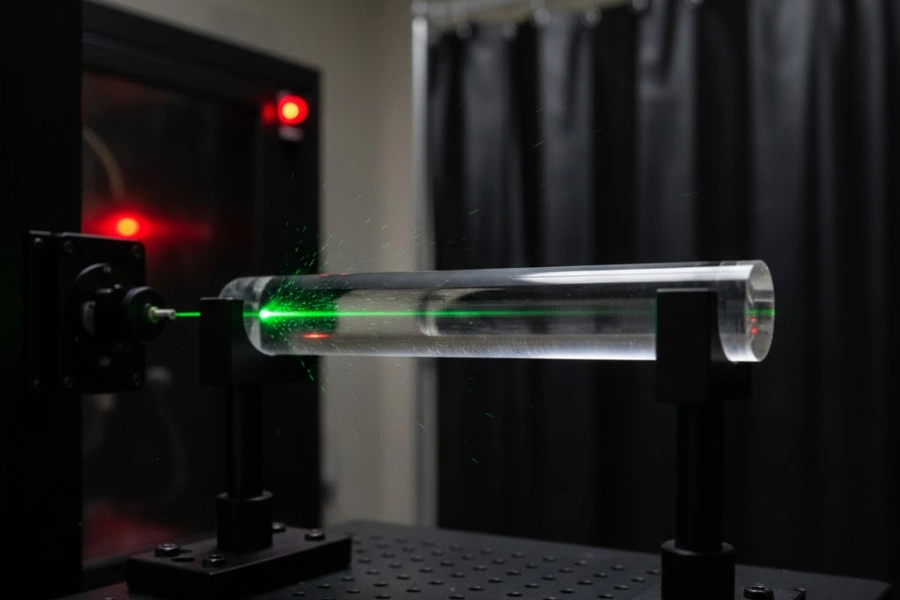
UV-Vis spectrophotometry quantifies the concentration of absorbing species by measuring the attenuation of light passing through a sample solution across wavelengths typically spanning 190 nm to 900 nm. The cuvette — the sample cell through which the beam passes — must be transparent across this entire range; any absorption by the cuvette material itself introduces a baseline error that propagates directly into every concentration calculation.
Standard optical glass cuvettes transmit adequately above approximately 340 nm, covering the visible range and long-wavelength near-UV. Below 310 nm, borosilicate glass absorbs so strongly that it becomes functionally opaque, making glass cuvettes incompatible with measurements of aromatic compounds, nucleic acids (peak absorbance at 260 nm), proteins (peak absorbance at 280 nm), and a large class of inorganic ions with UV charge-transfer absorptions. Fused quartz cuvettes maintain greater than 80% transmission at 200 nm in high-purity synthetic grades, enabling reliable measurement throughout the deep UV range.
Standard analytical quartz cuvettes are manufactured with a path length of 10.000 ± 0.010 mm, a tolerance maintained through precision grinding and polishing of the optical windows. Deviations from this path length directly translate into proportional errors in Beer-Lambert law calculations. Optical-grade synthetic fused silica cuvettes additionally specify refractive index homogeneity across the window aperture, ensuring that beam steering artifacts do not contribute to apparent absorbance — a specification irrelevant for glass cuvettes but critical for cuvettes used with high-brightness UV sources or in quantitative structural biology applications.
Digestion Vessels and Acid Dissolution Flasks for Trace Element Analysis
Trace element analysis by ICP-MS and ICP-OES requires sample dissolution in mineral acids — typically concentrated HNO₃, HCl, or HNO₃/HCl mixtures — at temperatures between 80 °C and 250 °C, for durations ranging from minutes to several hours. The vessel used for this digestion step is the most contamination-critical item in the entire analytical workflow.
Borosilicate glass digestion vessels release boron at concentrations of 50–500 μg/L into hot nitric acid solutions, a contamination level that is analytically significant in environmental and biological samples where boron is itself an analyte. Sodium and aluminum leaching from glass vessels adds further matrix complexity and raises the analytical blank for these elements. Fused quartz vessels contribute silicon to solution (as silicic acid) at measurable concentrations in hot HF-free acid media, but silicon is not an analyte in most ICP workflows and is easily accounted for. For all other elements, the quartz matrix blank contribution is negligible at the sub-μg/L level, enabling detection limits that are unachievable with glass or even high-grade PTFE vessels for elements where PTFE additives introduce contamination.
In geochemical analysis of rock and mineral samples — a field where accurate determination of rare earth elements, transition metals, and platinum group elements at ng/g concentrations is standard — quartz digestion vessels are considered the minimum acceptable vessel material for open-vessel acid dissolution at atmospheric pressure.
Quartz Glassware Performance in Analytical Measurement Applications
| Application | Key Requirement | Quartz Specification | Alternative Material Limitation |
|---|---|---|---|
| UV-Vis at 200–280 nm | Transmission >80% | Synthetic fused silica | Borosilicate opaque <310 nm |
| UV-Vis at 280–900 nm | Transmission >90% | Natural fused quartz | Glass adequate but not UV-capable |
| ICP-MS digestion | Blank <0.1 μg/L | High-purity quartz flask | Borosilicate releases B, Na, Al |
| ICP-OES digestion | Blank <1 μg/L | Quartz Erlenmeyer | PTFE suitable but temperature-limited |
| Fluorescence at <300 nm | Zero background fluorescence | UV-grade fused silica | Glass fluoresces in UV range |
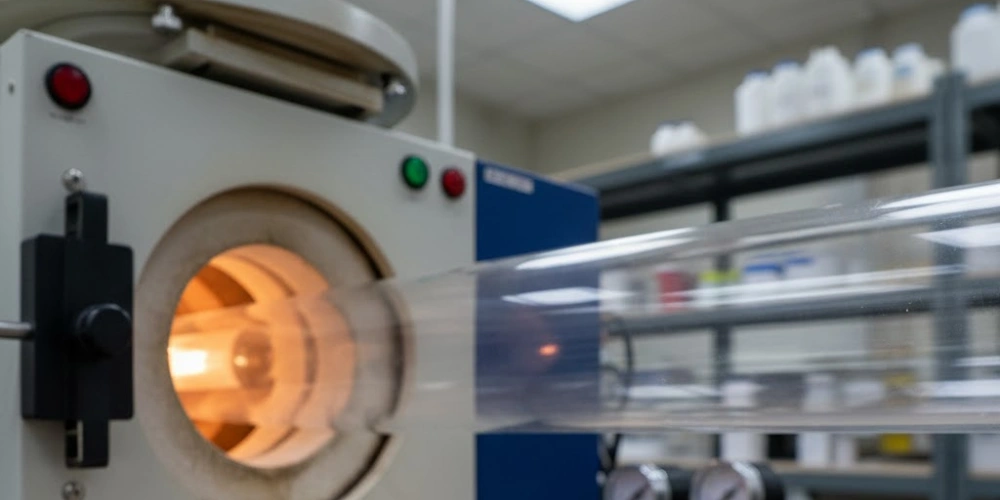
Quartz Glassware Across High-Temperature Synthesis and Thermal Research
Beyond semiconductor and analytical applications, an equally demanding set of material requirements emerges in high-temperature synthesis, thermal analysis, and photochemical research — environments where the combination of extreme temperature, reactive atmospheres, and optical access constraints eliminates conventional glass alternatives with equal finality.
Research laboratories conducting materials synthesis, thermal characterization, and photochemical experiments impose load cases on glassware that diverge from semiconductor and analytical norms but are no less severe. Temperatures may cycle between cryogenic and 1,200 °C within a single experimental protocol; atmospheric compositions range from inert argon and nitrogen through oxidizing oxygen to mildly reducing hydrogen mixtures; and photochemical reactors require UV-transparent vessel walls that simultaneously withstand thermal and chemical stresses. Fused quartz satisfies this convergence of demands across all three contexts.
Tube Furnaces and Crucible Applications in Materials Synthesis
Tube furnaces represent the primary thermal processing tool in solid-state chemistry, ceramic science, and nanomaterials synthesis. A standard horizontal tube furnace accommodates a fused quartz reaction tube of 50–100 mm outer diameter and 600–1,200 mm heated length, through which controlled gas atmospheres flow during synthesis, annealing, or phase transformation experiments at temperatures typically between 400 °C and 1,100 °C.
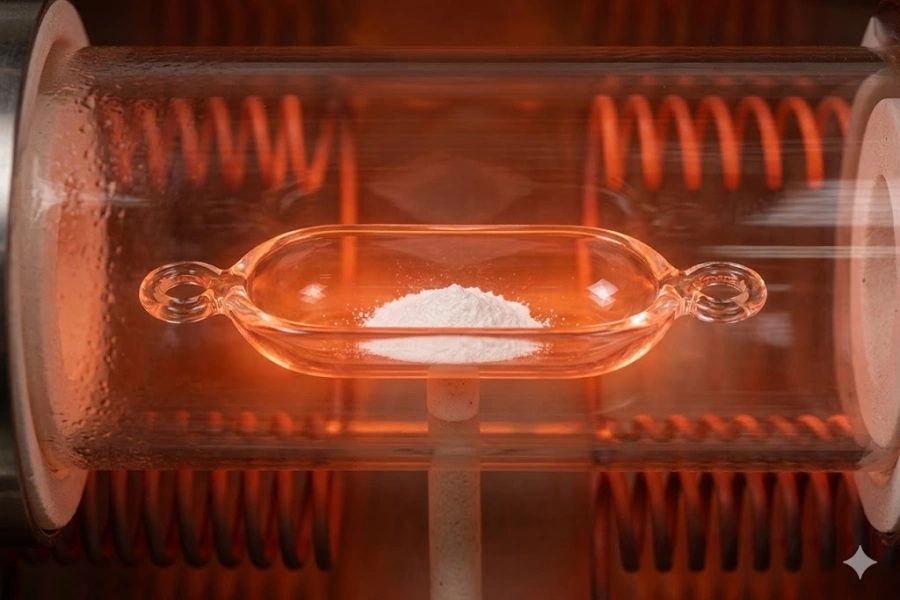
Quartz reaction tubes withstand continuous operation at 1,100 °C in oxidizing (O₂, air), inert (Ar, N₂), and mildly reducing (5% H₂/N₂) atmospheres without measurable reaction with the gas phase, making them compatible with the overwhelming majority of solid-state synthesis protocols. Carbon nanotubes grown by chemical vapor deposition, metal oxide powders synthesized by thermal decomposition, and thin-film materials annealed under controlled partial pressures all rely on quartz tube integrity at these conditions. A quartz crucible placed inside such a tube serves as the immediate container for reactive starting materials, isolating the sample from the tube wall and enabling gravimetric tracking of mass changes during thermally driven reactions.
Quartz crucibles for high-temperature synthesis are specified with wall thicknesses of 2–4 mm and are manufactured in volumes from 10 mL to 500 mL. Their compatibility with temperatures to 1,100 °C covers the melting and sintering ranges of most transition metal oxides, phosphates, and silicates — though molten alkali metal oxides and fluorides attack quartz aggressively and require platinum or alumina alternatives.
Thermal Analysis Instruments and Reaction Vessels in Research Settings
Thermogravimetric analysis (TGA) and differential scanning calorimetry (DSC) instruments require sample holders and protective components that remain dimensionally and chemically stable across the full instrument operating range, typically −150 °C to 1,600 °C in high-temperature configurations. Fused quartz sample tubes, hangdown tubes, and balance shields appear throughout high-temperature TGA instruments as both structural and protective components.
In TGA systems, a quartz hangdown tube suspends the sample crucible within the furnace zone while isolating the precision balance mechanism from the hot gas stream. The tube must exhibit zero creep at the operating temperature — a requirement that eliminates borosilicate glass above 500 °C — and must transmit the gas atmosphere uniformly to the sample without reaction. For TGA experiments conducted under reactive atmospheres including SO₂, HCl vapor, or steam at elevated temperatures, the chemical inertness of quartz toward these species (below approximately 1,000 °C and excluding HF) makes it the default tube material in instrument design.
In high-temperature autoclave and sealed ampoule experiments — where precursor materials are enclosed in a sealed quartz tube under partial pressure and heated to promote crystal growth or phase transformation — the quartz ampoule simultaneously functions as a pressure vessel, reaction chamber, and optical observation cell if the experiment requires in-situ monitoring.
Quartz Glassware in Photochemical and UV-Assisted Reaction Systems
Photochemical research requires reactors in which a UV or visible light source illuminates a reacting solution or gas phase with minimal attenuation by the reactor wall. Fused quartz reactors — cylindrical vessels, immersion well reactors, and flat-window flow cells — serve this function across photocatalysis, UV-assisted synthesis, and actinometry3 experiments where the precise photon dose delivered to the reaction volume must be known or controlled.
An immersion well reactor fabricated from fused quartz allows a mercury vapor lamp emitting at 254 nm, 313 nm, and 365 nm to illuminate the surrounding reaction annulus with negligible wall absorption — transmission losses through a 2 mm quartz wall at 254 nm are typically below 5% for high-purity grades. Borosilicate glass reactors under the same lamp transmit essentially zero energy at 254 nm, confining the reaction to whatever photons penetrate the 310 nm borosilicate cutoff. In photocatalytic degradation experiments where a TiO₂ catalyst is activated by sub-365 nm photons, the choice between quartz and glass reactors produces categorically different photon fluence rates at the catalyst surface — a variable that completely dominates reaction rate data.
Quartz Glassware Across High-Temperature and Photochemical Research Settings
| Application | Quartz Component | Temperature Range (°C) | Key Property Utilized |
|---|---|---|---|
| Solid-state synthesis | Reaction tube | 400–1,100 | Thermal stability, gas inertness |
| Oxide crucible melting | Crucible | 800–1,100 | Chemical inertness, thermal shock resistance |
| TGA analysis | Hangdown tube, balance shield | 25–1,500 | Zero creep, chemical inertness |
| Sealed ampoule synthesis | Fused ampoule | 200–900 | Pressure tolerance, optical access |
| UV photocatalysis | Immersion well reactor | 10–80 | UV transmission at 254–365 nm |
| Photochemical synthesis | Flow cell, flat-window vessel | 0–100 | Broadband UV transparency |
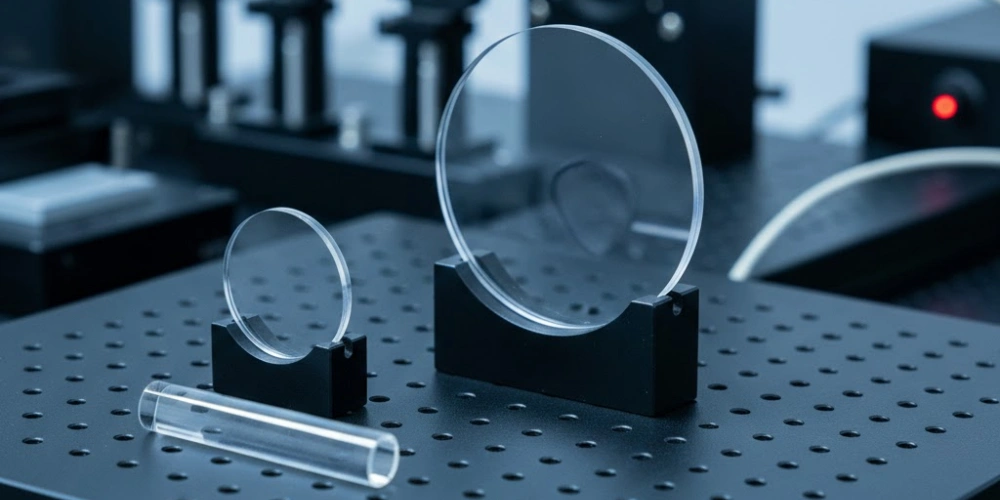
Optical and Photonic Uses of Precision Quartz Glassware
At the frontier of optical engineering, where wavelengths extend into the deep UV and power densities challenge every material's damage threshold, precision fused silica components take on roles that no other oxide glass can fulfill — roles where refractive index homogeneity, UV transmission, and resistance to laser-induced damage are specified to tolerances measured in parts per million.
Photonic and laser applications demand material properties that go beyond standard laboratory grades. Refractive index homogeneity across a 100 mm aperture must be controlled to better than 1 × 10⁻⁶ in the most demanding lithographic and interferometric applications; birefringence — a stress-induced anisotropy in refractive index — must be suppressed below 2 nm/cm in optical-grade components to prevent polarization degradation in laser systems. These specifications are achievable only with synthetic fused silica produced through tightly controlled flame hydrolysis or plasma CVD processes, followed by annealing cycles designed to relax residual stress in the glass network.
UV Laser Windows and Beam-Delivery Optics in High-Power Systems
Excimer lasers operating at ArF (193 nm) and KrF (248 nm) wavelengths serve as the primary light sources in photolithography for integrated circuit manufacturing and in UV microfabrication. Every optical element in the beam delivery path — windows, beam splitters, lenses, and homogenizers — must transmit at these wavelengths with minimal absorption, scatter, or induced absorption from prior UV exposure.
Synthetic fused silica with OH content above 800 ppm is specified for 193 nm and 248 nm optics because high-OH grades demonstrate superior resistance to laser-induced compaction — a permanent densification of the glass network caused by deep-UV photon absorption that shifts the refractive index and causes focal point drift over millions of laser pulses. At pulse energies typical of production lithography scanners (approximately 5–10 mJ/cm² per pulse at repetition rates of 4,000–6,000 Hz), cumulative fluences exceeding 10⁹ J/cm² are delivered to lens elements over their operational lifetimes. Only high-OH synthetic fused silica maintains refractive index stability and transmission at these exposure levels — a requirement that has driven the development of specialized lithographic-grade silica materials with tightly controlled impurity and OH specifications distinct from standard optical grades.
For pulsed Nd:YAG laser systems generating harmonic outputs at 532 nm, 355 nm, and 266 nm, fused silica windows and lenses replace standard glass components in the UV harmonic generation and delivery stages, where damage threshold rather than homogeneity represents the primary selection criterion.
Optical Fiber Preform Fabrication and Silica-Based Waveguides
Optical fiber — the transmission medium underlying global telecommunications infrastructure — is fabricated from ultra-high-purity fused silica preforms produced by CVD processes. The preform is a cylindrical glass rod of precisely engineered refractive index profile, drawn into fiber at temperatures around 2,000 °C to produce filaments of 125 μm outer diameter with core diameters of 8–62.5 μm depending on fiber type.
The fused silica used for telecommunications fiber preforms must achieve attenuation below 0.18 dB/km at 1,550 nm — a specification that demands total OH content below 0.1 ppb in the core region, as the 2,730 nm OH absorption overtone creates measurable attenuation at 1,383 nm (the "water peak") that degrades dense wavelength division multiplexing (DWDM) performance in legacy fiber grades. Modern low-water-peak fiber grades, specified under IEC 60793-2-50 Type B1.3, achieve OH-related attenuation at 1,383 nm below 0.4 dB/km through outside vapor deposition (OVD) processes that rigorously exclude moisture during soot deposition and sintering.
Quartz substrate tubes — hollow cylinders of ultra-pure fused silica — serve as the starting mandrel for modified chemical vapor deposition (MCVD) and plasma CVD (PCVD) preform fabrication, where successive layers of doped SiO₂ are deposited on the inner tube wall before collapse into a solid preform rod. The dimensional tolerances of these substrate tubes directly control the core-clad geometry of the finished fiber, with outer diameter tolerances held to ±0.5 mm and wall thickness uniformity maintained to better than 1% along the tube length.
Quartz Glassware and Fused Silica Specifications in Optical Applications
| Application | Wavelength Range | OH Content Required | Key Optical Spec |
|---|---|---|---|
| ArF lithography lenses | 193 nm | >800 ppm (wet grade) | Δn < 1×10⁻⁶, birefringence <2 nm/cm |
| KrF laser optics | 248 nm | >600 ppm | Laser damage threshold >5 J/cm² |
| Nd:YAG 4th harmonic | 266 nm | >400 ppm | UV transmission >85% |
| UV-Vis lab optics | 200–800 nm | 150–400 ppm | Transmission uniformity ±1% |
| Telecom fiber core | 1,310–1,550 nm | <0.1 ppb | Attenuation <0.18 dB/km at 1,550 nm |
| MCVD substrate tube | N/A (structural) | <1 ppm (dry grade) | OD tolerance ±0.5 mm |
Why Quartz Glassware Remains Irreplaceable Across Critical Applications
No single alternative material replicates the full performance profile of fused quartz simultaneously across temperature, optical, and chemical dimensions.
Polymers and fluoroplastics match or exceed quartz chemical inertness in many acid environments but fail above 260 °C and are opaque to UV radiation. Alumina and zirconia ceramics sustain higher operating temperatures but are opaque across all relevant optical wavelengths and are mechanically brittle at the wall thicknesses required for tube and vessel geometries. Borosilicate glass covers the majority of routine laboratory applications admirably but reaches hard performance ceilings at 500 °C, 310 nm, and trace-level contamination thresholds that quartz clears without compromise.
The combination of a 1,100 °C continuous service temperature, spectral transmission from 150 nm to 3,500 nm, sub-ppb metallic impurity contribution, and resistance to all mineral acids except HF exists in no other material that can be fabricated into tubes, vessels, and optical windows at useful dimensions. This convergence of properties — not any single attribute — is the reason fused quartz glassware occupies non-negotiable positions in semiconductor wafer processing, UV analytical measurement, high-temperature materials research, and precision photonic systems. Where these properties are required together, fused quartz is not a preference: it is a materials boundary condition.
Conclusion
Fused quartz glassware derives its performance from the amorphous SiO₂ network — a structure achievable through either natural quartz melting or synthetic silica CVD, each yielding distinct purity and optical characteristics suited to different application tiers. Its thermal stability to 1,100 °C, UV-to-infrared spectral window, and chemical inertness to mineral acids collectively define a performance envelope unmatched by any commercially available glass alternative. Across semiconductor fabrication, analytical spectroscopy, high-temperature synthesis, and laser photonics, these properties translate into functional requirements that alternative materials cannot satisfy simultaneously — establishing fused quartz as an irreplaceable material class wherever precision, purity, and thermal margin converge.
FAQ
What is the difference between fused quartz and fused silica?
Fused quartz is produced by melting natural quartz crystal, yielding SiO₂ purity of 99.9–99.99% with OH content of 150–300 ppm and a UV cutoff near 250 nm. Fused silica is manufactured from synthetic chemical precursors such as SiCl₄, achieving purities above 99.9999% with UV cutoffs extending to 150–180 nm. Both are amorphous SiO₂ with identical softening points and thermal expansion coefficients, but their spectral performance and contamination characteristics differ substantially.
At what temperature does quartz glassware fail?
Fused quartz sustains continuous service at up to 1,100 °C and tolerates short-term exposure to approximately 1,300 °C without catastrophic deformation. Its softening point is 1,665 °C. Prolonged use above 1,100 °C promotes devitrification — surface crystallization that increases brittleness and particulate generation — which is why semiconductor and research applications replace tubes and vessels before visible devitrification progresses.
Can quartz glassware be used with hydrofluoric acid?
Quartz glassware is incompatible with hydrofluoric acid (HF) in any concentration. HF reacts directly with silica to form soluble hexafluorosilicic acid, rapidly etching and thinning quartz vessel walls. For HF-containing processes, PTFE, perfluoroalkoxy (PFA), or fluorinated ethylene propylene (FEP) vessels are the standard alternatives.
Why must UV spectrophotometry use quartz cuvettes?
Borosilicate and optical glass cuvettes become effectively opaque below approximately 310 nm, absorbing the measurement beam and producing large, unstable baseline errors. Fused quartz cuvettes transmit above 80% at 200 nm, enabling accurate absorbance measurement for nucleic acids at 260 nm, proteins at 280 nm, and aromatic compounds throughout the deep UV range. Synthetic fused silica grades extend reliable transmission to approximately 180 nm for the most demanding UV spectroscopic applications.
References:
-
Hexafluorosilicic acid is the soluble silicon fluoride compound produced when hydrofluoric acid reacts with silicon dioxide, explaining why HF causes rapid and irreversible etching of quartz glassware surfaces. ↩
-
RCA cleaning is a standardized silicon wafer surface preparation sequence developed at RCA Laboratories, consisting of sequential immersion in SC-1 and SC-2 chemical baths to remove organic contamination, particles, and metallic residues prior to device fabrication steps. ↩
-
Actinometry is the quantitative measurement of photon flux in a photochemical system using a chemical or physical reference reaction of known quantum yield, requiring UV-transparent reactor vessels through which the irradiation source delivers a precisely characterized photon dose. ↩