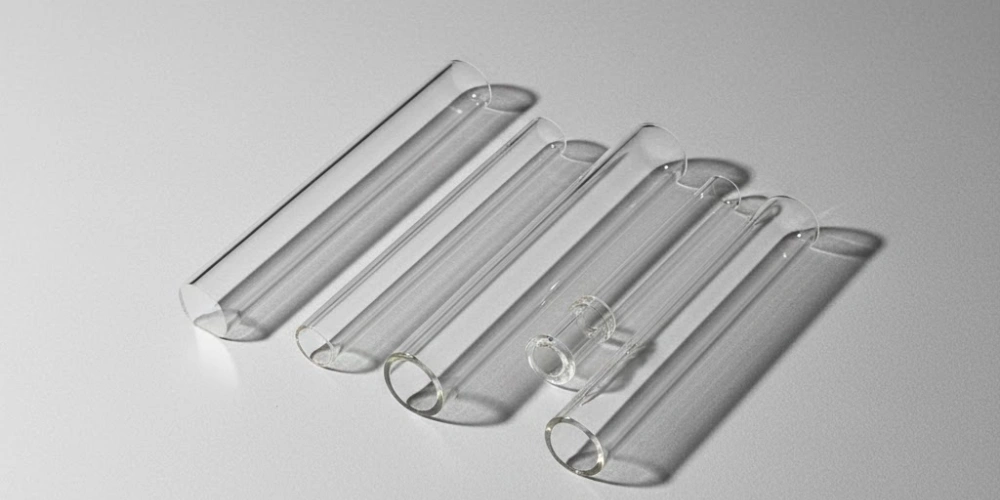
Fused quartz manifasts UV transparency, thermal resilience, and chemical inertness that make it the baseline material for serious UV system engineering. This article addresses every critical specification dimension — from hydroxyl content and wall thickness to end configurations and application-specific tolerances — giving engineers, researchers, and system integrators a complete technical reference for evaluating and commissioning UV-grade quartz tubing.
Across UV sterilization, photochemical synthesis, and semiconductor processing, the performance ceiling of any UV system is ultimately constrained by the optical and dimensional quality of its quartz components. Understanding what drives transmittance, how wavelength bands impose distinct material demands, and where generic tubing consistently falls short equips specifiers with the precision needed to avoid costly system underperformance.
Why Quartz Outperforms Conventional Glass in UV Systems
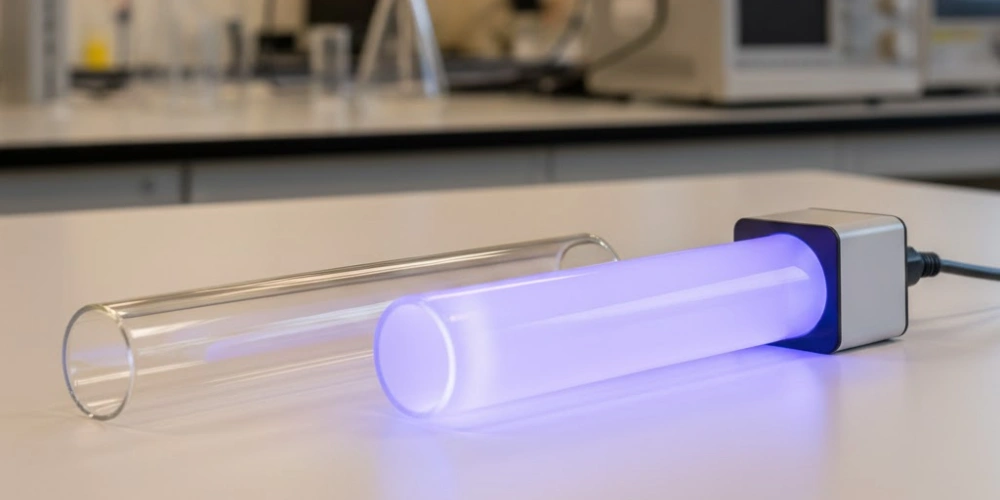
Among all transparent inorganic materials available for UV optical components, fused quartz occupies a singular position that no borosilicate or soda-lime glass can replicate across the full UV spectrum.
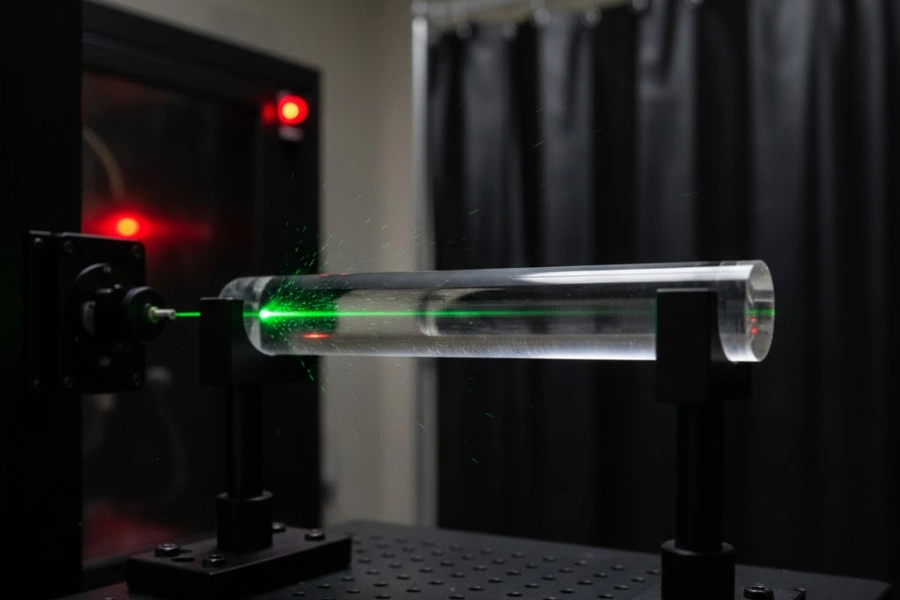
Borosilicate glass — the standard material in most laboratory glassware — exhibits a hard UV cutoff at approximately 300 nm. Below this threshold, the silica-boron oxide network absorbs UV photons aggressively, rendering the material effectively opaque to germicidal UVC radiation at 254 nm and to deep-UV wavelengths critical in semiconductor photolithography. Fused quartz, by contrast, transmits usable UV energy from as low as 150 nm through to the near-infrared, a spectral window roughly four times broader than that of borosilicate glass. This advantage originates in the atomic structure of pure silicon dioxide: the Si–O bond energy is high enough that photon absorption in the UV range is minimal, provided metallic impurities and structural defects are controlled to sub-ppm levels.
Beyond spectral transmission, fused quartz delivers two additional properties that glass cannot match in demanding UV installations. First, its coefficient of thermal expansion is approximately 0.55 × 10⁻⁶/°C, compared to 3.3 × 10⁻⁶/°C for borosilicate glass, giving it exceptional resistance to thermal shock when UV lamps cycle on and off repeatedly. Second, its chemical inertness to acids (excluding hydrofluoric acid), oxidizing agents, and aqueous environments eliminates the surface degradation that progressively clouds conventional glass sleeves in water treatment and photoreactor applications. These three converging advantages — spectral breadth, thermal stability, and chemical durability — establish fused quartz as the only technically defensible material for UV systems where performance and longevity are non-negotiable.
Critical Factors Affecting UV Transmittance in Custom Quartz Tubes
Transmittance in fused quartz is not a fixed property — it is a composite outcome shaped by at least four interacting material and geometric variables, each of which can be independently controlled through careful specification of custom quartz tubes.
Treating UV transmittance as a single-number specification overlooks the mechanisms by which photon attenuation actually occurs inside a quartz tube wall. Hydroxyl ion concentration, wall thickness, surface finish quality, and geometric concentricity each contribute independently — and in combination — to the fraction of UV energy that ultimately exits the tube and reaches its target. Precisely because these variables interact, a tube that meets one criterion in isolation may still underperform if adjacent parameters are left unspecified.
Hydroxyl Content and Its Spectral Consequences
The hydroxyl (OH) group concentration in fused quartz is the single most consequential material variable for UV transmittance below 300 nm.
High-OH synthetic quartz, typically containing 100–1,000 ppm OH, transmits efficiently in the vacuum ultraviolet (VUV) range of 150–200 nm but exhibits absorption bands centered near 2,730 nm in the infrared — a trade-off that matters for systems combining UV and thermal processing. Low-OH natural or synthetic quartz, with OH content below 10 ppm, is optimized for deep-UV and mid-UV transmission in the 200–300 nm range with minimal absorptive loss. At 254 nm — the primary germicidal wavelength — a low-OH tube with 1 mm wall thickness can achieve transmittance values exceeding 90%, whereas a high-OH tube of equivalent geometry may transmit only 75–80% at the same wavelength due to OH-related absorption overtones extending into the UV.
The commercial classification system codified by SEMI and used widely in the quartz industry assigns Type I to naturally sourced fused quartz with low OH, Type II to flame-fused natural quartz with moderate OH, Type III to synthetically produced high-OH quartz, and Type IV to plasma-fused synthetic quartz with controlled ultra-low OH and metallic impurity levels below 0.1 ppm. For UVC germicidal applications specifically, Type I and Type IV materials represent the two dominant choices, with the selection governed by budget constraints and the specific wavelength sensitivity of the application.
Specifying OH content numerically on a procurement drawing — rather than relying on generic "UV-grade quartz" language — is therefore not a formality but a functional requirement that directly determines whether the tube will deliver its intended transmittance across its full service life.
Wall Thickness and Its Effect on Photon Attenuation
Photon attenuation through a quartz tube wall follows Beer-Lambert1 behavior: transmittance decreases exponentially with increasing path length through the absorbing medium.
For a material with an absorption coefficient α at a given wavelength, transmittance T = e^(−α·d), where d is the wall thickness. Even for high-purity fused quartz with α values as low as 0.002 cm⁻¹ at 254 nm, doubling the wall thickness from 1.5 mm to 3.0 mm reduces transmittance at that wavelength by approximately 8–12 percentage points — a difference that translates directly into reduced germicidal dose or photochemical reaction rate. Conversely, walls thinner than 1.0 mm, while maximally transmissive, introduce structural fragility that makes them unsuitable for pressurized or thermally cycled installations.
In practical UV system design, wall thicknesses between 1.5 mm and 2.5 mm represent the standard engineering range for most water treatment and photoreactor applications, balancing transmittance, mechanical integrity, and manufacturability. Semiconductor inspection systems, by contrast, may specify walls as thin as 0.8 mm where transmittance at 193 nm or 248 nm is paramount and structural loads are minimal. The wall thickness specification on a custom quartz tube drawing should always be accompanied by a tolerance band — typically ±0.1 mm to ±0.3 mm depending on tube diameter — because wall thickness variation along the tube length introduces transmittance non-uniformity that degrades irradiance homogeneity in spatially sensitive applications.
Matching wall thickness to the specific attenuation budget of the UV system — rather than defaulting to a stock thickness — is one of the most direct levers available when specifying custom quartz tubes for performance-critical installations.
Surface Finish Standards and Optical Scattering
The outer and inner surface condition of a quartz tube governs the fraction of incident UV photons that are scattered rather than transmitted, a loss mechanism that is entirely distinct from bulk absorption.
Surface roughness, expressed as Ra (arithmetic mean roughness), introduces microscopic facets that redirect photons away from the intended optical path. A fire-polished surface achieves Ra values in the range of 0.1–0.5 μm, producing minimal scattering loss at UV wavelengths above 200 nm. Ground surfaces, with Ra values of 0.5–2.5 μm, scatter measurably more and are generally unsuitable for applications where irradiance uniformity is critical. Optically polished surfaces, achieving Ra below 0.05 μm, are reserved for deep-UV semiconductor applications where even sub-percent scattering losses are unacceptable.
End-face finish is equally consequential. A square-cut end without fire polishing introduces micro-chipping along the cut edge that generates localized scatter and potential stress concentration sites. Fire-polished or optically polished end faces eliminate these defects and also improve compatibility with elastomeric and PTFE ferrule sealing systems, where a smooth end-face geometry is required to achieve leak-free compression seals. In immersion-type photoreactors — where the quartz tube is in direct contact with the reaction medium — inner surface Ra should be specified at ≤0.4 μm to prevent particulate adhesion and biofilm formation that would progressively attenuate UV output over time.
Geometric Tolerances and Concentricity in Optical Performance
Wall thickness uniformity — quantified as concentricity or eccentricity — is a geometric parameter with direct optical and thermal consequences that is frequently omitted from quartz tube specifications.
Eccentricity, defined as the offset between the outer diameter center and the inner diameter center, causes the wall thickness to vary continuously around the tube circumference. In a tube with 10% eccentricity relative to wall thickness — for example, a 0.2 mm center offset in a 2.0 mm wall tube — the thinnest section transmits measurably more UV than the thickest, creating a non-uniform irradiance pattern around the lamp arc. This is particularly problematic in annular UV reactors where circumferential dose uniformity is a validated process parameter. Beyond optical effects, the thinner wall section in an eccentric tube concentrates thermal stress during lamp warm-up cycles, increasing the statistical probability of cracking under repeated thermal cycling.
Concentricity Tolerance Standards for UV Quartz Tubes
| Application | Outer Diameter (mm) | Wall Thickness (mm) | Max Eccentricity (mm) | Concentricity Standard |
|---|---|---|---|---|
| UV Water Treatment (Standard) | 20–80 | 1.5–2.5 | ±0.3 | Commercial Grade |
| UV Water Treatment (High-Dose) | 20–80 | 1.5–2.5 | ±0.15 | Precision Grade |
| Laboratory Photoreactor | 10–50 | 1.0–2.0 | ±0.10 | Precision Grade |
| Semiconductor Inspection | 5–30 | 0.8–1.5 | ±0.05 | Optical Grade |
| Semiconductor Photolithography | 5–20 | 0.8–1.2 | ±0.02 | Ultra-Precision Grade |
Summary of UV Transmittance Influencing Factors
| Parameter | Variable Range | Primary Impact | Typical UV Spec Requirement |
|---|---|---|---|
| OH Content | <10 ppm – >1,000 ppm | Spectral absorption curve | <30 ppm for UVC; Type III/IV for VUV |
| Wall Thickness | 0.8 mm – 5.0 mm | Bulk attenuation (Beer-Lambert) | 1.5–2.5 mm for standard UV systems |
| Surface Roughness (Ra) | 0.05–2.5 μm | Photon scattering loss | ≤0.5 μm (fire polish) for UV-grade |
| Eccentricity | ±0.02–±0.3 mm | Irradiance uniformity; thermal stress | ±0.1 mm precision; ±0.02 mm optical |
Spectral Requirements across UVC, UVB and UVA Wavelength Bands
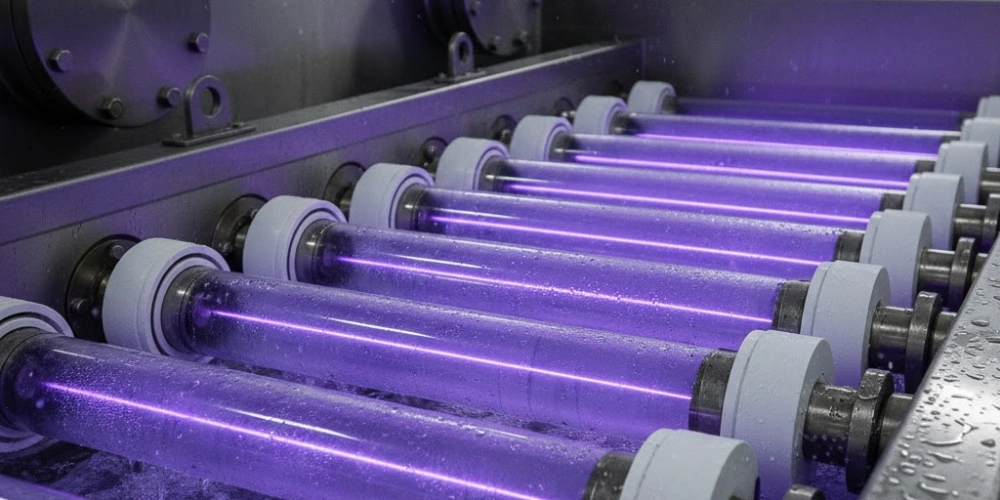
Different UV wavelength bands impose fundamentally different demands on quartz tube material purity, surface integrity, and dimensional precision — making a single generic specification inadequate across all UV applications.
The UV spectrum from 100 nm to 400 nm is not a homogeneous optical environment. Each sub-band interacts with fused quartz differently at the atomic level, and the consequences of material misspecification scale with how far the target wavelength falls into the deep-UV range. Engineers working across germicidal, phototherapeutic, and photochemical applications therefore benefit from wavelength-specific material guidance rather than monolithic UV-grade designations.
UVC Band Quartz Specifications for Germicidal Efficiency
The UVC band, spanning 100–280 nm with peak germicidal efficacy at 254 nm and secondary importance at 185 nm, represents the most demanding spectral environment for fused quartz performance.
At 254 nm, the minimum acceptable transmittance for UV water treatment applications is typically specified at ≥85% for a 1.5 mm wall thickness, as codified in NSF/ANSI 55 and aligned with DVGW W294 validation protocols. Achieving this threshold reliably requires low-OH synthetic or natural quartz with total metallic impurity content below 20 ppm, particularly for iron (Fe) and titanium (Ti), whose d-electron absorption bands extend into the UV range and can reduce transmittance by 3–8 percentage points per ppm of contamination. At 185 nm — the wavelength responsible for ozone generation in open-air UV systems — the material demand escalates further: only Type III or Type IV synthetic quartz with OH content exceeding 150 ppm transmits efficiently at this wavelength, because low-OH quartz exhibits increasing absorption below 200 nm due to oxygen-deficiency structural defects.
Specifying a UVC quartz tube without distinguishing between 254 nm and 185 nm target wavelengths is therefore a consequential omission, as the optimal OH specification for one wavelength actively degrades performance at the other. This wavelength-OH polarity is one of the most frequently misunderstood aspects of UV quartz tube procurement in the water treatment industry.
UVB Band Applications and Material Tolerance
Spanning 280–315 nm, the UVB band presents a comparatively more forgiving optical environment for fused quartz, though application-specific uniformity requirements introduce their own precision demands.
At UVB wavelengths, transmittance values for standard-grade natural fused quartz (Type I or Type II) typically range from 88% to 93% at 1.5 mm wall thickness — a performance level sufficient for most phototherapy, plant growth irradiation, and UV curing applications where absolute dose efficiency is less critical than spatial uniformity. The absorption gap between natural and synthetic quartz narrows substantially in the UVB range, because the OH-related absorption features that dominate UVC performance are less pronounced above 280 nm. Consequently, Type I natural fused quartz is often the specification of choice for UVB applications, offering adequate transmittance at a lower material cost than synthetic alternatives.
The primary performance challenge in UVB systems is not peak transmittance but irradiance uniformity across the tube length and circumference. In phototherapy cabinets and plant growth chambers, dose non-uniformity of more than ±5% across the irradiated surface is clinically or agronomically significant. This places wall thickness tolerance and concentricity specifications at the center of UVB tube procurement — parameters that must be tightened relative to standard commercial-grade tolerances to achieve the spatial uniformity required.
Tube length precision also becomes relevant in UVB array installations: a ±1.0 mm length tolerance across a 20-tube array introduces lamp-end misalignment that disrupts the spatial dose map, requiring length tolerances of ±0.3 mm or better in precision phototherapy installations.
UVA Band Quartz Tubes in Photochemical Reactors
At the upper end of the UV spectrum, the UVA band (315–400 nm) imposes the least stringent purity requirements on fused quartz while simultaneously demanding the greatest geometric precision in reactor configurations.
Transmittance of standard fused quartz at 365 nm — the dominant UVA line of mercury lamps — exceeds 92% even for lower-purity Type I material with moderate metallic impurity levels, making material grade selection in this band primarily a cost and availability decision rather than a performance-critical one. The optical challenge in UVA photochemical reactors instead lies in geometric uniformity: in annular reactor designs, where the quartz tube separates a central UV lamp from a surrounding reaction volume, OD/ID concentricity must be controlled to ±0.1 mm or better to ensure that the annular gap between tube and reactor wall remains constant, preventing flow channeling that would produce non-uniform photon dose distribution across the reaction volume.
Laboratory photochemical reactors — including Rayonet-type carousel reactors and custom immersion well assemblies — frequently require non-standard tube configurations that are unavailable in stock catalogs: single-closed-end tubes, tubes with integral side ports, or tubes with ground glass joints at one or both ends. Custom quartz tubes in these configurations must maintain the same wall uniformity and surface finish standards as open-ended cylindrical forms, with the additional constraint that the closed-end geometry introduces residual thermal stress during fabrication that must be annealed to below 5 nm/cm optical retardation before the tube is qualified for photochemical use.
UV Band Comparison for Quartz Material Selection
| UV Band | Wavelength Range (nm) | Key Wavelengths (nm) | Recommended Material Grade | Min. Transmittance @ 1.5 mm Wall | Primary Geometric Concern |
|---|---|---|---|---|---|
| UVC | 100–280 | 185, 254 | Type III/IV (185 nm); Type I/IV (254 nm) | ≥85% @ 254 nm | Surface finish; OH spec precision |
| UVB | 280–315 | 295, 308 | Type I or Type II | ≥88% @ 308 nm | Wall uniformity; concentricity |
| UVA | 315–400 | 340, 365 | Type I (standard) | ≥92% @ 365 nm | Concentricity; annular gap tolerance |
Full Technical Specification Parameters for Custom Quartz Tubes
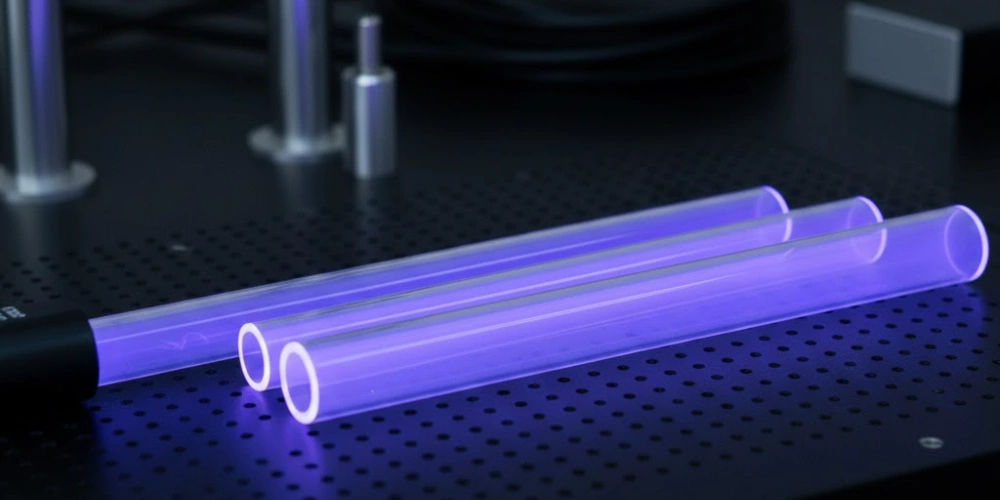
Beyond wavelength and material grade, the complete specification of custom quartz tubes for UV applications encompasses dimensional geometry, end-face configuration, and verified thermal and chemical resistance ratings — each of which interacts with system-level performance in ways that generic catalog entries cannot address.
Dimensional and configurational parameters define how a quartz tube integrates physically into a UV system, and imprecision in any single parameter propagates into assembly misalignment, sealing failure, or dose non-uniformity. Systematic specification of all relevant parameters at the design stage eliminates the retrofit corrections and performance shortfalls that arise when tube geometry is treated as a secondary consideration.
Dimensional Parameters — Outer Diameter, Inner Diameter and Length
The three primary geometric dimensions of a quartz tube — outer diameter (OD), inner diameter (ID), and length — are interdependent, and their tolerances cascade through every downstream assembly operation.
OD and ID together define wall thickness, and their individual tolerances must be specified such that the worst-case combination of OD at maximum and ID at maximum still produces a wall thickness above the structural minimum for the application. In UV water treatment sleeve applications, ODs range from 18 mm to 120 mm, with the most common range of 30–70 mm OD accounting for approximately 70% of installed UV reactor configurations globally. Length tolerances for UV lamp sleeves are particularly consequential: the quartz tube must extend beyond the lamp arc by a minimum of 10 mm at each end to ensure that the sealing zone — where the tube contacts the O-ring or ferrule — is not exposed to the intense UV flux at the lamp ends, which would accelerate elastomer degradation.
Standard commercial-grade OD tolerances for fused quartz tubes are typically ±0.5 mm, which is adequate for low-precision installations but insufficient for direct-replacement UV lamp sleeves where the seal groove dimensions are fixed. Precision-grade tolerances of ±0.1 mm on OD allow the tube to seat correctly in the reactor end cap without requiring field shimming or sealant application to compensate for diameter variation.
Length tolerances follow a similar gradient: ±1.0 mm for standard applications, ±0.3 mm for precision lamp sleeve replacements, and ±0.1 mm for multi-tube array installations where tube-end planarity across the array affects manifold sealing.
Material Grade Selection — Natural vs. Synthetic Fused Quartz
Material grade selection is the specification decision with the greatest impact on UV transmittance, service life, and total system cost — and it cannot be reduced to a binary choice between "natural" and "synthetic" without reference to the specific wavelength and purity requirements of the application.
The four-type classification system provides a structured framework: Type I (electrically fused natural quartz) contains OH below 5 ppm and metallic impurities in the range of 5–30 ppm total; Type II (flame-fused natural quartz) carries similar OH content but slightly elevated metallic impurities due to flame contamination; Type III (synthetically deposited quartz from silicon tetrachloride2) achieves OH levels of 150–1,000 ppm with metallic impurities below 1 ppm; Type IV (plasma-fused synthetic quartz) achieves the tightest overall specification — OH below 1 ppm in ultra-dry grades, metallic impurities below 0.1 ppm, and bubble and inclusion counts below Class 0 per ISO 10110-3. The presence of iron at even 1 ppm concentration introduces measurable absorption at 254 nm; titanium at similar concentrations affects transmittance across the 250–350 nm range; both impurities must be controlled to below 0.5 ppm for UV-grade material certification in regulated water treatment applications.
Synthetic quartz commands a significant material premium over natural quartz, but for applications at wavelengths below 220 nm or where transmittance certification to traceable spectrophotometric standards is required by regulatory agencies, the performance gap justifies the cost differential entirely.
Fused Quartz Type Classification for UV Applications
| Type | Source | OH Content (ppm) | Total Metallic Impurities (ppm) | UV Transmittance @ 254 nm (1.5 mm) | Primary UV Application |
|---|---|---|---|---|---|
| Type I | Natural (electric fusion) | <5 | 5–30 | 88–91% | UVB; standard UVC water treatment |
| Type II | Natural (flame fusion) | <5 | 15–50 | 84–88% | UVB; low-precision UVC |
| Type III | Synthetic (CVD/SiCl₄) | 150–1,000 | <1 | 85–90% | VUV (185 nm); high-purity photochemistry |
| Type IV | Synthetic (plasma fusion) | <1 (ultra-dry) | <0.1 | 91–95% | Deep-UV semiconductor; precision UVC |
End Configurations and Sealing Compatibility
The end configuration of a quartz tube is the most system-specific dimension of the entire specification — it determines assembly method, sealing reliability, and whether the tube can be replaced in the field without disassembling the reactor housing.
Square-cut ends (saw-cut without secondary finishing) are the baseline configuration: they are the lowest-cost option and suitable for systems where the tube ends are housed in free-floating mechanical fixtures that do not rely on the tube end-face for sealing. Fire-polished ends eliminate the micro-chip damage zone produced by sawing, reduce end-face Ra to below 0.4 μm, and improve compatibility with O-ring groove seals by providing a smooth, defect-free contact surface. Optically polished ends, ground and lapped to Ra below 0.05 μm and flatness within 1 fringe (λ/2 at 633 nm), are required for optical-contact sealing and for installations where end-face scatter would compromise UV dose measurement accuracy.
Beyond flat-end configurations, several specialized geometries are common in custom quartz tube applications. Flanged ends — formed by reheating the tube end and flaring it over a mandrel — allow the tube to be retained axially in a reactor without external clamps, a significant advantage in pressurized UV reactors operating above 6 bar. Ground glass joint ends (spherical or taper), compatible with standard laboratory glassware fittings, are specified for laboratory photoreactor configurations where the quartz tube must interface with borosilicate reaction vessels. Teflon-ferrule compatible ends require a specific OD tolerance band (typically +0.0/−0.1 mm) and an absence of surface scratches deeper than 0.5 μm in the ferrule seating zone, making surface inspection a mandatory step in the finishing process for these configurations.
End Configuration Compatibility with UV System Sealing Methods
| End Configuration | Surface Ra (μm) | Compatible Seal Type | Typical Pressure Rating | Common Application |
|---|---|---|---|---|
| Square Cut | 0.5–2.5 | Mechanical clamp only | Low (<1 bar) | Open-tank UV systems |
| Fire Polished | 0.1–0.4 | O-ring; PTFE ferrule | Moderate (1–6 bar) | UV water treatment sleeves |
| Optically Polished | <0.05 | Optical contact; precision ferrule | Low–moderate | Semiconductor UV optics |
| Flanged | 0.1–0.5 | Flange + gasket | High (>6 bar) | Pressurized UV reactors |
| Ground Glass Joint | 0.4–1.0 | Glass-to-glass; PTFE sleeve | Low | Laboratory photoreactors |
Thermal and Chemical Resistance Ratings
The operating environment of a UV system imposes thermal and chemical stresses on the quartz tube that are as consequential for service life as optical specifications are for performance.
Fused quartz sustains continuous service temperatures up to 1,100°C and can tolerate short-duration excursions to 1,650°C without structural failure — a thermal reserve far beyond the demands of any UV lamp application, where quartz tube surface temperatures rarely exceed 750°C under normal operating conditions. The more relevant thermal parameter for UV applications is thermal shock resistance, quantified by the maximum safe temperature differential (ΔT) the tube can withstand during instantaneous thermal events. For fused quartz with a thermal expansion coefficient of 0.55 × 10⁻⁶/°C, the safe ΔT threshold is approximately 1,000°C — compared to approximately 200°C for borosilicate glass — making rapid lamp start-up cycles and cold-water splashing non-threatening events for properly dimensioned quartz sleeves.
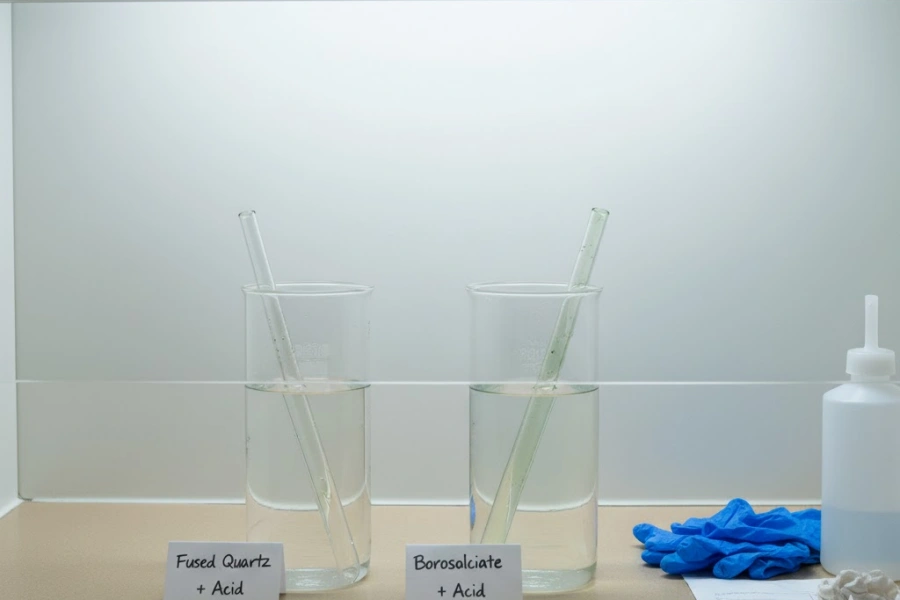
Chemically, fused quartz is inert to virtually all acids at concentrations encountered in UV water treatment and photochemical processing, including hydrochloric, sulfuric, nitric, and phosphoric acids at elevated temperatures. The notable exception is hydrofluoric acid (HF) and fluoride-containing compounds, which attack the Si–O network at measurable rates even at room temperature and ppm-level concentrations. In photochemical applications involving fluorinated solvents or HF-generating photoreactions, material alternatives such as fluorinated synthetic quartz coatings or sapphire tubes must be considered. Aqueous alkaline environments above pH 10 produce slow surface etching of quartz at rates of 0.01–0.1 μm per hour at 25°C — negligible in most UV water treatment service lives of 8,000–12,000 hours, but measurable in long-duration laboratory photoreactor experiments where surface quality preservation is critical.
Thermal and Chemical Resistance Reference Data
| Property | Fused Quartz Value | Borosilicate Glass Value | Significance for UV Systems |
|---|---|---|---|
| Continuous Use Temperature (°C) | 1,100 | 500 | UV lamp surface temp safety margin |
| Short-Term Peak Temperature (°C) | 1,650 | 600 | Lamp ignition spike tolerance |
| Thermal Expansion Coefficient (×10⁻⁶/°C) | 0.55 | 3.3 | Thermal shock resistance |
| Safe ΔT (°C) | ~1,000 | ~200 | Cold-water splash; rapid cycling |
| HF Resistance | Poor (etches) | Poor (etches) | Fluoride process incompatibility |
| Alkali Resistance (pH >10) | Moderate | Poor | Long-term surface quality in high-pH water |
| Acid Resistance (non-HF) | Excellent | Good | Chemical cleaning compatibility |
Application-Specific Quartz Tube Requirements across UV Industries
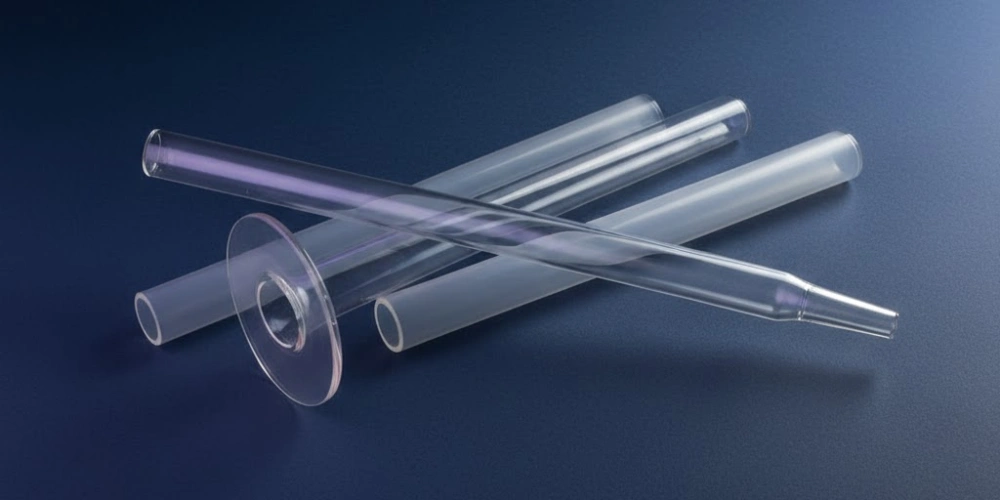
Each UV application sector imposes a distinct hierarchy of performance demands, and the specification of custom quartz tubes shifts in emphasis accordingly — from transmittance certification in water treatment to geometric ultra-precision in semiconductor processing.
Recognizing the dominant specification driver for each application type allows engineering teams to allocate specification rigor where it will have the greatest impact on system performance, rather than applying uniform over-specification across all parameters.
Quartz Sleeves in UV Water Purification Systems
In UV water purification systems, the quartz sleeve serves a dual function that places it under simultaneous optical and mechanical stress: it must transmit UV energy from the lamp to the water column with minimal attenuation while maintaining a hydraulically sealed barrier between the lamp and the water.
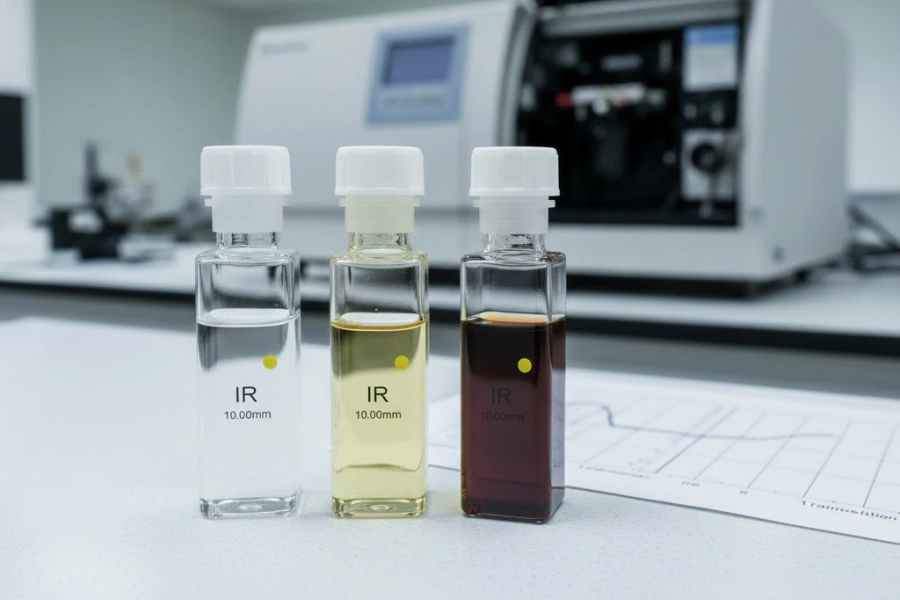
The transmittance requirement at 254 nm is the primary validation parameter for UV water treatment sleeves, with regulatory frameworks in the United States (EPA UV Disinfection Guidance Manual), Europe (DVGW W294), and Australia (WSAA Guidelines) all specifying minimum transmittance thresholds that must be verified by spectrophotometric measurement3 on production lots — not merely assumed from material grade certificates. A sleeve transmittance drop of 5 percentage points at 254 nm — from 90% to 85% — reduces the UV dose delivered to pathogens by approximately 6%, a reduction that can shift a validated reactor from compliance to non-compliance under low-pressure lamp conditions. Consequently, production-lot spectrophotometric certification to ±1% measurement accuracy is standard practice in qualified UV water treatment sleeve manufacturing.
The hydraulic environment introduces additional mechanical demands: sleeves in pressurized closed-vessel reactors must withstand internal water pressure of 6–10 bar continuously, plus pressure transients during valve actuation. Wall thickness in these applications is therefore sized not only for transmittance but for minimum burst pressure margin — typically 3× working pressure — which for a 50 mm OD sleeve at 10 bar working pressure requires a wall thickness of at least 2.5 mm in standard fused quartz.
Custom Quartz Tubes in Laboratory Photochemical Reactors
Laboratory photochemical reactors represent the most geometrically diverse application category for custom quartz tubes, driven by the non-standard lamp geometries, reaction vessel configurations, and optical path requirements that characterize research-scale photochemistry.
Immersion well reactors — the most common laboratory photoreactor format — require a quartz tube with one closed end, a precisely controlled annular gap between the outer tube wall and the reactor vessel inner wall, and an open end compatible with the gas inlet and outlet fittings that supply cooling air or inert atmosphere to the lamp housing. The annular gap width, typically 5–15 mm, must be uniform to within ±0.5 mm along the full tube length to ensure that photon flux reaching the reaction solution is spatially homogeneous. Carousel-type reactors, such as the Rayonet photoreactor used extensively in synthetic photochemistry, require arrays of 8–16 identical quartz tubes with length tolerances of ±0.2 mm to maintain lamp-array symmetry. The optical retardation of each tube — a measure of residual internal stress from fabrication — must be below 10 nm/cm, confirmed by polarimetric inspection, to prevent stress-induced birefringence from distorting polarized-light photochemical experiments.
Custom quartz tubes for laboratory photoreactors frequently require side-arm ports, valve-compatible end fittings, or integral cooling jackets, configurations that are fabricated through sequential lathe-working and flame-joining operations on pre-formed quartz tube stock. The thermal history of each joining operation must be managed to prevent stress concentration at joint boundaries — a failure mode that manifests as cracking during thermal cycling rather than during the initial fabrication inspection.
Quartz Tubes for Semiconductor Photolithography and Inspection
Semiconductor UV applications represent the extreme upper boundary of quartz tube specification, where material purity, geometric precision, and surface quality requirements exceed those of any other UV industry by a substantial margin.
ArF excimer laser photolithography operates at 193 nm, and KrF lithography at 248 nm — wavelengths at which only Type IV synthetic quartz with metallic impurity content below 0.05 ppm and OH content below 0.5 ppm achieves the transmittance values (≥95% per centimeter of optical path) required for reticle and lens element qualification. At these wavelengths, a single surface scratch wider than 0.1 μm or a subsurface inclusion larger than 50 μm constitutes a disqualifying defect that would introduce coherent scatter into the illumination field, distorting the aerial image and reducing lithographic resolution. Surface inspection using laser scatterometry at detection sensitivity levels of 0.1 μm² equivalent scatter cross-section is a mandatory qualification step for quartz optical components in photolithography systems.
Geometric tolerances in semiconductor UV quartz components reach levels that challenge conventional tube-forming processes: straightness tolerances of ±0.01 mm per 100 mm of tube length, concentricity within ±0.02 mm, and OD roundness within ±0.01 mm are representative requirements for wafer inspection system beam delivery tubes. These tolerances necessitate post-forming cylindrical grinding and lapping operations that add substantial lead time relative to standard quartz tube production, and require dimensional verification on coordinate measuring machines (CMM) rather than simple gauge measurement.
Application-Specific Specification Priority Matrix
| Application | Primary Spec Driver | Secondary Spec Driver | Material Grade | Transmittance Certification Required |
|---|---|---|---|---|
| UV Water Treatment | 254 nm transmittance | Wall thickness; OD tolerance | Type I or Type IV | Yes — per regulatory standard |
| Laboratory Photoreactor | Geometric uniformity | Optical retardation; end config | Type I or Type II | Recommended |
| UV Phototherapy | Irradiance uniformity | Length tolerance; UVB transmittance | Type I | No (device-level) |
| Semiconductor Lithography | Deep-UV transmittance | Surface defect density; straightness | Type IV only | Yes — traceable spectrophotometry |
| Semiconductor Inspection | Geometric precision | Surface scatter; concentricity | Type IV | Yes |
Three Prevalent Technical Misconceptions about UV Quartz Tube Procurement
Even among technically experienced procurement teams, three specific misconceptions about UV quartz tubes recur with sufficient frequency to warrant direct correction — each representing a gap between generic material knowledge and the application-specific precision that UV system performance demands.
-
Treating all quartz tubes as optically equivalent regardless of OH content. The assumption that any "UV-grade quartz" tube will perform identically across UV wavelengths ignores the fundamental spectral polarity between low-OH and high-OH material. In documented cases within UV water treatment facility commissioning, substituting a high-OH tube for a low-OH tube at 254 nm reduced delivered UV dose by 8–12% — sufficient to trigger validated reactor non-compliance. OH content must be specified numerically, not inferred from vendor grade designations, particularly when regulatory certification is a system requirement.
-
Specifying only OD and ID while omitting concentricity, end-face finish, and length tolerance. A tube drawing that specifies only outer and inner diameter leaves the three parameters most responsible for assembly fit and irradiance uniformity entirely uncontrolled. In annular UV reactor installations, concentricity variation of ±0.3 mm — well within commercial-grade tolerance — produced measured irradiance non-uniformity of ±15% around the lamp circumference in published UV reactor characterization studies, directly degrading dose delivery uniformity. Complete dimensional specification eliminates these hidden performance variables before fabrication begins.
-
Assuming that standard catalog tubes can substitute for custom quartz tubes in application-specific UV systems. Stock quartz tubes are manufactured to broad tolerance ranges optimized for general laboratory use, not for the sealing geometries, wall thickness budgets, and transmittance certification requirements of engineered UV systems. The dimensional mismatch between a standard catalog tube and a UV reactor's engineered end-cap groove is one of the most common sources of O-ring seal failure reported in UV system maintenance records — a failure mode that is entirely preventable through application-matched custom tube specification.
TOQUARTZ Custom Quartz Tubes for UV-Demanding Environments
For UV system engineers and research scientists who require quartz tube components specified to the precise dimensional, material, and optical standards described throughout this article, TOQUARTZ provides application-matched custom quartz tubes across the full spectrum of UV industry requirements.
TOQUARTZ's manufacturing capability spans Type I through Type IV fused quartz materials, with in-house spectrophotometric transmittance measurement at 185 nm, 254 nm, and across the full 200–400 nm UV range, enabling lot-level certification to application-specific transmittance thresholds. Geometric processing capabilities include CNC-controlled tube forming to ±0.1 mm OD and ID tolerances, fire-polishing and optical polishing of end faces, flanging, and the fabrication of closed-end, side-port, and ground-glass-joint configurations required by laboratory photoreactor and process UV system designs.
For UV water treatment sleeves, laboratory photoreactor tubes, and semiconductor UV optical components, TOQUARTZ accepts dimensional drawings, spectrophotometric transmittance specifications, and end-configuration requirements as the basis for custom tube quotation and production. Technical inquiry submissions with application wavelength, dimensional requirements, and quantity are the most direct path to receiving material grade recommendations and production feasibility confirmation from TOQUARTZ's application engineering team.
Conclusion
UV system performance is ultimately bounded by the optical and dimensional precision of its quartz tube components. From hydroxyl content and wall thickness governing photon attenuation, to concentricity and end-face finish controlling irradiance uniformity and seal integrity, every parameter addressed in this article represents a measurable performance variable — not a specification formality. Across UVC germicidal systems, UVB phototherapy, UVA photochemical reactors, and deep-UV semiconductor processing, the specification framework remains consistent: identify the dominant performance driver for the application, specify all interacting parameters completely, and verify conformance through traceable measurement. Custom quartz tubes, specified with this level of technical completeness, deliver the performance consistency that generic catalog tubing structurally cannot provide.
FAQ
What is the difference between fused quartz and fused silica in UV tube applications?
In commercial practice, "fused quartz" typically refers to material produced from natural quartz crystal feedstock, while "fused silica" refers to synthetically produced material from chemical precursors such as silicon tetrachloride. Both are amorphous silicon dioxide, but synthetic fused silica (Types III and IV) achieves lower metallic impurity levels and more controlled OH content, making it the material of choice for deep-UV applications below 220 nm where natural quartz transmittance is insufficient.
How often should quartz sleeves in UV water treatment systems be replaced?
Fused quartz sleeves in UV water treatment systems are typically replaced at intervals of 8,000–12,000 operating hours, corresponding to the rated service life of the UV lamp. However, transmittance degradation from scale deposition, surface etching in high-pH water, or UV-induced solarization (in systems operating continuously below 200 nm) can necessitate earlier replacement. Periodic transmittance monitoring using in-situ UV sensors provides the most reliable indication of sleeve condition.
Can custom quartz tubes be fabricated with non-circular cross-sections for specialized photoreactor geometries?
Rectangular and elliptical quartz tube cross-sections can be produced through specialized hot-forming processes, though geometric tolerances achievable in non-circular forms are broader than those for cylindrical tubes. For most photoreactor applications requiring non-standard geometries, cylindrical custom quartz tubes with side ports or integral adapters provide a more dimensionally controllable solution than non-circular extrusions.
What surface contamination sources most rapidly degrade UV transmittance in installed quartz sleeves?
Calcium carbonate (CaCO₃) scale from hard water is the most prevalent transmittance-degrading contaminant in UV water treatment sleeves, with deposits as thin as 0.1 mm reducing transmittance at 254 nm by 15–30%. Iron oxide precipitates, biofilm accumulation, and silicate deposits from high-silica source water also contribute to transmittance loss. Regular chemical cleaning with dilute citric or hydrochloric acid solutions (at pH 2–3) effectively removes calcium and iron deposits without attacking the quartz surface.
Refenreces:
-
The Beer-Lambert law is the foundational optical relationship describing how photon intensity attenuates exponentially as it passes through an absorbing medium of increasing thickness. ↩
-
Silicon tetrachloride is the high-purity chemical precursor used in chemical vapor deposition processes to produce synthetic fused quartz, yielding a material with metallic impurity levels below 1 ppm that cannot be achieved from natural quartz feedstock. ↩
-
Spectrophotometric measurement is the analytical technique used to quantify the transmittance or absorbance of a material at specific wavelengths, providing the traceable optical data required for regulatory certification of UV quartz sleeves in water treatment applications. ↩