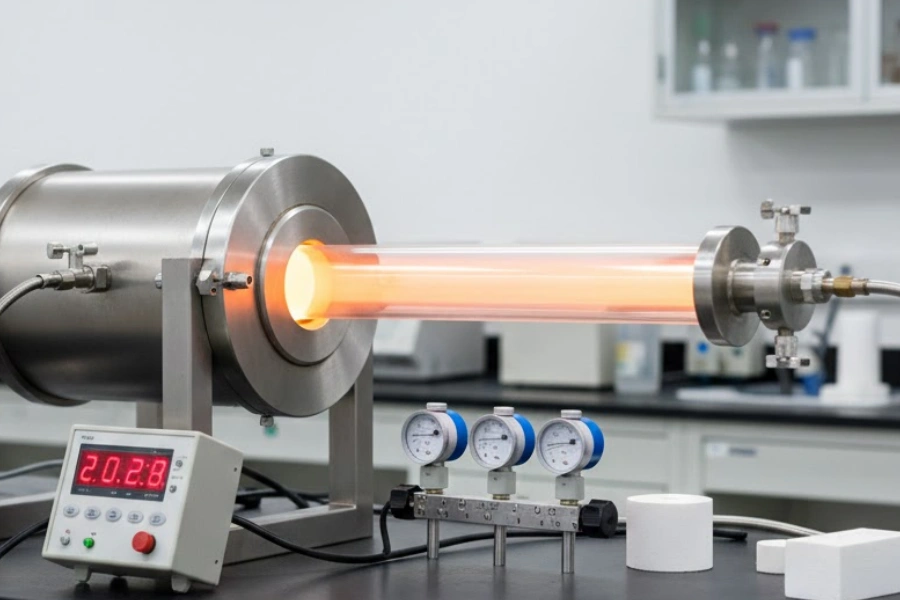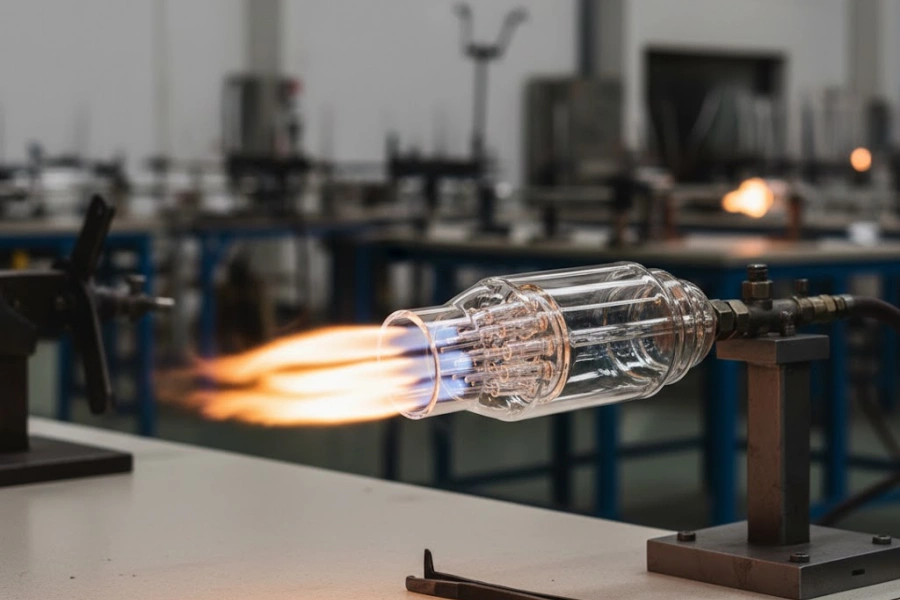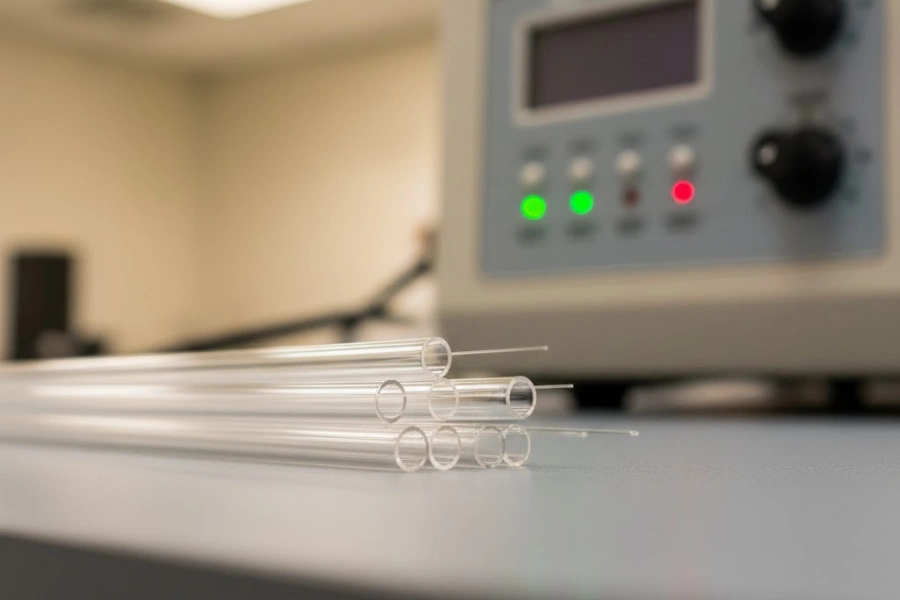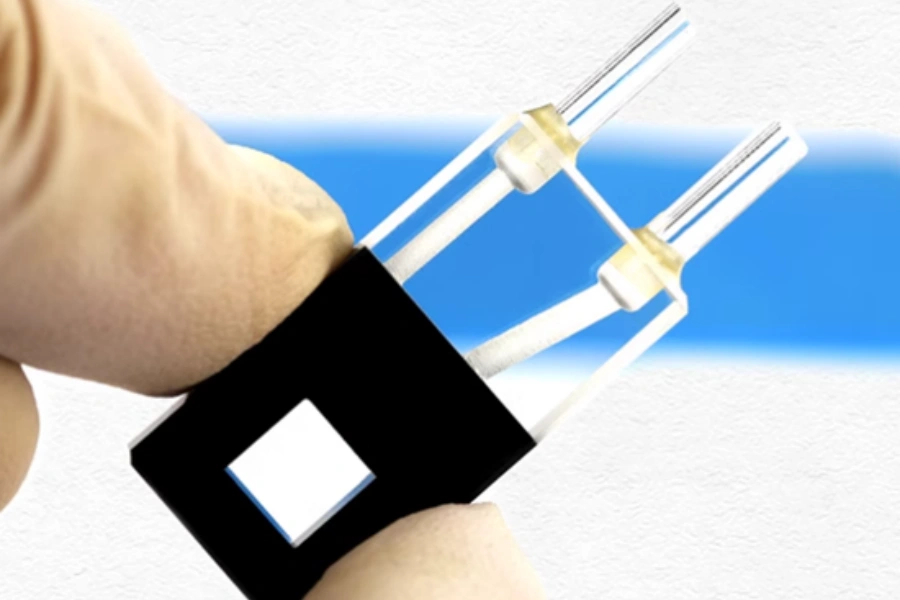
Fused quartz, borosilicate glass, alumina ceramic, sapphire, and stainless steel each occupy a distinct position in the high-temperature and high-purity materials landscape. Across six performance dimensions — thermal, optical, chemical, mechanical, electrical, and cleanroom compatibility — this article presents quantified, side-by-side comparisons so that engineers, researchers, and procurement specialists can make material selections grounded in verified data rather than assumption.
Among these five materials, no single option dominates every dimension simultaneously. Stainless steel leads in mechanical toughness; alumina leads in maximum service temperature; sapphire leads in chemical inertness and hardness. Yet across the combined demands of thermal shock resistance, UV transmission, chemical purity, electrical insulation, and dimensional stability, the quartz tube occupies a uniquely broad performance envelope that no single alternative replicates in full — a conclusion that the data presented here will substantiate.
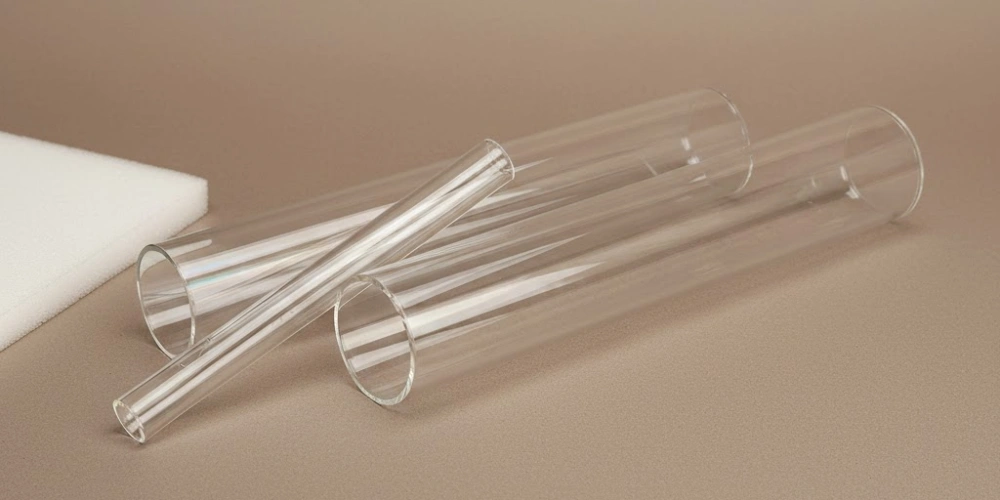
Material Composition and Manufacturing Origins of Each Tube Type
Before any performance dimension can be compared, the chemical identity of each material must be established, because composition is the root cause of every property difference that follows.
- Fused quartz (quartz tube): Composed of ≥99.99% silicon dioxide (SiO₂), produced either by electric arc fusion of natural quartz crystals (natural fused quartz, grades JGS2 and JGS3) or by chemical vapour deposition of silicon tetrachloride (SiCl₄) vapour (synthetic fused silica, grade JGS1). The CVD route yields OH content below 1 ppm and metallic impurities below 10 ppm. The defining structural feature is an amorphous, non-crystalline silica network — quartz tube material is glass in the physical sense, not crystalline quartz mineral, despite the shared name. This amorphous network is responsible for the near-zero thermal expansion and the isotropic optical properties that distinguish it from all crystalline competitors.
Borosilicate glass contains approximately 80% SiO₂, 12–13% B₂O₃, and residual Na₂O and Al₂O₃. The boron trioxide network modifier reduces thermal expansion relative to soda-lime glass, but the multi-component oxide system introduces leachable species — particularly sodium — that borosilicate tubes cannot eliminate. Alumina ceramic (Al₂O₃) tubes are produced by sintering high-purity aluminium oxide powder at temperatures above 1,600°C; commercial grades reach 96–99.8% Al₂O₃ purity, with the remainder being sintering aids such as MgO or SiO₂. The sintered polycrystalline structure is opaque and mechanically robust but dimensionally less precise than drawn glass. Sapphire tubes are grown as single-crystal α-Al₂O₃ using the Verneuil or Czochralski process; the single-crystal structure gives sapphire its exceptional hardness and optical clarity. Stainless steel tubes are iron-chromium-nickel alloys — grade 316L contains 16–18% Cr, 10–14% Ni, and 2–3% Mo — produced by cold drawing or seamless extrusion; they are metallic conductors with no optical transmission and significant outgassing under vacuum.
Each material's performance profile is a direct consequence of its composition and microstructure. The analysis that follows quantifies those consequences across six independent performance axes.
Thermal Performance across Quartz Tube and Competing Materials
Thermal behaviour is consistently the first specification parameter that engineers evaluate when selecting a process tube, and it is also the dimension along which the five materials diverge most dramatically from one another. A quartz tube operates comfortably up to 1,200°C in continuous service and survives short-term exposure to 1,450°C, while borosilicate glass softens above 500°C and stainless steel begins to creep above 800°C. Critically, maximum service temperature is only one of three thermal parameters that matter; the coefficient of thermal expansion and thermal shock resistance jointly determine whether a tube survives the real-world condition of rapid temperature cycling — and it is on these two parameters that the quartz tube's thermal case is strongest.
Maximum Service Temperature and Softening Points
The maximum service temperature of a tube material is not simply its melting point; it is the temperature at which the material loses sufficient structural integrity to maintain dimensional stability under its own weight and process loads.
For a quartz tube, the continuous service ceiling is 1,200°C, above which devitrification — the gradual crystallisation of the amorphous SiO₂ network into cristobalite1 — begins to embrittle and opacify the tube wall. Short-term exposures up to 1,450°C are permissible for brief process steps. Borosilicate glass softens at approximately 820°C but becomes dimensionally unstable above 500°C under load, limiting its practical service ceiling to this value. Alumina ceramic, by contrast, maintains structural integrity to 1,700°C continuously, making it the material of choice when quartz's 1,200°C ceiling is insufficient. Sapphire extends this further to 1,800°C, while retaining optical transparency — a unique combination unavailable in any other material. Stainless steel grade 310S, the highest-temperature commercial steel alloy, is rated to 1,150°C in oxidising atmospheres before significant scaling and creep deformation occur.
The practical implication of these ceilings is that for the majority of laboratory and industrial thermal processes — semiconductor diffusion at 900–1,100°C, UV lamp operation at 600–800°C envelope temperature, chemical reactor service at 800–1,100°C — the quartz tube's ceiling is entirely adequate, and the additional temperature capacity of alumina or sapphire carries no operational benefit while adding fabrication complexity.
Maximum Service Temperature and Softening Points
| Material | Continuous Service Temp (°C) | Short-Term Max Temp (°C) | Softening Point (°C) |
|---|---|---|---|
| Fused Quartz (Quartz Tube) | 1,200 | 1,450 | 1,665 |
| Borosilicate Glass | 450 – 500 | 820 | 820 |
| Alumina Ceramic (99.8%) | 1,700 | 1,800 | >2,000 (sinters) |
| Sapphire (single crystal) | 1,800 | 2,000 | 2,053 |
| Stainless Steel 310S | 1,150 | 1,200 | ~1,400 (solidus) |
Coefficient of Thermal Expansion and Dimensional Stability
Thermal expansion behaviour determines not only whether a tube survives a temperature change intact, but also whether it remains dimensionally compatible with flanges, seals, and fittings across the operating temperature range.
The coefficient of thermal expansion (CTE) of fused quartz is approximately 0.55 × 10⁻⁶/°C — the lowest value among all five materials by a wide margin. This means a 1,000 mm quartz tube heated from 20°C to 1,000°C expands by only 0.55 mm, a change that most metal and ceramic sealing assemblies can accommodate without stress. Borosilicate glass, at 3.3 × 10⁻⁶/°C, expands six times more per degree — still low by glass standards, but generating significant dimensional drift at high temperatures. Alumina ceramic carries a CTE of 7–8 × 10⁻⁶/°C, which creates a CTE mismatch of approximately 7 × 10⁻⁶/°C relative to quartz when the two materials are used in the same assembly — a source of interfacial stress that must be designed around. The most extreme mismatch arises with stainless steel, at 16–17 × 10⁻⁶/°C: a quartz tube sealed into a stainless steel flange and cycled from room temperature to 1,000°C will experience a differential expansion of approximately 16 mm per metre of contact length, necessitating compliant elastomeric seals or floating mechanical joints.
Sapphire's CTE of 5–6 × 10⁻⁶/°C lies between borosilicate and alumina, and its single-crystal anisotropy means that CTE varies slightly with crystallographic orientation — a consideration in precision optical assemblies that operate across wide temperature ranges.
Coefficient of Thermal Expansion
| Material | CTE (×10⁻⁶/°C) | Expansion per 1,000 mm at ΔT = 1,000°C (mm) |
|---|---|---|
| Fused Quartz (Quartz Tube) | 0.55 | 0.55 |
| Borosilicate Glass | 3.3 | 3.3 |
| Alumina Ceramic | 7.0 – 8.0 | 7.0 – 8.0 |
| Sapphire | 5.0 – 6.0 | 5.0 – 6.0 |
| Stainless Steel 310S | 16.0 – 17.0 | 16.0 – 17.0 |
Thermal Shock Resistance in Rapid Cycling Conditions
Thermal shock resistance is the property that separates materials capable of surviving rapid temperature transitions from those that fracture under the stress generated by temperature gradients across the tube wall.
A quartz tube can withstand a temperature differential of ΔT > 1,000°C applied virtually instantaneously — the classic demonstration being direct immersion of a glowing quartz tube into room-temperature water without fracture. This extreme thermal shock resistance is a direct consequence of the near-zero CTE: if a material does not expand when heated, no thermal stress is generated at the hot-cold interface, and no cracking force arises. Borosilicate glass, despite its comparatively low CTE of 3.3 × 10⁻⁶/°C, tolerates a thermal shock of only ΔT ≈ 160–200°C before fracture becomes likely — a ceiling that prevents its use in processes involving rapid quench cycles. Alumina ceramic is often assumed to be thermally robust because of its high service temperature, but its polycrystalline sintered microstructure is, in fact, more susceptible to thermal shock than quartz: controlled heating ramps of no faster than 5–10°C per minute are recommended for alumina tubes in tube furnace operation to prevent intergranular cracking.
Stainless steel does not fracture under thermal shock — its metallic ductility absorbs the thermal stress through plastic deformation — but repeated rapid thermal cycling above 800°C causes creep and oxidation scaling that permanently deforms the tube geometry. Sapphire's thermal shock resistance is superior to alumina's due to its single-crystal structure (no grain boundaries to propagate cracks) but falls short of quartz because its higher CTE of 5–6 × 10⁻⁶/°C generates proportionally greater thermal stresses at equivalent temperature gradients.
Thermal Shock Resistance
| Material | Approx. ΔT Tolerance (°C) | Failure Mode | Ramp Rate Requirement |
|---|---|---|---|
| Fused Quartz (Quartz Tube) | >1,000 | Surface microcracking at extreme cycling | None (free ramp) |
| Borosilicate Glass | 160 – 200 | Brittle fracture | Moderate (≤5°C/min above 300°C) |
| Alumina Ceramic | 150 – 300 | Intergranular cracking | Controlled (5–10°C/min) |
| Sapphire | 200 – 400 | Cleavage fracture | Moderate |
| Stainless Steel 310S | No fracture | Creep / oxidation scaling | None (ductile) |
Optical Transmission Properties Distinguishing Quartz Tube from Alternatives
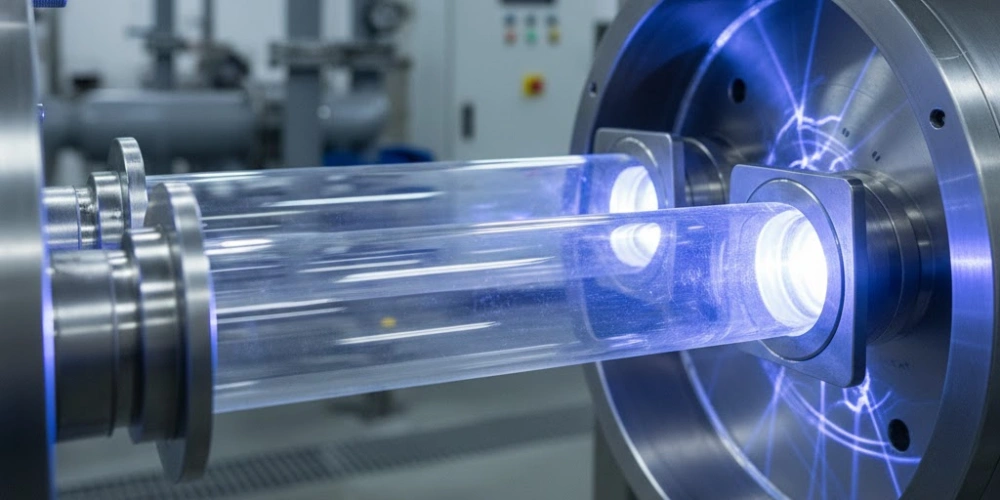
Among all the properties that separate these five tube materials, optical transmission is where the divide between quartz-family materials and the remaining three candidates is most absolute. Alumina and stainless steel transmit no light whatsoever across any wavelength range relevant to industrial or laboratory use, while borosilicate glass is limited to the visible spectrum. A quartz tube, by contrast, transmits from deep ultraviolet through the visible spectrum and into the near infrared — a breadth that no single alternative fully replicates at comparable dimensional and purity specifications.
UV Transmission Range and Cutoff Wavelengths
The UV transmission capability of a tube material is decisive in applications including UV-C water disinfection (254 nm), excimer laser beam delivery (193 nm, 248 nm), UV spectrophotometry (190–400 nm), and semiconductor photolithography exposure chambers.
JGS1 synthetic fused quartz — the highest purity grade — transmits UV radiation from a short-wavelength cutoff of approximately 150 nm, with transmittance exceeding 90% at 254 nm across a standard 2 mm wall thickness. This performance is achievable because the synthetic CVD process eliminates the OH absorption band at 2.73 µm and the trace-metal absorptions that attenuate transmission in natural quartz grades. JGS2 natural fused quartz, with OH content of 150–400 ppm, exhibits a UV cutoff of approximately 250 nm, limiting its use to applications where the 190–250 nm deep-UV band is not required. JGS3, with OH content above 400 ppm, cuts off near 350 nm, making it suitable only for visible and near-UV applications. Borosilicate glass, despite its optical clarity in the visible range, carries iron and other trace oxide absorbers that place its practical UV cutoff at approximately 300 nm — below the UV-C band — rendering it ineffective as a UV lamp envelope or sterilisation sleeve. Sapphire is the only material among the five with a UV cutoff below that of JGS1 quartz, transmitting from approximately 145 nm with very high transmittance across the UV-C band; however, its extreme hardness makes it difficult to fabricate into thin-wall cylindrical tubes at economically viable dimensions.
Alumina and stainless steel transmit zero UV radiation at any wavelength, functioning as complete UV barriers.
UV and Optical Transmission Cutoff Wavelengths
| Material | Short-Wavelength Cutoff (nm) | Transmittance at 254 nm (%) | IR Transmission Limit (µm) |
|---|---|---|---|
| JGS1 Quartz Tube | ~150 | >90 | ~3.5 |
| JGS2 Quartz Tube | ~250 | 40 – 80 | ~3.5 |
| JGS3 Quartz Tube | ~350 | <20 | ~3.5 |
| Borosilicate Glass | ~300 | <5 | ~2.5 |
| Alumina Ceramic | Opaque | 0 | 0 (opaque) |
| Sapphire | ~145 | >92 | ~5.5 |
| Stainless Steel | Opaque | 0 | 0 (opaque) |
Visible Light Transmission and Process Visibility
Beyond UV performance, the ability to observe a process in real time through the tube wall carries significant practical value in laboratory research and process development — a dimension that is entirely absent from opaque tube materials.
A quartz tube transmits approximately 95% of incident visible light across the 400–700 nm wavelength range, with no significant absorption bands in this region for any of the three JGS grades. This transparency allows direct visual monitoring of sample colour changes, phase transitions, gas flame behaviour, and deposition uniformity during tube furnace operation. In process development environments, the ability to observe a reaction at 900°C without interrupting the thermal programme — simply by looking through the transparent quartz tube wall — can reduce experimental cycle time substantially relative to alumina tube setups where every observation requires either a thermowell-mounted sensor or a complete cool-down. Borosilicate glass provides comparable visible transmission (~92%) and is likewise transparent in the visible range. Alumina ceramic is completely opaque, and stainless steel is equally so — both materials convert every tube furnace experiment into a process-blind operation where only thermocouple and gas analyser data are available. Sapphire transmits approximately 85–88% of visible light and additionally extends into the mid-infrared to approximately 5.5 µm, a unique combination; however, the dimensional limitations of single-crystal sapphire tubes — typically constrained to small diameters and short lengths — restrict this advantage to specialised micro-reactor and optical sensor applications rather than standard tube furnace configurations.
Visible and Broadband Optical Transmission
| Material | Visible Transmission (%) | Process Visibility | Fabricable as Large-Bore Tube |
|---|---|---|---|
| Fused Quartz (Quartz Tube) | ~95 | Full visual access | Yes (OD up to 600 mm) |
| Borosilicate Glass | ~92 | Full visual access | Yes (OD up to ~300 mm) |
| Alumina Ceramic | 0 (opaque) | None | Yes |
| Sapphire | 85 – 88 | Full visual access | Limited (small OD only) |
| Stainless Steel | 0 (opaque) | None | Yes |
Chemical Inertness and Purity Ratings for Quartz Tube and Rival Materials
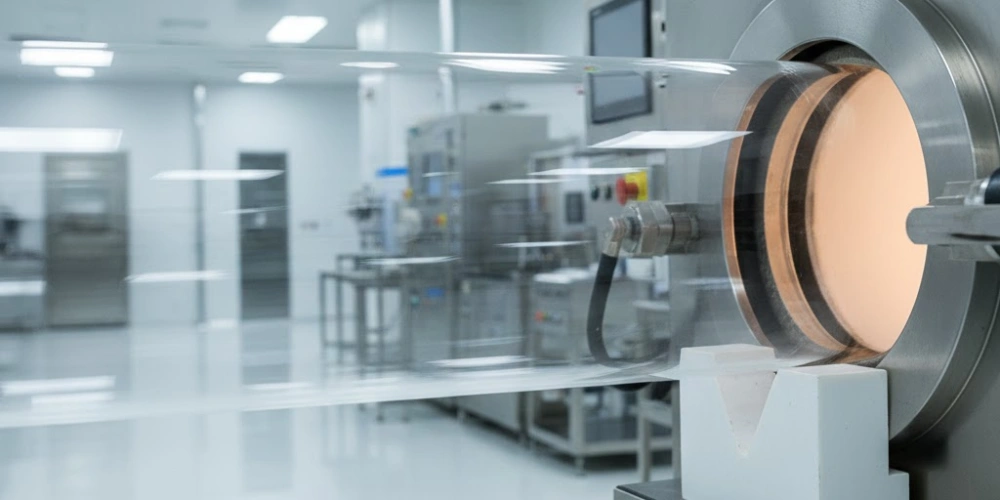
Chemical compatibility with process reagents and the purity of the tube material itself are two inseparable dimensions of chemical performance — a tube can be inert to a reagent but still contaminate a process through leaching of its own constituent elements. Both must be evaluated together to assess chemical suitability. For the quartz tube, the combination of near-universal acid inertness and sub-10 ppm metallic impurity content creates a chemical performance profile that stainless steel and borosilicate glass cannot approach for high-purity work, while sapphire and alumina occupy distinct positions that depend heavily on whether the process chemistry involves acidic, alkaline, or oxidising conditions.
Resistance to Acids Alkalis and Oxidising Atmospheres
Chemical resistance is not a single-value property — it varies with reagent concentration, temperature, and contact duration, and a material that performs well under one set of conditions may fail rapidly under another.
Fused quartz is inert to virtually all inorganic acids — including hydrochloric acid, nitric acid, sulfuric acid, aqua regia, and phosphoric acid at room temperature — with the critical exception of hydrofluoric acid (HF) and hot concentrated phosphoric acid (H₃PO₄ above ~150°C), both of which dissolve SiO₂ by direct chemical reaction. At elevated temperatures, hot concentrated sodium hydroxide and potassium hydroxide solutions will also attack quartz, though the attack rate is slow below 300°C. Borosilicate glass shares quartz's HF sensitivity and additionally degrades in hot strong alkali solutions (NaOH above ~60°C), in hot H₃PO₄, and — importantly — its boron and sodium constituents leach progressively into aqueous solutions at elevated temperatures, introducing measurable ionic contamination into any liquid-phase chemistry conducted inside the tube. Alumina ceramic is significantly more resistant to strong alkali attack than quartz, owing to the amphoteric stability of Al₂O₃ at high pH; however, alumina dissolves progressively in concentrated strong acids, particularly HCl and H₂SO₄ above 100°C. Stainless steel 316L, despite its molybdenum-enhanced chloride resistance, corrodes in concentrated HCl, HF, H₂SO₄, and halogen atmospheres, particularly at temperatures above 200°C, and is entirely unsuitable for oxidising acid service.
Sapphire (single-crystal Al₂O₃) demonstrates the broadest chemical inertness of all five materials — resistant to most acids, alkalis, and organic solvents across a wide temperature range — with meaningful attack occurring only in hot concentrated HF and in molten alkali metals. Its chemical stability surpasses that of fused quartz in alkaline environments, making it the only material capable of handling both UV transmission and high-alkalinity chemistry simultaneously.
Chemical Resistance Summary
| Reagent / Condition | Fused Quartz | Borosilicate | Alumina | Sapphire | Stainless 316L |
|---|---|---|---|---|---|
| Dilute HCl / HNO₃ | Resistant | Resistant | Attacked (hot) | Resistant | Resistant |
| Concentrated H₂SO₄ | Resistant | Resistant | Attacked | Resistant | Attacked (hot) |
| HF (any concentration) | Attacked | Attacked | Resistant | Resistant (dilute) | Attacked |
| Hot NaOH / KOH (>60°C) | Slowly attacked | Attacked | Resistant | Resistant | Resistant |
| Hot H₃PO₄ (>150°C) | Attacked | Attacked | Resistant | Resistant | Resistant |
| Halogen atmospheres (Cl₂, F₂) | Resistant | Resistant | Resistant | Resistant | Attacked |
| Oxidising atmospheres | Resistant | Resistant | Resistant | Resistant | Scaling (>800°C) |
| Organic solvents | Resistant | Resistant | Resistant | Resistant | Resistant |
SiO₂ Purity and Contamination Risk in Sensitive Processes
In semiconductor wafer processing, pharmaceutical synthesis, and trace-analytical chemistry, the tube material is not merely a container — it is a potential source of ionic contamination that can render an entire batch unacceptable.
Fused quartz achieves SiO₂ purity above 99.99%, with total metallic impurity content — including aluminium, iron, calcium, sodium, and titanium — typically below 10 ppm by weight for JGS2 production-grade material, and below 1 ppm for semiconductor-certified lots. Silicon, as a contamination element in silicon wafer processing, is chemically benign since the wafer substrate is itself silicon; consequently, the quartz tube is the uniquely compatible process tube for silicon diffusion furnaces. Borosilicate glass contains approximately 12–13% B₂O₃ and 2–4% Na₂O as intrinsic constituents — not impurities but structural components — meaning every borosilicate tube is a multi-element contamination source that releases boron and sodium ions into any process gas or liquid stream at elevated temperature. In semiconductor diffusion, even nanogram-level boron contamination alters dopant profiles in finished devices. Alumina ceramic tubes contain Al₂O₃ as the majority phase, and at the temperatures typical of silicon diffusion (900–1,200°C), aluminium vapour species can migrate from the alumina surface into the gas phase and deposit as aluminium impurities in the semiconductor wafer — a contamination pathway well-documented in the semiconductor process engineering literature. Stainless steel releases chromium, nickel, iron, and molybdenum at elevated temperatures, presenting the highest metallic contamination risk of all five materials for any chemistry or semiconductor application.
Sapphire, as single-crystal Al₂O₃, carries no glass-phase impurities and no multi-component oxide system; its contamination risk profile is identical to high-purity alumina in terms of the aluminium element but without the sintering-aid silica and magnesia phases present in polycrystalline alumina ceramic.
Material Purity and Contamination Risk
| Material | Primary Composition | Purity (%) | Key Leachable Elements | Semiconductor Wafer Risk |
|---|---|---|---|---|
| Fused Quartz (Quartz Tube) | SiO₂ | ≥99.99 | Si (benign) | Very Low |
| Borosilicate Glass | SiO₂ + B₂O₃ + Na₂O | ~80% SiO₂ | B, Na, Al | High (B doping risk) |
| Alumina Ceramic | Al₂O₃ | 96 – 99.8 | Al | Moderate |
| Sapphire | α-Al₂O₃ (single crystal) | >99.99 | Al | Low–Moderate |
| Stainless Steel 316L | Fe-Cr-Ni-Mo alloy | N/A | Cr, Ni, Fe, Mo | Very High |
A Cross-Material Comparison of Mechanical and Physical Properties
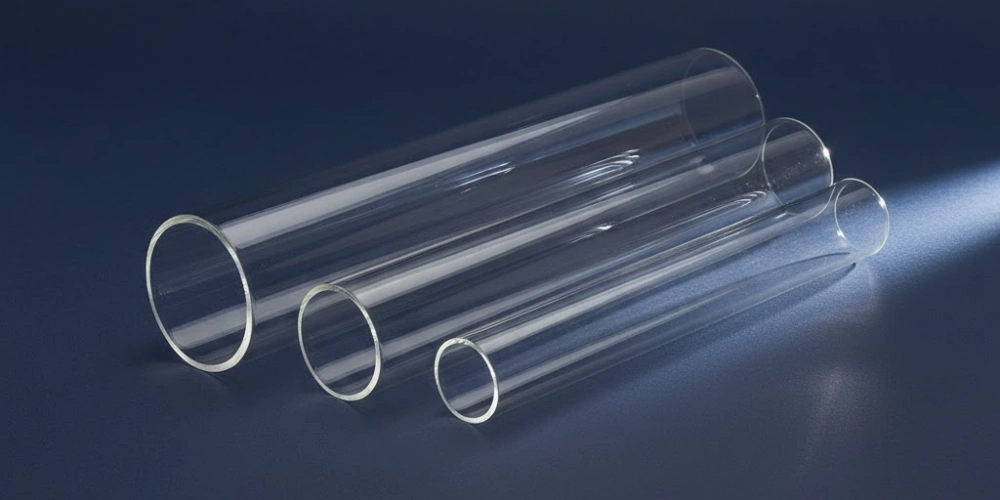
Mechanical performance data for quartz tube and the four alternative materials reveals a pattern that challenges a common assumption in material selection: physical hardness and structural toughness are not the same property, and a material can rank highly on one while performing poorly on the other. The five materials span an extraordinary range on both axes — from the extreme toughness of stainless steel to the extreme hardness of sapphire — and understanding where fused quartz sits within this space is essential for assessing whether it is appropriate for a given handling, installation, and operational environment.
Hardness Flexural Strength and Brittleness across Five Materials
Mohs hardness quantifies resistance to surface scratching, flexural strength quantifies resistance to bending fracture, and brittleness — the inverse of fracture toughness — quantifies the tendency to fail suddenly without plastic deformation warning.
Fused quartz registers Mohs 7, meaning it resists scratching by most metals and common abrasives but can be scratched by tungsten carbide or alumina grinding media. Its flexural strength of 50–70 MPa is the lowest among the five materials, reflecting the fact that amorphous silica has no grain boundary reinforcement mechanisms available to arrest crack propagation once initiated. In practice, a quartz tube operating in a static thermal environment with no vibration or mechanical contact loading performs reliably across thousands of thermal cycles; the flexural strength limitation becomes critical only when external mechanical loads are imposed — for example, when a tube is clamped asymmetrically, impacted during handling, or subjected to rapid gas pressure pulses. Borosilicate glass exhibits a nearly identical Mohs hardness of 6.5 and a slightly higher flexural strength of 60–70 MPa, with comparable brittleness. Alumina ceramic reaches Mohs 9 and a flexural strength of 300–400 MPa — four to six times that of quartz — making it mechanically robust under combined thermal and mechanical loading. Stainless steel 316L achieves flexural (tensile) strength of 500–800 MPa with full ductility, absorbing mechanical shock through plastic deformation without fracture; steel is the only material in this group that exhibits significant plasticity, with elongation at break exceeding 40%.
Sapphire at Mohs 9 and flexural strength 400–500 MPa is the hardest and mechanically strongest of the transparent materials, but its single-crystal structure introduces cleavage planes along which catastrophic fracture can occur under asymmetric loading — a failure mode that polycrystalline alumina, with its randomised grain orientation, does not exhibit as sharply.
Mechanical Properties
| Material | Mohs Hardness | Flexural Strength (MPa) | Fracture Toughness K₁c (MPa·m⁰·⁵) | Ductility |
|---|---|---|---|---|
| Fused Quartz (Quartz Tube) | 7.0 | 50 – 70 | 0.7 – 0.8 | None (brittle) |
| Borosilicate Glass | 6.5 | 60 – 70 | 0.7 – 0.9 | None (brittle) |
| Alumina Ceramic (99.8%) | 9.0 | 300 – 400 | 3.0 – 4.5 | None (brittle) |
| Sapphire | 9.0 | 400 – 500 | 2.0 – 3.0 | None (cleavage) |
| Stainless Steel 316L | 5.5 (Vickers ~200 HV) | 500 – 800 | >50 | High (ductile) |
Density and Weight Implications for System Integration
Tube density affects not only the handling and transport logistics of large-bore components but also the structural load calculations for cantilever tube furnace configurations and long horizontal tube spans.
Fused quartz has a density of 2.20 g/cm³, the lowest among all five materials by a meaningful margin. A quartz tube of OD 100 mm, WT 3 mm, and length 1,500 mm has a mass of approximately 3.0 kg — light enough to be installed and repositioned by a single technician without lifting equipment. The same geometry in alumina ceramic (density 3.75–3.90 g/cm³) yields a mass of approximately 5.1 kg, while stainless steel (density 7.9–8.0 g/cm³) produces a tube of approximately 10.9 kg — nearly four times the quartz mass. This weight differential becomes structurally significant in horizontal tube furnaces where the tube is supported only at its two ends: the self-weight bending moment2 at the midspan of a 1,500 mm alumina tube is 1.73 times that of the equivalent quartz tube, increasing the required support flange strength and the risk of progressive sag creep at operating temperature. Borosilicate glass at 2.23 g/cm³ is nearly identical to quartz in density and shares this weight advantage. Sapphire at 3.99 g/cm³ falls between alumina and quartz in density, but its limited availability in large tube formats makes the mass comparison largely theoretical for most tube furnace configurations.
The combined consideration of density and CTE — effectively a material's thermal-mechanical loading index — favours quartz tube comprehensively: it is simultaneously the lightest and the lowest-CTE material among the five, minimising both gravitational and thermally induced structural loads in horizontal furnace configurations.
Density and Derived Mass for Standard Tube Geometry
| Material | Density (g/cm³) | Mass of OD 100 × WT 3 × L 1,500 mm Tube (kg) | Relative Mass vs Quartz |
|---|---|---|---|
| Fused Quartz (Quartz Tube) | 2.20 | ~3.0 | 1.0× |
| Borosilicate Glass | 2.23 | ~3.1 | 1.03× |
| Alumina Ceramic | 3.75 – 3.90 | ~5.1 – 5.3 | 1.70 – 1.77× |
| Sapphire | 3.99 | ~5.5 | 1.83× |
| Stainless Steel 316L | 7.90 – 8.00 | ~10.8 – 10.9 | 3.60 – 3.63× |
Electrical Insulation and Cleanroom Compatibility of Quartz Tube and Peers
Two performance dimensions that receive disproportionately little attention in standard material comparison literature — electrical insulation at elevated temperatures and outgassing behaviour under high-purity process conditions — are, in semiconductor and vacuum applications, frequently the decisive selection criteria. A quartz tube maintains electrical insulation at 1,000°C that no metallic tube can provide; it releases virtually no volatile species under ultra-high vacuum; and it carries no certification incompatibilities for ISO Class 1–3 cleanroom environments. These properties, considered jointly, explain why the quartz tube remains the standard process tube in semiconductor diffusion furnaces globally despite the existence of materials with higher temperature ratings.
Volume Resistivity and Dielectric Properties at Elevated Temperatures
The ability of a tube material to maintain electrical isolation between the heating element, process gas, and wafer load — across the full operating temperature range of a diffusion furnace — determines whether it can be safely and reliably used in high-voltage or RF-excited process environments.
Fused quartz exhibits a volume resistivity exceeding 10¹⁸ Ω·cm at room temperature — effectively a perfect insulator under ambient conditions. Critically, this insulation performance degrades only slowly with temperature: at 1,000°C, fused quartz retains a volume resistivity above 10⁶ Ω·cm, remaining a functional electrical insulator throughout the entire semiconductor diffusion process temperature range. Borosilicate glass starts at a room-temperature resistivity of approximately 10¹⁵ Ω·cm — already three orders of magnitude lower than fused quartz — and this value decreases sharply with temperature as the mobile sodium ions in the borosilicate network become progressively more conductive; above 500°C, borosilicate becomes a moderate ionic conductor, rendering it electrically unsuitable for RF-excited process environments. Alumina ceramic at room temperature exhibits a resistivity of approximately 10¹⁴ Ω·cm, adequate for most electrical isolation purposes at moderate temperatures, though its polycrystalline grain boundary phases can introduce localised conductive pathways at extreme temperatures.
Stainless steel is a metallic conductor with resistivity of approximately 7 × 10⁻⁵ Ω·cm — seventeen to twenty-three orders of magnitude lower than fused quartz — and it is categorically incompatible with any application requiring tube electrical isolation. Sapphire exhibits room-temperature resistivity of approximately 10¹⁶ Ω·cm and maintains high electrical resistance to its service temperature ceiling, making it the only material among the five capable of challenging fused quartz on this dimension.
Electrical Resistivity at Room Temperature and Elevated Temperature
| Material | Volume Resistivity at 25°C (Ω·cm) | Volume Resistivity at 500°C (Ω·cm) | Volume Resistivity at 1,000°C (Ω·cm) |
|---|---|---|---|
| Fused Quartz (Quartz Tube) | >10¹⁸ | ~10¹² | >10⁶ |
| Borosilicate Glass | ~10¹⁵ | ~10⁶ | ~10³ (ionic conductor) |
| Alumina Ceramic | ~10¹⁴ | ~10¹⁰ | ~10⁶ |
| Sapphire | ~10¹⁶ | ~10¹² | ~10⁸ |
| Stainless Steel 316L | ~7 × 10⁻⁵ | ~1.2 × 10⁻⁴ | Not applicable |
Outgassing Rates and Cleanroom Certification Compatibility
In ultra-high vacuum(UHV)3 systems and ISO Class 1–5 semiconductor cleanrooms, the rate at which a tube material releases adsorbed or dissolved gas species into the process atmosphere is as critical as its chemical resistance, because even trace-level molecular contamination can alter thin-film deposition chemistry or degrade semiconductor junction performance.
The outgassing rate of fused quartz is among the lowest of any engineering material, attributed to the absence of dissolved hydrogen, carbon monoxide, and water binding sites that characterise metallic and polymeric materials. At temperatures above 600°C, the primary outgassing species from fused quartz is SiO vapour at partial pressures below 10⁻⁸ mbar — negligible for all practical process applications. Stainless steel, even after electropolishing and vacuum bake treatment, releases H₂, CO, CO₂, and H₂O from the grain boundary network and surface oxide layer at rates several orders of magnitude higher than fused quartz; in UHV systems, stainless steel tube walls represent the dominant outgassing load and require prolonged bake-out cycles at 150–250°C to reach acceptable base pressures. Borosilicate glass outgasses trace amounts of water vapour and alkaline oxide species when heated, particularly from freshly cleaned surfaces; while the contamination level is low in absolute terms, it is detectable in trace analytical chemistry environments. Alumina ceramic at high temperatures carries the risk of particulate generation from micro-spallation of surface grain clusters, which can deposit on wafers or optical surfaces — a contamination mode entirely absent in non-porous vitreous quartz. Sapphire's outgassing rate is comparably low to fused quartz and presents no particulate risk, but its limited tube size availability restricts its practical deployment in large-scale cleanroom process equipment.
Outgassing and Cleanroom Compatibility
| Material | Primary Outgassing Species | Relative Outgassing Rate | Cleanroom ISO Class Compatibility | Particulate Risk |
|---|---|---|---|---|
| Fused Quartz (Quartz Tube) | SiO (>600°C, trace) | Very Low | ISO Class 1–5 | Very Low |
| Borosilicate Glass | H₂O, alkali oxides | Low | ISO Class 3–5 | Very Low |
| Alumina Ceramic | None (gas) | Very Low | ISO Class 3–5 | Moderate (grain spallation) |
| Sapphire | None significant | Very Low | ISO Class 1–5 | Very Low |
| Stainless Steel 316L | H₂, CO, CO₂, H₂O | High | ISO Class 5–8 (post-bake) | Low |
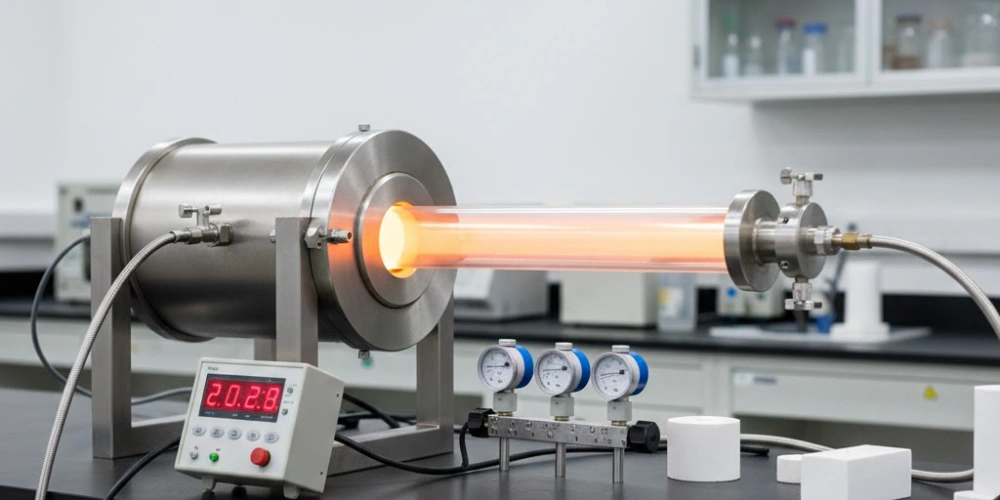
Application Suitability Mapped across All Five Tube Materials
With six performance dimensions now quantified, the material selection question shifts from abstract property comparison to direct application matching. Each of the six process environments below represents a distinct combination of thermal, optical, chemical, mechanical, and purity demands, and the appropriate tube material for each is a function of which parameter set is most constraining.
-
Semiconductor diffusion furnace (900–1,200°C, high purity, UV inert): The quartz tube is the globally established standard for this application. Its combination of continuous service to 1,200°C, SiO₂ purity above 99.99% (benign contamination element), electrical insulation at operating temperature, and near-zero outgassing addresses every critical process requirement simultaneously. Alumina is the alternative above 1,200°C but introduces aluminium contamination risk. No other material matches this combination.
-
UV water disinfection reactor (254 nm, ≤80°C, aqueous): JGS1 or JGS2 quartz tube is required for the UV sleeve application; borosilicate is inadequate because its UV cutoff at 300 nm blocks the germicidal 254 nm emission band. Sapphire would perform technically but is impractical at the tube diameters and lengths required. Alumina and stainless steel are UV-opaque and categorically excluded.
-
Chemical laboratory apparatus (variable temperature, mixed reagents): Borosilicate glass is appropriate and widely used for routine laboratory service up to 450°C. A quartz tube is required when service temperature exceeds 500°C, when UV illumination is needed, or when boron/sodium contamination must be excluded from the chemistry.
-
High-temperature tube furnace above 1,200°C: Above 1,200°C, devitrification limits the quartz tube to short-term use only. Alumina ceramic becomes the primary material for continuous service above this threshold, accepting the trade-offs of opacity and aluminium contamination potential. Sapphire is an option for small-diameter, high-precision applications at these temperatures.
-
High-pressure vessel or mechanical shock environment: Stainless steel is the unambiguous choice when internal pressure exceeds 1–2 MPa or when mechanical impact is unavoidable. No glass or ceramic material — including quartz — can safely absorb the impact energy of dropped components or pressure surge events in industrial piping.
-
Precision optical spectrometer flow cell or UV laser window: JGS1 quartz tube is the standard material for UV-Vis spectroscopy flow cells, offering >90% UV transmittance and <0.5 nm surface roughness after polishing. Sapphire covers a broader transmission range into the mid-IR but introduces fabrication complexity. Borosilicate is adequate for visible-only spectrophotometry.
Application Suitability
| Application | Quartz Tube | Borosilicate | Alumina | Sapphire | Stainless Steel |
|---|---|---|---|---|---|
| Semiconductor diffusion furnace | Optimal | Not Recommended | Suitable (>1,200°C) | Limited | Not Recommended |
| UV water disinfection sleeve | Optimal (JGS1/2) | Not Recommended | Not Applicable | Suitable | Not Applicable |
| General laboratory (≤450°C) | Optimal | Suitable | Suitable | Overkill | Suitable |
| Tube furnace >1,200°C | Limited (devitrification) | Not Recommended | Optimal | Suitable | Not Recommended |
| High-pressure vessel | Not Recommended | Not Recommended | Limited | Limited | Optimal |
| UV-Vis spectroscopy cell | Optimal (JGS1) | Suitable (visible only) | Not Applicable | Suitable | Not Applicable |
Selecting the Right Tube Material Based on Process Demands
Distilling six performance dimensions into a single material selection decision requires a sequenced evaluation of which parameter is most constraining for the specific process — because the material that fails the most critical constraint is eliminated regardless of its performance on all other axes.
The recommended evaluation sequence is as follows.
-
Step 1 — Temperature ceiling: If the process requires continuous operation above 1,200°C, the quartz tube is eliminated and alumina or sapphire must be considered. If the temperature is below 500°C and purity is not critical, borosilicate glass is adequate. For the 500–1,200°C range, the quartz tube is the primary candidate.
-
Step 2 — Chemical purity requirement: If the process is contamination-sensitive at the ppm level or below — semiconductor wafer processing, trace-analytical chemistry, pharmaceutical synthesis — borosilicate glass and stainless steel are eliminated. The quartz tube and sapphire remain viable; alumina is conditionally viable depending on aluminium tolerance.
-
Step 3 — Optical transmission requirement: If UV transmission below 300 nm is required, borosilicate glass is eliminated. If deep UV below 200 nm is required, only JGS1 quartz tube and sapphire qualify. For visible-only observation, all transparent materials remain viable.
-
Step 4 — Mechanical load environment: If the tube will be subjected to significant mechanical impact, vibration, or internal pressure above 1 MPa, all glass and ceramic materials — including quartz — are unsuitable, and stainless steel is the only appropriate choice.
-
Step 5 — Electrical insulation requirement: If the tube must maintain electrical isolation at operating temperature, stainless steel is immediately excluded, and borosilicate glass is excluded above 500°C. Fused quartz and sapphire retain high resistivity to their respective service temperature ceilings.
Applying this sequence to the broadest class of demanding industrial and laboratory applications — those combining temperatures of 500–1,200°C, high purity requirements, UV or visible transmission needs, and electrical insulation — the quartz tube satisfies every criterion simultaneously. No other single material in this comparison group achieves this multi-axis coverage at industrially scalable tube dimensions and geometries.
Conclusion
Across thermal performance, optical transmission, chemical inertness, mechanical properties, electrical insulation, and cleanroom compatibility, fused quartz and its four alternative tube materials each occupy a defined and non-overlapping performance niche. Stainless steel leads in mechanical toughness and pressure resistance; alumina and sapphire extend the service temperature ceiling beyond 1,200°C; sapphire offers the broadest UV-to-mid-IR optical window; borosilicate glass provides a cost-effective solution for general laboratory service below 500°C. The quartz tube, however, is the only material that simultaneously delivers a service temperature ceiling of 1,200°C, SiO₂ purity above 99.99%, UV transmission from 150 nm, thermal shock resistance exceeding ΔT 1,000°C, volume resistivity above 10⁶ Ω·cm at operating temperature, and near-zero outgassing — a convergence of properties that explains its status as the default process tube across semiconductor manufacturing, UV photochemistry, and high-temperature analytical chemistry worldwide.
FAQ
Is a quartz tube better than borosilicate glass for laboratory use?
For temperatures above 500°C, UV applications, or processes requiring boron and sodium-free chemistry, a quartz tube is unambiguously superior. For general aqueous laboratory work below 450°C with no UV or purity requirements, borosilicate glass is adequate and more economical to fabricate. The decision is primarily determined by the operating temperature and the chemical sensitivity of the process.
Can a quartz tube withstand higher temperatures than an alumina ceramic tube?
No — alumina ceramic withstands continuous service to 1,700°C, compared to the quartz tube's ceiling of 1,200°C. However, the quartz tube surpasses alumina in thermal shock resistance (ΔT >1,000°C versus ΔT 150–300°C for alumina), UV optical transmission, SiO₂ purity (lower aluminium contamination risk in silicon wafer processing), and electrical insulation at operating temperature. For processes below 1,200°C, the quartz tube's combined property profile is more favourable than alumina in the majority of precision industrial and laboratory applications.
What is the main disadvantage of using a quartz tube compared to stainless steel?
The primary disadvantage is mechanical brittleness. Fused quartz has a flexural strength of only 50–70 MPa and fracture toughness below 1.0 MPa·m⁰·⁵, meaning it fails suddenly under impact or asymmetric mechanical load without any plastic deformation warning. Stainless steel 316L, with tensile strength of 500–800 MPa and ductility exceeding 40% elongation, is categorically more tolerant of mechanical abuse. Additionally, a quartz tube is limited to internal pressures well below 1 MPa in standard wall thicknesses, while stainless steel pressure vessels operate routinely at 10–100 MPa.
Is sapphire a practical replacement for a quartz tube in UV applications?
Sapphire technically outperforms fused quartz in both UV transmission (cutoff ~145 nm vs ~150 nm for JGS1) and chemical resistance (superior alkali resistance). However, sapphire tubes are constrained by the single-crystal growth process to small outer diameters — typically below 50 mm — and short lengths, at fabrication complexity that limits their use to specialised micro-reactor, sensor, and precision optical applications. For the tube diameters of 25–300 mm and lengths of 500–3,000 mm that characterise standard UV reactor, semiconductor furnace, and spectroscopy cell applications, sapphire is not a practical substitute for the quartz tube at current fabrication scale.
References:
-
It describes cristobalite as the high-temperature polymorphic crystalline form of silicon dioxide that nucleates within fused quartz above 1,000°C during devitrification, explaining its effect on the optical and mechanical properties of the tube wall and the conditions that accelerate its formation. ↩
-
It covers bending moment as a structural mechanics concept describing the internal moment generated in a beam or tube under transverse loading, providing the engineering basis for calculating midspan deflection and stress in horizontally mounted tube furnace configurations of different tube materials and densities. ↩
-
It covers ultra-high vacuum (UHV) as a pressure regime below 10⁻⁷ mbar where surface science and semiconductor deposition processes operate, explaining the material selection requirements — particularly ultra-low outgassing and chemical purity — that place fused quartz among the few compatible tube materials for UHV process chambers. ↩