Quartz rods fail silently — and temperature is almost always the reason. Knowing the precise thermal limits prevents irreversible material degradation before it begins.
This article covers the full thermal operating range of fused quartz rods, including the 1100°C continuous service threshold and the 1650°C short-term ceiling, the devitrification and thermal stress failure mechanisms triggered by excessive heat, and the handling precautions required to preserve structural integrity across industrial and laboratory environments.
Thermal limits for quartz rods are not arbitrary figures drawn from manufacturer datasheets. They are rooted in the atomic structure of amorphous silicon dioxide and the thermodynamic boundaries beyond which that structure begins to reorganize irreversibly. Each temperature value discussed in this article carries a specific physical meaning, and conflating these values in real-world applications consistently leads to premature material failure.
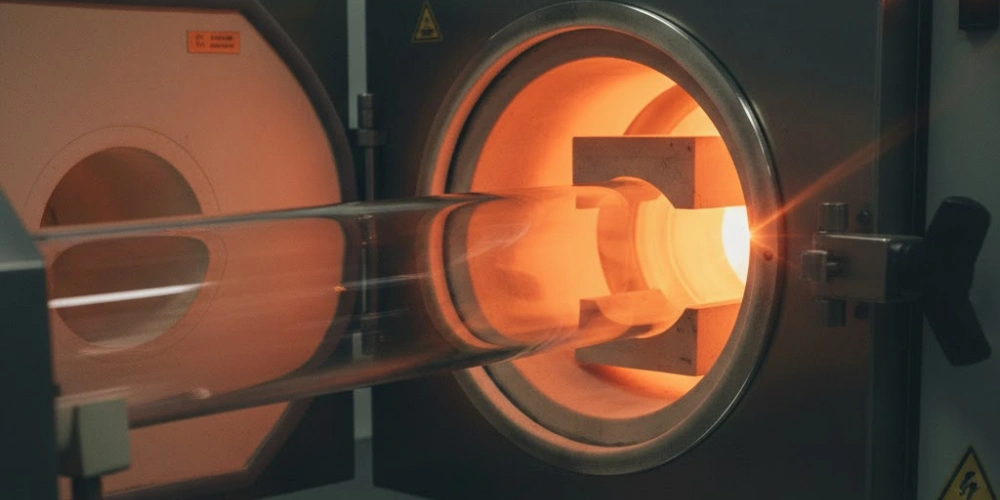
Quartz Rods Reach a Maximum Short-Term Temperature of 1650°C
Among the most frequently misapplied parameters in high-temperature material selection, the thermal limits of fused quartz demand precise interpretation — not approximation. Two distinct temperature boundaries govern operational safety, and each applies under fundamentally different conditions.
The 1100°C Continuous Use Threshold and Its Physical Rationale
Fused quartz rods are rated for continuous operation at temperatures up to approximately 1100°C. This ceiling is not defined by the onset of melting but by the kinetic threshold at which structural relaxation and surface devitrification begin to accumulate at a rate that compromises long-term performance. At sustained temperatures above this value, the amorphous silica network acquires sufficient thermal energy for atomic rearrangement to proceed measurably over timescales relevant to industrial service — typically hours to days.
Experimental data from thermal aging studies indicate that specimens held at 1050°C for 200 hours show no significant surface crystallization, whereas specimens maintained at 1150°C for equivalent durations exhibit measurable cristobalite nucleation at free surfaces. The transition is not abrupt; it is a rate-dependent process governed by Arrhenius kinetics, which is precisely why 1100°C is treated as a conservative operational ceiling rather than a hard physical boundary.
The 1100°C threshold also coincides with a region in the viscosity-temperature curve of fused silica where viscosity drops below approximately 10¹⁰·⁵ Pa·s — a value at which creep under mechanical load becomes non-negligible over extended service periods.
The 1650°C Short-Term Ceiling and the Forces Behind It
At approximately 1650°C, fused quartz approaches its softening point, defined as the temperature at which viscosity falls to roughly 10⁷·⁶ Pa·s. Below this viscosity threshold, the material can no longer sustain its own weight under standard gravitational loading without deforming measurably. Short-term exposure in the range of 1600°C to 1650°C is permissible only when mechanical stress is absent or negligible and exposure duration is measured in minutes rather than hours.
The softening point of high-purity fused silica is typically cited between 1665°C and 1683°C depending on hydroxyl content and trace impurity levels. Materials with elevated OH content (above 1000 ppm) soften at slightly lower temperatures due to the network-modifying effect of silanol groups on the SiO₂ tetrahedral framework. This distinction becomes critical when specifying rods for vacuum ultraviolet or high-temperature optical applications where grade selection directly determines the thermal ceiling.
Thermal exposure at these extreme values must be understood as a transient condition. Each excursion toward the 1650°C ceiling accelerates the cumulative degradation of surface quality and dimensional stability, even if no single exposure produces visually apparent damage.
Why Continuous and Peak Temperature Limits Serve Entirely Different Functions
The continuous use limit of 1100°C and the short-term ceiling of 1650°C address two entirely separate failure modes, and treating them as points on a single linear scale is a technically incorrect simplification. The continuous limit governs time-dependent degradation — devitrification kinetics, viscous creep, and fatigue accumulation. The short-term ceiling marks the boundary of acute structural compromise — softening, sagging, and loss of dimensional control.
In practice, a quartz rod operating at 1080°C continuously for 500 hours accumulates more functional damage than one exposed to 1600°C for 30 seconds, because the damage mechanisms differ in both type and rate. Engineers selecting fused quartz for cyclic high-temperature processes must evaluate both parameters independently and design thermal profiles that respect each boundary on its own terms.
Quartz Rod Temperature Limits at a Glance
| Parameter | Value | Condition |
|---|---|---|
| Continuous service temperature (°C) | 1100 | Sustained operation, hours to months |
| Short-term maximum temperature (°C) | 1650 | Transient exposure, minutes |
| Softening point (°C) | 1665–1683 | Grade-dependent |
| Working point — viscosity 10³ Pa·s (°C) | ~2000 | Glass-forming operations only |
| Annealing point — viscosity 10¹³ Pa·s (°C) | ~1140 | Stress relief |
| Strain point — viscosity 10¹⁴·⁵ Pa·s (°C) | ~1070 | Permanent stress fixed below this |
Thermal Properties That Give a Quartz Rod Its Heat Resistance
Rooted in the physics of amorphous silicon dioxide, the thermal performance of fused quartz exceeds that of most refractory ceramics and glasses in ways that are difficult to replicate with alternative materials. These properties are not independent — they interact to produce a material system capable of surviving thermal conditions that would catastrophically fracture borosilicate glass or distort most oxide ceramics.
Amorphous SiO₂ Structure and Its Role in Thermal Stability
Fused quartz is a non-crystalline solid composed entirely of corner-sharing SiO₄ tetrahedra1 arranged in a continuous random network. This disordered architecture lacks the long-range periodicity of crystalline quartz, and that structural randomness is directly responsible for its thermal stability. Without grain boundaries, cleavage planes, or periodic defect sites, fused quartz has no preferential pathways for crack initiation or thermal decomposition at moderate temperatures.
The Si–O bond energy is approximately 444 kJ/mol, among the highest of any oxide ceramic system. This bond strength prevents thermal dissociation of the network below 1700°C, giving fused quartz a stability window that encompasses the vast majority of industrial high-temperature processes. Additionally, the absence of mobile cations — unlike soda-lime or borosilicate glasses — eliminates ionic conductivity and alkali-driven degradation at elevated temperatures.
This structural integrity persists up to the devitrification onset temperature, beyond which the amorphous network begins to reorganize into crystalline cristobalite — a phase transition that fundamentally alters mechanical and optical behavior.
Ultra-Low Thermal Expansion and Resistance to Thermal Shock
The coefficient of thermal expansion (CTE) of fused quartz is approximately 0.55 × 10⁻⁶/°C, compared to 3.3 × 10⁻⁶/°C for borosilicate glass and 8–12 × 10⁻⁶/°C for most technical ceramics. This exceptionally low CTE is the primary reason fused quartz resists thermal shock with a figure of merit — defined as tensile strength divided by the product of elastic modulus, CTE, and thermal conductivity — far exceeding most competing materials.
When a quartz rod is plunged from room temperature into a 1000°C furnace environment, the differential expansion between its outer surface and core remains so small that the induced thermal stress stays well below the material's tensile fracture threshold of approximately 50–65 MPa. The same thermal excursion applied to a standard alumina rod, with CTE near 8 × 10⁻⁶/°C, generates stresses several times higher and frequently causes immediate fracture.
This resistance to thermal shock does not, however, imply immunity to fatigue. Repeated thermal cycling, even within safe temperature bounds, gradually accumulates surface microcracks that reduce effective fracture toughness over time.
Softening Point vs. Melting Point — Two Thresholds Engineers Must Distinguish
Fused quartz does not have a true crystallographic melting point in the conventional sense, because it is an amorphous solid rather than a crystalline phase. What is commonly referred to as its "melting point" in commercial literature — approximately 1710°C — corresponds to the temperature at which viscosity becomes low enough for the material to flow under its own weight without constraint. The softening point, at approximately 1665°C, represents the more operationally relevant threshold for load-bearing applications.
Below the softening point, fused quartz behaves as a viscoelastic solid whose creep rate increases exponentially with temperature. Between 1100°C and 1300°C, creep is slow enough to be negligible for short service durations but becomes significant over periods exceeding several hundred hours. Above 1300°C, creep rates accelerate sharply and permanent deformation becomes visible within hours under even modest mechanical loading.
Understanding this distinction prevents the common error of assuming that any temperature below the quoted "melting point" of 1710°C is safe for structural use — a misconception that has caused premature failure in semiconductor diffusion tube applications worldwide.
Thermal Properties of Fused Quartz vs. Selected High-Temperature Materials
| Property | Fused Quartz | Borosilicate Glass | Alumina (99%) | Fused Silica (UV Grade) |
|---|---|---|---|---|
| CTE (10⁻⁶/°C) | 0.55 | 3.3 | 8.1 | 0.55 |
| Softening Point (°C) | 1665 | 820 | N/A (crystalline) | 1670 |
| Continuous Use Temp. (°C) | 1100 | 500 | 1700 | 1100 |
| Thermal Conductivity (W/m·K) | 1.38 | 1.14 | 30 | 1.38 |
| Tensile Strength (MPa) | 50–65 | 40–60 | 150–200 | 50–65 |
| Thermal Shock Resistance | Excellent | Moderate | Poor–Moderate | Excellent |
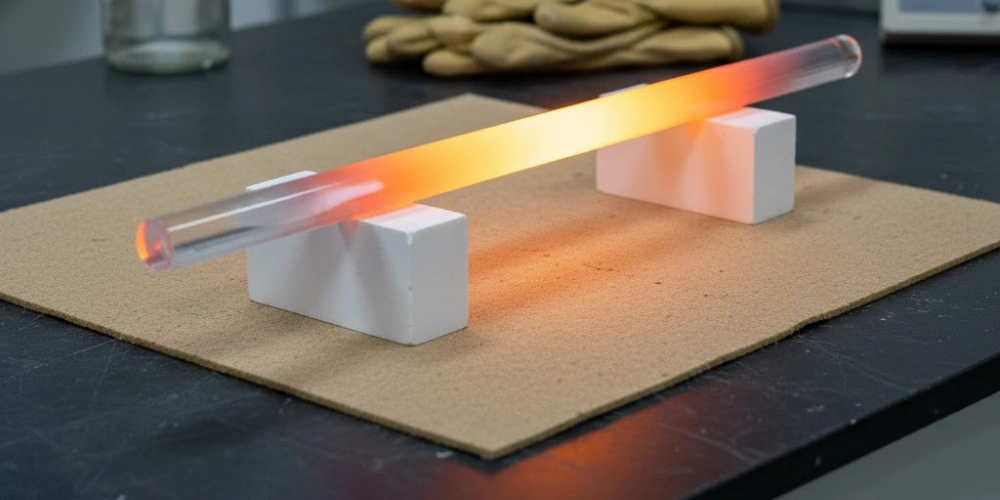
Devitrification in Quartz Rods Triggered by Excessive Heat
Directly consequent to any sustained thermal excursion beyond the 1100°C service ceiling, devitrification represents the most insidious and consequential failure mode encountered in high-temperature quartz applications. Unlike fracture, which is immediate and visually obvious, devitrification is a progressive transformation that compromises material integrity before any visible sign is apparent to the operator.
Structural Definition of Devitrification at the Atomic Level
Devitrification is the thermally activated conversion of amorphous silicon dioxide into crystalline cristobalite (β-SiO₂), a high-temperature polymorph that nucleates preferentially at free surfaces and impurity sites within the fused quartz network. At the atomic level, this process involves the cooperative rearrangement of SiO₄ tetrahedra from their random network configuration into the ordered, face-centered cubic arrangement characteristic of β-cristobalite.
The transformation is classified as a nucleation-and-growth process governed by classical solid-state kinetics. Nucleation rates peak at approximately 1200°C to 1250°C, while crystal growth rates reach their maximum near 1450°C. This temperature dependence means that exposure in the 1100°C to 1300°C range is particularly dangerous for nucleation — even without rapid growth, once nuclei form, subsequent heating cycles allow them to grow into visible crystalline domains.
Critically, devitrification is irreversible under normal operating conditions. Once cristobalite domains form within the fused quartz network, no practical thermal treatment below the softening point can restore the original amorphous structure.
Temperature and Exposure Duration Required to Initiate Crystallization
The onset of detectable surface crystallization on high-purity fused quartz rods requires both temperature and time acting in combination. At 1150°C, measurable cristobalite formation on clean, uncontaminated surfaces typically requires exposure durations exceeding 100 hours. At 1200°C, the same degree of crystallization can occur within 20 to 40 hours. At 1300°C, surface devitrification becomes visible to the naked eye within 5 to 10 hours of continuous exposure.
These figures apply to surfaces free of metallic contamination and hydroxyl groups. The presence of even trace quantities of alkali metals — as low as 1 ppm sodium — reduces the induction time for crystallization by an order of magnitude at any given temperature, because alkali ions act as network modifiers that lower the activation energy barrier for SiO₄ tetrahedral reorientation.
The cumulative nature of thermal exposure must also be recognized. A quartz rod subjected to 50 heating cycles, each reaching 1180°C for 4 hours, accumulates the same devitrification damage as a single 200-hour exposure — a fact that is frequently overlooked in cyclic process equipment.
Surface Contamination as a Catalyst for Accelerated Devitrification
Contamination is the single most controllable variable in the devitrification kinetics of quartz rods. Fingerprints are among the most common and damaging sources of surface contamination — human perspiration deposits sodium, potassium, and chloride ions onto the silica surface at concentrations sufficient to catalyze cristobalite nucleation at temperatures as low as 900°C. This threshold is approximately 200°C below the devitrification onset temperature for a clean surface.
Metallic contamination from tool contact — stainless steel handling tools, for example — deposits iron, chromium, and nickel onto the surface. Iron contamination at concentrations of just 5 ppm has been shown to reduce the devitrification onset temperature by 80°C to 120°C in controlled laboratory studies. This explains why quartz components in semiconductor diffusion furnaces, which must be handled with dedicated clean room protocols, exhibit dramatically shorter service lives when standard metallic tooling is used inadvertently.
Organic residues from machining lubricants or atmospheric hydrocarbon deposition decompose during initial heating, leaving carbonaceous and metallic residues that serve as heterogeneous nucleation sites for cristobalite growth.
Visual and Dimensional Symptoms of a Devitrified Quartz Rod
The earliest visual indication of devitrification is a faint milky or cloudy discoloration on the surface of the quartz rod, typically appearing as an irregular haze rather than a uniform coating. This opacity results from the scattering of transmitted light at cristobalite crystal boundaries, which have a refractive index of approximately 1.49 — slightly higher than the surrounding amorphous silica at 1.46. The refractive index mismatch creates visible scattering even when the crystalline layer is only a few micrometers thick.
As devitrification advances, the surface develops a characteristic white, matte, frost-like texture that is readily distinguishable from the original transparent, fire-polished appearance. In cross-section, polarized light microscopy reveals the crystalline domains as birefringent regions against the optically isotropic amorphous matrix. The depth of the devitrified layer typically ranges from 10 μm in early-stage cases to several hundred micrometers in severely degraded specimens.
Dimensionally, devitrified specimens may exhibit slight surface roughening detectable by profilometry, with average roughness (Ra) values increasing from typical as-fabricated values below 0.1 μm to 0.5–2.0 μm in moderate devitrification cases.
Degradation in Mechanical Strength and Optical Transmission After Devitrification
Cristobalite undergoes a displacive phase transformation from β to α form at approximately 220°C upon cooling, accompanied by a volume contraction of approximately 2.8%. This contraction generates tensile microstresses at the boundary between the devitrified surface layer and the underlying amorphous core. These stresses act as pre-existing crack initiators, reducing the effective modulus of rupture of the rod by 30% to 60% depending on the depth of the devitrified layer.
In optical applications, the consequences are equally severe. The transmission of fused quartz in the ultraviolet range (200–300 nm) decreases by 15% to 40% per millimeter of devitrified surface layer thickness, rendering UV-grade components unsuitable for precision optical applications after even moderate crystallization. For infrared applications, scattering losses in the 3–5 μm range increase proportionally with crystalline domain size.
Structurally, the combination of surface microstresses and reduced fracture toughness means that a devitrified quartz rod is significantly more susceptible to fracture under thermal cycling — the very conditions responsible for its degradation in the first place — creating a self-accelerating failure mechanism.
Devitrification Onset Conditions for Fused Quartz Rods
| Surface Condition | Onset Temperature (°C) | Time to Visible Crystallization (hrs) | Primary Catalyst |
|---|---|---|---|
| Clean, uncontaminated | 1150–1200 | 80–150 | Thermal energy alone |
| Fingerprint contamination | 900–950 | 10–30 | Na, K, Cl ions |
| Iron tool contact (5 ppm Fe) | 1030–1070 | 20–50 | Fe as nucleation catalyst |
| Alkali metal exposure (1 ppm Na) | 950–1000 | 5–15 | Network modification |
| OH-rich surface (>500 ppm) | 1100–1130 | 50–100 | Silanol group mobility |
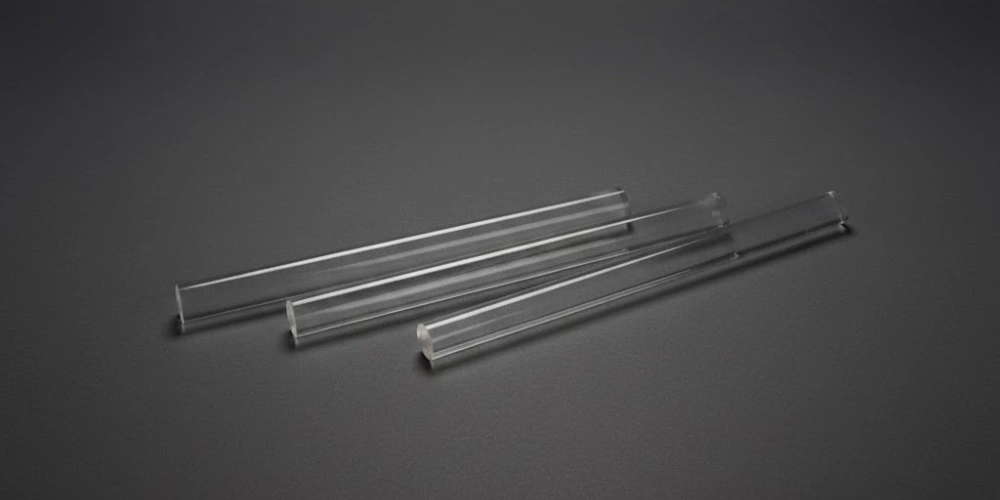
Thermal Stress and Fracture Behavior in Quartz Rod Service
Parallel to the chemical degradation pathway represented by devitrification, mechanical failure through thermally induced stress constitutes an equally significant — and often more abrupt — mode of quartz rod destruction. Unlike devitrification, thermal fracture can occur on the first heating cycle if temperature gradients or geometry variables exceed critical thresholds.
Thermal Gradient Formation Along a Quartz Rod Under Localized Heating
When heat is applied to one section of a quartz rod while adjacent regions remain at lower temperatures, a thermal gradient is established that generates differential expansion strains throughout the material. For a rod with a diameter of 10 mm and a thermal conductivity of 1.38 W/m·K, a localized heating rate of 20°C/min applied over a 50 mm zone produces radial temperature differentials of 15°C to 25°C between the rod surface and its central axis. While the low CTE of fused quartz mitigates the resulting stress, sustained gradients above 50°C over short axial distances can generate tensile stresses approaching the material's fracture threshold.
Finite element analyses of diffusion tube assemblies have demonstrated that temperature gradients exceeding 3°C/mm along the axial direction of a quartz rod generate stress concentrations at geometric discontinuities — end faces, diameter transitions, and support contact points — that can exceed 40 MPa, approaching the lower bound of reported tensile strength values. This behavior is especially pronounced in rods with wall thickness below 3 mm, where heat accumulation at the surface relative to the core is faster.
The thermal gradient problem is compounded in multi-zone furnace configurations, where the boundaries between heated and unheated zones impose sharp axial temperature transitions on any rod spanning multiple zones.
Rapid Temperature Cycling and Its Effect on Crack Propagation
Repeated thermal cycling — even within temperature bounds that would individually cause no detectable damage — progressively extends pre-existing surface microcracks through a fatigue mechanism analogous to cyclic mechanical loading. Each heating and cooling cycle generates a stress pulse at crack tips, and the stress intensity factor at these tips accumulates incrementally with each cycle. For surface cracks of initial depth 10 μm — typical of as-received fire-polished quartz surfaces — fracture mechanics modeling indicates that 1000 thermal cycles between 25°C and 900°C can extend crack depth to 25–40 μm, reducing residual strength by 20–35%.
The cooling phase of each cycle is generally more damaging than the heating phase because the outer surface cools and contracts faster than the interior, placing the surface in tension while the core remains in compression. Cooling rates above 5°C/min for rods with diameters exceeding 15 mm consistently produce surface tensile stresses above 20 MPa in the first few millimeters of depth, a threshold sufficient to propagate pre-existing cracks in specimens with accumulated fatigue damage.
In semiconductor furnace applications, where quartz diffusion tubes and support rods may undergo 500 to 2000 thermal cycles over their service lifetime, this fatigue mechanism is the dominant cause of sudden fracture — often occurring without any preceding visual warning.
Geometry Variables — Diameter and Wall Thickness as Stress Tolerance Factors
The geometry of a quartz rod exerts a direct and quantifiable influence on its resistance to thermally induced stress. For solid rods, stress resistance scales inversely with diameter: a rod of 5 mm diameter can tolerate thermal gradients approximately 3 times greater than a rod of 25 mm diameter before reaching equivalent stress levels, because the absolute temperature difference between core and surface decreases with cross-sectional area. Manufacturer data consistently shows that rods with diameters below 8 mm can be heated at rates of up to 15°C/min without generating stress concentrations above 15 MPa, while rods exceeding 20 mm diameter require heating rates below 5°C/min for equivalent stress levels.
For hollow quartz tubes used as rod-like structural elements, wall thickness determines both the thermal gradient across the wall and the moment of inertia available to resist bending. Walls thinner than 2 mm heat and cool so rapidly that gradient-induced stresses are minimal, but they offer virtually no resistance to mechanical loads at elevated temperatures where creep is active. Walls between 3 mm and 6 mm represent the optimal range for most high-temperature structural applications, balancing thermal gradient management against mechanical load capacity.
Tapered or stepped diameter transitions along a rod's length create stress concentration factors of 1.5 to 2.5 times the nominal thermal stress — a geometric amplification that must be accounted for in any precision thermal application.
Thermal Stress Parameters for Fused Quartz Rods by Diameter
| Rod Diameter (mm) | Max Safe Heating Rate (°C/min) | Max Safe Cooling Rate (°C/min) | Estimated Max Thermal Gradient (°C/mm) | Fracture Risk Level |
|---|---|---|---|---|
| < 5 | 20 | 15 | 8 | Low |
| 5–10 | 15 | 10 | 5 | Low–Moderate |
| 10–20 | 8 | 5 | 3 | Moderate |
| 20–40 | 4 | 3 | 1.5 | High |
| > 40 | 2 | 1.5 | 0.8 | Very High |
Fused Quartz and Fused Silica Exhibit Different Thermal Ceilings
Ambiguity between "fused quartz" and "fused silica" is one of the most persistent sources of specification error in high-temperature material procurement, and the consequences of this confusion are directly visible in thermal performance data.
-
Fused quartz is produced by melting naturally occurring quartz crystal (SiO₂ with typical purity of 99.9–99.99%) in electric or flame fusion processes. The resulting material contains between 150 and 400 ppm hydroxyl (OH) groups and trace metallic impurities at levels of 1–20 ppm. Its continuous use temperature is approximately 1050°C to 1100°C, and devitrification onset occurs near 1150°C under sustained heating.
-
Fused silica (synthetic) is manufactured from high-purity silicon tetrachloride (SiCl₄) or silane precursors via flame hydrolysis2 or plasma deposition, yielding material with purity exceeding 99.999% SiO₂. Depending on the manufacturing route, OH content ranges from below 1 ppm (Type III, IV) to above 1000 ppm (Type II). High-purity, low-OH fused silica grades resist devitrification up to approximately 1200°C and maintain superior dimensional stability above 1100°C. The continuous service temperature for premium grades is therefore approximately 50°C to 100°C higher than standard fused quartz.
The distinction matters most in semiconductor and optical fiber applications, where operating temperatures frequently push against the 1100°C ceiling and the choice of material grade directly determines component service life. Specifying "quartz rod" generically without declaring the required material grade risks procurement of standard fused quartz in applications that technically require synthetic fused silica.
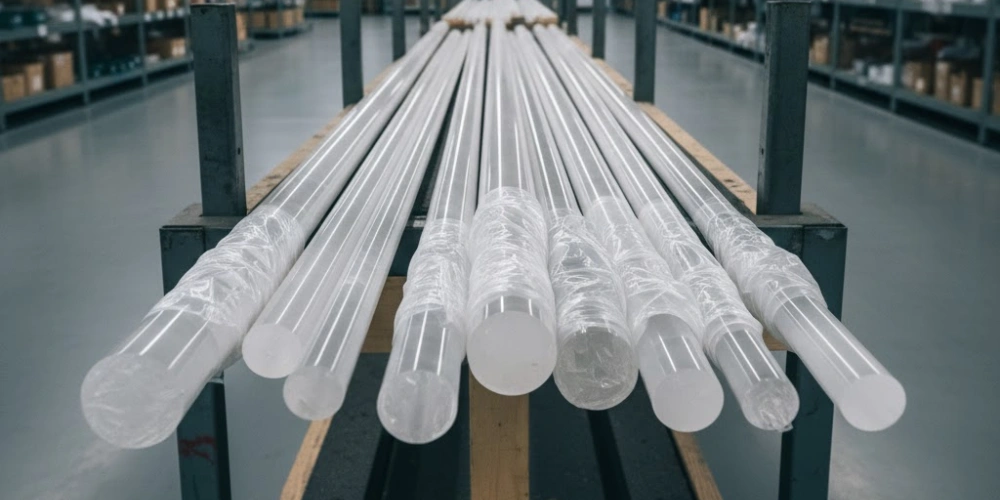
Purity Levels and Their Bearing on Quartz Rod Thermal Ceilings
Beyond the broad fused quartz versus fused silica classification, the specific impurity profile of a given material lot quantitatively shifts the thermal performance boundaries in ways that are predictable and measurable.
-
Hydroxyl (OH) content is the most influential single impurity variable. High OH content (above 800 ppm) lowers the softening point by approximately 30°C to 50°C relative to OH-free material, because silanol groups interrupt the continuity of the SiO₂ network and reduce average network connectivity. Conversely, very low OH content (below 10 ppm) can improve resistance to viscous deformation at temperatures above 1200°C but may introduce susceptibility to radiation-induced compaction in UV applications.
-
Alkali metal impurities — primarily sodium (Na), potassium (K), and lithium (Li) — act as network modifiers at concentrations as low as 0.1 ppm, creating non-bridging oxygen sites that increase ionic mobility and accelerate devitrification kinetics. Each 1 ppm increment of sodium reduces the effective devitrification onset temperature by approximately 15°C to 25°C. Materials destined for high-temperature service should have total alkali content below 0.2 ppm.
-
Transition metal impurities — iron, titanium, and chromium — absorb infrared radiation more strongly than the surrounding silica matrix, creating localized hot spots during radiative heating. Iron concentrations above 3 ppm have been measured to increase local surface temperatures by 40°C to 80°C above the bulk temperature in infrared-heated furnace environments, effectively lowering the practical thermal ceiling without any change in the nominal material specification. For applications at temperatures above 900°C, total transition metal content should remain below 1 ppm.
Purity certificates provided with each material lot should be evaluated against these benchmarks before thermal performance claims are accepted at face value.
Atmospheric Conditions Altering the Thermal Performance of Quartz Rods
The gas environment surrounding a quartz rod during high-temperature service is not thermally neutral — it interacts chemically and physically with the silica surface in ways that modify both the effective service temperature and the degradation kinetics.
-
Vacuum environments suppress oxidative surface reactions and eliminate the supply of water vapor — a known accelerant for surface hydroxylation3 and devitrification. In vacuum conditions above 10⁻³ Pa, the onset of surface crystallization is shifted upward by approximately 50°C to 80°C relative to ambient atmosphere, extending effective service life at temperatures near the continuous use ceiling. However, vacuum service above 1200°C promotes SiO evaporation from the rod surface at a rate of approximately 0.1 μm/hour, leading to gradual mass loss and surface roughening over extended service periods.
-
Inert gas atmospheres (argon, helium, nitrogen) largely replicate the vacuum effect on devitrification suppression while eliminating evaporative mass loss. Nitrogen atmospheres below 1300°C are generally safe; above 1300°C, partial nitridation of the silica surface has been reported in high-purity nitrogen, forming trace silicon nitride domains that alter local thermal properties.
-
Oxidizing atmospheres (air, oxygen-enriched environments) promote surface oxidation of any reduced silicon species but generally have minimal impact on stoichiometric fused quartz below 1200°C. Above this threshold, oxygen partial pressure influences the equilibrium between surface SiO₂ and volatile SiO, with higher oxygen pressures suppressing evaporation.
-
Humid and steam atmospheres are among the most aggressive environments for quartz rods. Water vapor hydroxylates the silica surface, increasing surface OH concentration and accelerating devitrification onset by 100°C to 150°C compared to dry atmospheres. Steam environments above 900°C should be avoided entirely in long-duration service.
-
Reducing atmospheres (hydrogen, forming gas) at temperatures above 900°C can partially reduce surface SiO₂ to SiO, creating a slightly darkened, substoichiometric surface layer with altered optical and mechanical properties. Hydrogen partial pressures above 10 kPa at 1000°C produce measurable surface reduction within 50 hours of exposure.
Temperature Ranges for Quartz Rods Across Major Industrial Applications
Across the industries that rely most heavily on fused quartz components, the thermal demands imposed on rods and tubes span a wide range — and each sector operates with characteristic temperature profiles, cycle frequencies, and atmospheric conditions that interact with the material's thermal limits in sector-specific ways.
-
Semiconductor diffusion and oxidation furnaces represent the most thermally demanding routine application. Quartz boats, tubes, and support rods in these systems operate continuously between 900°C and 1150°C, with the upper end of this range pushing directly against the devitrification ceiling. Cycle counts in high-volume fabs can reach 2000 to 3000 thermal cycles per year, making thermal fatigue the primary life-limiting mechanism rather than single-event overtemperature.
-
UV lamp and germicidal irradiation systems operate at envelope temperatures between 600°C and 900°C — well within the safe continuous service range — but the optical demands of these applications mean that even subcritical devitrification, caused by contamination rather than overtemperature, renders components non-functional before any mechanical failure occurs.
-
Laboratory tube furnaces and high-temperature reaction vessels typically operate in the 800°C to 1100°C range. In research settings, thermal protocols are frequently irregular and heating rates are often applied without strict rate control, making thermal shock a more common failure mode than in industrial settings with automated temperature programs.
-
Optical fiber preform fabrication uses fused silica rods and mandrels at temperatures between 1400°C and 1800°C during collapse and draw operations. At these temperatures, the material is deliberately operated above the continuous service ceiling for controlled short durations, relying on the absence of sustained mechanical load and the protective effect of high-purity inert gas atmospheres to prevent devitrification and evaporative mass loss.
-
Infrared heating elements and radiant tubes in industrial furnaces operate between 700°C and 1050°C. The primary thermal concern in these applications is localized overheating at electrical connection points, where contact resistance generates hot spots that can exceed the bulk operating temperature by 100°C to 200°C.
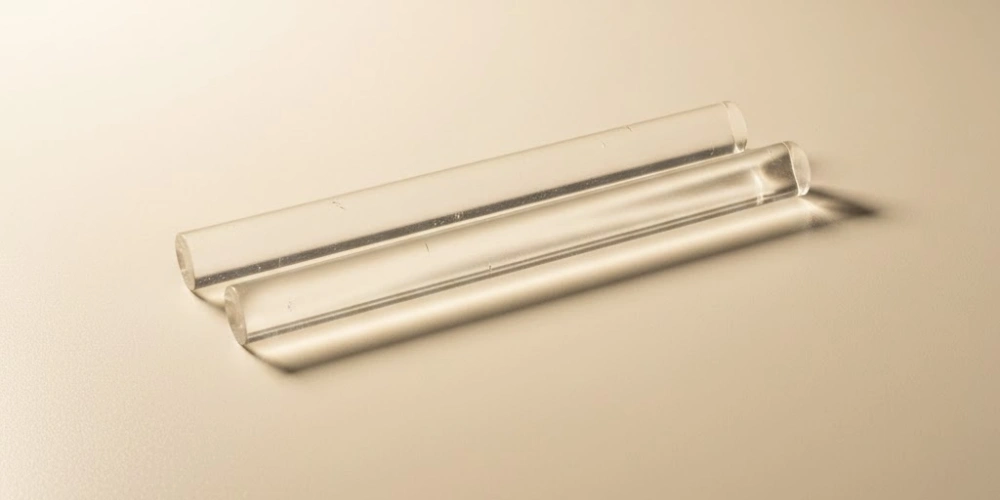
Thermal Handling Precautions Essential for Quartz Rods in Operation
Bridging the gap between understanding temperature limits in theory and applying them correctly in practice, the precautions governing physical handling and thermal management of quartz rods are the most direct levers available to extend service life. Failures attributable to handling errors account for a disproportionate share of premature quartz component replacements in both industrial and laboratory settings.
Controlled Heating and Cooling Rates to Avoid Thermal Shock
Heating and cooling rate control is the most immediately effective means of preventing thermal shock fracture in quartz rods. For rods with diameters between 10 mm and 20 mm, a maximum heating rate of 5°C to 8°C per minute is recommended for the temperature range between ambient and 600°C, where thermal gradients between surface and core are largest relative to the material's thermal conductivity. Above 600°C, where radiative heat transfer becomes increasingly dominant and more uniform, heating rates up to 10°C/min are generally tolerable for this diameter range.
The cooling phase demands equal or greater rate control than heating. Rapid quenching from operating temperature — even from 800°C — generates tensile stresses on the outer surface of a rod as it contracts ahead of the still-hot interior. For rods that have accumulated surface microcracks through prior cycling, cooling rates above 8°C/min from temperatures above 700°C have been associated with spontaneous fracture rates of 15% to 25% per cycle in documented process equipment maintenance records.
Pre-heating quartz rods before insertion into a hot furnace environment — to at least 300°C above ambient — significantly reduces the thermal shock impulse experienced during the first few minutes of insertion, particularly when furnace operating temperatures exceed 900°C.
Hand Contact Contamination and Its Accelerating Effect on Surface Devitrification
Direct skin contact with quartz rod surfaces during handling is one of the most preventable causes of accelerated devitrification in laboratory and production environments. Human perspiration deposits sodium at approximately 0.1 to 1 μg/cm² per contact event — a quantity sufficient to catalyze surface crystallization at temperatures 150°C to 200°C below the clean-surface devitrification onset. In cleanroom semiconductor environments, this contamination mechanism has been quantified to reduce quartz component service life by 40% to 60% when standard cleanroom gloves are not used consistently.
Handling should be performed exclusively with clean cotton or lint-free nitrile gloves, and contact should be limited to the cooler end sections of rods whenever possible. After any inadvertent skin contact, the affected surface should be cleaned with semiconductor-grade isopropyl alcohol (IPA) and allowed to dry completely before any thermal exposure. Failure to perform this cleaning step allows the deposited contaminants to bond covalently to the silica surface during the first heating cycle, after which removal without abrasive treatment is practically impossible.
Even gloved handling introduces contamination if the gloves themselves have been exposed to metallic tools, lubricants, or organic solvents — reinforcing the importance of maintaining dedicated, clean handling equipment for quartz components.
Mechanical Support Placement at Elevated Operating Temperatures
The placement and geometry of mechanical support structures for quartz rods at elevated temperatures are critical determinants of stress distribution and creep deformation patterns. At temperatures above 900°C, the viscosity of fused quartz is low enough that a horizontally oriented rod of 10 mm diameter and 500 mm length, supported only at its ends, will exhibit measurable mid-span sag within 200 hours — a deflection that permanently compromises the rod's dimensional suitability and concentrates stress at the support contact points.
Support intervals should not exceed 200 mm for rods with diameters below 10 mm operating above 1000°C, and contact points should be distributed over the largest practicable area to minimize stress concentration. Point contacts — such as those created by knife-edge ceramic supports — generate contact pressures that can locally exceed the material's compressive yield stress at high temperature, embedding the support into the rod surface and creating a stress concentration site that initiates cracking during subsequent cooling.
Support materials must be chemically compatible with fused quartz — high-purity alumina or platinum-group metals are preferred. Silicon carbide supports, despite their mechanical advantages, introduce trace carbon and silicon contamination at contact surfaces above 1000°C.
Thermal Handling Precautions Summary for Quartz Rods
| Handling Parameter | Recommended Practice | Risk of Non-Compliance |
|---|---|---|
| Heating rate (dia. 10–20 mm) | ≤ 8°C/min below 600°C | Thermal shock fracture |
| Cooling rate (dia. 10–20 mm) | ≤ 5°C/min from > 700°C | Surface tensile cracking |
| Glove type | Clean cotton or nitrile | Devitrification acceleration |
| Post-contact cleaning | IPA wipe before heating | Catalytic crystallization onset |
| Max support span (dia. < 10 mm, >1000°C) | ≤ 200 mm | Permanent creep sagging |
| Support material | High-purity alumina or platinum | Surface contamination and cracking |
| Pre-heating before furnace insertion | ≥ 300°C above ambient | Thermal shock at insertion |
Service Longevity of Quartz Rods Under Sustained High-Temperature Load
For any sustained high-temperature deployment, service life is a function of how closely operational conditions approach the material's thermal limits — and how rigorously handling and atmospheric conditions are controlled.
-
Operating temperature relative to the 1100°C ceiling is the dominant life-limiting variable. A quartz rod operating at 950°C in a clean, dry inert atmosphere can realistically achieve service lives of 18 to 36 months under continuous operation. The same rod operated at 1080°C under identical atmospheric and handling conditions may experience devitrification-related optical or mechanical degradation within 3 to 6 months.
-
Thermal cycle count exerts a secondary but significant influence. Rods subjected to 500 or more thermal cycles between ambient and operating temperature accumulate enough surface crack extension to reduce effective fracture strength by 20% to 40%, even without any single overtemperature event. High-cycle applications — such as batch furnace processing in semiconductor manufacturing — should therefore schedule preventive replacement at defined cycle intervals rather than waiting for visible damage.
-
Atmospheric and contamination management can extend or contract service life by a factor of 2 to 4 independently of temperature. Rods maintained in clean, dry inert gas environments with strict handling protocols consistently outlast identically rated components used in humid air with uncontrolled handling by substantial margins in side-by-side industrial comparisons.
-
Geometry and load configuration determine whether creep deformation or contact-point stress concentration becomes the primary end-of-life mechanism at temperatures above 900°C. Rods with diameters above 20 mm in horizontal configurations typically show creep-induced dimensional non-conformance before surface devitrification becomes visually apparent, reversing the failure mode sequence seen in smaller-diameter components.
Periodic inspection — combining visual assessment for surface opacity changes with dimensional gauging for creep-induced sag — is the most reliable method for predicting remaining service life before catastrophic failure occurs.
Conclusion
The thermal performance of fused quartz rods is bounded by two distinct limits: the 1100°C continuous service ceiling, governed by devitrification kinetics and viscous creep, and the 1650°C short-term maximum, defined by the material's softening point. Exceeding either limit — even briefly and repeatedly — initiates progressive material degradation through cristobalite crystallization, thermal fatigue cracking, or creep deformation. Purity grade, atmospheric environment, contamination management, and support geometry each modify these limits significantly. Reliable long-term performance requires treating every one of these variables as a precision engineering parameter rather than a background consideration.
FAQ
What is the maximum continuous operating temperature for a fused quartz rod?
The maximum continuous operating temperature for a standard fused quartz rod is approximately 1100°C. Above this value, devitrification kinetics and viscous creep accumulate at rates that compromise structural and optical performance over practical service durations.
What causes devitrification in quartz rods, and can it be reversed?
Devitrification is caused by thermally activated crystallization of amorphous SiO₂ into cristobalite, accelerated by surface contamination from alkali metals, fingerprints, or metallic tool contact. Once cristobalite domains form, the transformation is irreversible under normal operating conditions — no practical thermal treatment below the softening point can restore the original amorphous structure.
Does the atmosphere surrounding a quartz rod affect its thermal limits?
Atmospheric conditions significantly influence effective thermal performance. Vacuum and inert gas environments suppress devitrification onset by 50°C to 80°C relative to ambient air, while humid or steam atmospheres accelerate crystallization onset by 100°C to 150°C. Reducing atmospheres above 900°C can partially reduce the silica surface, altering optical and mechanical properties.
How should quartz rods be handled to prevent premature thermal degradation?
Quartz rods should always be handled with clean cotton or nitrile gloves to prevent skin-contact contamination, which can reduce devitrification onset temperature by 150°C to 200°C. Heating and cooling rates should be limited to 5°C to 8°C per minute for rods between 10 mm and 20 mm in diameter, and mechanical supports should be spaced no more than 200 mm apart for small-diameter rods operating above 1000°C.
References:
-
SiO₄ tetrahedra are the fundamental structural units of all silica-based materials, and their network connectivity determines the thermal and mechanical stability of fused quartz. ↩
-
Flame hydrolysis is a vapor-phase synthesis process used to produce high-purity synthetic fused silica, yielding material with significantly lower metallic impurity levels than naturally sourced fused quartz. ↩
-
Hydroxylation is the chemical process by which hydroxyl groups are introduced onto a silica surface through reaction with water vapor, accelerating devitrification onset in humid or steam-rich atmospheres. ↩