Polished quartz glass tubes, characterized by their exceptional surface integrity and micron-level precision, are indispensable in high-demand industrial sectors like semiconductor manufacturing and advanced optics. This specialized finishing significantly enhances their optical transmission, chemical resistance, and thermal stability, directly contributing to the reliability and performance of critical systems where unpolished alternatives fall short.

Definition and Core Value of Polished Quartz Glass Tubes
Polished quartz glass tubes are essential components in many high-performance industries. Their precise surface finish ensures superior optical clarity and improved material properties. These tubes provide enhanced reliability and performance, making them indispensable in critical applications like semiconductor manufacturing and high-end optics.
Impact of Precision Polishing Process on Surface Properties of Quartz Glass Tubes
The precision polishing process significantly enhances the surface properties of quartz glass tubes. It helps to reduce surface roughness to sub-micron levels, which directly impacts the optical performance by increasing light transmission. A smooth surface also minimizes the potential for chemical reactions and ensures that the tube maintains its strength and stability under stress.
This process improves the durability of quartz tubes, particularly when they are exposed to extreme temperatures or harsh chemicals. Polished quartz tubes are more resistant to wear, scratching, and corrosion compared to unpolished alternatives. This increased resilience is particularly critical for applications in industries such as semiconductor manufacturing and optical systems.
Additionally, precision polishing plays a key role in maintaining the integrity of the tube over time. By reducing imperfections and ensuring a consistent surface finish, the polished quartz tubes exhibit more predictable and reliable behavior in high-demand environments. This is essential for industries that rely on accuracy and long-term performance, ensuring that the components will function correctly without failure.
Unique Advantages of Polished Quartz Glass Tubes in Industrial Applications
Polished quartz glass tubes are essential components in many high-performance industrial sectors. Their high-precision surface treatment ensures superior optical clarity and enhanced material properties. This makes them indispensable in critical industries such as semiconductor manufacturing, optical systems, and high-temperature environments, where performance and reliability are crucial.
The smooth surface of polished quartz tubes significantly reduces light scattering, which is particularly important for optical applications. It also minimizes mechanical damage and chemical corrosion, ensuring that these tubes maintain their structural integrity in demanding environments. This advantage is particularly valuable in sectors like advanced optics and biotechnology, where contamination and failure can have costly consequences.
Additionally, the superior durability of polished quartz tubes reduces the need for frequent maintenance or replacements. Their resistance to heat, chemicals, and physical wear ensures they perform reliably over long periods, providing cost-effective solutions for industries that rely on consistent, high-quality performance.
Limitations of Unpolished Quartz Glass Tubes
Unpolished quartz glass tubes typically have higher surface roughness and visible defects, which affect their optical and mechanical properties. These imperfections can cause light scattering, reducing the tube's efficiency in optical applications. In semiconductor manufacturing, even slight surface imperfections can lead to significant performance degradation and product defects.
The lack of a smooth surface also makes unpolished quartz tubes more vulnerable to chemical reactions and physical damage. Exposure to aggressive chemicals or high temperatures may lead to surface degradation, which could compromise the performance and safety of the systems in which the tubes are used. In critical applications, such as laser systems or semiconductor reactors, such degradation can result in costly downtime and equipment failure.
Furthermore, unpolished quartz tubes are less reliable over time. The presence of defects increases the likelihood of internal stress, which can lead to fractures or breakage under high-pressure or thermal conditions. This unpredictability makes unpolished quartz tubes unsuitable for industries that require consistent, long-term performance and high-quality standards.
Polishing Process: Key Technologies for Achieving Superior Surface Integrity
The polishing process is a critical step in achieving the high surface integrity required for quartz glass tubes used in precision applications. Various polishing techniques are available, each with unique advantages and limitations. Understanding these technologies allows manufacturers to select the best method for their specific application needs.
Mechanical Polishing Technology: Principles, Advantages, and Limitations
Mechanical polishing is a widely used method for achieving smooth surfaces on quartz glass tubes. The process involves abrasive materials that remove imperfections, making the surface smoother and more reflective. It is a fast and cost-effective technique suitable for large-scale production, ensuring that a consistent finish is applied across many tubes.
One of the key advantages of mechanical polishing is its efficiency. It can quickly process quartz tubes, making it ideal for industries requiring high volumes of polished tubes. Additionally, the surface roughness achieved through this method is typically sufficient for many industrial applications, where extreme precision is not a strict requirement.
However, mechanical polishing has its limitations. It may not be able to achieve the micron-level precision required for advanced applications like high-precision optics or semiconductor manufacturing. The process may also cause microcracks or surface imperfections if not carefully controlled, which could compromise the tube's overall performance in sensitive applications.
Flame Polishing Technology: Surface Melting and Microscopic Crack Repair
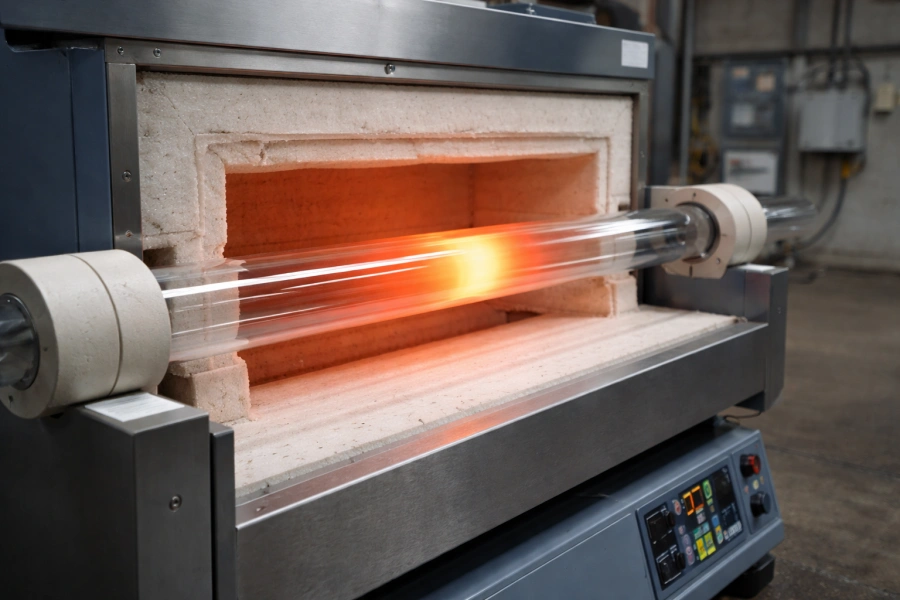
Flame polishing1 uses a high-temperature flame to melt the surface of quartz glass tubes, smoothing out imperfections and repairing microscopic cracks. This method is particularly useful for quickly improving surface finishes in mass production environments. The heat applied during the process ensures that any surface irregularities are removed, resulting in a smoother and more uniform appearance.
This technique offers several advantages, including fast processing times and the ability to handle large quantities of tubes. Flame polishing is also effective in treating thicker quartz tubes that may be difficult to process using other methods. Its high efficiency makes it a go-to option for industries that need polished quartz tubes in bulk.
Despite its advantages, flame polishing also has some drawbacks. The high temperatures involved can sometimes introduce new surface defects, such as slight warping or thermal stress. These imperfections can impact the tube’s performance in more demanding applications, where a flawless surface finish is essential.
Advances in Chemical Mechanical Polishing (CMP) and Laser Polishing
Chemical Mechanical Polishing (CMP)2 and laser polishing3 are cutting-edge methods that provide even finer surface finishes for quartz glass tubes. CMP combines chemical solutions with mechanical abrasives to achieve a smooth surface while also ensuring high precision. This dual-action method is ideal for applications that require extreme surface quality, such as optical systems and semiconductor manufacturing.
Laser polishing technology, on the other hand, uses a focused laser beam to melt the surface of the quartz tube, smoothing out imperfections without the need for abrasives. This method provides a highly controlled and precise surface finish, making it perfect for applications requiring the utmost precision and minimal surface defects.
Both CMP and laser polishing are advanced techniques that address the limitations of traditional mechanical polishing. These methods produce surfaces with significantly lower roughness, offering superior optical clarity and mechanical properties. However, they are more complex and costly, which may limit their application to high-end products or industries where performance demands are extremely high.
Performance Improvements and Technical Specifications of Polished Quartz Glass Tubes
Polished quartz glass tubes provide significant improvements in both performance and technical specifications. These enhancements are directly related to the polishing process, which refines the tube's surface, contributing to better optical and thermal properties. Understanding these improvements is essential for selecting the right quartz tube for specialized applications.
Surface Roughness (Ra/RMS) Impact on Optical Performance
Surface roughness plays a crucial role in the optical performance of quartz glass tubes. The smoother the surface, the better the light transmission and the lower the scattering. A rough surface causes light to scatter in different directions, which decreases the efficiency of optical systems that rely on precise light transmission, such as lasers or high-end optical instruments.
Polished quartz glass tubes achieve much lower roughness compared to unpolished alternatives, often achieving surface roughness values as low as 0.5 nm. This improvement significantly enhances the optical properties of the tubes, ensuring that light can pass through with minimal loss and maximum precision. These tubes are ideal for use in applications where even slight imperfections can lead to significant performance degradation.
The effect of surface roughness extends beyond optical performance and influences the durability of the quartz tube. A smoother surface reduces the likelihood of cracks or surface degradation under mechanical stress or high-temperature conditions. This makes polished quartz tubes more reliable and longer-lasting, even in harsh industrial environments.
Surface Defect Density and Device Reliability Correlation
The density of surface defects in quartz glass tubes directly correlates with the reliability of devices that use them. High defect densities can lead to premature failure, especially in applications where the tubes are exposed to mechanical stress or extreme environmental conditions. These defects can act as stress concentrators, leading to material fracture or failure under load.
Polishing significantly reduces the density of surface defects, which enhances the reliability of quartz tubes. By improving the smoothness and integrity of the surface, polished quartz tubes can withstand higher stresses and harsher environments without compromising their performance. This makes them ideal for industries where the reliability of components is critical, such as in aerospace, semiconductor manufacturing, and optical instrumentation.
As a result, polished quartz glass tubes offer superior reliability compared to their unpolished counterparts. In applications where device failure can have serious consequences, using polished tubes ensures greater longevity and performance. This reliability is a key factor in industries that rely on high-precision, long-lasting materials.
Enhancement of Thermal Stability and Chemical Inertness Through Polishing
Polishing improves the thermal stability and chemical inertness of quartz glass tubes by smoothing the surface and eliminating imperfections. A smooth surface helps prevent the formation of microscopic cracks, which can become points of failure under thermal stress. This makes polished quartz tubes more resistant to thermal shock and ensures they maintain their integrity at high temperatures.
In addition to thermal stability, polishing also enhances the chemical resistance of quartz tubes. The smooth surface is less prone to chemical corrosion, making these tubes suitable for use in aggressive chemical environments, such as those found in laboratories or chemical reactors. This characteristic is crucial in industries that require materials to resist corrosion without compromising performance.
By improving both thermal stability and chemical inertness, polishing ensures that quartz tubes perform reliably in high-stress, high-temperature environments. These enhanced properties extend the lifespan of the tubes and reduce the need for frequent replacements, making polished quartz tubes a cost-effective solution in many industries.
Control of Internal Stress and Birefringence
Internal stress and birefringence are critical factors in the performance of quartz glass tubes, especially in optical applications. Polishing helps to alleviate internal stress by smoothing out the surface and reducing microscopic cracks that can develop under high pressure or thermal stress. This is particularly important in optical systems, where even slight imperfections can cause distortions in light transmission.
By controlling internal stress, polished quartz tubes maintain better structural integrity, which is essential for high-precision systems. In optical applications, birefringence can significantly affect the clarity of transmitted light, resulting in poor image quality or measurement errors. The polishing process helps reduce these issues, ensuring that the tubes deliver consistent, high-quality performance.
Furthermore, controlling birefringence enhances the longevity and reliability of quartz tubes in sensitive environments. Without proper surface treatment, the internal stresses can lead to catastrophic failure or performance degradation over time. Polished tubes provide superior reliability in demanding applications, ensuring their continued functionality under high-stress conditions.
Key Applications of Polished Quartz Glass Tubes in Extreme Environments
Polished quartz glass tubes are essential in many industries that require materials capable of withstanding extreme environmental conditions. Their unique properties make them suitable for use in applications such as semiconductor manufacturing, high-precision optics, and medical devices, where high performance and reliability are crucial.
Semiconductor Manufacturing: High-Purity Process Tubes and Reactor Components
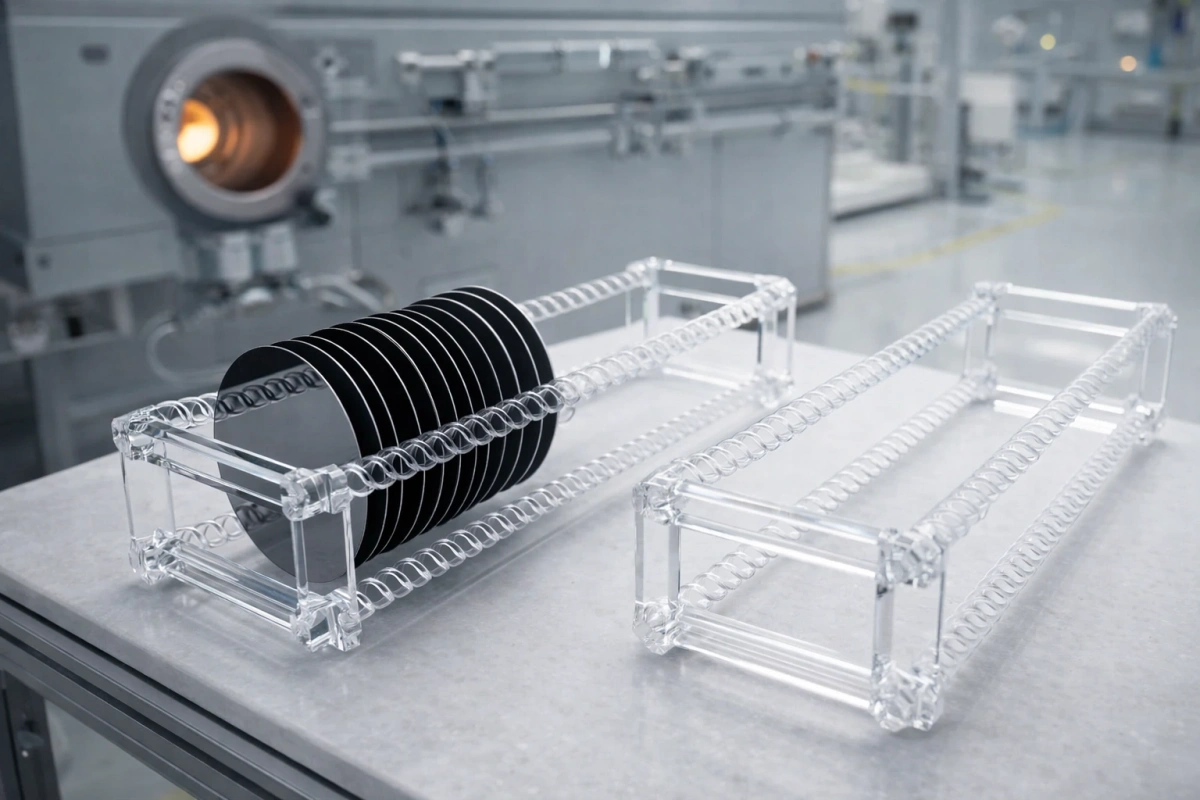
In semiconductor manufacturing, high-purity quartz tubes are used in critical process tubes and reactor components where even the slightest contamination can compromise the quality of the final product. The precision polishing of quartz tubes ensures minimal surface defects, reducing the risk of contamination during the manufacturing process. This is vital for processes like photolithography, where any imperfections can result in defects in semiconductor devices.
The high-purity nature of polished quartz tubes is essential in ensuring that chemical reactions within semiconductor reactors are not disrupted by foreign particles. By polishing the tubes, manufacturers can achieve a higher level of cleanliness and integrity, preventing the introduction of impurities that could interfere with delicate processes. These clean, polished surfaces are also resistant to corrosion, making them ideal for long-term use in these highly specialized environments.
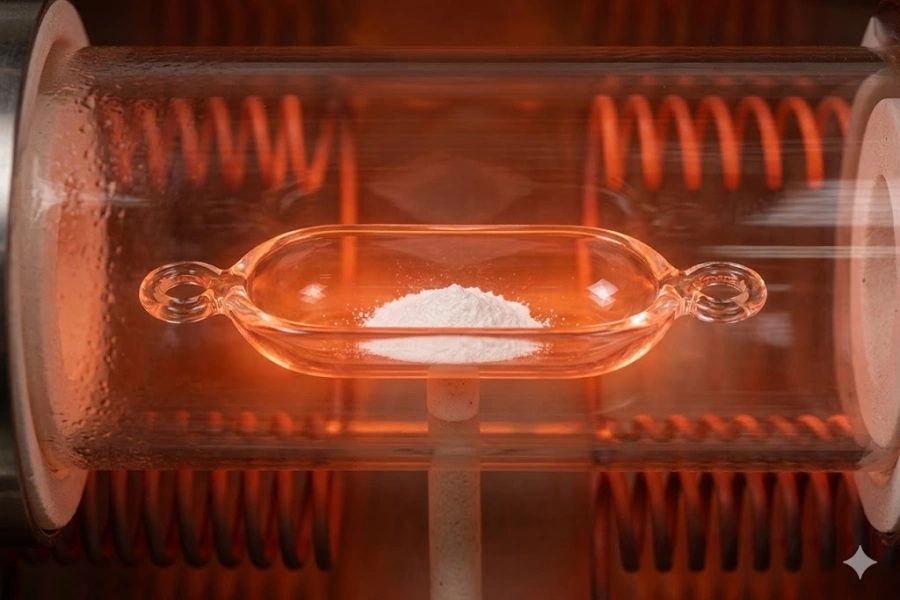
Additionally, polished quartz tubes contribute to the overall efficiency and performance of semiconductor manufacturing equipment. Their ability to withstand high temperatures and resist chemical degradation ensures that these tubes maintain their functionality over extended periods. This reliability is critical in maintaining consistent, high-quality production in semiconductor plants.
Optical Systems: UV/Deep UV (DUV) Light Transmission and Laser Applications
Polished quartz glass tubes are indispensable in optical systems that require high-precision light transmission, particularly in UV and DUV light systems. The smooth surface of polished quartz tubes minimizes light scattering, ensuring maximum light transmission and efficiency. This property is essential for applications like UV sterilization or laser systems, where the clarity and quality of the light beam directly affect performance.
The low surface roughness achieved through polishing enhances the transmission of light through quartz tubes, especially in the UV and DUV spectrum. These wavelengths are particularly sensitive to surface imperfections, which can absorb or scatter light, reducing system efficiency. By polishing the quartz tubes, manufacturers ensure that the light passes through with minimal distortion, making them ideal for high-performance optical systems.
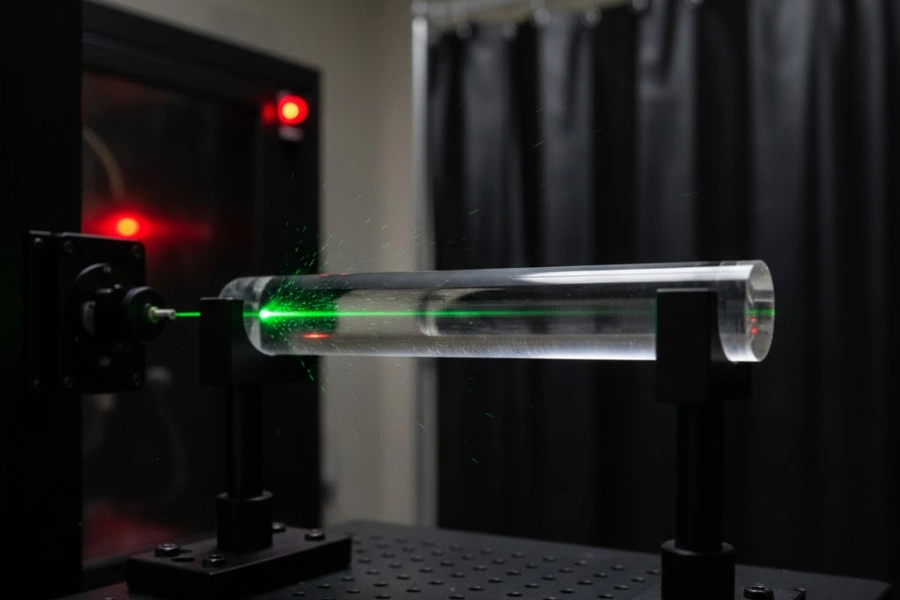
In laser applications, polished quartz tubes play a crucial role in maintaining beam quality. The smooth surface reduces the risk of beam divergence and ensures that the light is focused precisely where it is needed. This precision is vital for applications in medical devices, industrial lasers, and scientific research, where accuracy is paramount.
Medical and Biotechnology: Precision Fluid Transport and Analytical Equipment
Polished quartz tubes are essential in medical and biotechnology applications that require precise fluid transport and analysis. The smooth, chemically resistant surface of polished quartz ensures that the fluids transported through the tubes remain uncontaminated, maintaining the integrity of sensitive samples. This is particularly important in applications like DNA analysis or protein assays, where contamination can compromise the results.
In biotechnology equipment such as flow cytometers and spectrophotometers, polished quartz tubes enhance performance by reducing light scattering and improving optical clarity. This results in more accurate readings and higher reliability in tests. The uniformity of the polished surface also ensures that fluid dynamics are consistent, which is crucial in precision-based applications.
The thermal stability and chemical inertness of polished quartz tubes make them ideal for use in medical and biotechnology systems. These tubes can withstand aggressive solvents and high temperatures without degrading, ensuring their long-term reliability and performance. This makes them a valuable material for high-precision instruments used in diagnostics and pharmaceutical research.
High-Temperature and Corrosive Environments: Specialized Sensor and Detector Protection
Polished quartz tubes are frequently used to protect sensitive sensors and detectors in high-temperature and corrosive environments. Their superior thermal stability allows them to perform in extreme conditions, where unpolished alternatives would fail. The smooth surface finish not only enhances thermal resistance but also prevents the build-up of corrosive elements, ensuring the longevity of the sensor components.
The chemical inertness of polished quartz tubes makes them ideal for use in environments where exposure to harsh chemicals is common. For example, in chemical reactors or industrial monitoring systems, polished quartz tubes protect sensors from corrosive fumes or liquids that could otherwise damage the equipment. Their ability to maintain structural integrity in these conditions is crucial for the reliable operation of specialized industrial and scientific instruments.
Moreover, polished quartz tubes provide an additional layer of protection against mechanical stress in high-temperature applications. Their smooth surface reduces the risk of internal stress points, which can lead to cracks or fractures under extreme conditions. This makes polished quartz tubes a reliable choice for long-term use in environments that demand high performance and durability.
Conclusion
Polished quartz glass tubes offer unparalleled performance in high-demand applications, making them an essential component in industries ranging from semiconductor manufacturing to biotechnology.
Leverage TOQUARTZ's 20 years of experience in quartz glass manufacturing for high-precision, customized solutions tailored to your needs. Contact us for a free consultation and optimize your procurement strategy today.
FAQ (Frequently Asked Questions)
1. How does surface roughness affect the optical performance of polished quartz glass tubes?
Surface roughness directly impacts the optical transmission and scattering properties of quartz glass tubes. A smoother surface leads to better light transmission and higher performance in optical systems.
2. What factors should I consider when selecting a supplier for polished quartz glass tubes?
Key factors include the supplier’s technical capabilities, production qualifications, customization options, and ability to meet international standards and certifications.
3. What is the typical procurement process for polished quartz glass tubes?
The procurement process typically involves evaluating suppliers, reviewing technical specifications, confirming quality standards, and negotiating pricing and lead times. Customized orders may also require detailed drawings and consultations.
4. How does polished quartz compare to other materials in high-temperature applications?
Polished quartz has superior thermal stability and chemical inertness compared to many other materials, making it ideal for high-temperature and corrosive applications in industries like semiconductor manufacturing and optical systems.
References:
-
Explore this link to understand the process of flame polishing and its benefits in repairing glass surfaces. ↩
-
Understanding CMP can enhance your knowledge of advanced polishing techniques and their applications in various industries. ↩
-
Exploring laser polishing will reveal its advantages and innovations in achieving superior surface finishes. ↩