Choosing the wrong sample vessel corrupts results before analysis even begins — yet material selection rarely receives the scrutiny it deserves.
Both quartz combustion boats and ceramic vessels are engineered for high-temperature analytical work, yet their material properties diverge sharply across purity, thermal behavior, and dimensional precision. Recognizing where each material excels — and where it fails — is the most direct path to reliable, reproducible analytical outcomes.
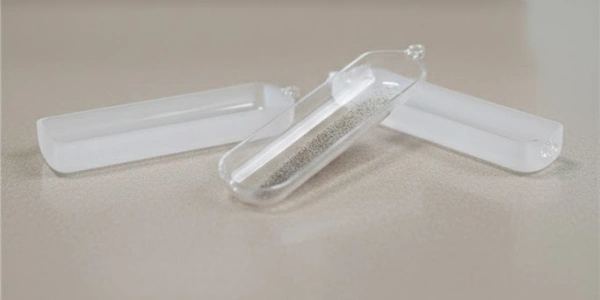
Quartz Combustion Boats and Ceramic Vessels Approach the Same Analysis Differently
Laboratories running high-temperature analysis routinely encounter the same foundational question: quartz combustion boat or ceramic vessel — and the answer carries more consequence than most technicians initially anticipate.
At first glance, quartz and ceramic combustion vessels appear interchangeable. Both tolerate elevated temperatures, both hold solid samples during combustion or thermal processing, and both are available in broadly similar form factors. However, the operational differences between these two material categories extend well beyond surface appearances, affecting everything from trace-level analytical accuracy to the mechanical compatibility of automated sampling systems. Selecting a vessel based solely on availability or unit price — without accounting for the specific analytical demands of the application — is one of the most common sources of systematic error in high-temperature laboratory workflows. Consequently, a structured comparison across the dimensions that actually influence results is not merely academic; it is a practical necessity for any laboratory that depends on the integrity of its combustion data.
Material Composition of Quartz Combustion Boats and Ceramics Shapes Their Capabilities
The physical and chemical properties that distinguish quartz from ceramic vessels originate entirely at the level of raw material composition and manufacturing process — understanding this foundation makes every subsequent performance comparison self-explanatory.
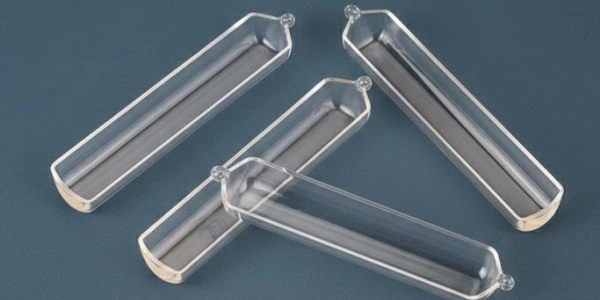
A quartz combustion boat is fabricated from fused silica — a non-crystalline, amorphous form of silicon dioxide produced by melting high-purity SiO₂ feedstock at temperatures exceeding 1,700 °C. The resulting material carries an SiO₂ content of 99.99% or higher, with metallic impurities measured in single-digit parts per million. This extraordinary purity is not incidental; it is the deliberate outcome of a manufacturing process specifically designed to eliminate contamination at the material level. The fused silica blank is then formed into its characteristic elongated trough geometry — a smooth, arc-shaped cross-section with perfectly flat, parallel ends — through precision flame-working or lathe-turning techniques that allow dimensional tolerances to be held within ±0.1 mm.
Ceramic combustion vessels, by contrast, are produced through powder compaction and high-temperature sintering of alumina (Al₂O₃), mullite (3Al₂O₃·2SiO₂), or high-alumina refractory blends. Standard laboratory-grade alumina ceramics typically carry Al₂O₃ contents between 85% and 99.7%, with the balance comprising silica, magnesia, and various sintering aids. The sintering process introduces an inherent degree of dimensional variability, because ceramic bodies contract non-uniformly during firing — shrinkage rates of 10–15% are common, and controlling this contraction to achieve consistent final dimensions requires tightly managed kiln profiles. The resulting microstructure is polycrystalline and porous at the microscale, a structural characteristic with direct implications for chemical cleanliness and surface behavior.
- Fused silica (quartz): Amorphous, non-porous, SiO₂ ≥ 99.99%, formed by precision flame or lathe process
- Alumina ceramic: Polycrystalline, microporous, Al₂O₃ 85–99.7%, formed by powder sintering with inherent shrinkage variability
- Mullite ceramic: Mixed aluminosilicate phase, suited to ultra-high-temperature service but lower chemical purity than fused silica
These compositional differences cascade into every performance category examined in the sections that follow, from thermal shock resistance to trace metal contamination and dimensional repeatability.
Quartz Combustion Boat and Ceramic Vessel Thermal Performance Under Elevated Temperatures
Thermal behavior sits at the center of any combustion vessel selection decision, and the contrast between fused silica and alumina ceramic across this dimension is both measurable and practically significant.
Fused silica and alumina ceramic reach their performance limits through entirely different thermal mechanisms. Fused silica derives its stability from an extraordinarily low coefficient of thermal expansion, while alumina ceramic earns its high-temperature credentials from the thermodynamic stability of its crystalline phase. Understanding where each mechanism succeeds — and where it breaks down — allows laboratories to match vessel material to the precise thermal demands of their instrumentation.
Thermal Shock Resistance and Coefficient of Thermal Expansion Compared
The coefficient of thermal expansion (CTE) is the single most consequential thermal property for any vessel that undergoes repeated insertion into and removal from a heated furnace environment.
Fused silica carries a CTE of approximately 0.55 × 10⁻⁶ /°C — among the lowest of any practical laboratory material. When a quartz combustion boat at room temperature is placed into a furnace preheated to 1,000 °C, the dimensional change across the vessel body remains so small that internal thermal stresses stay well below the fracture threshold of the material. This resistance to thermally induced cracking, commonly referred to as thermal shock resistance, is what allows fused silica vessels to survive the aggressive thermal cycling inherent to automated carbon-sulfur analyzers, where boats may cycle between ambient and 1,050 °C dozens of times per shift.
Alumina ceramic, by contrast, carries a CTE of 7–8 × 10⁻⁶ /°C — roughly 13 to 15 times higher than fused silica. Under equivalent thermal cycling conditions, the larger dimensional excursions generate proportionally higher internal stresses. Well-sintered, high-density alumina bodies can tolerate moderate thermal cycling, but vessels with residual porosity or surface microcracks are at meaningful risk of progressive crack propagation under repeated rapid temperature transitions. Laboratories that load cold ceramic boats directly into hot furnaces — a common practice in high-throughput workflows — report significantly higher breakage rates compared to equivalent quartz combustion boat usage under the same conditions.
The practical implication is straightforward: for applications involving frequent thermal cycling at temperatures up to 1,050 °C, fused silica offers materially superior resistance to thermally induced failure.
Sustained Operating Temperature Ranges for Each Material in Practice
Thermal shock resistance and maximum operating temperature are related but distinct properties, and conflating them leads to incorrect material selection decisions.
Fused silica is rated for continuous service up to approximately 1,050 °C, with intermittent excursions permissible to 1,150–1,200 °C for limited durations. Beyond these thresholds, the amorphous silica network begins to devitrify — converting progressively from a glassy, non-crystalline structure into crystalline cristobalite. Devitrification degrades the material's thermal shock resistance, introduces internal stress concentrations, and ultimately causes the vessel to become brittle and prone to fracture. Critically, devitrification is irreversible; a boat that has been exposed to temperatures above its stability limit cannot be restored to its original properties.
High-alumina ceramic, in contrast, is routinely rated for continuous service at 1,400–1,600 °C, with specialized refractory compositions maintaining structural integrity even higher. This thermal ceiling is genuinely beyond the reach of fused silica and represents the primary application domain in which ceramic vessels hold a clear and unambiguous advantage.
For the temperature ranges characteristic of the most common laboratory analytical applications — carbon-sulfur combustion analysis at 850–1,050 °C, thermogravimetric analysis at up to 1,000 °C, and AOX combustion at 950–1,000 °C — fused silica operates well within its stable service range, while alumina ceramic is technically overspecified for the thermal demand. The mismatch between ceramic's thermal capability and these applications' actual requirements does not, by itself, disqualify ceramic vessels, but it does mean that ceramic's primary strength is not being utilized in these contexts.
Operating Temperature Reference
| Property | Quartz Combustion Boat | High-Alumina Ceramic Vessel |
|---|---|---|
| Continuous Service Limit (°C) | 1,050 | 1,400–1,600 |
| Short-Term Peak Limit (°C) | 1,150–1,200 | 1,700+ |
| Thermal Shock Resistance | Excellent | Moderate |
| CTE (×10⁻⁶ /°C) | 0.55 | 7–8 |
| Devitrification Risk Above (°C) | 1,050 | N/A |
| Typical C-S Analysis Range (°C) | 850–1,050 | 850–1,050 |
Dimensional Stability After Repeated Thermal Cycling in Both Vessel Types
Dimensional stability under thermal cycling is a property that receives insufficient attention during vessel selection, yet it directly determines whether automated sampling systems maintain calibration over extended operational periods.
The low CTE of fused silica translates directly into dimensional repeatability across thermal cycles. A quartz combustion boat that measures 75.0 mm in length at room temperature will measure approximately 75.04 mm at 1,000 °C — a change of less than 0.06 mm. Over thousands of thermal cycles, fused silica vessels retain their original geometry with negligible deviation, ensuring consistent engagement with the mechanical feeders, transport rails, and positioning stops of automated analyzers such as the LECO CS-744 and Eltra CS-2000.
Alumina ceramic vessels expand by approximately 0.56 mm over the same 75 mm length under equivalent thermal conditions — a dimensional excursion roughly ten times larger. In manual analytical workflows, this difference is inconsequential. However, in automated systems where dimensional tolerances are held to ±0.1–0.2 mm to ensure reliable mechanical transport, repeated thermal cycling of ceramic vessels introduces cumulative dimensional uncertainty that can manifest as misfeeds, positioning errors, and incomplete combustion due to improper seating within the furnace tube.
Additionally, ceramic vessels that have experienced microcrack initiation — invisible to the naked eye but present after thermal shock events — may exhibit progressive dimensional distortion as microcracks open and close under cyclic thermal stress. This subtle degradation further compounds mechanical compatibility issues in precision automated systems.
Dimensional Change Under Thermal Load
| Vessel Length (mm) | Temperature Delta (°C) | Quartz Expansion (mm) | Ceramic Expansion (mm) |
|---|---|---|---|
| 75 | 0 → 500 | 0.02 | 0.28 |
| 75 | 0 → 800 | 0.03 | 0.43 |
| 75 | 0 → 1,000 | 0.04 | 0.56 |
| 100 | 0 → 1,000 | 0.06 | 0.75 |
| 120 | 0 → 1,000 | 0.07 | 0.90 |
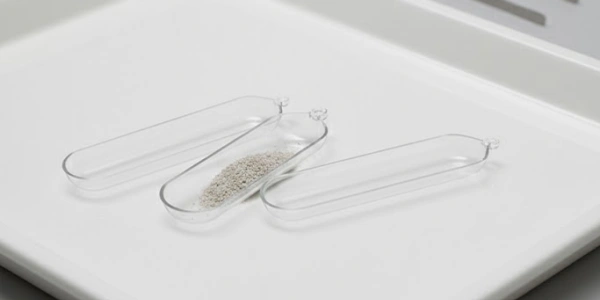
Purity Levels and Contamination Profiles of Quartz Combustion Boats Versus Ceramics
Beyond thermal mechanics, the chemical interaction between vessel material and sample is where analytical accuracy is most directly determined — and where the purity gap between fused silica and ceramic becomes operationally decisive.
For any analytical application where the vessel holds a sample during combustion or thermal decomposition, the material of the vessel is chemically present in the analytical environment. Even trace levels of elemental contamination originating from the vessel can corrupt results in high-sensitivity applications, particularly when the analytes of interest — carbon, sulfur, nitrogen, or halogens — are present in the sample at concentrations below 0.1%. The contamination pathways are multiple and cumulative, making a systematic comparison of chemical behavior essential.
Trace Metal Leaching and Its Impact on Analytical Background Values
The analytical blank — the signal detected by an instrument in the absence of any intentional sample contribution — is the foundation of detection limit performance, and vessel material is one of its primary determinants.
High-purity fused silica carries metallic impurity levels measured in single-digit parts per million or below. Typical specifications for laboratory-grade quartz combustion boats cite iron content below 1 ppm, aluminum below 0.5 ppm, calcium below 0.5 ppm, and total alkali metal content below 1 ppm. At the combustion temperatures used in carbon-sulfur analysis (850–1,050 °C), silicon dioxide is thermodynamically stable and does not decompose or release measurable quantities of contaminating species into the analytical gas stream. Consequently, the blank contribution from a properly conditioned quartz combustion boat is both low in absolute terms and highly reproducible from boat to boat.
Standard laboratory alumina ceramic vessels present a materially different contamination profile. Even 99.5% Al₂O₃ ceramic contains 0.5% of other phases, which at the scale of a single vessel translates to hundreds of micrograms of iron, calcium, magnesium, and silicon distributed throughout the vessel body. At high temperatures, these phases are not entirely inert. Grain boundary phases — the glassy silica-rich regions that form between alumina crystals during sintering — are thermodynamically less stable than the bulk alumina phase and can release trace species under sustained thermal loading. In carbon-sulfur analysis, sulfur-containing grain boundary phases in lower-grade ceramics have been documented as a source of positive sulfur blank bias, directly inflating measured sulfur concentrations in low-sulfur samples.
The practical consequence is that laboratories analyzing materials with sulfur or carbon concentrations below 0.01% are particularly vulnerable to ceramic-vessel-induced blank inflation, and achieving stable, low blanks typically requires extensive pre-firing conditioning of ceramic vessels — a time cost that fused silica vessels avoid due to their inherently lower and more stable blank contribution.
Elemental Purity Comparison
| Impurity Element | Quartz Combustion Boat (ppm, typical) | 99.5% Alumina Ceramic (ppm, typical) |
|---|---|---|
| Iron (Fe) | < 1 | 50–300 |
| Aluminum (Al) | < 0.5 | Matrix element |
| Calcium (Ca) | < 0.5 | 100–500 |
| Magnesium (Mg) | < 0.3 | 50–200 |
| Sodium (Na) | < 1 | 100–400 |
| Sulfur (S) | < 0.5 | 5–50 |
| Total metallic impurities | < 5 | > 1,000 |
Resistance to Acids and Alkalis in Sample Pre-Treatment Environments
Chemical resistance during cleaning and sample pre-treatment is a secondary but non-trivial factor in vessel selection, particularly in laboratories where vessels are cleaned with acid solutions between analytical runs.
Fused silica exhibits excellent resistance to hydrochloric acid (HCl), sulfuric acid (H₂SO₄), nitric acid (HNO₃), and most organic acids at concentrations routinely used in laboratory cleaning procedures. Immersion in 1:1 HCl at room temperature — a standard laboratory cleaning protocol for trace-metal decontamination — produces no measurable surface attack on fused silica over periods of hours to days. This stability means that acid-cleaned quartz combustion boats retain their original surface finish and dimensional integrity through repeated cleaning cycles, maintaining the analytical blank stability that makes them valuable in the first place.
High-alumina ceramic demonstrates good resistance to strong alkalis and reasonable resistance to many acids, but exhibits meaningful vulnerability to prolonged exposure to concentrated sulfuric acid at elevated temperatures. More significantly, the microporous surface of sintered ceramic provides a physical substrate for acid entrapment — acid solution wicked into surface pores during cleaning may not be fully removed by subsequent rinsing, leading to residual acid contamination that can interact with subsequent samples. This pore-entrapment mechanism is particularly problematic for halogen-sensitive analyses such as AOX and TOX, where residual chlorine-containing cleaning agents can produce false positive signals.
It bears noting explicitly that neither fused silica nor alumina ceramic is resistant to hydrofluoric acid (HF). HF reacts aggressively with silicon dioxide and attacks ceramic grain boundary phases, making HF-containing environments incompatible with both vessel types. Laboratories working with HF must use alternative vessel materials — typically platinum or PTFE — regardless of the temperature requirements of their application.
Chemical Resistance Profile
| Chemical Environment | Quartz Combustion Boat | Alumina Ceramic Vessel |
|---|---|---|
| Dilute HCl (< 10%) | Excellent | Good |
| Concentrated HCl | Excellent | Moderate |
| Dilute H₂SO₄ | Excellent | Good |
| Concentrated H₂SO₄ (hot) | Good | Moderate–Poor |
| Dilute HNO₃ | Excellent | Good |
| NaOH / KOH solutions | Good | Excellent |
| Hydrofluoric acid (HF) | Poor | Poor |
| Organic solvents | Excellent | Excellent |
Surface Porosity and Cross-Contamination Risk Between Consecutive Samples
The microscale surface architecture of a combustion vessel — specifically its porosity and surface roughness — governs how completely it can be cleaned between samples and how reliably it maintains a stable analytical blank across a sequence of consecutive measurements.
Fused silica is a non-porous, amorphous material with a surface roughness achievable to Ra ≤ 0.8 μm through standard polishing procedures. At this surface finish, fine powder samples — including sub-100 μm steel drillings, coal dust, and mineral fines — do not penetrate the surface or become mechanically entrapped. After combustion, residual ash can be removed by acid washing or simple mechanical cleaning, returning the vessel surface to a condition analytically equivalent to its initial state. This cleanability is a quantifiable advantage: laboratories using fused silica vessels in sequential carbon-sulfur runs typically report blank-to-blank variability of less than 2 μg carbon equivalent, supporting detection limits in the sub-0.001% carbon range.
The sintered microstructure of ceramic vessels, in contrast, presents open porosity at the surface. Depending on sintering density, alumina ceramics may carry surface porosities of 0.5–3% by area, with individual pore diameters ranging from 1 to 20 μm. Fine analytical samples — particularly those with high carbon or sulfur loading — can penetrate these surface pores during combustion and resist complete removal during cleaning. The consequence is carryover contamination: residual carbon or sulfur from a high-concentration sample contributes a positive bias to the blank measurement of the subsequent sample, progressively degrading the detection limit performance of the analytical sequence. In high-throughput laboratories running samples across a wide concentration range — alternating between high-carbon steels and ultra-low-carbon grades, for example — ceramic vessel cross-contamination can introduce systematic errors that are difficult to detect without rigorous blank monitoring protocols.
Surface and Contamination Properties
| Property | Quartz Combustion Boat | Alumina Ceramic Vessel |
|---|---|---|
| Surface Porosity (%) | 0 (non-porous) | 0.5–3.0 |
| Typical Surface Roughness Ra (μm) | ≤ 0.8 | 1.5–5.0 |
| Sample Penetration Risk | Negligible | Moderate–High |
| Blank-to-Blank Variability (μg C equiv.) | < 2 | 5–20 |
| Cleanability After High-Load Sample | Excellent | Moderate |
| Cross-Contamination Risk (sequential runs) | Very Low | Moderate |
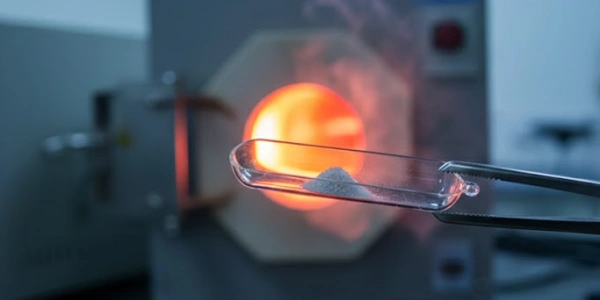
Structural and Dimensional Precision Inherent to Quartz Combustion Boats Over Ceramics
Dimensional precision may appear to be a secondary concern relative to thermal and chemical performance, yet in laboratories operating automated analytical instrumentation, it is frequently the determining factor in day-to-day operational reliability.
The precision of a combustion vessel's physical geometry directly governs its compatibility with the mechanical systems — feeders, transport rails, positioning stops, and furnace tube clearances — of automated analyzers. A vessel that is thermally and chemically appropriate for an application but dimensionally inconsistent will cause mechanical failures, interrupting analytical sequences and requiring manual intervention that negates the productivity benefits of automation. Fused silica and ceramic diverge significantly in their inherent dimensional controllability, for reasons rooted in their respective manufacturing processes.
Flat-End Parallelism and Tolerance Requirements for Automated Sampling Systems
The most geometrically critical feature of a precision combustion vessel is the condition of its two end faces — and this is precisely where fused silica manufacturing holds its most significant structural advantage over ceramic sintering.
A precision quartz combustion boat is formed with both end faces cut perpendicular to the vessel's long axis and ground to absolute horizontal parallelism. The two ends are not curved, not tapered, and carry no upward tilt whatsoever — they are planar surfaces, machined to be parallel to each other within angular tolerances of less than 0.5°. Overall length tolerances of ±0.1 mm are routinely achieved in production, and width and depth tolerances of ±0.2 mm ensure consistent engagement with instrument feeder mechanisms. These tolerances are maintained across production batches because fused silica machining — flame cutting and precision grinding — is a subtractive process that removes material to achieve target dimensions, rather than relying on volumetric shrinkage to approach them.
Ceramic vessel manufacturing presents a fundamentally different dimensional control challenge. Green-body compacts shrink by 10–15% during sintering, and this shrinkage is neither perfectly isotropic1 nor perfectly reproducible from piece to piece within a kiln batch. Even with carefully optimized firing profiles, sintered alumina vessels routinely carry dimensional tolerances of ±0.5–1.0 mm on length, and end-face parallelism is rarely specified or guaranteed. In automated analyzer systems where the mechanical feeder is calibrated to accept vessels within a ±0.2 mm length window, ceramic vessels at the upper or lower limits of their tolerance range will either jam in the feeder mechanism or fail to actuate the position sensor — both failure modes require operator intervention and interrupt unattended overnight runs.
Laboratories that have transitioned from ceramic to precision quartz combustion boats in automated carbon-sulfur analyzer workflows consistently report reductions in feeder jam frequency of 60–80%, with corresponding improvements in unattended run completion rates.
Dimensional Tolerance Comparison
| Dimensional Parameter | Quartz Combustion Boat (±mm) | Alumina Ceramic Vessel (±mm) |
|---|---|---|
| Overall Length | 0.1 | 0.5–1.0 |
| Width | 0.2 | 0.5–0.8 |
| Depth | 0.2 | 0.4–0.7 |
| End-Face Parallelism (angular, °) | < 0.5 | 1.0–3.0 |
| Wall Thickness Uniformity | ±0.1 | ±0.3–0.5 |
| Batch-to-Batch Repeatability | High | Moderate |
Surface Finish Standards and Their Effect on Sample Retention and Cleaning
The surface finish of the vessel interior has direct consequences for sample distribution behavior during weighing, combustion efficiency, and the completeness of post-run cleaning.
The interior arc surface of a fused silica combustion boat, polished to Ra ≤ 0.8 μm, presents a smooth, non-retentive substrate for powdered analytical samples. When fine drillings or ground mineral powders are placed into the boat for weighing, the smooth surface allows the sample to distribute naturally into the arc profile under gravity without clumping at surface asperities — a behavior that directly supports the accurate transfer of sample mass recorded on the analytical balance to the furnace environment. After combustion, residual ash sits loosely on the polished surface and is removed completely by a single acid rinse or brief ultrasonic cleaning step, leaving the surface analytically clean for the next run.
Ceramic vessel interiors, with surface roughness values typically in the range of Ra 1.5–5.0 μm, interact differently with fine powder samples. Particles smaller than the dominant surface feature size — which at Ra 3 μm may be 10–15 μm in lateral dimension — can become mechanically lodged in surface valleys and pores. In quantitative combustion analysis, any sample retained in the vessel after transfer to the balance cannot be accounted for in the weighed sample mass, introducing a systematic low bias to the calculated analyte concentration. The magnitude of this effect varies with sample particle size distribution, but for sub-50 μm powders, retention losses of 0.5–2.0 mg per run have been documented in peer-reviewed combustion analysis method validation studies, representing a non-trivial source of error in low-concentration analyte determinations.
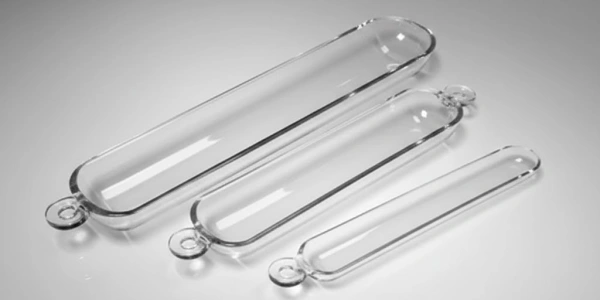
Extreme Temperature Thresholds and Scenarios Favoring Ceramic Over Quartz Combustion Boats
A technically rigorous comparison requires an honest account of the scenarios in which ceramic vessels hold a genuine, application-determining advantage — and those scenarios do exist.
The upper thermal service limit of fused silica is a real constraint, not a minor caveat. Laboratories and industrial facilities operating processes that demand sustained temperatures above 1,200 °C cannot use quartz combustion boats without accepting accelerating devitrification, progressive embrittlement, and shortened service life. In these specific high-temperature domains, high-alumina or mullite ceramic vessels are not merely an alternative — they are the technically correct choice.
Ultra-High-Temperature Calcination and Ashing Beyond Quartz Safety Limits
Certain analytical and industrial thermal processes require sustained vessel exposure at temperatures that definitively exceed the fused silica service envelope.
High-temperature calcination of geological samples, ceramic precursors, and refractory materials is commonly conducted at 1,300–1,550 °C — temperatures at which fused silica is actively devitrifying and structurally degrading. Mineralogical analysis requiring complete volatilization of organic phases in complex matrices may also demand temperatures in this range to achieve quantitative combustion within practical run times. For these applications, high-alumina ceramic (Al₂O₃ ≥ 99%) or mullite ceramic vessels are the appropriate vessel material, offering structural integrity and acceptable chemical purity across the entire working temperature range.
Similarly, standard loss-on-ignition (LOI)2 determinations for cement, lime, and geological samples are frequently conducted at 950–1,050 °C in routine laboratory practice, but some method specifications — particularly for high-carbon refractory materials — specify ignition temperatures of 1,100–1,200 °C to ensure complete combustion. At 1,100 °C, a quartz combustion boat is operating at or slightly above its recommended continuous service limit, and extended dwell times at this temperature will progressively devitrify the vessel. Ceramic vessels carry no equivalent devitrification risk at 1,100 °C and are the safer choice for LOI protocols specifying temperatures at or above the fused silica stability threshold.
Additionally, certain metal fusion sample preparation techniques — used in X-ray fluorescence (XRF) analysis of major elements — operate at 1,050–1,200 °C with fluxing agents such as lithium tetraborate that react aggressively with silica. In these fusion applications, fused silica vessels are chemically incompatible with the flux, and specialized high-alumina or platinum crucibles are required.
Application Temperature and Vessel Suitability
| Application | Typical Temperature (°C) | Quartz Combustion Boat | Alumina Ceramic Vessel |
|---|---|---|---|
| Carbon-sulfur analysis | 850–1,050 | Recommended | Acceptable |
| TGA (thermogravimetric) | Up to 1,000 | Recommended | Acceptable |
| AOX / TOX combustion | 950–1,000 | Recommended | Not preferred |
| Standard LOI (cement, geological) | 950–1,050 | Acceptable | Recommended |
| High-temperature LOI | 1,100–1,200 | Not recommended | Recommended |
| High-temp calcination | 1,300–1,550 | Incompatible | Recommended |
| Metal fusion (XRF prep) | 1,050–1,200 | Incompatible | Recommended |
Cost-Per-Test Economics in High-Volume Industrial Screening
Economic considerations in analytical consumable selection are legitimate and should be assessed with the same rigor as technical performance criteria — provided the cost analysis is conducted at the level of cost-per-accurate-result rather than unit purchase price.
In industrial screening applications where sample volumes are large, analyte concentrations are well above detection limits, and vessel-induced contamination does not materially affect result interpretation, ceramic combustion vessels present a genuine economic advantage. A standard alumina ceramic combustion boat is typically priced at 20–40% of the equivalent fused silica vessel, and for high-throughput coal quality screening, ore grade estimation, or cement plant process control — where daily sample volumes may reach 200–400 per instrument — this unit price differential translates into meaningful consumable cost reduction over an annual period.
The critical qualification is that this economic advantage holds only when the application's accuracy requirements are genuinely compatible with ceramic's contamination and dimensional variability profile. For high-volume screening of samples where carbon or sulfur concentrations exceed 0.05%, where results are used for trend monitoring rather than certification, and where automated feeding is not required, ceramic vessels may deliver acceptable analytical performance at lower per-test consumable cost. However, when the application involves low-concentration analyte determinations, certification testing, automated feeding systems, or cross-contamination-sensitive sample sequences, the total cost of analytical errors and instrument downtime attributable to ceramic vessel limitations typically exceeds the purchase price differential — making the economic case for ceramic far less compelling than the unit price comparison suggests.
Matching Quartz Combustion Boats or Ceramic Vessels to Your Specific Workflow
Translating material science into a practical selection decision requires mapping each vessel's property profile against the specific performance demands of the intended analytical application — and several of those applications present sufficiently clear-cut requirements to support unambiguous recommendations.
The properties examined across the preceding sections do not affect all analytical workflows equally. An application's temperature range, sensitivity requirements, degree of automation, and sample throughput collectively determine which vessel material delivers the most reliable and cost-effective performance. Approaching the selection decision through this application-specific lens — rather than defaulting to familiarity or unit price — is what separates systematic analytical method development from ad hoc consumable procurement.
Carbon-Sulfur and TGA Analysis — Optimal Conditions for Quartz Combustion Boats
Carbon-sulfur combustion analysis represents the highest-volume application for laboratory combustion vessels globally, and the performance requirements of this application align closely with the material strengths of fused silica.
In carbon-sulfur analysis conducted on a LECO CS-744, Eltra CS-2000, or equivalent induction-furnace combustion analyzer, the analytical vessel is exposed to rapid inductive heating to 850–1,050 °C, followed by removal and cooling to ambient temperature for the next sample loading. This aggressive thermal cycling — potentially hundreds of cycles per day in a high-throughput laboratory — places maximum demand on thermal shock resistance, precisely the property where fused silica holds its largest performance advantage over alumina ceramic. Breakage rates observed in laboratories running alumina ceramic boats under these conditions are consistently higher than those reported for fused silica, with ceramic breakage contributing measurable consumable waste and instrument downtime.
Beyond thermal cycling, the analytical sensitivity requirements of modern carbon-sulfur instrumentation — capable of resolving carbon concentrations to 0.0001% in certified reference material analysis — demand vessel blank contributions that are both low and reproducible. The sub-5 ppm total metallic impurity profile of a high-purity quartz combustion boat, combined with its non-porous, Ra ≤ 0.8 μm interior surface, enables blank stability that ceramic vessels cannot consistently match. For laboratories certifying ultra-low-carbon steels, electronic-grade materials, or high-purity industrial gases absorbed into solid sorbents, fused silica is the only vessel material that reliably supports the blank performance required for method validation at the lowest concentration tiers.
Thermogravimetric analysis presents a slightly different but similarly aligned requirement profile. TGA experiments track mass change as a continuous function of temperature, meaning that any material released from the vessel — oxide phases, adsorbed gases, or volatile impurities — registers as an apparent sample mass change and corrupts the derivative thermogravimetric (DTG) signal. The chemical inertness and low outgassing rate of fused silica across the 25–1,000 °C range typical of laboratory TGA instruments make it the preferred vessel material for high-resolution thermal decomposition studies, particularly when working with samples at the milligram scale where vessel contributions represent a proportionally larger fraction of the total signal.
Performance Alignment for Carbon-Sulfur and TGA Applications
| Performance Criterion | Requirement Level | Quartz Combustion Boat | Alumina Ceramic Vessel |
|---|---|---|---|
| Thermal shock resistance (daily cycling) | Critical | Excellent | Moderate |
| Blank carbon contribution (μg C) | < 5 | < 2 | 5–20 |
| Blank sulfur contribution (μg S) | < 2 | < 1 | 2–15 |
| Dimensional tolerance for auto-feeder (±mm) | ±0.1–0.2 | 0.1 | 0.5–1.0 |
| Surface cleanliness after combustion | High | Excellent | Moderate |
| Batch-to-batch blank reproducibility | High | High | Moderate |
AOX and Halogenated Compound Analysis Requirements for Vessel Purity
AOX, TOX, and EOX analysis imposes the most stringent chemical purity requirements of any standard combustion vessel application — requirements that effectively disqualify standard ceramic vessels from routine use in this context.
Adsorbable organic halogen (AOX) analysis quantifies total halogenated organic compounds in water and solid matrices by combustion and coulometric titration3 of the resulting halide. Method detection limits under ISO 9562 and DIN 38409-14 are typically set at 10 μg/L or below, corresponding to halide masses in the range of nanograms per analytical run. At this sensitivity level, any chlorine, bromine, or fluorine present in the vessel material — whether as lattice-incorporated halide, adsorbed surface contamination, or residual cleaning agent entrapped in surface pores — contributes directly to the measured AOX blank, raising the effective detection limit and degrading the method's ability to distinguish contaminated from clean samples.
High-purity fused silica contains halide concentrations below 0.1 ppm and presents a non-porous, smooth surface that does not entrap cleaning solution residues. After acid cleaning and high-temperature blank conditioning, a quartz combustion boat contributes a halide blank consistently below the detection threshold of the coulometric titrator — the prerequisite for reliable AOX quantification at environmental monitoring concentrations. Standard alumina ceramic vessels, with their microporous surfaces and higher total impurity burden, cannot consistently achieve the same blank baseline, and the risk of cleaning solution entrapment in ceramic pores adds an additional variable that compromises blank reproducibility between runs.
For laboratories conducting AOX, TOX, EOX, or POX analysis in compliance with international environmental standards, the use of high-purity quartz combustion boats is not merely preferred — it is effectively mandated by the sensitivity requirements of the measurement method itself.
AOX Analysis Vessel Requirements
| Criterion | AOX Method Requirement | Quartz Combustion Boat | Alumina Ceramic Vessel |
|---|---|---|---|
| Halide blank (ng per run) | < 5 | < 2 | 10–50 |
| Surface porosity | Non-porous preferred | Non-porous | Microporous |
| Cleaning solution entrapment risk | Minimal | Negligible | Moderate–High |
| Compliance with ISO 9562 | Required | Achievable | Difficult |
| Batch blank reproducibility | High | High | Low–Moderate |
A Practical Decision Matrix Across Temperature, Purity and Throughput Variables
For laboratories whose application parameters do not fall neatly into the carbon-sulfur or AOX categories, a structured five-variable assessment provides a systematic basis for vessel material selection.
The five variables that collectively determine the appropriate vessel material are: operating temperature ceiling, analyte concentration range, automated versus manual sample introduction, daily sample throughput, and analytical purpose (certification versus screening). Each variable independently shifts the balance between fused silica and alumina ceramic, and the combined effect of all five variables evaluated simultaneously determines the optimal choice for a given workflow.
Decision Matrix for Vessel Material Selection
| Variable | Favors Quartz Combustion Boat | Favors Alumina Ceramic Vessel |
|---|---|---|
| Operating temperature ceiling | ≤ 1,050 °C | > 1,200 °C |
| Analyte concentration range | < 0.05% (low-level detection) | > 0.1% (bulk screening) |
| Sample introduction system | Automated feeder (±0.1 mm tolerance) | Manual loading |
| Daily throughput | < 200 samples (quality over speed) | > 300 samples (volume screening) |
| Analytical purpose | Certification, method validation | Routine process monitoring |
| Cross-contamination sensitivity | High (wide concentration range) | Low (homogeneous sample set) |
| Cleaning protocol | Acid wash between runs | High-temperature burn-off |
| Chemical environment | Halogen-sensitive (AOX, TOX) | Alkali-rich matrices |
Best Laboratory Practices for Handling and Maintaining a Quartz Combustion Boat
Proper handling and maintenance protocols determine whether the material and dimensional advantages of fused silica translate into consistent analytical performance over the full service life of each vessel.
Pre-use conditioning is the first and most consequential step in deploying a new quartz combustion boat. Fresh vessels carry adsorbed atmospheric moisture and trace organic contamination from packaging and handling. Introducing an unconditioned vessel directly into a combustion analyzer produces an elevated and unstable blank for the first several runs, corrupting the early portion of any analytical sequence. The established conditioning protocol is to heat the new vessel at 1,000 °C for 30–45 minutes in an oxidizing atmosphere (air or pure oxygen), then allow it to cool in a desiccated environment before first use. This burn-in step thermally desorbs surface contaminants, stabilizes the blank to its long-term baseline value, and reveals any pre-existing microcracks — vessels that survive the conditioning cycle without cracking are confirmed structurally sound for analytical service.
Cleaning between uses should be matched to the contamination load of the preceding sample. For routine carbon-sulfur analysis of steel and cast iron samples, a 15-minute immersion in 1:3 HNO₃:H₂O at room temperature, followed by triple rinsing with deionized water and drying at 120 °C, removes residual iron oxide ash completely without attacking the fused silica surface. For high-carbon samples such as graphite, electrode materials, or high-carbon steels, a supplementary high-temperature blank firing at 950 °C for 20 minutes after acid cleaning ensures complete combustion of any carbonaceous residue entrapped in surface features. Vessels used for AOX or halogen analysis require dedicated cleaning with halide-free acid solutions — typically 1:10 H₂SO₄:H₂O — to avoid introducing chlorine-containing residues that would compromise subsequent halide blanks.
Reuse criteria for fused silica vessels should be assessed visually before each analytical sequence. A vessel is suitable for continued use if its surface is free of visible cracks, the interior arc shows no devitrification (visible as a milky opacity in previously clear sections), and the two end faces remain chip-free and parallel. Devitrified sections — identifiable by their white, non-transparent appearance — indicate that the vessel has been exposed to temperatures exceeding its stability threshold and should be retired from service, as the altered microstructure compromises both thermal shock resistance and blank performance. In precision trace-level analysis, many laboratories adopt a policy of single-use deployment for each vessel, accepting the consumable cost in exchange for the certainty of a well-characterized, uncompromised analytical blank for every measurement.
Storage and thermal ramp management complete the operational best-practice framework. Quartz combustion boats should be stored in a sealed, desiccated container when not in use, protected from laboratory dust and aerosol contamination that would require additional conditioning to remove. When introducing vessels into a pre-heated furnace, a staged approach — placing the vessel at the furnace entrance for 60–90 seconds before full insertion — moderates the thermal shock experienced by the fused silica and extends service life meaningfully without adding material time to the analytical workflow. Handling should always be performed with clean nitrile gloves or dedicated stainless-steel tongs; bare-hand contact transfers skin oils and sodium-containing perspiration to the vessel surface, elevating carbon and sodium blanks in subsequent runs in a pattern that can persist through multiple cleaning cycles if not specifically addressed.
Conclusion
Quartz combustion boats and ceramic vessels are both legitimate analytical tools — the difference lies in where each material's property profile intersects with an application's actual requirements. Fused silica's combination of near-zero thermal expansion, sub-5 ppm total impurity content, non-porous surface architecture, and ±0.1 mm dimensional controllability makes it the superior choice for the majority of laboratory combustion analysis applications, including carbon-sulfur determination, TGA, and AOX testing. Ceramic vessels earn their place in the analytical toolkit at sustained temperatures above 1,200 °C and in high-volume industrial screening workflows where analyte concentrations are well above detection limits. Matching vessel material to application requirements — rather than defaulting to availability or unit price — is the most direct path to analytical data that can be trusted.
FAQ
Can a quartz combustion boat be reused multiple times?
Yes, provided the vessel shows no visible cracks, no devitrification, and no chipping at the end faces. After each use, acid cleaning followed by a high-temperature conditioning cycle restores the analytical blank to its baseline. For trace-level certifications where blank stability is paramount, single-use deployment is the recommended practice.
At what temperature does a quartz combustion boat begin to devitrify?
Devitrification — the conversion of amorphous fused silica to crystalline cristobalite — begins at approximately 1,050 °C under sustained thermal exposure. The rate accelerates with increasing temperature and cumulative exposure time. Vessels operated consistently within the 850–1,000 °C range characteristic of standard carbon-sulfur analysis experience negligible devitrification over hundreds of thermal cycles.
Is a quartz combustion boat compatible with all tube furnace configurations?
Fused silica vessels are compatible with resistance-heated tube furnaces, induction furnaces, and infrared furnaces operating within the 850–1,200 °C service range. Compatibility with a specific instrument model depends on the internal bore diameter of the furnace tube and the dimensional specifications of the vessel feeder mechanism. Standard production sizes are designed to match the bore dimensions of major commercial analyzers, and custom dimensions are available for non-standard configurations.
What distinguishes a quartz combustion boat from a quartz crucible for high-temperature work?
A combustion boat is an elongated open trough with an arc-shaped cross-section, optimized for inserting into a horizontal tube furnace or combustion analyzer where the sample must be exposed to a flowing gas stream across its full surface area. A quartz crucible is a vertical, cylindrical or conical vessel intended for static heating applications such as gravimetric analysis, fusion, or precipitation. The two vessel geometries are designed for fundamentally different heating configurations and are not interchangeable in practice.
References:
-
Isotropy describes a material property that is identical in all directions; anisotropic shrinkage during ceramic sintering produces dimensional variability that complicates precision manufacturing. ↩
-
Loss-on-ignition is a gravimetric analytical technique that quantifies volatile components in a sample — including moisture, carbonate, and organic matter — by measuring mass reduction after high-temperature heating. ↩
-
Coulometric titration is an electroanalytical technique that determines analyte concentration by measuring the total electrical charge required to complete a quantitative electrochemical reaction at a working electrode. ↩