When selecting materials for high-temperature furnaces, one crucial decision that engineers must make is choosing the right furnace tube. Quartz furnace tubes offer unique benefits, especially in applications requiring precise thermal stability and mechanical strength. But how do you ensure you’re selecting the right quartz tube for your furnace's needs?
Quartz furnace tubes for furnaces provide excellent thermal resistance, durability, and transparency. This article will guide you through understanding the critical properties of quartz furnace tubes, comparing them with alternative materials, and helping you select the right one for your furnace.

Key Properties of Quartz Furnace Tubes for Furnace Applications
Quartz furnace tubes are essential components in high-temperature furnace applications due to their remarkable thermal stability, mechanical strength, and optical properties. These properties enable them to withstand extreme temperatures and thermal fluctuations without compromising furnace performance. Understanding these key characteristics is crucial when selecting quartz furnace tubes for various furnace types and applications.
Thermal Properties of Quartz Furnace Tubes for Furnace Applications
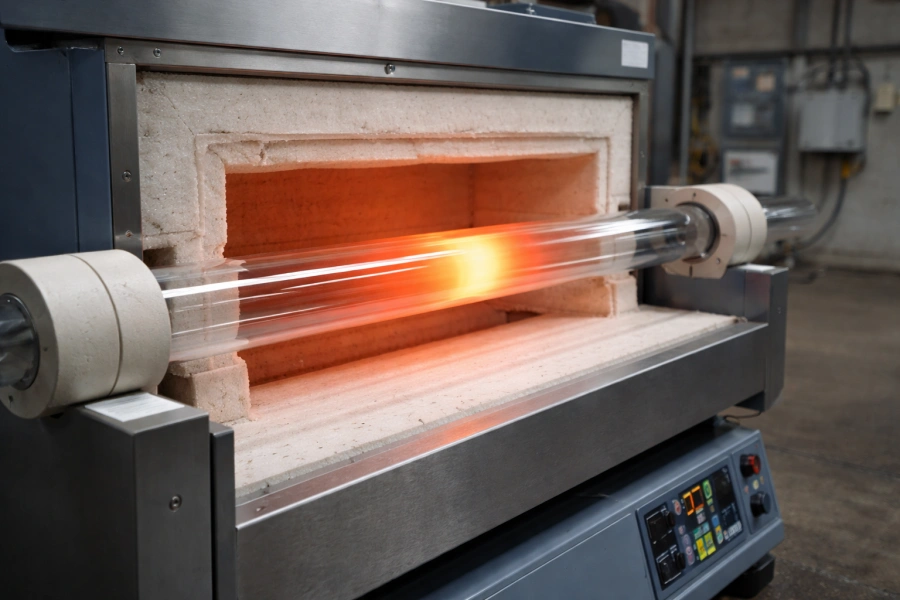
Quartz furnace tubes are highly valued for their outstanding thermal stability. They can withstand temperatures exceeding 1,600°C, which is essential for furnace operations that involve high heat. Their resistance to thermal shock ensures that the furnace tubes remain intact even during rapid heating and cooling cycles.
Additionally, the low coefficient of thermal expansion in quartz helps maintain its structural integrity under fluctuating temperature conditions. This property is critical, as it minimizes the risk of cracks or deformations that could jeopardize the furnace's performance. Without this resistance, the tube may fail prematurely under intense heat.
These thermal properties make quartz furnace tubes ideal for high-temperature furnace applications, where both stability and durability are crucial. Their ability to endure extreme thermal conditions is one of the primary reasons engineers prefer quartz for furnace use.
Optical Properties and Their Impact on Furnace Tube Performance
Quartz furnace tubes offer excellent optical properties, allowing for transparent performance in the UV, visible, and infrared spectrums. This makes them ideal for applications where optical monitoring is required, such as in furnaces used for precision heating or scientific research. The ability to observe the internal furnace environment through the tube enhances operational control and process visibility.
Furthermore, quartz's transparency ensures that the heat inside the furnace is evenly distributed, which is essential for consistent temperature control. It also supports better monitoring of material behavior during processing, making it easier to optimize furnace operations and improve product quality.
The optical properties of quartz also play a role in protecting sensitive components inside the furnace. Their ability to transmit infrared light helps in better control of heat distribution, minimizing the risk of overheating or uneven heating, which can lead to material failure.
Mechanical Strength and Durability in High-Temperature Environments
Quartz furnace tubes possess impressive mechanical strength, which is vital for their durability in high-temperature furnace environments. They can withstand significant stress without compromising their structural integrity, even when subjected to thermal shock. This mechanical toughness is key in maintaining the tube's longevity during repeated heating cycles.
Quartz also resists deformation under high pressure and extreme heat, which ensures it continues to function effectively over long periods. Its strength is further enhanced by its ability to resist cracking under rapid temperature changes, a common issue with less durable materials like glass or plastics.
In high-temperature environments, the mechanical durability of quartz furnace tubes is indispensable. Without this durability, the furnace could suffer from tube failures, resulting in costly downtime and potential damage to the furnace components. Quartz furnace tubes' ability to maintain their form and function under such conditions makes them a preferred choice for high-temperature applications.
Comparing Quartz Furnace Tubes with Other Furnace Tube Materials
When selecting the right tube material for furnace applications, comparing quartz furnace tubes with alternatives like alumina, stainless steel, and molybdenum is crucial. Each material offers distinct advantages and limitations based on thermal resistance, transparency, and durability. A thorough comparison helps engineers make informed decisions on the most suitable tube for their furnace needs.
Quartz Furnace Tubes vs. Alumina Tubes: A Performance Comparison
Alumina furnace tubes1 offer good thermal resistance, making them suitable for high-temperature environments. However, they do not provide the same level of transparency as quartz furnace tubes, limiting their use in applications where visual monitoring or precise temperature control is essential. In environments where visibility is critical, quartz furnace tubes are far superior due to their excellent optical properties.
In addition to optical transparency, quartz furnace tubes outperform alumina furnace tubes when it comes to flexibility under thermal stress. Quartz is better able to maintain its shape and structure when exposed to rapid temperature changes, reducing the risk of cracks or breakage. This makes quartz furnace tubes a more reliable choice for many furnace applications, especially those involving fluctuating temperatures.
Moreover, alumina furnace tubes may have a higher resistance to certain chemical reactions, but quartz furnace tubes offer a broader range of applications due to their better heat distribution and transparency. This makes quartz furnace tubes a more versatile option, especially for high-precision or scientific furnace applications.
Quartz Furnace Tubes vs. Stainless Steel Tubes: Heat Resistance and Durability
Stainless steel furnace tubes are well-known for their mechanical strength and ability to resist corrosion. However, they cannot match the high heat resistance of quartz furnace tubes, which can handle temperatures up to 1,500°C. Quartz furnace tubes are specifically designed to endure extreme thermal conditions without losing their structural integrity.
Stainless steel, while durable, can deform under extreme heat, which could compromise the furnace's performance. In contrast, quartz furnace tubes remain stable, even during rapid heating and cooling cycles. Their ability to resist thermal shock is a crucial factor when deciding which material to use in high-temperature environments.
The durability of quartz furnace tubes, coupled with their high transparency, makes them ideal for applications requiring precise temperature control. Stainless steel furnace tubes may offer better mechanical strength, but for thermal shock resistance and transparency, quartz furnace tubes are the preferred choice.
Quartz Furnace Tubes vs. Molybdenum Tubes: High-Temperature Endurance and Stability
Molybdenum furnace tubes excel at withstanding extremely high temperatures, making them useful for specialized furnace applications. However, they are prone to oxidation when exposed to oxygen at elevated temperatures, which can compromise their performance. Quartz furnace tubes, on the other hand, offer superior resistance to oxidation, ensuring greater longevity and stability in furnace environments.
In addition to oxidation resistance, quartz furnace tubes have better thermal stability compared to molybdenum, making them less susceptible to damage from rapid temperature fluctuations. Their high melting point and low thermal expansion ensure they maintain their shape under extreme heat.
Quartz furnace tubes provide a safer, more reliable option in many high-temperature furnace applications due to their stability and resistance to environmental factors. Molybdenum furnace tubes, though suitable for certain applications, are not as versatile or durable as quartz in the long term.
Selecting the Right Quartz Tube for Your Furnace Application
Choosing the appropriate quartz tube for a furnace requires careful consideration of factors such as tube size, thickness, temperature range, and material purity. These variables play a significant role in the efficiency and durability of the furnace. Understanding how each factor affects performance is key to optimizing furnace operation and extending tube lifespan.
Choosing the Right Quartz Tube Size and Thickness for Your Furnace
The size and thickness of the quartz tube are crucial factors in optimizing furnace performance. A thicker tube provides better insulation, which is beneficial for maintaining consistent temperature and reducing energy loss. Thicker furnace tubes also offer more durability and can withstand higher pressure without compromising their structural integrity.
On the other hand, a thinner tube may be more suitable for applications that require faster heating and cooling times. It allows for quicker thermal response but may not provide the same level of insulation as a thicker tube. Engineers must carefully select the thickness based on the furnace's operating conditions and thermal requirements.
The diameter of the tube is equally important in determining the flow rate and the furnace's overall efficiency. A larger diameter allows for better airflow and faster heating, while a smaller diameter is ideal for more concentrated heating or smaller furnace sizes. Ensuring the correct size and thickness is key to optimizing both performance and energy efficiency.
Evaluating the Thermal Performance of Quartz Furnace Tubes in Different Furnace Types
Different furnace types have varying thermal requirements, which must be matched with the appropriate quartz tube. For instance, batch furnaces that handle large quantities of material may require thicker furnace tubes for insulation, while continuous furnaces may benefit from thinner furnace tubes that allow for faster heating and cooling cycles.
Quartz furnace tubes in industrial furnaces are subjected to prolonged high temperatures, while those in laboratory or research furnaces may experience more frequent temperature fluctuations. Understanding the specific thermal performance needs of your furnace is essential for selecting the right quartz tube.
Engineers should evaluate the performance of quartz furnace tubes under the typical operating conditions of their furnace. Factors such as the maximum temperature, the rate of temperature changes, and the material being processed all affect how the tube performs and should guide the tube selection process.
Understanding the Impact of Quartz Tube Material Purity on Furnace Performance
The purity of the quartz tube plays a significant role in its overall performance in high-temperature environments. Higher purity quartz furnace tubes, such as those with a 99.99% SiO₂ content, exhibit improved thermal resistance and are less likely to contain impurities that could affect furnace performance.
Quartz furnace tubes with higher purity levels also tend to have fewer microfractures or inclusions, which improves their mechanical strength. These furnace tubes are more resilient under stress and thermal shock, making them better suited for demanding furnace applications.
When selecting quartz furnace tubes, it's essential to consider the purity required for your specific application. The purity level directly impacts the tube's durability, heat resistance, and overall lifespan in high-temperature furnace environments.
Selecting Quartz Furnace Tubes Based on Temperature Range and Furnace Usage
Each furnace operates within a specific temperature range, and the selected quartz tube must be able to withstand those temperatures without compromising its integrity. Quartz furnace tubes designed for lower temperature ranges may not perform well in high-temperature furnaces, while tubes rated for higher temperatures may be overkill in some applications.
Understanding the temperature profile of your furnace is essential to selecting the correct quartz tube. Some furnaces operate at steady temperatures, while others may experience temperature spikes or fluctuations that require more robust tube materials.
Furnace usage also plays a role in the type of quartz tube required. For example, a furnace used for continuous operations may benefit from tubes that offer both high thermal stability and long-term durability. In contrast, batch furnaces may require tubes with better insulation properties for short-term heating and cooling cycles. Choosing the right tube based on these factors ensures optimal performance and longevity.
Conclusion
Choosing the right quartz tube for furnace applications is essential for maintaining efficient and stable furnace operations. By carefully evaluating thermal properties, mechanical strength, and material comparisons, engineers can ensure they select the best quartz tube for their specific needs.
Ready to make an informed decision? TOQUARTZ’s expert engineering team, with 20+ years of experience in quartz tube manufacturing, is ready to help you find the right quartz furnace tubes for your furnace applications. Contact us for a free consultation and personalized support.
FAQ (Frequently Asked Questions)
1. What are the main advantages of using quartz furnace tubes in furnaces?
Quartz furnace tubes offer excellent thermal resistance, mechanical strength, and optical clarity, making them ideal for high-temperature furnace applications.
2. How do I select the right quartz tube size for my furnace?
Choosing the right size depends on the furnace’s heating capacity and the required insulation. The tube’s diameter and wall thickness should be selected based on these factors.
3. What is the impact of quartz tube purity on its performance in a furnace?
Higher purity quartz furnace tubes have fewer defects, improving their thermal resistance and durability, and are necessary for high-precision furnace operations.
4. How do quartz furnace tubes compare to alumina and stainless steel furnace tubes in furnace applications?
While quartz furnace tubes provide superior thermal stability and transparency, alumina and stainless steel furnace tubes are better suited for applications that require high mechanical strength but lower temperature resistance.
References:
-
Explore this link to understand how Alumina furnace tubes enhance performance in extreme heat conditions. ↩