
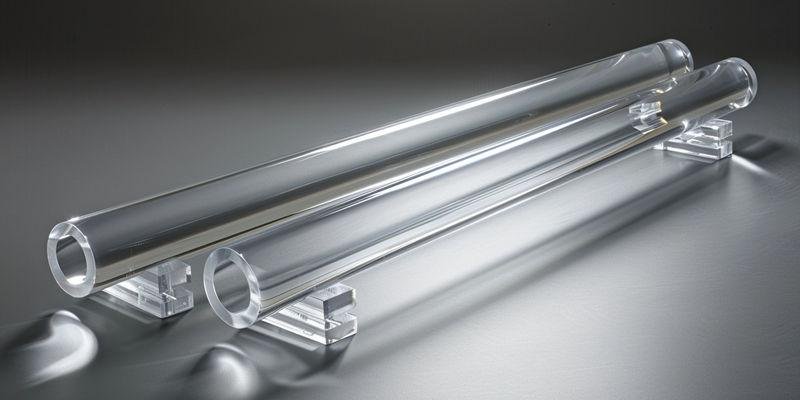
What Application Requirements Determine Quartz Versus Glass Tube Selection?
Quartz vs glass tube application selection depends on temperature, purity, chemical resistance, and optical needs for each use case.
Quartz vs glass tube application selection depends on temperature, purity, chemical resistance, and optical needs for each use case.

Compare optical transmission: quartz 185-2500nm (85-92% UV) vs glass 350-2000nm (<5% UV). Iron content, OH impact & wavelength-specific material selection.
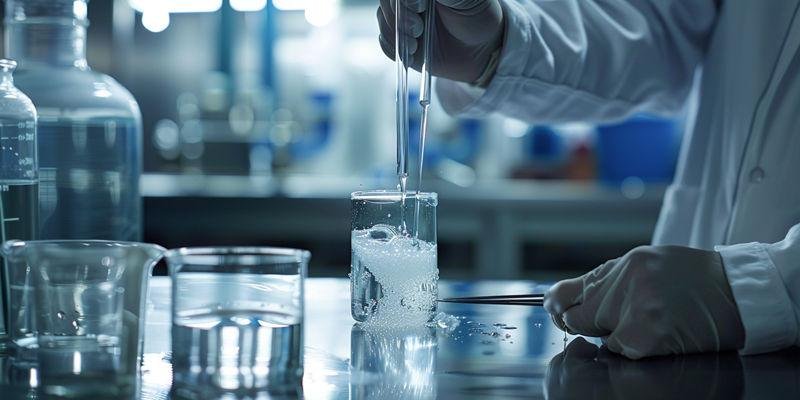
Compare acid resistance: quartz (99.98% SiO₂) lasts 10,000-15,000h vs glass 800-1,500h in 70% HNO₃. Understand Na₂O leaching, attack rates & service life.

Compare rapid heating capability: quartz tubes enable 500°C/min vs glass limited to 150°C/min. Understand thermal stress, cycle life & process throughput.
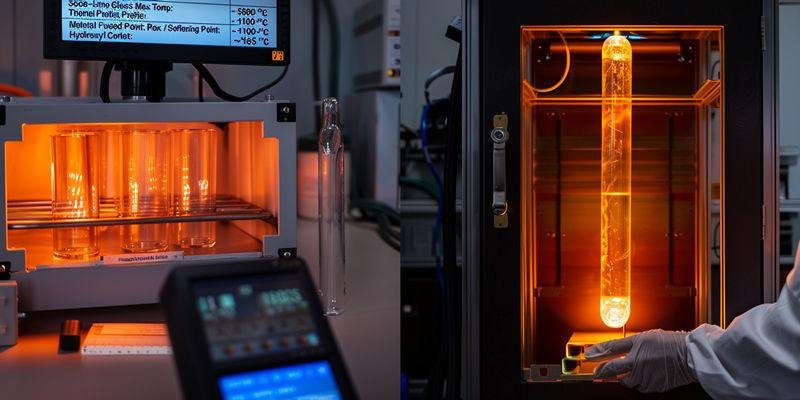
Compare quartz (1665°C softening) vs borosilicate glass (820°C) for high-temp tubes. Learn composition differences affecting thermal cycling & deformation.
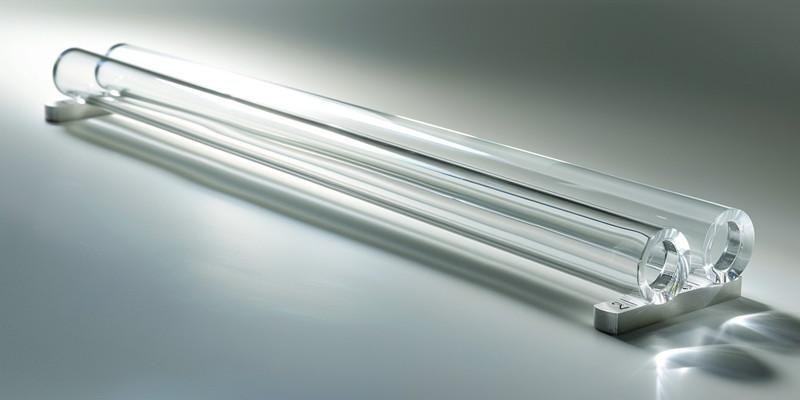
Learn fundamental differences: composition (99.98% vs 80% SiO₂), temperature limits (1200°C vs 500°C), UV transmission (85% vs <5%), applications & costs.
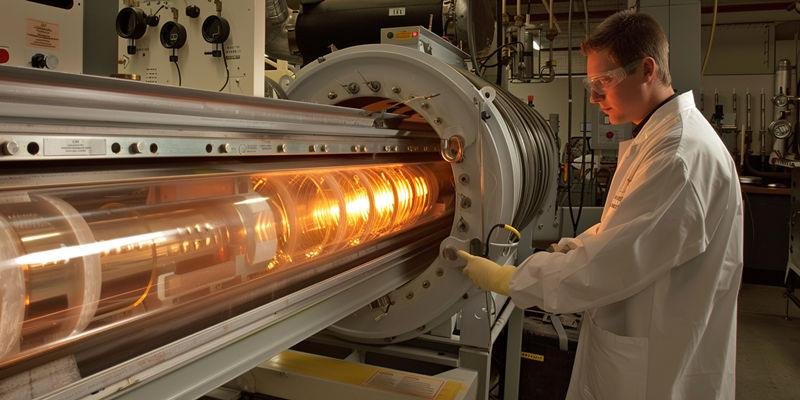
Specification guide: Wall thickness calculations, OH content by temperature, tolerance requirements & L/D ratios for reliable high-temperature tube performance.

Engineering analysis: How scaling from 300mm to 400mm+ quartz tubes delivers 23% energy savings and faster polysilicon production. ROI calculation included.

Compare 250-600mm quartz tube requirements across semiconductor, photovoltaic & industrial furnace applications. Purity specs, diameter selection & standards.