Quartz cuvettes define precise wavelength measurement boundaries. Small variations in material or design can disrupt accurate readings.
Quartz cuvettes provide a broad absorbance range of 190–2500 nm, covering UV, visible, and near-infrared regions. Their stability across these bands ensures reliable performance for spectroscopy applications.
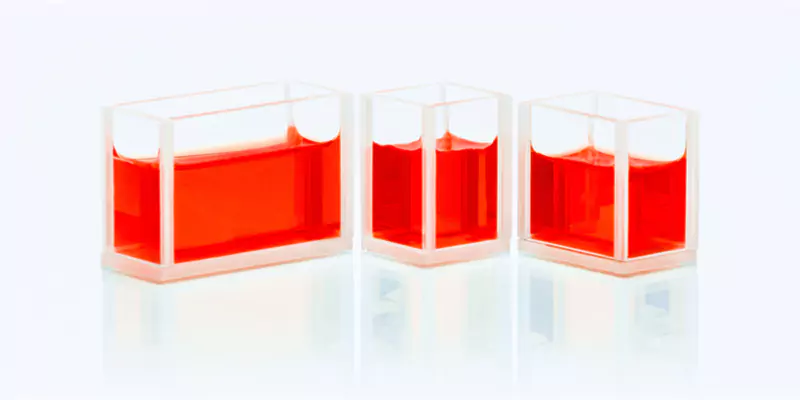
Engineers rely on quartz cuvettes because of their stable optical properties, yet performance varies depending on purity, thickness, and operating conditions. The following sections outline key parameters, comparisons, and decision factors.
What Defines Quartz Cuvette Absorbance Characteristics?
Light interactions within quartz cuvettes determine their usable range. Subtle imperfections shift absorption thresholds.
Quartz cuvettes are defined by their transmittance spectrum1. They transmit UV light down to ~190 nm and maintain clarity into the near-infrared region up to ~2500 nm.
Absorbance characteristics depend on:
- Quartz purity: fewer impurities reduce scattering.
- Wall thickness: influences baseline transmission.
- Surface polishing: lowers stray light.
Quartz Cuvette Property Overview
| Property | Typical Value / Range | Notes |
|---|---|---|
| UV cut-off wavelength (nm) | 190–200 | Below 190 nm transmission drops sharply |
| NIR limit (nm) | 2500 | Stable up to this range |
| Transmittance at 200 nm (%) | 80–90 (standard), 90–95 (premium) | Premium fused silica maintains higher clarity |
| Surface finish tolerance (µm) | ≤0.1 | Ensures reproducible optical paths |
How Material Purity Impacts Absorbance Range in Quartz Cuvettes
Even minor contamination shifts baseline readings. Engineers must verify grade specifications.
Material purity directly influences absorbance. High-purity fused silica (>99.98% SiO₂) allows UV transmission below 200 nm, while lower grades exhibit absorption starting near 220 nm.
- Standard quartz: useful for visible and NIR, limited for deep-UV.
- Spectroscopic grade: extended deep-UV transparency, lower defect density.
- Metal contamination: introduces unwanted absorption bands.
Quartz Material Purity and Absorbance Impact
| Quartz Type | UV Cut-off (nm) | Absorbance Deviation (%) at 200 nm | Typical Use Case |
|---|---|---|---|
| Standard fused silica | ~220 | 10–15 | Routine visible/NIR spectroscopy |
| High-purity silica | 190–200 | 5–10 | UV-Vis precision analysis |
| Premium spectroscopic | 190 | <5 | Pharmaceutical, semiconductor testing |
Comparing Quartz and Glass Cuvettes: Absorbance Performance Differences
Glass cuvettes are low-cost but restricted in range. Quartz extends usability into deep-UV.
Quartz cuvettes cover 190–2500 nm, while optical glass2 stops around 320–350 nm. For UV work, glass is unsuitable.
- Quartz: broad spectrum, stable high-temperature use.
- Glass: low cost, restricted to visible/NIR.
Quartz vs Glass Absorbance Comparison
| Property | Quartz Cuvettes | Glass Cuvettes |
|---|---|---|
| UV transmission cut-off (nm) | 190 | 320–350 |
| NIR range (nm) | Up to 2500 | Up to ~1100 |
| Thermal resistance (°C) | 1100 (continuous) | ~250 |
| Typical applications | UV-Vis, NIR, pharma | Routine visible tests |
Key Absorption Range Specifications for UV-Vis and NIR Applications
Wavelength accuracy depends on cuvette material and design. Incorrect specifications limit usable data.
Quartz cuvettes reliably cover 190–2500 nm. UV-Vis labs emphasize 190–900 nm, while NIR extends to ~2500 nm.
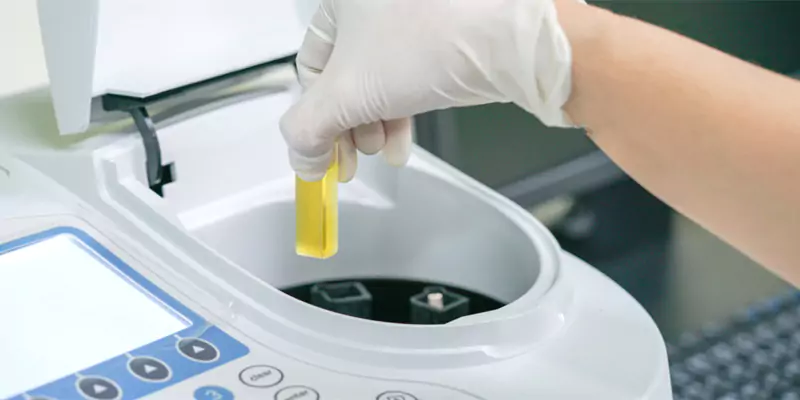
Key specifications include:
- UV transmission down to 190 nm (deep-UV).
- Stable visible region transmission (400–700 nm).
- Extended NIR coverage up to 2500 nm.
- Minimal signal deviation (<0.5% in premium designs).
Quartz Absorbance Range by Spectral Region
| Spectral Region | Range (nm) | Quartz Cuvette Suitability |
|---|---|---|
| Deep-UV | 190–250 | Requires spectroscopic grade |
| Visible | 400–700 | All quartz cuvettes suitable |
| Near-IR | 700–2500 | Stable across quartz grades |
Path Length Selection Guidelines for Optimal Absorbance Accuracy
Path length errors distort concentration calculations. Careful matching to sample type prevents inaccuracies.
Absorbance follows Beer-Lambert law1. Quartz cuvettes are offered in path lengths from 1 mm to 100 mm. Selection depends on sample concentration.
Guidelines:
- Short paths (1–2 mm): high concentration samples.
- Standard paths (10 mm): general laboratory use.
- Long paths (50+ mm): trace detection.
Path Length vs Concentration Suitability
| Path Length (mm) | Suitable Concentration Range | Common Applications |
|---|---|---|
| 1–2 | High (>10 mM) | Protein assays, dense solutions |
| 10 | Medium (0.1–10 mM) | General UV-Vis analysis |
| 50–100 | Low (<0.1 mM) | Environmental trace analysis |
Temperature Effects on Quartz Cuvette Absorbance Stability
Thermal stress shifts transmittance. Misinterpreting limits risks calibration errors.
Quartz maintains stability up to ~1100 °C continuous service. However, optical deviations begin above 200 °C, with ~5% transmittance loss in standard grades.
- Premium grades (e.g., low-OH fused silica) show <1% deviation up to 300 °C.
- ASTM E275-2025 requires suppliers to specify use thresholds, not just melting points.
Thermal Stability of Quartz Cuvettes
| Grade Type | Deviation Onset (°C) | % Transmittance Loss | Notes |
|---|---|---|---|
| Standard quartz | ~200 | ≥5% | Risk of calibration drift |
| Premium quartz | 300 | <1% | Preferred for critical assays |
Industry Application Scenarios of Quartz Cuvettes
Pharmaceutical and environmental labs rely on consistent absorbance ranges. Real-world use cases highlight performance needs.
Quartz cuvettes are used in HPLC-UV detection, dissolution testing, and environmental trace analysis (e.g., water quality). Their deep-UV transparency enables detection of compounds below 200 nm.
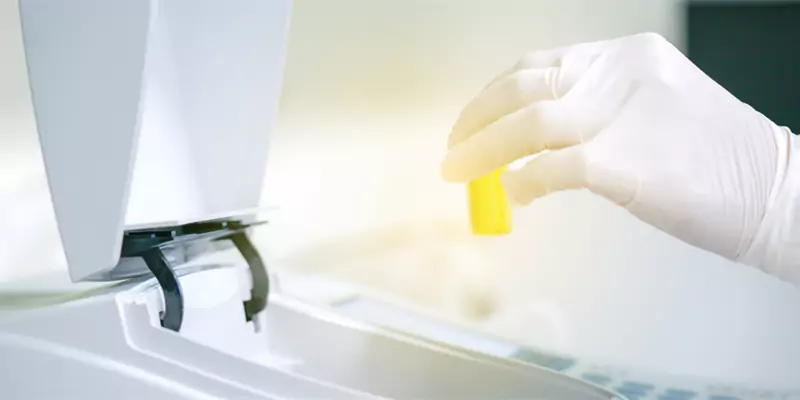
Applications:
- Pharmaceutical: HPLC, assay development, stability testing.
- Environmental: trace metals, pollutants, nitrates.
- Food science: additive quantification, quality monitoring.
Pharmaceutical Applications with Quartz Cuvettes
Pharmaceutical laboratories rely on quartz cuvettes for accurate UV-Vis detection in HPLC assays. These cuvettes enable reliable measurement of active pharmaceutical ingredients at very low concentrations. Their deep-UV transparency down to 190 nm supports detection of compounds not visible with glass cuvettes.
Quartz cuvettes also play a role in dissolution testing and formulation development. They provide consistent path lengths and stable transmission, ensuring accurate calibration of spectrophotometers. This reliability reduces the risk of variability across repeated tests.
Stability studies often demand prolonged exposure to UV light under controlled conditions. Quartz cuvettes maintain their performance during these extended protocols. Their resistance to thermal and chemical stress supports long-term use in regulatory environments.
Environmental Testing with Quartz Cuvettes
Environmental laboratories use quartz cuvettes to measure pollutants and trace elements in water and soil samples. Their long path length options allow detection of extremely dilute substances. UV transparency is essential for monitoring nitrates and organic pollutants.
These cuvettes support repeated thermal cycling and maintain stable optical clarity. Environmental assays often require analysis under varied conditions, and quartz ensures data consistency. This stability improves reproducibility across multiple laboratories.
Regulatory compliance in environmental monitoring demands accurate baseline data. Quartz cuvettes reduce noise from stray light, minimizing false positives in sensitive measurements. Their ability to withstand harsh cleaning protocols ensures long service life in routine testing.
Food Science Analysis with Quartz Cuvettes
Food science laboratories use quartz cuvettes to quantify additives, dyes, and natural compounds. Their broad absorbance range covers visible and UV regions, supporting multiple types of analysis in one device. This versatility reduces the need for separate cuvettes.
In quality monitoring, quartz cuvettes help detect contaminants and assess nutritional content. Their stable path length ensures consistent calibration across production batches. Reliable readings support both research and industrial quality control.
Quartz cuvettes are also valued for their durability during frequent use. Food analysis often requires repeated cleaning and handling, which quartz withstands without loss of clarity. This long-term stability makes them cost-effective for routine testing.
Quartz Cuvette Applications Across Industries
| Industry | Common Tests | Role of Quartz Cuvette |
|---|---|---|
| Pharmaceutical | HPLC-UV, dissolution | Deep-UV absorbance monitoring |
| Environmental | Water pollutants, nitrate detection | Trace analysis, long path lengths |
| Food science | Additive verification | Stable visible and UV-Vis absorbance |
How to Evaluate Quartz Cuvette Suppliers for Absorbance Consistency
Supplier quality directly impacts measurement stability. Verification prevents costly errors.
Suppliers should provide ASTM test data and clear specifications on UV cut-off, transmittance, and thermal thresholds.
Key checks:
- Certification of purity levels.
- Independent spectrophotometer test reports.
- Consistency across production batches.
- Ability to support custom path lengths.
Supplier Evaluation Criteria
| Evaluation Factor | Required Verification |
|---|---|
| Purity certification | Independent chemical analysis |
| UV cut-off consistency | Reported 190–200 nm with deviation |
| Thermal stability data | ASTM E275-2025 compliant testing |
| Batch reproducibility | Variation <2% in transmission |
Quality Verification Tests for Absorbance Range Compliance
Without validation, reported specifications may mislead. Independent tests ensure compliance.
Labs confirm absorbance ranges through spectrophotometer scans, thermal cycling, and stress tests.
Verification protocols:
- Spectral scan: measure baseline transmittance 190–2500 nm.
- Thermal cycling: assess stability under repeated heating.
- Surface inspection: detect micro-defects impacting stray light.
Standard Tests for Quartz Cuvette Verification
| Test Method | Purpose | Reference Standard |
|---|---|---|
| UV-Vis transmission | Confirm wavelength cut-off | ASTM E275-2025 |
| Thermal cycling | Assess temperature resistance | ISO 7884 |
| Surface microscopy | Identify polishing defects | ISO 10110 |
Cost Factors and Lead Times in Quartz Cuvette Procurement
Procurement decisions balance quality, delivery, and budget. Engineers weigh trade-offs.
Quartz cuvettes cost more than glass, reflecting purity and durability. Lead times vary by customization.
Cost drivers:
- Material grade (standard vs premium).
- Custom path length machining.
- Batch size and inventory availability.
- International shipping lead times.
Quartz Cuvette Procurement Considerations
| Factor | Impact on Cost / Lead Time |
|---|---|
| Grade (standard vs premium) | +20–40% price difference |
| Custom path lengths | Adds machining time (1–2 weeks) |
| Stock availability | 24-hour dispatch for common sizes |
| International freight | 5–15 days delivery depending region |
Conclusion
Quartz cuvettes deliver broad UV-Vis-NIR coverage with reliable absorbance stability.
Navigating wavelength accuracy challenges requires reliable components. Leverage TOQUARTZ factory-direct supply, with engineering support and small-batch customization, to secure precise quartz cuvettes for your spectroscopy projects.
FAQ (Frequently Asked Questions)
Q1. How does quartz cuvette material grade affect UV absorbance?
High-purity quartz transmits light down to ~190 nm with minimal deviation, while lower grades cut off near 220 nm. This difference determines suitability for deep-UV applications.
Q2. What procurement factors influence quartz cuvette cost and delivery?
Grade, customization, and stock levels are primary cost drivers. Standard sizes may ship in 24 hours, while custom path lengths add 1–2 weeks to lead times.
Q3. What protocols verify absorbance range compliance in quartz cuvettes?
Compliance is checked through UV-Vis spectral scans, thermal cycling, and ASTM E275-2025 reports. These confirm cut-off wavelengths and stability.
Q4. How do quartz cuvettes compare with glass in spectroscopy?
Quartz offers 190–2500 nm transmission, while glass is limited to ~320–1100 nm. For UV-Vis spectroscopy, quartz is required, whereas glass is sufficient for visible-only studies.
References: