Choosing the wrong cuvette corrupts every measurement that follows — yet most laboratories overlook three decisive parameters until results become unrepeatable.
This article addresses path length, volume capacity, and optical window configuration in full technical depth, equipping analysts with a rigorous framework for selecting a quartz cuvette for spectrophotometer applications across UV, visible, and near-infrared wavelength ranges. All three parameters interact through distinct physical mechanisms, each carrying quantitative decision thresholds well established in the analytical literature.
Accurate spectrophotometric data begins long before the instrument is switched on. The physical cell holding the sample — its internal dimensions, its cavity volume, and the number of optically polished faces it presents to the light beam — sets a hard ceiling on measurement quality that no software correction can raise. Accordingly, each of the three parameters explored here must be resolved in sequence, because an error at the first selection stage propagates irreversibly through every subsequent measurement.
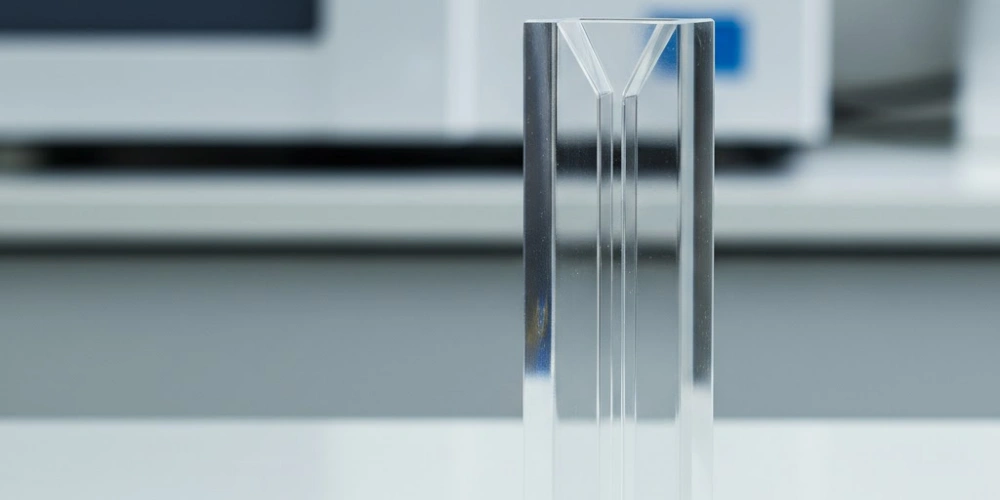
Why Quartz Outperforms Glass and Plastic in Spectrophotometry
Before any dimensional parameter can be meaningfully evaluated, the material from which the cuvette is manufactured determines whether the instrument's light source reaches the detector with integrity across the intended wavelength range.
-
Ultraviolet transmission range Fused quartz (SiO₂ purity ≥ 99.99%) transmits light reliably from 190 nm to 2,500 nm. Borosilicate glass absorbs strongly below approximately 340 nm, introducing wavelength-dependent baseline errors that blank subtraction cannot eliminate. For protein quantification at 280 nm, nucleic acid purity assessment at 260/280 nm, or aromatic compound analysis below 300 nm, glass and most plastics are physically unsuitable. UV-grade fused silica (JGS1) achieves transmission onset below 170 nm, while IR-grade fused silica (JGS2 or JGS3) extends the usable range to 3,500 nm or beyond.
-
Chemical resistance boundaries Quartz withstands acetone, ketones, concentrated mineral acids (with one absolute exception), and strong bases at moderate concentrations. Hydrofluoric acid (HF) and all fluoride-containing solutions attack the SiO₂ lattice irreversibly, permanently etching optical surfaces regardless of exposure duration. Prolonged contact with solutions above pH 12 causes progressive surface erosion. Benzene, toluene, and ethanol can degrade cement-bonded cells by attacking adhesive joints; only fully fused (cement-free) quartz construction eliminates this vulnerability. These chemical boundaries are fixed by the material's chemistry and cannot be modified by surface coatings.
-
Thermal and mechanical durability Quartz cuvettes tolerate temperatures from cryogenic ranges up to several hundred degrees Celsius, making them compatible with thermostated cell holders and high-temperature reaction monitoring. Plastic cuvettes are restricted to near-ambient temperatures and dissolve or swell in organic solvents including DMSO, chloroform, and THF. A quartz cell maintained correctly and cleaned without abrasives preserves its optical specification across hundreds of measurement cycles. Scratches on any optically active face scatter the incident beam and produce systematic errors that worsen as wavelength decreases — a single visible scratch can invalidate UV measurements entirely.
-
Low autofluorescence High-purity fused quartz emits negligible autofluorescence under UV excitation, a property critical for fluorescence spectroscopy where background signal from the cell itself would be indistinguishable from the analyte's emission. Standard glass cuvettes fluoresce measurably when excited below 350 nm, generating a background that rises steeply as excitation wavelength decreases.
Material selection therefore functions as a prerequisite gate: confirming quartz is the correct material immediately constrains the selection space for path length, volume, and window configuration — the three parameters addressed sequentially in the sections that follow.
Path Length Selection in a Quartz Cuvette for Spectrophotometry
Among all the physical parameters embedded in a quartz cuvette for spectrophotometry, path length exerts the most mathematically direct influence on the absorbance value the instrument records.
The internal distance the light beam travels through the sample — measured in millimetres — is not a fixed engineering constant but a variable the analyst must match to the expected absorbance range of the sample. Selecting an inappropriate path length produces readings that fall outside the instrument's linear response region, and no post-hoc dilution or concentration factor can fully recover measurement integrity once that boundary has been crossed. Consequently, path length selection must precede sample preparation, not follow it.
The Beer-Lambert Law as the Governing Framework for Path Length
The quantitative foundation for all path length decisions in absorption spectroscopy is the Beer-Lambert law, expressed as A = ε · c · l, where A is absorbance (dimensionless), ε is the molar attenuation coefficient (L·mol⁻¹·cm⁻¹), c is the molar concentration of the absorbing species (mol·L⁻¹), and l is the optical path length (cm).
The linearity of this relationship — that absorbance increases proportionally with both concentration and path length — holds only within a defined absorbance window. Deviations from Beer-Lambert linearity become measurable above A ≈ 1.0 AU in most bench-top UV-Vis instruments and become severe above A ≈ 2.0 AU. These deviations arise from two independent physical causes: stray light reaching the detector without traversing the full sample column, and the finite dynamic range of the photodetector.
Stray light is particularly significant in single-monochromator instruments, where optical imperfections allow a fraction of non-selected wavelengths to reach the detector. At high true absorbance, the stray-light contribution becomes disproportionate, causing the instrument to underreport absorbance — a systematic negative deviation. Knowing the Beer-Lambert relationship quantitatively allows the analyst to rearrange the equation: l = A_target / (ε · c). If the molar attenuation coefficient and approximate sample concentration are known, the path length required to keep A within 0.1–0.8 AU can be calculated before sample preparation begins, entirely avoiding the measurement error rather than correcting for it afterward.
Standard 10 mm Path Length and Its Optimal Absorbance Range
The 10 mm path length (1 cm) is the universal reference standard in spectrophotometry, and its dominance is not arbitrary.
All published molar attenuation coefficients are tabulated for a 1 cm path length, instrument calibration routines assume a 1 cm cell, and the Beer-Lambert law as conventionally written uses centimetres for l. The reliable linear range of a standard 10 mm cell spans approximately A = 0.1 to A = 1.0 AU. Readings below 0.1 AU carry elevated photon-noise contributions as a percentage of signal; readings above 1.0 AU begin showing stray-light-induced deviation in single-beam instruments, with the deviation reaching 5% or more above A = 1.5 AU. Double-beam instruments with superior stray-light suppression extend reliable linearity to A ≈ 1.5–2.0 AU, but this range must be verified against the instrument's photometric accuracy specification sheet rather than assumed.
A 10 mm path cell with a standard external width of 12.5 mm is mechanically compatible with virtually all commercial UV-Vis spectrophotometer cuvette holders. This geometric universality makes the 10 mm cell the correct default starting point for any new measurement protocol. Deviation from this default requires a quantitative justification based on the sample's calculated absorbance, not convenience or habit.
An important but often overlooked consideration when validating a 10 mm cell's performance is the instrument's photometric accuracy specification, which describes the maximum deviation of the measured absorbance from the true value across the instrument's measurement range. High-quality research-grade instruments specify photometric accuracy of ±0.002 AU at A = 1.0 AU, while entry-level instruments may specify ±0.01 AU or worse. This accuracy specification interacts directly with the cell's path length tolerance: even a perfectly accurate instrument cannot compensate for a cell whose internal path length deviates from its nominal 10 mm value. Verifying both instrument accuracy and cell tolerance against method requirements before committing to a measurement protocol is a routine step in method validation that prevents systematic bias from propagating into reported results.
Short Path Length Cuvettes for High-Absorbance Samples
When sample concentration is fixed by the experimental system and cannot be reduced without disrupting the analyte's physical state, path length must be shortened rather than the sample altered.
A 1 mm path length cuvette reduces absorbance by a factor of exactly 10 relative to a 10 mm cell at identical sample concentration, under Beer-Lambert conditions. This tenfold equivalence makes the 1 mm cell a precise substitute for a tenfold dilution — without the volumetric manipulation, without dilution-induced aggregation or dissociation artefacts, and without the risk of introducing pipetting error into concentrated stocks. Routine applications include concentrated nucleic acid solutions measured at 260 nm (a 1 mg/mL double-stranded DNA solution produces A ≈ 20 AU in a 10 mm cell, but A ≈ 2.0 AU in a 1 mm cell), undiluted serum measured by UV absorbance profiling, and high-extinction organic chromophores in concentrated reaction mixtures. A 2 mm path cell occupies a useful intermediate position, reducing absorbance fivefold, which is sufficient when the 10 mm reading falls in the range A = 1.5–3.0 AU.
The choice between 1 mm and 2 mm depends on whether the sample's absorbance in a 10 mm cell exceeds approximately 5 AU: above 5 AU, the 1 mm cell is the appropriate selection; between 1.5 AU and 5 AU, a 2 mm cell brings the reading into the linear range without compressing the signal unnecessarily. Both short-path cells demand precise mechanical alignment because any angular deviation of the cell within the holder introduces a path-length error proportional to the cosine of the misalignment angle — an error that is negligible in a 10 mm cell but becomes significant relative to the shorter nominal path.
Extended Path Length Cuvettes for Trace Concentration Analysis
Trace-level analytes present the inverse challenge: absorbance values that fall below the reliable detection threshold of a 10 mm cell, where photon noise dominates the signal.
Extending path length to 50 mm or 100 mm multiplies absorbance by factors of 5 and 10 respectively, amplifying the analyte signal without changing sample composition. Environmental water samples containing nitrate at sub-milligram-per-litre concentrations, industrial effluents measured for trace aromatic contamination, and dilute pharmaceutical impurity profiles in formulation solvents all represent scenarios where 50–100 mm cells are analytically necessary rather than optional. A 100 mm quartz cell used for nitrate determination in drinking water can detect concentrations as low as 0.01 mg/L at 220 nm — a sensitivity level inaccessible in a 10 mm cell without preconcentration steps that introduce their own error sources.
Extended path length cells impose two instrumental requirements that must be confirmed before adoption. First, the instrument's sample compartment must physically accommodate the longer cell exterior, which typically measures 110–115 mm in external length for a 100 mm path cell. Second, the instrument's light source must deliver sufficient photon flux across the extended path to maintain an acceptable signal-to-noise ratio at the detector; instruments with lower-power deuterium lamps may exhibit elevated baseline noise when used with long-path cells in the far-UV region. Confirming both constraints against instrument specifications prevents the situation where a correctly selected path length cannot be physically implemented in the available instrument.
Dimensional Tolerance of Path Length and Its Impact on Quantitative Accuracy
Path length tolerance — the manufacturing precision with which the internal cell width matches its nominal value — is a specification that appears in supplier data sheets but is rarely interrogated during cell selection, despite its direct effect on quantitative accuracy.
A path length tolerance of ±0.01 mm represents a relative error of 0.1% on a 10 mm nominal path, whereas a tolerance of ±0.1 mm represents a 1.0% error — a tenfold difference in quantitative uncertainty introduced by the cell itself before any instrumental or chemical variable is considered. For routine colorimetric assays where uncertainty targets are ±2–5%, a ±0.1 mm tolerance is acceptable. For high-precision quantification — such as certified reference material verification, pharmaceutical potency assays under regulatory methods, or extinction coefficient determination — a ±0.01 mm tolerance cell is required, and the actual path length should be verified by interferometry1 or by absorbance comparison against a certified standard solution.
Matched-pair cuvettes — cells manufactured and verified to have path lengths within ±0.005 mm of each other — are essential for differential spectroscopy and for any measurement in a double-beam instrument where the reference and sample cells must be optically equivalent. When a mismatched pair is used in a double-beam configuration, the path-length difference introduces a wavelength-independent offset into every spectrum recorded. In practice, matched pairs should be stored together, never separated into general laboratory stock, and re-verified after any incident involving thermal shock or mechanical impact.
Path Length Selection by Sample Absorbance Range
| Nominal Path Length (mm) | Equivalent Dilution Factor vs. 10 mm | Target Absorbance Range (AU) | Typical Application |
|---|---|---|---|
| 0.1 | ×100 | 0.1 – 1.0 | Extremely concentrated chromophores, undiluted biological extracts |
| 0.5 | ×20 | 0.1 – 1.0 | High-concentration protein or nucleic acid stocks |
| 1 | ×10 | 0.1 – 1.0 | Concentrated DNA/RNA, undiluted serum, dense reaction mixtures |
| 2 | ×5 | 0.1 – 1.0 | Moderately concentrated organic chromophores |
| 5 | ×2 | 0.1 – 1.0 | Slightly elevated absorbance samples |
| 10 | Reference | 0.1 – 1.0 | Universal standard — aqueous and organic routine analysis |
| 20 | ×0.5 | 0.05 – 0.5 | Dilute samples requiring moderate sensitivity enhancement |
| 50 | ×0.2 | 0.02 – 0.2 | Trace environmental analysis, dilute pharmaceutical impurities |
| 100 | ×0.1 | 0.01 – 0.1 | Ultra-trace aqueous analysis, sub-ppb environmental monitoring |
Path Length Tolerance and Recommended Applications
| Tolerance Class | Typical Tolerance (mm) | Relative Error at 10 mm (%) | Recommended Use Case |
|---|---|---|---|
| Standard | ±0.10 | 1.0 | Routine colorimetric and spectrophotometric assays |
| Precision | ±0.05 | 0.5 | QC methods with ±1–2% uncertainty targets |
| High precision | ±0.01 | 0.1 | Reference standard verification, extinction coefficient determination |
| Matched pair | ±0.005 (between cells) | 0.05 | Differential spectroscopy, double-beam instruments |
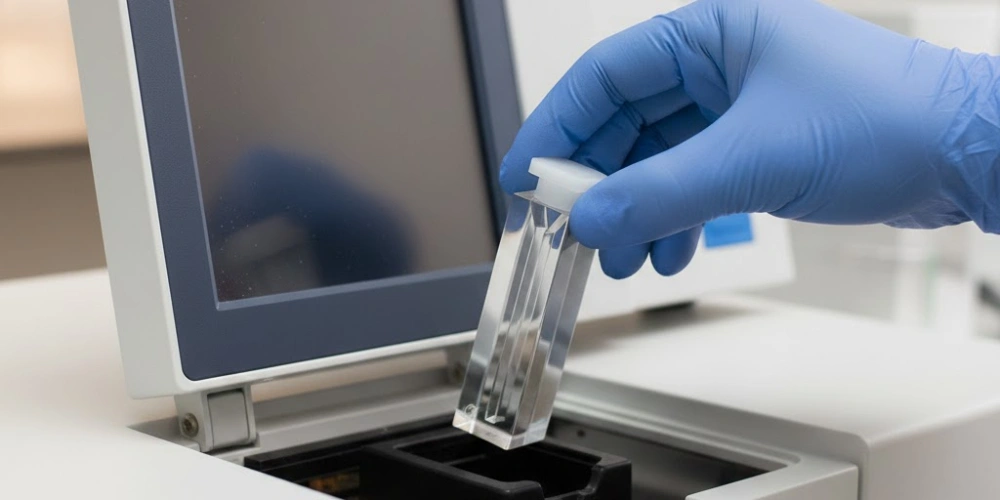
Volume Capacity across Quartz Cuvette Types for Spectrophotometers
Sample availability is frequently the first physical constraint encountered in practice, and it directly governs which volume class of cell is viable before path length or window configuration can be finalised.
The internal cavity volume of a cuvette is calculated from its three internal dimensions — length, width, and height — but the usable sample volume is conventionally taken as 80% of the geometric maximum, because the sample surface must remain below the cell rim to prevent spillage, and the liquid column must extend above the light beam height to avoid beam clipping at the meniscus. In addition to cavity volume, the Z-dimension — the vertical distance from the cuvette base to the instrument's light beam centreline — constrains the minimum sample volume needed to place the beam within the liquid column. These two parameters together define the practical sample volume requirement for any cuvette-instrument combination.
Macro Cuvettes and Their Sample Volume Requirements
The macro cuvette is the baseline reference for all volume comparisons in spectrophotometry, and its internal dimensions reflect the geometry of standard cuvette holders across the widest range of commercial instruments.
A standard macro quartz cell has an internal cross-section of 10 mm × 10 mm and an internal height of approximately 43.75 mm, producing a geometric maximum volume of approximately 4.375 mL. At 80% fill, the usable sample volume is approximately 3.5 mL. This volume is sufficient to accommodate the light beams of all standard spectrophotometers, including instruments with Z-dimensions as high as 20 mm. The wide internal cavity imposes no special alignment requirements on the beam, making macro cells the most forgiving format with respect to instrument tolerance stack-up and cell positioning error.
For sample types where 3–4 mL is not a constraint — buffer-diluted chromogenic assay mixtures, solvent blanks, or samples prepared in large volumes as part of a standard protocol — the macro cell remains the preferred choice precisely because its generous dimensions eliminate alignment sensitivity as a variable. Macro cells are also the appropriate format when the experiment involves repeated sampling from the same cuvette, such as kinetic monitoring of a slow reaction, because the larger volume provides a more representative measurement cross-section and reduces the proportional impact of evaporation over measurement periods extending to tens of minutes.
Semi-Micro and Micro Cuvettes for Limited Sample Quantities
When sample volume is restricted — by the mass of biological material available, by the scale of a synthetic reaction, or by the cost of a reference standard — the transition from macro to semi-micro or micro format becomes necessary rather than optional.
A semi-micro quartz cell typically holds 600 µL to 1,500 µL at 80% fill capacity, achieved by narrowing the internal width from 10 mm to approximately 4 mm while maintaining the same external 12.5 mm width. This narrowing preserves the path length (which is set by the distance between the two optically polished faces, not the internal width in the orthogonal direction) while reducing the volume of sample exposed to the beam. A micro cuvette narrows further to an internal width of approximately 2–3 mm, reducing usable volume to 350–700 µL at 80% fill. The narrowed cavity concentrates the sample within a smaller cross-sectional area, which means the light beam must be precisely centred within the cavity — a tolerance that becomes increasingly demanding as internal width decreases.
Beam alignment sensitivity in narrow-cavity cells is not a theoretical concern but a practical one encountered routinely when transferring micro cells between instruments with different beam geometries. An instrument whose beam diameter exceeds the internal cavity width of a micro cell will irradiate the cell walls, generating a stray-light contribution that appears as an apparent reduction in absorbance at all wavelengths. The beam diameter at the focal point within the sample compartment should be confirmed against the internal width of the intended micro cell before adoption; this specification appears in the instrument's optical system documentation and is typically 1–3 mm for research-grade instruments. Confirming this match prevents systematic error that would otherwise appear as a reproducibility problem rather than a cell-selection error.
Ultra-Micro Cuvettes for Nanoliter-to-Microliter Scale Samples
Ultra-micro cuvettes address the extreme end of sample scarcity, where the total available volume may be as low as 10–70 µL and no dilution is analytically permissible.
These cells achieve their minimal volume through a combination of reduced internal cross-section (internal widths as narrow as 1–2 mm) and restricted fill height, with a polished quartz cover plate or PTFE lid used to eliminate the air-sample interface within the beam path. Usable volumes range from 10 µL to 100 µL depending on the specific cell design, with some ultra-micro formats achieving measurement at volumes below 20 µL while maintaining a standard 10 mm path length. Applications include direct measurement of concentrated DNA or RNA solutions without dilution, small-volume enzymatic assay end-points where the total reaction volume is constrained by reagent scarcity, and pharmaceutical micro-dissolution studies where only milligram quantities of compound are available.
The ratio of sample surface area to volume in an ultra-micro cell is substantially higher than in a macro cell, which has two practical consequences. First, evaporation proceeds significantly faster during measurement, introducing a concentration drift error in extended kinetic measurements; covering the cell immediately after filling and minimising the interval between filling and reading is essential. Second, residual contamination from a previous sample represents a larger fraction of the total sample volume after rinsing; accordingly, ultra-micro cells require a more rigorous rinsing protocol — typically three complete fills and empties with the new sample or with clean solvent — before a measurement can be considered free of carry-over contamination.
The Z-Dimension Parameter and Instrument Light Beam Alignment
The Z-dimension is the vertical distance from the bottom of the cuvette to the centreline of the instrument's light beam, and it is the single most frequently overlooked compatibility parameter in cuvette selection.
Common Z-dimension standards across commercial spectrophotometers include 8.5 mm, 15 mm, and 20 mm, though instrument-specific values vary. When a cell is placed in a holder, the sample liquid must cover the beam centreline for a valid measurement. If the Z-dimension of the instrument is 15 mm, the sample in the cuvette must reach at least 15 mm above the cell base — meaning the minimum sample volume must be sufficient to fill the cell to that height before the 80% fill rule is applied. A micro cuvette with an internal height of only 20 mm used in an instrument with a Z-dimension of 15 mm leaves only 5 mm of liquid margin above the beam, which is insufficient to guarantee complete beam immersion at lower fill volumes.
Mismatch between instrument Z-dimension and cuvette internal geometry produces a characteristic measurement artefact: anomalously low absorbance across all wavelengths, with the apparent transmission reaching values above 100% (negative absorbance) in severe cases. This artefact is caused by the beam partially traversing the air-liquid interface or the cuvette wall rather than the sample. The Z-dimension of the target instrument must be extracted from the instrument specification sheet and cross-referenced against the cuvette's minimum fill height before any reduced-volume cell is adopted. This verification step takes less than two minutes and prevents a systematic error that can persist undetected across an entire experimental series.
Volume Classes and Key Dimensional Parameters
| Volume Class | Internal Width (mm) | Usable Volume at 80% Fill (µL) | Beam Alignment Sensitivity | Typical Application |
|---|---|---|---|---|
| Macro | 10 | 3,000 – 3,500 | Low | Routine aqueous/organic assays with ample sample |
| Semi-micro | 4 | 600 – 1,500 | Moderate | Biological samples in limited supply |
| Micro | 2 – 3 | 350 – 700 | High | Scarce samples, small-volume reactions |
| Ultra-micro | 1 – 2 | 10 – 100 | Very high | Direct DNA/RNA measurement, micro-dissolution |
Z-Dimension Compatibility Reference
| Instrument Z-Dimension (mm) | Minimum Sample Height Required (mm) | Minimum Usable Volume in 10×10 mm Cell (µL) | Risk of Beam Clipping |
|---|---|---|---|
| 8.5 | 8.5 | ~850 | Low with macro; manageable with semi-micro |
| 15 | 15 | ~1,500 | Moderate with semi-micro; high with micro |
| 20 | 20 | ~2,000 | High with semi-micro; prohibitive with micro |
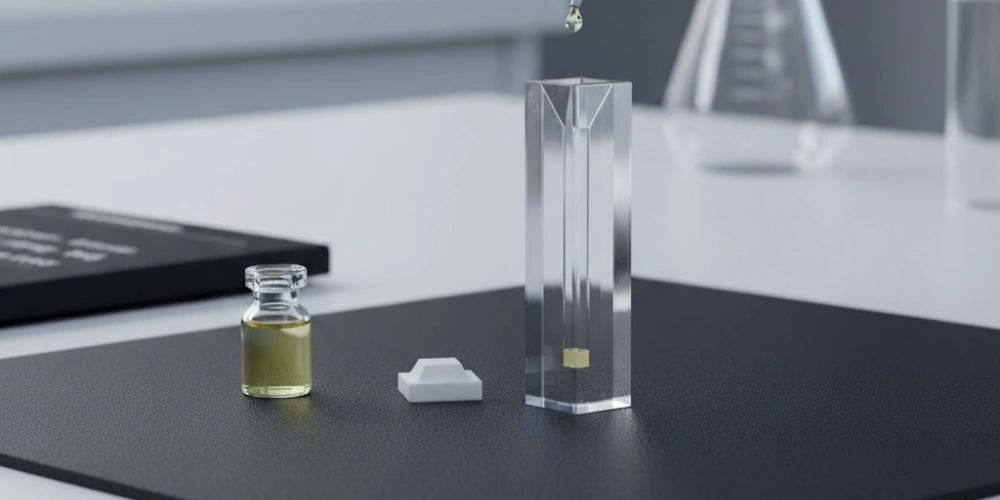
Optical Window Configuration on Quartz Cuvettes Used in Spectrophotometers
Window count is the specification that most directly encodes the measurement technique, and selecting the wrong configuration introduces systematic error that no calibration routine can correct.
The number and arrangement of optically polished faces on a quartz cuvette for spectrophotometer applications reflect the geometry of the light path the measurement technique requires. Absorbance spectroscopy and fluorescence spectroscopy impose fundamentally different optical geometries, and the window configuration of the cell must match the measurement geometry of the instrument precisely. Selecting a two-window cell for a fluorescence measurement, or a standard four-window cell where a specialised configuration is required, produces data artefacts that originate in the cell's optical design rather than in the sample or the instrument.
Two-Window Cuvettes and the Linear Transmission Path in Absorbance Spectroscopy
Absorbance measurements operate on a single linear optical axis: the light source, the sample, and the detector are collinear.
In a two-window configuration, exactly two opposite faces of the rectangular cuvette are ground and polished to optical flatness, while the remaining two faces are ground to a matte (frosted) finish. The two polished faces are perpendicular to the beam axis; the two frosted faces are parallel to it. Light enters through one polished face, traverses the sample along the path length axis, and exits through the opposite polished face to reach the detector. The frosted side faces serve a functional purpose beyond structural support: their non-reflective surface suppresses internal reflections within the sample cavity that would otherwise re-enter the beam path as stray light, artificially reducing the apparent absorbance. Two-window cells are mechanically compatible with all UV-Vis single-beam and double-beam spectrophotometers and represent the correct selection for every absorbance-based measurement, including UV absorbance quantification, colorimetric assays, kinetic rate measurements, and transmittance-based purity assessments.
A two-window cell used in a fluorescence instrument, however, fails to collect emission signal efficiently because fluorescence is emitted omnidirectionally from the excited sample volume, and the detector in a fluorometer is positioned at 90° to the excitation beam — precisely the direction blocked by the frosted faces of a two-window cell. This fundamental geometric mismatch is the most common source of near-zero fluorescence signal in laboratories that have inadvertently used an absorbance cell in a fluorometer.
Four-Window Cuvettes and the Orthogonal Optical Path in Fluorescence Measurement
Fluorescence spectroscopy requires a cell configuration that accommodates two independent, perpendicular optical axes simultaneously — one for excitation, one for emission collection.
In a four-window (four-clear-sided) configuration, all four vertical faces of the rectangular cuvette are polished to optical flatness. The excitation beam enters through one polished face, excites the sample within the cavity, and the emitted fluorescence is collected through the perpendicular polished face at 90° to the excitation axis. This orthogonal geometry is not a design preference but a physical necessity: if the emission detector were placed in line with the excitation beam (at 180°), it would receive both the transmitted excitation light and the emitted fluorescence simultaneously, making separation of the two signals impossible without the optical filter chain. By positioning the detector at 90°, the fluorometer collects almost exclusively emitted photons from the sample volume, with only a small Rayleigh2 and Raman scatter contribution from the solvent.
Using a two-window cell in a fluorometer produces a characteristic result: the emission detector is partially or completely blocked by the frosted cell wall, yielding fluorescence signals that are 10- to 100-fold lower than the true value and severely wavelength-distorted because the frosted surface acts as a wavelength-dependent scatterer. The four-window configuration is therefore not interchangeable with the two-window format under any fluorescence measurement conditions, regardless of the sample's absorbance properties. When a cell will serve both absorbance and fluorescence measurements in the course of a single experiment — for example, when an equilibrium binding constant is being determined by simultaneous UV absorbance and intrinsic tryptophan fluorescence — the four-window cell is the mandatory selection, accepting the minor disadvantage that its four polished faces offer slightly more internal reflection than a two-window cell during the absorbance phase.
Black-Wall Masking and Stray Light Suppression in Fluorescence Cuvettes
Beyond the distinction between two-window and four-window geometry, fluorescence cuvettes frequently incorporate an additional optical feature: black-wall masking on the faces not used for emission collection.
Black-wall masking consists of an opaque black layer applied to the outer surface of one or both non-emission faces, reducing internal reflections of the excitation beam within the cell cavity. In a standard four-window cell without masking, the excitation beam entering through face A generates not only the desired excited-state population in the sample but also a small reflected beam from the interior of face C (opposite to A) and a scattered component from the internal walls. These secondary photon paths re-excite additional sample volume at non-standard angles, contributing to a diffuse fluorescence background that elevates the spectral baseline and reduces signal-to-noise ratio at low analyte concentrations. Black masking on face C and, in semi-micro or micro configurations, on the upper and lower walls of the cavity, suppresses these internal reflection pathways.
The practical consequence is measurable: black-masked fluorescence cuvettes consistently achieve signal-to-noise ratios 2- to 5-fold higher than unmasked four-window cells at analyte concentrations below 100 nM, a range critical for single-molecule proximity assays, fluorescence-labelled antibody quantification, and environmental tracer studies. Two masking configurations are commercially available: full black-wall masking (all non-emission faces completely opaque) and half-height masking (the lower half of the non-emission faces is opaque, while the upper half remains transparent). Full masking is preferred when the sample volume fills the entire cell height; half-height masking is used when the sample volume occupies only the lower portion of the cell, exposing the upper clear region for visual inspection of fill level without compromising optical performance in the beam zone.
Optical Window Requirements in Circular Dichroism Spectroscopy
Circular dichroism (CD) spectroscopy imposes the most demanding window specifications of any routine spectrophotometric technique, combining extreme path-length sensitivity with strict mechanical constraints on the cell body.
CD measurements require path lengths of 0.1 mm to 1 mm for far-UV protein secondary structure analysis (195–250 nm), compared to the 10 mm standard for UV absorbance. This dramatic reduction arises from the high absorbance of amide bonds at 220 nm and of aromatic residues below 280 nm: a protein solution at 0.2 mg/mL in a 10 mm cell would produce A > 5 AU at 220 nm, completely saturating the detector. A 0.1 mm demountable CD cell brings the same solution into the linear range at A ≈ 0.05–0.2 AU. The two polished quartz plates forming the cell walls in a demountable CD configuration are held in a precision holder that defines the path length by the thickness of a spacer, and the plate surfaces must be flat to within fractions of a wavelength of far-UV light to avoid introducing wavefront distortion.
Mechanical stress applied to the quartz windows of a CD cell induces birefringence — a polarisation-state alteration of the transmitted beam that is indistinguishable from the sample's circular dichroism signal. Even modest stress from overtightened cell assembly screws, thermal gradients during temperature-ramped CD experiments, or impact damage creates a wavelength-dependent birefringent background that corrupts the CD spectrum. This constraint means CD cells must never be assembled with excessive torque, must not be thermally cycled rapidly, and must be stored without mechanical loading on the optical faces. This sensitivity to stress distinguishes CD cells sharply from all other cuvette formats and makes them unsuitable for reuse as general absorbance or fluorescence cells, even if their quartz material and path length would otherwise be appropriate.
A practical consequence of the CD cell's stress sensitivity emerges during temperature-scanning experiments, where the cell is ramped from 20°C to 90°C to monitor protein thermal unfolding. A ramp rate exceeding approximately 1°C per minute generates sufficient thermal gradient across the quartz walls to introduce measurable stress birefringence, which appears as a slowly drifting baseline that shifts the apparent CD signal at all wavelengths. Performing the ramp at 0.5°C per minute or slower, and allowing thermal equilibration for at least 60 seconds at each target temperature before recording the spectrum, eliminates this artefact. These operational parameters are as critical to CD data integrity as the cell's optical path length specification itself, and they represent the type of instrument-cell interaction that is specific to this measurement technique and has no equivalent in UV absorbance or fluorescence spectroscopy.
Window Configuration Selection by Measurement Technique
| Measurement Technique | Window Configuration | Polished Faces Required | Black Masking Needed | Path Length Range (mm) |
|---|---|---|---|---|
| UV-Vis absorbance | 2-window | 2 (opposing) | No | 0.1 – 100 |
| Colorimetric assay | 2-window | 2 (opposing) | No | 2 – 10 |
| Fluorescence intensity | 4-window | 4 (all vertical faces) | Optional | 3 – 10 |
| Fluorescence at low concentration | 4-window with black masking | 4 + opaque coating | Yes | 5 – 10 |
| Circular dichroism (far-UV) | Demountable CD cell | 2 polished plates | No | 0.01 – 1 |
| Circular dichroism (near-UV) | Standard CD or demountable | 2 polished plates | No | 1 – 10 |
| Simultaneous absorbance + fluorescence | 4-window | 4 (all vertical faces) | Optional | 5 – 10 |
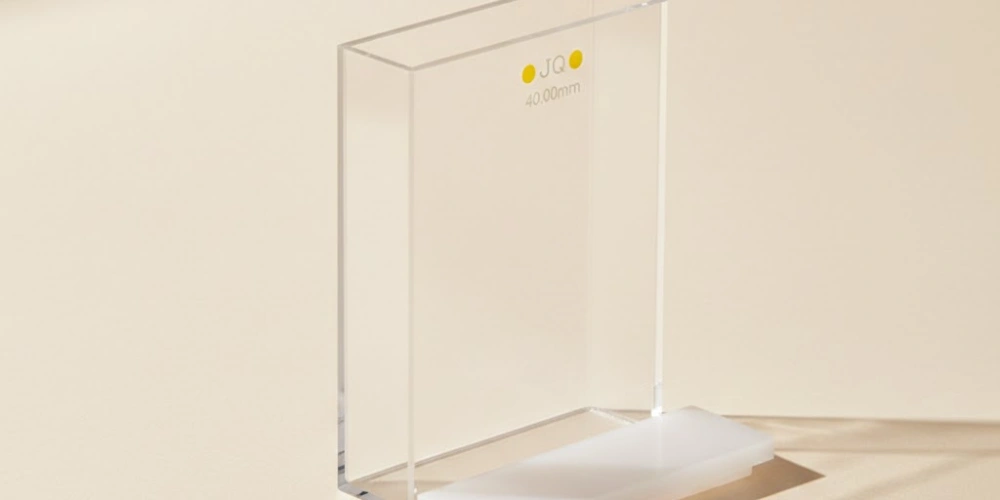
Interdependence of Path Length Volume and Window in Cuvette Selection
No single parameter in cuvette selection operates independently — each choice made for path length, volume, or window configuration places constraints on the remaining two.
-
Concentrated protein fluorescence quantification Consider a tryptophan fluorescence experiment with a 2 mg/mL protein solution. The tryptophan absorbance at 280 nm in a 10 mm cell calculates to approximately A = 0.6 AU for a protein with a molar extinction coefficient of 30,000 L·mol⁻¹·cm⁻¹, which lies within the Beer-Lambert linear range. However, at the excitation wavelength of 295 nm, the protein still absorbs substantially, and the inner filter effect — re-absorption of emitted fluorescence photons by the sample itself — becomes significant when A at the excitation wavelength exceeds 0.1 AU. To suppress the inner filter effect, a 3 mm path length four-window cell is the appropriate solution: it reduces excitation-path absorbance to approximately 0.18 AU while maintaining a four-window geometry for emission collection. Volume at 80% fill in a 3 mm × 10 mm internal cross-section cell is approximately 1,050 µL — accessible even when sample is limited. This scenario demonstrates that the path length decision is driven by fluorescence physics rather than absorbance linearity, and that the window configuration then determines which path lengths are geometrically available.
-
DNA purity assessment at 260/280 nm A concentrated genomic DNA extraction at 500 µg/mL produces A₂₆₀ ≈ 10.0 AU in a 10 mm cell — far outside the linear range. A 1 mm two-window cell brings A₂₆₀ to approximately 1.0 AU, restoring linearity. The measurement is absorbance-based, so a two-window configuration is correct. The question of volume then determines feasibility: if only 50 µL of eluate is available, a 1 mm ultra-micro cell with a usable volume of 40–50 µL is required, and the Z-dimension of the instrument must be confirmed to accommodate the ultra-micro cell's geometry before the cell is procured. All three parameters — path length (1 mm), window count (2), and volume class (ultra-micro) — are co-determined by the combined constraints of sample absorbance, measurement technique, and sample scarcity.
-
Trace nitrate in drinking water at 220 nm Surface water samples containing nitrate at 0.5 mg/L produce A₂₂₀ ≈ 0.005 AU in a standard 10 mm cell — below the reliable detection threshold of most instruments. A 100 mm path cell amplifies this to A₂₂₀ ≈ 0.05 AU, within the measurable range, without any sample preconcentration. The measurement is a two-window absorbance measurement. Volume is not a constraint because environmental water samples are available in litre quantities. The 100 mm cell, however, requires verification of the sample compartment length (minimum 110 mm internal clearance) and of the instrument's deuterium lamp output at 220 nm with the extended path. In this case, path length drives the decision, window configuration is consequential but straightforward, and volume imposes no limitation — yet the instrument-cell geometric constraint emerges as the critical compatibility check.
These three scenarios collectively illustrate that quartz cuvette selection is a constraint-satisfaction problem: the analyst must identify which of the three parameters is the primary constraint (sample absorbance, sample volume, or measurement technique), resolve that parameter first, and then verify that the resulting cell specification is compatible with the remaining two parameters and with the target instrument's geometry.
A fourth scenario worth examining involves kinetic reaction monitoring, where the constraints evolve over the course of the experiment. An enzyme-catalysed reaction beginning with a colourless substrate that is converted to a coloured product at 420 nm may start at A₄₂₀ = 0.00 AU and rise to A₄₂₀ = 1.8 AU over 30 minutes. If a 10 mm two-window cell is used, the early time points are recorded with adequate sensitivity but the later time points approach the upper boundary of linearity. In this scenario, reducing the path length to 5 mm extends the linear measurement window to A₄₂₀ = 0.9 AU equivalent (since absorbance is halved at half the path length), but doubles the required sample concentration — which may affect enzyme kinetics if substrate concentrations are near the Km. The interdependence between path length, concentration regime, and reaction kinetics is therefore a three-body constraint that requires iterative resolution rather than sequential optimisation. Consulting a Beer-Lambert calculation table at the experiment design stage, before reagents are prepared, is the most efficient method for resolving this class of multi-parameter conflict.
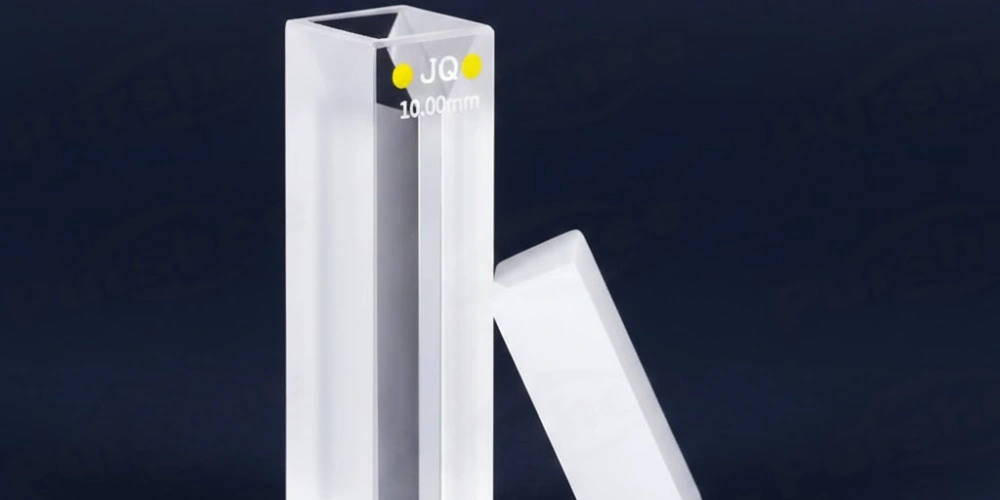
Quartz Cuvette Specifications Every Spectrophotometry User Should Verify
Beyond path length, volume, and window configuration, a set of secondary specifications printed on data sheets and engraved on cell bodies carry direct consequences for measurement reliability.
-
"Q" Marking and material verification Reputable quartz cells carry an engraved "Q" mark on one of the frosted faces (or on the cell body for four-window formats) to distinguish quartz construction from optically similar glass cells. The two materials are visually indistinguishable to the naked eye under visible light, but a glass cell used in a UV application will absorb the measurement wavelength and produce anomalously low or zero absorbance readings below 340 nm. Confirming the "Q" mark before placing a cell into a UV measurement is a 30-second verification that prevents hours of troubleshooting systematic error later.
-
Fully fused versus cemented construction High-quality quartz cuvettes are manufactured by fusing quartz walls directly to quartz base material without cement or adhesive intermediate layers. Cemented cells rely on an optical adhesive at the wall-base joints, and this adhesive dissolves in organic solvents including acetone, THF, methanol at elevated temperatures, and many aromatic solvents. A fully fused construction — quartz fused to quartz throughout — resists all common laboratory solvents and can withstand cleaning in acid/base solutions without joint failure. Confirming fully fused construction from the cell's specification sheet prevents catastrophic cell failure mid-experiment when aggressive solvents are involved.
-
PTFE stopper fit and sealing performance Standard quartz cuvettes are supplied with a PTFE (polytetrafluoroethylene3) stopper that provides a low-friction, solvent-resistant seal at the cell opening. PTFE is chemically inert to virtually all solvents used in UV-Vis spectroscopy. A correctly fitted stopper should insert with moderate resistance and remain in position under gravity inversion. A loose stopper — indicative of dimensional mismatch between the stopper and the cell aperture — fails to contain volatile solvent vapours during measurement, allowing evaporation-driven concentration changes that introduce drift in time-resolved measurements. When stoppers are supplied separately or when replacement stoppers are sourced, matching the stopper dimensions (typically 12.4 mm × 12.4 mm for a standard 10 mm path macro cell) to the cell manufacturer's specification prevents fit mismatch.
-
Surface condition inspection Before each measurement session, both polished optical faces should be inspected under oblique lighting against a dark background. Scratches scatter incident light and produce a characteristic wavelength-dependent baseline elevation that worsens below 300 nm. A surface that shows no visible scratches under this inspection method is acceptable for routine UV-Vis work. Fine surface abrasion from improper cleaning — cleaning with paper tissue, dry wiping, or abrasive laboratory wipes — accumulates progressively and can degrade UV transmission by 5–15% before scratches become clearly visible, making regular baseline comparison against a certified clean cell a worthwhile quality control habit.
Conclusion
Path length, volume capacity, and optical window configuration are the three independent variables that together define the performance envelope of any quartz cuvette for spectrophotometer use. Path length must match the sample's expected absorbance to keep measurements within the Beer-Lambert linear range; volume class must accommodate the available sample quantity while remaining compatible with the instrument's Z-dimension; and window configuration must reflect the geometric optical path of the measurement technique. No single parameter can be selected in isolation, because each choice constrains the feasible range of the other two. Resolving these interdependencies systematically — starting from the primary constraint and verifying compatibility across all three parameters — is the method by which reliable, reproducible spectrophotometric data is produced.
FAQ
What path length is standard for a quartz cuvette used in a spectrophotometer?
The standard path length is 10 mm (1 cm). All published molar attenuation coefficients reference this path length, and virtually all commercial UV-Vis spectrophotometers are calibrated for 10 mm cells. Shorter path lengths (1–5 mm) are used when samples are highly concentrated; longer path lengths (20–100 mm) are used for trace-level analytes.
Why does a fluorescence measurement require a four-window quartz cuvette?
Fluorescence instruments collect emitted light at 90° to the excitation beam. A two-window cell blocks this emission axis with its frosted faces, preventing the detector from receiving fluorescence photons. A four-window cell, with all four vertical faces polished, provides an unobstructed collection path at 90° while still allowing the excitation beam to pass through the opposing polished faces.
What is the minimum sample volume needed for a standard quartz cuvette in a spectrophotometer?
For a standard 10 mm macro cell, the practical minimum is approximately 2.5–3.0 mL to ensure the sample column covers the instrument's light beam, assuming a Z-dimension of up to 15 mm. Semi-micro cells reduce this to 600–800 µL, micro cells to 350–500 µL, and ultra-micro cells to as little as 10–40 µL, depending on the cell design and instrument Z-dimension.
How does path length tolerance affect quantitative accuracy in spectrophotometry?
A path length tolerance of ±0.1 mm introduces a relative concentration error of 1.0% in a 10 mm cell, directly through the Beer-Lambert relationship. For routine assays with ±2–5% uncertainty targets, this is acceptable. For high-precision quantification — such as pharmaceutical potency assays or extinction coefficient determination — a tolerance of ±0.01 mm or better is required, and matched-pair cells verified by interferometry should be used in double-beam instruments.
References:
-
Interferometry is an optical measurement technique that exploits the interference of light waves to determine distances and surface flatness with sub-micrometre precision, as described in the Wikipedia physics entry. ↩
-
Rayleigh scattering describes the elastic scattering of photons by particles much smaller than the wavelength of light, and its contribution to spectroscopic background signals is explained in the Wikipedia physics article. ↩
-
Polytetrafluoroethylene (PTFE) is a synthetic fluoropolymer noted for its exceptional chemical inertness and low friction coefficient, with material properties and laboratory applications detailed on Wikipedia. ↩