Choosing the wrong vessel material costs experiments. When temperature, chemistry, or optical precision push beyond ordinary thresholds, the material in your hand determines whether results are valid.
Quartz labware and borosilicate glass share a silicate foundation yet diverge sharply in thermal ceiling, chemical inertness, and spectral transmission. This article maps every performance dimension against real laboratory conditions, so the selection between the two materials rests on evidence rather than assumption.
Both materials have earned their place in laboratory practice. The distinction lies not in one being universally superior, but in each being precisely suited to a defined set of conditions — and genuinely inadequate beyond them.
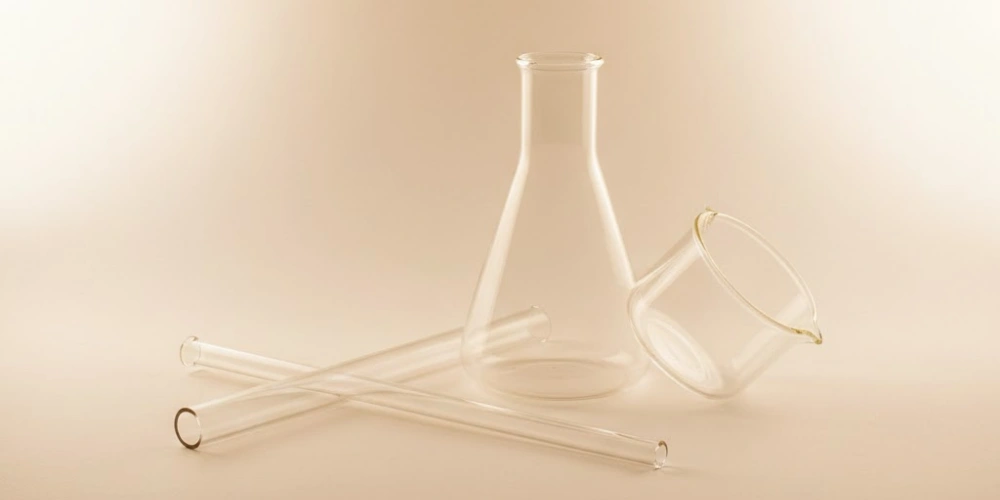
Temperature, Chemistry and Optics Separate Quartz Labware from Borosilicate
Before examining each property in depth, a working answer serves most readers immediately. The three variables that consistently force a material decision are operating temperature, the chemical aggressiveness of the medium, and whether the application involves ultraviolet or infrared optical measurement.
-
Use borosilicate glass when working temperatures remain below 450°C, reagents are moderately acidic or basic at ambient to mild temperatures, and optical measurements stay within the visible spectrum (400–700 nm). For routine heating, general acid-base reactions, distillation, and standard volumetric work, high-quality borosilicate performs reliably and economically.
-
Use quartz labware when any one of the following applies: sustained temperatures exceed 500°C; the medium involves concentrated mineral acids at elevated temperatures with sensitivity to trace contamination; UV measurements below 300 nm are required; or fluorescence spectroscopy demands a low-autofluorescence substrate. When two or more of these conditions coincide, quartz is not merely preferable — it is the only silicon-oxide-based vessel material that will not compromise the experiment.
-
The boundary conditions worth examining carefully are the 450–600°C zone, where borosilicate approaches its softening limit and quartz remains structurally stable, and the 260–300 nm UV window, where borosilicate transmission becomes unreliable while quartz maintains greater than 85% transmission.
A structured understanding of why these boundaries exist requires examining what each material is made of at the atomic and network level.
The Foundational Chemistry Behind Both Materials
The performance gap between fused quartz and borosilicate glass originates at the compositional level. Understanding the structural logic of each network clarifies why identical-looking vessels behave so differently under identical stresses.
Fused Silica as the Structural Basis for Quartz Labware
Fused silica — the base material of all high-performance quartz labware — consists of a continuous, disordered three-dimensional network of SiO₄ tetrahedra bonded entirely through bridging oxygen atoms. No alkali modifier ions, no boron, no aluminium interrupt the network. This structural purity accounts for the material's exceptional performance envelope.
The absence of modifier ions produces two measurable consequences: an extremely low coefficient of thermal expansion (CTE of 5.5 × 10⁻⁷ /°C) and a softening point above 1600°C. Because thermal expansion is a function of network bond angles and their resistance to distortion, the rigid, uniform Si–O–Si framework resists dimensional change even under steep thermal gradients. Concurrently, purity levels at SiO₂ ≥ 99.995% eliminate trace metallic contaminants — iron, aluminium, sodium — that would otherwise introduce optical absorption in the UV range and leach into sensitive samples under acidic conditions.
From a manufacturing standpoint, fused silica used in precision quartz labware is produced either by flame fusion of natural quartz crystal or by chemical vapour deposition of synthetic SiCl₄, with synthetic-grade material achieving the highest optical homogeneity and lowest metallic impurity levels.
The Multi-Oxide Network of Borosilicate Glass
Borosilicate glass — commercially represented by formulations such as Pyrex (Corning 7740) and Duran (Schott) — is a multi-component oxide system typically comprising approximately 80% SiO₂, 13% B₂O₃, 4% Na₂O, and 2–3% Al₂O₃ by weight. The inclusion of B₂O₃ serves a deliberate engineering function: boron atoms enter the silicate network in both three-coordinated and four-coordinated configurations, disrupting the rigid SiO₄ framework and reducing the overall CTE to approximately 3.3 × 10⁻⁶ /°C — a sixfold improvement over standard soda-lime glass, though still six times higher than fused silica.
The multi-oxide network lowers the processing viscosity of the glass melt, enabling economical manufacturing through blowing, pressing, and drawing into complex shapes. However, the same Na₂O and B₂O₃ components that make the glass processable introduce structural vulnerabilities at elevated temperatures and under aggressive chemical conditions. Na⁺ ions are mobile within the network and migrate toward surfaces under thermal or electrical stress, while B₂O₃ is selectively extracted by hot acidic solutions, particularly hydrochloric and nitric acid at temperatures above 150°C.
The aluminium content, typically at 2–3%, acts as a network stabiliser that improves chemical durability compared to binary sodium-silicate glass. Nevertheless, the multi-component character of borosilicate means that any environment capable of selectively attacking one oxide component will compromise the integrity of the whole network over repeated exposure cycles.
Key Structural Properties of Both Materials
| Property | Fused Quartz (Quartz Labware) | Borosilicate Glass |
|---|---|---|
| Primary composition | SiO₂ ≥ 99.995% | SiO₂ ~80%, B₂O₃ ~13%, Na₂O ~4% |
| Thermal expansion coefficient (10⁻⁷ /°C) | 5.5 | 33 |
| Softening point (°C) | >1600 | ~820 |
| Continuous use limit (°C) | 1100 | ≤500 |
| UV transmission onset (nm) | ~170 | ~280–300 |
| Density (g/cm³) | 2.20 | 2.23 |
Thermal Resistance Across Quartz Labware and Borosilicate Vessels
Of all the variables that drive material selection in laboratory settings, working temperature is the most binary: either a vessel survives the thermal cycle intact or it does not. Quantifying the precise boundaries of both materials removes ambiguity from this decision.
Continuous-Use Temperature Ceilings
The continuous-use temperature of a vessel material is defined as the sustained working temperature at which structural deformation, viscous flow, or phase change remains below measurable thresholds over a typical experimental timescale of hundreds of hours.
For borosilicate glass, the practical continuous-use ceiling is approximately 450–500°C. The softening point of standard borosilicate formulations lies near 820°C, but dimensional distortion under load — particularly in thin-walled tubes or crucibles — becomes significant well below that threshold. In tube furnace applications, borosilicate tubes used at 550°C for extended periods exhibit measurable sagging within 50–100 hours of operation. By contrast, fused quartz maintains structural integrity at continuous temperatures up to 1100°C and tolerates short-term excursions to 1600°C without deformation.
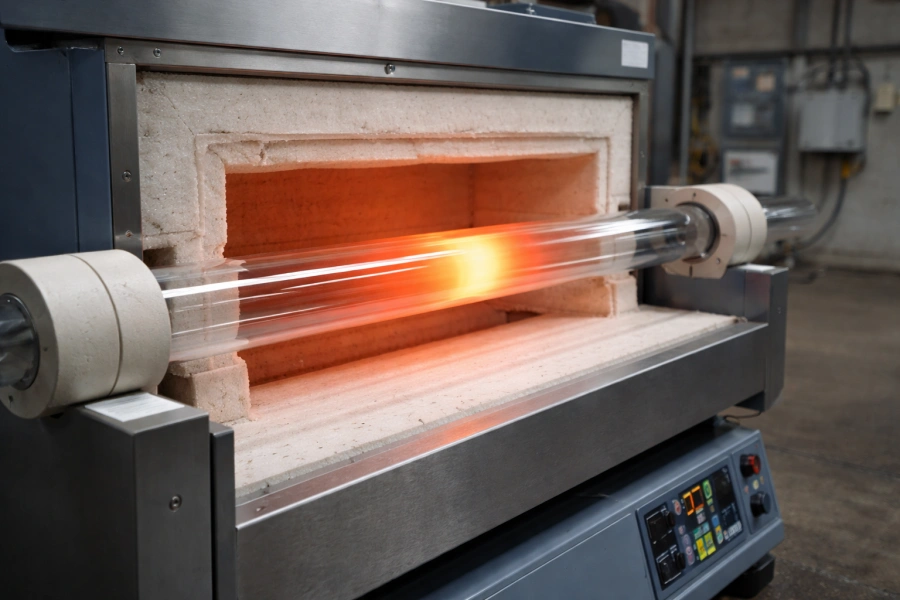
The practical implication is unambiguous: any application involving a tube furnace, muffle furnace, or infrared heating system operating above 600°C requires fused quartz vessels. Diffusion annealing in semiconductor research, high-temperature sample ashing, and CVD (chemical vapour deposition) tube lining are canonical examples where borosilicate is structurally incompatible and quartz labware is the standard choice.
Thermal Shock Resistance in Practice
Thermal shock resistance is a function of the relationship between a material's CTE, its thermal conductivity, and its elastic modulus. Materials with lower CTE values generate smaller internal stress gradients when subjected to rapid temperature changes, making them intrinsically more resistant to fracture under sudden heating or quenching.
With a CTE of 5.5 × 10⁻⁷ /°C, fused quartz generates internal stresses approximately six times lower than borosilicate (CTE 3.3 × 10⁻⁶ /°C) under identical thermal transients. This difference is measurable in practice: a fused quartz crucible transferred directly from a 1000°C furnace into ambient air at 25°C routinely survives the thermal gradient; an equivalent borosilicate crucible would fracture immediately under the same conditions. In research settings where rapid quenching is part of the experimental protocol — such as rapid thermal processing (RTP)1 or shock-synthesis experiments — only quartz labware components can safely accommodate the thermal gradient.
It is worth noting that borosilicate's own thermal shock resistance is substantially better than standard soda-lime glass, making it appropriate for moderate thermal cycling below its structural limit. The relative comparison here concerns whether the application pushes into the regime where borosilicate's higher CTE becomes a fracture risk, which begins to occur reliably above 300°C thermal differentials.
Devitrification and the Upper Limits of Fused Quartz
An honest appraisal of fused quartz must include its principal vulnerability: devitrification, the thermally driven transformation of the amorphous SiO₂ network into crystalline cristobalite. This phase transition occurs most rapidly in the temperature range of 1000–1200°C and is accelerated by contamination of the quartz surface with alkali metals, particularly sodium and potassium, which act as nucleation catalysts.
Devitrification manifests as a progressive whitening or opacification of the quartz surface, accompanied by an increase in CTE (cristobalite CTE ≈ 1.3 × 10⁻⁵ /°C near its α–β transition at 220°C) that introduces localised stresses during cooling. A devitrified quartz tube or crucible becomes brittle and susceptible to cracking during thermal cycling, even at temperatures well below the original working limit. In practice, quartz labware components used in high-temperature furnace applications should be handled with clean cotton gloves or silica-compatible tools to prevent alkali transfer from skin contact, inspected periodically for surface opacification, and replaced before crystallisation extends through the wall thickness.
Thermal Performance Thresholds
| Thermal Parameter | Quartz Labware | Borosilicate Glass |
|---|---|---|
| Continuous-use ceiling (°C) | 1100 | 450–500 |
| Short-term maximum (°C) | 1600 | 550 |
| Softening point (°C) | >1600 | ~820 |
| CTE (10⁻⁷ /°C) | 5.5 | 33 |
| Thermal shock resistance | Excellent — survives 1000°C to ambient quench | Moderate — safe below 300°C differential |
| Devitrification risk | Above 1000°C with alkali contamination | Not applicable |
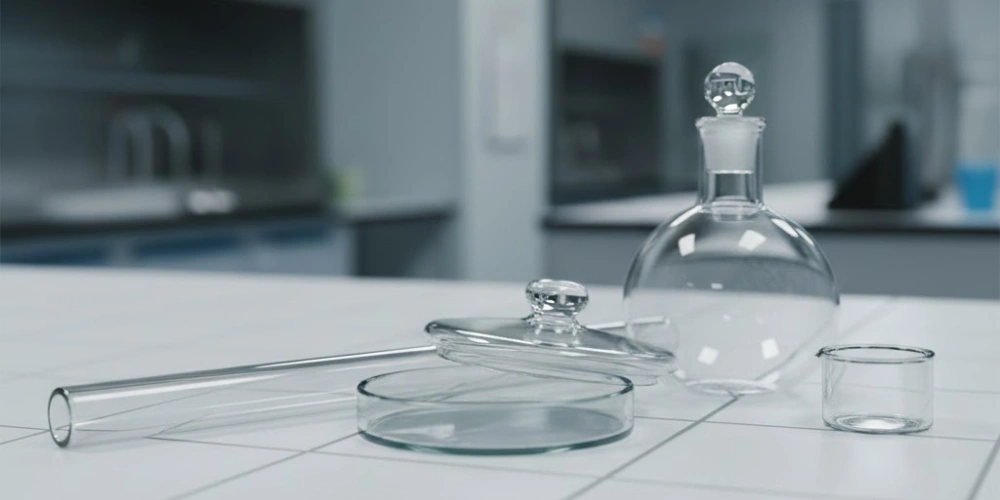
Chemical Durability of Quartz Labware and Borosilicate Across Acids, Alkalis and HF
Chemical resistance governs whether a vessel remains dimensionally stable, contamination-free, and analytically inert throughout repeated exposure to aggressive media. The comparison between quartz and borosilicate across three reagent categories — mineral acids, alkali solutions, and hydrofluoric acid — reveals both materials' true suitability limits.
Acid Resistance in Quartz Labware for Digestion and Reaction Work
The chemical inertness of fused silica toward mineral acids originates from the stability of the fully cross-linked SiO₄ network. At ambient to moderate temperatures, concentrated HNO₃, HCl, H₂SO₄, and HClO₄ cause no measurable mass loss or surface degradation in high-purity quartz labware. Even at elevated digestion temperatures — 150–250°C in closed-vessel microwave digestion systems — the SiO₂ dissolution rate in mineral acid media remains below 0.01 mg/dm² per day for properly manufactured fused quartz.
Borosilicate glass under the same conditions presents a more complex picture. At room temperature and for dilute acid concentrations, borosilicate performs adequately. However, repeated exposure to hot concentrated HCl or HNO₃ above 100°C selectively leaches B₂O₃ from the network, leaving a silica-enriched surface layer that is initially protective but progressively porous. This leaching releases boron into solution at concentrations that are analytically significant in trace-element work: studies of borosilicate digestion vessels have documented boron blank contributions of 5–50 µg/L in acid digestion solutions, which directly interferes with ICP-OES and ICP-MS measurements of boron-containing analytes and compromises the blank correction for co-eluting elements. For trace metal analysis requiring procedural blanks below 1 µg/L, the container material is not a minor variable — it is a primary source of systematic error.
The consequence for laboratory practice is that acid digestion of geological, biological, or environmental samples intended for multi-element trace analysis should be conducted in quartz vessels rather than borosilicate, specifically when boron, sodium, or aluminium are among the target analytes or when total dissolved solids in the digest must be minimised.
Alkali Exposure and the Limits of Both Materials
Neither fused quartz nor borosilicate glass is chemically inert in hot, concentrated alkali solutions. This is a critical point that vendor literature for both materials sometimes understates.
Concentrated NaOH solutions at temperatures above 60°C attack the Si–O–Si network of fused silica through nucleophilic substitution, producing soluble silicate species (Na₂SiO₃). The dissolution rate for fused quartz in 10 mol/L NaOH at 90°C has been measured at approximately 0.5–2 mg/dm² per day, which, while substantially lower than the rate for borosilicate under equivalent conditions, is not negligible over extended reaction times or repeated cleaning cycles with hot alkaline detergents. Borosilicate dissolves more rapidly in the same conditions due to the preferential attack on B–O bonds and the mobilisation of Na⁺ ions.
For alkali fusion procedures — flux fusion using Na₂CO₃, NaOH, or K₂CO₃ for refractory sample dissolution — neither quartz nor borosilicate is appropriate. Platinum, zirconium, or nickel crucibles are the established material choices for such protocols. Attempting alkali fusion in either silicate-based vessel results in rapid vessel dissolution, flux contamination, and analytical interference.
The Hydrofluoric Acid Exception
Hydrofluoric acid occupies a unique position in laboratory chemistry: it is the single reagent that attacks silicon-oxygen bonds directly and aggressively, regardless of the purity or structural form of the silicate material.
The reaction of HF with SiO₂ proceeds as: SiO₂ + 4HF → SiF₄↑ + 2H₂O, with gaseous SiF₄ evolving from the surface. This reaction is thermodynamically favourable across the entire concentration range of HF from dilute (1%) to concentrated (49%), and proceeds at room temperature. Both fused quartz and borosilicate are equally susceptible, with dissolution rates for quartz in concentrated HF measured at 1–10 µm/min depending on concentration and temperature. Any experimental protocol involving HF — including silicate rock digestion, silicon wafer etching, or fluoride matrix preparation — must use vessels fabricated from fluoropolymers: PTFE, FEP, or PFA are the universally accepted alternatives for HF-containing media.
Chemical Resistance Summary
| Reagent Condition | Quartz Labware | Borosilicate Glass |
|---|---|---|
| Dilute mineral acids, ambient temperature | Excellent | Good |
| Concentrated HCl / HNO₃, >100°C | Excellent | Moderate — B₂O₃ leaching occurs |
| H₂SO₄ concentrated, >200°C | Excellent | Poor — surface degradation |
| Dilute NaOH, ambient | Good | Good |
| Concentrated NaOH, >60°C | Moderate — measurable dissolution | Poor — rapid dissolution |
| Alkali fusion flux | Not suitable | Not suitable |
| Hydrofluoric acid (any concentration) | Not suitable | Not suitable |
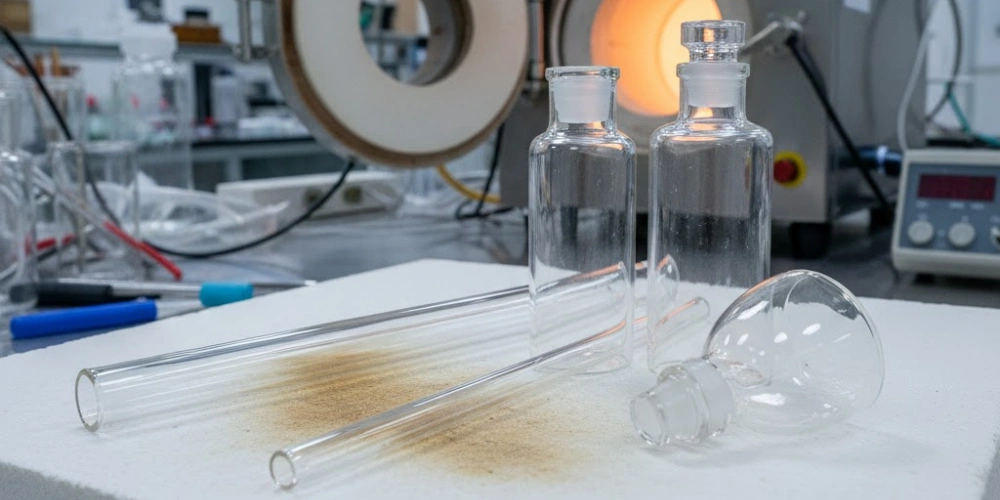
Optical Transmission Compared Between Quartz Labware and Borosilicate Glass
Spectroscopic applications place optical performance at the centre of material selection. The transmission window, autofluorescence characteristics, and wavelength-dependent absorption of a vessel material determine whether measured signals represent sample properties or vessel artefacts.
UV Cutoff Wavelengths and Their Analytical Consequences
The ultraviolet transmission boundary is the most consequential optical difference between the two materials. Borosilicate glass begins to absorb significantly below approximately 300–320 nm, with transmission dropping below 10% at wavelengths shorter than 280 nm in standard-grade formulations. This absorption arises from two sources: residual Fe²⁺ and Fe³⁺ ions present even in optical-grade borosilicate at concentrations of 5–50 ppm, which produce broad absorption bands in the UV, and the fundamental electronic absorption of the B–O bond network, which extends into the near-UV range.
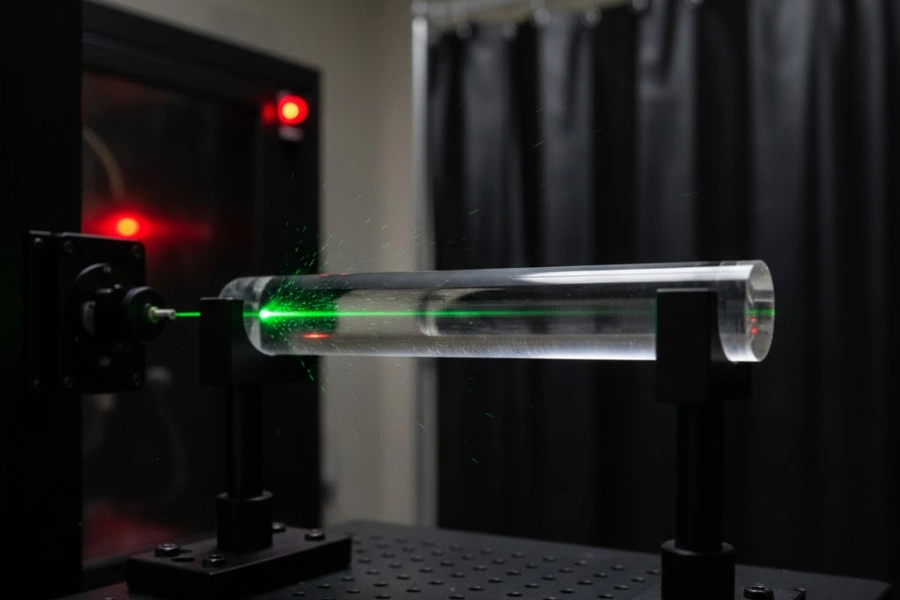
Fused quartz of optical grade transmits from approximately 170 nm (vacuum UV, in the case of highest-purity synthetic silica) to beyond 2500 nm, with transmission exceeding 90% across the 200–2500 nm range for a 10 mm pathlength cuvette. This spectral window encompasses the absorption maxima of nucleic acids at 260 nm, aromatic amino acids at 280 nm, and a wide range of pharmaceutical chromophores in the 220–350 nm region. A standard borosilicate cuvette is effectively opaque at 260 nm, making it categorically unsuitable for DNA quantification, protein assays by A280, or any UV method below 300 nm. The consequences of using borosilicate in these applications are not merely reduced sensitivity — the absorbance readings become artefact-dominated and analytically meaningless.
In environmental analysis, polycyclic aromatic hydrocarbons (PAHs) and nitroaromatic compounds have primary absorption bands at 220–310 nm. Regulatory methods for these analytes, including EPA methods 8310 and 8100, specify quartz cells for spectrophotometric measurements precisely because borosilicate absorption introduces systematic bias.
Autofluorescence Interference in Fluorescence Spectroscopy
Beyond transmission, the autofluorescence of vessel materials constitutes a distinct source of analytical interference in fluorescence spectroscopy. Autofluorescence refers to the intrinsic photoluminescence of the vessel material itself when irradiated by the excitation beam, producing a background emission signal superimposed on the sample fluorescence.
Borosilicate glass exhibits autofluorescence emission predominantly in the 350–600 nm range when excited at wavelengths between 280 and 380 nm — a region that overlaps with the emission windows of common fluorescent labels including fluorescein (em. 517 nm), DAPI (em. 461 nm), and many Alexa Fluor dyes. In single-molecule fluorescence experiments or assays with fluorophore concentrations below 10 nmol/L, the autofluorescence background from a borosilicate cuvette can exceed the sample signal by a factor of three to ten, rendering the measurement uninterpretable. Fused quartz exhibits autofluorescence intensities approximately 10–50 times lower than borosilicate under equivalent excitation conditions, a difference that becomes decisive for low-concentration fluorescence assays, time-resolved fluorescence measurements, and FRET.)2-based experiments where signal-to-noise ratio directly determines assay sensitivity.
This distinction is well-established in fluorescence microscopy, where quartz coverslips and substrates are the standard for single-molecule imaging and TIRF (total internal reflection fluorescence) experiments, specifically to eliminate substrate autofluorescence as a confounding variable.
Infrared Transmission for Spectroscopic and Thermal Applications
Fused quartz transmits effectively through the near-infrared (NIR) and into the mid-infrared (MIR) range, with usable transmission extending to approximately 2.5 µm (4000 cm⁻¹). This window supports applications in NIR spectroscopy, quartz-envelope infrared heating lamps, and optical windows for high-temperature reaction monitoring. The optical homogeneity of fused quartz across this range, characterised by refractive index uniformity within ±1 × 10⁻⁵ per cm, makes it suitable for precision interferometry and laser beam steering in the NIR.
Beyond 2.5 µm, fused quartz absorption increases substantially due to Si–O stretching and bending overtone bands, rendering it opaque at wavelengths above approximately 3.5–4.0 µm. For mid-infrared spectroscopy (4000–400 cm⁻¹, or 2.5–25 µm), alternative materials are required: CaF₂ transmits to approximately 8 µm, ZnSe to 20 µm, and KBr to 25 µm. Borosilicate glass, due to its multi-oxide composition, shows stronger MIR absorption than fused quartz and is rarely used for infrared optical applications. Neither material is an appropriate substitute for dedicated IR-grade crystals when full mid-infrared coverage is needed.
Optical Transmission Windows
| Optical Parameter | Quartz Labware (Optical Grade) | Borosilicate Glass |
|---|---|---|
| UV transmission onset (nm) | ~170 (synthetic) / ~200 (natural fused quartz) | ~280–320 |
| Transmission at 260 nm (10 mm path) | >85% | <5% |
| Transmission at 546 nm (10 mm path) | >92% | >90% |
| NIR transmission limit (µm) | ~2.5 | ~2.2 |
| MIR transmission limit (µm) | ~3.5–4.0 | ~3.0 |
| Autofluorescence (relative, 350 nm excitation) | Very low (reference value: 1) | 10–50× higher |
| Refractive index at 589 nm | 1.458 | 1.474 |
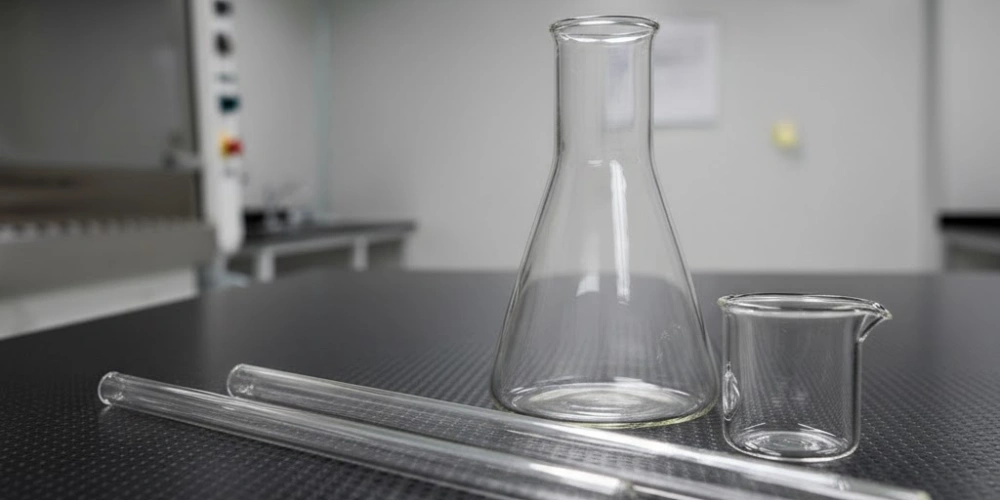
Mechanical Properties and Machinability of Quartz Labware Versus Borosilicate
The structural performance of a vessel under mechanical load and its response to precision fabrication are practical considerations that influence dimensional stability, component lifespan, and the feasibility of custom geometries.
- Fracture toughness and hardness: Fused quartz has a Vickers hardness of approximately 600–650 HV and a fracture toughness (K₁c) of 0.7–0.8 MPa·m½. Borosilicate glass has a comparable hardness of 500–600 HV and a fracture toughness of approximately 0.7–0.9 MPa·m½. Both materials are brittle; neither possesses meaningful plastic deformation capacity. The practical implication is that both require careful handling, and neither should be subjected to impact loads or unsupported spanning of significant distances under their own weight at elevated temperature.
In precision machining applications — grinding, drilling, lapping, and CNC milling — fused quartz responds more predictably to diamond tooling due to the homogeneity of its single-component network. Dimensional tolerances of ±0.1 mm for outer diameters and wall thicknesses, and surface roughness values below Ra 0.02 µm after polishing, are achievable in fused quartz components. Borosilicate glass, by contrast, is more readily formed by hot glass-blowing and pressing due to its lower softening point (~820°C versus >1600°C for quartz), making it the economically preferred material for complex volumetric labware geometries such as round-bottom flasks, condensers, and fritted glassware where forming accuracy of ±1–2 mm is acceptable.
- Dimensional stability under thermal load: Because fused quartz's CTE is approximately six times lower than borosilicate, quartz components maintain dimensional stability through thermal cycles that would cause measurable distortion in borosilicate. For precision-fit assemblies — flanged vacuum components, optical cells with defined pathlengths, or tube furnace components with close wall-clearance tolerances — quartz's dimensional stability over repeated thermal cycling from ambient to 800°C is a functional requirement that borosilicate cannot satisfy.
The decision between the two materials on mechanical grounds thus mirrors the thermal decision: for ambient-temperature, volumetrically shaped labware where forming flexibility matters, borosilicate's glass-working characteristics are an asset. For precision-machined, thermally cycled, or dimensionally critical components, fused quartz's structural homogeneity and thermal stability make it the appropriate substrate.
Research Applications Matching Quartz Labware or Borosilicate to the Task
Translating material properties into experimental decisions requires mapping each performance parameter to its counterpart in laboratory practice. The four domains below represent the most common decision points encountered across research disciplines.
Materials Science and High-Temperature Synthesis
High-temperature synthesis, sintering, and annealing experiments represent the clearest and most unambiguous application domain for quartz vessels. Tube furnaces, muffle furnaces, and resistance-heated reactors operating above 600°C require containment materials with softening points substantially above the working temperature.
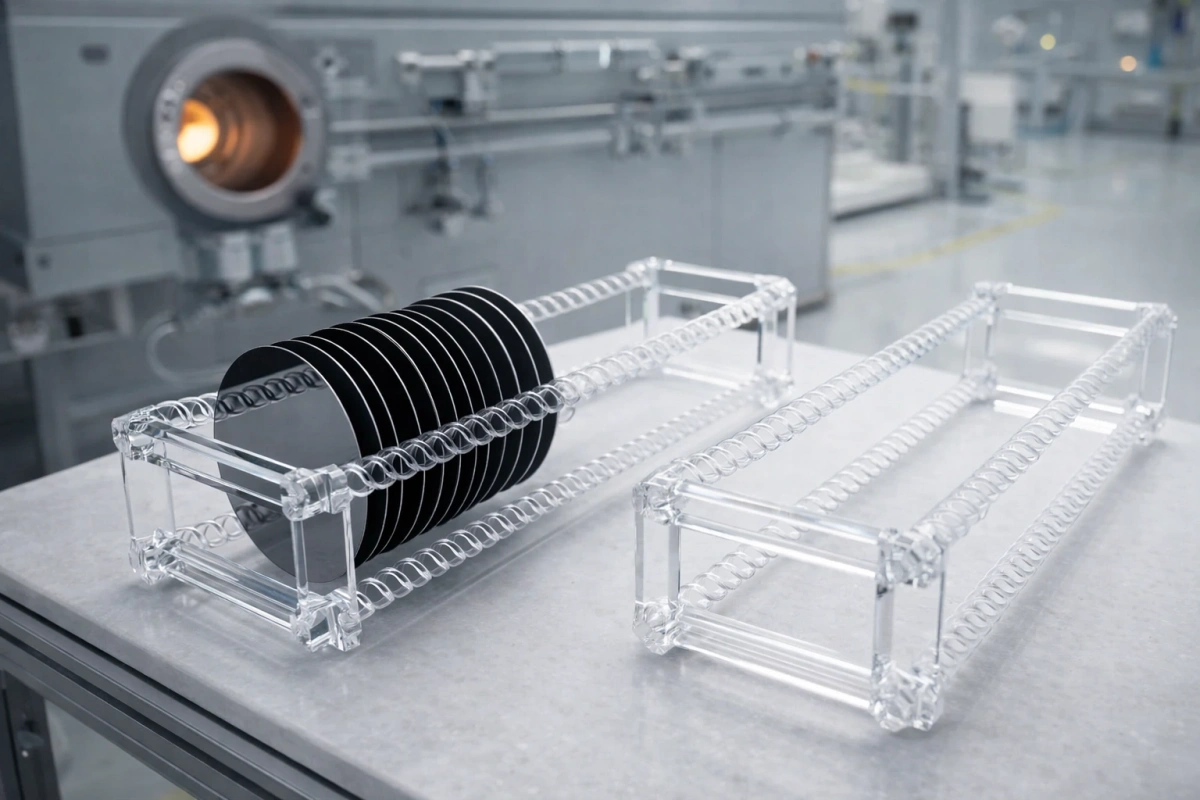
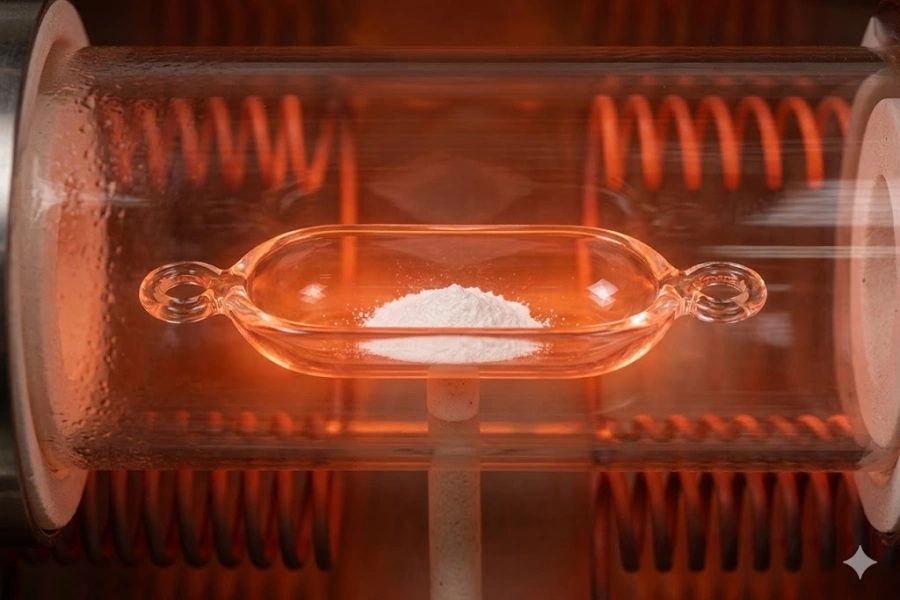
Quartz tubes used as furnace liners in CVD, PVD, and thermal oxidation systems operate continuously at 900–1100°C, and quartz boats serve as sample carriers for silicon wafer diffusion doping at temperatures up to 1050°C — conditions at which borosilicate would soften, deform, and potentially bond to the furnace element or contaminate the substrate with sodium and boron. In ceramic synthesis research, quartz crucibles provide a chemically inert, thermally stable containment volume for precursor calcination at 700–1000°C, where even trace sodium contamination from a borosilicate crucible would alter the stoichiometry of oxygen-ion conducting ceramics or high-temperature superconductor precursors. Materials synthesis protocols at leading research institutions routinely specify fused quartz as the default tube and crucible material for any process above 550°C.
The quantitative boundary is practical: borosilicate tubes show measurable sagging at 600°C under their own weight across unsupported spans greater than 30 cm. Fused quartz tubes of the same diameter remain dimensionally stable to within ±0.05 mm across equivalent spans at 1000°C.
Analytical Spectroscopy and Photochemistry
UV-visible spectrophotometry and fluorescence spectroscopy constitute the largest single application domain for quartz cuvettes, where the optical performance difference between quartz and borosilicate translates directly into data quality.
Standard UV-VIS methods for nucleic acid quantification at 260 nm, protein quantification at 280 nm, and pharmaceutical purity assays at 220–250 nm all require fused quartz cells. In practice, laboratories that use borosilicate cuvettes for these measurements obtain systematically elevated absorbance baselines and compressed dynamic ranges below 300 nm. Fluorescence assays using fluorophores excited below 350 nm — including DAPI, Hoechst 33342, and many tryptophan-based intrinsic protein fluorescence measurements — require quartz cells to suppress the borosilicate autofluorescence background that otherwise overwhelms low-emission signals. In photocatalysis research, quartz reaction vessels are specified to transmit the UV component of simulated solar spectra (AM 1.5, 290–400 nm), allowing valid quantification of quantum yields and photocatalytic degradation rates.
The consequences of incorrect material selection in these applications are not merely imprecise results; they are systematically biased results that may not be identifiable as artefact-driven without a comparative experiment using quartz vessels.
Trace Analysis and High-Purity Sample Handling
Analytical chemistry protocols targeting sub-ppb (µg/L) or sub-ppt (ng/L) concentration ranges impose strict requirements on vessel blanks — the concentration of target analytes contributed by the container itself during sample preparation.
ICP-MS and ICP-OES methods for ultra-trace elemental analysis are particularly sensitive to container contributions. Borosilicate glass vessels in hot acid digestion protocols consistently contribute boron at 5–100 µg/L, sodium at 10–500 µg/L, and aluminium at 1–20 µg/L to digestion blanks, depending on acid concentration, temperature, and contact time. For environmental water analysis, geochemical sample preparation, and pharmaceutical elemental impurity testing under ICH Q3D3 guidelines, these blank levels are unacceptable. Fused quartz vessels with SiO₂ ≥ 99.995% purity contribute silicon as the sole potential leachate, and at digestion temperatures below 200°C in mineral acid media, silicon contributions typically remain below 0.1 mg/L — sufficiently low that silicon matrix effects are manageable. Cleanroom-grade quartz labware used in semiconductor wafer cleaning protocols (RCA clean, SPM clean) must meet even stricter criteria, with metallic impurity contributions verified by TXRF (total-reflection X-ray fluorescence) to be below 10¹⁰ atoms/cm² on wafer surfaces.
The blank contribution from container materials is a systematic error that propagates invisibly through calibration curves and method detection limits unless explicitly characterised through acid blank experiments.
Routine Laboratory Work Below 450°C
Objective assessment of material selection demands acknowledging the conditions under which borosilicate glass is not merely adequate but genuinely the rational choice.
For general-purpose heating, reflux, distillation, and routine acid-base reactions at temperatures below 450°C, borosilicate glass performs reliably across thousands of cycles with appropriate care. Round-bottom flasks, condensers, separating funnels, and volumetric glassware are manufactured in borosilicate for good reasons: the material's glass-working characteristics enable complex shapes not achievable in fused quartz, and the optical clarity of borosilicate in the visible range supports direct visual observation of reactions. For teaching laboratories, scale-up chemistry, preparative organic synthesis, and general inorganic reactions where trace contamination is not analytically critical, the additional cost of quartz labware is not justified by performance gains. Borosilicate glass remains the workhorse material of experimental chemistry at ambient and moderate temperatures, and correctly so.
Application-to-Material Reference
| Laboratory Application | Temperature Range | Recommended Material | Critical Property |
|---|---|---|---|
| Tube furnace liner / CVD reactor | 600–1100°C | Quartz labware | Thermal stability, purity |
| Sample ashing / calcination | 500–900°C | Quartz labware | Thermal stability |
| Acid digestion (trace metals) | 100–250°C | Quartz labware | Chemical purity, low blank |
| UV-VIS spectrophotometry (<300 nm) | Ambient | Quartz labware | UV transmission |
| Fluorescence assay (<350 nm excitation) | Ambient | Quartz labware | Low autofluorescence |
| NIR / IR spectroscopy (2–4 µm) | Ambient | Quartz labware | IR transmission |
| General heating / reflux | Ambient–450°C | Borosilicate glass | Cost-effectiveness |
| Routine volumetric work | Ambient | Borosilicate glass | Forming flexibility |
| Visible-range spectrophotometry | Ambient | Borosilicate glass | Optical clarity (vis.) |
| Alkali fusion | >800°C | Platinum / Zirconium | Alkali resistance |
| HF digestion / etching | Ambient–80°C | PTFE / PFA / FEP | HF resistance |
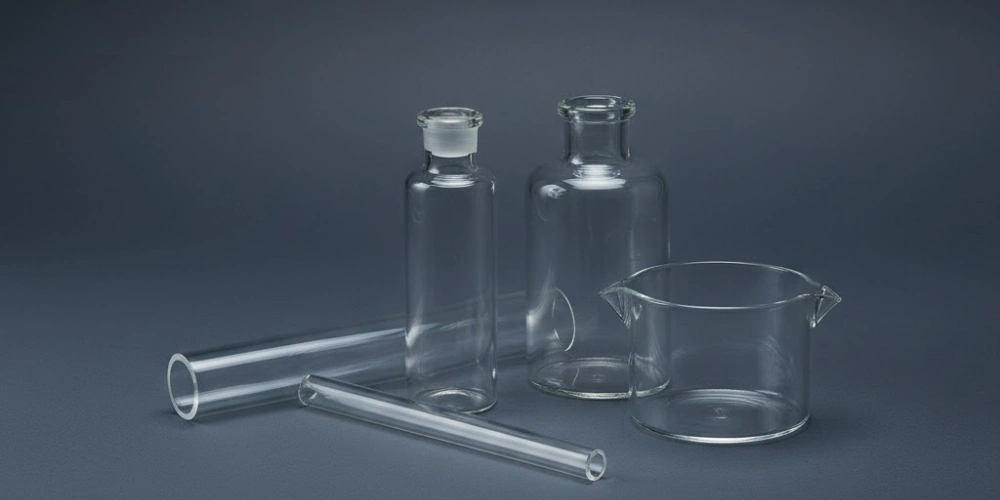
Cost Efficiency Assessed Across Quartz Labware Lifecycles
The unit price difference between fused quartz and borosilicate vessels is real and substantial, but unit price alone is a misleading metric for total cost of ownership in a laboratory context.
-
Thermal failure replacement rate: In high-temperature applications above 600°C, borosilicate vessels are not merely more expensive per cycle — they are non-functional. A borosilicate tube used at 900°C will deform or fail within the first heating cycle. The relevant comparison for furnace applications is therefore not quartz versus borosilicate cost per unit, but quartz cost per unit versus the cost of repeated experiment failure, instrument downtime, and re-preparation of samples. In materials synthesis research, a single failed high-temperature run — due to vessel deformation contaminating a sample or releasing a substrate — may invalidate days of preparatory work.
-
Chemical durability and service life: In repeated acid digestion protocols, quartz vessels show no measurable mass loss after hundreds of digestion cycles in mineral acid media below 250°C. Borosilicate vessels subjected to the same protocol exhibit progressive surface etching, increasing blank contributions over time, and eventually visible surface degradation. Published data on borosilicate digestion tube performance in hot HNO₃/HCl mixtures indicate measurable surface layer removal after 20–50 digestion cycles at 180°C, requiring vessel replacement to maintain blank performance. Fused quartz vessels in the same service have demonstrated blank stability over 200+ cycles, yielding a per-cycle cost that converges toward or below borosilicate on a long-term basis.
-
Contamination-driven experimental costs: In trace analysis, the cost of a contaminated analytical run includes not only reagent consumption but instrument time, sample re-preparation, and, in some regulated environments, investigation documentation. A single batch of ICP-MS results invalidated by elevated boron blanks from a borosilicate digestion vessel represents a cost that dwarfs the price differential between vessel materials. For applications where contamination risk from vessel material is analytically significant, quartz is the economically conservative choice despite its higher unit cost.
A Practical Selection Framework for Quartz Labware
Drawing together the thermal, chemical, optical, and mechanical evidence presented across this article, a four-variable framework provides a structured basis for material selection applicable to any laboratory application.
Four Variables That Settle the Quartz Labware Selection
The selection between fused quartz and borosilicate glass resolves consistently when four experimental variables are assessed in sequence. Together, they cover the full range of conditions under which the performance gap between the two materials becomes operationally decisive.
Variable 1 — Working temperature: If the sustained working temperature exceeds 500°C, quartz labware is required. If temperatures remain below 450°C, borosilicate glass is thermally adequate for the application. The 450–500°C transition zone requires case-by-case assessment of load geometry, heating rate, and cycle frequency.
Variable 2 — Chemical medium aggressiveness at temperature: If the application involves concentrated mineral acids at temperatures above 100°C with sensitivity to boron, sodium, or aluminium contamination at sub-ppm levels, quartz labware is the appropriate choice. If reagents are moderate in concentration and temperature, and contamination thresholds are at the ppm level or above, borosilicate glass is chemically adequate. Neither material is suitable for HF or hot concentrated alkali — fluoropolymer and platinum vessels respectively govern those conditions.
Variable 3 — Optical measurement wavelength: If any optical measurement in the experimental workflow falls below 300 nm, quartz labware components are required. If fluorescence excitation wavelengths fall below 380 nm and assay fluorophore concentrations are below 100 nmol/L, the autofluorescence of borosilicate will interfere, and quartz cells are necessary. For measurements confined to the visible and near-infrared range above 400 nm, borosilicate glass provides adequate optical transmission.
Variable 4 — Sample purity sensitivity: If the application requires procedural blanks for trace elements at or below 1 µg/L (ppb), fused quartz vessels with SiO₂ ≥ 99.995% are necessary to achieve the required blank performance. For applications where analyte concentrations are in the mg/L range or above, and multi-element blank contributions from borosilicate glass are analytically tolerable, borosilicate is a functional choice.
Decision Framework
| Variable | Threshold | Quartz Labware Required | Borosilicate Adequate |
|---|---|---|---|
| Working temperature | 500°C | >500°C | <450°C |
| Acid concentration at temperature | Hot concentrated mineral acid + trace sensitivity | Yes | No trace sensitivity |
| Optical wavelength | 300 nm | <300 nm UV or <380 nm fluorescence | >400 nm visible/NIR |
| Blank sensitivity | 1 µg/L | Sub-ppb trace analysis | >1 mg/L concentration range |
Configurations Available in Precision Quartz Labware
Once the selection framework confirms that fused quartz is the appropriate material, the practical question becomes which vessel geometry best serves the specific application. The principal configurations in laboratory quartz labware cover the full range of research needs.
Quartz tubes are the most widely used configuration, available in clear and opaque fused silica, with outer diameters from 3 mm to 300 mm, wall thicknesses from 0.5 mm to 10 mm, and length tolerances of ±0.5 mm. They serve as furnace liners, CVD reactors, UV sterilisation sleeves, and flow-through spectroscopic cells. Quartz crucibles for high-temperature material processing are manufactured in both transparent and opaque (microbubble) variants; opaque quartz provides more uniform radiant heat distribution due to its diffuse emissivity profile, while transparent quartz allows visual process monitoring. Quartz cuvettes for spectrophotometry are fabricated in pathlengths from 0.1 mm to 100 mm, with UV-grade synthetic fused silica achieving transmission from 170 nm and surface flatness within λ/4 at 633 nm. Quartz plates and windows provide optical access to high-temperature or high-pressure environments, with dimensional tolerances of ±0.1 mm and surface roughness achievable to Ra < 0.5 nm for interferometric applications. Quartz beakers and flasks serve acid digestion and high-temperature reaction containment, with wall thicknesses designed to accommodate thermal cycling without mechanical failure. Quartz boats for semiconductor and materials processing carry substrates through diffusion furnaces and deposition systems, dimensioned to furnace tube specifications with tolerances of ±0.1–0.2 mm.
Custom configurations — including non-standard geometries, ground flanges, quartz-to-metal transitions, and multi-aperture reactor bodies — are fabricated to customer drawings in fused silica with manufacturing tolerances commensurate with the application requirements. TOQUARTZ's quartz labware range covers standard and custom configurations across all these product families, with SiO₂ purity verified at ≥99.995% and dimensional inspection to ±0.1 mm on critical surfaces.
Standard Quartz Labware Configurations and Specifications
| Component | Typical Dimensions | Dimensional Tolerance | Max Working Temp (°C) | Primary Application |
|---|---|---|---|---|
| Quartz tube (clear) | OD 3–300 mm, wall 0.5–10 mm | ±0.1–0.2 mm | 1100 (continuous) | Tube furnace, CVD, UV lamp |
| Quartz tube (opaque) | OD 20–200 mm | ±0.2 mm | 1100 | Infrared heating, diffusion |
| Quartz crucible (clear) | 5–500 mL | ±0.2 mm | 1100 | Calcination, synthesis |
| Quartz crucible (opaque) | 10–1000 mL | ±0.2 mm | 1100 | Thermal processing, furnace |
| Quartz cuvette (UV grade) | Pathlength 0.1–100 mm | ±0.01 mm (pathlength) | 300 (standard) | UV-VIS, fluorescence spectroscopy |
| Quartz plate / window | 5×5 mm to 300×300 mm | ±0.1 mm | 1000 | Optical windows, substrates |
| Quartz beaker / flask | 10–2000 mL | ±0.2 mm | 1100 | Acid digestion, HT reactions |
| Quartz boat | 50–400 mm length | ±0.1–0.2 mm | 1100 | Wafer processing, sample carry |
Conclusion
Quartz labware and borosilicate glass occupy complementary positions in the laboratory material hierarchy. Borosilicate glass provides reliable, cost-effective service for the majority of routine laboratory operations conducted below 450°C, within the visible spectrum, and at analyte concentrations that tolerate ppm-level blank contributions. Fused quartz is the material of necessity when temperature, chemical purity, or optical demands push beyond those boundaries — not as a premium upgrade, but as the only silicon-oxide-based vessel material capable of maintaining structural integrity, analytical inertness, and spectral transparency under the conditions that define advanced research and high-precision measurement. The four-variable framework presented here — temperature, chemical aggressiveness, optical wavelength, and blank sensitivity — provides a sufficient basis for resolving material selection decisions across virtually all laboratory applications.
FAQ
Is quartz labware the same as fused silica labware?
The terms are used interchangeably in commercial and laboratory contexts, but they are technically distinct. Fused silica refers specifically to amorphous SiO₂ produced by melting high-purity silica — either natural quartz crystal (natural fused quartz) or synthetic silicon tetrachloride (synthetic fused silica). Natural fused quartz typically contains trace metallic impurities at 1–20 ppm; synthetic fused silica achieves sub-ppm metallic impurity levels and better UV homogeneity. All fused silica is amorphous SiO₂, but "quartz" in its geological sense refers to crystalline SiO₂. In laboratory supply nomenclature, "quartz labware" reliably refers to fused silica products, not crystalline quartz.
Can quartz cuvettes be used for all UV-VIS measurements?
Quartz cuvettes fabricated from optical-grade fused silica are suitable for measurements across the full UV-VIS-NIR range from approximately 170 nm to 2500 nm. For measurements confined to wavelengths above 340 nm, high-quality borosilicate glass cuvettes are optically adequate and substantially less expensive. The practical recommendation is to use quartz cuvettes for any method with a measurement wavelength below 300 nm, for fluorescence assays with excitation below 380 nm, and for any application where autofluorescence background is analytically significant. Borosilicate cuvettes are suitable for colorimetric assays, most visible-range absorption measurements, and applications where UV performance is not required.
What causes quartz labware to crack during use?
The most common causes of fracture in fused quartz vessels are thermal shock from excessively rapid heating or cooling, mechanical impact during handling, and devitrification-induced stress from surface crystallisation. Thermal shock fractures are characterised by curved crack propagation following tensile stress trajectories; they are prevented by controlled heating and cooling rates — typically below 5–10°C per minute in the 500–800°C range — and by avoiding contact between hot quartz surfaces and cold liquids or metal surfaces. Devitrification-induced fracture appears as cracking that initiates at opacified surface regions and is prevented by keeping the quartz surface clean of alkali contamination during use. Impact fractures are indistinguishable from those in other brittle materials and are managed through appropriate handling protocols.
At what temperature does borosilicate glass become unsuitable for laboratory use?
The practical upper working limit for borosilicate glass in load-bearing configurations — tubes, crucibles, or reaction vessels — is approximately 450–500°C for sustained operation and 550°C for short-duration exposure without significant mechanical load. The softening point of standard borosilicate (Pyrex 7740, Duran) is approximately 820°C, but measurable viscous deformation under self-weight begins well below this temperature, particularly in thin-walled geometries or cantilevered configurations. For intermittent oven or furnace use with no mechanical load, some borosilicate components tolerate 500–520°C without visible distortion, but dimensional stability cannot be assured above 500°C for precision applications.
References:
-
A semiconductor fabrication technique involving very short, controlled high-temperature annealing cycles, for which fused quartz components are standard containment materials due to their thermal shock resistance. ↩
-
Förster resonance energy transfer, a distance-dependent fluorescence technique used to study molecular interactions, for which low-autofluorescence quartz substrates are required to achieve adequate signal-to-noise ratios at low fluorophore concentrations. ↩
-
An international regulatory guideline issued by the International Council for Harmonisation specifying permitted daily exposure limits for elemental impurities in pharmaceutical products, driving the use of high-purity quartz labware in pharmaceutical sample preparation. ↩