Choosing the wrong cuvette material corrupts spectral data and wastes precious samples. The differences between quartz, glass, and plastic are not superficial — they are fundamental to measurement validity.
This article delivers a rigorous, application-driven comparison of quartz, glass, and plastic cuvettes across optical transmittance, chemical resistance, dimensional precision, path length selection, and real-world laboratory scenarios. Every major selection variable is addressed in full, so no supplementary reference is required.
Material selection in spectroscopy is rarely a single-axis decision. Optical performance, solvent compatibility, dimensional tolerances, and per-use economics all converge into the final specification. The sections that follow dissect each of these variables systematically, moving from foundational material science through to application-specific recommendations.
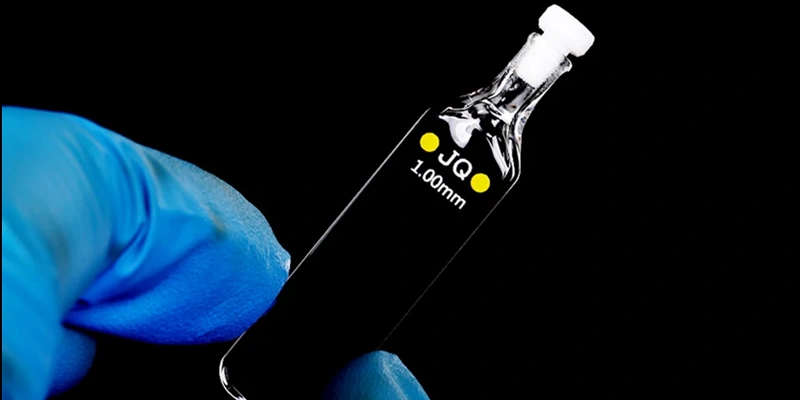
The Material Architecture behind Each Cuvette Type
At the atomic level, cuvette performance is dictated entirely by the composition of its constituent material. Recognizing these structural differences is the prerequisite for any informed selection decision.
-
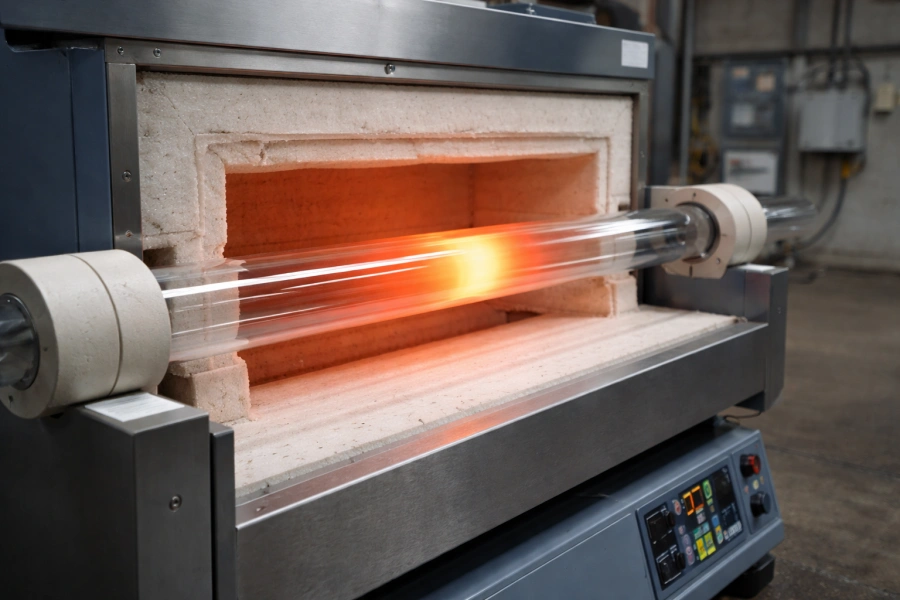
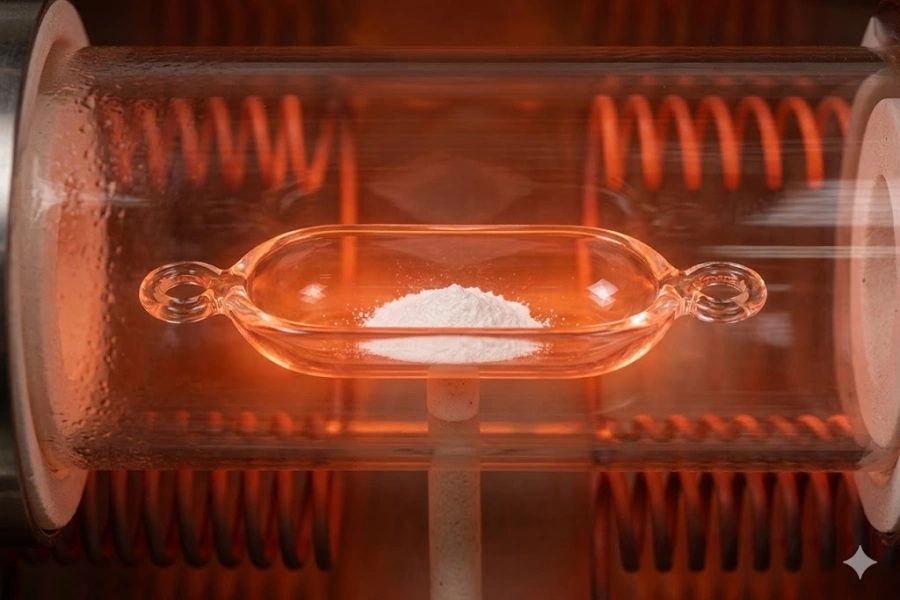
Fused silica (fused quartz): Produced by melting high-purity silicon dioxide (SiO₂) at temperatures exceeding 1,700 °C, fused silica is an amorphous, non-crystalline solid. Its hydroxyl (OH⁻) content and trace metal impurities are tightly controlled during synthesis. Fused silica transmits radiation from approximately 170 nm in the deep UV through to 2,500 nm in the near-infrared, a range unmatched by any other common cuvette substrate. Its thermal expansion coefficient is exceptionally low at roughly 0.55 × 10⁻⁶/°C, conferring dimensional stability across a wide temperature range.
-
Borosilicate glass: Formed from a silica-boron trioxide network, borosilicate glass contains approximately 80% SiO₂ and 13% B₂O₃ by mass. The boron network modifier disrupts the pure silica lattice, introducing absorption bands in the UV region. Borosilicate glass begins to absorb significantly below approximately 320 nm, rendering it unsuitable for deep UV work. It remains optically transparent across the full visible spectrum (320–2,500 nm) and offers reasonable chemical durability against most aqueous reagents.
-
Optical-grade plastic (polystyrene, polymethyl methacrylate, cyclic olefin copolymer1): Plastic cuvettes are injection-moulded from organic polymer resins. Their optical transparency is limited to the visible and partial near-UV range, typically 340–900 nm for polystyrene and 285–900 nm for PMMA. Polymer matrices introduce fluorescence background, surface softness, and solvent sensitivity that fundamentally restrict their use to low-precision, visible-wavelength applications.
These three compositional profiles establish the performance ceiling for each cuvette type. Subsequent sections quantify exactly where those ceilings manifest in practice.
UV Transmittance Performance of Quartz Cuvettes versus Other Materials
Optical transmittance is the single most consequential parameter separating cuvette materials in spectroscopic practice. Without adequate UV transmission, no amount of dimensional precision or chemical durability can salvage a measurement.
Fused silica's dominance in UV spectroscopy is rooted directly in its atomic structure. The absence of network-modifying ions and the high purity of the SiO₂ lattice eliminate the electronic transitions responsible for UV absorption in glass and polymer systems. Consequently, quartz cuvettes preserve signal integrity in spectral regions that are entirely inaccessible to alternative materials.
Optical Transmission Ranges for Fused Quartz, Borosilicate Glass and Plastic
The operational wavelength range of a cuvette material represents an absolute physical boundary, not a preference. Measurements attempted outside this range yield systematically corrupted absorbance values regardless of instrument calibration quality.
Fused silica transmits usable radiation from 170 nm to approximately 2,500 nm, covering the vacuum UV, deep UV, near UV, full visible, and near-infrared regions. At 200 nm, a 1 mm path length fused silica cuvette typically exhibits less than 10% intrinsic absorbance. Borosilicate glass, by contrast, reaches 50% absorbance at approximately 310 nm and becomes effectively opaque below 280 nm. PMMA plastic performs marginally better than polystyrene in the UV, with a practical lower limit near 285 nm, but even this boundary excludes the critical 260 nm nucleic acid absorption band.
Spectral Transmission Boundaries by Cuvette Material
| Material | Lower UV Limit (nm) | Upper NIR Limit (nm) | Visible Range Transmission (%) | Fluorescence Background |
|---|---|---|---|---|
| Fused Silica (UV-grade) | 170 | 2,500 | >90 | Negligible |
| Fused Silica (IR-grade) | 220 | 3,500 | >90 | Negligible |
| Borosilicate Glass | 320 | 2,500 | >88 | Low |
| PMMA Plastic | 285 | 900 | >85 | Moderate |
| Polystyrene Plastic | 340 | 900 | >82 | High |
| Cyclic Olefin Copolymer | 300 | 900 | >87 | Low–Moderate |
Spectral Failure Mechanisms in Glass and Plastic below 300 nm
The UV opacity of glass and plastic is not a manufacturing defect — it is an intrinsic consequence of electronic structure. Understanding these failure mechanisms prevents misattribution of analytical errors to instrument or reagent causes.
In borosilicate glass, the B₂O₃ network modifier introduces non-bridging oxygen bonds whose electronic transitions absorb strongly between 250 and 320 nm. Additionally, trace iron (Fe³⁺) impurities present at even sub-ppm concentrations contribute broad absorption bands centred near 380 nm and tailing into the UV. A borosilicate glass cuvette measured in a UV-Vis spectrophotometer at 260 nm will register apparent absorbance values of 0.3–0.8 AU from the cuvette material alone, wholly obscuring the sample signal and producing fabricated concentration readings.
Plastic cuvettes fail through a different mechanism. The aromatic ring systems inherent to polystyrene and the ester carbonyl groups in PMMA undergo π→π and n→π electronic transitions with absorption maxima between 260 and 290 nm. Furthermore, residual polymerisation initiators and plasticisers contribute stray absorption that varies batch to batch. Plastic cuvettes also exhibit autofluorescence when excited below 340 nm, producing an elevated and unstable baseline that fundamentally compromises both absorbance and fluorescence measurements in this region.
These failure modes are non-correctable through blank subtraction alone. The reference blank and sample cuvette must be matched to within 0.005 AU at the measurement wavelength; at 260 nm, plastic cuvettes cannot satisfy this criterion.
Four-Face Polished Quartz Cuvettes in Fluorescence Spectroscopy
Fluorescence spectroscopy imposes optical demands beyond those of standard UV-Vis transmission measurements. The geometry of emission detection — typically at 90° to the excitation beam — requires optical access through lateral cuvette faces that transmission measurements never utilise.
Standard UV-Vis quartz cuvettes are polished on two opposing faces (the transmission windows) while the remaining two faces are ground or frosted. In a fluorescence measurement, the excitation beam enters through one polished face and the emitted photons are collected through an adjacent perpendicular face. If that adjacent face is ground rather than polished, scatter from the rough surface overwhelms the emission signal, degrading sensitivity by one to two orders of magnitude. Four-face polished quartz cuvettes eliminate this limitation entirely by presenting optically flat surfaces on all four sides.
Beyond polishing geometry, UV-grade fused silica is essential in fluorescence work because any autofluorescence from the cuvette material itself appears directly in the emission spectrum. Standard fused silica autofluorescence peaks near 450 nm when excited at 280 nm, which overlaps with protein and aromatic compound emission bands. Selecting low-fluorescence UV-grade quartz — which specifies OH⁻ content and purity to suppress this background — is therefore not optional for quantitative fluorescence work.
Quartz Cuvette Specifications for UV-Vis versus Fluorescence Applications
| Specification | Standard UV-Vis Quartz Cuvette | Fluorescence-Grade Quartz Cuvette |
|---|---|---|
| Polished Faces | 2 | 4 |
| Material Grade | UV-grade fused silica | Low-fluorescence UV-grade fused silica |
| Excitation Range (nm) | 170–2,500 | 200–700 |
| Autofluorescence Level | Low | Very Low |
| Path Length Options (mm) | 1, 2, 5, 10, 20, 50 | 3, 5, 10 |
| Typical Application | Absorbance, turbidity | Emission spectroscopy, FRET, quantum yield |
Chemical Resistance Profiles of Quartz, Glass and Plastic Cuvettes
Beyond optical performance, the chemical environment of the sample dictates material viability just as stringently. A cuvette that dissolves, swells, or leaches contaminants into the sample invalidates every measurement it participates in, regardless of its optical specifications.
Fused silica's chemical inertness derives from the same dense SiO₂ network that produces its UV transparency. Borosilicate glass shares partial chemical resistance but introduces boron-leaching vulnerability under alkaline conditions. Plastic materials present the most complex compatibility profile, with susceptibility varying substantially by polymer type and solvent polarity.
Organic Solvents That Degrade Plastic Cuvettes
Plastic cuvettes are frequently positioned as economical, disposable alternatives for routine work — a characterisation that obscures their severe limitations with organic solvents.
Polystyrene cuvettes dissolve or craze visibly within seconds of contact with acetone, tetrahydrofuran (THF), chloroform, toluene, and dimethyl sulfoxide (DMSO). PMMA cuvettes exhibit greater solvent resistance than polystyrene but are incompatible with acetone, ethyl acetate, dichloromethane, and concentrated acetic acid. COC (cyclic olefin copolymer) cuvettes represent the most chemically tolerant plastic option, withstanding dilute acids, bases, and many polar solvents, yet they still fail in contact with aromatic hydrocarbons and halogenated solvents above trace concentrations.
The degradation mechanism matters analytically. Partial dissolution releases polymer oligomers and plasticiser molecules into the sample, adding UV-absorbing contaminants that co-elute with analyte signals. At 260 nm, PMMA dissolution products have been documented to contribute up to 0.15 AU of spurious absorbance in acetone-containing samples — an error magnitude that would produce a 41% overestimation of nucleic acid concentration in a standard Beer-Lambert calculation.
Whenever an analytical method involves organic solvent extraction, protein denaturation with organic acids, or lipid solubilisation with detergent-alcohol mixtures, plastic cuvettes must be excluded from consideration entirely.
Acid and Alkali Tolerance in Glass versus Fused Quartz
Both glass and fused quartz resist a broad range of inorganic acids, but their failure modes under extreme pH conditions differ in ways that carry direct analytical consequences.
Borosilicate glass is stable in contact with most mineral acids (HCl, H₂SO₄, HNO₃, HClO₄) at concentrations below 10% and temperatures below 100 °C. However, alkaline solutions above pH 9 initiate network hydrolysis in borosilicate glass, progressively leaching silica and boron species into solution. At pH 12–13, measurable silica leaching occurs within 30 minutes of contact at room temperature, introducing SiO₂ concentrations that alter sample refractive index and absorb weakly in the UV below 210 nm. Fused silica exhibits superior alkali resistance relative to borosilicate glass because the absence of boron from the network eliminates the primary hydrolysis pathway; however, prolonged contact with concentrated NaOH (>30%) at elevated temperatures does attack even fused silica surfaces.
Hydrofluoric acid (HF) is the critical exception: it etches both glass and fused silica aggressively through direct attack on Si–O bonds, producing surface pitting that scatters radiation and permanently degrades optical performance after even brief exposure. No silica-based cuvette is HF-compatible. For HF-containing samples, acid-resistant polymers such as PTFE-lined cells or speciality fluoropolymer cuvettes are the only viable option.
Chemical Compatibility Summary by Cuvette Material
| Chemical Class | Fused Quartz | Borosilicate Glass | PMMA Plastic | Polystyrene | COC Plastic |
|---|---|---|---|---|---|
| Dilute Mineral Acids (pH 1–4) | ✓ | ✓ | ✓ | ✓ | ✓ |
| Concentrated Mineral Acids | ✓ | ✓ | ✗ | ✗ | ✗ |
| Hydrofluoric Acid (any conc.) | ✗ | ✗ | ✓ | ✓ | ✓ |
| Dilute Alkali (pH 9–11) | ✓ | Limited | ✓ | ✓ | ✓ |
| Concentrated Alkali (>pH 12) | Limited | ✗ | ✓ | ✓ | ✓ |
| Acetone / Ketones | ✓ | ✓ | ✗ | ✗ | ✗ |
| DMSO | ✓ | ✓ | ✗ | ✗ | Limited |
| Chlorinated Solvents | ✓ | ✓ | ✗ | ✗ | ✗ |
| Aromatic Hydrocarbons | ✓ | ✓ | Limited | ✗ | ✗ |
| Aqueous Buffers (pH 4–8) | ✓ | ✓ | ✓ | ✓ | ✓ |
Mapping Sample Chemistry to Cuvette Material Selection
Translating chemical compatibility data into a rapid selection decision requires matching the dominant chemical stress in the specific protocol to the tolerance profile of each material.
For purely aqueous samples measured at visible wavelengths — such as colorimetric enzyme assays using Bradford or BCA reagents — borosilicate glass or COC plastic cuvettes satisfy both optical and chemical requirements at a fraction of the cost of fused silica. The decisive crossover occurs when measurement wavelengths drop below 320 nm or when organic solvents enter the sample matrix. At that point, fused quartz becomes the only material with a validated performance profile, and the selection decision effectively resolves itself.
Samples combining extreme pH with UV detection — such as alkaline DNA denaturation assays or acid hydrolysis products monitored at 210–220 nm — demand fused quartz exclusively. The combination of UV-opaque behaviour and alkaline instability in glass, paired with UV-absorbing degradation products in plastic, leaves no viable alternative. Establishing a chemical compatibility checklist before instrument setup, rather than after observing anomalous baseline behaviour, represents the standard practice in well-managed analytical laboratories.
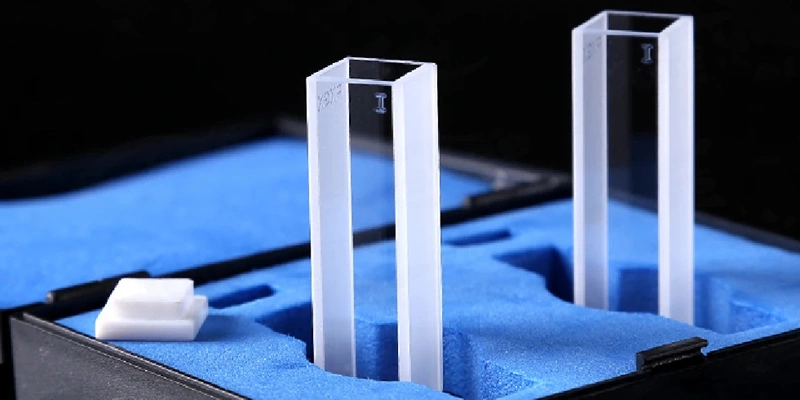
Path Length Specifications for Quartz Cuvettes in Quantitative Spectroscopy
Selecting the correct path length is as consequential as selecting the correct material. An analytically appropriate cuvette material deployed at the wrong path length produces absorbance values outside the linear detection range, undermining quantitative accuracy.
Path length determines the physical distance travelled by radiation through the sample, which directly controls the proportion of photons absorbed. This relationship, codified in the Beer-Lambert law2, defines the mathematical framework within which all path length decisions must be made. The sections below translate that framework into practical selection criteria for fused silica cuvettes across the most common spectroscopic configurations.
Beer-Lambert Law as the Theoretical Basis for Path Length Selection
The Beer-Lambert law states that absorbance (A) equals the product of the molar absorption coefficient (ε), the sample concentration (c), and the path length (l): A = ε · c · l. This linear relationship holds reliably across a specific absorbance window, and violations of linearity at its boundaries define the operating limits of any given cuvette-concentration combination.
Spectrophotometers maintain photometric linearity across an absorbance range of approximately 0.1 to 1.5 AU in most commercial instruments; below 0.1 AU, signal-to-noise ratio degrades measurement precision, while above 1.5–2.0 AU, stray light and detector saturation introduce systematic positive errors. Because path length scales absorbance proportionally, a sample reading 1.8 AU in a 10 mm cuvette will read 0.18 AU in a 1 mm cuvette — a tenfold reduction achieved purely by path length reduction, with no sample dilution required.
This relationship has practical power in scenarios where sample dilution is unacceptable — for example, when analyte volumes are sub-microliter, when dilution would disrupt equilibrium states, or when sample preparation has already reached the limits of concentration feasibility. Controlling path length is, in effect, controlling the effective concentration seen by the detector without altering the sample itself.
The 10 mm Standard — Suitable Concentration Ranges and Typical Applications
The 10 mm path length cuvette became the default laboratory standard for a straightforward reason: for most aqueous biological and chemical samples at standard working concentrations, a 10 mm path length places absorbance values comfortably within the 0.1–1.0 AU linear range.
For nucleic acid quantification at 260 nm, the molar absorption coefficient of double-stranded DNA is approximately 50 ng·μL⁻¹ per AU at 10 mm path length, meaning a sample at 25 ng/μL produces an absorbance of 0.50 AU — squarely within the optimal measurement window. For protein quantification by direct UV absorbance at 280 nm, a typical IgG antibody solution at 1 mg/mL produces approximately 1.35 AU in a 10 mm quartz cuvette. These values illustrate why the 10 mm specification has become nearly universal in molecular biology, biochemistry, and pharmaceutical QC environments.
The 10 mm path length also defines the calibration baseline for most published molar absorption coefficients, meaning that literature ε values can be applied directly without path length correction factors. Deviating from 10 mm introduces a conversion requirement that, if overlooked, produces systematic concentration errors of the same magnitude as the path length deviation ratio.
Short Path Length Cuvettes for High-Concentration Sample Measurements
When sample concentration is fixed at a high value and dilution is analytically or practically prohibited, reducing path length is the technically sound strategy for maintaining photometric linearity.
Short path length quartz cuvettes are manufactured in standard increments of 0.01 mm, 0.1 mm, 1 mm, 2 mm, and 5 mm, providing a two-order-of-magnitude range of adjustment below the standard 10 mm. A protein sample at 20 mg/mL that produces an off-scale absorbance of 27 AU in a 10 mm cell will read approximately 2.7 AU in a 1 mm cell — still above the optimal range, suggesting a 0.5 mm path length cuvette as the appropriate selection for that concentration. The precision of this calculation depends critically on path length tolerance, which in high-quality fused silica cuvettes is certified to ±1% or better.
Concentrated enzyme preparations, undiluted serum samples, and high-titre viral lysates are routine scenarios where the 1 mm or 2 mm quartz cuvette proves indispensable. In pharmaceutical formulation analysis, concentrated monoclonal antibody solutions at 100–200 mg/mL are routinely characterised using 0.05–0.1 mm path length fused silica cells, a regime where glass and plastic alternatives cannot compete due to their UV opacity and dimensional instability under solvent stress.
Path Length Selection by Concentration Range at 280 nm (Protein, ε₂₈₀ ≈ 1.35 mL·mg⁻¹·cm⁻¹)
| Protein Concentration (mg/mL) | Absorbance in 10 mm (AU) | Recommended Path Length (mm) | Expected Absorbance (AU) |
|---|---|---|---|
| 0.05–0.75 | 0.07–1.01 | 10 | 0.07–1.01 |
| 0.75–2.0 | 1.01–2.70 | 5 | 0.51–1.35 |
| 2.0–10.0 | 2.70–13.5 | 1 | 0.27–1.35 |
| 10–50 | 13.5–67.5 | 0.2 | 0.27–1.35 |
| 50–200 | 67.5–270 | 0.05 | 0.34–1.35 |
Micro-Volume Quartz Cuvettes for Sample-Limited Experiments
Micro-volume quartz cuvettes address a constraint orthogonal to concentration management: the physical scarcity of sample material. In structural biology, single-cell proteomics, and rare clinical specimens, the available sample volume may be 5–50 μL — insufficient to fill a standard 10 mm cuvette requiring 700–3,500 μL.
Micro-volume fused silica cuvettes are available with internal volumes as low as 30 μL at a standard 10 mm path length, achieved by narrowing the internal chamber width rather than reducing path length. Semi-micro formats (350–700 μL) and sub-micro formats (30–100 μL) provide volume flexibility while preserving the 10 mm path length and its associated linear range advantages. Reduced-volume cells are particularly valuable in circular dichroism3 (CD) spectroscopy, where the path length must remain short (0.1–1 mm) to accommodate the high UV absorption of far-UV CD buffers while the sample volume is inherently limited.
It is important to distinguish micro-volume cuvettes from micro-volume spectrophotometer pedestals (such as those used in NanoDrop instruments). Pedestals measure 1–2 μL samples via surface tension at very short, variable path lengths. Fused silica micro-volume cuvettes offer superior baseline stability, reproducible path lengths certified to ±1%, and compatibility with conventional spectrophotometer beams, making them the preferred option wherever measurement precision rather than throughput is the primary criterion.
Quartz Cuvette Volume and Path Length Options
| Cuvette Format | Internal Volume (μL) | Path Length (mm) | Typical Application |
|---|---|---|---|
| Standard | 700–3,500 | 10 | General UV-Vis, nucleic acid quantification |
| Semi-Micro | 350–700 | 10 | Protein quantification, enzyme assays |
| Micro | 100–350 | 10 | Limited-volume samples, kinetics |
| Sub-Micro | 30–100 | 10 | Rare specimens, high-value biological samples |
| Short Path Standard | 700–3,500 | 0.01–5 | High-concentration samples |
| Flow-Through | Variable | 2–10 | Continuous monitoring, HPLC detection |
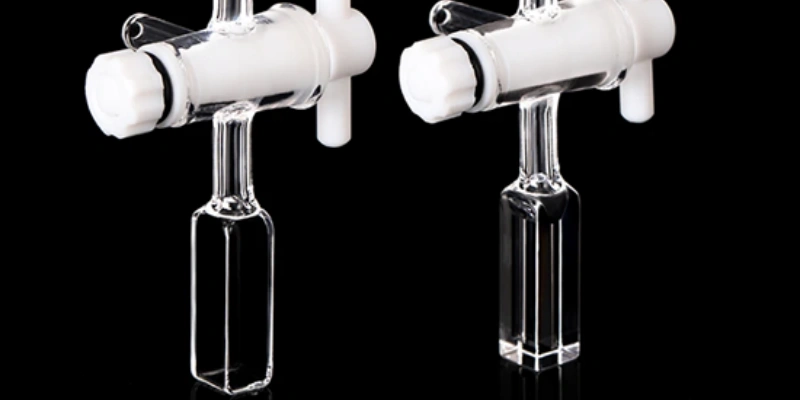
Dimensional Precision and Surface Finish in Spectrophotometry-Grade Quartz Cuvettes
Optical performance in a quartz cuvette is not solely determined by material purity — the mechanical execution of fabrication defines whether the theoretical optical properties of fused silica are actually realised in practice.
Dimensional tolerances and surface finish specifications separate spectrophotometry-grade quartz cuvettes from commodity alternatives. These parameters govern measurement reproducibility, instrument-to-instrument transferability, and the long-term stability of calibration curves. Understanding them is essential for procurement decisions and for diagnosing unexplained variance in spectroscopic datasets.
Two-Window versus Four-Window Polishing Specifications
The polishing configuration of a cuvette is the most immediate indicator of its intended application class.
Standard transmission cuvettes are polished on two opposing faces — the light-entry and light-exit windows — while the remaining two lateral faces are left with a ground or frosted finish. This two-face polishing configuration is adequate for all absorbance and turbidity measurements in UV-Vis spectrophotometers, where the analytical beam is collimated through the polished pair and the lateral faces serve no optical function. Frosted lateral faces can actually be advantageous in this configuration by suppressing internal reflections that would otherwise contribute stray light artefacts in high-absorbance measurements.
Fluorescence cuvettes require all four faces to be polished to optical flatness. The accepted surface flatness specification for spectrophotometry-grade optical faces is λ/4 or better (approximately 150 nm peak-to-valley deviation at 633 nm), ensuring that the transmitted wavefront is not significantly distorted by surface irregularity. In practice, premium-grade fused silica cuvettes from established manufacturers achieve λ/10 flatness, reducing wavefront distortion to below 63 nm — a level relevant only in the most demanding coherence-sensitive measurements such as laser-excited fluorescence or absorption difference spectroscopy.
Path Length Tolerance and Optical Face Parallelism Standards
Path length accuracy is the dimensional parameter most directly coupled to quantitative analytical accuracy. A cuvette labelled as 10.00 mm that measures 10.15 mm introduces a systematic 1.5% positive bias into every concentration derived from it, independently of any other error source.
High-quality fused silica cuvettes are manufactured to path length tolerances of ±0.01 mm (±0.1%) at the 10 mm nominal dimension, certified by interferometric measurement at multiple positions across the optical aperture. Economy-grade glass cuvettes are typically produced to ±0.05–0.1 mm tolerances, and plastic injection-moulded cuvettes may deviate by ±0.2 mm or more due to thermal shrinkage variability during moulding. For laboratories maintaining Beer-Lambert calibrations traceable to certified reference materials, this tolerance differential is analytically significant. A 0.1 mm path length error in a 1 mm cuvette constitutes a 10% error — an unacceptable deviation in any validated quantitative method.
Optical face parallelism — the angular alignment between the two transmission windows — is equally consequential. Non-parallel faces deflect the transmitted beam laterally, causing it to exit the cuvette at a slight angle relative to the entrance beam. In instruments with narrow detector apertures, this beam displacement reduces detected intensity and produces a false absorbance offset. Parallelism specifications for analytical-grade fused silica cuvettes are typically ≤30 arc seconds (0.008°), verified by autocollimation during quality inspection.
Surface Contamination and Its Effect on Optical Baseline Stability
Even a dimensionally perfect fused silica cuvette degrades to unreliable performance when its optical surfaces carry contamination. The sensitivity of UV spectroscopy to surface films is frequently underappreciated until anomalous baseline behaviour makes the problem undeniable.
Fingerprint oils deposited on optical faces introduce a film of complex organic molecules with broad UV absorption extending from 200 to 300 nm. A visible fingerprint on a 10 mm fused silica cuvette has been shown to contribute 0.05–0.2 AU of spurious absorbance at 260 nm, which translates directly into a 13–55% overestimation of nucleic acid concentration in a standard OD₂₆₀ assay. Residual solvent films present a subtler but equally problematic contamination mode: trace dimethyl sulfoxide remaining from an incomplete rinsing step absorbs near 210 nm, while residual acetonitrile contributes absorption below 200 nm.
The recommended handling protocol — contact restricted to ground glass surfaces or lateral frosted faces, rinsing with distilled water followed by the sample solvent, and air-drying in a laminar flow environment before use — is not a precautionary ritual but a directly traceable intervention against quantifiable measurement error. Cuvettes suspected of contamination should be cleaned by immersion in 10% nitric acid for 30 minutes, followed by thorough rinsing with ultrapure water, a protocol that removes organic films, metal ion deposits, and protein residues without attacking the fused silica surface.
Dimensional and Surface Specifications for Quartz Cuvette Grades
| Specification | Analytical Grade | Standard Grade | Economy Grade |
|---|---|---|---|
| Path Length Tolerance (mm) | ±0.01 | ±0.03 | ±0.05–0.10 |
| Optical Face Flatness | λ/10 | λ/4 | λ/2 |
| Face Parallelism (arc sec) | ≤10 | ≤30 | ≤60 |
| Surface Roughness Ra (nm) | <1 | <5 | <10 |
| Certification | Interferometric | Photometric | Visual inspection |
| Typical Application | Reference standards, validated methods | Routine quantitative analysis | Qualitative screening |
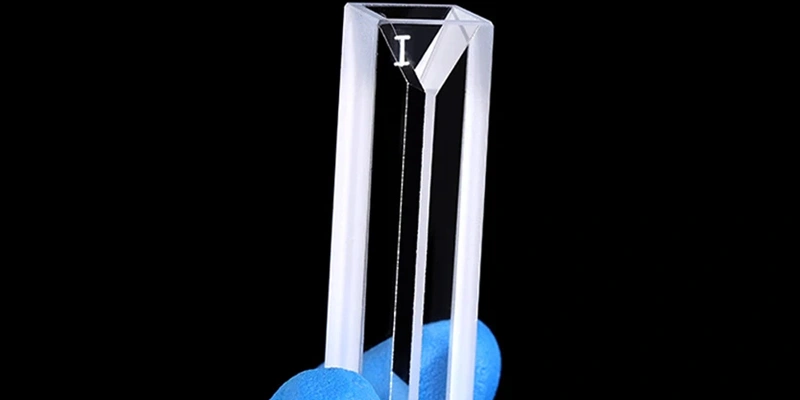
Price Comparison and Cost-per-Use among Quartz, Glass and Plastic Cuvettes
Material cost should never be evaluated in isolation from the total analytical cost of a measurement. A cuvette that must be replaced after every run carries a fundamentally different economic profile from one that serves reliably for years with proper maintenance.
-
Fused silica quartz cuvettes represent the highest initial capital outlay among standard cuvette types. A standard 10 mm, two-face polished fused silica cuvette from an established optical manufacturer typically falls in a premium price tier. However, with proper handling and cleaning, a single fused silica cuvette can remain in continuous service for 5–10 years, yielding a per-measurement cost that is orders of magnitude lower than disposable plastic when amortised over thousands of runs. The key cost drivers in fused silica are material purity (UV-grade vs standard), polishing configuration (two-face vs four-face), and certification level. Laboratories running fewer than 50 UV measurements per month may find the capital cost difficult to justify, particularly if measurements remain in the visible range.
-
Borosilicate glass cuvettes occupy a middle position in both cost and capability. They are typically priced at 10–30% of equivalent fused silica cuvettes, and their service life under careful handling approaches that of quartz for visible-range applications. The cost-per-use advantage of glass over quartz is most pronounced in high-volume colorimetric applications — clinical chemistry, environmental monitoring, and food quality testing — where UV capability is not required and visible-range precision is the sole optical demand.
-
Plastic disposable cuvettes carry the lowest unit cost but the highest long-term cost in active laboratories. Individual polystyrene or PMMA cuvettes are priced at a fraction of glass equivalents but generate continuous consumable expenditure and substantial laboratory waste. For genuinely high-throughput visible-range screening — such as 96-well plate readers or automated clinical analysers — plastic disposables remain the operationally rational choice, not because of optical superiority but because cross-contamination risk and cleaning time are eliminated entirely. COC cuvettes, while more expensive than polystyrene, justify their premium through reduced autofluorescence background and broader solvent tolerance in semi-automated workflows.
The rational economic decision integrates measurement wavelength, sample volume, run frequency, and contamination risk into a total cost-of-ownership calculation rather than defaulting to either the cheapest unit cost or the most premium specification available.
Application-Based Selection Criteria for Quartz Cuvette Usage
After establishing the optical, chemical, dimensional, and economic parameters of each material, the final step is translating those parameters into concrete recommendations for the laboratory protocols encountered most frequently.
The scenarios examined below represent the applications where cuvette selection errors are most consequential and most common. Each recommendation emerges directly from the material properties established in preceding sections, ensuring that the logic is traceable and not dependent on convention alone.
DNA and RNA Quantification at 260 nm — Spectral Requirements for Cuvette Selection
Nucleic acid quantification by UV absorbance is among the most commonly performed measurements in molecular biology, and it is also one of the most frequently compromised by inappropriate cuvette selection.
Double-stranded DNA absorbs maximally at 260 nm, a wavelength that lies within the UV-opacity window of both borosilicate glass and most plastic cuvette materials. Using a borosilicate glass cuvette for OD₂₆₀ measurement produces a systematic positive error that cannot be corrected by blank subtraction, because the blank and sample cuvettes carry identical material-derived absorbance at 260 nm only when their path length tolerances are exactly matched — a condition that glass manufacturing tolerances do not reliably satisfy. The 260/280 purity ratio, which is the primary indicator of protein contamination in nucleic acid preparations, is further distorted because borosilicate glass absorbs more strongly at 260 nm than at 280 nm, artificially inflating the ratio and masking genuine contamination.
UV-grade fused silica cuvettes with certified path length tolerances of ±0.01 mm are the unambiguous specification for nucleic acid quantification. RNA quantification introduces additional sensitivity requirements because RNA preparations are frequently available at concentrations of 1–10 ng/μL, placing absorbance values at 260 nm between 0.02 and 0.20 AU in a standard 10 mm cell. At these low absorbance levels, cuvette autofluorescence background and surface contamination errors are proportionally amplified, reinforcing the case for analytical-grade fused silica over standard-grade alternatives.
Recommended Cuvette Specifications for Nucleic Acid Quantification
| Parameter | Recommended Specification | Rationale |
|---|---|---|
| Material | UV-grade fused silica | Transparent at 260 nm; negligible autofluorescence |
| Path Length (mm) | 10 (standard conc.) / 1 (concentrated) | Linear range alignment with typical concentrations |
| Path Length Tolerance | ±0.01 mm | 260/280 ratio accuracy requires matched cells |
| Polishing | 2-face | Transmission measurement only |
| Volume Format | Micro (100–350 μL) or standard | Dependent on available sample volume |
| Cleaning Protocol | 10% HNO₃ rinse, ultrapure water | Removes DNA/RNA carryover and protein films |
Protein Assays at 280 nm versus 595 nm — Quartz or Glass Cuvettes
Protein quantification encompasses two methodologically distinct measurement protocols that impose different cuvette requirements — a distinction frequently overlooked in laboratory standard operating procedures.
Direct UV absorbance at 280 nm exploits the intrinsic absorption of aromatic amino acids, principally tryptophan (ε₂₈₀ ≈ 5,500 M⁻¹cm⁻¹) and tyrosine (ε₂₈₀ ≈ 1,490 M⁻¹cm⁻¹). At 280 nm, borosilicate glass transmits approximately 60–70% of incident radiation, producing a path-dependent absorbance contribution that introduces measurement error when the reference and sample cuvettes are not optically identical. Fused silica quartz cuvettes transmit >90% at 280 nm with negligible material-derived absorbance, making them mandatory for direct UV protein quantification. High-concentration monoclonal antibody characterisation, a routine task in biopharmaceutical development, is invariably conducted in fused silica cells precisely for this reason.
Colorimetric assays at 595 nm (Bradford/Coomassie) and 562 nm (BCA) operate entirely within the visible spectrum, a region where borosilicate glass performs with full transparency. For these applications, glass cuvettes are technically equivalent to fused silica at a substantially lower cost per unit, and the selection of quartz for Bradford assays represents unnecessary expenditure without analytical benefit. Plastic cuvettes are compatible with visible colorimetric assays chemically only when the reagent is solvent-free; Coomassie brilliant blue in acidic methanol-phosphoric acid solution attacks polystyrene, limiting plastic compatibility to the aqueous Bradford reagent formulations.
Enzyme Kinetics and the Thermal Stability Requirements of Reaction-Monitoring Cuvettes
Continuous kinetic monitoring imposes constraints on cuvette performance that static endpoint measurements never encounter. The cuvette must maintain optical and dimensional stability through temperature cycling, mechanical insertion and removal, and prolonged reagent contact.
Enzyme kinetics assays typically monitor absorbance changes over periods of 1–30 minutes at controlled temperatures between 25 °C and 60 °C, using substrates and cofactors that may include organic solvents, detergents, and reducing agents. Thermal expansion of cuvette material during temperature ramp-up alters path length by an amount proportional to the coefficient of thermal expansion (CTE). Fused silica's CTE of 0.55 × 10⁻⁶/°C produces a path length change of just 0.00055 mm per degree Celsius in a 10 mm cell — a variation of 0.0055% per °C, entirely negligible relative to the photometric noise floor of commercial instruments. Borosilicate glass, with a CTE of approximately 3.3 × 10⁻⁶/°C, produces six times greater dimensional change under identical thermal conditions, introducing a small but detectable baseline drift in high-precision kinetic measurements.
Stopped-flow spectroscopy, a specialised kinetics format measuring rapid reactions with mixing times below 2 ms, requires flow-through fused silica cells with precisely bored conduits and optically flat windows. These cells endure repeated high-pressure injections and must maintain alignment tolerances below 10 μm across thousands of cycles. Only fused silica provides the combination of UV transparency, chemical inertness, mechanical hardness (Vickers hardness ≈ 600 HV), and dimensional stability necessary to meet these requirements without progressive degradation of the optical baseline.
Thermal and Mechanical Properties Relevant to Kinetic Measurements
| Property | Fused Silica | Borosilicate Glass | PMMA Plastic | Polystyrene |
|---|---|---|---|---|
| CTE (×10⁻⁶/°C) | 0.55 | 3.3 | 70–77 | 50–85 |
| Max Service Temperature (°C) | 1,000+ | 500 | 70–80 | 60–70 |
| Vickers Hardness (HV) | ~600 | ~580 | ~18 | ~15 |
| Thermal Shock Resistance | Excellent | Good | Poor | Poor |
| Dimensional Stability at 60 °C | Excellent | Good | Poor | Poor |
Environmental Water Analysis — Viable Scenarios for Plastic Cuvettes
Not every spectroscopic application demands UV performance or sub-micrometer dimensional precision. Environmental and industrial water quality analysis offers a set of conditions under which plastic cuvettes provide a fully adequate and operationally practical solution.
Standard water quality parameters — chemical oxygen demand (COD) at 600 nm, turbidity at 860 nm, nitrate at 540 nm by colorimetric method, and total suspended solids by nephelometry — are all measured in the visible range. At these wavelengths, the optical performance of polystyrene and COC cuvettes is indistinguishable from borosilicate glass for practical measurement purposes, with both achieving transmission values above 85% and equivalent photometric noise floors. Disposable plastic cuvettes eliminate cross-contamination between environmental samples, which frequently contain high bacterial loads, heavy metals, and complex organic matrices that are difficult to remove from reusable cells completely.
Regulatory methods from the US EPA, ISO 7027, and equivalent European standards for water quality parameters generally specify cuvette path lengths of 10 mm at visible wavelengths without mandating a specific material, implicitly acknowledging that glass and plastic are interchangeable in these conditions. Laboratories processing 50–200 water samples per day find that the labour cost of cleaning and re-qualifying reusable glass cuvettes exceeds the material cost of high-quality disposable COC alternatives, making plastic the economically and practically superior choice in this specific analytical niche.
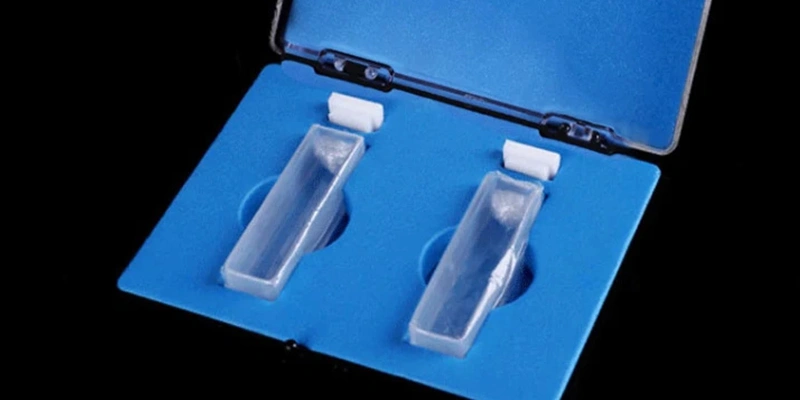
Cleaning Protocols and Reusability of Quartz Cuvettes versus Disposable Types
The reusability of quartz and glass cuvettes is one of their defining economic and environmental advantages over plastic disposables, but this advantage is only realised when cleaning protocols are executed correctly and consistently.
-
Routine cleaning between samples: Rinse the cuvette three times with the next sample solvent before filling for measurement. For aqueous samples, a preliminary rinse with ultrapure water followed by the sample buffer is sufficient for most biological applications. Never use abrasive cloths, paper tissues, or hard-bristle brushes on optical faces; even laboratory-grade lens tissue introduces micro-scratches on fused silica surfaces over repeated use, progressively elevating scatter losses in the UV.
-
Cleaning after organic solvent samples: Flush three times with the neat solvent used in the measurement, followed by three rinses with a miscible polar solvent (typically methanol or acetone for non-polar samples), and finish with ultrapure water rinses. Allow to air-dry inverted on clean lint-free paper in a dust-controlled environment. Residual high-boiling solvents such as DMSO or DMF require extended flushing sequences because their low volatility results in persistent contamination films that elevate baseline absorbance at 210–230 nm.
-
Deep cleaning for persistent contamination: Immersion in 10% (v/v) nitric acid for 30–60 minutes effectively removes inorganic deposits, metal complexes, and most organic films. Protein-fouled cuvettes respond well to 0.1 M NaOH for 15–20 minutes followed by acid neutralisation and thorough water rinsing. Piranha solution (3:1 H₂SO₄:H₂O₂) removes carbonaceous deposits and is used in optical fabrication facilities, but requires strict safety protocols and is not recommended for routine laboratory cleaning. All deep-cleaning protocols must conclude with a minimum of five ultrapure water rinses to eliminate cleaning agent residues.
Properly maintained fused silica cuvettes from reputable manufacturers retain photometric performance within original specifications for 10–15 years under routine laboratory conditions, provided they are not subjected to thermal shock, HF contact, or mechanical abrasion. Polystyrene and standard PMMA cuvettes are single-use by design and should never be reused, as surface leaching and micro-abrasion from pipette tips compromise their already limited optical performance on subsequent use. The lifecycle carbon footprint of a single fused silica cuvette servicing 5,000 measurements is substantially lower than 5,000 individual plastic cuvettes, a consideration that increasingly informs procurement decisions in sustainability-conscious research institutions.
Conclusion
Cuvette selection is a materials science decision with direct consequences for measurement validity. Fused silica quartz cuvettes are the mandatory choice for all UV measurements below 320 nm, fluorescence spectroscopy, high-concentration sample analysis requiring short path lengths, and thermally demanding kinetic protocols. Borosilicate glass cuvettes offer a cost-effective and optically equivalent alternative for visible-range measurements in chemically mild aqueous conditions. Plastic cuvettes are rationally justified in high-throughput disposable workflows at visible wavelengths, particularly in environmental monitoring and routine colorimetric screening where contamination control outweighs optical precision. Matching material to measurement wavelength, solvent chemistry, and dimensional requirements — rather than defaulting to either the cheapest or most premium option — is the defining competency of accurate quantitative spectroscopy.
FAQ
Q1: Can a quartz cuvette be used for visible-range measurements if only glass cuvettes are specified in the method?
Fused silica is fully transparent across the visible spectrum and exceeds the optical requirements of any visible-range method. Substituting quartz for glass in a visible-wavelength protocol introduces no optical disadvantage; the cuvette will perform at or above the specification of the original method without requiring any adjustment to calibration or baseline procedures.
Q2: What is the minimum sample volume required for a standard 10 mm quartz cuvette?
A standard 10 mm path length cuvette with a rectangular cross-section requires approximately 700–3,500 μL depending on chamber dimensions. For samples available at volumes below 350 μL, semi-micro or micro-volume fused silica cuvettes with internal volumes of 100–350 μL are the appropriate selection, maintaining the 10 mm path length while accommodating limited sample quantities.
Q3: How can measurement errors from cuvette contamination be identified?
The most reliable diagnostic is to measure the blank cuvette against a matched reference cuvette filled with solvent and check that the absorbance at the measurement wavelength does not exceed 0.005 AU. A contaminated cuvette typically presents an elevated, sloping baseline rather than a flat zero-absorbance baseline, and the anomaly persists after refilling with fresh solvent. Re-cleaning the cuvette and re-zeroing the baseline eliminates contamination-derived artefacts when cleaning is successful.
Q4: Is there a performance difference between UV-grade and standard-grade fused silica cuvettes for nucleic acid quantification?
UV-grade fused silica is manufactured with controlled hydroxyl content and reduced metallic impurity levels, producing lower intrinsic absorbance below 220 nm and substantially reduced autofluorescence. For absorbance measurements at 260 nm and 280 nm, the difference between UV-grade and standard-grade fused silica is negligible in most commercial instruments. However, for fluorescence quantification or measurements below 230 nm — such as peptide bond absorption assays — UV-grade or low-fluorescence-grade fused silica provides meaningfully superior baseline stability.
References:
-
This reference describes the polymerisation chemistry and optical properties of COC, the most chemically tolerant plastic substrate used in disposable laboratory cuvettes. ↩
-
This entry provides a rigorous derivation and discussion of the Beer-Lambert law, including its assumptions, linear range limitations, and common sources of deviation that directly govern path length selection decisions. ↩
-
This reference explains circular dichroism spectroscopy instrumentation and sample requirements, including the short path length and low-UV-absorbing buffer constraints that make micro-volume fused silica cuvettes the standard cell format for this technique. ↩