Is quartz glass shatterproof? You might think so because quartz glass feels strong and looks tough. In the glass industry, shatterproof means glass resists breaking into sharp pieces and stays safer during impacts.
Aspect | Description |
|---|---|
Definition | Shatterproof glass resists shattering and keeps broken pieces attached to a plastic layer. |
Quartz glass stands out for its heat resistance and hardness, but it can still break if you drop or hit it hard.
Key Takeaways
Quartz glass is strong but not truly shatterproof. It can break under certain conditions.
Shatterproof glass has layers that hold pieces together, while quartz glass does not.
Handle quartz glass carefully to avoid thermal shock and mechanical stress that can cause breakage.
Inspect quartz glass regularly for cracks or chips to ensure safety and longevity.
Choose quartz glass for high-temperature and chemical-resistant applications, but always prioritize careful handling.
Is Quartz Glass Shatterproof?
What "Shatterproof" Means
When you ask, "Is quartz glass shatterproof?", you might picture a material that never breaks or cracks. In the glass industry, shatterproof glass has a very specific meaning. It does not just resist breaking; it also protects you from sharp, dangerous shards if it does break.
Shatterproof glass, also known as safety or laminated glass, is designed to reduce the risk of shattering into dangerous shards when broken. It is typically composed of multiple layers of glass and a layer of plastic or resin sandwiched between them.
You can see that shatterproof glass uses layers to hold broken pieces together. This design keeps you safe from sharp fragments. Most people expect shatterproof glass to be flawless and never break, but even the best glass can have small imperfections. These do not mean the glass is weak. All glass, including quartz glass, can show tiny flaws if you look closely.
Quartz glass does not have the same layered structure as true shatterproof glass. It is made from pure silicon dioxide in a single, solid piece. So, when you ask, "Is quartz glass shatterproof?", the answer depends on what you mean by shatterproof. Quartz glass resists breaking better than regular glass, but it does not have the safety features of laminated glass.
Real-World Durability
You might wonder how quartz glass performs in real life. Is quartz glass shatterproof when you use it every day? Quartz glass stands out because of its unique molecular structure. The silicon dioxide molecules form a strong, three-dimensional network. This network gives quartz glass high mechanical strength and excellent thermal stability. You can heat it up or cool it down quickly, and it often survives without cracking.
However, quartz glass is not invincible. Here are some common reasons why quartz glass can shatter:
Thermal Shock: If you heat quartz glass and then cool it suddenly, or the other way around, it can crack. Rapid temperature changes create stress inside the glass.
Material Factors: The purity of the quartz, the thickness of the glass, and how fast you heat or cool it all affect its resistance to breaking.
Surface Quality: Scratches or tiny flaws on the surface can make it easier for the glass to break.
You should also know about other risks:
Devitrification: Sometimes, the atoms in quartz glass rearrange into a crystal pattern. This usually happens if the glass gets contaminated or exposed to certain gases. Devitrification makes the glass more likely to crack.
Solarization: If you use quartz glass in places with strong UV light and high heat, tiny impurities can absorb the energy. This causes small cracks that weaken the glass.
Cause of Breakage | Description |
|---|---|
Thermal Shock | Rapid temperature changes create internal stress and cracks. |
Devitrification | Atoms rearrange, often due to contamination, making glass more brittle. |
Solarization | UV exposure and heat cause stress cracks from microscopic impurities. |
You can see that while quartz glass is tough, it is not truly shatterproof. It can handle heat and stress better than regular glass, but it still breaks under certain conditions. When you ask, "Is quartz glass shatterproof?", remember that it is strong, but not unbreakable.
Quartz Glass Properties

Heat and Corrosion Resistance
You might wonder why quartz glass is popular in labs and industries. The answer lies in its ability to handle extreme conditions. Quartz glass can withstand very high temperatures. You can heat it up to 1,200°C without worrying about deformation. Fused quartz goes even further, with a softening point around 1,660°C and can endure up to 1,670°C. This makes quartz glass perfect for high-temperature reactions and sample preparation.
Quartz glass also stands out in harsh chemical environments. You can use it with strong acids and bases, and it will not corrode easily. Borosilicate glass offers good chemical resistance, but quartz glass is even stronger. Soda-lime glass does not perform well in corrosive settings, so you should avoid it for tough jobs. If you need glassware for aggressive chemicals, quartz glass is your best choice.
Tip: If you work with high heat or strong chemicals, quartz glass gives you better safety and durability than regular glass.
Hardness and Brittleness
You may think that hardness means something cannot break. Quartz glass is harder than regular glass. Look at the table below to see the difference:
Material | Mohs Hardness Rating |
|---|---|
Quartz Glass | 6.5 |
Regular Glass | 5.5 |
This extra hardness helps quartz glass resist scratches and wear. However, hardness does not mean toughness. Quartz glass can still break if you drop it or hit it with force. It is brittle, so it does not bend or flex much before snapping.
Common ways quartz glass breaks include:
Mechanical failure, especially when you twist or bend it.
Thermal shock, which happens if you change the temperature too quickly, like during cleaning or startup.
Is quartz glass shatterproof? You now see that while it is strong and hard, it can still shatter under physical shock or rapid temperature changes. Always handle quartz glass with care to avoid sudden breaks.
Quartz vs. Regular Glass
Durability Comparison
When you compare quartz glass to regular glass, you notice big differences in how they handle stress and heat. Quartz glass contains at least 99% silicon dioxide. Regular glass has about 80% silicon dioxide and includes other additives like sodium carbonate and limestone. These extra ingredients make regular glass less stable.
Property | Quartz Glass | Regular Glass |
|---|---|---|
Main Component | At least 99% silicon dioxide | Around 80% silicon dioxide |
Additives | Minimal impurities (e.g., alumina, calcium oxide) | Contains sodium carbonate, limestone, etc. |
Molecular Structure | Symmetrical and crystalline | Amorphous and random |
Thermal Stability | High thermal stability | Lower thermal stability |
Chemical Stability | Excellent, resistant to acids and alkalis | Susceptible to corrosion in alkaline environments |
Quartz glass has a symmetrical molecular arrangement. This structure helps it resist high temperatures and pressure. Regular glass has an amorphous, or random, structure. This makes it softer and more likely to break or melt when exposed to heat.
You can see that quartz glass stands up better to harsh conditions. It does not corrode easily and keeps its shape even when you heat it up. Regular glass can weaken or crack if you use it with strong chemicals or sudden temperature changes.
Everyday Use Cases
You use quartz glass in places where strength and safety matter most. Scientists choose quartz glass for lab equipment because it does not react with acids or bases. You also find it in high-temperature lamps, semiconductor manufacturing, and even some watches.
Regular glass works well for windows, bottles, and dishes. It costs less and is easy to shape. However, it cannot handle extreme heat or harsh chemicals. If you drop regular glass, it often shatters into sharp pieces.
Tip: If you need glass for tough jobs, pick quartz glass. For everyday items like cups or windows, regular glass is usually enough.
Is quartz glass shatterproof? You now know that while quartz glass is much stronger than regular glass, it can still break if you drop it or expose it to sudden changes in temperature.
When Quartz Glass Breaks

Common Misconceptions
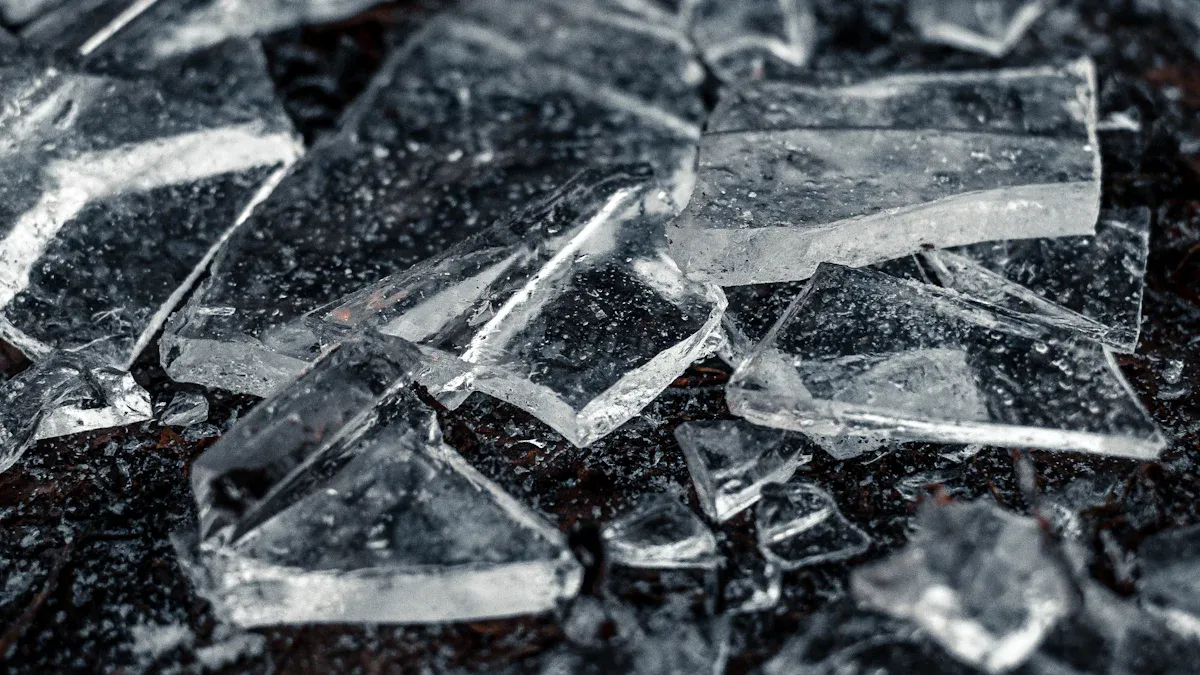
Many people believe quartz glass never breaks. You might think its hardness means it cannot shatter. This idea is not true. Quartz glass can break, especially if you do not handle it carefully. Some users expect it to act like safety glass, but quartz glass does not have a plastic layer to hold pieces together. When it breaks, it can form sharp fragments.
You may also hear that only strong impacts cause quartz glass to fail. In reality, several factors can lead to breakage:
Thermal stress happens when different parts of the glass heat or cool at different rates. This creates internal pressure.
Mechanical stress results from dropping, bumping, or squeezing the glass.
Chemical attack can weaken the glass over time, especially if you use harsh chemicals.
Internal defects like tiny bubbles or impurities can make the glass more likely to crack.
When quartz glass breaks, you often see patterns like radial, lateral, or median cracks. These cracks form because the glass cannot bend much before snapping. If you hit quartz glass quickly and hard, it tends to break into smaller pieces.
Note: Even though quartz glass is strong, it is not immune to damage from stress, chemicals, or hidden flaws.
Handling Tips
You can protect your quartz glass by following some simple steps. Good habits help prevent accidents and keep your glassware in top shape.
Inspect your glassware before each use. Look for cracks or chips.
Wear thick, puncture-resistant gloves to protect your hands.
Handle glassware gently. Avoid sudden movements and do not grip too tightly.
Store glass in a secure, dust-free cabinet or container made from non-reactive material.
Clean glass only when it is cool. Sudden temperature changes can cause shattering.
Dispose of broken glass safely. Use proper tools and containers.
Train everyone who uses quartz glass on safe handling and cleaning.
Check your glassware regularly for signs of wear or damage.
You should also keep your storage area clean and dry. Stable temperature and humidity help prevent damage. Cover your glassware to avoid contamination and inspect it often for cracks or discoloration.
Tip: Careful handling and proper storage extend the life of your quartz glass and help you avoid costly accidents.
Quartz glass gives you impressive strength and heat resistance. You can use it in places where regular glass would fail, like furnace tubes or UV lamps. Scientific studies show that quartz glass stays strong even at 1,000°C and resists sudden temperature changes. However, it can still break if you drop it or expose it to extreme stress.
Specification Type | Importance for Selection |
|---|---|
Melting Point | Withstands up to 1670°C for high-heat jobs. |
Thermal Shock Resistance | Prevents shattering during rapid temperature shifts. |
Maximum Operating Temperatures | Standard quartz works below 1000°C; choose custom for more. |
Choose quartz glass when you need durability, but always handle it with care to avoid accidents.
FAQ
What happens if you drop quartz glass?
If you drop quartz glass, it can break or shatter. The glass is hard but brittle. You should always handle it carefully to avoid accidents.
Can you use quartz glass in the microwave?
You can use quartz glass in most microwaves. The material resists heat and does not react with food. Always check your microwave’s manual before use.
Does quartz glass scratch easily?
Quartz glass resists scratches better than regular glass. Its high hardness protects it from most everyday wear. You should still avoid using sharp metal tools on it.
How do you clean quartz glass safely?
Use mild soap and warm water. Let the glass cool before cleaning. Avoid sudden temperature changes. Dry with a soft cloth to prevent scratches.