Many engineers and scientists ask why quartz tubes fail high temperature applications. The answer lies in two main factors: devitrification and thermal limits. Devitrification changes the structure of quartz, while thermal limits define the maximum safe temperature before damage starts. Understanding these mechanisms helps users prevent unexpected failure and improve equipment reliability.
Key Takeaways
Devitrification weakens quartz tubes at high temperatures. Understanding this process helps prevent unexpected failures.
Surface contamination, even in small amounts, can significantly accelerate devitrification. Regular cleaning and careful handling are essential.
Thermal cycling introduces internal stress that can lead to micro-cracks. Controlling heating and cooling rates can extend the life of quartz tubes.
Exceeding thermal limits causes rapid structural changes in quartz. Knowing these limits helps users avoid damage and maintain stability.
Why Does Devitrification Cause Quartz Tube Failure at High Temperatures?

Devitrification stands as a primary reason why quartz tubes fail high temperature applications. This process changes the internal structure of quartz, reducing its high-temperature stability and mechanical strength. Understanding the stages of devitrification and the resulting stress helps explain the failure mechanism in detail.
The Two-Stage Devitrification Process: Nucleation and Growth
Devitrification in quartz tubes begins with nucleation, followed by crystal growth.
Surface contamination, especially from alkali metals, initiates nucleation by providing sites where the crystalline phase can start forming. Growth of cristobalite crystals then proceeds inward, with rates influenced by temperature, quartz viscosity, and the presence of hydroxyl groups.
This two-stage process explains why quartz tubes lose stability and develop weak spots during prolonged heat exposure.
Key Points:
Nucleation starts at contaminated surfaces, especially with alkali metals.
Growth rate depends on temperature and quartz composition.
Devitrification reduces high-temperature stability and leads to failure.
Why Thermal Expansion Mismatch Creates Catastrophic Stress
Thermal expansion mismatch between devitrified and amorphous quartz generates increased internal stress.
Cristobalite, the crystalline phase, has a thermal expansion coefficient 12-16 times higher than that of quartz, causing stress concentration at the interface. Rapid temperature changes or impurities amplify this stress, making cracks and breakage more likely.
Stress from this mismatch often exceeds the strength of quartz fibres, leading to sudden failure.
Cause | Effect | Causality |
|---|---|---|
Thermal expansion mismatch | Increased internal stress | Stress exceeds quartz strength, causing cracks |
Impurities present | Higher stress concentration | Impurities act as stress amplifiers |
Rapid temperature change | More frequent breakage | Quick changes worsen stress effects |
How the 270°C Cristobalite Phase Transformation Triggers Failure
The cristobalite phase transformation at 270°C triggers a sudden change in volume.
When quartz tubes cool through this temperature, the β to α transformation of cristobalite causes a 5-10% volume shift, creating micro-cracks at the interface. Repeated thermal cycling through this point leads to crack growth and eventual structural failure.
This transformation explains why quartz tubes lose high-temperature stability after devitrification.
Key Points:
Cristobalite transforms at 270°C, causing volume change.
Micro-cracks form and grow with each thermal cycle.
Repeated cycling leads to failure and loss of stability.
Why Does Surface Contamination Accelerate High-Temperature Failure?
Surface contamination plays a critical role in why quartz tubes fail high temperature applications. Even small amounts of impurities can disrupt high-temperature stability and trigger rapid failure in high-temperature environments. Understanding the mechanisms behind contamination helps users protect the mechanical properties and stability of high-purity silica tubes.
Why Alkali Metals Lower Cristobalite Nucleation Barriers
Alkali metals such as sodium and potassium lower the energy barrier for cristobalite nucleation in quartz. These elements substitute into the silica network, creating weak points that allow the crystalline phase to form more easily. This process reduces the high-temperature stability of quartz fibres and increases the risk of failure.
The presence of alkali metals accelerates devitrification by up to 50 times compared to clean surfaces. Even a contamination level as low as 5-10 ppm can cause nucleation rates to rise sharply, leading to rapid crystal growth and loss of mechanical properties. This explains why even trace contamination can undermine the stability of high-purity silica in demanding conditions.
Factor | Effect | Causality |
|---|---|---|
Alkali metals | Lower nucleation energy barrier | Easier cristobalite formation |
Increased nucleation | Faster devitrification | Reduced high-temperature stability |
Rapid crystal growth | Early failure | Loss of mechanical properties |
Contamination Sources That Cause Premature Failure
Many sources contribute to surface contamination in laboratory and industrial settings. Oils, greases, and residues from cleaning processes, as well as atmospheric pollutants like acid rain, marine spray, and industrial dust, can all deposit impurities on quartz surfaces. Everyday items such as lab coats, makeup, perfume, jewelry, and even dust from building materials also introduce contaminants.
These contaminants act as nucleation sites for cristobalite, making the quartz more vulnerable to devitrification and stress. Aluminum from lab glassware and cosmetics can further reduce the stability of high-purity silica, increasing the risk of failure in high-temperature environments. Regular cleaning and careful handling help maintain the stability and mechanical properties of quartz tubes.
Common contamination sources include:
Atmospheric and industrial pollutants
Oils, greases, and cleaning residues
Dust, rust, and building materials
Lab coats, makeup, perfume, and jewelry
Aluminum from glassware and cosmetics
The Exponential Effect: How 5-10 ppm Contamination Accelerates Failure by 10-50×
Even a small increase in contamination can have a dramatic effect on quartz tube performance. When surface contamination reaches just 5-10 ppm, the rate of devitrification accelerates by 10 to 50 times, causing rapid loss of high-temperature stability. This exponential effect means that even minor lapses in cleanliness can lead to early failure.
Key temperature thresholds define the limits for safe operation. The devitrification onset occurs above 1665°C, while the softening point for high-purity silica is also 1665°C, marking the temperature where significant flow begins and mechanical properties change. Exceeding these limits causes rapid deformation or failure, regardless of material quality, because the physics of quartz glass make these thresholds absolute.
Threshold | Temperature (°C) | Significance |
|---|---|---|
Devitrification onset | 1665 | Crystallization risk increases |
Softening point | 1665 | Mechanical properties change, flow begins |
Why Does Thermal Cycling Cause Cumulative Damage Leading to Failure?
Thermal cycling stands as a major reason why quartz tubes fail high temperature applications. Each cycle of heating and cooling introduces new stresses that gradually weaken the material. Understanding why these cycles cause cumulative damage helps users improve high-temperature stability and extend service life.
Why Temperature Gradients Generate Damaging Tensile Stress
Temperature gradients during thermal cycling create damaging tensile stress in quartz tubes.
Different regions of the tube expand or contract at different rates when exposed to heat, causing uneven thermal expansion. This uneven expansion leads to internal stress, which often shifts from compressive to tensile during rapid cooling, resulting in micro-crack formation that threatens stability.
Tensile stress from these gradients can exceed the strength of quartz fibres, making cracks more likely to form.
Key points:
Uneven expansion causes internal stress.
Rapid cooling increases tensile stress and micro-cracks.
Thermal cycling weakens quartz tubes over time.
Cumulative Fatigue Mechanisms: How Each Cycle Consumes Material Life
Each thermal cycle consumes a portion of the quartz tube’s material life.
Repeated heating and cooling generate micro-cracks that grow with every cycle, especially when the temperature difference is large. Over time, these cracks coalesce, reducing the tube’s high-temperature stability and leading to eventual failure.
The process explains why quartz tubes in frequent cycling environments show shorter service life.
Mechanism | Effect | Causality |
|---|---|---|
Micro-crack growth | Reduced stability | Each cycle increases crack size |
Repeated cycling | Shorter service life | Accumulated damage leads to failure |
Large temperature swings | Faster fatigue | Greater stress accelerates crack formation |
Why Heating/Cooling Rates Directly Control Failure Timing
Heating and cooling rates directly control the timing of quartz tube failure.
Rapid temperature changes increase the likelihood of breakage because the material cannot adjust quickly, leading to higher stress and more frequent micro-cracks. Slower rates allow the tube to distribute heat more evenly, reducing stress and extending service life.
Careful control of heating and cooling rates helps maintain stability and prevent early failure.
Key points:
Fast heating/cooling increases failure risk.
Slower rates improve high-temperature stability.
Controlled rates extend quartz tube life.
Why Do Thermal Limits Define Maximum Safe Operating Temperatures?
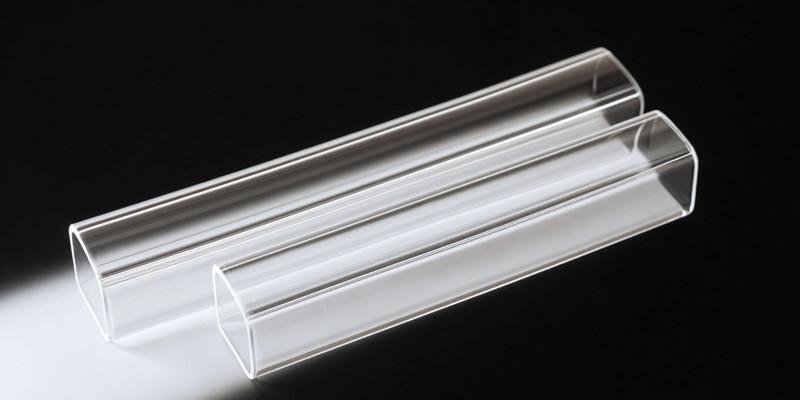
Thermal limits set the boundaries for safe operation in quartz tubes. These limits exist because material properties change rapidly at certain temperatures, leading to loss of stability and mechanical strength. Understanding why these limits matter helps users prevent damage and extend tube life.
Why Devitrification Kinetics Accelerate Exponentially Above 1100°C
Devitrification kinetics increase rapidly above 1100°C because the energy needed for crystal growth drops sharply. At these temperatures, the rate of cristobalite formation rises by a factor of ten for every 50°C increase, which means even small temperature increases can cause rapid structural changes. This exponential growth in devitrification leads to a much higher risk of failure, especially when surface contamination is present.
Key points:
Devitrification rates rise 10× for every 50°C above 1100°C.
Small temperature increases can trigger rapid crystal growth.
Surface contamination accelerates this process further.
The Softening Point: Why Viscous Deformation Begins Above 1400°C
Quartz tubes begin to deform above the softening point, which is typically around 1400°C for high-purity silica. At this temperature, the material’s viscosity drops, allowing gravity or mechanical loads to cause sagging or collapse. The softening point marks the threshold where the tube can no longer maintain its shape, even if it remains chemically stable.
Type of Glass | Softening Point (°C) |
|---|---|
Bullseye Transparent | 677 |
Bullseye Opals | 688 |
Gold Pink Transparent | 638 |
Quartz tubes designed for high-temperature stability must stay below this threshold to avoid permanent deformation. The softening point acts as a hard limit for safe operation.
Why Material Property Changes Make Thermal Limits Absolute
Material property changes make thermal limits absolute because they alter how quartz responds to heat and stress. As temperature rises, properties like thermal expansion, purity, wall thickness, and surface quality all influence the tube’s ability to resist cracking and deformation. These factors cannot be changed by operating procedures alone, so exceeding thermal limits always leads to failure.
Factor | Description |
|---|---|
Low Thermal Expansion | Reduces thermal stress and helps maintain stability. |
Material Purity | High-purity silica resists thermal shock; impurities create weak points. |
Wall Thickness | Thicker walls spread stress but may heat unevenly. |
Heating/Cooling Rates | Gradual changes reduce thermal shock risk. |
Surface Quality | Smooth, defect-free surfaces resist cracking. |
Thermal limits remain fixed because they depend on the fundamental physics and chemistry of the material.
Tip: To maximize tube life, use rigorous cleaning, gloved handling, and regular inspection. Set thermal ramp rates between 1–3°C/min for general use, and select high-purity silica with appropriate wall thickness for your environment.
How Can Understanding These Failure Mechanisms Prevent Premature Tube Failure?
Recognizing the reasons behind quartz tube failure allows engineers to take targeted actions that extend service life. By focusing on contamination control and thermal profile optimization, users can maintain high-temperature stability and preserve mechanical properties. These strategies help prevent early breakdown and ensure consistent performance.
Contamination Control: Preventing Accelerated Devitrification
Contamination control plays a vital role in maintaining stability and preventing devitrification in quartz tubes.
Engineers reduce devitrification rates by switching to ultra-high-purity synthetic quartz tubes with metal impurities below 0.1 ppm and replacing metal flanges with ceramic or platinum-coated alternatives. They also use double O-rings and helium leak tests to seal systems, which blocks contaminants and maintains sample integrity. Selecting high-purity quartz or Ti-doped tubes and controlling heating and cooling rates below 5°C per minute further limits thermal stress and devitrification.
These measures protect the tube’s mechanical properties and help maintain high-temperature stability.
Contamination Control Measure | Action Taken | Causality |
|---|---|---|
Ultra-high-purity quartz tubes | Metal impurities <0.1 ppm | Reduces nucleation sites for devitrification |
Ceramic/platinum flanges | Replace metal vapor sources | Prevents contamination from flanges |
Double O-rings + helium test | Seal leaks | Blocks external contaminants |
Controlled heating/cooling | ≤5°C/min | Limits thermal stress devitrification |
Thermal Profile Optimization: Minimizing Cycling Damage
Thermal profile optimization helps minimize cycling damage and extends the service life of quartz tubes.
Operators select opaque quartz tubes with high emissivity (0.9-0.95) to promote uniform heating and reduce hot spots, while low thermal expansion coefficients preserve tube geometry during cycles. Continuous operation near 1000-1100°C with only short excursions to higher temperature maintains stability and prevents rapid fatigue.
These practices ensure that the tube resists cracking and deformation, even in demanding environments.
Key strategies include:
Use high-emissivity tubes for uniform heating
Choose low thermal expansion materials to reduce stress
Limit temperature excursions to maintain stability
Monitor tubes with non-destructive testing and acoustic sensors
Apply TTBT for early leak and fault detection
Quartz tubes often fail at high temperatures because devitrification, contamination, thermal cycling, and exceeding thermal limits compromise structural integrity. Each factor can cause localized overheating or thermal strength loss, which reduces the integrity of the tube. Engineers who understand these risks and follow environment-specific guidelines can extend service life and improve safety in high-temperature processes.
FAQ
Why do quartz tubes become cloudy after high-temperature use?
Quartz tubes become cloudy because devitrification forms tiny cristobalite crystals. These crystals scatter light, making the tube appear opaque. Cloudiness signals that the tube has lost some of its original mechanical strength.
Why does handling quartz tubes with bare hands increase failure risk?
Bare hands leave oils and salts on the quartz surface. These contaminants act as nucleation sites for devitrification. Even small amounts can accelerate crystal growth and reduce tube lifespan.
Why is rapid heating or cooling harmful to quartz tubes?
Rapid temperature changes create large thermal gradients. These gradients cause internal stress, which leads to micro-cracks. Over time, repeated cycles make the tube more likely to break.
Why can’t higher purity alone prevent quartz tube failure at high temperatures?
High purity reduces contamination risk but cannot change the basic thermal limits of quartz. Exceeding these limits still causes devitrification or deformation. Material properties set absolute boundaries for safe use.
Why do quartz tubes fail sooner in vacuum or reducing atmospheres?
Vacuum and reducing atmospheres limit heat dissipation and can chemically attack quartz. These conditions lower the maximum safe temperature. Tubes in these environments often deform or erode faster than in air.