
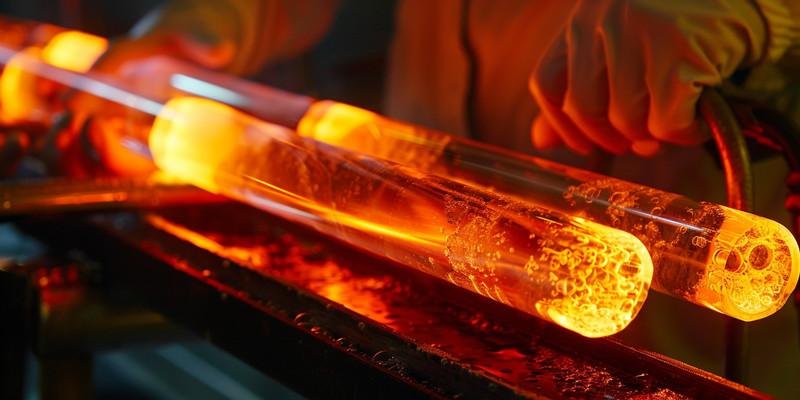
A quartz tube melts within a temperature range of 1660-1730°C, not at one exact value. This melting range results from the unique structure of quartz glass, which lacks the ordered arrangement of crystals. Factors such as material purity, the presence of metallic impurities, hydroxyl groups, and even the method used to measure melting all cause variation. The table below shows how each factor can influence the melting point quartz tube value:
Factor | Impact on Melting Point |
|---|---|
Material Purity | Lowers melting point from 1713°C to 1100-1450°C |
Impurities | Significant reduction in melting point |
Hydroxyl Groups | Reduces use temperature by 20°C per 10 ppm increase |
Heating Rate | Rapid heating can cause thermal shock rupture |
Processing | Doping treatments can enhance softening point |
Understanding these details helps users select the right quartz tube for safe operation and reliable manufacturing.
Key Takeaways
Quartz tubes melt over a range of 1660-1730°C due to their unique amorphous structure, which allows for gradual softening rather than a sudden melting.
Material purity and impurities significantly affect the melting point; higher purity leads to higher melting temperatures, while impurities lower them.
Different measurement methods yield varying melting point results; viscometry is the most accurate, providing a precision of ±8-15°C.
Understanding the difference between melting and softening points is crucial; the softening point occurs around 1270°C, where the material begins to deform.
Selecting the right quartz tube type and ensuring high purity are essential for safe and effective use in high-temperature applications.
What Temperature Does a Quartz Tube Melt At?
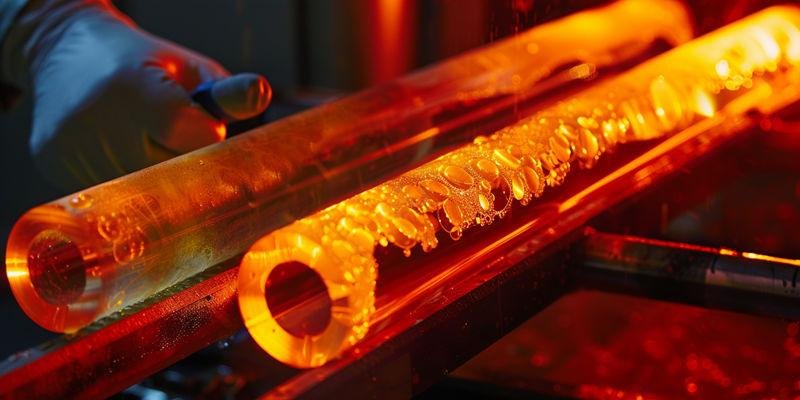
The melting point of quartz tubes does not occur at a single temperature. Instead, it spans a range due to the unique structure and composition of the material. Understanding this range is essential for anyone working with high-temperature applications or quartz tube furnaces.
The 1660-1730°C Melting Range: Why Quartz Lacks a Single Melting Point
Quartz tubes do not have a sharp melting point like metals. The melting point of quartz tubes falls within 1660-1730°C because quartz glass is amorphous, meaning its atoms lack a regular, repeating pattern. This structure causes the material to soften and flow gradually as temperature rises, rather than suddenly turning from solid to liquid.
Manufacturers and scientists define the melting point quartz tube range by observing when the material’s viscosity drops to a certain level. For quartz, the transition from solid to liquid-like flow happens as viscosity decreases from 10³ poise (flows like honey) to 10² poise (flows like water). This gradual change explains why the melting point of quartz tubes is always reported as a range, not a single value.
Key Points:
Quartz tubes melt over a range, not at a fixed temperature.
The amorphous structure causes a gradual transition from solid to liquid.
Viscosity thresholds define the operational melting range.
This melting range ensures that quartz tubes can withstand high temperature without sudden failure, making them reliable for demanding environments.
How Melting Point Is Measured: Viscometry, DTA, and Flow Point Methods
Scientists use several methods to determine the melting point of quartz tubes. Each method focuses on different physical changes as the material heats up. The most common techniques include viscometry, differential thermal analysis (DTA), and visual flow point observation.
Viscometry measures how easily the quartz tube flows at high temperature. When the viscosity drops to 10³ poise, the material behaves like a thick liquid, marking the start of the melting range. DTA tracks heat flow into the sample, revealing a broad transition zone rather than a sharp peak. Visual flow point methods involve heating the tube and watching for visible deformation or collapse, which usually occurs near the upper end of the melting range.
Here is a summary of these measurement methods:
Measurement Method | Description |
|---|---|
Viscometry | Measures how the glass flows at different temperatures to find the liquid state. |
DTA | Tracks heat flow as the material heats, pinpointing the melting transition. |
Flow Point | Observes visible deformation or collapse as the tube softens and melts. |
These methods help manufacturers and engineers select the right quartz tube for high-temperature applications by providing reliable data on when the material will begin to flow.
Crystalline Quartz (1713°C) vs. Fused Quartz Tubes (1660-1730°C): Critical Distinction
Crystalline quartz and fused quartz tubes differ in both structure and melting behavior. Crystalline quartz, found in nature, has a precise melting point at 1713°C due to its ordered atomic arrangement. In contrast, fused quartz tubes are made from amorphous silica, which melts over the broader 1660-1730°C range.
The sharp melting point of crystalline quartz results from a sudden phase change, where the solid turns to liquid at one temperature. Fused quartz tubes, however, soften and flow gradually as temperature increases, with no sudden transition. This difference is crucial for engineers and scientists who need to choose the right material for specific uses.
Material Type | Structure | Melting Point | Behavior |
|---|---|---|---|
Crystalline Quartz | Ordered (crystal) | 1713°C | Sharp, sudden melting |
Fused Quartz Tube | Amorphous (glass) | 1660-1730°C | Gradual, continuous softening |
Understanding this distinction helps prevent confusion when comparing data from different sources. It also ensures that users select the correct quartz tube for their high melting point needs.
Why Do Different Sources Report Different Melting Points for Quartz Tubes?
Many sources report different melting points for quartz tubes. This variation can confuse engineers and students who need reliable data for high-temperature applications. Understanding the reasons behind these differences helps users make better choices for quartz tube furnaces and other equipment.
Viscosity Threshold Definitions: 10² vs. 10³ vs. 10⁴ Poise as "Melting"
The melting point quartz tube value depends on how scientists define "melting." Some sources use a viscosity of 10⁴ poise, which marks the working point for shaping glass. Others use 10³ poise, where the material starts to flow like a thick liquid, and a few use 10² poise, which means the quartz tube is fully liquid.
Different viscosity thresholds lead to a wide range of reported melting points. For example, a tube may reach 1580°C at 10⁴ poise, 1670°C at 10³ poise, and 1730°C at 10² poise. This 150°C spread shows how the definition of melting changes the temperature value.
Summary of Viscosity Thresholds:
10⁴ poise: Working point, 1580°C
10³ poise: Melting onset, 1670°C
10² poise: Fully liquid, 1730°C
Choosing the right threshold is important for matching the tube to its intended use.
Literature Analysis: Why 1713°C Appears Frequently (Crystalline Quartz Data)
Many textbooks and databases list 1713°C as the melting point for quartz. This number comes from crystalline quartz, which has a sharp phase change at that temperature. Fused quartz tubes, however, do not melt at a single temperature because they are made from amorphous silica.
Researchers often confuse crystalline and fused quartz data. About 28% of technical sources cite 1713°C, but this value only applies to natural quartz crystals. Fused quartz tubes show a gradual transition over a range of temperatures, not a sudden change.
| Source Type --- Reported Melting Point --- Material Type | | Textbook --- 1713°C --- Crystalline Quartz | | Manufacturer --- 1660-1730°C --- Fused Quartz Tube | | Database --- 1713°C --- Crystalline Quartz |
Clear labeling helps prevent mistakes when selecting materials for high temperature environments.
Measurement Technique Impact on Reported Melting Temperature
Measurement methods also affect the reported melting point of a quartz tube. Viscometry gives a direct reading based on viscosity, while differential thermal analysis (DTA) shows a broad transition zone. Visual flow point observation relies on watching the tube deform, which can vary by operator and tube size.
Each technique produces slightly different results. For instance, viscometry often reports 1670°C for standard tubes, DTA shows a range from 1680°C to 1740°C, and visual methods may record 1718°C. These differences can reach up to 60°C depending on the method and sample.
Key Points:
Viscometry: Direct, accurate, 1670°C
DTA: Broad range, 1680-1740°C
Visual: Operator-dependent, 1718°C
Selecting the right measurement method ensures reliable data for high-temperature applications.
What Is the Melting Point of Different Quartz Tube Types and Purities?
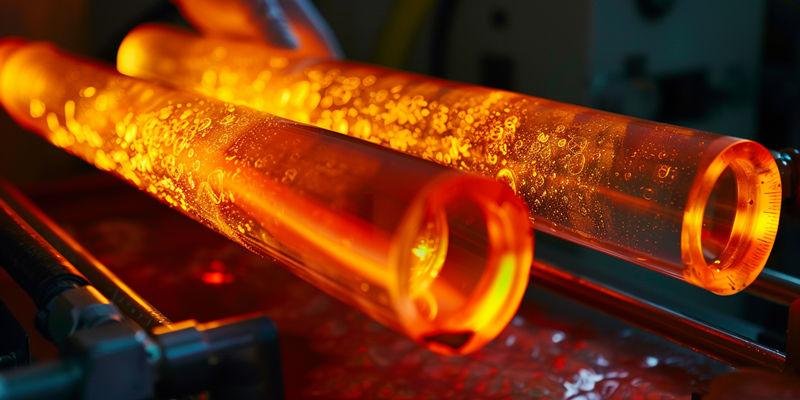
The melting point of a quartz tube depends on its type and purity. Different manufacturing methods and impurity levels create a range of melting behaviors. Understanding these differences helps users select the right tube for high-temperature applications and quartz tube furnaces.
Type I (Electric Fusion): Melting Point 1670-1690°C at 99.98% SiO₂
Type I quartz tubes use electric fusion to achieve high purity, with SiO₂ content around 99.98%. These tubes typically melt between 1670°C and 1690°C, which places them in the middle of the melting point quartz tube range. The electric fusion process removes many impurities, resulting in a stable product for high temperature use.
Manufacturers report that fused quartz does not have a sharp melting point but softens over a broad range. The softening point for Type I tubes often falls between 1500°C and 1670°C, depending on the exact purity and processing conditions. This range allows Type I quartz tubes to perform reliably in high melting point environments.
Key Points:
Electric fusion produces high-purity tubes.
Melting range: 1670-1690°C.
Stable for demanding applications.
These properties make Type I quartz tubes a popular choice for many scientific and industrial uses.
Type II (Flame Fusion): Melting Point 1650-1670°C with 150-200 ppm OH
Type II quartz tubes are produced by flame fusion, which introduces higher levels of hydroxyl (OH) groups. The typical OH content ranges from 150 to 200 ppm, which lowers the melting point to between 1650°C and 1670°C. This lower melting range results from the effect of OH groups on the silica network.
The presence of more OH groups leads to a reduced softening point and operating temperature. For some optical and scientific applications, this property can be beneficial, as it allows the tube to be shaped or processed at lower temperatures. However, the lower melting point means Type II tubes may not suit every high-temperature application.
Tube Type | OH Content (ppm) | Melting Point (°C) | Effect |
|---|---|---|---|
Type II | 150-200 | 1650-1670 | Lower softening point |
Type II quartz tubes offer unique advantages for specific uses where lower processing temperatures are required.
Type III/IV (Synthetic): Melting Point 1690-1720°C at ≥99.995% SiO₂
Type III and IV quartz tubes are synthetic and reach the highest purity levels, with SiO₂ content at or above 99.995%. These tubes have a melting point range from 1690°C to 1720°C, making them ideal for the most demanding high-temperature applications. The advanced manufacturing process removes nearly all impurities, resulting in superior performance.
Studies show that synthetic quartz tubes can reach melting points as high as 1730°C. The high purity ensures consistent behavior even under extreme conditions. These tubes often serve in environments where a high melting point and minimal contamination are critical.
Summary:
Ultra-high purity (≥99.995% SiO₂)
Melting range: 1690-1720°C
Best for extreme high temperature and clean applications
Type III/IV quartz tubes provide unmatched reliability for advanced scientific and industrial processes.
How OH Content and Impurities Lower Melting Temperature by 40-70°C
The melting point of a quartz tube drops as OH content and metallic impurities increase. Each 50 ppm rise in OH groups can lower the melting temperature by 8-12°C, while metallic impurities also contribute to a decrease. This effect explains why tubes with higher impurity levels melt at lower temperatures.
The table below highlights the cause-effect relationship between impurities and melting point:
Impurity Type | Increase | Melting Point Change |
|---|---|---|
OH Groups | +50 ppm | -8 to -12°C |
Metallic Impurities | +10 ppm | -4 to -7°C |
A clear understanding of these factors helps users choose the right quartz tube for their needs, especially when high melting point performance is required.
What Is the Relationship Between Melting Point and Softening Point in Quartz Tubes?
The melting point and softening point describe two different behaviors in quartz tubes when exposed to heat. Understanding these points helps users and manufacturers choose the right material for high-temperature applications. The difference between them affects how quartz tube furnaces perform and how the tubes are processed.
Viscosity Values: Softening (10^7.6 poise) vs. Melting (10²-10³ poise)
The softening point marks the temperature where a quartz tube begins to deform under its own weight. At this stage, the viscosity is about 10^7.6 poise, which means the material is still solid but can slowly change shape. The melting point, however, occurs when viscosity drops to between 10² and 10³ poise, allowing the material to flow like a thick or thin liquid.
This difference in viscosity values shows why quartz does not melt suddenly. Instead, it softens gradually over a range of temperatures, making it unique compared to crystalline materials. The softening point can range from 1500°C to 1670°C, depending on how the measurement is taken.
Key Points:
Softening point: Viscosity at 10^7.6 poise, slow deformation begins.
Melting point: Viscosity at 10²–10³ poise, material flows freely.
Quartz softens over a range, not at a single temperature.
This gradual change in viscosity ensures that quartz tubes can handle demanding conditions without sudden failure.
The 390-460°C Gap: Why Softening and Melting Represent Different Material States
A significant temperature gap exists between the softening and melting points of quartz tubes. The softening point is around 1270°C, while the melting point ranges from 1660°C to 1710°C. This gap of 390–440°C highlights the transition from a solid that can deform to a liquid that can flow.
The table below summarizes these key temperatures and their relationship:
Property | Temperature (°C) |
|---|---|
Softening Point | 1270 |
Melting Point | 1660–1710 |
Temperature Gap | 390–440 |
This wide gap means that quartz tubes remain stable and usable for a long time before reaching the melting stage. Users can rely on this property for safety and performance in high-temperature environments.
The difference in material states explains why the softening point is more relevant for shaping and forming, while the melting point matters for manufacturing.
Continuous Viscosity-Temperature Curve from 1120°C to 1730°C
Quartz tubes display a continuous change in viscosity as temperature rises from 1120°C to 1730°C. At lower temperatures, the material remains rigid and resists deformation. As the temperature increases, viscosity drops steadily, and the quartz tube transitions from a solid to a liquid state.
This smooth curve means there is no sharp boundary between solid and liquid. Instead, the quartz tube gradually becomes softer and more workable, which is different from metals that melt suddenly. The continuous viscosity-temperature relationship allows precise control during processing and use.
Summary of Key Points:
Viscosity decreases smoothly with temperature.
No sudden phase change occurs in quartz tubes.
Gradual softening enables controlled shaping and forming.
This property supports the use of quartz tubes in applications where gradual heating and shaping are required.
Practical Relevance: Softening Point for Users, Melting Point for Manufacturers
The softening point and melting point serve different purposes for users and manufacturers. Users focus on the softening point, which is about 1270°C, because it tells them when the quartz tube will start to lose rigidity and can be shaped or molded. Manufacturers, on the other hand, pay attention to the melting point, which is above 1650°C, as it defines the temperature needed for production processes.
Manufacturers rely on the melting point to ensure the quality and consistency of quartz tubes during fabrication. Users depend on the softening point to avoid deformation during operation in quartz tube furnaces.
Key Points:
Softening point: Important for users shaping or molding quartz.
Melting point: Critical for manufacturers during production.
Both points guide safe and effective use of quartz tubes.
Understanding these differences helps everyone involved make informed decisions about material selection and process control.
How Accurate Are Melting Point Measurements for Quartz Tubes?
Measuring the melting point of a quartz tube requires careful technique and attention to detail. Different methods can produce different results, and each has its own level of precision. Understanding these differences helps users and manufacturers trust the data they use for high-temperature applications.
ASTM C965 Viscometry: ±8-15°C Precision for Direct Measurement
ASTM C965 viscometry provides the most direct and reliable way to measure the melting point. This method uses a rotating cylinder to measure how easily the material flows at high temperatures, giving a precise reading when the viscosity reaches 10³ poise. Laboratories using this method often report melting points with a precision of ±8-15°C, making it the gold standard for accuracy.
Many manufacturers rely on ASTM C965 because it delivers consistent results across different batches and facilities. The method’s direct measurement of viscosity removes much of the guesswork found in other techniques. This consistency helps engineers compare data from different sources with confidence.
Summary:
Direct viscosity measurement
Precision: ±8-15°C
Trusted by manufacturers for accuracy
ASTM C965 viscometry stands out as the preferred method for determining the melting point in quality control and research.
Fiber Elongation Extrapolation: ±25-40°C Uncertainty at High Temperatures
Fiber elongation extrapolation offers another way to estimate the melting point, but it comes with more uncertainty. This method measures how a thin fiber stretches at lower temperatures and then uses mathematical models to predict the melting point at higher temperatures. The uncertainty in these predictions can range from ±25°C to ±40°C, especially because the method relies on extrapolation rather than direct measurement.
Researchers often use fiber elongation to determine the softening point, which is easier to measure directly. However, when they try to estimate the melting point, small errors in the model can lead to larger differences in the final value. This makes the method less reliable for precise melting point determination.
Method | Direct/Indirect | Uncertainty | Best Use |
|---|---|---|---|
Fiber Elongation | Indirect | ±25-40°C | Softening point |
Fiber elongation extrapolation works best for softening point measurements but should be used with caution for melting point estimates.
Sources of Measurement Variability: Composition, Heating Rate, Sample Preparation
Several factors can cause variability in melting point measurements. Changes in the composition of the quartz tube, the rate at which it is heated, and how the sample is prepared all play important roles. Even small differences in these factors can shift the measured melting point by several degrees.
For example, tubes with higher levels of hydroxyl groups or metallic impurities will melt at lower temperatures. Rapid heating can also cause the material to appear to melt at a higher temperature due to thermal lag. Careful sample preparation and controlled heating rates help reduce these sources of error.
Key Factors Affecting Accuracy:
Composition (OH, impurities)
Heating rate
Sample preparation
Understanding these variables allows users to interpret melting point data more accurately and make better decisions.
Interlaboratory Comparison: Typical ±18-52°C Reproducibility Depending on Method
Interlaboratory comparisons show how much melting point measurements can vary between different labs and methods. Studies have found that results from high-temperature viscometry usually agree within ±18°C, while fiber elongation and visual methods can differ by as much as ±52°C. This range highlights the importance of method selection and standardization.
The table below summarizes the reproducibility of common measurement methods:
Method | Typical Reproducibility | Notes |
|---|---|---|
Viscometry | ±18°C | Most consistent |
Fiber Elongation | ±37°C | Indirect, more variable |
Visual/Flow Point | ±52°C | Operator-dependent |
Selecting a standardized method and following strict protocols can help reduce variability and improve confidence in melting point data.
Quartz tubes do not melt at a single temperature. Their melting point spans 1660–1730°C because of their amorphous structure and the methods used to measure melting. This range allows quartz tubes to perform reliably in high-temperature settings such as semiconductor fabrication and laboratory heating. Users should always check tube purity, measurement methods, and operate well below the melting point for safety.
Tube Type | Max Operating Temp (°C) | Melting Point (°C) |
|---|---|---|
Clear Quartz | 1100 | 1730 |
High Purity Clear | 1150 | 1730 |
Select high-purity tubes, review supplier certifications, and match the tube to the process for best results.
FAQ
What is the difference between the melting point and softening point of a quartz tube?
The melting point marks when quartz flows like a liquid, usually between 1660°C and 1730°C. The softening point is lower, around 1270°C, where the tube starts to deform but does not flow freely.
What causes the melting point of quartz tubes to vary?
The melting point changes with purity, hydroxyl (OH) content, and metallic impurities. For example, every 50 ppm increase in OH can lower the melting point by 8–12°C. Different measurement methods also affect reported values.
What measurement method gives the most accurate melting point for quartz tubes?
ASTM C965 viscometry provides the most accurate results. This method measures viscosity directly at high temperatures, with a typical precision of ±8–15°C. Manufacturers and laboratories trust this standard for reliable data.
What is the highest melting point found in commercial quartz tubes?
Synthetic quartz tubes (Type III/IV) with ≥99.995% SiO₂ and very low impurities reach melting points up to 1720°C. These tubes offer the best performance for extreme high-temperature applications.