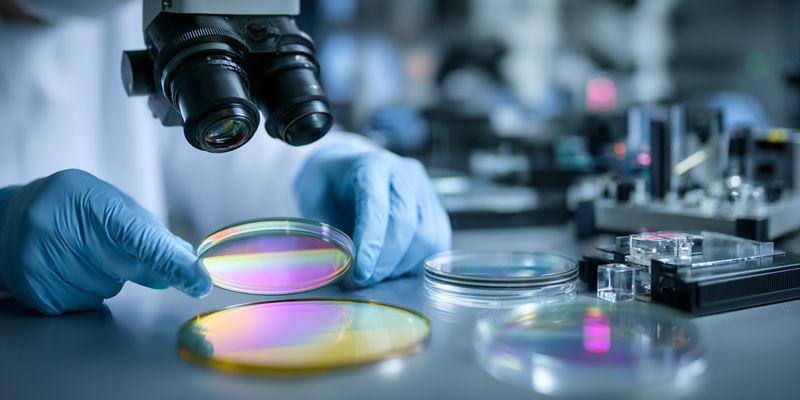
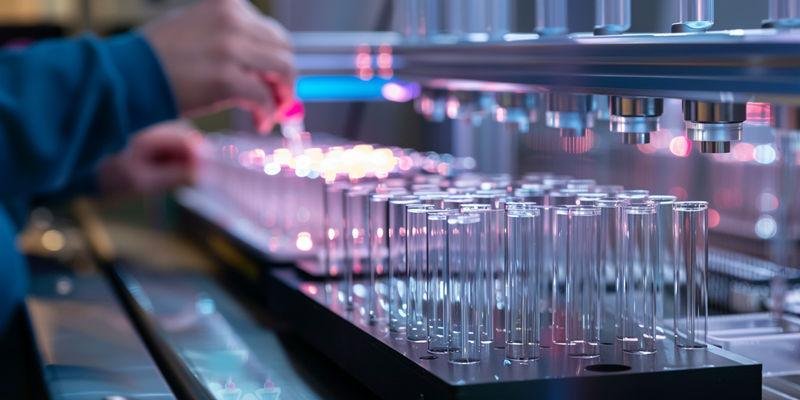
Quartz laboratory tubes thermal expansion remains minimal because the thermal expansion coefficient is very low. This property stops cracks from forming during fast heating or cooling. When a tube faces sudden temperature changes, it expands or contracts only slightly. The small change keeps stress inside the tube below the level that causes cracks. Laboratory workers rely on this feature for safe experiments and long-lasting equipment.
Key Takeaways
Quartz's low thermal expansion coefficient (α = 0.5 × 10⁻⁶ K⁻¹) significantly reduces thermal stress, keeping it below the fracture threshold.
During rapid heating, quartz tubes expand only 0.54 mm per meter, compared to 3.56 mm for borosilicate glass, minimizing the risk of cracking.
Quartz can withstand heating rates up to 20°C/min without cracking, while borosilicate glass fails at just 5°C/min, showcasing quartz's superior thermal shock resistance.
The annealing process ensures uniform thermal expansion properties, further enhancing quartz's ability to resist cracking during temperature changes.
Engineers should use the thermal stress equation to determine safe operating conditions, ensuring quartz tubes remain reliable in demanding laboratory environments.
How Does α = 0.5 × 10⁻⁶ K⁻¹ Prevent Thermal Stress Accumulation?
Quartz laboratory tubes thermal expansion plays a critical role in preventing cracks during heating and cooling cycles. This section explains how the low thermal expansion coefficient of quartz keeps stress levels safe, even when temperatures change quickly. Readers will see how the unique properties of quartz tubing provide unmatched thermal shock resistance and reliability in laboratory settings.
Thermal Stress Equation: How α = 0.5 × 10⁻⁶ K⁻¹ Reduces Calculated Stress by 85%
The thermal stress equation shows why quartz laboratory tubes thermal expansion prevents dangerous stress buildup. The formula σ = EαΔT means that thermal stress depends on the elastic modulus, the thermal expansion coefficient, and the temperature change. Quartz, with α = 0.5 × 10⁻⁶ K⁻¹, keeps this stress much lower than other materials.
A higher thermal expansion coefficient leads to greater thermal stress for the same temperature change. For example, borosilicate glass with α = 3.3 × 10⁻⁶ K⁻¹ generates over 240 MPa of stress at a 1000°C temperature change, while quartz only reaches about 36.5 MPa. This 85% reduction in calculated stress means quartz tubes can handle rapid temperature changes without cracking.
Quartz’s low α value directly limits the risk of fracture during thermal shock events.
Key points to remember about the thermal stress equation and quartz:
Quartz’s low α keeps stress far below the fracture threshold.
The σ = EαΔT relationship proves why quartz outperforms other materials.
Lower stress means higher resistance to thermal shock and longer tube life.
Dimensional Stability During Heating: 0.54 mm Expansion vs. 3.56 mm in Borosilicate Glass
Dimensional stability is a major advantage of quartz laboratory tubes thermal expansion. When heated from 20°C to 1100°C, a one-meter quartz tube expands only 0.54 mm, while a borosilicate tube expands 3.56 mm. This small change in length helps prevent stress buildup and cracking.
The minimal expansion of quartz means that even during rapid temperature changes, the tube maintains its shape and structural integrity. In contrast, borosilicate glass experiences much larger dimensional changes, which can lead to stress concentrations and eventual failure. This difference explains why quartz tubing is the preferred choice for high-temperature laboratory work.
The data below highlights the cause-and-effect relationship between expansion and stability:
Material | Expansion (mm/m at 1080°C) | Risk of Cracking |
|---|---|---|
Quartz | 0.54 | Very Low |
Borosilicate Glass | 3.56 | High |
Fracture Prevention Mechanism: Keeping Thermal Stress Below 50 MPa Tensile Strength Limit
Quartz tube fracture prevention depends on keeping thermal stress below the material’s tensile strength. Quartz laboratory tubes have a tensile strength limit of over 50 MPa, and maintaining stress below this value is essential for safe operation. The low thermal expansion coefficient ensures that even during extreme thermal shock, the stress remains within safe limits.
Material standards recommend a design stress of 10 MPa for practical use, but quartz can safely handle up to 36.5 MPa during rapid temperature changes. Borosilicate and soda-lime glass often exceed their strength limits under similar conditions, leading to immediate failure. Quartz’s unique properties provide a wide safety margin and reliable resistance to cracking.
Quartz laboratory tubes thermal expansion gives engineers confidence in the tube’s ability to survive rapid temperature changes and repeated thermal cycling.
Summary of fracture prevention in quartz:
Tensile strength limit: 50 MPa
Typical thermal stress in use: 36.5 MPa or less
Wide safety margin prevents cracking and extends tube life
How Does Low Expansion Coefficient Enable Survival of Rapid Temperature Changes?
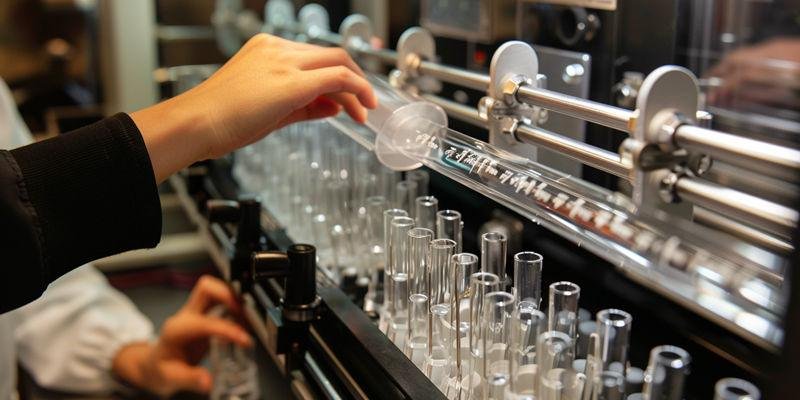
Quartz laboratory tubes face extreme conditions in many laboratory processes. Rapid temperature changes can cause cracking in materials with high thermal expansion. Quartz tubing survives these challenges because of its unique properties and low thermal shock resistance.
Transient Thermal Gradient Stress: How Low α Limits Stress to <20 MPa During Rapid Heating
Quartz tube walls experience temperature gradients during rapid heating. The low thermal expansion coefficient of quartz laboratory tubes thermal expansion keeps stress below 20 MPa, even when the outer surface heats much faster than the inner surface. Laboratory tests using ASTM C1525 confirm that quartz maintains structural integrity while borosilicate glass often fails.
Quartz tubing resists cracking because its minimal expansion prevents large stress differences between the inner and outer surfaces. When a 100°C gradient develops, quartz generates only 3.7 MPa of stress, while borosilicate glass produces 24 MPa. This difference explains why quartz tubes survive rapid heating in laboratory furnaces.
Quartz’s properties allow safe operation during fast temperature ramps.
Key takeaways for transient thermal gradient stress:
Quartz keeps stress below the fracture threshold during rapid heating.
Borosilicate glass develops much higher stress and cracks easily.
ASTM C1525 testing proves quartz’s superior thermal shock resistance.
Heating Rate Tolerance: 20°C/min Capability vs. 5°C/min Limit for Borosilicate
Quartz laboratory tubes thermal expansion enables high heating rate tolerance. Quartz tubes can withstand heating rates up to 20°C per minute, while borosilicate glass cracks above 5°C per minute. ISO 7991 and ASTM C1525 standards show that wall thickness also affects safe heating rates.
Thin quartz tubes (2 mm) tolerate 20°C/min, generating only 12 MPa gradient stress. Borosilicate tubes of the same thickness reach 79 MPa and crack. As wall thickness increases, quartz maintains safe stress levels, while borosilicate glass fails at even lower rates.
The following table highlights the cause-and-effect relationship between heating rate, wall thickness, and crack prevention:
Tube Wall Thickness | Quartz Max Rate (°C/min) | Borosilicate Max Rate (°C/min) | Quartz Gradient Stress (MPa) | Borosilicate Gradient Stress (MPa) |
|---|---|---|---|---|
2 mm | 20 | 8 | 12 | 79 |
3-4 mm | 12-15 | 5 | 18 | 119 |
5-6 mm | 8-10 | 3 | 25 | 165 |
>7 mm | 5 | 2 | 32 | 211 |
Water Quench Survival Mechanism: Why 1100°C-to-20°C Doesn't Crack Quartz Tubes
Quartz tube resistance to thermal shock stands out during water quenching. Quartz glass can withstand temperature changes exceeding 1000°C with minimal risk of cracking. Its ultra-low thermal expansion coefficient allows it to survive extreme thermal cycling, while other materials fail.
Laboratory tests show that quartz tubes maintain their structure after being quenched from 1100°C to 20°C. Borosilicate glass cracks instantly under the same conditions. Quartz’s properties make it ideal for applications requiring rapid cooling, such as high-intensity UV sterilization and analytical instruments.
Quartz laboratory tubes thermal expansion ensures reliable performance in the most demanding environments.
Summary of water quench survival:
Quartz resists cracking during extreme temperature changes.
Ultra-low expansion coefficient enables survival of rapid cooling.
Quartz tubes outperform other materials in thermal shock resistance.
How Does Thermal Expansion Coefficient Comparison Explain Material Selection?
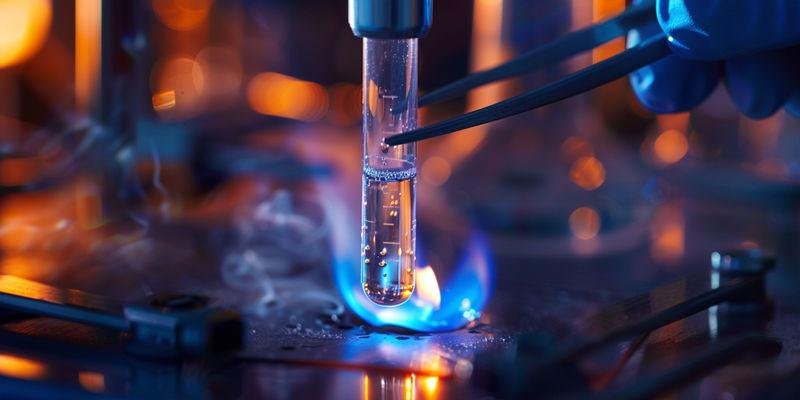
Selecting the right material for laboratory tubes depends on understanding how thermal expansion affects performance. Quartz, borosilicate glass, and ceramics each respond differently to rapid temperature changes. Comparing their properties helps engineers choose the best option for thermal shock resistance and long-term reliability.
Quantitative Comparison: Stress Generation in Quartz vs. Borosilicate vs. Ceramics
Different materials generate different levels of thermal stress when exposed to rapid temperature changes. Quartz laboratory tubes thermal expansion produces much less stress than borosilicate glass or ceramics, which means less risk of cracking. For example, at a 1000°C temperature change, quartz generates about 36.5 MPa of stress, borosilicate glass reaches 240 MPa, and alumina ceramics can exceed 580 MPa.
Lower thermal stress means higher resistance to thermal shock. Quartz tubing maintains its structure and function even after repeated heating and cooling cycles, while borosilicate and ceramics often fail much sooner. This difference comes from the much lower expansion coefficient of quartz, which directly limits stress buildup.
Material | Thermal Expansion (×10⁻⁶/K) | Stress at ΔT=1000°C (MPa) | Cracking Risk |
|---|---|---|---|
Quartz | 0.5 | 36.5 | Very Low |
Borosilicate | 3.3 | 240 | High |
Alumina Ceramic | 8.0 | 584 | Moderate |
Temperature Rating Correlation: How 10x Lower α Enables 2.4x Higher Working Temperature
A lower thermal expansion coefficient allows quartz tube use at much higher temperatures than other materials. Quartz can operate safely at temperatures up to 1,200°C, while borosilicate glass is limited to about 500°C. This difference results from quartz’s ability to keep thermal stress below the level that causes cracking, even during extreme heating.
Engineers often select quartz for applications that require both high temperature and rapid temperature changes. The 10x lower expansion coefficient of quartz compared to borosilicate glass enables a 2.4x higher working temperature. This property makes quartz the preferred choice for demanding laboratory environments.
In summary, quartz’s low expansion coefficient directly supports higher temperature ratings and greater safety margins in laboratory applications.
Thermal Shock Parameter R: Why Quartz Achieves 7-10x Better Crack Resistance
The thermal shock parameter R measures how well a material resists cracking during sudden temperature changes. Quartz achieves R values 7-10 times higher than borosilicate glass or ceramics, mainly because of its ultra-low expansion coefficient. This means quartz laboratory tubes can survive rapid temperature changes that would break other materials.
High R values translate to fewer failures and longer service life. Quartz tube users experience reliable performance, even in harsh conditions involving repeated thermal shock. This advantage ensures that laboratory processes remain safe and efficient.
Key points for material selection based on thermal shock parameter R:
Quartz offers the highest resistance to thermal shock.
Engineers can trust quartz tubing for applications with rapid temperature changes.
Longer tube life and fewer failures result from superior crack resistance.
How Do Manufacturing Methods Control Expansion Coefficient for Crack Prevention?
Manufacturing methods play a crucial role in determining the thermal expansion properties of quartz tubes. The way a tube is made affects its ability to resist thermal shock and prevent cracking during rapid temperature changes. Understanding these processes helps engineers select the best quartz tube for high-performance laboratory applications.
Electrical Fusion vs. Flame Fusion: α Uniformity Impact on Crack Prevention (±0.02 vs. ±0.05 × 10⁻⁶ K⁻¹)
The method used to produce quartz tubes directly impacts the uniformity of the thermal expansion coefficient. Electrical fusion creates Type I quartz glass with low hydroxyl content, resulting in more consistent thermal properties across the tube. Flame fusion, on the other hand, introduces higher and more variable hydroxyl levels, which can lead to less uniform expansion and increased risk of cracking.
Electric fusion allows for precise control over the tube’s structure, keeping the variation in the expansion coefficient within ±0.02 × 10⁻⁶ K⁻¹. Flame fusion often results in a wider range, up to ±0.05 × 10⁻⁶ K⁻¹, due to impurities and higher OH content. This difference means that tubes made by electrical fusion show better thermal shock resistance and longer service life.
Manufacturing Method | OH Content (ppm) | α Uniformity (×10⁻⁶ K⁻¹) | Crack Resistance |
|---|---|---|---|
Electrical Fusion | 100-130 | ±0.02 | High |
Flame Fusion | 150-200 | ±0.05 | Moderate |
OH Content Effect on Expansion Coefficient: How 150 ppm OH Increases α by 0.03-0.05 × 10⁻⁶ K⁻¹
Hydroxyl (OH) content in quartz tubes affects both the thermal expansion coefficient and the tube’s resistance to thermal shock. Higher OH levels, often found in flame-fused tubes, can increase the expansion coefficient by 0.03-0.05 × 10⁻⁶ K⁻¹, making the tube more likely to crack during rapid temperature changes. Low-hydroxyl quartz tubes, such as those made from synthetic quartz with less than 5 ppm OH, offer better structural integrity and thermal shock resistance.
OH groups absorb energy in the ultraviolet range, which can influence the tube’s performance in high-temperature or UV-intensive applications. Data from TOQUARTZ shows that tubes with lower OH content maintain more stable properties and resist cracking even after repeated thermal cycling. Engineers often choose low-OH quartz tubes for demanding laboratory environments.
Key points about OH content and expansion coefficient:
Low OH content improves thermal shock resistance and crack prevention.
High OH content increases the risk of cracking during rapid temperature changes.
Synthetic quartz with minimal OH offers the best performance for critical applications.
Annealing Process: Stress Relief and α Homogenization for Crack Prevention
The annealing process helps relieve internal stress and ensures a uniform thermal expansion coefficient throughout the quartz tube. This process involves slow heating to 1100°C, holding at a constant temperature, and then gradual cooling to room temperature. Each stage follows strict rates, such as a heating rate of 4.5/R²°C per minute, where R is the tube’s radius, to prevent large temperature gradients.
Uniform annealing allows the tube to release built-up stress and homogenize its expansion properties, reducing the chance of cracking during thermal shock. ISO and ASTM standards recommend this process to maximize tube reliability and extend service life. Proper annealing ensures that even thick-walled tubes maintain their resistance to rapid temperature changes.
Annealing Stage | Purpose | Effect on Tube |
|---|---|---|
Heating | Slow, controlled rise to 1100°C | Prevents stress buildup |
Constant Temp | Uniform heating | Homogenizes expansion coefficient |
Cooling | Gradual temperature drop | Reduces cracking risk |
How Should Engineers Apply Expansion Coefficient Data to Prevent Cracking?
Engineers need practical methods to prevent cracking in laboratory tubes exposed to rapid temperature changes. Using the thermal expansion coefficient helps them calculate safe operating conditions and select the right materials. This section explains how to apply these calculations and follow industry standards for reliable tube performance.
Thermal Stress Calculation Method for Laboratory Furnace Design
Engineers use the thermal stress equation to predict when a quartz tube might crack during thermal shock. The formula, σ = EαΔT, combines the elastic modulus, the thermal expansion coefficient, and the temperature change to estimate the stress inside the tube. For quartz, with an elastic modulus of 73 GPa and α = 0.5 × 10⁻⁶ K⁻¹, a 1000°C temperature change produces about 36.5 MPa of stress, which stays below the 50 MPa tensile strength limit.
Design standards such as ISO 10110 and ASTM C1525 recommend keeping calculated thermal stress below 60% of the tensile strength for safety. Engineers should select tube wall thickness and heating rates based on these calculations. For example, a 2 mm thick quartz tube can safely handle heating rates up to 20°C/min, while thicker tubes require slower rates to prevent thermal shock.
The following table summarizes how engineers can use expansion coefficient data to set safe operating conditions:
Tube Wall Thickness | Max Safe Heating Rate (°C/min) | Calculated Stress (MPa) | Crack Risk |
|---|---|---|---|
2 mm | 20 | 12 | Low |
4 mm | 12 | 18 | Low |
6 mm | 8 | 25 | Low |
8 mm | 5 | 32 | Low |
Tip: Always check the calculated thermal stress against the tube’s tensile strength and follow recommended heating rates to maximize thermal shock resistance and tube longevity.
Quartz laboratory tubes prevent cracking because their thermal expansion coefficient is much lower than ordinary glass. This property gives quartz outstanding thermal shock resistance and long-term reliability. Key facts include:
Quartz glass expands only about 1/10 to 1/20 as much as ordinary glass.
The linear expansion coefficient for transparent quartz glass is around 5.4×10⁻⁷.
High purity synthetic quartz glass ranges from 4.9×10⁻⁷ to 5.0×10⁻⁷.
Engineers should focus on material selection, manufacturing quality, and proper use of expansion data to maximize resistance and ensure safe, durable laboratory equipment.
FAQ
Why do quartz laboratory tubes resist cracking during rapid temperature changes?
Quartz tubes resist cracking because their low thermal expansion coefficient keeps stress below the material’s strength limit. This property allows them to survive sudden heating or cooling without breaking.
Why is testing thermal shock resistance important for laboratory tubes?
Testing thermal shock resistance helps engineers understand how tubes perform under extreme conditions. This process ensures that tubes will not fail during real-world laboratory procedures.
Why should laboratories choose high-quality glassware for thermal applications?
High-quality glassware provides better durability and safety. It reduces the risk of breakage during experiments that involve rapid temperature changes or high heat.
Why do real-world implications of thermal shock matter in laboratory settings?
Thermal shock can cause sudden tube failure, leading to equipment damage or safety hazards. Understanding these real-world implications of thermal shock helps laboratories prevent accidents and maintain reliable results.
Why does the manufacturing method affect quartz tube performance?
Manufacturing methods control the uniformity of the thermal expansion coefficient. Consistent production reduces weak spots, making tubes more resistant to cracking during use.