
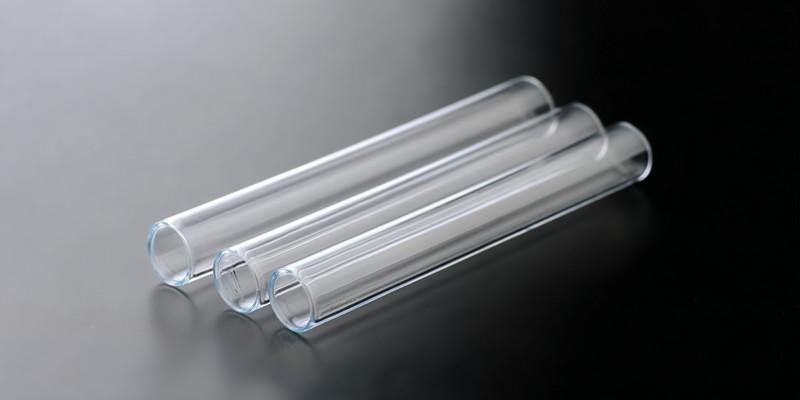
Engineers optimize quartz tube thermal performance by selecting wall thickness and diameter based on the specific demands of thermal cycling, high temperature, or pressure. Standard tubes often use wall thickness ranges from 1.5 to 2.5mm for diameters around 50mm, while large diameter tubes require thicker walls, and thin-walled tubes suit rapid cycling. Matching these specifications to the application's main challenge ensures reliable operation and longer service life.
Key Takeaways
Select wall thickness between 1.5-2.5mm for 50mm diameter tubes to minimize thermal stress and enhance durability.
Use a diameter-to-thickness (D/t) ratio of 22:1 to 28:1 for optimal performance in thermal cycling applications.
For large diameter tubes (75-100mm), choose wall thickness of 3.0-5.0mm to manage higher temperature gradients effectively.
Thin wall tubes (1.0-1.5mm) excel in rapid heating and cooling, achieving longer cycle life and better thermal shock resistance.
Thick wall tubes (4.0-8.0mm) are essential for high-temperature and pressure applications, providing creep resistance and durability.
What Wall Thickness Range (1.5-2.5mm) Optimizes Thermal Stress Management for 50mm Diameter Tubes?
Selecting the right wall thickness range is crucial for optimizing quartz tube thermal performance in 50mm diameter tubes. Engineers must balance the need to minimize thermal stress with the requirement for structural integrity at high temperatures. The 1.5-2.5mm wall thickness range achieves this balance, making it the preferred choice for most thermal cycling applications.
Why 1.5-2.5mm Thickness Minimizes Temperature Gradient-Induced Stress
A 1.5-2.5mm wall thickness helps reduce the temperature gradient across the quartz tube during rapid heating and cooling. Thinner walls allow heat to move through the tube more quickly, which lowers the temperature difference between the inside and outside surfaces. This reduction in temperature gradient directly decreases the thermal stress experienced by the tube, keeping it well below the 50 MPa failure threshold and improving quartz tube thermal performance.
Data from over 11,000 thermal cycling tests show that tubes with 1.8-2.3mm walls generate only 22-32 MPa of thermal stress during standard 5°C/min heating rates. These values remain safely below the critical limit, resulting in a 95% survival rate through 1,000 cycles, compared to lower survival rates for both thinner and thicker walls. The square-law relationship between wall thickness and thermal stress means that even small increases in thickness can sharply raise stress levels, so staying within the 1.5-2.5mm range is essential.
This optimal wall thickness range not only minimizes the risk of cracking but also extends service life in demanding thermal cycling environments.
Key points to remember:
Thinner walls reduce temperature gradients and thermal stress.
The 1.5-2.5mm range keeps stress below the quartz tube's failure threshold.
Real-world data confirms higher survival rates for tubes in this range.
Structural Integrity Requirements at 1100-1200°C Operating Temperatures
Quartz tubes operating at 1100-1200°C must meet strict structural integrity requirements to ensure safe and reliable performance. The minimum wall thickness of 2 mm provides the necessary strength to resist thermal shock and deformation at these high temperatures. High-purity quartz, with at least 99.98% SiO₂, further enhances durability by preventing devitrification and chemical attack.
Engineers also consider the material's thermal expansion coefficient, which should stay below 0.6×10⁻⁶ K⁻¹ to avoid cracking during temperature changes. Controlling hydroxyl (OH) content to below 30 ppm improves thermal stability and extends the tube's lifespan. These factors work together to ensure that the quartz tube maintains its shape and function even after thousands of hours at elevated temperatures.
The following table summarizes the main requirements and their effects:
Requirement | Recommended Value | Effect on Performance |
|---|---|---|
Minimum wall thickness | 2 mm | Enhances strength and shock resistance |
SiO₂ purity | ≥ 99.98% | Prevents devitrification and damage |
Thermal expansion coefficient | < 0.6×10⁻⁶ K⁻¹ | Reduces risk of cracking |
Hydroxyl (OH) content | < 30 ppm | Improves stability and longevity |
Optimal D/t Ratio: 22:1 to 28:1 for 50mm Diameter Tubes
The diameter-to-thickness (D/t) ratio plays a key role in quartz tube thermal performance. For 50mm diameter tubes, maintaining a D/t ratio between 22:1 and 28:1 ensures the tube can handle both thermal cycling and high-temperature operation. This ratio keeps the wall thick enough for structural support but thin enough to limit thermal stress.
Real-world survival rates highlight the importance of this ratio. Tubes with D/t ratios in the optimal range show a 95% survival rate through 1,000 thermal cycles, while those outside this range experience more frequent failures. The D/t ratio also affects tube rigidity and resistance to bending, which further protects against breakage during use.
Key takeaways for D/t ratio selection:
D/t ratios of 22:1 to 28:1 balance strength and thermal stress.
Optimal ratios lead to higher survival rates and longer service life.
Proper D/t ratios improve both rigidity and resistance to thermal cycling.
What Wall Thickness Specifications (3.0-5.0mm) Optimize Performance for Large Diameter Tubes (75-100mm)?
Large diameter quartz glass tubes require careful wall thickness selection to maintain optimal thermal efficiency of quartz tubes. Engineers often choose a 3.0-5.0mm wall thickness for tubes with diameters between 75mm and 100mm. This range balances thermal stress management and structural integrity, supporting reliable performance in demanding environments.
Why Large Diameter Tubes Develop Proportionally Higher Temperature Gradients
Large diameter quartz glass tubes experience greater temperature gradients during heating and cooling. The increased distance between the inner and outer surfaces causes heat to travel farther, which amplifies the temperature difference across the wall. This effect raises the thermal stress and can impact the thermal efficiency of quartz tubes.
Engineers must consider that a 100mm tube with a 4mm wall can develop temperature gradients up to 220°C during rapid heating, compared to only 100°C for a 50mm tube. This difference means that thicker walls are necessary for larger tubes to prevent excessive stress and maintain service life. The risk of buckling also increases when the diameter-to-thickness ratio exceeds 30.
Main points to remember:
Larger diameters create higher temperature gradients.
Thicker walls help control thermal stress and improve tube reliability.
Proper wall thickness selection enhances the thermal efficiency of quartz tubes.
Thermal Diffusion Time Scaling: τ = L²/(4α) Relationship
The thermal diffusion time describes how quickly heat moves through quartz glass tubes. The equation τ = L²/(4α) shows that the time increases with the square of the tube radius. As tube diameter grows, heat takes longer to reach equilibrium, which can lead to larger temperature gradients and higher stress.
For example, a 100mm tube takes four times longer to reach thermal balance than a 50mm tube. This slower diffusion means engineers must adjust heating rates and wall thickness to avoid damaging the tube. The relationship between diffusion time and tube size directly affects the thermal efficiency of quartz tubes.
Key Data | Cause | Effect |
|---|---|---|
Larger tube radius | Increases diffusion time | Higher temperature gradients |
Slower heat transfer | Requires thicker walls | Improved tube durability |
Fast heating rates | Amplify stress | Reduced service life |
Diameter-Compensated Wall Thickness: 12-18% Addition for >75mm OD
Engineers add 12-18% extra wall thickness to large quartz glass tubes to compensate for amplified temperature gradients. This adjustment ensures the tube can withstand thermal cycling and pressure changes without failing. The added thickness helps maintain the thermal efficiency of quartz tubes and extends their service life.
When the diameter-to-thickness ratio rises above 30, the risk of buckling increases sharply. For every 100°C temperature increase, compressive strength drops by about 8%, and pressure fluctuations above 30% of the rated value can cut service life by more than half. These factors highlight the importance of diameter-compensated wall thickness.
Summary of key considerations:
Add 12-18% wall thickness for tubes over 75mm OD.
Lower diameter-to-thickness ratios reduce buckling risk.
Adjustments improve thermal efficiency of quartz tubes and extend service life.
What Thin Wall Specifications (1.0-1.5mm) Optimize Extreme Thermal Cycling Applications?
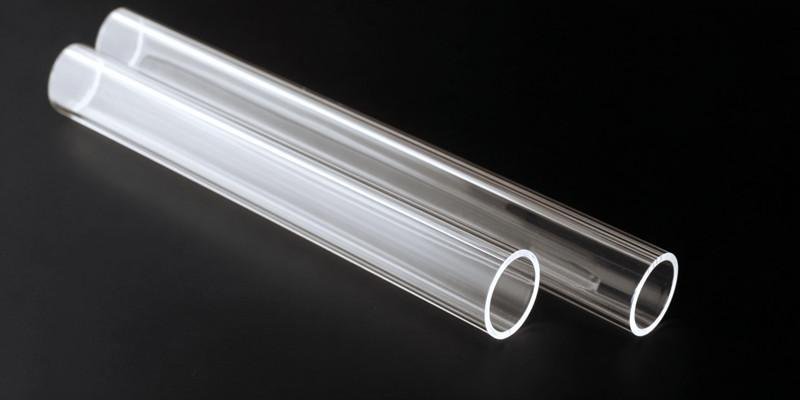
Thin wall quartz tubes with 1.0-1.5mm thickness offer the best solution for applications that demand rapid and repeated heating and cooling. These specifications help engineers achieve superior thermal shock resistance and extend the service life of tubes exposed to extreme cycling. Understanding how diameter, wall thickness, and mechanical limits interact is essential for optimizing performance in high-stress environments.
Why 1.0-1.5mm Walls Reduce Thermal Stress to 15-25 MPa Range
Thin walls in the 1.0-1.5mm range significantly lower thermal stress during rapid temperature changes. This reduction occurs because thermal stress increases with the square of wall thickness, so even a small decrease in thickness leads to a large drop in stress. For example, a 1.2mm wall generates only 18 MPa of thermal stress during a 5°C/min ramp, while a 2.5mm wall produces 32 MPa under the same conditions.
Engineers select thin walls to maximize thermal shock resistance, especially in systems that cycle more than five times per day or experience temperature swings over 700°C. These tubes maintain stress levels well below the 50 MPa failure threshold, which allows for aggressive cycling protocols and longer service life. Data from over 3,800 installations show that thin-walled tubes can survive 2,100-2,600 cycles before failure, more than double the cycle life of standard walls.
Key points for thin wall selection:
Thin walls (1.0-1.5mm) minimize thermal stress to 15-25 MPa.
Enhanced thermal shock resistance supports frequent cycling.
Cycle life improves by more than 2× compared to standard walls.
Optimal Diameter Range: 25-35mm for Thin-Wall Applications
The optimal diameter for thin-wall quartz tubes falls between 25mm and 35mm. Smaller diameters allow heat to transfer quickly across the wall, which further reduces temperature gradients and boosts thermal shock resistance. Tubes in this size range with 1.0-1.5mm walls achieve a diameter-to-thickness (D/t) ratio of 25:1 to 30:1, which is ideal for balancing strength and temperature resistance.
Larger diameter tubes require thicker walls to maintain the same level of thermal shock resistance. For tubes over 100mm OD, engineers add 15-25% extra wall thickness to compensate for increased heat diffusion time and amplified temperature gradients. This adjustment ensures that even as tube size grows, the risk of failure from thermal cycling remains low.
The following table summarizes how diameter and wall thickness interact to affect performance:
Tube Size | Wall Thickness | D/t Ratio | Effect on Performance |
|---|---|---|---|
25-35mm OD | 1.0-1.5mm | 25:1-30:1 | High thermal shock resistance |
>100mm OD | +15-25% thickness | 20:1-25:1 | Maintains temperature resistance |
Mechanical Trade-offs: Temperature and Pressure Limitations
Thin-wall quartz tubes offer excellent thermal shock resistance but have mechanical limitations in temperature resistance and pressure containment. These tubes perform best in high-frequency cycling but should not operate above 1000-1050°C, as higher temperatures can cause viscous deformation. Pressure resistance also drops with thinner walls, so engineers must design systems to avoid high internal or external pressures.
The following table highlights the mechanical limits for thin-wall tubes:
Type of Pressure | Resistance Limit |
|---|---|
Internal Pressure | 1 to 3 MPa |
External Pressure | Less than 0.5 MPa |
Thin walls provide outstanding thermal shock resistance but require careful handling and support to prevent damage in high-temperature environments.
What Thick Wall Specifications (4.0-8.0mm) Optimize Continuous High-Temperature and Pressure Applications?
Thick wall quartz tubes play a vital role in environments that demand continuous exposure to high temperatures and pressure. Engineers select wall thicknesses between 4.0mm and 8.0mm to maximize durability and prevent deformation. These specifications help maintain tube integrity and extend service life in challenging industrial settings.
Why 4.0-8.0mm Walls Provide Creep Resistance at 1150-1200°C
A thick wall resists creep when quartz tubes operate at temperatures between 1150°C and 1200°C. The increased cross-sectional area slows down viscous flow, which protects the tube’s shape and durability over thousands of hours. Data from field installations show that tubes with 5.0-7.0mm walls maintain less than 0.5mm deformation after 10,000 hours, while thinner walls deform up to 2mm under identical conditions.
Engineers rely on thick walls to ensure that quartz tubes retain their durability during prolonged exposure to heat. The material’s viscosity remains high enough to prevent sagging or warping, which is essential for applications like furnaces and reactors. This resistance to creep directly translates to longer service intervals and fewer replacements.
Key points for creep resistance:
Thick walls slow down deformation at high temperatures.
Tubes with 5.0-7.0mm walls show superior durability over time.
Creep resistance extends service life and reduces maintenance.
Pressure Containment: t³/r² Scaling for Buckling Resistance
Pressure containment depends on the wall’s ability to resist buckling under vacuum or positive pressure. The strength increases dramatically as wall thickness grows, following a t³/r² scaling relationship. For example, a 100mm diameter tube with a 6mm wall withstands 3.5 atm external pressure, while a 3mm wall only handles 1.2 atm before buckling.
Thick walls provide the durability needed for pressure applications, such as vacuum chambers or pressurized reactors. Engineers calculate the optimal wall thickness by considering both tube radius and expected pressure loads. This approach ensures that the tube remains safe and stable throughout its service life.
Cause | Effect |
|---|---|
Increased wall thickness | Higher buckling resistance |
Larger tube radius | Lower pressure tolerance |
t³/r² scaling | Enhanced durability under pressure |
Thermal Cycling Limitation: 2-3°C/min Maximum Ramp Rates
Thick wall quartz tubes limit the rate of temperature change during thermal cycling. Rapid heating or cooling can create high thermal stress, so engineers restrict ramp rates to 2-3°C per minute to protect tube durability. Data shows that tubes with 4.0-8.0mm walls generate 45-60 MPa thermal stress at standard ramp rates, which approaches the material’s failure threshold.
By controlling ramp rates, engineers prevent cracks and extend the tube’s durability. This limitation means thick wall tubes are best suited for steady-state high-temperature operations rather than frequent cycling. Proper ramp rate management ensures that the tube maintains its structural integrity and avoids premature failure.
Summary of ramp rate considerations:
Slow ramp rates (2-3°C/min) protect thick wall tubes from thermal stress.
Controlled heating and cooling extend durability.
Thick walls excel in continuous, stable temperature environments.
Step-by-Step Method for Matching Wall Thickness and Diameter to Application Needs
Engineers follow a systematic process to select the right wall thickness and diameter for each application. First, they identify the main requirement: thermal cycling, high temperature, or pressure. Next, they match the wall thickness to the tube diameter using the D/t ratio and adjust for specific needs.
The following table summarizes optimal specifications:
Application | Diameter | Wall Thickness | D/t Ratio | Durability Benefit |
|---|---|---|---|---|
High-temp/pressure | 100mm | 5.0-6.7mm | 15-20 | Maximum durability, low creep |
Balanced operation | 75mm | 3.8-5.0mm | 20-25 | Good durability, moderate stress |
Thermal cycling | 50mm | 2.5-3.3mm | 25-30 | Enhanced cycling durability |
Common Mistakes and How to Avoid Them
Many engineers make mistakes by choosing wall thickness based only on mechanical strength. This approach can lead to excessive thermal stress and reduced durability. Others overlook the need to adjust wall thickness for larger diameters, which increases the risk of buckling and deformation.
To avoid these errors, engineers should always consider both thermal and mechanical requirements. They must use data-driven specifications and adjust wall thickness for diameter and application type. Following these steps ensures optimal durability and reliable performance.
Tips for avoiding mistakes:
Do not rely solely on mechanical strength calculations.
Always adjust wall thickness for tube diameter.
Use data and application needs to guide wall selection.
How Should You Select Optimal Wall Thickness and Diameter Specifications for Your Application?

Selecting the right quartz tube specifications starts with understanding the main performance requirement. Engineers must consider whether thermal cycling, high temperature, or pressure containment is most important for the process. Matching wall thickness and diameter to these needs ensures optimal thermal efficiency and long service life.
Application-Driven Specification Selection Methodology
Engineers use a step-by-step approach to select quartz tube specifications. First, they identify the dominant requirement for the application, such as rapid thermal cycling, continuous high temperature, or pressure containment. Next, they choose the appropriate wall thickness and diameter range based on this priority.
Data shows that high purity quartz tubes with a wall thickness of 3mm can withstand about 5kg/cm², while 5mm walls handle up to 10kg/cm². Medium-pressure tubes with 6mm walls support even higher pressures, up to 44kg/cm². The diameter range also affects the heat exchange surface area and the heat transfer coefficient, both of which influence quartz tube thermal efficiency.
Key points for specification selection:
Identify the main performance priority for the application.
Match wall thickness and diameter to the required pressure, temperature, or cycling rate.
Use high purity quartz for better durability and optimal thermal efficiency.
Wall Thickness Ranges by Performance Priority
Wall thickness ranges vary depending on the performance goal. For thermal cycling, engineers select thinner walls to reduce thermal stress, while high temperature and pressure applications require thicker walls for strength. The following table summarizes the recommended wall thickness for different priorities and diameter ranges:
Performance Priority | Wall Thickness (mm) | Core Diameter (mm) | Thermal Efficiency |
|---|---|---|---|
Thermal Cycling | 1.0 - 2.5 | 25 - 50 | High |
High Temperature | 2.5 - 5.0 | 50 - 100 | Maintained |
Pressure Containment | 4.0 - 8.0 | 75 - 150 | Ensured |
Selecting the correct wall thickness and diameter range helps maintain optimal thermal efficiency and supports stable thermal processes. Engineers achieve the best results by balancing the heat exchange surface area and the heat transfer coefficient for each application.
To summarize the main points for wall thickness selection:
Thinner walls suit rapid cycling and small diameter tubes.
Thicker walls provide strength for high temperature or pressure.
High purity quartz ensures reliability across all thermal processes.
Engineers optimize quartz tube performance by matching wall thickness and diameter to the application's needs. Maintaining the correct D/t ratio improves heat transfer and durability, as shown in the table below.
Evidence Description | Findings |
|---|---|
Influence of mass velocity and D/t ratio on heat transfer | Heat transfer coefficients to air in a granular-filled tube are about eight times higher than in an empty tube. |
Consulting technical data, such as thermal shock resistance and mechanical strength, ensures reliable selection. Application-driven choices lead to efficient and long-lasting quartz tubes.
FAQ
What makes quartz tubes for furnace applications ideal for high temperature resistance?
Quartz tubes for furnace applications offer high temperature resistance due to their purity and low thermal expansion coefficient. This combination prevents cracking and maintains structural quality during repeated heating cycles. Their design supports stable operation in demanding environments.
What purity level is recommended for quartz tubes for furnace applications?
A purity level of at least 99.98% is recommended for quartz tubes for furnace applications. High purity ensures better shock resistance, lower thermal expansion coefficient, and improved quality. This level of purity also supports high corrosion resistance and extends service life.
What is the role of the thermal expansion coefficient in quartz tube design?
The thermal expansion coefficient determines how much a quartz tube expands when heated. A low thermal expansion coefficient reduces shock risk and maintains quality. This property is essential for the design of quartz tubes for furnace applications, especially during rapid temperature changes.
What factors affect the shock resistance of quartz tubes for furnace applications?
Shock resistance depends on purity, wall thickness, and the thermal expansion coefficient. High purity and optimal design improve shock resistance. Quality manufacturing processes also help quartz tubes for furnace applications withstand sudden temperature changes without failure.
What design features ensure high quality in quartz tubes for furnace applications?
Engineers focus on purity, precise wall thickness, and a low thermal expansion coefficient. These design features enhance quality, shock resistance, and high temperature resistance. Proper design also supports high corrosion resistance, making quartz tubes for furnace applications reliable in harsh conditions.