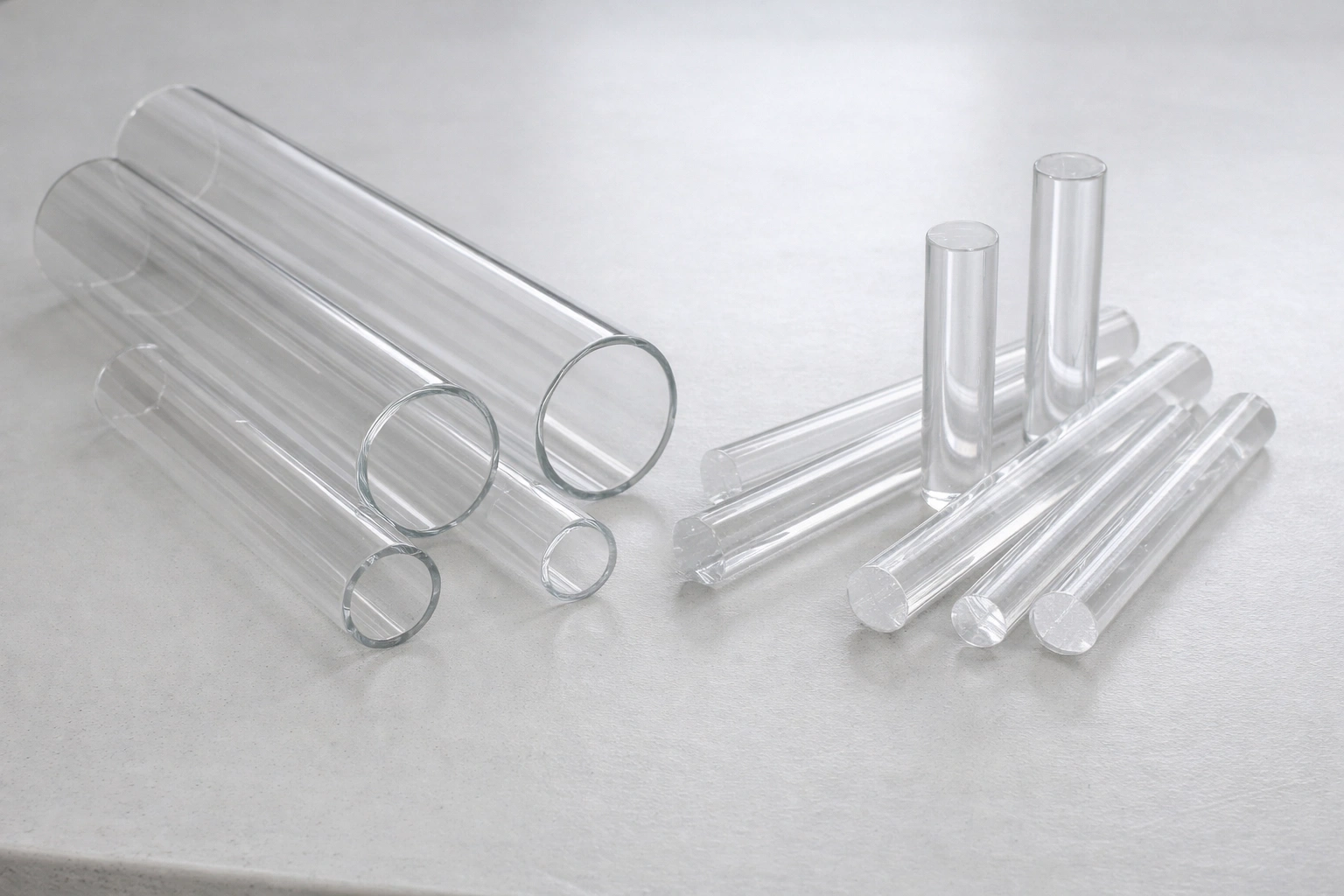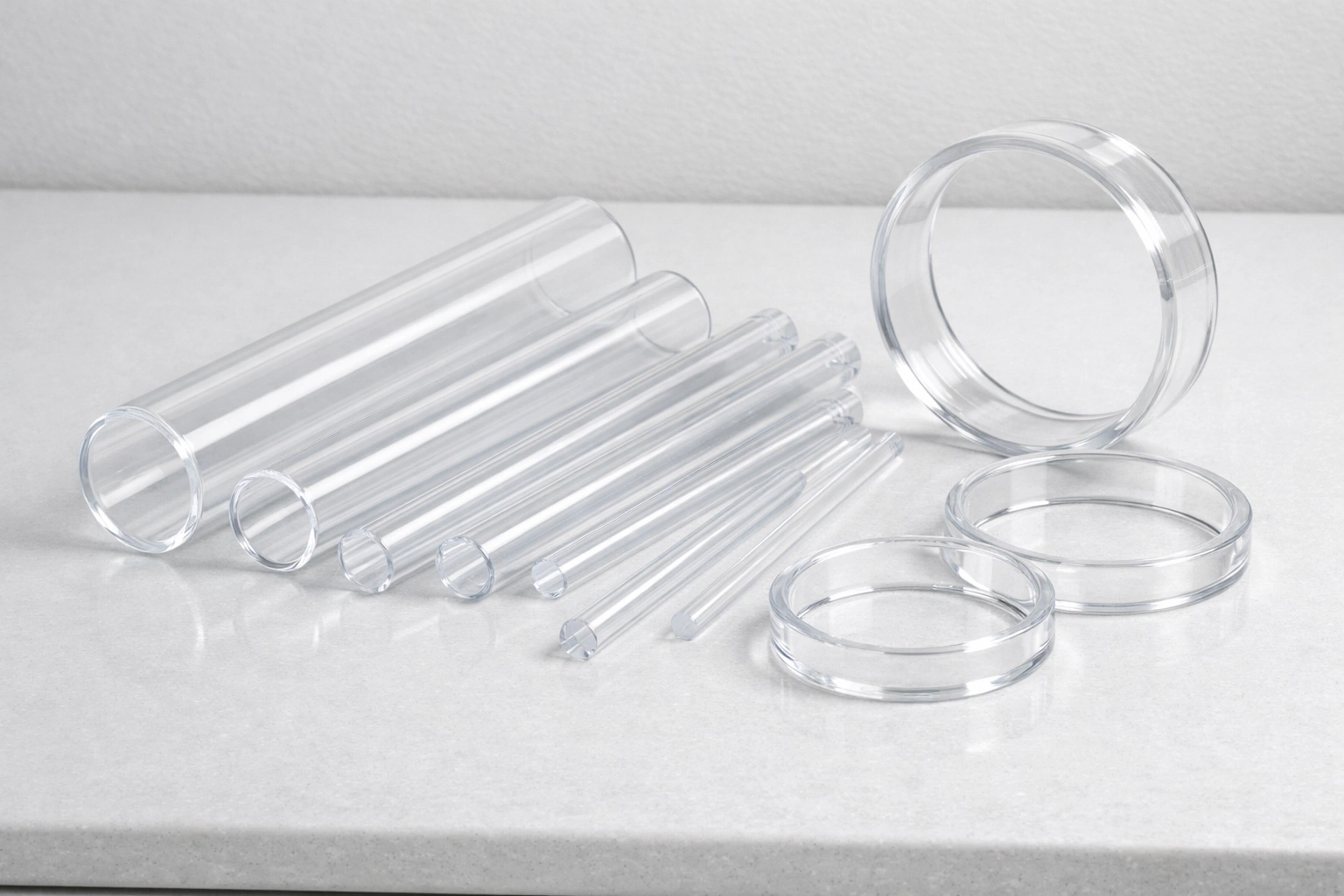

Quartz tube cutting failures often result from the specific method used, with each technique presenting unique challenges. Understanding the quartz tube cutting failures prevention causes helps reduce edge damage and maintain product quality. Edge damage can increase costs, create safety risks, and lower the reliability of finished quartz tubes.
Key Takeaways
Use the correct scoring depth of 5-10% of wall thickness for score-and-snap cutting to prevent uncontrolled cracks.
Implement a two-stage feed rate during diamond blade cutting to reduce edge chipping by up to 80%.
Optimize laser cutting parameters by setting power between 1-2kW and maintaining a traverse velocity of 15-25mm/min to minimize thermal damage.
Select appropriate waterjet cutting parameters, such as lower pressure and finer abrasives, to reduce subsurface damage and improve edge quality.
Regularly inspect separated edges for quality, discarding any with significant cracks to ensure product reliability and safety.
What Are the Four Primary Cutting Methods and Their Specific Failure Mechanisms?

This section explains the four main methods for cutting quartz tubes and describes how each method can cause edge damage. Readers will learn about the specific failure mechanisms for score-and-snap, diamond blade, laser, and waterjet cutting. Understanding these details helps identify quartz tube cutting failures prevention causes and guides the selection of the best cutting strategy.
Score-and-Snap: Stress Concentration and Uncontrolled Crack Propagation
Score-and-snap cutting relies on creating a controlled fracture along a scored line, but improper technique often leads to longitudinal cracks. Operators who score too deeply or unevenly increase the risk of uncontrolled crack propagation, which can extend 50-200mm beyond the intended separation point. Data from the TOQUARTZ database shows that 68% of longitudinal crack failures result from excessive score depth or insufficient circumferential coverage.
Tip:
Maintain score depth at 5-10% of wall thickness.
Ensure at least 75% circumferential coverage.
Apply a water drop before separation to reduce fracture strength and improve control.
Score-and-snap failures highlight the importance of precise technique and careful inspection. Consistent scoring and proper force application are key quartz tube cutting failures prevention causes.
Diamond Blade: Breakthrough Tensile Failure and Chip Formation
Diamond blade cutting uses a rotating abrasive blade to separate quartz tubes, but edge chipping often occurs during the final breakthrough. When the feed rate exceeds 0.8mm/s or the blade is worn, the unsupported material at the exit experiences tensile stress above quartz's strength, causing chips 0.5-3mm in size. TOQUARTZ data from over 15,000 cuts shows that 81% of edge chipping cases happen during the last 5-10% of wall penetration.
Cause | Effect | Prevention |
|---|---|---|
High feed rate (>0.8mm/s) | Large edge chips (0.5-3mm) | Two-stage feed protocol |
Worn blade (>30% life) | Increased chipping | Replace blade at 25% life |
No internal support | Wall deflection, chipping | Use PVC liner or wax-fill |
Implementing a two-stage feed rate and monitoring blade condition greatly reduces edge chipping. These steps form essential quartz tube cutting failures prevention causes for mechanical cutting.
Laser Cutting: Thermal Gradient Stress and Delayed Micro-Cracking
Laser cutting uses focused thermal energy to separate quartz tubes, but excessive heat input can create thermal stress and delayed micro-cracks. When power density exceeds 5,000 W/mm² or traverse velocity drops below 10mm/min, the heat-affected zone widens and residual stress rises above 15 MPa. Analysis of 3,500+ tubes shows that 72% of thermal stress crack incidents occur when process parameters are not optimized.
Key Points:
Set laser power between 1-2kW for most tube sizes.
Focus beam to 0.3-0.5mm spot diameter.
Maintain traverse velocity at 15-25mm/min for best results.
Laser cutting requires careful adjustment of power and speed to minimize edge damage. Optimized parameters and post-cutting annealing are vital quartz tube cutting failures prevention causes for thermal processes.
Waterjet: Abrasive Impact Damage and Subsurface Delamination
Waterjet cutting uses high-pressure water and abrasive particles to erode quartz tubes, but large abrasive sizes or high pressure can cause subsurface delamination. Particles over 150μm or pressures above 70,000 psi create micro-cracks 0.2-0.8mm deep, which may not be visible but weaken the tube. Comparative trials show waterjet cutting produces 3-5 times more subsurface damage than other methods, especially in thin-wall tubes.
Parameter | Failure Mode | Recommended Action |
|---|---|---|
Abrasive >150μm | Subsurface cracks | Use finer abrasive (120-150 mesh) |
Pressure >70,000 psi | Delamination | Lower pressure to 40,000-50,000 psi |
Slow traverse velocity | Increased damage | Increase speed to 100-150mm/min |
Waterjet cutting is not suitable for optical, vacuum, or thermal cycling applications due to hidden damage. Selecting proper parameters and secondary finishing helps address quartz tube cutting failures prevention causes in large-diameter tubes.
What Causes Score-and-Snap Failures and How to Execute This Method Correctly?
Score-and-snap cutting remains a popular method for quartz tubes, but improper technique often leads to edge damage and costly failures. Operators must control scoring depth, ensure proper circumferential coverage, and apply the right separation force to prevent cracks from spreading. This section explains the main causes of score-and-snap failures and outlines step-by-step methods for achieving clean, reliable cuts.
Scoring Depth Control: 5-10% Wall Thickness Optimization
Scoring depth plays a critical role in preventing uncontrolled crack propagation during quartz tube cutting. When the score is too shallow, the fracture may not initiate, while excessive depth weakens the tube and causes cracks to extend far beyond the intended break. Data from over 850 failed attempts shows that scores deeper than 15% of wall thickness result in longitudinal cracks up to 200mm, while scores less than 5% often fail to separate the tube.
Operators should use a glass cutter or diamond wheel to achieve a score depth between 5% and 10% of the tube wall thickness. Visual inspection helps verify the score line, which should appear as a fine white line about 0.1-0.2mm wide for a 2mm wall. Consistent scoring depth around the tube ensures the crack initiates and stops at the intended location.
Key Points:
Optimal score depth: 5-10% of wall thickness
Too deep: Uncontrolled cracks
Too shallow: Incomplete separation
Circumferential Coverage Requirements: Minimum 75% for Reliable Initiation
Circumferential coverage of the score line determines whether the fracture will follow the intended path. Coverage below 70% allows the crack to deviate, leading to jagged edges or cracks that run along the tube. TOQUARTZ analysis found that 68% of longitudinal crack failures involved insufficient circumferential scoring.
Operators should secure the tube in a V-block or padded vise and mark the separation line before scoring. The scoring tool must travel at least 75% of the tube’s circumference, overlapping the starting point by 10-15mm to ensure reliable crack initiation. This approach reduces the risk of edge damage and supports the main quartz tube cutting failures prevention causes.
Coverage | Result | Recommendation |
|---|---|---|
<70% | Crack deviation, jagged edges | Increase to ≥75% coverage |
≥75% | Clean, controlled break | Overlap start by 10-15mm |
Separation Force Application: Proper Hand Positioning and Progressive Loading
Applying the correct separation force is essential for a clean break and operator safety. Improper hand placement or sudden force can cause the tube to shatter or produce dangerous shards. Studies show that tubes separated with smooth, progressive force and proper hand positioning have a much lower rate of uncontrolled fracture.
Operators should grip the tube 30-40mm on each side of the score line, keeping hands away from the ends. Applying a steady, perpendicular bending force, combined with slight tension, allows the tube to snap cleanly within a few seconds. If the tube does not separate easily, operators should reassess the score rather than increase force.
Summary:
Hand placement: 30-40mm from score line
Force: Smooth, progressive bending
Safety: Avoid excessive or sudden force
Failure Recognition: Acceptable vs. Reject Criteria for Separated Edges
Recognizing acceptable and rejectable edges helps maintain product quality and safety. Acceptable edges show a uniform, slightly curved fracture surface with no cracks extending more than 5mm from the separation plane. Rejectable edges display jagged breaks or longitudinal cracks that compromise tube strength.
Inspectors should examine each separated tube visually and by touch. Tubes with minor edge irregularities may be smoothed with fine sandpaper or a diamond file, but those with significant cracks must be discarded. This inspection process supports the overall goal of quartz tube cutting failures prevention causes.
Edge Condition | Accept/Reject | Action |
|---|---|---|
Uniform, minor curvature | Accept | Smooth if needed |
Jagged, cracks >5mm | Reject | Discard for safety |
What Causes Diamond Blade Edge Chipping and How to Eliminate Breakthrough Damage?
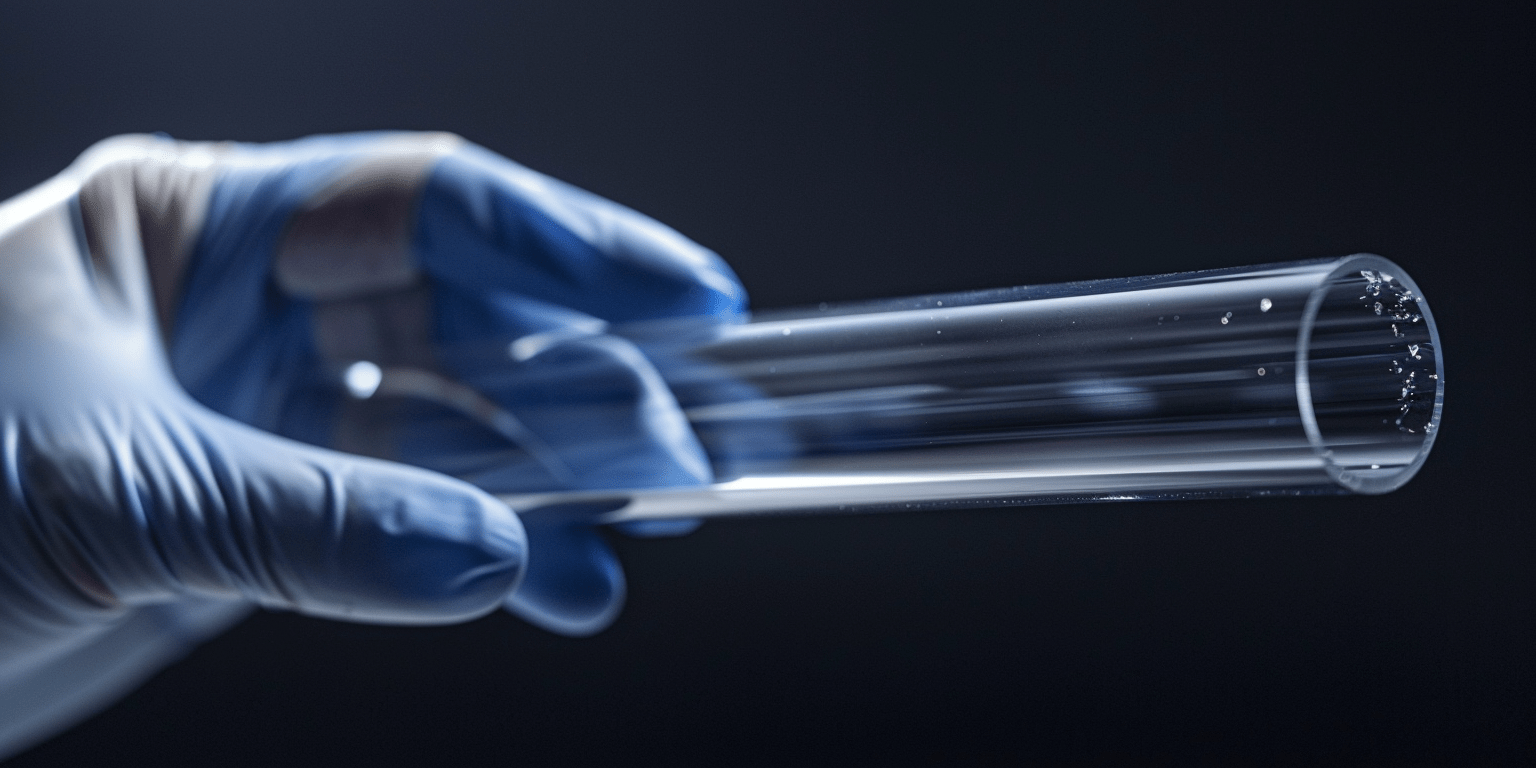
Diamond blade edge chipping is a common issue during quartz tube cutting, especially at the final breakthrough stage. Several factors, such as feed rate, blade wear, and internal support, contribute to edge damage. Effective strategies can greatly reduce breakthrough damage and improve the quality of cut edges.
Two-Stage Feed Rate Protocol: Transition Timing and Parameter Values
Operators often see edge chipping when the feed rate remains high during the final phase of cutting. Reducing the feed rate from 0.5mm/s to 0.2mm/s in the last 20% of wall penetration lowers tensile stress and prevents chips from forming. Data from over 15,000 tubes shows that this two-stage protocol decreases chipping frequency by up to 80%, saving time and reducing secondary finishing costs.
Key Points:
Start at 0.5mm/s, reduce to 0.2mm/s for last 20%
Chipping drops from 8-12 to 1-3 defects per meter
Adds only 15-25 seconds per cut
This method forms a core part of quartz tube cutting failures prevention causes and ensures smoother edges.
Blade Wear Monitoring: Chips-Per-Meter Metric and Replacement Criteria
Blade condition plays a major role in edge quality during quartz tube cutting. Worn blades with dulled diamonds increase cutting force, which leads to more frequent and larger chips at breakthrough. Technicians monitor blade performance by counting chips per meter and replace blades when the metric exceeds 5 chips/meter for precision work or 15 chips/meter for standard applications.
Blade Condition | Chipping Rate | Replacement Action |
|---|---|---|
New/Sharp | 1-3 chips/meter | Continue use |
Worn (>30% life) | 8-12 chips/meter | Replace blade |
Regular monitoring and timely replacement maintain consistent edge quality and minimize costly defects.
Internal Support Methods: PVC Liner vs. Wax-Fill Techniques (Selection Guide)
Internal support prevents wall deflection and breakthrough damage, especially in thin-wall tubes. PVC liners provide a stable fit for most tubes, while wax-fill techniques work best for ultra-thin walls that risk splitting. Both methods stabilize the tube during cutting, reducing chip formation and supporting high-quality results.
Summary of Support Methods:
PVC liner: Best for 2mm+ walls, easy removal
Wax-fill: Ideal for <1.5mm walls, melts away after cutting
Both methods: Lower breakthrough damage and improve edge finish
Choosing the right support method depends on tube thickness and desired edge quality.
Breakthrough Force Reduction: Blade Thickness and Feed Rate Correlation
Blade thickness and feed rate directly affect the force required for breakthrough. Thicker blades and higher feed rates increase cutting force, which raises the risk of edge chipping. Operators select softer blade specifications and adjust feed rates to minimize stress, especially when cutting hard materials like quartz.
Parameter | Effect on Force | Edge Quality |
|---|---|---|
Thicker blade | Higher force | More chipping |
Softer blade | Lower force | Smoother edge |
Lower feed rate | Reduced force | Fewer chips |
Laser welded diamond blades with strong eutectic structures and narrow heat affected zones also help maintain performance and reduce cracking during high-speed cutting.
What Causes Laser Cutting Thermal Damage and How to Optimize Process Parameters?
Laser cutting can cause thermal damage in quartz tubes when the process introduces too much heat or uneven temperature changes. Operators must control laser power, spot size, and cutting speed to avoid micro-cracks and residual stress. Optimizing these parameters helps prevent edge damage and improves the reliability of quartz tubes.
Laser Power and Spot Size Optimization: Heat Input Control Calculations
Laser power and spot size directly affect the amount of heat delivered to the quartz tube during cutting. High power or a large spot size can create a wide heat-affected zone, leading to thermal stress and delayed micro-cracking. Data from over 3,500 tubes shows that power densities above 5,000 W/mm² increase the risk of cracks by 72%.
Operators should select a laser power between 1-2kW for most tube diameters and focus the beam to a 0.3-0.5mm spot. This combination keeps the heat input controlled and limits the affected area. Proper adjustment of these settings forms the foundation for effective quartz tube cutting failures prevention causes.
Key Points:
Power: 1-2kW for 20-60mm tubes
Spot size: 0.3-0.5mm diameter
Result: Reduced thermal stress and micro-cracking
Traverse Velocity Selection: Balancing HAZ Width vs. Surface Finish
Traverse velocity, or the speed at which the laser moves, determines how much heat builds up in the quartz tube. A slow traverse velocity allows more heat to spread, widening the heat-affected zone (HAZ) and increasing the chance of delayed cracks. A faster velocity narrows the HAZ but may leave a rougher edge.
Technicians often set traverse velocity between 15-25mm/min to balance edge quality and thermal damage. For example, increasing the speed from 12mm/min to 25mm/min can reduce HAZ width from 1.2mm to 0.4mm, based on TOQUARTZ field data. This adjustment helps maintain both structural integrity and surface finish.
Velocity (mm/min) | HAZ Width (mm) | Edge Finish |
|---|---|---|
12 | 1.2 | Smooth (Ra 0.3-0.5μm) |
25 | 0.4 | Slightly rougher |
Heat-Affected Zone Measurement: Polarized Light Analysis and Acceptance Criteria
Measuring the heat-affected zone ensures that the cutting process does not leave hidden stress in the quartz tube. Polarized light analysis reveals stress patterns and helps inspectors judge if the HAZ meets quality standards. Tubes with a HAZ wider than 0.5mm often show higher rates of delayed cracking during use.
Inspectors use polarized light to check the width and uniformity of the HAZ after each cut. Acceptance criteria usually require a HAZ less than 0.5mm wide and no visible stress lines extending from the edge. This method provides a reliable way to verify process quality and prevent future failures.
Summary:
HAZ width: <0.5mm for acceptance
Inspection: Polarized light analysis
Benefit: Early detection of stress-related defects
Post-Cutting Annealing Protocol: Stress Relief for High-Cycle Applications
Annealing after laser cutting relieves residual stress and prevents micro-cracks from growing during thermal cycling. Operators heat the tube to 1100-1150°C for 2-4 hours, then cool it slowly to 600°C before letting it reach room temperature. This process reduces residual stress from over 25 MPa to less than 5 MPa, as shown in ASTM C770 tests.
Tubes that undergo post-cutting annealing show much higher survival rates in high-cycle applications, such as repeated heating and cooling. This step is especially important for tubes used in demanding environments, where even small cracks can lead to failure.
Annealing Step | Temperature/Time | Result |
|---|---|---|
Heat soak | 1100-1150°C, 2-4 hr | Stress relaxation |
Slow cool | 50°C/hr to 600°C | Prevents new cracks |
Air cool | To room temperature | Final stress below 5 MPa |
By following these process controls, operators can greatly reduce the risk of thermal damage and improve the long-term performance of quartz tubes.
What Causes Waterjet Subsurface Damage and When to Avoid This Method?
Waterjet cutting can cause hidden damage beneath the surface of quartz tubes. This damage often results from the impact of abrasive particles and high water pressure. Technicians should avoid waterjet cutting for applications that require flawless edges or high durability.
Abrasive Impact Damage Mechanism: Hertzian Fracture and Crack Propagation
Abrasive particles in a high-pressure waterjet strike the quartz surface at speeds up to 900 meters per second. Each particle creates a small, cone-shaped crack known as a Hertzian fracture, which can join with others to form a network of subsurface cracks. These cracks weaken the tube and may cause edge spalling during later use.
Data from TOQUARTZ shows that using abrasive particles larger than 150μm or pressures above 70,000 psi increases subsurface crack depth to 0.8mm. Smaller particles and lower pressure reduce this risk, but some damage still occurs. The risk of delayed failure rises when tubes face thermal or mechanical stress.
Key Points:
Large abrasive particles and high pressure increase subsurface cracks.
Crack networks can cause delayed edge failure.
Damage depth can reach up to 0.8mm in thin-wall tubes.
Subsurface Damage Detection: Dye Penetrant and Cross-Sectional Analysis
Technicians use dye penetrant testing and cross-sectional analysis to find hidden cracks after waterjet cutting. Dye penetrant seeps into surface openings and reveals cracks under ultraviolet light, while cross-sectional analysis involves cutting the tube and examining the interior with a microscope. These methods help identify damage that is not visible to the naked eye.
TOQUARTZ studies found that waterjet-cut edges have three to five times more subsurface cracks than edges cut by other methods. Early detection allows technicians to remove damaged material before the tube enters service. Reliable detection methods support better quality control and safer products.
Detection Method | What It Finds | When to Use |
|---|---|---|
Dye Penetrant | Surface/subsurface cracks | Routine inspection |
Cross-Sectional | Internal crack networks | Failure analysis |
Application Unsuitability: Optical, Vacuum, and Thermal Cycling Limitations
Waterjet cutting does not suit every application. Subsurface cracks scatter light, create leak paths, and grow under temperature changes. These effects make waterjet cutting a poor choice for optical tubes, vacuum systems, and parts exposed to repeated heating and cooling.
TOQUARTZ data shows that waterjet-cut optical tubes lose up to 20% light transmission, and vacuum tubes may develop leaks due to hidden cracks. Tubes in thermal cycling tests fail after only 50-200 cycles, compared to over 1,000 cycles for tubes cut by other methods. Choosing the right cutting method prevents costly failures and ensures long-term reliability.
Summary Table:
Application | Waterjet Suitability | Reason |
|---|---|---|
Optical | Not suitable | Light scattering by cracks |
Vacuum | Not suitable | Leak paths from cracks |
Thermal Cycling | Not suitable | Crack growth, spalling |
Parameter Optimization for Damage Reduction: Pressure, Abrasive, Velocity
Technicians can reduce waterjet damage by adjusting cutting parameters. Lowering water pressure to 40,000-50,000 psi and using finer abrasive (120-150 mesh) decreases the size and depth of cracks. Increasing traverse velocity to 100-150mm/min also limits the number of particle impacts per edge length.
TOQUARTZ trials show that these changes reduce subsurface damage by up to 90%, especially when combined with secondary edge grinding. These steps form part of the broader quartz tube cutting failures prevention causes and help improve edge quality for large-diameter tubes. Careful parameter selection makes waterjet cutting safer for less demanding applications.
Key Points:
Lower pressure and finer abrasive reduce crack depth.
Faster traverse velocity limits particle impacts.
Secondary grinding removes damaged material for better results.
Quartz tube cutting failures often result from method-specific issues such as uncontrolled cracking, edge chipping, thermal stress, or subsurface damage. Technicians can prevent most problems by following targeted strategies for each cutting method and inspecting edges after every cut. Regular updates to cutting techniques and attention to quartz tube cutting failures prevention causes help maintain high product quality.
Use the correct scoring depth and coverage for score-and-snap.
Apply two-stage feed rates and monitor blade wear for diamond blade cutting.
Optimize laser power and speed, then anneal for stress relief.
Select proper waterjet parameters and inspect for hidden cracks.
Safety and quality should always guide every cutting operation. Staying informed about new technologies ensures the best results.
FAQ
What is the most common cause of edge damage in quartz tube cutting?
Edge damage most often results from improper technique or parameter selection. Data from TOQUARTZ shows that 81% of edge chipping cases occur during diamond blade breakthrough. Operators can reduce this risk by following a two-stage feed protocol.
Key Points:
Improper technique leads to most edge damage.
Diamond blade breakthrough is the highest risk phase.
Two-stage feed reduces chipping by up to 80%.
What method should technicians avoid for optical or vacuum quartz tubes?
Technicians should avoid waterjet cutting for optical or vacuum tubes. Subsurface cracks from abrasive impact reduce light transmission by up to 20% and create leak paths. These defects compromise performance and reliability in sensitive applications.
Method | Defect | Impact |
|---|---|---|
Waterjet | Subsurface cracks | Light loss, leaks |
What scoring depth ensures reliable score-and-snap separation?
A scoring depth of 5-10% of wall thickness ensures reliable separation. Scores deeper than 15% cause uncontrolled cracks, while shallow scores below 5% often fail to initiate a break. Consistent scoring depth improves yield and reduces waste.
Summary:
5-10% depth is optimal.
>15% depth causes cracks.
<5% depth fails to separate.
What is the recommended traverse velocity for laser cutting quartz tubes?
Technicians should set traverse velocity between 15-25mm/min for laser cutting. This range balances heat-affected zone width and edge finish. Data shows that a velocity of 25mm/min reduces HAZ width to 0.4mm, minimizing delayed micro-cracking.
Velocity (mm/min) | HAZ Width (mm) | Edge Quality |
|---|---|---|
15 | 0.7 | Smoother |
25 | 0.4 | Slightly rougher |
What inspection methods detect hidden damage after cutting?
Technicians use dye penetrant testing and polarized light analysis to detect hidden cracks. Dye penetrant reveals surface and subsurface cracks, while polarized light highlights stress patterns. These methods help ensure product quality before tubes enter service.
Key Points:
Dye penetrant finds cracks.
Polarized light shows stress.
Early detection prevents failures.