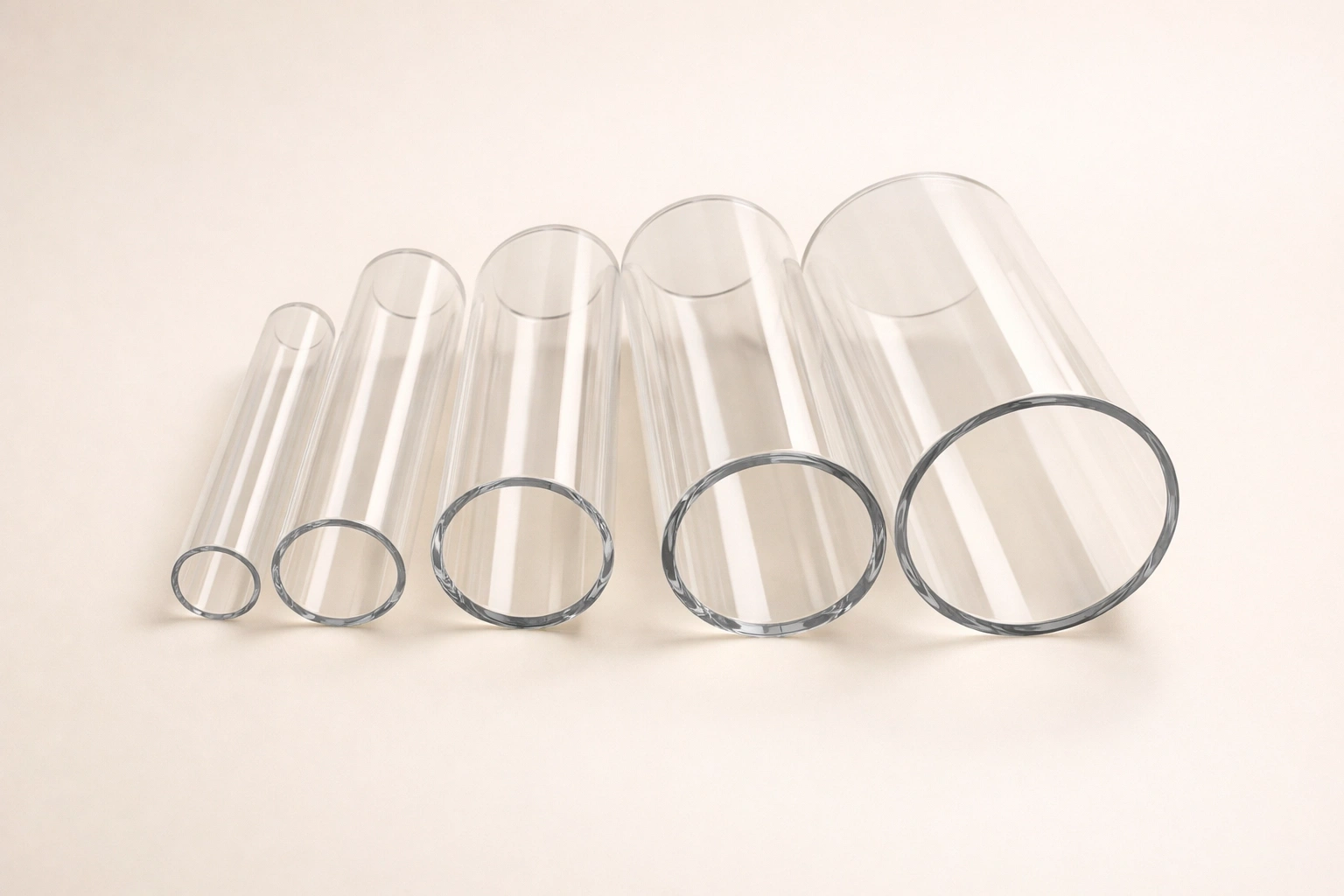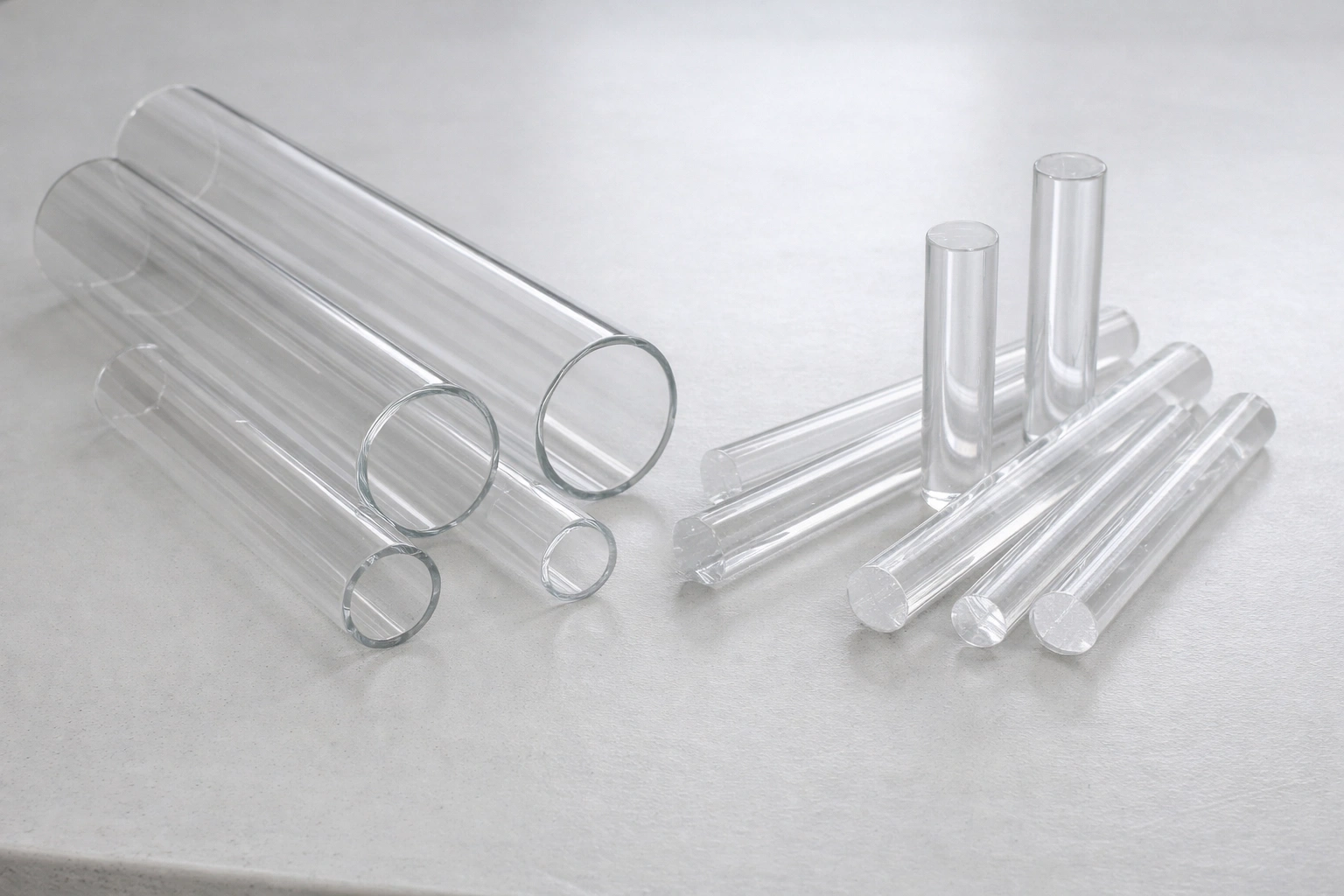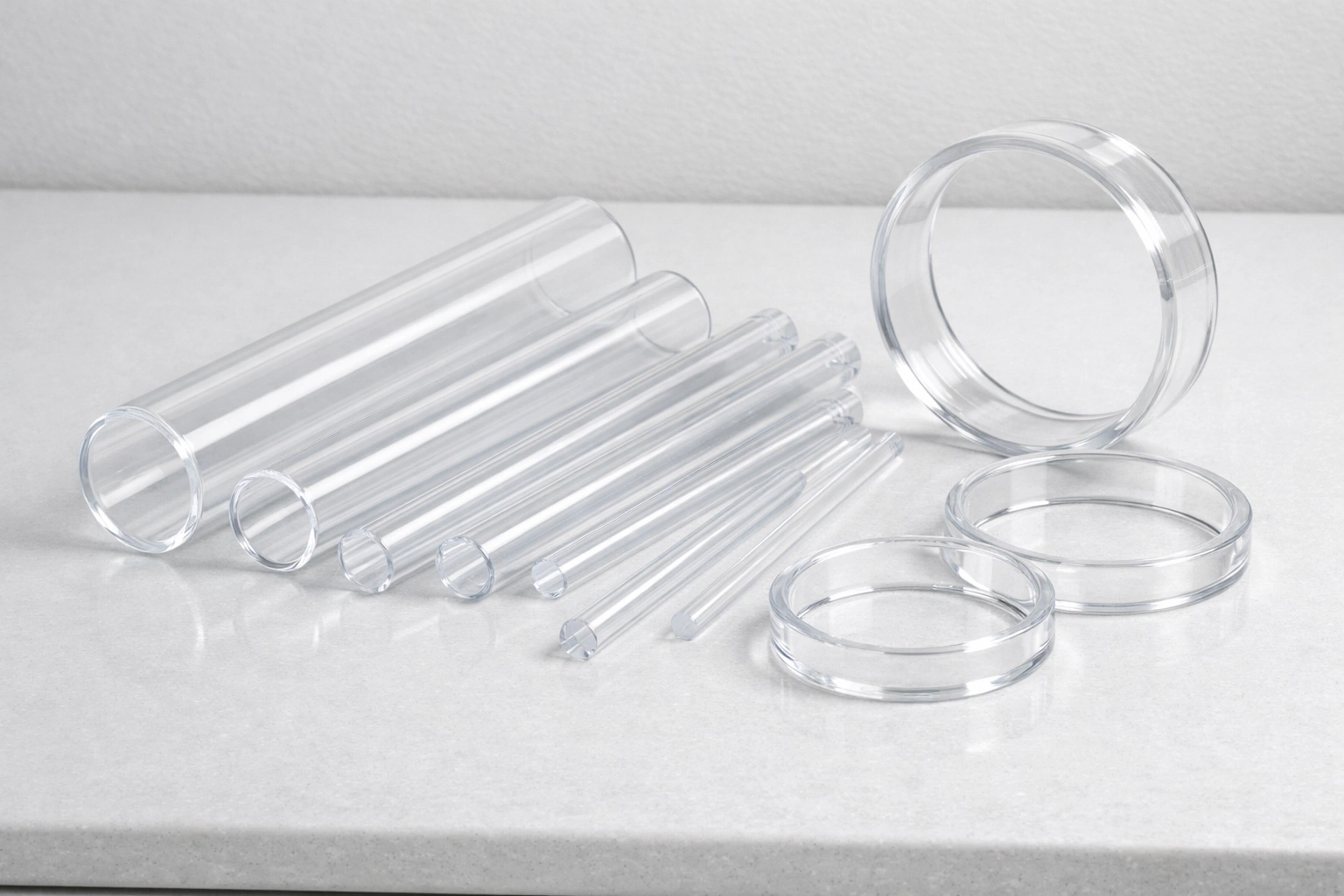

Quartz plate thickness laboratory applications rely on precise control to ensure optimal performance. In molecular biology, micro-volume analysis uses quartz plates with thicknesses from 1 to 5 µg, while semi-micro settings require 10 mm. Quartz crystal microbalance and quartz microbalance devices use quartz to measure frequency and mass with high sensitivity. Quartz crystal resonator technology depends on thickness shear resonance, allowing the quartz crystal sensor to detect even small mass changes. Frequency measurements, mass sensitivity, and response all link closely to quartz plate thickness. Thin-film deposition, viscoelastic properties, and acoustic wave effects influence device response and stability. Experimental results show that frequency temperature and temperature stability impact frequency-temperature behavior, making the right quartz plate thickness essential for reliable operating performance in laboratories.
Key Takeaways
Quartz plate thickness directly impacts measurement accuracy in laboratory applications. Choose the right thickness to ensure reliable results.
Small variations in quartz plate thickness can lead to significant errors in absorbance readings. Maintain strict control over thickness to avoid measurement shifts.
Uniform quartz plate thickness is crucial for consistent frequency and mass readings across devices. Ensure all quartz plates are evenly thick for accurate data.
Thinner quartz plates handle rapid temperature changes better, reducing the risk of cracking. Select thinner quartz for applications involving thermal shock.
Engineers should use a structured decision framework to balance thickness requirements across different laboratory applications. This approach ensures optimal performance and safety.
How Does Thickness Impact UV-Vis Spectroscopy Measurement Accuracy?

Quartz plate thickness laboratory applications depend on precise control to achieve accurate UV-Vis spectroscopy results. The thickness of quartz plate directly influences the optical path length, which affects absorbance readings and the reliability of measurements. Understanding why thickness matters helps laboratories select the right quartz for their needs.
How Do Thickness Variations Propagate Through Beer-Lambert Calculations
A small change in quartz plate thickness can cause a large error in absorbance readings. The Beer-Lambert law links absorbance to path length, so even a 0.05 mm difference in thickness can shift results for DNA, RNA, or protein samples. This happens because the law uses the path length as a multiplier, making any error in thickness directly affect the outcome.
When scientists use quartz crystal microbalance or quartz microbalance devices, they rely on stable frequency and mass measurements. If the quartz plate thickness varies, the frequency response of the quartz crystal resonator changes, which alters mass sensitivity and device performance. This can lead to inconsistent results and reduced operating performance in laboratory experiments.
Key reasons why thickness matters:
Absorbance depends on path length.
Small thickness errors cause big measurement shifts.
Stable frequency and mass readings need uniform quartz.
These points show why laboratories must control quartz plate thickness to ensure accurate, repeatable results in UV-Vis spectroscopy.
What USP <857> Tolerance Requirements Apply to Spectroscopic Cells
USP <857> sets strict rules for quartz used in spectroscopic cells. The standard requires that the thickness of quartz plates stays within ±0.03 mm for cuvette windows up to 2 mm thick. This tight tolerance ensures that absorbance readings remain within the allowed ±2% error for pharmaceutical quality control.
Laboratories use quartz crystal microbalance and quartz crystal sensor devices to measure frequency and mass with high precision. If the quartz does not meet USP <857> standards, the frequency temperature and mass sensitivity can drift, causing errors in experimental results. The stability of the device depends on both the polish and the thickness of the quartz plate, as poor polish can introduce stray light and noise.
Requirement | Effect on Performance |
|---|---|
±0.03 mm tolerance | Keeps absorbance error below 2% |
High polish | Reduces stray light, improves stability |
Uniform thickness | Ensures frequency and mass accuracy |
Meeting these requirements helps laboratories achieve reliable frequency-temperature behavior and consistent mass measurements.
Understanding Optical Path Length Uniformity in Multi-Point Measurements
Uniform optical path length is vital for multi-point measurements in high-throughput settings. When quartz plate thickness varies across a plate, absorbance readings can differ from one spot to another, leading to false results. This is especially important in microplate assays, where each well must have the same path length for fair comparison.
Quartz crystal microbalance devices use acoustic wave effects to detect small mass changes. If the quartz plate thickness is not uniform, the frequency response and mass sensitivity will vary across the device, reducing the accuracy of experimental data. Laboratories need to ensure that every point on the quartz plate matches the required thickness to maintain stability and reliable operating performance.
Summary of why uniformity matters:
Prevents measurement errors between wells or spots.
Keeps frequency and mass readings consistent.
Supports stable and repeatable experimental results.
Uniform quartz plate thickness supports the viscoelastic properties needed for accurate acoustic wave detection and ensures that frequency and mass measurements remain trustworthy.
How Does Thickness Affect Thermal Shock Resistance in Rapid Heating/Cooling Applications?
Quartz plate thickness plays a critical role in how laboratory devices withstand rapid temperature changes. Scientists often use quartz in environments where sudden heating or cooling can cause stress and potential failure. Understanding why thickness matters helps laboratories select the right quartz for stable performance and reliable experimental results.
What Fourier Heat Transfer Calculations Predict Thermal Shock Limits
Fourier heat transfer calculations explain why thinner quartz plates handle rapid temperature changes better than thicker ones. Thinner quartz allows heat to move quickly through the material, which reduces the buildup of internal stress. This rapid heat transfer means the quartz can survive higher temperature changes without cracking.
A thinner quartz plate accumulates heat rapidly, resulting in a shorter hysteresis period. In contrast, a thicker quartz plate transfers heat more slowly, causing a longer hysteresis period and lower maximum temperature change before failure. The table below shows how thickness affects the heat transfer process and thermal shock resistance:
Quartz Plate Thickness | Maximum Temperature Change | Hysteresis Period | Heat Transfer Process |
|---|---|---|---|
Thinner | Higher | Shorter | Rapid accumulation of heat |
Thicker | Lower | Longer | Slower heat transfer process |
This relationship explains why quartz crystal microbalance devices with thin quartz maintain frequency stability during rapid heating. Thicker quartz can cause frequency drift, affecting mass sensitivity and device response. Laboratories choose thinner quartz to ensure frequency-temperature behavior remains consistent during experimental cycles.
How Do Different Thicknesses Perform in Flame Sterilization Protocols
Flame sterilization exposes quartz to extreme and sudden temperature changes. Thinner quartz plates resist cracking because they allow heat to pass through quickly, minimizing temperature gradients. Thicker quartz, however, heats unevenly, which creates stress and increases the risk of fracture.
Quartz crystal microbalance devices rely on thin quartz to maintain stable frequency and accurate mass readings during sterilization. When the quartz is too thick, the frequency response becomes unpredictable, and mass measurements lose accuracy. This instability can compromise the performance of the device and the reliability of experimental data.
Key reasons for thickness selection in flame sterilization:
Thin quartz ensures rapid heat transfer and reduces stress.
Stable frequency and mass readings depend on uniform heating.
Thicker quartz increases risk of fracture and frequency drift.
Laboratories select thin quartz for flame sterilization protocols to protect device stability and maintain accurate frequency and mass sensitivity.
Understanding Critical Temperature Gradient Thresholds for Fracture
Quartz fractures when the temperature difference between its surface and core exceeds a critical threshold. Thinner quartz can withstand higher gradients because heat spreads evenly, reducing stress. Thicker quartz develops larger gradients, which can cause cracks and sudden failure.
Quartz crystal microbalance and quartz crystal sensor devices use thin quartz to avoid these fractures. When the temperature gradient becomes too high, the frequency of the quartz crystal resonator shifts, leading to errors in mass measurement and device response. This effect highlights why laboratories must understand the relationship between thickness, frequency, and mass sensitivity.
Factor | Effect on Quartz |
|---|---|
Thin quartz | Withstands higher gradients |
Thick quartz | Prone to fracture at lower gradients |
Frequency stability | Maintained with thin quartz |
Mass accuracy | Improved with thin quartz |
Selecting the right quartz plate thickness ensures that the device maintains frequency-temperature behavior and viscoelastic properties, supporting reliable acoustic wave detection and experimental performance.
How Does Thickness Determine Load-Bearing Capacity in High-Pressure Chemical Reactors?

Quartz plate thickness plays a vital role in high-pressure chemical reactors. Engineers must understand why the right thickness ensures safety and reliable frequency measurements. The following sections explain why structural mechanics, window shape, and industry standards matter for quartz in these demanding environments.
What Structural Mechanics Equations Govern Pressure Window Design
Engineers use structural mechanics equations to predict how quartz windows respond to pressure. The main reason for this is that the stress on a quartz plate increases as thickness decreases. Thicker quartz can handle higher pressure because it spreads the force over a larger area.
The maximum stress equation, σ_max = (3/4) × P × r² / t², shows why thickness matters. Here, P stands for pressure, r for radius, and t for thickness. When engineers double the thickness, the stress drops by 75%. This relationship explains why quartz crystal microbalance devices in reactors need thicker quartz to maintain frequency and mass accuracy under pressure. Frequency stability depends on the quartz not bending or breaking, which would change the frequency response and mass sensitivity.
Key reasons for using structural mechanics equations:
Thicker quartz reduces stress and prevents failure
Stable frequency and mass readings require proper thickness
Accurate frequency-temperature behavior depends on correct design
These equations help engineers select the right quartz thickness for safe, stable, and accurate experimental performance.
How Do Circular vs Rectangular Windows Affect Thickness Requirements
The shape of a quartz window changes how it handles pressure. Circular windows distribute stress evenly, so they need less thickness than rectangular ones for the same pressure. Rectangular windows have corners where stress builds up, making them more likely to crack.
A circular quartz window in a reactor can use a thinner plate and still keep frequency and mass measurements stable. In contrast, a rectangular window must be thicker to avoid bending, which would affect the frequency response of the quartz crystal microbalance. This difference in design affects the device’s ability to measure mass and frequency accurately, especially when the reactor operates at high pressure.
Window Shape | Required Thickness | Effect on Frequency | Mass Sensitivity |
|---|---|---|---|
Circular | Lower | Stable | High |
Rectangular | Higher | Can drift | Lower |
Engineers choose window shapes based on why they need certain frequency and mass performance, always considering the impact on quartz stability and acoustic wave response.
Understanding ASME Section VIII Pressure Vessel Window Standards
ASME Section VIII sets the standards for pressure vessel windows, including those made from quartz. These rules explain why engineers must use a minimum thickness for safety and performance. The standards require that quartz windows withstand the maximum expected pressure without breaking or changing frequency.
Following ASME guidelines ensures that the quartz crystal microbalance and quartz crystal resonator inside the reactor maintain frequency stability and mass accuracy. If the quartz is too thin, the frequency response will shift, and the device may fail to detect small mass changes. Meeting these standards protects both the device and the experimental results.
Summary of why ASME standards matter:
Guarantee safe operation and prevent window failure
Ensure frequency and mass measurements remain accurate
Support reliable frequency-temperature behavior and viscoelastic properties
Engineers rely on these standards to design reactors that deliver consistent performance and protect the integrity of every experimental measurement.
How Does Thickness Influence Microplate Well Uniformity in High-Throughput Screening?
Microplate screening in laboratories depends on precise quartz plate thickness laboratory applications. Scientists use quartz microplates to measure frequency and mass in high-throughput screening, where even small thickness differences can affect results. Uniform quartz plate thickness supports accurate frequency readings and reliable mass measurements, making it essential for pharmaceutical and biological research.
How Does Well-to-Well Thickness Variation Affect HTS Data Quality
Quartz plate thickness variation between wells can cause major problems in high-throughput screening. When the thickness of the quartz plate base changes from one well to another, the frequency response shifts, leading to inconsistent mass readings. Scientists rely on quartz crystal microbalance devices to detect small mass changes, so any thickness difference can create false positives or negatives.
A microplate with uneven quartz plate thickness produces different frequency readings across wells. This variation affects mass sensitivity and can distort experimental results. Laboratories need uniform quartz to ensure that each well gives the same frequency and mass response, which supports accurate data collection and analysis.
Summary of why uniformity matters:
Uniform thickness ensures consistent frequency readings.
Stable mass measurements depend on even quartz.
Reliable device response supports valid screening results.
Consistent quartz thickness across all wells maintains frequency-temperature behavior and viscoelastic properties, which are critical for acoustic wave detection and overall device stability.
What Manufacturing Processes Achieve ±0.05 mm Microplate Uniformity
Manufacturers use advanced techniques to achieve precise quartz plate thickness in microplates. The direct fusion method connects the upper part of the microplate to a synthetic quartz base, creating a surface evenness less than the wavelength of light. This process ensures that the thickness uniformity stays within ±0.05 mm, which is vital for laboratory screening applications.
Quartz crystal microbalance devices require this level of uniformity to maintain stable frequency and mass readings. The fusion technique prevents thickness variation, so each well responds identically to mass changes. Laboratories benefit from reliable frequency measurements and consistent device response, which improves experimental accuracy.
Manufacturing Process | Effect on Uniformity | Impact on Frequency | Mass Sensitivity |
|---|---|---|---|
Direct fusion | ±0.05 mm | Stable | High |
Standard grinding | ±0.15 mm | Can drift | Lower |
Manufacturers choose direct fusion for quartz microplates because it supports frequency-temperature behavior and acoustic wave detection, which are essential for high-throughput screening stability.
Understanding Pharmaceutical Screening Validation Requirements
Pharmaceutical screening requires strict validation of quartz microplate thickness. Regulatory standards demand that frequency and mass measurements remain accurate across all wells. Laboratories must prove that their quartz crystal microbalance devices meet these requirements to ensure reliable drug screening results.
Validation protocols test the frequency response and mass sensitivity of each well. Scientists check for uniform quartz plate thickness to confirm that the device produces stable readings. Consistent frequency-temperature behavior and viscoelastic properties help laboratories pass validation and maintain high-quality data.
Key validation points:
Uniform quartz plate thickness supports regulatory compliance.
Stable frequency and mass readings ensure data integrity.
Reliable device response meets pharmaceutical standards.
Pharmaceutical laboratories rely on validated quartz microplates to detect small mass changes and maintain frequency stability, which protects the accuracy of high-throughput screening results.
How Does Thickness Affect Optical Microscopy Applications Using Quartz Slides?
Quartz slide thickness plays a vital role in optical microscopy. The choice of thickness influences image clarity, resolution, and the ability to use high-powered objectives. Understanding why thickness matters helps laboratories achieve accurate frequency and mass measurements with quartz crystal microbalance and related devices.
How Do Objective Working Distances Constrain Slide Thickness
Objective working distance sets a strict limit on the maximum thickness of quartz slides. High-magnification objectives have short working distances, so thick quartz slides can prevent the lens from focusing on the specimen. This limitation explains why laboratories must select thin quartz slides for high-resolution imaging.
When the quartz slide exceeds the working distance, the objective cannot reach the focal plane. This issue leads to blurry images and reduced frequency response in microscopy applications. Many objectives designed for high numerical aperture require a total slide and coverslip thickness below 2.5 mm, making thin quartz essential for optimal performance. Research shows that a quartz substrate thickness of 1.5 mm, combined with careful fabrication, helps correct optical aberrations and supports high-quality imaging.
Key reasons why working distance matters:
Thin quartz slides allow objectives to focus properly.
Thick slides block the lens, causing image blur.
Correct thickness ensures accurate frequency and mass readings.
Selecting the right thickness ensures that the quartz crystal microbalance maintains frequency stability and mass sensitivity during microscopy experiments.
What Numerical Aperture Loss Occurs with Thick Substrates
Numerical aperture (NA) determines the resolving power of a microscope. Thick quartz slides reduce the effective NA by increasing the distance between the specimen and the objective lens. This reduction in NA leads to lower resolution and less precise frequency and mass measurements.
As the substrate thickness increases, optical aberrations become more pronounced. The research highlights that variations in quartz substrate thickness can cause diffraction efficiency to drop, which directly affects image quality. For example, a 1.5 mm quartz substrate, when properly cleaned and etched, minimizes aberrations and preserves high NA, while thicker slides can degrade performance by up to 40%. This loss impacts the frequency response of the quartz crystal microbalance, making it harder to detect small mass changes.
Factor | Effect |
|---|---|
Thin quartz | Maintains high NA and resolution |
Thick quartz | Reduces NA, lowers resolution |
Proper cleaning | Minimizes aberrations |
Choosing thin quartz slides helps laboratories achieve the best possible frequency and mass sensitivity, supporting stable device response and clear imaging.
Understanding Resolution Trade-offs in UV vs Visible Microscopy
Resolution in microscopy depends on both the wavelength of light and the thickness of the quartz slide. Thin quartz slides enable high-resolution imaging in both UV and visible light, while thick slides can limit performance. Laboratories must understand these trade-offs to select the right slide for their application.
Quartz slides offer a major advantage over glass for UV microscopy. Conventional glass absorbs most UV light at 313 nm, but quartz remains transparent, allowing for higher frequency and mass sensitivity in UV imaging. Theoretical resolution improves with shorter wavelengths, as shown in the table below:
Light Type | NA of Objective | NA of Condenser | Theoretical Resolution (nm) |
|---|---|---|---|
UV (313nm) | 1.2 | 0.85 | 128 |
UV (254nm) | 1.2 | 1.25 | 104 |
Visible | - | - | Similar to UV, <10% apart |
Quartz crystal microbalance devices benefit from thin quartz slides, which support high-frequency response and accurate mass detection in both UV and visible microscopy. Laboratories achieve better viscoelastic properties and acoustic wave detection, ensuring device stability and reliable frequency temperature behavior.
How Should Engineers Balance Thickness Trade-offs Across Multiple Laboratory Applications?
Engineers often face difficult choices when selecting quartz plate thickness for laboratory devices. Each application, from spectroscopy to high-pressure reactors, demands different properties for frequency, mass, and stability. Understanding why a structured approach is necessary helps engineers achieve reliable performance and minimize risk.
What Decision Framework Prioritizes Competing Thickness Requirements
Engineers must decide which property—optical, thermal, or mechanical—most affects the device’s performance. The decision framework starts by listing all laboratory applications that use quartz, such as quartz crystal microbalance, UV-Vis spectroscopy, and microscopy. Each application has unique requirements for frequency, mass, and response.
The framework then ranks these requirements by their impact on measurement accuracy and safety. For example, a quartz crystal microbalance needs precise frequency and mass readings, while a reactor window must withstand pressure. Engineers use a mapping matrix to compare the minimum and maximum thickness needed for each use. They also consider how changes in thickness affect frequency temperature and viscoelastic properties. This process helps engineers avoid overdesigning for one application and underperforming in another.
Key points for balancing trade-offs:
Identify the most critical property for each application
Rank requirements by impact on frequency and mass
Use a mapping matrix to visualize thickness needs
Consider how thickness changes affect device response and stability
This structured approach ensures that engineers select the optimal quartz plate thickness for every laboratory device.
How to Conduct Application-Specific Failure Mode Analysis
Failure mode analysis helps engineers understand why quartz plate thickness sometimes leads to device problems. The process begins by identifying all possible ways a quartz plate could fail in each application. For example, surface roughness can disrupt the operating frequency of a quartz crystal microbalance, causing mode coupling and unstable mass readings.
Engineers then evaluate the likelihood and impact of each failure mode. They look at how thickness, surface finish, and device design influence frequency, mass, and response. Minimizing surface roughness during manufacturing improves device stability and acoustic wave detection. Supporting data shows that smoother quartz surfaces reduce frequency drift and enhance mass sensitivity, especially in high-precision applications.
Failure Mode | Cause | Effect | Prevention |
|---|---|---|---|
Frequency drift | Surface roughness | Unstable readings | Improve manufacturing process |
Mass measurement error | Incorrect thickness | Inaccurate results | Use precise thickness control |
Device instability | Overly thick or thin | Reduced response and reliability | Match thickness to application |
By analyzing each failure mode, engineers can select the right quartz plate thickness and improve the overall performance and reliability of laboratory devices.
Quartz plate thickness laboratory applications shape measurement accuracy, safety, and durability in every laboratory setting. Selecting the right quartz plate thickness for each application ensures precise response, reliable frequency temperature control, and long-term stability. The table below highlights how application-specific choices improve laboratory outcomes:
Aspect | Evidence |
|---|---|
Measurement Accuracy | Accurate measurements are essential for industries like automotive, industrial, and medical. |
Safety | Consistency in rubber thickness measurement ensures product performance and compliance with standards. |
Durability | Proper calibration and routine maintenance enhance accuracy, ensuring compliance with ASTM and ISO standards. |
Laboratories can expect future advancements in quartz plate thickness laboratory applications by using finite element analysis, robust design methods, and improved electrode designs. These trends will boost viscoelastic properties, acoustic wave response, and sensitivity. For optimal results, engineers should use the mapping matrix and decision framework to match quartz to each laboratory need.
FAQ
Why does quartz plate thickness affect measurement response in laboratory devices?
Quartz plate thickness changes the measurement response because it alters the optical path or mechanical strength. Thicker plates can reduce sensitivity, while thinner plates may improve accuracy but lower durability. Laboratories choose thickness to balance reliable response and safety.
Why is frequency temperature stability important for quartz applications?
Frequency temperature stability ensures that laboratory devices provide consistent results as temperatures change. Quartz with stable frequency temperature properties prevents measurement drift. This stability is critical for experiments that require precise and repeatable data.
Why do acoustic wave properties matter when selecting quartz plate thickness?
Acoustic wave properties determine how well a quartz plate transmits signals in devices like sensors. The right thickness supports strong acoustic wave transmission, which improves detection and measurement accuracy. Laboratories select thickness to match the device’s acoustic needs.
Why should laboratories validate quartz plate thickness for each application?
Validation confirms that the quartz plate thickness meets the specific needs of each laboratory process. Proper thickness ensures accurate response, safety, and compliance with industry standards. This step helps prevent errors and equipment failures.