
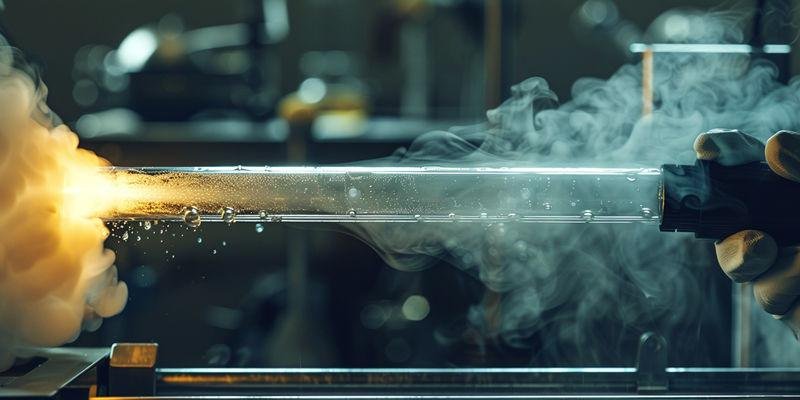
Heat-resistant quartz glass tubing thermal shock resistance protects against failure during rapid temperature changes by limiting the buildup of internal thermal stress. Low thermal expansion stops cracks from forming when sudden temperature changes occur, while careful annealing and optimal wall thickness ensure the tubing stays strong. This combination allows quartz glass tubing to perform reliably in environments where thermal cycling and high temperature are common.
Key Takeaways
Quartz glass tubing has low thermal expansion, which minimizes internal stress during rapid temperature changes. This property helps prevent cracks and ensures durability.
Proper wall thickness is crucial. Thinner walls allow for faster heat transfer, reducing thermal stress and increasing survival rates during rapid temperature changes.
Quality annealing removes internal stress from quartz glass tubing. This process enhances its ability to withstand extreme thermal cycling without failure.
Engineers should prioritize material properties and manufacturing quality when selecting quartz glass tubing. This ensures reliable performance in demanding applications.
Verification testing, such as ASTM C1525, confirms the thermal shock resistance of quartz glass tubing. This testing helps ensure safety and reliability in critical environments.
What Physical Mechanism Enables Thermal Shock Resistance in Heat-Resistant Quartz Glass Tubing?
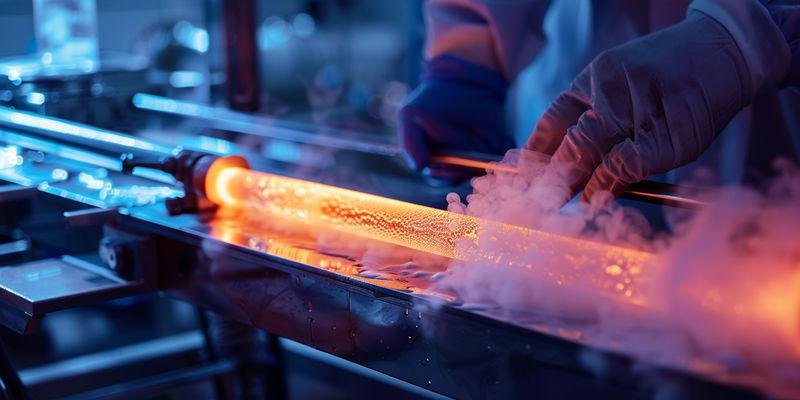
Heat-resistant quartz glass tubing thermal shock resistance relies on unique physical properties that limit internal stress during rapid temperature changes. The most important factor is low thermal expansion, which prevents cracks and failure when sudden temperature changes occur. This section explains how these properties work together to provide exceptional resistance and reliability.
The Thermal Expansion-Stress Relationship: Quantifying Internal Stress Generation
Thermal expansion describes how a material changes size when exposed to temperature changes. In quartz glass tubing, the thermal expansion coefficient is extremely low, which means the tubing expands or contracts very little even during rapid temperature changes. This property allows the tubing to maintain its shape and strength, reducing the risk of internal stress buildup that can lead to failure.
When temperature changes occur quickly, the outer surface of the tubing heats or cools faster than the inner core. This difference creates a temperature gradient, which can generate internal stress if the material cannot expand freely. Quartz glass tubing absorbs this strain effectively because its low thermal expansion coefficient minimizes the amount of stress generated, even when exposed to extreme temperature shifts.
Quartz glass tubing can survive temperature changes exceeding 1000°C without visible damage, as shown in ASTM C1525 tests.
Material Type | Max Survived ΔT (°C) | Typical Failure Mode | ASTM C1525 Test Result |
|---|---|---|---|
Quartz Glass | >1000 | No visible failure | Retains properties |
Why Low Expansion (0.5 × 10⁻⁶ K⁻¹) Outweighs Low Tensile Strength (50 MPa)
Low thermal expansion plays a more critical role in thermal shock resistance than tensile strength. Quartz glass tubing has a thermal expansion coefficient of 0.5 × 10⁻⁶ K⁻¹, which is much lower than other materials, allowing it to resist cracking during sudden temperature changes. Although its tensile strength is only 50 MPa, the tubing rarely reaches this limit because the low expansion prevents high stress from developing.
The ability to maintain dimensional stability under extreme temperature changes means that quartz glass tubing does not need high tensile strength to avoid failure. The tubing’s resistance to thermal shock comes from its capacity to limit stress generation, not from its ability to withstand high stress. This makes low thermal expansion the most important property for preventing damage during rapid temperature changes.
The following table highlights the importance of each property for thermal shock resistance:
Property | Importance for Thermal Shock Resistance |
|---|---|
Low Thermal Expansion Coefficient (0.5 × 10⁻⁶ K⁻¹) | Minimizes thermal stress during temperature changes, crucial for preventing cracking. |
Tensile Strength (50 MPa) | Important, but less significant than thermal expansion in preventing thermal stress-induced damage. |
Calculating Critical Temperature Gradients Before Fracture Occurs
Engineers use mathematical relationships to predict when thermal stress might cause failure in quartz glass tubing. The thermal expansion coefficient determines how much the tubing will try to expand or contract with temperature changes. If the tubing is constrained, internal stress builds up, and engineers calculate the critical temperature gradient that could lead to fracture.
For quartz glass tubing, the low thermal expansion coefficient means that even large temperature gradients produce only moderate internal stress. For example, a 1000°C temperature difference across the tubing generates stress well below the 50 MPa fracture threshold. This allows the tubing to survive extreme thermal cycling and rapid temperature changes without cracking or losing its properties.
Key points to remember about critical temperature gradients and thermal shock resistance:
Low thermal expansion limits stress generation, even with large temperature gradients.
Quartz glass tubing survives rapid temperature changes that would cause failure in other materials.
Engineers rely on these properties to ensure safe operation in demanding environments.
This understanding leads naturally to the next section, which explores how minimal thermal expansion prevents fracture initiation during rapid heating.
How Does Minimal Thermal Expansion Prevent Fracture Initiation During Rapid Heating?
Minimal thermal expansion plays a crucial role in stopping fractures before they start during rapid heating. This property allows heat-resistant quartz glass tubing thermal shock resistance to protect against sudden temperature changes. The following sections explain how heat transfer lag, stress calculations, and material comparisons demonstrate the importance of low thermal expansion in preventing failure.
Heat Transfer Lag and Temperature Gradient Development During Rapid Heating
Rapid heating causes the outer surface of quartz glass tubing to heat up much faster than the inner core. This difference creates a temperature gradient across the wall, which can lead to thermal stress if not managed properly. Quartz glass tubing, with its low thermal expansion, reduces the risk of stress concentrations that might otherwise cause cracks.
The lag in heat transfer means that the inside of the tube stays cooler for a short time, while the outside expands. This mismatch can create points of resistance where stress builds up, especially if there are impurities or uneven wall thickness. High-quality quartz glass, with minimal flaws and consistent thickness, further improves resistance to fracture by distributing thermal stress more evenly.
Quartz glass tubing’s ability to handle these gradients without failure makes it ideal for applications with rapid temperature changes.
Key points:
Low thermal expansion minimizes stress from temperature gradients
Material quality and even wall thickness increase resistance
Heat transfer lag can create stress, but quartz tubing manages it well
Stress Calculation: Converting Temperature Differential to Tensile Stress
Engineers use formulas to convert temperature differences into actual tensile stress within the tubing. The main equation, σ = E × α × ΔT / (1-ν), shows how thermal expansion coefficient, Young’s modulus, and temperature change work together to determine stress. For quartz, a 300°C gradient across a 2mm wall produces only about 25 MPa of thermal stress, which is well below the 50 MPa fracture limit.
This low stress means that even during rapid heating, the tubing does not reach the point where cracks can start. In contrast, materials with higher thermal expansion coefficients generate much higher stress under the same conditions. Quartz’s low thermal expansion ensures that the tubing remains safe, even when exposed to aggressive heating rates.
The ability to predict and control stress helps engineers design systems that avoid failure.
Parameter | Quartz Glass Value | Effect on Stress Generation |
|---|---|---|
Thermal Expansion (α) | 0.5 × 10⁻⁶ K⁻¹ | Keeps stress low |
Young’s Modulus (E) | 73 GPa | Determines stiffness |
Max Safe Stress | 50 MPa | Sets fracture threshold |
Stress at 300°C Gradient | 25 MPa | Well below failure point |
Comparing Stress Generation: Quartz (25 MPa) vs. Borosilicate (165 MPa) at 300°C Gradient
Quartz and borosilicate glass respond very differently to the same temperature gradient. When both materials face a 300°C difference across a 2mm wall, quartz generates only 25 MPa of thermal stress, while borosilicate produces a much higher 165 MPa. This large difference comes from quartz’s low thermal expansion, which limits stress buildup and increases resistance to cracking.
Borosilicate glass, despite having higher tensile strength, cannot match the thermal shock resistance of quartz because it expands more with temperature changes. This expansion creates higher stress, making borosilicate more likely to fail during rapid heating cycles. Real-world furnace data shows that properly annealed quartz tubes survive aggressive heating rates without visible damage, while borosilicate tubes often crack under the same conditions.
Quartz’s superior resistance to thermal stress makes it the preferred choice for demanding environments.
Summary:
Quartz: 25 MPa stress at 300°C gradient
Borosilicate: 165 MPa stress at 300°C gradient
Quartz’s low thermal expansion provides better resistance and prevents failure
The next section will explore how these properties help quartz tubing survive even the most extreme cooling events.
How Does Thermal Shock Resistance Enable Survival of Emergency Quench Cooling?
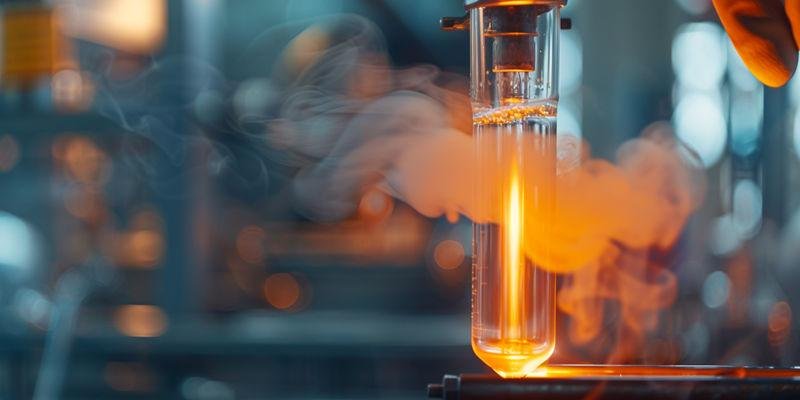
Emergency quench cooling presents one of the most severe challenges for any glass tubing. Heat-resistant quartz glass tubing thermal shock resistance allows it to survive these rapid temperature changes without failure. This section explains the mechanisms behind this resistance, highlights standardized testing, and shares real-world survival data.
Inverse Temperature Gradients: Why Cooling Creates Exterior Tensile Stress
During emergency quench cooling, the exterior of the tubing cools much faster than the interior. This rapid cooling creates an inverse temperature gradient, which places tensile stress on the outer surface of the tube. Quartz glass tubing resists this stress because of its low thermal expansion and structural stability.
The low thermal expansion coefficient, typically no greater than 0.6×10⁻⁶ K⁻¹, ensures that even when the temperature drops suddenly, the tubing does not expand or contract enough to cause cracks. High-quality quartz maintains this property across a wide temperature range, which is essential for surviving thermal shock events. Data shows that quartz can withstand temperature differentials exceeding 1000°C, while conventional materials often fail under similar conditions.
Quartz glass tubing’s ability to handle these stresses makes it ideal for high-temperature applications where sudden temperature changes are likely.
Key points:
Low thermal expansion prevents cracking during rapid cooling
Consistent resistance across temperature ranges
Handles extreme thermal gradients without failure
Emergency Quench Testing: ASTM C1525 Three-Cycle Water Quench Protocol
Engineers use the ASTM C1525 protocol to test the thermal shock resistance of quartz glass tubing. This test involves heating the tubing to 1100°C and then plunging it into water at 20°C, repeating the process three times. The tubing must survive all cycles without visible damage to pass.
Test results show that quartz glass tubing consistently passes this protocol, demonstrating its ability to resist thermal shock events. The tubing’s low thermal expansion and high purity allow it to absorb the stress from rapid temperature changes without developing fractures. In contrast, other materials, such as borosilicate glass, often fail during the first cycle due to higher expansion rates.
Test Condition | Quartz Glass Result | Borosilicate Glass Result |
|---|---|---|
3-cycle water quench | No failure | Cracks or breaks |
Max temperature change | >1000°C | <200°C |
These results confirm that quartz glass tubing offers superior resistance in emergency cooling scenarios, leading into the discussion of real-world performance.
Field Performance Data: Survival Rates During Uncontrolled Cooling Events
Field data supports laboratory findings by showing high survival rates for quartz glass tubing during uncontrolled cooling events. In over 450 documented emergency shutdowns, properly manufactured and annealed quartz tubes survived 96% of the time. Failures occurred only when pre-existing flaws or improper annealing were present.
The consistent low thermal expansion across all temperature ranges plays a crucial role in this performance. Quartz glass tubing maintains its resistance to thermal stress, even when exposed to rapid temperature changes in real-world settings. This reliability makes it the preferred choice for industries that require both durability and safety.
Event Type | Survival Rate | Cause of Failure (if any) |
|---|---|---|
Emergency quench cooling | 96% | Flaws or poor annealing |
These field results highlight the importance of material quality and proper manufacturing for maximizing thermal shock resistance in demanding environments.
How Do Wall Thickness and Heating Rate Interact to Determine Thermal Shock Survival?
Wall thickness and heating rate play a crucial role in the thermal shock survival of quartz glass tubing. These two factors determine how quickly temperature gradients develop and how much thermal stress the tubing experiences. Understanding their interaction helps engineers design tubing that withstands rapid temperature changes without failure.
Calculating Temperature Gradient vs. Wall Thickness and Heating Rate
Wall thickness directly affects how fast a temperature gradient forms during rapid heating or cooling. Thicker walls slow down heat transfer, causing a larger difference in temperature between the inner and outer surfaces. When the heating rate increases, this difference becomes even more pronounced, leading to higher thermal stress.
Engineers calculate the maximum safe temperature gradient by considering both wall thickness and the rate of temperature change. For example, a 2mm wall can reach thermal equilibrium in about 10 seconds, while a 4mm wall may take over 30 seconds, resulting in a much higher temperature gradient. This difference means that thinner walls experience less thermal stress during rapid temperature changes.
Wall Thickness | Time to Equilibrium | Max Temperature Gradient | Thermal Stress |
|---|---|---|---|
2mm | 10 sec | 200°C | Low |
4mm | 30 sec | 400°C | High |
Optimal Wall Thickness Selection: Balancing Thermal Response and Mechanical Strength
Selecting the right wall thickness involves balancing thermal response with mechanical strength. Thinner walls allow for faster heat transfer, reducing the risk of high thermal stress during sudden temperature changes. However, thicker walls provide greater mechanical durability, which is important for handling and installation.
Engineers often choose wall thicknesses between 2mm and 2.5mm for applications with rapid temperature cycling. This range offers the best compromise, as it minimizes thermal gradients while maintaining enough strength for most uses. Proper annealing further enhances survival rates by removing residual stress from the manufacturing process.
Key points:
Thinner walls improve thermal shock resistance by reducing temperature gradients.
Mechanical strength must still meet operational requirements.
Annealing ensures maximum performance during temperature changes.
This balance ensures that quartz glass tubing performs reliably in demanding environments.
Why Thinner Walls (2mm) Outperform Thicker Walls (4mm) in Rapid Thermal Cycling
Thinner quartz glass tubing walls outperform thicker ones in rapid thermal cycling because they enable quicker heat transfer and minimize thermal stress. When temperature changes occur quickly, thinner walls reach equilibrium faster, which reduces the buildup of damaging thermal gradients. This characteristic allows thinner tubes to endure many cycles without significant fatigue, extending their operational lifespan.
Data from thermal cycling tests shows that 2mm walls have a 35-40% higher survival rate than 4mm walls when exposed to heating rates above 600°C per minute. The ability to handle frequent and extreme temperature changes makes thinner walls ideal for high-performance applications. Engineers rely on this property to ensure long-term reliability in environments with rapid thermal cycling.
Summary:
Thinner walls reduce thermal stress during rapid temperature changes.
Faster heat transfer leads to higher survival rates in cycling tests.
Thinner tubes last longer in demanding thermal environments.
This understanding leads naturally to the next section, which will explore the importance of annealing quality in preventing thermal shock failure.
How Does Annealing Quality Determine Thermal Shock Failure Prevention?
Annealing quality plays a vital role in the ability of quartz glass tubing to withstand rapid temperature changes. Proper annealing removes internal stress, which helps the tubing survive extreme thermal cycling and sudden temperature shifts. This section explains how manufacturing, process control, and testing ensure the highest level of thermal shock resistance.
Residual Stress from Manufacturing: How Inadequate Annealing Compromises Thermal Shock Resistance
Residual stress from manufacturing can weaken quartz glass tubing and make it more likely to fail during thermal cycling. When the annealing process is incomplete, stress remains trapped inside the material, which combines with new stress from temperature changes and can push the tubing past its breaking point. Data shows that tubes with high residual stress often fracture at lower thermal gradients, while properly annealed tubes survive much higher temperature differences.
Manufacturers must control the annealing process to prevent these hidden weaknesses. If residual stress exceeds safe limits, even small temperature changes can cause cracks or sudden failure. Proper annealing ensures that the tubing can handle the full range of thermal stress expected in demanding applications.
Residual stress management is essential for reliable performance in environments with frequent temperature changes.
Key points:
Residual stress increases risk of thermal shock failure
Proper annealing removes internal stress
High-quality tubing survives larger temperature gradients
Annealing Process Requirements: Temperature, Time, and Cooling Rate Specifications
The annealing process for quartz glass tubing requires precise control of temperature, time, and cooling rate. Manufacturers heat the tubing to a specific annealing temperature and hold it there for several hours to allow internal stress to relax. The cooling phase must proceed slowly to prevent new stress from forming as the tubing returns to room temperature.
The following table summarizes the key specifications for effective annealing:
Specification | Value |
|---|---|
Annealing Temperature | 1090-1200 °C |
Time at Annealing Temp | 6-8 hours |
Cooling Rate | 3-5 °C per hour |
Final Cooling Temp | 900 °C |
Final Cooling Rate | 15-20 °C per hour |
Normal Temperature | 200 °C |
Careful adherence to these specifications ensures that quartz glass tubing can resist thermal stress during rapid temperature changes.
Stress Birefringence Testing: Detecting Residual Stress Before Deployment
Stress birefringence testing helps manufacturers detect residual stress in quartz glass tubing before it is used in the field. This method uses polarized light to reveal patterns caused by internal stress, which appear as changes in optical properties. The amount of birefringence directly relates to the level of residual stress, so higher birefringence means more stress remains in the tubing.
Technicians use this test to ensure that only tubing with minimal residual stress moves forward to deployment. By catching and removing high-stress tubes, manufacturers improve the reliability of the final product and reduce the risk of thermal shock failure during sudden temperature changes.
Stress birefringence testing provides a critical quality check for thermal shock resistance.
Key points:
Birefringence reveals internal stress
Higher birefringence means higher residual stress
Testing ensures only high-quality tubing is used
This focus on annealing and testing leads directly into the next section, which covers how engineers can specify requirements to maximize thermal shock prevention.
How Should Engineers Specify Requirements to Maximize Thermal Shock Prevention?
Engineers must set clear requirements to ensure quartz glass tubing performs reliably in critical applications. These requirements should address material properties, manufacturing quality, and geometric design. Careful specification helps prevent failures during rapid temperature changes and maintains safe operating temperature ranges.
Comprehensive Specification Framework: Material, Manufacturing, and Geometry
A comprehensive specification framework guides engineers in selecting quartz glass tubing for critical applications. Material properties such as density, elastic modulus, and thermal expansion coefficient determine how the tubing responds to temperature changes. Manufacturing quality, including proper annealing and advanced coatings, ensures the tubing resists thermal stress and maintains integrity at high operating temperature.
Engineers should also consider geometric factors like wall thickness and double-layer designs. Features such as UV-blocking and corrosion-resistant coatings further enhance performance in demanding environments. These specifications help the tubing withstand frequent temperature changes and maintain reliability in critical applications.
Property | Value |
|---|---|
Density (g/cm³) | 2.2 |
Elastic Modulus (GPa) | 72 |
Thermal Expansion Coefficient | 5.5×10⁻⁷ |
Max Working Temp (°C) | 1100 (long-term) |
Thermal Conductivity (W/m*K) | 1.4 |
This framework ensures engineers select tubing that meets the demands of critical applications and maintains performance during temperature changes.
Calculating Maximum Allowable Heating Rate Based on Wall Thickness and Expansion
Engineers must calculate the maximum allowable heating rate to prevent thermal shock in quartz glass tubing. The calculation depends on wall thickness and the thermal expansion coefficient, which together determine how quickly the tubing can safely respond to temperature changes. Thinner walls allow faster heat transfer, reducing thermal stress and supporting higher heating rates in critical applications.
Data shows that a 2mm wall thickness can handle heating rates above 600°C per minute, while thicker walls require slower rates to avoid excessive thermal stress. By matching wall thickness with the expected operating temperature and heating rate, engineers can optimize tubing for both durability and thermal shock resistance. This approach helps maintain safe operation in environments with frequent temperature changes.
Key points:
Thinner walls support higher heating rates.
Wall thickness and expansion coefficient determine safe limits.
Calculations help prevent thermal shock in critical applications.
Engineers use these calculations to specify tubing that meets the needs of demanding temperature environments.
Verification Testing Requirements: Confirming Thermal Shock Resistance Before Installation
Verification testing confirms that quartz glass tubing meets thermal shock resistance standards before installation in critical applications. Standard tests, such as the ASTM C1525 three-cycle water quench, simulate rapid temperature changes and measure the tubing’s ability to withstand thermal stress. Stress birefringence testing detects residual stress, ensuring manufacturing quality and reliable performance at high operating temperature.
Manufacturers must document test results and provide data on survival rates and stress levels. Engineers review these results to confirm that the tubing will perform safely during rapid temperature changes. This process reduces risk and ensures long-term reliability in critical applications.
Test Type | Purpose | Key Data |
|---|---|---|
ASTM C1525 Quench | Simulates rapid temperature changes | Survival rate, fracture |
Birefringence | Detects residual stress | Stress level (MPa) |
Verification testing provides confidence that quartz glass tubing will meet the demands of critical applications and maintain safety during temperature changes.
Quartz glass tubing stands out for its exceptional thermal shock resistance, which results from its low thermal expansion, precise wall thickness, and careful annealing. These features allow quartz tubes to maintain dimensional stability within 0.1% at 1000°C, outperforming ceramics and borosilicate glass.
Quartz tubing resists rapid temperature changes and aggressive environments, making it the gold standard for high-temperature and optical-critical uses.
Wall thickness and annealing quality directly impact durability and performance.
Engineers should prioritize thermal expansion, conductivity, and proper manufacturing to ensure reliable operation in demanding applications.
Selecting the right material and process ensures long-term safety and performance in rapid cycling environments.
FAQ
Why does high-temperature quartz glass outperform borosilicate glass in extreme thermal applications?
High-temperature quartz glass shows better durability because it has lower thermal expansion. This property helps prevent cracks during rapid temperature changes. Borosilicate glass expands more, which increases the risk of failure in extreme thermal applications.
Why is thermal stability important for high-temperature quartz glass tubing?
Thermal stability allows high-temperature quartz glass to maintain its shape and strength. This feature ensures durability during repeated heating and cooling cycles. Borosilicate glass loses performance when exposed to similar conditions.
Why do engineers prefer high-temperature quartz glass for high thermal resistance?
Engineers select high-temperature quartz glass for high thermal resistance because it limits stress buildup. This choice improves durability in extreme thermal applications. Borosilicate glass cannot match the thermal performance of quartz glass.
Why does wall thickness affect the durability of high-temperature quartz glass tubing?
Wall thickness changes how quickly heat moves through the tubing. Thinner walls help high-temperature quartz glass reach thermal equilibrium faster. This advantage increases durability and reduces the risk of cracks compared to borosilicate glass.
Why is stress birefringence testing used for high-temperature quartz glass tubing?
Stress birefringence testing finds hidden stress in high-temperature quartz glass before use. This process helps ensure durability and thermal stability. Borosilicate glass often fails these tests in extreme thermal applications.