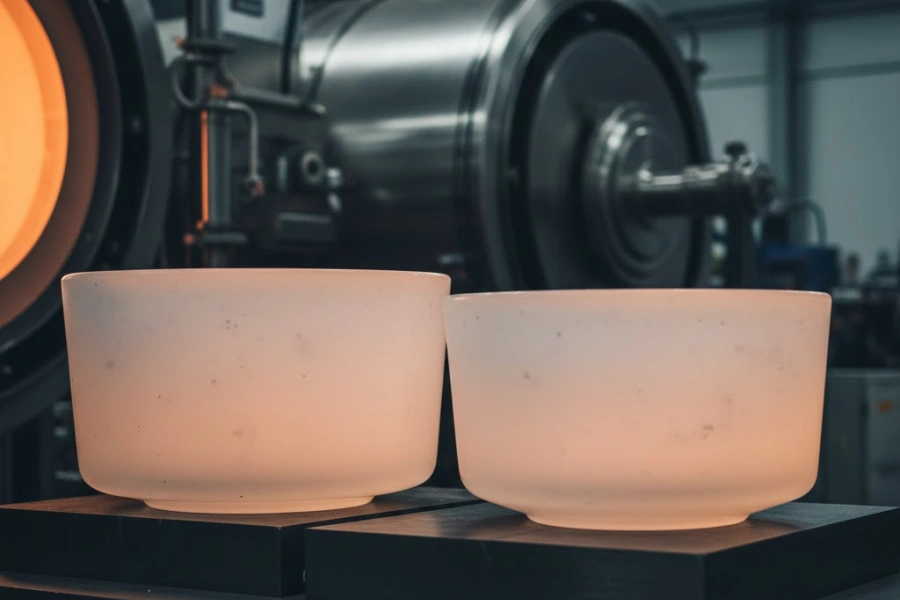
Semiconductor fabs replace crucibles after every single pull. If your procurement cycle cannot keep pace with that demand, production stops.
Quartz glass crucibles are the most consumed structural component in Czochralski silicon production. This article covers degradation mechanisms, purity thresholds, dimensional standards, batch consistency requirements, and supply lead times — everything a semiconductor procurement team needs to specify, source, and reorder with confidence.
Across the CZ pulling process, no single consumable carries more technical consequence than the crucible holding the silicon melt. Understanding why these components fail, what specifications govern their performance, and where procurement friction originates is essential before any purchase order is placed.
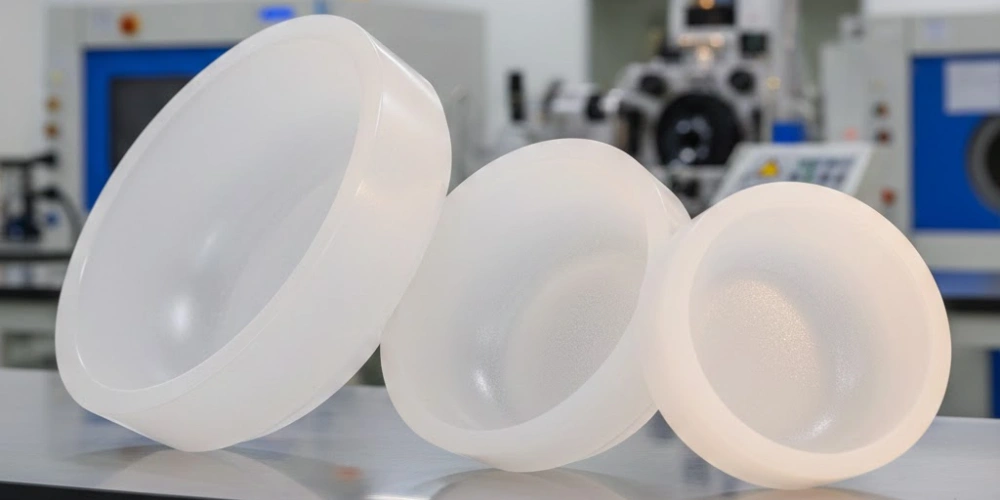
Quartz Glass Crucibles Fail Structurally After Every CZ Pull
Every CZ crystal growth cycle consumes one crucible entirely, making replacement frequency a direct function of production volume rather than component wear.
The replacement rate of quartz glass crucibles in semiconductor manufacturing is not driven by incidental damage or handling error. It is an intrinsic consequence of the physicochemical conditions inside a CZ furnace — conditions that no silica material, regardless of grade, can indefinitely withstand. Procurement teams that understand the underlying degradation pathways are better positioned to plan inventory cycles, anticipate quality deviations, and justify specification requirements to suppliers.
The Thermal Stress Mechanism Behind Crucible Degradation
Fused silica begins as an amorphous solid, and that amorphous structure is precisely what gives it superior thermal properties compared to crystalline quartz. At temperatures above approximately 1,050°C, however, prolonged exposure initiates devitrification — the partial recrystallization of the amorphous SiO₂ matrix into cristobalite1. This phase transformation is irreversible and progressive.
Cristobalite is mechanically problematic because it undergoes a sharp displacive phase transition at around 200–270°C during cooling, contracting by roughly 2.8% in volume. When this contraction occurs within a partially devitrified crucible wall, differential stress between the crystallized surface layer and the still-amorphous interior generates microcracks. These cracks propagate inward with each thermal cycle, progressively reducing wall integrity until the crucible can no longer maintain structural coherence under the hydrostatic pressure of the silicon melt.
In high-volume fabs where furnaces run continuous multi-day pulls, devitrification accelerates because the crucible never fully cools between cycles. Field observations from process engineers indicate that the devitrified layer on the inner wall can reach depths of 0.8 to 2.5 mm within a single 60-hour pull, depending on melt temperature uniformity and crucible grade.
Silica Dissolution into the Silicon Melt and Its Process Consequences
The contact surface between molten silicon and the crucible inner wall is not chemically inert. SiO₂ dissolves continuously into the silicon melt, with the dissolution rate governed by melt temperature, convective flow patterns, and the surface condition of the crucible wall. This process introduces oxygen into the growing crystal at concentrations that are directly traceable to crucible quality.
Oxygen incorporated into CZ silicon occupies interstitial lattice sites and forms thermal donors — electrically active defects that alter resistivity in ways that are difficult to compensate. For device-grade wafers, interstitial oxygen concentration must be controlled within a window of approximately 10 to 18 ppma (ASTM F121 standard). Crucibles with excessive SiO₂ dissolution rates push oxygen levels beyond this window, causing wafer lots to fail electrical specifications at downstream testing. The consequence is not merely yield loss on individual wafers but the rejection of entire crystal ingots representing 40 to 120 hours of furnace time.
Beyond oxygen, dissolution of a contaminated or low-purity crucible wall introduces metallic impurities directly into the melt. Even trace levels of iron at 0.1 ppba in the silicon crystal can generate deep-level traps that reduce minority carrier lifetime — a critical parameter for solar cell efficiency and DRAM refresh performance.
How Pull Duration and Crystal Diameter Affect Replacement Frequency
Crucible size scales with crystal diameter, and both scale with pull duration. A 14-inch crucible used for 150 mm silicon growth typically supports a single pull of 20 to 35 hours under standard conditions. A 24-inch crucible used for 300 mm wafer production may support a pull lasting 60 to 100 hours, but the crucible is still discarded after that single use because the structural degradation from devitrification and wall thinning makes reuse impossible.
The relationship between crystal diameter and crucible consumption is approximately linear on a per-kilogram-of-silicon basis, but the cost consequences are nonlinear. Larger diameter crucibles carry higher per-unit costs, and the yield impact of a crucible failure mid-pull — resulting in contamination or loss of the entire ingot — escalates sharply with crystal size. For 300 mm production, a single failed pull due to crucible failure can represent a material loss exceeding 80 kg of prime-grade silicon polysilicon, in addition to furnace downtime.
Procurement planning therefore requires visibility into both pull schedule frequency and crystal diameter distribution across active furnaces. Facilities running 24/7 with multiple CZ pullers may consume 50 to 200 crucibles per month, depending on ingot length targets and the proportion of large-diameter production.
Crucible Replacement Frequency Reference by Crystal Diameter
| Crystal Diameter (mm) | Typical Crucible Size (inch) | Approximate Pull Duration (hours) | Crucibles per Furnace per Month |
|---|---|---|---|
| 150 | 14 | 20–35 | 20–40 |
| 200 | 18–20 | 35–60 | 12–25 |
| 300 | 24–28 | 60–100 | 8–18 |
| 450 (development) | 32 | 90–140 | 4–10 |
Purity Thresholds in Quartz Glass Crucibles Set the Chemical Ceiling of CZ Silicon
Specifying purity without understanding what each threshold protects against leads to either unnecessary cost or unacceptable yield risk.
No procurement decision in the CZ crucible supply chain carries more downstream consequence than the purity grade selected. The purity of a quartz glass crucible defines the chemical ceiling of the silicon crystal it produces — contaminants present in the silica will, to varying degrees, transfer into the melt and ultimately into the wafer. Yet purity specifications are often presented by suppliers as single-number SiO₂ percentages that obscure the more granular — and more operationally significant — breakdown of specific impurity elements. A thorough understanding of what each purity parameter controls is the foundation of any defensible procurement specification.
SiO₂ Content Thresholds and What Each Grade Implies for Crystal Quality
The SiO₂ content of a crucible is the first and most commonly cited purity metric, but its utility lies entirely in what the remaining fraction consists of. A crucible rated at 99.99% SiO₂ contains up to 100 ppm of non-silica material — a quantity that, if concentrated in metallic impurities, is wholly incompatible with semiconductor-grade crystal growth. The figure becomes meaningful only when paired with a full elemental analysis of the impurity profile.
In practice, three SiO₂ purity tiers are commercially relevant to CZ semiconductor production. Standard semiconductor grade at 99.99% SiO₂ is suitable for non-critical applications and pilot-scale work where oxygen concentration control is secondary. High-purity grade at 99.995% SiO₂ represents the baseline for volume production of 200 mm wafers and is widely used in logic and memory device manufacturing. Ultra-high-purity grade above 99.999% SiO₂, often described as "5N" or "6N" silica, is specified for advanced node production where sub-10 ppba total metallic contamination is required across the full ingot length.
The transition from 99.99% to 99.999% does not represent a linear improvement in crystal quality. The relationship is exponential at the device level because minority carrier lifetime — a key electrical parameter — degrades logarithmically with metallic contamination concentration. Procurement teams selecting between grades should request wafer-level oxygen uniformity data from the supplier, not merely the crucible SiO₂ percentage, to make a defensible comparison.
SiO₂ Purity Grades and Semiconductor Application Suitability
| Purity Grade | SiO₂ Content | Total Metallic Impurities (max) | Typical Application |
|---|---|---|---|
| Standard | 99.99% | ≤ 50 ppm | R&D, non-critical CZ pulls |
| High-Purity | 99.995% | ≤ 10 ppm | 200 mm volume production |
| Ultra-High-Purity | 99.999% | ≤ 1 ppm | 300 mm advanced node |
| Electronic Grade | > 99.9995% | < 0.1 ppm | EUV-era logic, leading edge |
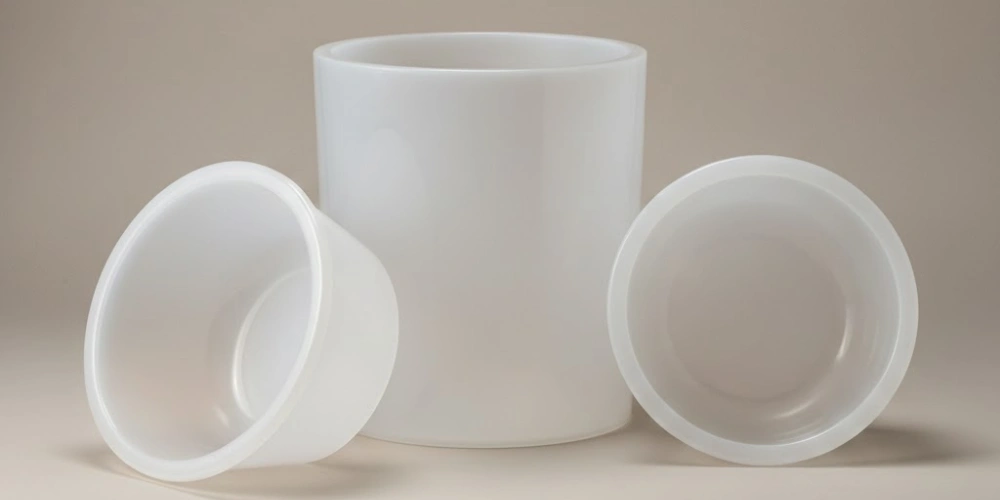
Metallic Contaminant Limits That Semiconductor Processes Cannot Compromise
Metallic impurities in fused silica crucibles fall into two categories based on their semiconductor impact pathway: fast diffusers that penetrate the silicon lattice rapidly at melt temperatures, and slow diffusers that concentrate at the solid-liquid interface near the crystal tail. Both categories are damaging, but through different mechanisms and at different crystal positions.
Iron (Fe), copper (Cu), and nickel (Ni) are the most electrically active fast diffusers. Iron at concentrations above 0.01 ppba in the silicon crystal generates FeB pairs in boron-doped p-type material, reducing minority carrier lifetime by orders of magnitude. Procurement specifications for high-purity crucibles should require Fe content below 20 ppb by weight in the silica raw material, which corresponds to approximately 2 ppba in the resulting crystal under standard CZ segregation conditions. Sodium (Na) and potassium (K), while less electrically active in silicon, attack the SiO₂ network structure at high temperatures, accelerating devitrification and increasing dissolution rate — making their control important for both purity and structural reasons.
Calcium (Ca) and aluminum (Al) are the most difficult impurities to suppress in natural quartz-based crucibles because both are present as structural substitutions in the quartz crystal lattice, not merely as surface contaminants. Natural quartz sources with Al content below 2 ppm are considered high-quality feedstock, but batch-to-batch consistency in natural material is inherently limited by geological variability. Synthetic fused silica offers significantly lower and more consistent Al and Ca levels, typically below 0.1 ppm total, making it the preferred feedstock for ultra-high-purity crucible production.
Metallic Impurity Limits in Semiconductor-Grade Fused Silica Crucibles
| Element | Maximum Concentration (ppb wt) | Primary Impact on Silicon Crystal |
|---|---|---|
| Iron (Fe) | ≤ 20 | Minority carrier lifetime reduction |
| Copper (Cu) | ≤ 5 | Deep-level traps, leakage current |
| Nickel (Ni) | ≤ 5 | Recombination centers in depletion region |
| Sodium (Na) | ≤ 30 | Devitrification acceleration, oxide reliability |
| Potassium (K) | ≤ 20 | SiO₂ network degradation |
| Aluminum (Al) | ≤ 100 | Carrier compensation in n-type silicon |
| Calcium (Ca) | ≤ 50 | Secondary structural effect |
Hydroxyl Group Content and Its Influence on High-Temperature Structural Integrity
The hydroxyl (OH) group content of fused silica is among the least understood purity parameters in crucible procurement, yet it has direct consequences for structural performance at CZ operating temperatures. OH groups weaken the Si–O–Si network by interrupting its tetrahedral continuity, lowering the effective viscosity of the glass at elevated temperatures. A crucible with high OH content softens at a lower temperature than one with low OH content, which directly affects wall deformation behavior under the mechanical load of a full silicon melt charge.
Natural fused silica produced by flame fusion typically contains 150 to 400 ppm OH as a result of the hydrogen-rich flame environment used in manufacturing. Synthetic fused silica produced by chemical vapor deposition (CVD) or sol-gel routes can be engineered across a wide OH range — from below 1 ppm (Type 2 synthetic, vacuum fusion) to above 1,000 ppm (Type 3 synthetic, flame hydrolysis). For CZ semiconductor crucibles, the preferred OH range is below 30 ppm, achieved through either high-purity natural quartz processed in an electric arc furnace (Type 1) or Type 2 synthetic material.
The practical consequence of exceeding this threshold becomes apparent during long pulls. At OH concentrations above 100 ppm, the crucible wall begins to exhibit measurable viscous creep at 1,500°C — the typical silicon melt temperature — leading to gradual deformation of the crucible geometry. This deformation alters the thermal symmetry of the melt, disrupting convection patterns and introducing radial oxygen non-uniformity in the growing crystal. Radial oxygen non-uniformity is one of the most difficult CZ process defects to diagnose from wafer-level data alone, and its root cause is frequently traced back to crucible geometry deviation during the pull.
OH Content Ranges by Fused Silica Type and CZ Suitability
| Fused Silica Type | OH Content (ppm) | Manufacturing Route | CZ Semiconductor Suitability |
|---|---|---|---|
| Type 1 (Natural) | 150–400 | Electric arc fusion, natural quartz | Limited — only for non-critical use |
| Type 2 (Synthetic) | < 5 | Vacuum/inert atmosphere CVD | Preferred for advanced node |
| Type 3 (Synthetic) | 800–1,200 | Flame hydrolysis | Not suitable for semiconductor CZ |
| Type 4 (Synthetic) | 0.1–30 | Plasma fusion, purified natural | Acceptable for standard 200 mm |
Crucible Geometry and Surface Condition Feed Directly into Melt Uniformity
Dimensional non-conformance in a crucible is not detected at goods receipt — it is detected mid-pull, when correction is no longer possible.
The geometry of a quartz glass crucible is not merely a packaging parameter; it is a process variable. Wall thickness uniformity, diameter tolerance, and inner surface condition each contribute measurably to melt flow symmetry, thermal gradient distribution, and the nucleation2 behavior of the growing crystal. Procurement specifications that treat dimensional parameters as secondary to chemistry are systematically underestimating a significant source of process variability.
SEMI M1 Crucible Size Designations from 14-Inch to 32-Inch
The SEMI M1 standard provides the primary dimensional reference framework for CZ crucibles used in silicon production. Crucible sizes are designated by outer diameter in inches at the rim, with corresponding specifications for body height, wall thickness, and base radius. These designations do not describe a single set of exact values but define tolerance bands within which a conforming crucible must fall — and the width of those bands has significant implications for process consistency.
For 300 mm silicon production, the dominant crucible size is 24 inches (610 mm outer diameter), with a body height of approximately 430–450 mm and a nominal wall thickness of 10–14 mm at mid-body. Wall thickness tolerance under SEMI M1 for this size class is typically ±1.0 mm, but leading semiconductor fabs often impose tighter internal specifications of ±0.5 mm to achieve the thermal symmetry required for low-defect crystal growth. The base radius is a geometrically critical dimension because it governs the melt flow recirculation pattern near the base — a region associated with the formation of large grown-in voids (D-defects) in the crystal tail.
Crucibles for 450 mm silicon development (32-inch designation) are not yet covered under a fully harmonized SEMI M1 revision and remain subject to bilateral specifications between equipment manufacturers and crucible suppliers. This makes procurement of 450 mm crucibles entirely dependent on direct technical dialogue with the supplier — a requirement that should be factored into lead time planning.
SEMI M1 Crucible Dimensional Reference
| Crucible Designation (inch) | Outer Diameter (mm) | Body Height (mm) | Nominal Wall Thickness (mm) | Standard Diameter Tolerance (mm) |
|---|---|---|---|---|
| 14 | 356 | 250–280 | 7–9 | ±0.8 |
| 18 | 457 | 320–350 | 8–11 | ±0.8 |
| 20 | 508 | 360–390 | 9–12 | ±1.0 |
| 24 | 610 | 430–450 | 10–14 | ±1.0 |
| 28 | 711 | 500–530 | 12–16 | ±1.2 |
| 32 | 813 | 560–600 | 14–18 | Bilateral spec |
Inner Surface Texture Requirements Across Different CZ Applications
The inner surface condition of a quartz glass crucible directly influences the nucleation and dissolution behavior at the melt-wall interface. A smooth, polished inner surface — characterized by a surface roughness Ra below 0.4 μm — minimizes preferential dissolution sites and produces a more chemically uniform melt contact zone. This is the standard specification for advanced node semiconductor crucibles where oxygen uniformity is critical.
A roughened or lightly etched inner surface, with Ra in the range of 1.5 to 4.0 μm, is sometimes specified for applications where controlled oxygen release is desired, such as in certain DRAM process flows where a minimum oxygen concentration is required for oxide precipitation control during device processing. The increased surface area of a textured inner wall accelerates early-stage SiO₂ dissolution, effectively pre-loading the melt with oxygen during the initial heating phase and compressing the oxygen transient that typically occurs at pull initiation. This surface engineering approach requires precise specification of both Ra value and the spatial uniformity of the texture, parameters that are rarely detailed in standard catalog listings and typically require direct technical negotiation with the supplier.
Barium-doped or boron-nitride-coated inner surfaces represent a third category, used in specialized applications where standard silica dissolution rates produce unacceptably high oxygen in large-diameter pulls. BN-coated crucibles can reduce effective oxygen transfer by 15 to 40% compared to uncoated equivalents, but they carry significant additional cost and require compatibility verification with the specific furnace atmosphere and pull protocol in use.
Inner Surface Condition Options and CZ Application Matching
| Surface Condition | Ra Range (μm) | Oxygen Transfer Rate | Typical Application |
|---|---|---|---|
| Polished (standard) | < 0.4 | Moderate, uniform | 300 mm logic, memory |
| Lightly etched | 1.5–2.5 | Elevated, controlled | DRAM oxygen pre-loading |
| Heavily textured | 3.0–4.0 | High, early-stage peak | Specialty CZ, test wafers |
| BN-coated | N/A (coated) | Reduced by 15–40% | Low-oxygen 300 mm pulls |
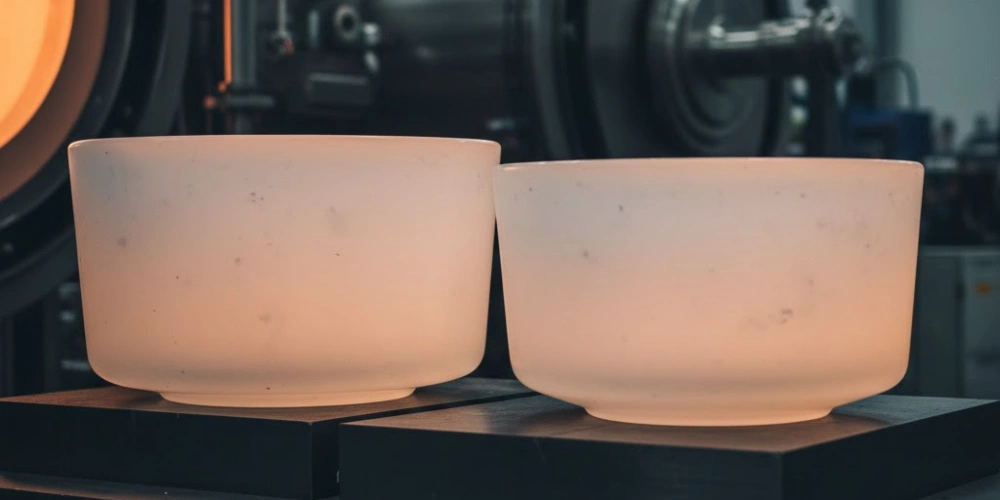
Raw Material Origin Separates Acceptable Crucibles from Production-Critical Ones
The choice between synthetic and natural fused silica affects not only purity but also the geological consistency risk embedded in every procurement cycle.
Natural quartz-based fused silica, sourced primarily from high-purity deposits in Brazil, Madagascar, and the United States, has been the dominant raw material for CZ crucible production for decades. Its cost advantage over synthetic routes is substantial, and for 14-inch and 18-inch crucibles used in 150 mm and 200 mm production, the purity achievable from premium natural quartz is sufficient for most device applications. However, natural quartz carries an inherent geological variability risk: trace element concentrations — particularly Al, Ti, and Li — fluctuate between mining batches, and these fluctuations can translate into detectable shifts in crucible performance that are difficult to predict from certificate of analysis data alone.
-
Synthetic fused silica is produced by the thermal decomposition or oxidation of high-purity silicon precursors such as SiCl₄ or TEOS, yielding a starting material with total metallic impurity levels typically below 0.1 ppm. This level of purity is not achievable through any purification of natural quartz. For 300 mm and advanced node applications, synthetic material has become the de facto standard, particularly in the outer wall and base regions of the crucible that experience the longest melt contact time. Consequently, the price premium of synthetic-based crucibles over natural-based equivalents for 24-inch sizes is substantial and should be factored into multi-year procurement budgeting.
-
Hybrid construction crucibles, combining a synthetic inner layer with a natural quartz outer layer, represent the most common commercial solution for balancing purity requirements against cost. The inner layer — typically 2 to 5 mm thick — is the chemically active zone in contact with the silicon melt and is fabricated from synthetic silica. The outer structural layer, which provides mechanical support and thermal mass, uses processed natural quartz. This construction achieves the impurity control of a fully synthetic crucible at a significantly reduced material cost, and it is the configuration used in the majority of crucibles for mainstream 300 mm CZ production.
-
Procurement specification implication: When requesting quotations, the distinction between all-natural, hybrid, and all-synthetic construction must be explicitly stated in the RFQ. Suppliers may default to their most cost-competitive configuration without disclosing the material layering, making it essential to request a cross-section material declaration as part of the standard documentation package. This single clarification point eliminates one of the most common sources of specification ambiguity in crucible procurement.
Batch Variation in Quartz Glass Crucibles Shifts the CZ Process Window Without Warning
A crucible that passes individual inspection but deviates from the previous batch in OH content or wall thickness will shift the process window without triggering any incoming quality alarm.
Batch-to-batch consistency is the most underspecified dimension of quartz glass crucible procurement in semiconductor manufacturing. Individual crucibles that fully conform to dimensional and purity specifications on a standalone basis may still generate yield-impacting variability when the statistical distribution of those parameters shifts between orders. The sensitivity of CZ oxygen control to crucible-to-crucible variability means that even sub-specification shifts in wall thickness or dissolution rate can move wafer oxygen targets by 1 to 3 ppma — a delta that, in tight process windows, can push a wafer lot from specification to rejection without any single crucible failing its acceptance test.
What a Certificate of Analysis Should Cover for Semiconductor Crucibles
A Certificate of Analysis (COA) is the primary documentation tool for verifying that a received crucible lot meets the agreed specification, and its comprehensiveness determines whether incoming inspection is a genuine quality gate or a formality. A minimally adequate COA for semiconductor-grade crucibles should include elemental purity data, dimensional measurements, and optical quality classification — all three categories must be present for the document to support a credible incoming inspection decision.
On the purity side, the COA should report individual concentrations — not summed totals — for at least Fe, Cu, Ni, Na, K, Al, Ca, and Ti, expressed in ppb by weight with the analytical method specified (typically ICP-MS for metals below 10 ppb). Reporting SiO₂ content as a single percentage without element-level breakdown is insufficient for semiconductor procurement and should prompt a request for supplementary data before lot acceptance.
On the dimensional side, the COA should include mean and standard deviation values for outer diameter, body height, and wall thickness measured across a statistically representative sample from the lot — not merely the values from a single specimen. For orders exceeding 50 crucibles, a sampling plan of at least 10% with full measurement reporting is standard practice in leading fab supply chains.
Minimum COA Parameters for Semiconductor-Grade Quartz Crucible Procurement
| COA Category | Required Parameters | Minimum Reporting Format |
|---|---|---|
| Chemical Purity | Fe, Cu, Ni, Na, K, Al, Ca, Ti (individual) | ppb wt, ICP-MS method noted |
| SiO₂ Content | Total SiO₂ percentage | % with ≥ 4 decimal places |
| OH Content | Hydroxyl group concentration | ppm, IR spectroscopy method |
| Dimensional | OD, height, wall thickness (mean ± SD) | mm, sample size stated |
| Optical Quality | Bubble grade, inclusion classification | Per ISO 10110 or SEMI internal |
| Structural | Stress birefringence level | nm/cm, polarimetry method |
Bubble Grade Classifications and Acceptable Inclusion Limits
Bubbles and solid inclusions in fused silica reduce the thermal homogeneity of the crucible wall, creating localized hot spots that accelerate devitrification and introduce asymmetric thermal gradients into the melt. ISO 10110 Part 4 classifies bubbles by number per unit volume and by maximum individual diameter, with grades ranging from 0 (highest quality, essentially bubble-free) to 3 (visible bubble density acceptable for non-optical applications). For semiconductor CZ crucibles, grade 0 or grade 1 classification is standard, with individual bubble diameters limited to below 0.1 mm and aggregate cross-sectional area below 0.1 mm² per 100 cm³ of material.
Solid inclusions — typically unreacted quartz grains, zirconia from furnace refractory contamination, or metallic particles from processing equipment — are classified separately from bubbles and carry stricter acceptance criteria because they are both chemically active and structurally disruptive. A single solid inclusion larger than 50 μm in the inner 3 mm of the crucible wall is sufficient grounds for lot rejection in leading semiconductor fab specifications, because inclusions of this size will dissolve preferentially during the pull, releasing a concentrated pulse of contaminants into the melt at an unpredictable point in the crystal growth cycle.
The practical challenge for procurement teams is that bubble and inclusion data are typically collected by the supplier under their own inspection protocol, using equipment and sampling rates that may not align with the fab's internal standards. Requesting that the supplier disclose their inspection methodology — including the magnification level, illumination type, and sample fraction inspected — provides a basis for assessing whether the reported grade is comparable across multiple potential suppliers, rather than treating all "Grade 1" declarations as equivalent.
ISO 10110 Bubble Grade Reference for CZ Crucible Applications
| ISO 10110 Grade | Max Bubble Diameter (mm) | Max Aggregate Area per 100 cm³ (mm²) | Semiconductor CZ Suitability |
|---|---|---|---|
| Grade 0 | < 0.016 | < 0.029 | Advanced node, 300 mm EUV-adjacent |
| Grade 1 | < 0.1 | < 0.1 | Standard 300 mm, 200 mm production |
| Grade 2 | < 0.25 | < 0.5 | Non-critical, pilot scale |
| Grade 3 | < 0.5 | < 2.0 | Not suitable for semiconductor CZ |
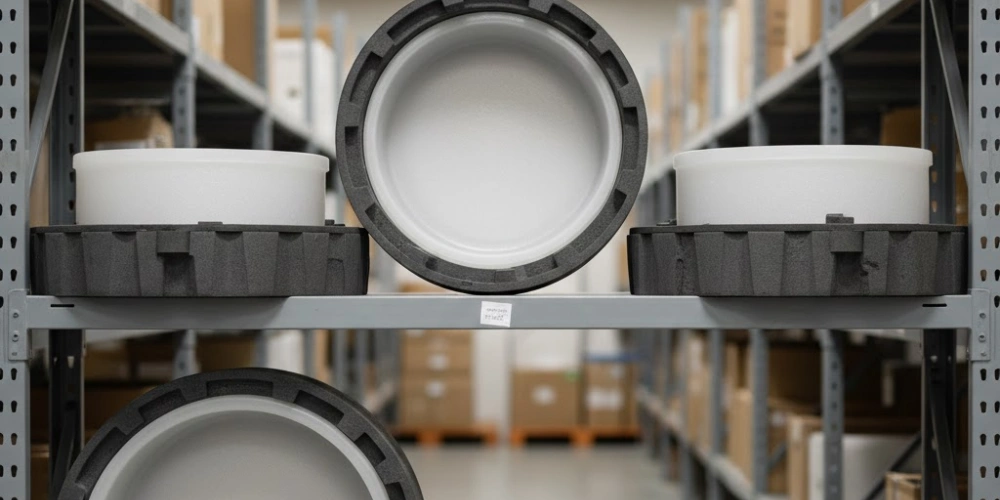
Fused Silica Thermal Properties Explain Why CZ Crucibles Perform Where Others Cannot
The thermal properties of fused silica are not incidental — they are the reason this material dominates CZ crucible applications despite its chemical reactivity with silicon.
Fused silica has an exceptionally low coefficient of thermal expansion (CTE) of approximately 0.55 × 10⁻⁶/°C across the range of 0 to 1,000°C. This value is roughly 10 times lower than that of alumina and more than 20 times lower than that of standard borosilicate glass. The practical consequence is that a fused silica crucible can be heated from room temperature to 1,500°C and cooled back to room temperature without generating the thermal stress gradients that would crack a higher-CTE refractory material under equivalent conditions.
-
Softening point and working temperature: The softening point of high-purity fused silica is approximately 1,665°C, and the practical working temperature limit — the temperature at which sustained mechanical load can be supported without viscous deformation — is approximately 1,100°C under atmospheric pressure. In CZ applications, the silicon melt at approximately 1,415 to 1,500°C is well above this working limit, which is why CZ crucibles are always supported externally by a graphite susceptor. The susceptor carries the mechanical load; the quartz crucible carries the chemical isolation function. This division of mechanical and chemical roles is fundamental to understanding why crucible deformation is primarily a material purity and OH content issue, not a structural design issue.
-
Thermal shock parameter and resistance to cracking: The thermal shock resistance of a material is characterized by the figure of merit R = σf × λ / (E × α × κ), where σf is fracture strength, λ is thermal conductivity, E is elastic modulus, α is CTE, and κ is thermal diffusivity. For fused silica, the dominant contributor to high thermal shock resistance is the extremely low CTE — not exceptional fracture strength, which is actually modest at approximately 50 MPa for annealed fused silica. This means that surface flaws, micro-cracks from machining, or scratches from improper handling disproportionately reduce thermal shock resistance by reducing the effective fracture strength term without improving the CTE term. Incoming inspection protocols should include surface flaw assessment, particularly on the outer surface near the rim, which experiences the steepest thermal gradient during furnace load.
-
Annealing state and residual stress: All fused silica components carry some level of residual stress from the manufacturing process, the magnitude of which depends on cooling rate and forming method. Residual stress in crucibles is quantified by stress birefringence measurement, expressed in nm/cm of optical path difference. For semiconductor-grade crucibles, the acceptable limit is typically below 10 nm/cm, measured at the mid-body region. Crucibles with higher residual stress are more prone to catastrophic fracture during thermal ramp — a failure mode that results in silicon melt contamination and furnace refractoring, adding unplanned downtime measured in days. A natural transition occurs here: specifying annealing state and birefringence limits in the procurement document adds minimal complexity but eliminates a significant category of furnace incident risk.
Quartz Glass Crucible Lead Times Make Supply Planning a Production Quality Variable
Procurement decisions made without lead time visibility are production schedule decisions made in the dark.
The supply chain for semiconductor-grade quartz glass crucibles is geographically concentrated and technically specialized, with primary manufacturing capacity located in Japan, Germany, and China. Each of these production regions serves different market segments by purity grade, size class, and certification capability, and the lead time implications of sourcing from each region differ substantially. For procurement teams managing high-volume CZ facilities, understanding the structural characteristics of the crucible supply chain is as important as understanding the technical specifications of the product.
Standard Production Lead Times by Crucible Size and Order Volume
Lead time for quartz glass crucibles is a function of three variables: size class, order volume, and whether the ordered specification is covered by the supplier's standard production program. Standard catalog sizes — typically 14, 18, 20, and 24 inch — can be produced against existing mold and tooling sets, which compresses setup time and allows production to begin within days of order confirmation. Non-standard or customer-specific sizes require mold fabrication or modification, which adds 4 to 12 weeks to the total lead time before production volume can begin.
For standard sizes, small orders of 10 to 50 crucibles typically carry a production lead time of 3 to 6 weeks from order confirmation to shipment, excluding transit. Medium-volume orders of 50 to 200 crucibles may extend to 6 to 10 weeks as furnace scheduling and quality inspection capacity become constraints. Large-volume orders exceeding 200 units benefit from economies of production scheduling but may paradoxically carry longer lead times — 8 to 14 weeks — if they require dedicated furnace time or priority allocation of high-purity synthetic silica feedstock, which itself has limited global supply capacity.
Transit time adds a further variable that is frequently underestimated. Crucibles are fragile, oversized freight items that require custom crating and are typically shipped by sea freight for cost reasons. Sea transit from East Asia to North America or Europe adds 4 to 6 weeks to the supplier-quoted lead time. Air freight is available but typically reserved for emergency replenishment of critical-path shortages, given the dimensional weight charges for large crucible sizes.
Lead Time Reference by Crucible Size and Order Volume
| Crucible Size (inch) | Order Volume (units) | Production Lead Time (weeks) | Sea Transit to US/EU (weeks) | Total Procurement Lead Time (weeks) |
|---|---|---|---|---|
| 14–18 | 10–50 | 3–5 | 4–5 | 7–10 |
| 14–18 | 50–200 | 5–8 | 4–5 | 9–13 |
| 20–24 | 10–50 | 4–6 | 4–6 | 8–12 |
| 20–24 | 50–200 | 6–10 | 4–6 | 10–16 |
| 24–28 | < 50 | 6–10 | 5–6 | 11–16 |
| 32 (custom) | Any | 14–20+ | 5–6 | 19–26+ |
Why Custom Dimensions Require Direct Supplier Communication
Standard catalog crucibles cover the majority of CZ production needs, but the semiconductor industry's ongoing push toward larger crystal diameters, longer pull times, and tighter process windows has generated a persistent demand for non-standard dimensions, modified surface treatments, and hybrid material constructions that cannot be specified through catalog selection alone. These requirements cannot be resolved through a standard RFQ form — they require direct technical communication between the buyer's process engineering team and the supplier's application engineering function.
Custom dimension requests typically originate from three process engineering scenarios: modified base radius specifications to alter melt flow recirculation in the tail region, increased wall thickness in the lower body to compensate for accelerated dissolution in high-oxygen-target pulls, and non-standard height-to-diameter ratios required by modified furnace chamber geometry in upgraded CZ equipment. Each of these modifications requires the supplier to assess tooling compatibility, raw material availability for the specified volume, and the feasibility of achieving the requested surface finish on a non-standard form factor.
The critical procurement implication is that custom crucible development requires a sampling phase before volume supply can begin. The standard process involves the supplier producing a small qualification batch — typically 5 to 20 units — against the custom specification, which are then tested in the buyer's furnace before the commercial supply agreement is finalized. This qualification phase typically adds 8 to 16 weeks to the effective lead time for the first commercial delivery. Procurement teams that initiate custom dimension discussions fewer than 6 months before the target production ramp date frequently encounter supply gaps that force process engineering to accept specification compromises — a pattern that is preventable through earlier supplier engagement.
Pre-Furnace Handling Errors Compromise Crucible Performance Before a Pull Begins
A crucible that arrives conforming to specification can be rendered non-conforming before it ever reaches the furnace.
Fused silica crucibles are chemically stable under ambient storage conditions, but their mechanical vulnerability — particularly at the rim and base radius — means that improper handling is the leading cause of in-warehouse crucible rejection in high-volume semiconductor procurement environments. Establishing a clear storage and pre-use protocol is a cost-control measure as much as a quality measure.
-
Storage environment requirements: Quartz glass crucibles should be stored in a clean, dry environment with relative humidity below 60% and temperature maintained between 15°C and 35°C. High humidity accelerates hydroxyl group absorption at the surface — a process known as surface hydroxylation3 — which locally degrades the thermal stability of the crucible rim. Crucibles stored in unsealed packaging in high-humidity environments for more than 90 days have been documented to show measurable surface OH enrichment in the top 100 μm of the rim region, detectable by attenuated total reflectance FTIR spectroscopy. While the bulk OH content remains unchanged, the surface enrichment contributes to accelerated devitrification at the melt-line contact zone early in the pull.
-
Handling and transport within the facility: Crucibles should never be handled without clean gloves — skin oils and particulate transfer from bare hands leave organic and metallic residues that combust and volatilize during furnace ramp, contributing minor but measurable metallic contamination to the melt in the early pull phase. Each crucible should be transported individually in its original molded packaging, never stacked rim-to-rim or nested, as contact between the rims of adjacent crucibles generates microcrack initiation sites at the rim edge — the highest-stress zone during thermal loading. For 24-inch and larger crucibles, two-person lifts with designated support points at the base and mid-body are standard protocol; single-person handling of large crucibles leads to asymmetric stress loading that can initiate invisible subsurface cracks.
-
Pre-use inspection and cleaning: Prior to loading, each crucible should undergo a visual inspection under oblique lighting for surface scratches, rim chips, and visible inclusions. Any rim chip deeper than 1 mm or longer than 5 mm should be grounds for rejection, as chip-edge stress concentrations frequently propagate to full circumferential cracks during furnace ramp. If surface contamination from storage is suspected, a cleaning protocol using high-purity deionized water rinse followed by clean-room-grade nitrogen blow-dry is standard; wet chemical cleaning with HF is rarely necessary for standard contamination levels and introduces handling safety requirements that must be managed under separate protocols. A natural transition into procurement practice: crucibles arriving without individual protective packaging, or showing evidence of rim-to-rim contact during transit, should be flagged immediately in the receiving record and the supplier notified — packaging quality is a predictive indicator of the supplier's broader quality management capability.
Conclusion
Quartz glass crucibles are the chemical and dimensional interface between raw silica and device-grade silicon. Every specification parameter discussed in this article — purity grade, OH content, dimensional tolerance, batch consistency, surface condition — exists because the sensitivity of CZ crystal growth amplifies small material variations into measurable yield outcomes. Procurement decisions made with incomplete technical information introduce process risk that manifests only after furnace time, silicon feedstock, and production schedule have already been committed. Sourcing with full specification clarity, adequate lead time, and documented batch traceability is not a procurement best practice — it is a production continuity requirement.
FAQ
What purity grade of quartz glass crucible is required for 300 mm semiconductor wafer production?
For mainstream 300 mm CZ silicon production, a minimum SiO₂ content of 99.995% (high-purity grade) is standard, with total metallic impurities below 10 ppm. Advanced node applications — particularly at process nodes below 10 nm — typically specify ultra-high-purity grade at 99.999% or above, with individual element limits for Fe, Cu, and Ni in the single-digit ppb range.
How often do quartz glass crucibles need to be replaced in a CZ furnace?
Quartz glass crucibles are replaced after every single crystal pull in standard CZ production. They are one-use consumables. For a furnace running 300 mm production with pull durations of 60 to 100 hours, this translates to 8 to 18 crucible replacements per furnace per month under continuous operation.
What is the difference between synthetic and natural fused silica in CZ crucibles?
Synthetic fused silica is manufactured from ultra-high-purity silicon precursors by chemical vapor deposition or plasma fusion, achieving total metallic impurity levels below 0.1 ppm. Natural fused silica is produced by melting high-purity mined quartz and contains higher and less consistent trace element levels, particularly aluminum and titanium. Most commercial crucibles for 300 mm production use a hybrid construction with a synthetic inner layer and a natural quartz outer layer.
What documentation should be requested when procuring semiconductor-grade quartz crucibles?
A complete procurement documentation package should include a Certificate of Analysis covering individual elemental purity (ICP-MS), OH content (IR spectroscopy), dimensional measurements with statistical sampling data, bubble and inclusion grade classification per ISO 10110, and stress birefringence values. For custom or non-standard dimensions, a qualification batch report documenting dimensional conformance and furnace trial results should be required before volume supply begins.
References:
-
Cristobalite is a high-temperature polymorph of silicon dioxide that forms during the devitrification of fused silica above 1,050°C. ↩
-
Nucleation is the initial step in a phase transformation by which new crystalline structures begin to form at preferential sites on a surface or within a melt. ↩
-
Surface hydroxylation is a chemical process by which silanol groups form on the exposed surface of silica materials upon contact with atmospheric moisture. ↩