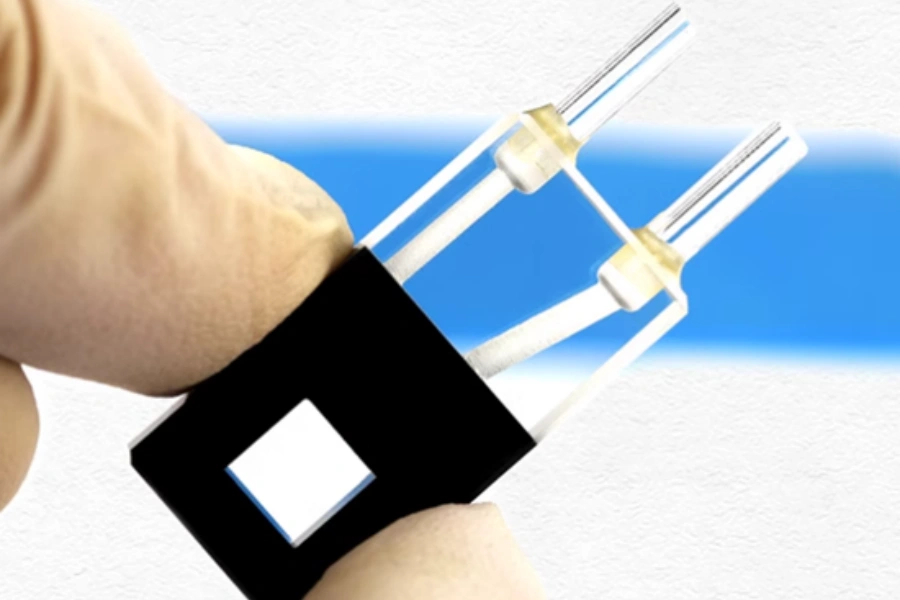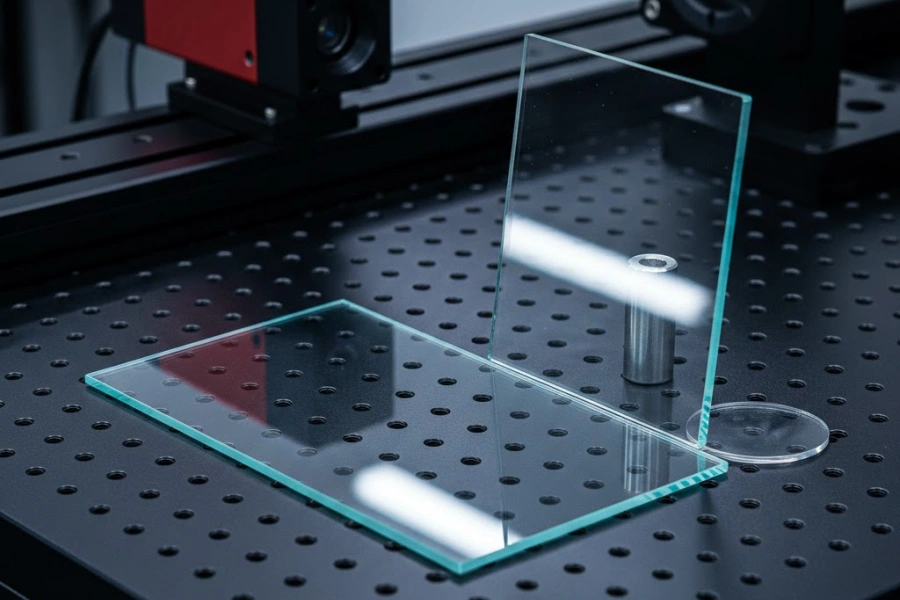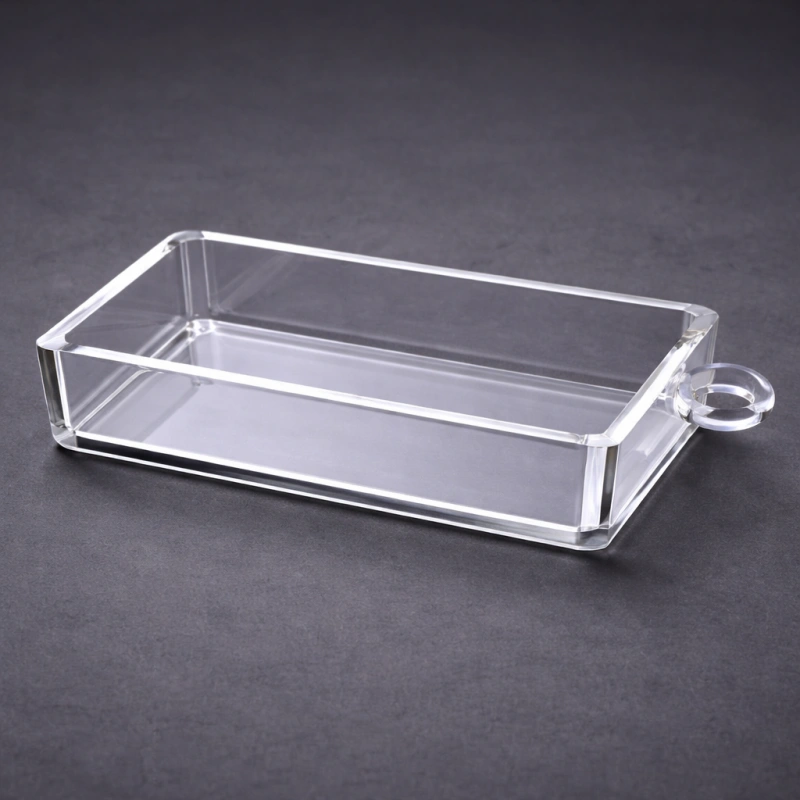
Quartz flow-through cuvettes play a crucial role in accurate liquid analysis, especially in spectroscopy. These cuvettes allow continuous fluid flow, ensuring precise optical path control. Understanding their definition, working mechanism, and selection criteria can help optimize their use in various applications.

What is a Quartz Flow-Through Cuvette Cell?
A quartz flow-through cuvette is an essential tool in analytical chemistry and biology. It allows continuous fluid flow, making it suitable for dynamic sample analysis. This section explains its definition, key features, and common applications.
Definition of Quartz Flow-Through Cuvette
The cuvette, designed to allow a continuous flow of fluid through a quartz chamber, is a specialized quartz flow-through cuvette, which is essential in many spectroscopy applications. This ensures that the liquid sample remains in the optical path for the required duration, making it ideal for monitoring real-time changes in the sample during analysis. Its transparent quartz construction provides excellent UV transmission, which is crucial for accurate measurements in UV-Vis and fluorescence spectroscopy.
Key Features of Quartz Flow-Through Cuvette
- Optical Path Precision: The cuvette provides a defined and consistent optical path, which is essential for obtaining accurate and reproducible spectroscopic readings. This precision ensures that light is transmitted through the sample without interference from extraneous variables.
- Flow Design: The flow-through design allows for real-time monitoring of continuously changing samples. This feature is especially valuable in applications where the sample composition evolves over time, such as chemical reactions or biological processes.
- Material Durability: Made from high-purity quartz, these cuvettes are resistant to UV light and can withstand high temperatures. This durability ensures minimal interference during measurements, even under demanding conditions.
Common Applications for Quartz Flow-Through Cuvette
- UV-Vis Spectroscopy[^1]: Quartz flow-through cuvettes are widely used in environmental monitoring, chemical analysis, and biological research where it is necessary to measure dynamic samples in real-time. They ensure accurate measurements of absorbance across a wide range of wavelengths.
- Fluorescence Detection: Their design, which minimizes stray light, makes them ideal for fluorescence spectroscopy[^2]. They enable precise excitation and emission measurements in studies like enzyme kinetics or protein-ligand binding assays.
- Pharmaceutical and Biotech Labs: In high-throughput screening or process monitoring, quartz flow-through cuvettes facilitate efficient analysis of large numbers of samples. They are also used in drug testing, where continuous monitoring of sample changes is critical.
How Does a Quartz Flow-Through Cuvette Cell Work?
The working principle of a quartz flow-through cuvette is based on the continuous movement of fluids through an optical chamber. This allows for uninterrupted analysis of the sample. Here, we explore how the liquid flows, how the optical path is maintained, and how the cuvette integrates with various analytical systems.
Flow Path and Liquid Movement
The flow path in a quartz flow-through cuvette is carefully engineered to allow liquid to pass smoothly through the optical chamber. This uninterrupted movement ensures that the sample remains in the light path during analysis, which is essential for monitoring chemical or biological changes over time. By keeping the flow steady, the cuvette allows for continuous, real-time measurements without interruption.
The controlled path ensures that the liquid is evenly distributed, preventing bubbles or irregularities that could interfere with light transmission. This stable flow helps capture accurate absorbance or fluorescence data, which is especially important in sensitive experiments. A predictable liquid path also reduces measurement variability between different runs.
Consistent movement of the sample also minimizes problems such as sedimentation or uneven mixing. In applications where reactions may evolve or components separate, the continuous flow helps maintain homogeneity. This improves the reliability of the results and allows researchers to track dynamic changes with greater precision.
How the Optical Path is Maintained
The optical path in a quartz flow-through cuvette is maintained by its precise construction and fixed design. The pathlength is carefully defined during manufacturing, ensuring that light always travels the same distance through the sample. This stability is critical for reproducibility, as even small changes in pathlength can cause significant variations in measured values.
Quartz as a material provides excellent optical clarity and resists distortion, allowing the light to pass with minimal interference. The durability of quartz under UV and high-temperature conditions also ensures that the cuvette remains accurate over repeated use. This makes quartz the preferred choice for demanding UV-Vis spectroscopy applications.
Accurate maintenance of the optical path ensures that the data reflects only the sample properties and not variations in equipment or geometry. In UV-Vis and fluorescence spectroscopy, this consistency supports precise absorbance and emission readings. Researchers can rely on the data produced, knowing that it is not influenced by shifts in the optical alignment.
Integration with Pumps and Auto-samplers
Quartz flow-through cuvettes are often connected to pumps or auto-samplers to create a continuous and automated sampling process. This setup allows large numbers of samples to be processed quickly, which is especially useful in high-throughput laboratories. Automated systems reduce the need for manual handling, lowering the chance of human error.
The use of pumps helps regulate a steady flow rate, ensuring that the sample passes consistently through the optical chamber. Auto-samplers can introduce new samples in sequence, maintaining efficiency while minimizing downtime. Together, these systems improve the overall accuracy and productivity of spectroscopic analysis.
Integration with laboratory equipment also enables compatibility with advanced workflows, such as online monitoring or kinetic studies. By linking the cuvette with automation tools, researchers can track reactions over time without manual intervention. This not only speeds up the process but also enhances the quality and reliability of the data collected.
How to Select a Quartz Flow-Through Cuvette Cell?
Choosing the right quartz flow-through cuvette depends on factors like pathlength, material compatibility, and system integration. In this section, we will guide you on how to make the best selection based on your specific analytical needs.
Pathlength and Volume Considerations
-
Pathlength Selection: The optical pathlength in a cuvette plays a key role in determining the sensitivity of the measurement. A shorter pathlength is best for high-concentration samples, as it reduces the risk of signal saturation. This allows for more accurate readings without overwhelming the detector.
On the other hand, a longer pathlength is suitable for dilute samples, as it provides more interaction between the light and the sample. This increased interaction enhances sensitivity, making it easier to detect lower concentrations. For experiments that involve both concentrated and dilute solutions, choosing the correct pathlength can ensure that the cuvette provides reliable and precise results.
Selecting the correct pathlength based on the sample's concentration is essential for obtaining accurate absorbance or fluorescence measurements. If the pathlength is too long for a high-concentration sample, the light may be absorbed too quickly, leading to inaccurate readings. Conversely, a short pathlength for dilute samples may not provide enough signal strength for accurate detection. -
Volume Considerations: The sample volume plays an essential role in determining the performance of the cuvette. Larger volumes are often required for dilute samples, as they help ensure that there is enough material for accurate measurement. Larger volumes also allow for better control over the flow rate and consistency during analysis.
For concentrated or precious samples, smaller volumes are preferable to minimize waste and optimize sample efficiency. By using smaller volumes, the cuvette can handle a higher concentration without overloading the system. Micro-volume flow-through cuvettes are designed to work with small sample sizes, providing precise analysis with minimal sample loss.
When selecting the cuvette, it is important to consider both the volume and the type of sample being used. For example, samples that require a high level of precision or smaller quantities would benefit from micro-volume cuvettes. In high-throughput or bulk testing environments, larger volumes may be more suitable for ensuring accuracy and reproducibility.
Material Compatibility and Spectral Range
- Material Compatibility: The material of the cuvette must be selected based on the chemical properties of the sample. Quartz is the material of choice for UV-Vis applications because it offers excellent transparency in the UV range, which is essential for accurate light transmission.
When dealing with aggressive solvents or high temperatures, choosing a highly durable quartz cuvette becomes even more critical. This ensures that the cuvette will not degrade or interfere with the analysis due to chemical reactions or extreme conditions. The ability of quartz to withstand harsh environments makes it ideal for a wide range of applications, from environmental monitoring to chemical research.
For specific applications, it is important to assess whether the cuvette material can withstand the chemical properties of the sample being analyzed. In cases where the sample may react with other materials, quartz provides the necessary durability without compromising measurement quality. - Spectral Range: Quartz flow-through cuvettes are typically designed for the UV-Vis range (190–2500 nm), making them suitable for most standard spectrophotometric applications. The broad transparency range of quartz ensures that it can handle different wavelengths of light without distortion.
For specialized applications such as Near Infrared (NIR) analysis, quartz cuvettes may be available with a spectral range extending beyond the UV-Vis range. The availability of quartz flow-through cuvettes for NIR applications ensures that they can accommodate a variety of scientific needs.
Choosing a cuvette with the appropriate spectral range is critical to obtaining the best performance from your system. Matching the cuvette’s spectral capabilities with your analytical requirements ensures that the cuvette will allow for optimal light transmission and accurate measurement.
Connector Standards and System Integration
- Connector Compatibility: The cuvette must be compatible with the connection standards of the spectrophotometer or any other analysis equipment. Common connectors used with quartz flow-through cuvettes include M6 and PTFE, which provide secure, leak-free connections that are necessary for maintaining continuous fluid flow.
The compatibility between the cuvette’s connectors and the system ensures that there are no leaks, which could disrupt the flow or introduce errors in the analysis. A proper seal is vital for preventing sample contamination or loss, which could otherwise affect the measurement accuracy.
Additionally, it is important to select a cuvette with connectors that are easy to integrate into your existing system. The right connector type will allow for smoother operation, reducing the likelihood of maintenance issues or system downtime. - System Integration: A high-performance flow-through cuvette must integrate seamlessly with other components of the analytical system, such as pumps, auto-samplers, and flow controllers. This integration is essential for ensuring consistent and reliable fluid flow throughout the measurement process.
When the cuvette is integrated with pumps and auto-samplers, it enables automated sample introduction, reducing the need for manual intervention. This automation improves the speed and efficiency of sample analysis, particularly in high-throughput environments.
To maintain a consistent flow rate and stable measurements, it is crucial that the cuvette's design aligns with the overall system. Ensuring that the cuvette and other system components are compatible guarantees smooth operation and enhances the reliability of the analysis.
Conclusion
Selecting the right quartz flow-through cuvette is crucial for achieving accurate and efficient results in UV-Vis and fluorescence spectroscopy applications. Consider the pathlength, volume, material compatibility, and system integration when making your selection to ensure the cuvette meets your specific analytical needs.
FAQ (Frequently Asked Questions)
-
How does the material of a quartz flow-through cuvette impact its performance in UV-Vis spectroscopy?
- The material of the cuvette plays a significant role in its optical properties, such as transmission in the UV range. Quartz is commonly used in UV-Vis spectroscopy because of its excellent transparency and minimal interference with the light path, ensuring accurate readings.
-
What factors should be considered when selecting a quartz flow-through cuvette for high-throughput applications?
- Key considerations include the sample volume, flow rate, and connector compatibility. Additionally, the cuvette must be compatible with automated systems like pumps and auto-samplers to facilitate high-throughput processing.
-
How can I maintain and clean a quartz flow-through cuvette?
- To maintain optimal performance, regularly clean the cuvette using appropriate solvents based on the sample type. Ensure that connectors and seals are intact to prevent leaks or contamination during analysis.
-
How does a quartz flow-through cuvette compare to a traditional static cuvette?
- Unlike static cuvettes, which hold a fixed sample volume, flow-through cuvettes allow continuous flow, making them ideal for applications requiring real-time monitoring of dynamic samples or for high-throughput systems.
References: