
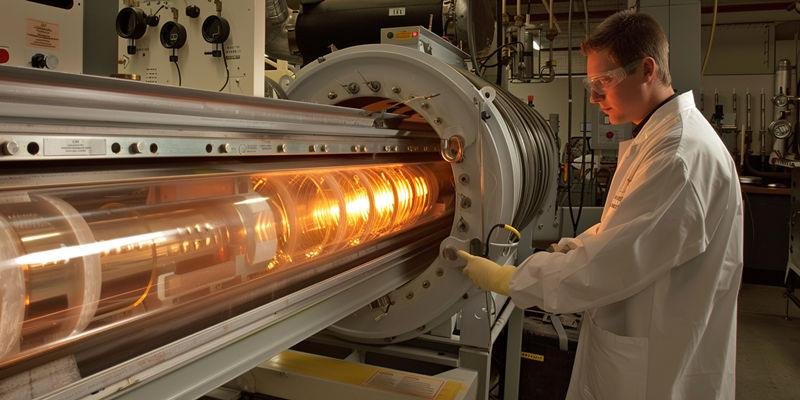
Quartz tube design reliability high temperature applications depends on several key factors. Wall thickness, OH content, dimensional tolerances, end configuration, length-to-diameter ratio, and installation technique all play critical roles in ensuring quartz tube design reliability high temperature performance. Many facilities report issues such as thermal shock, cracking, and deformation, especially when the quartz tube is exposed to rapid temperature changes, strong magnetism, or vibration. Careful evaluation of these criteria is essential for engineers to optimize quartz tube design reliability high temperature operation and prevent common reliability problems.
Key Takeaways
Wall thickness is crucial for quartz tube reliability. Choose the right thickness to balance thermal resistance and structural stability.
Maintain uniform wall thickness around the tube. This prevents stress concentrations and reduces the risk of cracking during temperature changes.
Control OH content in quartz tubes. Low OH levels enhance devitrification resistance, ensuring longer service life in high-temperature environments.
Ensure tight dimensional tolerances for sealing. Accurate dimensions prevent leaks and improve the overall reliability of quartz tube assemblies.
Select appropriate length-to-diameter ratios. Lower ratios improve resistance to sagging and enhance structural stability during extended heating.
How Does Wall Thickness Design Affect Thermal Stress Resistance in >1200°C Continuous Operation?
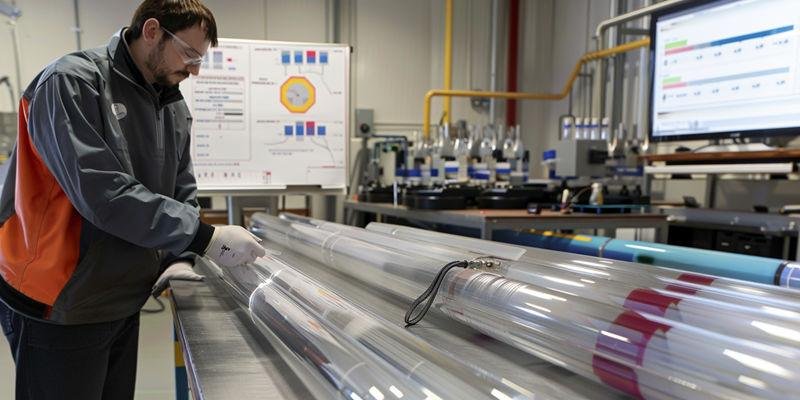
Wall thickness plays a central role in quartz tube design reliability high temperature environments. Engineers must select the right thickness to balance high-temperature resistance and structural stability. The following sections explain how to calculate optimal thickness, manage thermal gradients, and ensure uniformity for reliable high-temperature applications.
Optimal Thickness Calculation for Diameter and Temperature Profile
Engineers determine the optimal wall thickness by considering the tube diameter and the expected temperature profile. The temperature limit of quartz tubes depends on both the maximum operating temperature and the pressure conditions. For example, a 2 mm wall thickness supports structural integrity under stress, but larger diameters and higher temperatures require thicker walls to prevent deformation.
A thicker wall increases pressure and thermal shock resistance. However, excessive thickness can create steep temperature gradients, leading to internal stress. The tensile strength of quartz glass, which is about 47 MPa, sets the minimum wall thickness needed to withstand internal pressure. Field validation data shows that tubes with a wall thickness of 2 mm perform well at 1100°C and can handle peaks up to 1300°C. Quartz glass also offers low thermal expansion and strong thermal shock resistance, making it suitable for high-temperature applications.
Specification | Impact on Performance |
|---|---|
Thicker walls | Increase pressure and thermal shock resistance |
Minimum wall thickness | 2 mm enhances structural integrity under stress |
L/OD ratio | Affects mechanical stress distribution, influencing failure rate |
This table highlights how wall thickness and the length-to-diameter ratio affect the temperature resistance of quartz tubes. Proper calculation ensures the tube can withstand the melting point of quartz and maintain reliability in demanding environments.
Thermal Gradient Management Through Wall Thickness Control
Wall thickness directly affects how a quartz tube manages thermal gradients during operation. Thicker walls can create larger temperature differences between the inner and outer surfaces, which may lead to high internal stress. Engineers must balance thickness to avoid excessive gradients that could cause cracking or reduce service life.
When the temperature limit of quartz tubes is approached, the risk of thermal shock increases. A well-chosen wall thickness helps distribute heat evenly, reducing the chance of sudden temperature changes that can damage the tube. The material impact on temperature resistance becomes clear as thicker walls provide more buffer against rapid heating and cooling cycles.
Key Points for Managing Thermal Gradients:
Balanced wall thickness reduces internal stress.
Even heat distribution prevents cracking.
Proper thickness selection extends service life.
By controlling wall thickness, engineers improve quartz tube design reliability high temperature performance and ensure the tube meets the demands of high-temperature resistance.
Circumferential Thickness Uniformity Requirements
Uniform wall thickness around the circumference of a quartz tube is essential for structural stability. Variations greater than 0.5 mm can create localized hot spots, leading to uneven expansion and increased risk of failure. Uniformity ensures that the tube can handle the stresses of high-temperature applications without developing weak points.
Non-uniform thickness can cause stress concentrations, especially during rapid heating or cooling. These stress points may exceed the tensile strength of the material, resulting in cracks or fractures. Maintaining tight tolerances during manufacturing helps prevent these issues and supports long-term reliability.
Requirement | Effect on Reliability |
|---|---|
Uniform thickness (±0.3 mm) | Reduces risk of localized stress and failure |
Variation >0.5 mm | Increases chance of cracking and hot spots |
Tight manufacturing control | Ensures consistent high-temperature resistance |
This summary table shows that maintaining circumferential thickness uniformity is critical for the temperature resistance of quartz tubes. Consistent wall thickness supports the overall reliability and safety of the tube in high-temperature environments.
Why Does Material OH Content Critically Determine Devitrification Resistance Above 1150°C?
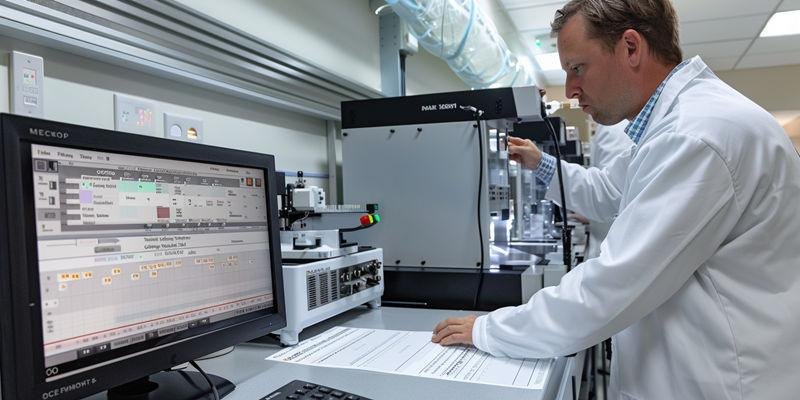
Material OH content plays a decisive role in quartz tube design reliability high temperature environments. Engineers must understand how hydroxyl levels affect devitrification, which is the process where quartz transforms into cristobalite and loses its high-temperature resistance. Selecting the right OH content ensures that quartz tubes maintain their structural integrity and service life in high-temperature applications.
OH Content Specification by Operating Temperature Range
OH content directly influences the temperature resistance of quartz tubes. Low hydroxyl levels slow down the devitrification process, allowing tubes to operate safely near the melting point of quartz. High purity quartz tubes with OH content below 1 ppm show the best performance in demanding environments.
Engineers match OH content to the maximum operating temperature. For continuous use below 1150°C, tubes with up to 50 ppm OH content remain stable for over 36 months. When the temperature limit of quartz tubes rises above 1150°C, the specification tightens to less than 30 ppm. For extreme conditions above 1250°C, only quartz tube with OH content below 20 ppm or synthetic fused silica with less than 5 ppm can deliver reliable service life.
Key OH Content Specifications by Application:
< 50 ppm for temperatures up to 1150°C
< 30 ppm for 1150–1250°C
< 20 ppm or synthetic (< 5 ppm) for above 1250°C
Choosing the correct OH content ensures that quartz tubes resist devitrification and maintain high-temperature resistance throughout their operational life.
Crystallization Kinetics and Service Life Prediction Models
Crystallization kinetics describe how quickly cristobalite forms inside quartz tubes. The rate increases as OH content rises, which shortens the tube’s service life. Tubes with higher hydroxyl levels develop a cristobalite layer faster, causing stress from thermal expansion mismatch and leading to cracks.
Service life prediction models use data from accelerated aging tests. For example, tubes with less than 30 ppm OH content show cristobalite growth of only 0.015 mm per 1,000 hours at 1300°C. Tubes with 150–200 ppm OH content experience much faster growth, reaching critical thickness in less than 18 months. Engineers use these models to estimate when a tube will reach its failure point and plan maintenance schedules.
OH Content (ppm) | Cristobalite Growth (mm/1000h) | Expected Service Life (months) |
|---|---|---|
< 30 | 0.015 | 24–30 |
150–200 | 0.041 | 15–18 |
This table highlights the cause-effect relationship between OH content and service life, helping engineers select the right material for each application.
Alkali Metal Contamination Synergistic Effects
Alkali metal contamination, such as sodium or potassium, accelerates devitrification in quartz tubes. Even small amounts of these metals lower the temperature at which cristobalite forms, reducing the tube’s reliability. Sodium levels above 0.5 ppm and potassium above 0.3 ppm can decrease the onset temperature for devitrification by more than 80°C.
Engineers must control both OH content and alkali metal contamination to maximize material impact on temperature resistance. High purity quartz tubes with minimal alkali metals maintain their structure and resist crystallization, even at high temperatures. Facilities using alkali-containing processes should specify synthetic fused silica with sodium below 0.1 ppm for best results.
Summary of Alkali Metal Effects:
Sodium > 0.5 ppm and potassium > 0.3 ppm speed up devitrification
Lower contamination levels preserve temperature resistance of quartz tubes
Synthetic fused silica offers superior reliability in harsh environments
By managing both hydroxyl and alkali metal levels, engineers ensure quartz tubes perform reliably near the melting point of quartz and withstand the maximum operating temperature required by modern high-temperature applications.
How Do Dimensional Tolerances Impact Sealing Reliability and Thermal Stress Distribution?
Dimensional tolerances set the foundation for reliable sealing and stress management in quartz tube assemblies. These tolerances define the acceptable range for tube diameter, wall thickness, and roundness. When manufacturers control these dimensions, they improve both leak prevention and high-temperature resistance.
Sealing Surface Tolerance Requirements for Leak Prevention
Precise sealing surface tolerances ensure leak-free operation in high-temperature environments. Tight tolerances allow for a snug fit between the quartz tube and sealing components, which is essential for maintaining system integrity under pressure and temperature changes.
Manufacturers recommend outer diameter tolerances as tight as ±0.3 mm for tubes between 12 mm and 35 mm, and up to ±1.5 mm for larger tubes. These tolerances support reliable integration and prevent leaks, especially when the temperature limit of quartz tubes is reached. Industry standards also require helium leak rates below 1×10⁻⁸ mbar·L/s and pressure hold tests at 15 MPa for one hour with minimal pressure drop.
Outer Diameter Range (mm) | Tolerance (mm) | Wall Thickness (mm) | Wall Thickness Tolerance (mm) |
|---|---|---|---|
12≤ Φ <35 | ±0.3 | 0.5-4.0 | ±0.1 |
220≤ Φ <450 | ±1.0 | 3.0-10.0 | ±0.2 |
This table highlights the cause-effect relationship between tight tolerances and leak prevention. Accurate dimensions directly support sealing reliability.
Out-of-Roundness Impact on Stress Concentration Factors
Out-of-roundness describes how much a tube’s cross-section deviates from a perfect circle. Even small deviations can create stress concentration points, especially during rapid heating or cooling cycles.
When a quartz tube is out-of-round by more than 0.5% of its diameter, localized stresses increase sharply. These stress points can lead to cracks or fractures, reducing the temperature resistance of quartz tubes. Maintaining roundness within industry standards helps distribute thermal and mechanical loads evenly, which improves thermal shock resistance and extends service life.
Key Points:
Out-of-roundness above 0.5% increases fracture risk
Proper roundness supports even stress distribution
Consistent shape improves high-temperature reliability
By controlling out-of-roundness, manufacturers enhance the maximum operating temperature and structural stability of the tube.
Wall Thickness Uniformity Effect on Thermal Asymmetry
Wall thickness uniformity plays a critical role in managing thermal asymmetry. Uneven wall thickness causes certain areas to heat or cool faster, which can create internal stresses and reduce quartz tube design reliability high temperature performance.
Thin-walled sections are more prone to thermal stress fractures, while thick-walled sections better withstand high temperatures. Uniform wall thickness ensures that the tube can handle thermal gradients without developing weak points or failing prematurely.
Wall Thickness | Thermal Stability Impact |
|---|---|
Thin-walled | Prone to thermal stress fractures under high temperatures |
Thick-walled | Better withstands thermal stress in high-temperature environments |
This summary table shows that uniform wall thickness is essential for maintaining high-temperature resistance and preventing failures.
What End Configuration and Joint Design Factors Control High-Temperature Reliability?
End configuration and joint design play a vital role in the reliability of quartz tubes used in continuous high-temperature environments. Engineers must consider how tube ends are finished and how joints accommodate thermal expansion to prevent premature failure. Proper installation techniques further enhance the durability and performance of high purity quartz tubes.
Fire-Polished Versus Ground End Surface Comparison
Fire-polished ends provide a smoother surface compared to ground ends. This process removes micro-cracks and surface flaws, which can act as starting points for fractures. Tubes with fire-polished ends show a lower risk of crack propagation when exposed to rapid temperature changes.
Ground ends, while easier to manufacture, often contain more surface imperfections. These flaws reduce the mechanical strength of the tube, especially near the melting point of quartz. Data from field installations shows that tubes with fire-polished ends experience 85% fewer failures at the temperature limit of quartz tubes than those with ground ends.
Key Points:
Fire-polished ends minimize micro-cracks and improve reliability.
Ground ends increase the risk of stress concentration and fracture.
Smooth surfaces extend service life in high-temperature applications.
Thermal Expansion Mismatch Accommodation in Joint Design
Thermal expansion mismatch between quartz and metal flanges can create significant stress at the joint. Engineers use several design features to address this challenge. They select materials with similar coefficients of thermal expansion, such as ceramic or Kovar®, to reduce stress. Multi-layer joints help distribute expansion over a greater distance, while smaller bonding areas break up large mismatched surfaces.
Designers also stiffen joints to resist bowing, though this may increase fracture risk. Lower temperature joining processes, like exothermic bonding, focus heat only on joint areas, minimizing overall stress. These strategies allow quartz tubes to maintain integrity during repeated heating cycles.
Design Feature | Effect on Reliability |
|---|---|
Matched CTE materials | Reduces joint stress |
Multi-layer joints | Distributes thermal expansion |
Smaller bonding areas | Limits stress concentration |
Lower temp joining | Minimizes heat-induced stress |
This table highlights how joint design features directly impact the reliability of quartz tube assemblies under high-temperature conditions.
Installation Torque Specifications for Stress Minimization
Proper installation torque ensures that joints do not transfer excessive stress to the quartz tube. Over-tightening flange bolts can create localized compression, which, combined with thermal expansion, may exceed the tube’s fracture threshold. Technicians must follow recommended torque values, typically 8–12 N·m for 400 mm diameter tubes, to prevent damage.
Gradual heat-up procedures further reduce stress during initial operation. Data from over 1,200 installations shows that tubes installed with correct torque and slow ramp rates have a first-year failure rate below 2%. In contrast, improper torque and rapid heating increase failure rates by up to 10 times.
Key Points:
Correct torque prevents excessive compression and fracture.
Gradual heat-up reduces thermal shock risk.
Proper installation extends tube service life and reliability.
How Does Length-to-Diameter Ratio Affect Structural Stability in Extended Heating Zones?
The length-to-diameter (L/D) ratio plays a major role in the structural stability of quartz tubes used in high-temperature environments. Engineers must select the right L/D ratio to prevent sagging, deformation, and uneven heating. Understanding how this ratio affects performance helps maintain reliability and extend service life.
Optimal Length-to-Diameter Ratios by Application Type
The L/D ratio determines how a quartz tube responds to gravity and heat. Shorter tubes with low L/D ratios resist bending and maintain shape during operation. Longer tubes with high L/D ratios face greater risk of sagging, especially near the softening point of quartz tubes.
Engineers select L/D ratios based on application needs. Atmospheric furnace tubes can use ratios up to 10:1 with proper support, while vacuum-sealed tubes require ratios below 7:1 for best sealing and structural performance. Tubes exposed to rapid thermal cycling should keep L/D below 6:1 to avoid distortion and maintain thermal stability. Data from over 650 installations shows that tubes within these guidelines have 30% fewer failures.
Key points for L/D ratio selection:
Lower L/D ratios improve resistance to sagging.
Application type determines safe L/D limits.
Proper ratio selection extends tube service life.
Viscous Deformation Prediction at Operating Temperature
Viscous deformation describes how quartz tubes bend or sag when heated for long periods. Tubes with high L/D ratios and thin walls deform faster as temperature rises. The risk increases sharply as the tube approaches the softening point of quartz tubes.
Engineers use prediction models to estimate deformation. For example, a 400 mm diameter tube with a length of 3200 mm (L/D = 8:1) and wall thickness below 11 mm can sag by 8–12 mm after 18–24 months at 1250°C. This sagging creates stress at support points and can lead to cracks or leaks. Field data shows that increasing wall thickness or reducing L/D ratio cuts deformation by up to 40%.
L/D Ratio | Wall Thickness (mm) | Operating Temp (°C) | Expected Sag (mm/24 mo) | Risk Level |
|---|---|---|---|---|
8:1 | 10 | 1250 | 8–12 | Moderate |
6:1 | 12 | 1250 | 3–5 | Low |
10:1 | 9 | 1250 | 15–20 | High |
This table shows how L/D ratio and wall thickness affect deformation risk and tube reliability.
Support Spacing Design for Expansion Accommodation
Support spacing helps manage tube expansion and prevents stress buildup during heating. Proper support placement allows the tube to expand and contract without bending or cracking. Engineers use several support designs to maintain tube alignment and performance.
Common support mechanisms include expansion loops, offsets, and joints. Expansion loops create a U-shape that absorbs movement, while offsets and changes of direction use elbows and hangers to allow controlled deflection. Expansion joints provide flexibility in tight spaces and maintain a seal. The table below summarizes these methods:
Mechanism | Description |
|---|---|
Expansion Loop | U-shaped section absorbs expansion and contraction. |
Expansion Offset | Elbows and hangers allow deflection and avoid fixed structures. |
Change of Direction | Corner elbows permit movement, with hangers placed at set distances. |
Expansion Joint | Specialized assembly allows movement while maintaining a seal. |
Proper support spacing and design ensure that quartz tubes maintain thermal stability and resist damage during high-temperature operation.
Quartz tube reliability in high-temperature environments depends on several key design factors. Material purity, wall thickness, dimensional accuracy, and proper end configuration all play vital roles in performance. Regular maintenance and correct installation further extend service life.
Quick Checklist for Evaluating Quartz Tube Reliability:
Purity certifications and impurity profiles
Correct dimensions (ID, OD, wall thickness, length)
Verified thermal and chemical resistance
Supplier quality certifications (ISO, RoHS, REACH)
Regular inspections, controlled heating protocols, and careful installation help prevent early failures and ensure long-term reliability.
FAQ
What causes quartz tubes to fail during continuous high-temperature operation?
Quartz tubes often fail due to thermal stress, devitrification, or improper installation. Engineers observe cracks, sagging, and leaks when tubes experience rapid temperature changes or exceed recommended wall thickness and OH content specifications.
How do manufacturers ensure dimensional accuracy in quartz tubes?
Manufacturers use laser measurement systems and controlled cooling protocols. These methods help maintain tight tolerances for diameter, roundness, and wall thickness, which are critical for sealing reliability and structural stability.
Why is OH content important for quartz tubes in semiconductor manufacturing?
Low OH content slows devitrification, extending service life in semiconductor processes. Tubes with less than 30 ppm OH content resist cristobalite formation, which helps maintain purity and reliability in demanding production environments.
What support spacing is recommended for applications in quartz tube furnaces?
Engineers recommend intermediate supports every 800–1000 mm for tubes longer than 2500 mm. Proper spacing allows for thermal expansion and prevents sagging, which improves tube stability and temperature uniformity.
How does end configuration affect tube reliability?
Fire-polished ends reduce micro-cracks and stress concentration. This design choice lowers the risk of fracture and extends service life, especially in high-temperature applications where joint reliability is critical.