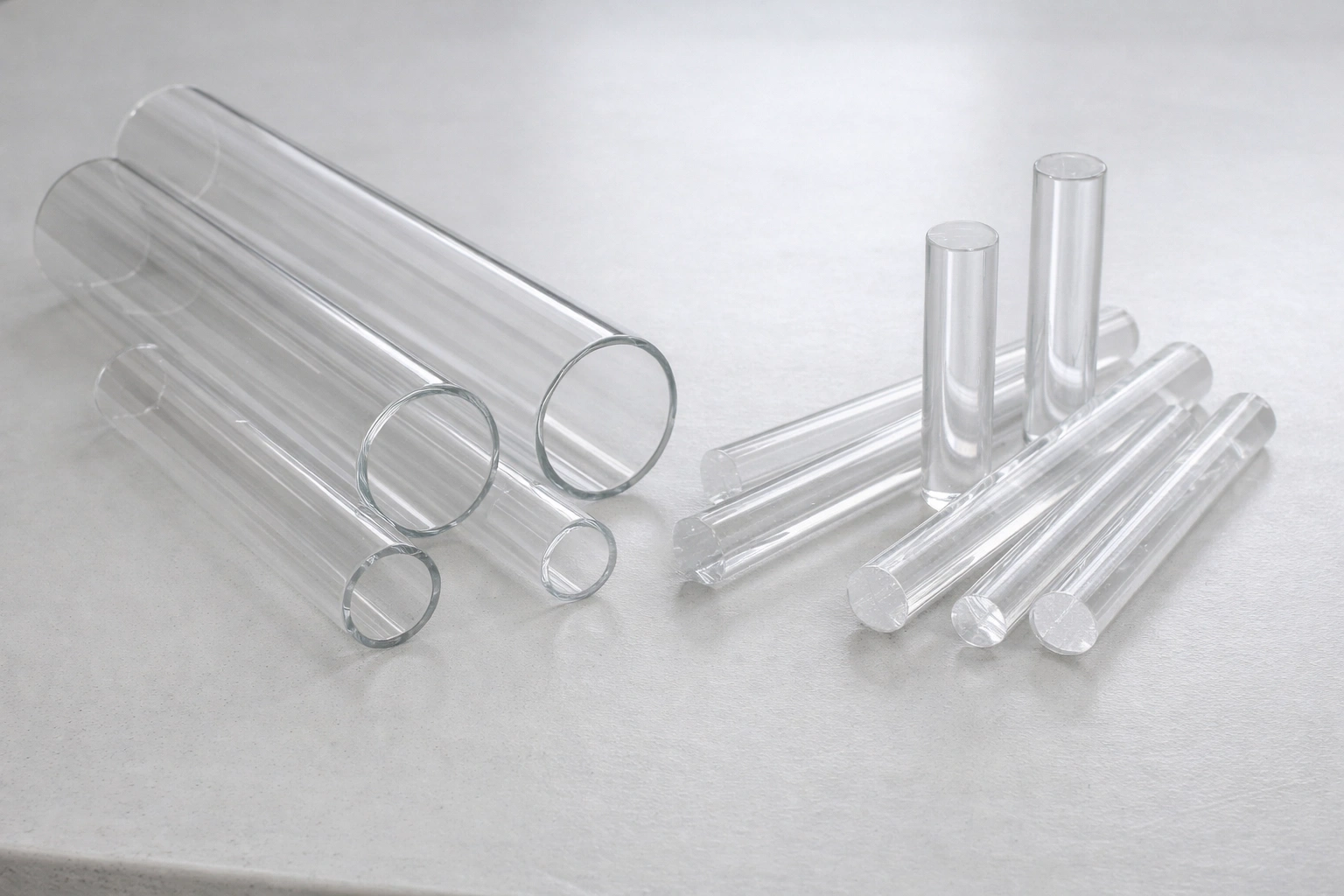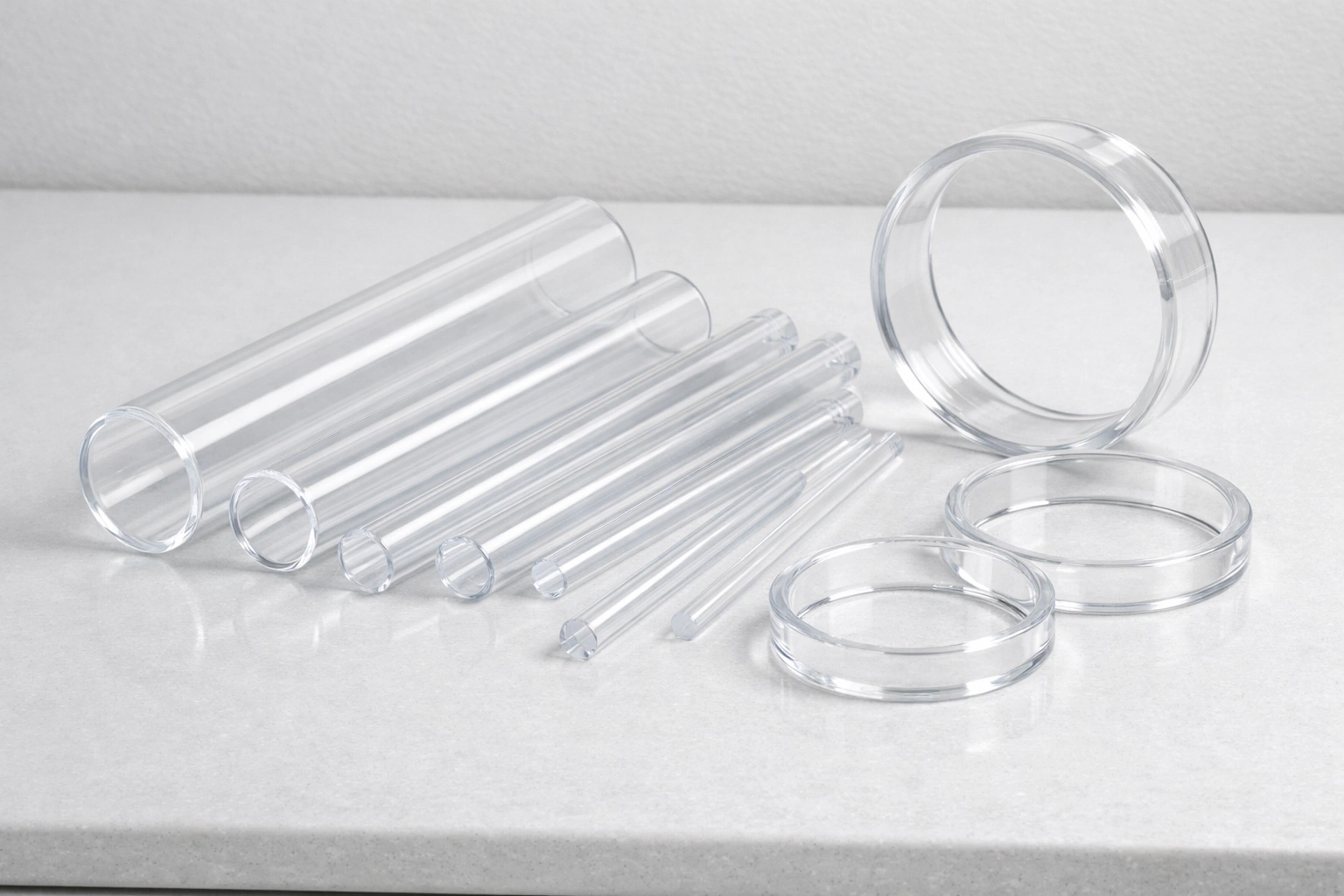
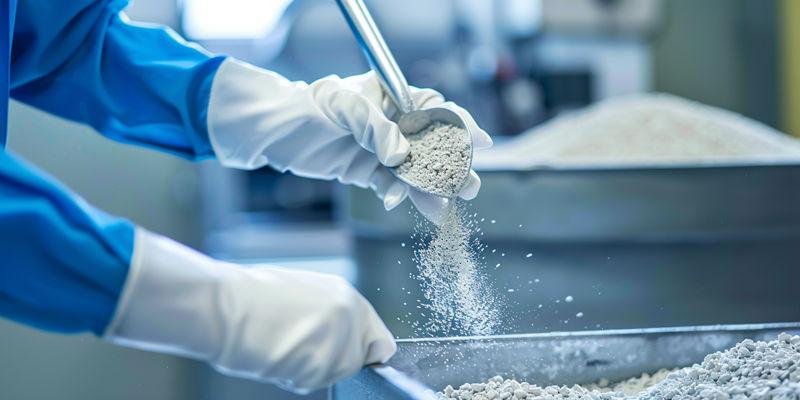
Quartz tube manufacturing transforms high-purity quartz into durable industrial tubes through a sequence of tightly controlled steps. The process includes:
Careful preparation of raw quartz to eliminate impurities.
Melting quartz at extreme temperatures for a bubble-free glass.
Forming molten quartz into tubes with precise dimensions.
Annealing to remove internal stresses.
Post-processing for exact size and surface quality.
Each stage demands strict purity, precision, and quality control. These factors explain how quartz tubes are made to meet demanding industrial standards.
Key Takeaways
High-purity quartz is essential for strong, reliable tubes. It prevents chemical reactions that can weaken the material.
Careful washing and purification remove impurities, ensuring the tubes resist corrosion and last longer.
Temperature control during melting is crucial. It prevents bubbles and defects, leading to high-quality quartz tubes.
Annealing eliminates internal stresses, making tubes more durable and able to withstand harsh conditions.
Post-processing steps like cutting and polishing enhance the final quality, ensuring tubes meet strict industrial standards.
What Raw Materials and Preparation Steps Start Quartz Tube Manufacturing?
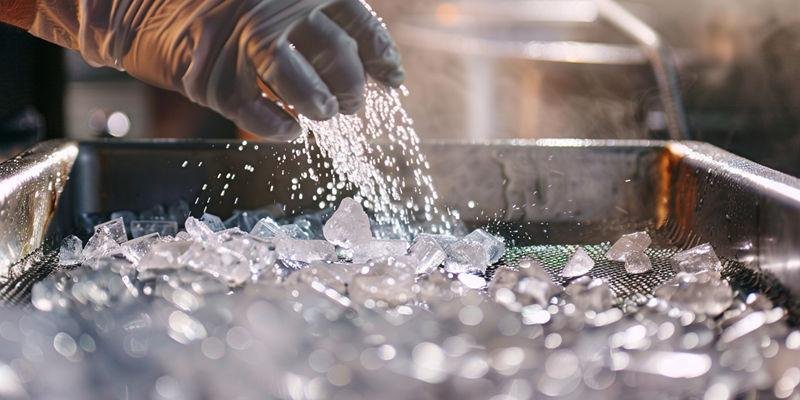
Quartz tube manufacturing begins with the selection of high-purity quartz sand or crystals. Facilities prioritize materials with at least 99.9% silicon dioxide to ensure the tubes meet industrial standards. The preparation process includes cleaning, crushing, and removing impurities to achieve metallic content below 20 ppm.
Raw Material Purity's Impact on Final Tube Performance
Raw material purity determines the chemical durability and strength of quartz tubes. When metallic impurities exceed 20 ppm, the tubes become more vulnerable to acid and alkali attack, which accelerates degradation and shortens service life. High-purity quartz, with minimal metallic content, resists chemical corrosion and maintains structural integrity under harsh conditions.
Manufacturers use advanced analytical methods to verify purity levels before processing. They rely on standards such as ASTM E438 to confirm that metallic impurities remain below the critical threshold. This careful selection process ensures that the final tubes perform reliably in demanding environments.
The choice of raw material directly affects how quartz tubes are made for industrial use.
Key points to remember:
High purity increases chemical resistance.
Low impurity levels extend tube lifespan.
Purity verification is essential for quality control.
Washing and Purification Methods for Metallic Contamination Removal
Washing and purification remove surface and embedded contaminants from quartz feedstock. Physical methods such as water washing, scrubbing, and magnetic separation target coarse impurities, while chemical techniques like acid leaching dissolve iron oxide films and other metallic residues. Microbial purification uses specific microorganisms to separate iron, though this process is slower and less common in industrial settings.
Manufacturers often combine these methods to maximize impurity removal. Joint purification strategies adapt to the properties of each quartz batch, ensuring thorough cleaning and consistent quality. Chemical purification, although more efficient, requires careful handling due to environmental concerns and cost.
The following table summarizes the main purification approaches used in quartz tube manufacturing:
Method Type | Description |
|---|---|
Physical Methods | Magnetic separation, gravity separation, flotation, ultrasonic cleaning, water washing. |
Chemical Methods | Acid leaching with sulfuric, hydrochloric, nitric, hydrofluoric, or oxalic acids. |
Microbial Methods | Use of bacteria to separate iron from oxidized ore. |
Joint Purification | Combination of methods tailored to quartz properties. |
Particle Size Distribution Effects on Melting Efficiency
Particle size distribution influences melting speed and final tube quality. Uniform particle sizes allow for consistent melting rates, which improves glass quality and production efficiency. Variations in particle size can lead to uneven melting, affecting tube strength and air permeability.
Manufacturers control particle size through crushing and milling processes. They aim for a distribution that balances fast fusion with minimal contamination from grinding media. Consistent particle size supports stable melting conditions and reduces defect rates in finished tubes.
A well-managed particle size distribution helps manufacturers optimize how quartz tubes are made for both strength and clarity.
Summary highlights:
Uniform particle size improves melting efficiency.
Consistency enhances tube quality and reduces defects.
Controlled milling supports reliable production.
How Is Quartz Sand Melted at 2000°C to Form Molten Glass?
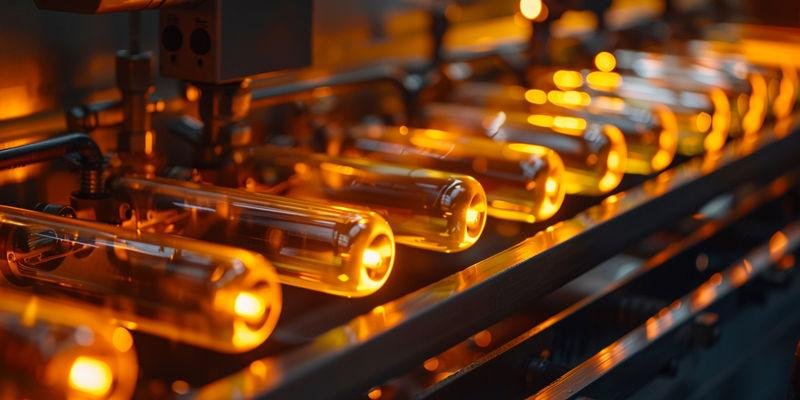
Quartz sand transforms into molten glass through a high-temperature process that demands precise control. Manufacturers use specialized furnaces to reach temperatures between 2000°C and 2200°C, ensuring the quartz melts evenly. This stage is critical in how quartz tubes are made, as temperature and atmosphere directly affect the purity and quality of the final product.
Temperature Control Systems for Uniform Melting
Temperature control plays a vital role in producing defect-free quartz glass. Operators must maintain the furnace temperature within a narrow range—typically within ±25°C—to prevent uneven melting and bubble formation. Specialized heating elements and advanced control systems help achieve this level of precision.
Modern quartz melting furnaces use a combination of sensors and programmable controllers to monitor and adjust the temperature in real time. These systems ensure that every part of the melt zone receives consistent heat, which is essential for producing high-quality tubes. For example, quartz tube furnaces and conveyor belt furnaces both feature highly accurate sensors and advanced control systems, but conveyor belt furnaces also include process monitoring and control capabilities for continuous production.
Feature | Quartz Tube Furnace | Conveyor Belt Furnace |
|---|---|---|
Precise Temperature Control | Equipped with advanced control systems for accurate regulation | Highly accurate sensors and advanced control systems |
Uniform Heating | Ensures consistent temperature distribution | Maintains accurate temperatures and heat treatment profiles |
Monitoring and Control | Not specified | Includes process monitoring and control capabilities |
Maintaining temperature uniformity is essential for how quartz tubes are made, as it reduces the risk of defects and ensures consistent tube properties.
Furnace Atmosphere Effects on OH Content and Purity
The composition of the furnace atmosphere has a significant impact on the properties of molten quartz glass. The presence of hydroxyl (OH) groups in the atmosphere can change the viscosity of the glass and influence bubble formation. Operators carefully control the atmosphere to limit unwanted chemical reactions and maintain high purity.
OH-group content affects not only the viscosity but also the formation of cristobalite, a crystalline phase that can weaken the tube. Metallic impurities, especially barium, can interact with OH groups and further alter the glass structure. The evolution of bubbles depends strongly on both OH content and impurity levels, making atmosphere control a key factor in how quartz tubes are made.
Key points about furnace atmosphere and purity:
OH-group content changes glass viscosity and bubble formation.
Metallic impurities and OH groups can promote unwanted crystallization.
Careful atmosphere control ensures high-purity, defect-free tubes.
Electrical Fusion vs Flame Fusion Property Differences
Manufacturers use two main methods to melt quartz: electrical fusion and flame fusion. Each method produces tubes with distinct physical and chemical properties. The choice of method depends on the intended application and required tube characteristics.
Electrical fusion uses resistance heating in a controlled atmosphere, resulting in quartz tubes with very low hydroxyl content—usually below 2 ppm—which can be further reduced by annealing. These tubes offer high infrared transmission and are ideal for applications that demand low OH levels. Flame fusion, on the other hand, introduces more hydroxyl groups into the glass, leading to lower viscosity and slightly reduced infrared transmission, but it produces tubes with very low bubble content and no drawing lines.
Property | Flame Fused Quartz | Electrically Fused Quartz |
|---|---|---|
Hydroxyl (OH) Content | High, cannot be reduced by annealing | Low, usually below 2ppm, can be reduced by annealing |
Thermal Properties | Lower viscosity, lower infrared transmission | High infrared transmission |
Impurities | Very low bubble content, no drawing lines | Certain bubbles and drawing lines present |
Selecting the right fusion method is a crucial decision in how quartz tubes are made, as it determines the tube’s suitability for specific industrial or optical uses.
What Forming Processes Shape Molten Quartz into Tubes?
Manufacturers shape molten quartz into tubes using advanced forming processes. These methods include continuous drawing, centrifugal casting, and blow-forming, each selected based on tube size, geometry, and production needs. Careful control of temperature, pulling rates, and monitoring systems ensures that every tube meets strict dimensional and quality standards.
Continuous Drawing's Dimensional Control During Forming
Continuous drawing forms most standard quartz tubes. Operators feed molten quartz through precision dies at 1665-1720°C, then pull the material at controlled speeds. This process shapes the tube and sets its diameter and wall thickness.
Real-time monitoring plays a crucial role in maintaining uniformity. Laser diameter sensors track the tube’s dimensions as it exits the die, sending feedback to automated pulling systems. These systems adjust pulling speed and die temperature to keep wall thickness within ±0.1 mm, as required by ASTM C693. Data from over 15,000 production runs shows that lines with automated feedback achieve less than 2% dimensional rejects, while manual systems can see rejection rates as high as 25%. Operators also monitor melt viscosity and temperature, since even a 30°C change can cause wall thickness to vary by 0.2 mm. Consistent pulling rates, typically between 2 and 8 meters per hour, help prevent diameter fluctuations and ensure long production runs with minimal waste.
For a quick overview of the key factors in continuous drawing, consider the following points:
Laser sensors provide real-time diameter feedback.
Automated pulling systems maintain tight tolerances.
Stable melt temperature and viscosity reduce defects.
Consistent pulling rates support high production yields.
Centrifugal Casting Advantages for Large-Diameter Tubes
Centrifugal casting offers unique benefits for producing large-diameter quartz tubes. This method spins a cylindrical mold at high speeds, typically 500-1500 RPM, while molten quartz enters the mold. The centrifugal force pushes the material outward, forming a tube with uniform wall thickness and density.
This process stands out for its ability to create tubes up to 6 meters in diameter and 15 meters in length. Rapid cooling during casting produces a fine, uniform grain structure, which enhances mechanical strength. The spinning action also eliminates impurities and trapped gases, resulting in cleaner, higher-quality tubes. Controlled solidification reduces casting defects, and even material distribution minimizes anisotropy, giving the tube consistent properties throughout. These features make centrifugal casting ideal for applications that demand reliability and precision, especially in mass production or when large sizes are required.
The following table highlights the main advantages of centrifugal casting for large-diameter quartz tubes:
Advantage | Description |
|---|---|
Uniform Thickness & Density | Ensures precise, consistent tube walls |
Enhanced Strength | Fine grain structure improves mechanical properties |
Cleaner Tubes | Centrifugal force removes impurities and gases |
Large Size Capability | Produces tubes up to 6 m diameter, 15 m length |
High Reliability | Reduces defects, supports mass production |
Blow-Forming vs Drawing Method Selection Criteria
Blow-forming and drawing serve different needs in quartz tube manufacturing. Blow-forming heats a solid quartz preform to the softening point, then applies internal air pressure to expand it into a tube shape. Drawing, in contrast, pulls molten quartz through a die to form tubes directly from the melt.
Manufacturers choose between these methods based on tube geometry, size, and cost. Blow-forming excels at producing complex shapes, such as tubes with variable diameters or spiral features, which drawing cannot achieve easily. However, drawing remains the preferred method for standard tubes with diameters between 5 and 150 mm, due to its lower production cost and higher throughput. Data from TOQUARTZ shows that drawing reduces production costs by 40-60% compared to blow-forming for standard sizes. When optical clarity and low bubble content are critical, manufacturers may also consider the forming method’s impact on final tube quality.
When selecting a forming process, manufacturers consider these factors:
Tube geometry and complexity
Required diameter and wall thickness
Production cost and volume
Desired optical and mechanical properties
By understanding these forming processes, readers gain a clearer picture of how quartz tubes are made to meet a wide range of industrial requirements.
Why Is Annealing Critical for Eliminating Internal Stress in Formed Tubes?
Annealing is a vital step in quartz tube manufacturing that ensures long-term durability and performance. This process removes internal stresses that develop during forming, which can otherwise lead to cracks or sudden failure. By optimizing temperature profiles and inspection methods, manufacturers can produce tubes that withstand repeated thermal cycling and harsh industrial conditions.
Temperature Profiles Optimized for Different Wall Thicknesses
Manufacturers design annealing temperature profiles based on the wall thickness of each quartz tube. The process involves four main stages: heating, holding at a constant temperature, controlled cooling, and natural cooling. For quartz glass, the recommended annealing temperature is around 1150°C, which effectively relieves thermal stress.
Thicker tubes require slower heating and cooling rates to prevent the formation of new stresses. For example, tubes with walls greater than 5 mm cool at rates of 20-30°C per hour, while thin-walled tubes under 2 mm can tolerate faster rates of 40-50°C per hour. This careful control ensures that the entire tube relaxes evenly, eliminating stress concentrations that could cause future fractures. Data from over 10,000 annealing cycles shows that following these optimized profiles increases tube lifespan by more than 300% in high-temperature applications.
To summarize the key points about temperature profiles:
Annealing temperature for quartz glass: ~1150°C
Four essential stages: heating, constant temperature, controlled cooling, natural cooling
Cooling rates depend on wall thickness for effective stress relief
Polarized Light Inspection for Residual Stress Detection
Polarized light inspection provides a reliable method for detecting residual stress in annealed quartz tubes. Technicians place the tube between two polarizers set at right angles. When polarized light passes through the quartz, it creates interference patterns—black, gray, and white bands—that reveal the presence and distribution of internal stress.
Higher stress levels appear as colored fringes, such as yellow, red, or blue, which indicate both the magnitude and location of stress within the tube. This visual feedback allows operators to identify areas that may require additional annealing or could pose a risk during service. The method offers a non-destructive way to ensure quality and consistency in every batch.
Inspection Method | Key Features |
|---|---|
Polarized Light Analysis | Reveals stress patterns and intensity |
Visual Interference Bands | Black, gray, white, and colored fringes |
Non-Destructive Testing | Ensures tube integrity before shipment |
Rapid Cooling Rate Effects on Delayed Fracture During Service
Rapid cooling during annealing can trap thermal gradients inside the quartz tube, leading to dangerous residual stresses. These stresses may not cause immediate failure but can result in delayed fractures after repeated heating and cooling cycles in service. Proper annealing, with controlled cooling rates, prevents these hidden weaknesses and extends the operational life of the tube.
Manufacturers have observed that tubes cooled too quickly show a 340% higher failure rate in high thermal cycle environments compared to properly annealed tubes. This data highlights the importance of matching cooling rates to wall thickness and application requirements. By understanding how quartz tubes are made and the role of annealing, users can appreciate the expertise required to produce reliable, high-performance products.
Key takeaways for preventing delayed fractures:
Avoid rapid cooling to minimize residual stress
Match cooling rates to tube wall thickness
Proper annealing increases tube durability and service life
What Post-Processing Steps Achieve Final Dimensions and Surface Quality?
Manufacturers rely on precise post-processing steps to achieve the final dimensions and surface quality required for quartz tubes. These steps include cutting, grinding, polishing, and cleaning, each designed to enhance accuracy and purity. The right combination of techniques ensures that quartz tubes meet strict industrial and semiconductor standards.
Laser Cutting vs Diamond Saw Processing Comparison
Laser cutting and diamond saw processing represent two main approaches for shaping quartz tubes. Laser cutting uses focused light to vaporize quartz along programmed paths, allowing for intricate designs and high precision. Diamond saws, on the other hand, use a physical blade embedded with diamond particles to slice through the material, producing minimal micro-cracks and a smoother edge.
Laser cutting excels in detail work, often achieving shapes and tolerances that traditional saws cannot match. However, it can introduce a thermal affected zone, leading to slightly rougher edges and potential micro-fractures. Diamond saws typically produce less edge chipping and a finer surface finish, making them suitable for applications where surface integrity is critical. The following table highlights key differences between these methods:
Parameter | Endless Diamond Wire Saw | Laser Cutting |
|---|---|---|
Typical Tolerance | ±0.03mm | ±0.05mm |
Edge Chipping | <10µm | 20-50µm thermal zone |
Surface Roughness | Ra 0.2-0.5µm | Ra 0.5-2µm |
Subsurface Damage | Minimal micro-cracks | Potential micro-fractures |
Laser cutting remains the preferred choice for complex geometries, while diamond saws offer superior surface quality for standard cuts.
Surface Finishing Techniques for Optical-Grade Polish
Surface finishing transforms the cut quartz tube into a product with optical-grade clarity. Lapping uses a rotating plate and abrasive slurry to grind and flatten the surface, achieving precise thickness and flatness. Polishing follows, using a fine abrasive on a soft pad to remove micro-scale roughness and create a mirror-like finish.
These techniques are essential for applications in optics and semiconductors, where even minor imperfections can affect performance. Data shows that lapping and polishing can reduce surface roughness from 3-5 μm Ra to less than 0.4 μm Ra, meeting the requirements for high-quality optical surfaces. The process also improves transmission and minimizes light scattering, which is critical for UV and IR applications. The table below summarizes the main finishing techniques and their purposes:
Technique | Description | Purpose |
|---|---|---|
Lapping | Rotating lap plate with abrasive slurry grinds and flattens | Achieves precise thickness and flatness |
Polishing | Fine abrasive on soft pad creates a mirror finish | Removes micro-roughness for optical-grade surfaces |
A flawless finish ensures that quartz tubes deliver optimal performance in demanding environments.
Cleanroom Processing Requirements for Semiconductor-Grade Tubes
Cleanroom processing plays a vital role in producing quartz tubes for semiconductor applications. Even trace impurities can contaminate wafers and disrupt sensitive manufacturing processes. Facilities use Class 100 cleanrooms, where the air contains fewer than 100 particles larger than 0.5 microns per cubic foot, to minimize contamination during final washing, inspection, and packaging.
Strict protocols govern every step, from ultrasonic cleaning to particle counting, ensuring that each tube meets the highest purity standards. High-purity quartz tubes support processes like epitaxial growth, where even minor contamination can compromise device performance. Different semiconductor processes require varying levels of purity, but all depend on rigorous contamination control for success.
To summarize the importance of cleanroom processing for semiconductor-grade tubes:
Purity prevents contamination of semiconductor wafers.
High-purity tubes are essential for advanced manufacturing steps.
Contamination control ensures reliable device performance.
Manufacturers who follow these protocols demonstrate a commitment to quality and reliability in how quartz tubes are made.
Quartz tube manufacturing involves a series of precise steps, each designed to ensure reliability and performance. Quality control at every stage—appearance checks, conductor resistance tests, and operation testing—prevents defects and supports consistent results. The process relies on high-purity raw materials, advanced purification, and careful forming. These measures explain why manufacturers achieve tubes that last for years, even in harsh environments. Understanding how quartz tubes are made highlights the expertise and attention to detail required for industrial success.
Quality Control Step | Purpose |
|---|---|
Appearance Check | Detects visual flaws |
Uniformity of Conductors | Ensures consistent tube structure |
Conductor Resistance Check | Confirms electrical integrity |
Operation Testing | Verifies tube functionality |
FAQ
Why does quartz tube manufacturing require such high purity raw materials?
High purity prevents unwanted chemical reactions and defects. Impurities can weaken the tube, reduce its lifespan, and cause failures during use. Manufacturers choose high-purity quartz to ensure strong, reliable tubes for demanding industrial applications.
Why do bubbles sometimes form in quartz tubes during melting?
Bubbles form when temperature control is poor or impurities remain in the quartz. These bubbles weaken the tube and reduce clarity. Careful temperature management and thorough purification help prevent bubble formation.
Why is annealing necessary after forming quartz tubes?
Annealing removes internal stresses created during forming. Without this step, tubes may crack or break during use. Proper annealing ensures the tube remains strong and durable through repeated heating and cooling cycles.
Why do some quartz tubes crack during cutting?
Cracks often result from micro-stresses left in the tube or from improper cutting techniques. Using precise tools and following correct procedures reduces the risk of cracks and ensures a clean, smooth cut.
Why do semiconductor applications demand cleanroom processing for quartz tubes?
Semiconductor processes require extreme cleanliness. Even tiny particles can contaminate wafers and cause device failures. Cleanroom processing ensures quartz tubes meet strict purity standards, supporting reliable semiconductor manufacturing.