Why Does Chemical Resistance Vary Between Quartz and Glass Tubes in Acid Processing?
Compare acid resistance: quartz (99.98% SiO₂) lasts 10,000-15,000h vs glass 800-1,500h in 70% HNO₃. Understand Na₂O leaching, attack rates & service life.

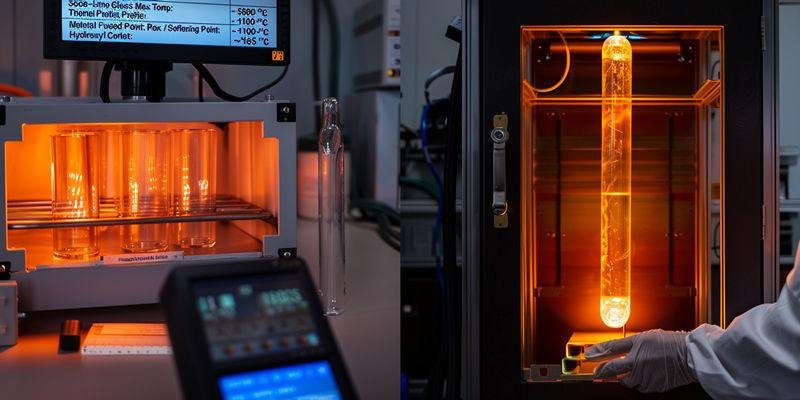
Compare acid resistance: quartz (99.98% SiO₂) lasts 10,000-15,000h vs glass 800-1,500h in 70% HNO₃. Understand Na₂O leaching, attack rates & service life.
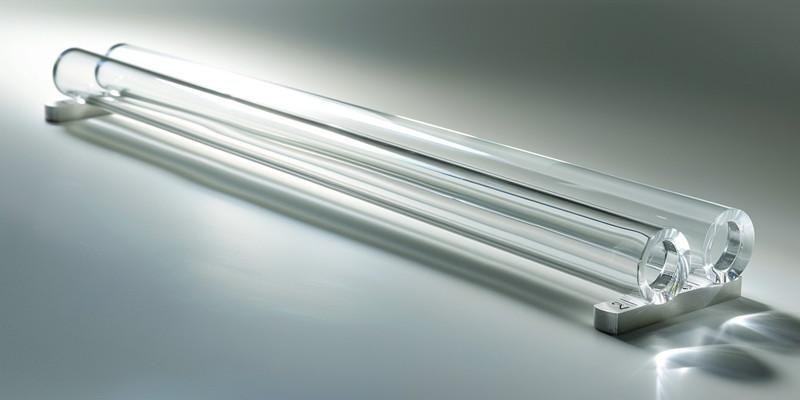
Compare rapid heating capability: quartz tubes enable 500°C/min vs glass limited to 150°C/min. Understand thermal stress, cycle life & process throughput.

Compare quartz (1665°C softening) vs borosilicate glass (820°C) for high-temp tubes. Learn composition differences affecting thermal cycling & deformation.

Learn fundamental differences: composition (99.98% vs 80% SiO₂), temperature limits (1200°C vs 500°C), UV transmission (85% vs <5%), applications & costs.

Specification guide: Wall thickness calculations, OH content by temperature, tolerance requirements & L/D ratios for reliable high-temperature tube performance.

Engineering analysis: How scaling from 300mm to 400mm+ quartz tubes delivers 23% energy savings and faster polysilicon production. ROI calculation included.

Compare 250-600mm quartz tube requirements across semiconductor, photovoltaic & industrial furnace applications. Purity specs, diameter selection & standards.

Which industries use 200-600mm quartz tubes? Explore applications in semiconductor, solar, furnace systems & sterilization. Specification requirements included.

Compare fire-polished, ground, and optically polished quartz tube ends. Specs for vacuum sealing, optical transmission, dimensional accuracy, and cost trade-offs.
TOQUARTZ: Quartz Glass Solution
Typically replies within minutes
Hi,This is Haber Ma ,Product Engineer at TOQUARTZ™.How Can I Help You ?
WhatsApp Us
🟢 Online | Privacy policy
WhatsApp us
Tell us what you need — Receive tailored pricing and lead time with 6hours.
* Check email after submit. Not received? Verify address.