
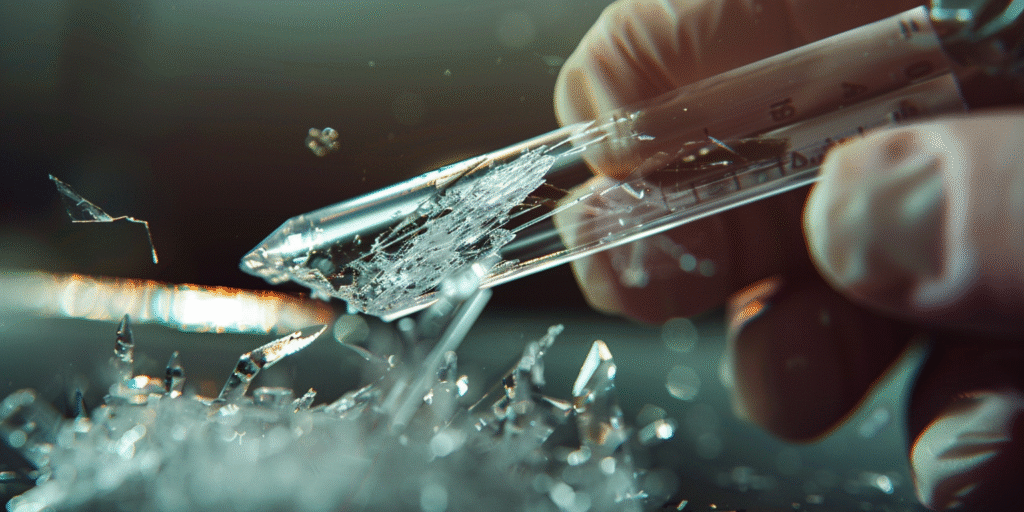
What Causes Quartz Tube Cutting Failures and How to Prevent Edge Damage?
Comprehensive analysis of cutting failure mechanisms for each method. Eliminate longitudinal cracking, edge chipping, and thermal damage with expert solutions.
Comprehensive analysis of cutting failure mechanisms for each method. Eliminate longitudinal cracking, edge chipping, and thermal damage with expert solutions.
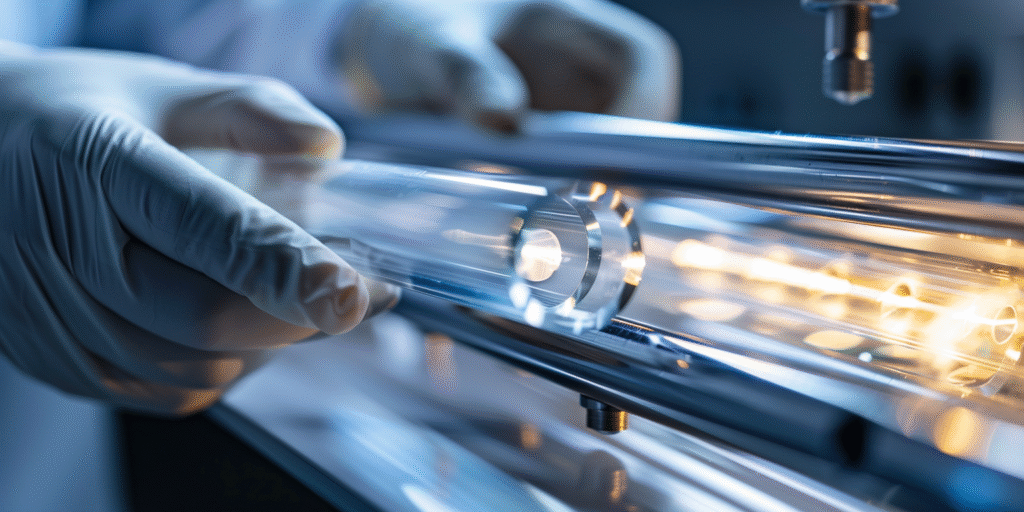
Professional guide to cutting quartz glass tubes for laboratory applications. Learn diameter-specific methods, breakthrough techniques, and edge finishing standards.

Quartz tube transmission dropping? Learn 5 degradation factors: contamination (5-30% loss), UV solarization, devitrification, thermal cycling, chemical attack.

Compare quartz tube wavelength transmission to borosilicate glass, sapphire, and fluoride tubes. See which material wins for UV, visible, and IR applications.

Complete wavelength transmission data for quartz tubes: >90% at 254 nm (UV-C), >92% at 365 nm (UV-A), >88% at 2,730 nm (IR). JGS grade comparison included.

Engineering guide to quartz tube pressure capacity: 0.7 MPa standard tubes, 3.5 MPa thick-wall, temperature effects, burst pressure testing & ASTM E438 safety specifications.

Why vacuum reduces quartz tube max temperature from 1200°C to 1000°C: heat transfer mechanisms, viscous deformation, OH content effects & design solutions per ASTM C1525.
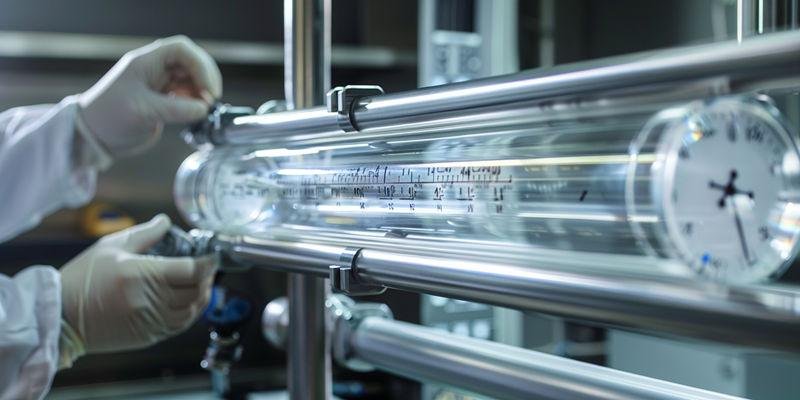
Prevent thermal shock failures: pressure change severity zones (mild <0.5 MPa to extreme >5 MPa), critical ramp rates, gas type effects & temperature-adjusted limits for cycling.
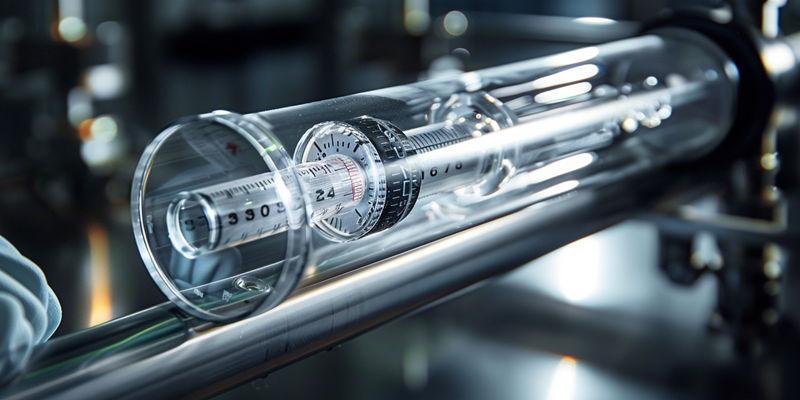
Quartz tube internal pressure ranges: 10⁻⁶ mbar vacuum to 15 MPa positive, spatial gradients (10-300%), temperature effects (P∝T), transient vs steady-state behavior analysis.