

How Do OH Content Variations Affect Laboratory Quartz Plate Performance?
Compare <30ppm electrically fused vs 150-200ppm flame-fused quartz specifications. IR transmission, thermal cycling, and high-temperature stability analysis.
Compare <30ppm electrically fused vs 150-200ppm flame-fused quartz specifications. IR transmission, thermal cycling, and high-temperature stability analysis.

When optical precision (Ra <10nm) matters vs industrial grade (Ra 50-100nm). Surface quality selection for spectroscopy, chemical resistance, and thermal use.

Optimize quartz thickness for thermal shock resistance (°C/min), optical path accuracy (±0.03mm), and pressure containment. Application-specific selection matrix.

Discover optimal UV transmission specifications for quartz plates across 190-400nm spectroscopy applications. Expert guide to wavelength-specific requirements.

Engineering guide to dimensional tolerance specification: O-ring compression calculations, thermal gradient modeling, RSS stack-up analysis. Compare precision (±0.2 mm) vs. standard (±0.5 mm) tolerances for vacuum and optical systems.

Prevent premature quartz tube failure in corrosive environments. Specify <0.01 mg/cm² weight loss, HGA 1 hydrolytic class, and <3 ppm alkali content. Includes HF avoidance protocols and temperature-scaled specifications.
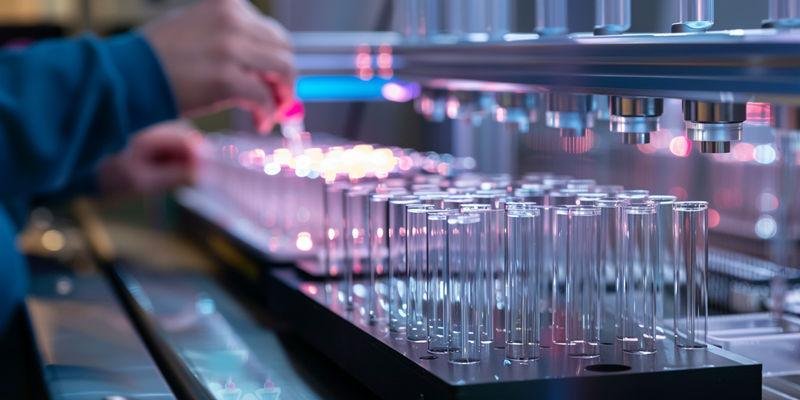
Achieve 20°C/min heating rates without tube failure. Learn how 0.5 × 10⁻⁶ K⁻¹ expansion coefficient enables rapid thermal cycling, prevents gradient stress >40 MPa, and extends furnace tube service life 3-4x.
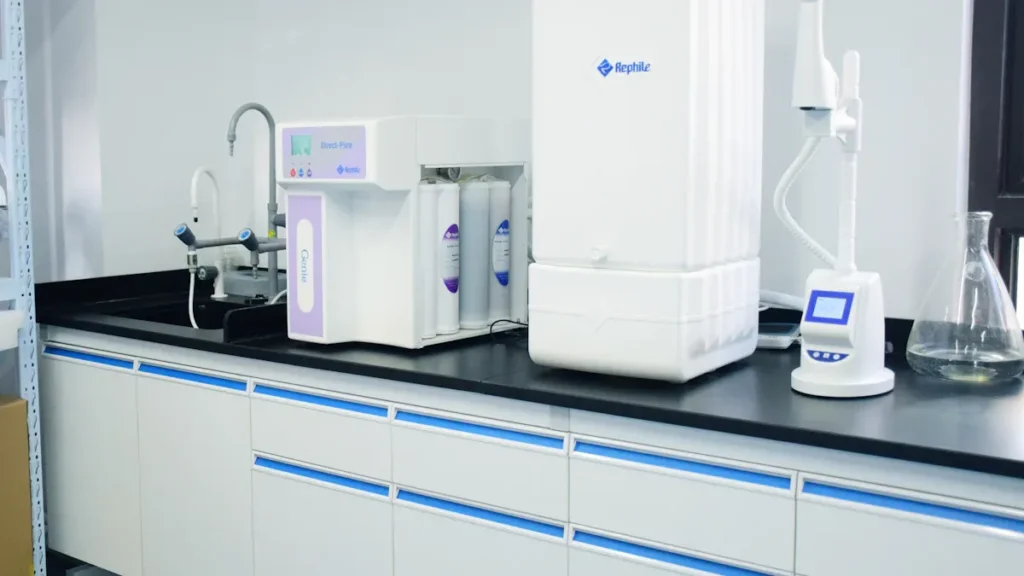
Match quartz tube purity to detection limits: 99.98% for routine work, 99.99% for trace analysis, 99.995% for ppb detection. Includes ICP-OES testing standards, impurity profiles, and procurement specifications.
Critical applications requiring heat-resistant quartz glass tubing: semiconductor furnaces, CVD processes, UV lamps, and analytical instruments at 800-1200°C operation.