Quartz glass is frequently specified in demanding technical environments, yet fragmented performance data often leads to conservative assumptions or design uncertainty when conditions become extreme.
This article consolidates the properties of quartz glass into a single, engineering-grade reference, clarifying measurable limits, condition dependencies, and practical boundaries without relying on generalized claims or application narratives.
Because thermal, optical, chemical, electrical, and mechanical behaviors interact rather than act independently, a structured evaluation framework becomes essential before any technical judgment is formed.
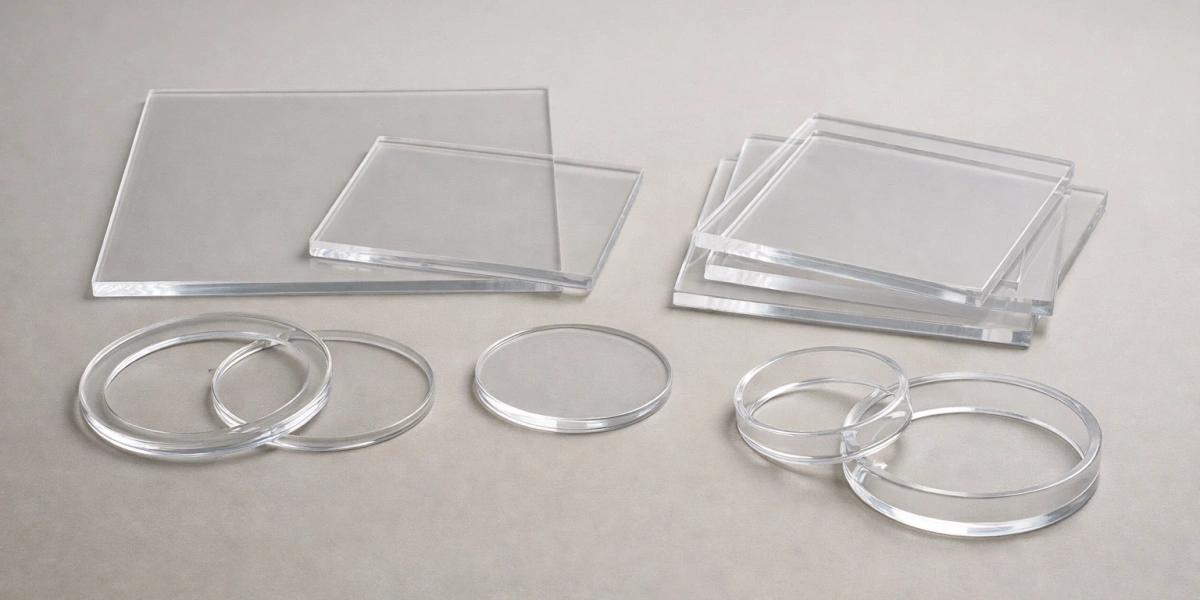
Why Quartz Glass Properties Matter In Technical Evaluation
Across laboratory equipment, high-temperature systems, and precision assemblies, quartz glass is cited as a reference material for stability. However, its performance envelope is rarely evaluated as a unified set of conditions, which can obscure real operational limits.
In technical assessments, the properties of quartz glass must be interpreted quantitatively, with explicit recognition of temperature dependence, environmental exposure, and intrinsic material constraints rather than isolated parameter values.
Thermal Characteristics Of Quartz Glass
Before optical transmission, chemical stability, or electrical insulation can be evaluated, thermal behavior establishes the fundamental feasibility boundary. Temperature governs dimensional stability, stress development, and long-term material integrity under service conditions.
Consequently, thermal characteristics are examined first, as they define whether quartz glass remains structurally reliable when exposed to sustained heat, rapid temperature gradients, or cyclic thermal loading.
Coefficient Of Thermal Expansion And Dimensional Stability
The coefficient of thermal expansion (CTE) of quartz glass is among the lowest observed in industrial glass materials, typically reported near 0.5 × 10⁻⁶ K⁻¹ at room temperature. This extremely small expansion rate explains the high dimensional stability observed during gradual heating.
As temperature increases beyond 500 °C, measured expansion remains minimal compared with borosilicate or soda-lime glass, which often exceed 3.0 × 10⁻⁶ K⁻¹ in the same range. This contrast becomes critical when assemblies involve constrained geometries or rigid interfaces.
From an engineering standpoint, low CTE does not eliminate thermal stress, but it significantly reduces mismatch strain accumulation, particularly in assemblies subjected to repeated heating and cooling cycles.
Thermal Shock Resistance And Temperature Gradient Tolerance
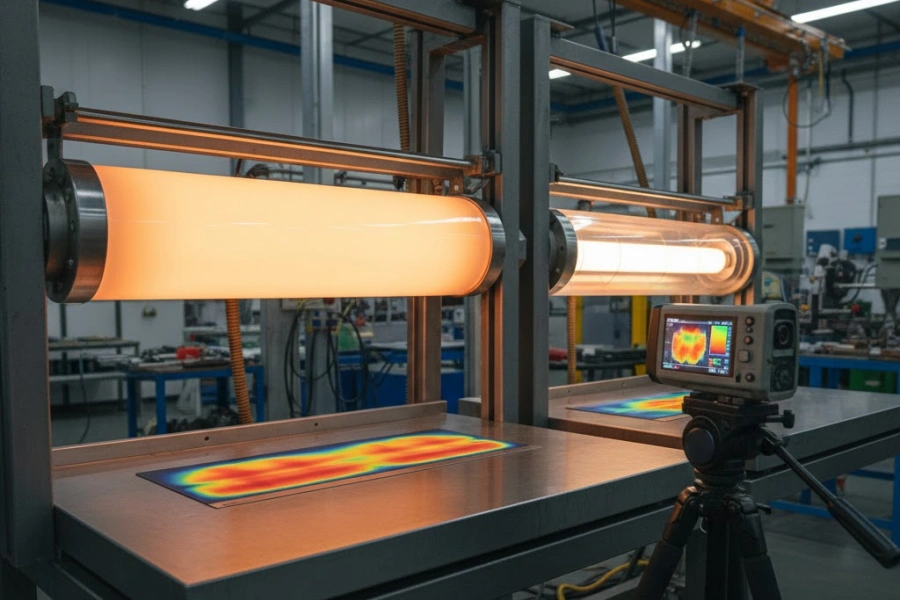
Thermal shock resistance in quartz glass arises from the combination of low CTE and moderate elastic modulus rather than high fracture toughness. Temperature gradients exceeding 200–300 °C over short distances can often be tolerated without immediate cracking under controlled conditions.
In experimental systems, rapid insertion of quartz glass components into hot zones near 800 °C has demonstrated survivability when surface defects are minimal and heating is non-asymmetric. Nevertheless, localized cooling or uneven heat extraction remains a dominant failure trigger.
Therefore, thermal shock resistance should be interpreted as gradient tolerance rather than immunity, with surface condition and geometry playing decisive roles alongside intrinsic material properties.
Continuous Service Temperature Versus Softening Behavior
Quartz glass exhibits a continuous service temperature typically quoted between 1000 °C and 1100 °C, where mechanical integrity and dimensional stability remain acceptable over extended durations. Short-term exposure to higher temperatures may be possible without immediate deformation.
Softening behavior begins near 1660–1710 °C, where viscosity decreases rapidly and structural rigidity is lost. This transition is gradual rather than abrupt, meaning deformation risk increases well before full softening is reached.
In long-term operation, time-dependent viscous flow becomes more relevant than peak temperature alone, requiring conservative interpretation of maximum allowable service conditions.
Thermal Conductivity And Heat Transfer Limitations
The thermal conductivity of quartz glass at room temperature typically ranges from 1.3 to 1.4 W·m⁻¹·K⁻¹, remaining relatively low even as temperature rises. At 1000 °C, values often remain below 2.0 W·m⁻¹·K⁻¹.
Such low conductivity limits heat dissipation and promotes temperature gradients under localized heating. In practice, quartz glass behaves as a thermal isolator rather than a heat-spreading medium.
Accordingly, thermal conductivity must be considered alongside expansion behavior to avoid unintended stress concentration in high-flux thermal environments.
Summary Of Thermal Properties
| Thermal Property | Typical Value Or Range | Temperature Dependence | Limiting Factors |
|---|---|---|---|
| Coefficient of Thermal Expansion (×10⁻⁶ K⁻¹) | 0.5–0.6 | Slight increase above 800 °C | Geometric constraint |
| Thermal Shock Tolerance (°C gradient) | 200–300 | Surface condition dependent | Flaws, asymmetry |
| Continuous Service Temperature (°C) | 1000–1100 | Time-dependent | Viscous flow |
| Softening Point (°C) | 1660–1710 | Rapid viscosity drop | Load presence |
| Thermal Conductivity (W·m⁻¹·K⁻¹) | 1.3–2.0 | Gradual increase | Heat flux density |
Optical Transmission Behavior Of Quartz Glass
Optical performance defines whether quartz glass can function reliably in radiation-sensitive and spectrally controlled environments. Beyond general transparency, transmission behavior depends on wavelength, material purity, hydroxyl content, and exposure history.
Accordingly, optical characteristics must be evaluated as a combination of intrinsic glass structure and condition-dependent limitations, rather than as a single universal transparency claim.
Fundamental Transparency From Ultraviolet To Infrared
Quartz glass exhibits a broad intrinsic transmission window extending from the ultraviolet into the infrared region, a consequence of its amorphous SiO₂ network and low electronic absorption. Under high-purity conditions, transmission typically begins near 170–180 nm in the ultraviolet and extends beyond 3.5 µm in the infrared.
In controlled optical measurements, visible-range transmittance commonly exceeds 90% per centimeter thickness, assuming polished surfaces and minimal bulk absorption. This level of transparency remains stable across moderate temperature variations, as electronic band structure is not strongly temperature dependent.
From practical experience in optical calibration systems, transmission losses are more often associated with surface condition, thickness variation, or contamination rather than intrinsic bulk absorption within the visible spectrum.
Deep Ultraviolet Transmission Limits And Conditions
Transmission in the deep ultraviolet region is not a universal property of all quartz glass variants. Meaningful transmittance below 200 nm requires extremely low impurity levels, particularly with respect to metallic contaminants and hydroxyl groups1.
In laboratory spectroscopic setups operating between 185–200 nm, synthetic fused quartz demonstrates measurable transmission, while electrically fused materials often show sharp absorption edges above this range. These differences are consistently observed during repeated wavelength scans.
As a result, deep ultraviolet transparency should be treated as a conditional property, dependent on glass chemistry and processing history rather than assumed by default.
OH Content And Its Influence On Optical Windows
Hydroxyl (OH) content plays a decisive role in shaping the optical transmission profile of quartz glass, especially at ultraviolet and infrared extremes. High-OH quartz glass typically exhibits enhanced ultraviolet transmission but increased absorption near 2.7–2.9 µm in the infrared.
Conversely, low-OH material shifts absorption away from the infrared region, enabling improved transmission above 3.0 µm, while often sacrificing deep ultraviolet performance. Measured OH concentrations can range from <5 ppm to >1000 ppm, leading to pronounced spectral differences.
In optical systems where wavelength selectivity is critical, OH content effectively defines the usable optical window and must be considered alongside thickness and surface finish.
Radiation Effects And Optical Stability Boundaries
Under prolonged exposure to high-energy radiation or intense ultraviolet flux, quartz glass may develop color centers that reduce transmission at specific wavelengths. These effects are most pronounced below 300 nm and increase with cumulative radiation dose.
Experimental irradiation studies have shown that transmission losses of 5–20% can occur in affected wavelength bands after extended exposure, depending on impurity content and thermal history. Partial recovery may occur upon annealing at elevated temperatures.
Therefore, optical stability should be evaluated not only at initial installation but also across the expected radiation exposure profile of the operating environment.
Summary Of Optical Properties
| Optical Property | Typical Value Or Range | Wavelength Dependence | Limiting Factors |
|---|---|---|---|
| UV Transmission Cutoff (nm) | 170–200 | Strong below 200 nm | Impurities, OH content |
| Visible Transmittance (%/cm) | >90 | Minimal | Surface finish |
| Infrared Transmission Limit (µm) | 3.0–3.5 | OH dependent | Hydroxyl absorption |
| OH Content (ppm) | <5–>1000 | UV–IR tradeoff | Processing route |
| Radiation-Induced Loss (%) | 5–20 | UV dominant | Dose, annealing |
Chemical Stability Of Quartz Glass In Reactive Environments
Chemical resistance is often cited as an inherent advantage of quartz glass, yet its behavior varies significantly with chemical species, temperature, and exposure duration. Stable performance therefore depends on understanding where chemical inertness applies and where measurable degradation begins.
Within reactive environments, chemical stability must be evaluated alongside thermal and structural conditions, as elevated temperature frequently accelerates reactions that remain negligible at ambient conditions.
Resistance To Acids And Oxidizing Media
Quartz glass demonstrates exceptional resistance to most inorganic acids due to the strong covalent bonding within the SiO₂ network. Exposure to hydrochloric, nitric, and sulfuric acids at room temperature typically results in negligible mass loss below 0.01 mg·cm⁻²·day⁻¹.
Under oxidizing conditions, including high-purity oxygen atmospheres up to 1000 °C, quartz glass maintains structural integrity without forming volatile surface products. Long-term tests in analytical systems have repeatedly shown unchanged surface morphology after hundreds of hours of exposure.
Such behavior supports the classification of quartz glass as chemically inert in acidic and oxidizing environments, provided temperature remains within established service limits.
Alkaline Corrosion And Temperature Dependence
In contrast, alkaline environments represent a well-defined limitation for quartz glass. Alkali hydroxides and carbonates readily attack the SiO₂ network by breaking siloxane bonds, leading to progressive surface dissolution.
Measured corrosion rates increase sharply with temperature, rising from <0.05 mm·year⁻¹ near 200 °C to values exceeding 1.0 mm·year⁻¹ above 600 °C in concentrated alkaline melts. Even dilute alkaline solutions can produce measurable etching when temperature is elevated.
Accordingly, chemical stability in alkaline conditions cannot be assumed and must be assessed as a combined function of composition, concentration, and operating temperature.
Behavior In Molten Salts And Reactive Vapors
Molten salts introduce additional complexity, as ionic species can penetrate surface layers and initiate localized reactions. Nitrate and sulfate melts below 400 °C generally show limited interaction, whereas fluoride-containing salts cause rapid degradation.
Reactive vapors, such as alkali metal or halogen-bearing species, may also induce surface modification at temperatures above 700 °C, even when bulk chemical attack remains limited. Such effects are often detected through increased surface roughness rather than macroscopic damage.
Therefore, chemical stability in molten or vapor-phase environments should be evaluated with attention to both chemical composition and partial pressure effects.
Summary Of Chemical Properties
| Chemical Property | Typical Behavior | Temperature Sensitivity | Limiting Factors |
|---|---|---|---|
| Acid Resistance | Excellent | Low | HF exclusion |
| Oxidizing Atmospheres | Stable up to 1000 °C | Moderate | Surface defects |
| Alkaline Corrosion Rate (mm·year⁻¹) | <0.05 to >1.0 | High | Concentration |
| Molten Salt Interaction | Variable | High | Ionic species |
| Reactive Vapor Stability | Conditional | High | Partial pressure |
Electrical And Dielectric Properties Of Quartz Glass
Electrical behavior becomes critical when quartz glass is used in environments combining elevated temperature, electrical fields, or high-frequency signals. Insulating performance cannot be evaluated at room temperature alone, as conductivity mechanisms evolve with thermal activation and field intensity.
Therefore, electrical and dielectric properties must be interpreted as temperature- and frequency-dependent parameters rather than fixed constants, particularly in precision and high-reliability systems.
Electrical Resistivity And Temperature Effects
At ambient conditions, quartz glass exhibits extremely high electrical resistivity, typically on the order of 10¹⁶–10¹⁸ Ω·cm, placing it among the most effective inorganic electrical insulators. This high resistivity originates from the absence of free charge carriers within the amorphous SiO₂ network.
As temperature increases, thermally activated ionic conduction becomes more prominent, leading to a gradual reduction in resistivity. Measurements at 800–1000 °C commonly report resistivity values decreasing to approximately 10⁸–10¹⁰ Ω·cm, still sufficient for insulation but no longer negligible in sensitive circuits.
From long-duration testing in heated sensor assemblies, leakage currents tend to increase smoothly rather than abruptly, indicating predictable degradation rather than sudden electrical failure.
Dielectric Constant And Loss Characteristics
The dielectric constant of quartz glass remains relatively stable across a wide frequency range, with typical room-temperature values between 3.7 and 3.9. This stability supports consistent capacitive behavior in alternating electric fields.
Dielectric loss, often expressed as loss tangent (tan δ), is exceptionally low at low and moderate frequencies, frequently reported below 0.001 at room temperature. Even at elevated temperatures approaching 500 °C, loss values generally remain within an order of magnitude of ambient measurements.
Such low dielectric losses are repeatedly observed in high-frequency measurement environments, where signal distortion remains minimal provided contamination and moisture adsorption are controlled.
Electrical Performance In High Temperature And Vacuum
In vacuum environments, quartz glass maintains electrical insulation without outgassing or conductive film formation, a property essential for high-voltage and electron-beam systems. The absence of volatile constituents minimizes surface charge migration under vacuum conditions.
Electrical breakdown strength2 typically exceeds 20–30 kV·mm⁻¹ at room temperature, decreasing with temperature and surface condition. At elevated temperatures, breakdown behavior becomes increasingly influenced by surface roughness and electrode geometry rather than bulk properties alone.
Consequently, reliable electrical performance depends on both intrinsic dielectric strength and external field configuration, particularly in high-temperature vacuum applications.
Summary Of Electrical And Dielectric Properties
| Electrical Property | Typical Value Or Range | Temperature Dependence | Limiting Factors |
|---|---|---|---|
| Electrical Resistivity (Ω·cm) | 10¹⁶–10¹⁸ | Strong decrease | Ionic conduction |
| Resistivity at 1000 °C (Ω·cm) | 10⁸–10¹⁰ | High | Impurities |
| Dielectric Constant | 3.7–3.9 | Low | Frequency |
| Dielectric Loss (tan δ) | <0.001 | Moderate increase | Moisture |
| Breakdown Strength (kV·mm⁻¹) | 20–30 | Decreases | Surface condition |
Mechanical And Physical Constants Of Quartz Glass
Mechanical behavior of quartz glass is often misinterpreted because high hardness and stiffness coexist with brittle fracture characteristics. Accurate evaluation therefore requires separating elastic response, resistance to surface damage, and failure mechanisms rather than treating strength as a single metric.
Accordingly, mechanical and physical constants should be interpreted as indicators of stress tolerance and dimensional reliability, not as measures of ductility or impact resistance.
Density And Structural Uniformity
The density of quartz glass typically lies within 2.20–2.22 g·cm⁻³, reflecting the compact yet non-crystalline nature of the amorphous SiO₂ network. This narrow range indicates high compositional uniformity when impurities are minimized.
Unlike crystalline materials, density variations in quartz glass are not associated with grain boundaries or phase transitions, but rather with residual porosity and impurity content. High-purity material consistently shows density deviations below ±0.5%.
In precision assemblies, such uniformity supports predictable mass distribution and dimensional consistency across components of varying geometry.
Elastic Modulus And Load Response
Quartz glass exhibits a Young’s modulus typically reported between 70 and 75 GPa, placing it below many structural ceramics but above most polymeric materials. This modulus indicates substantial stiffness under elastic loading.
Under applied stress, elastic deformation remains linear up to fracture, with no measurable plastic deformation. As a result, stress redistribution through yielding does not occur, and local stress concentrations directly govern failure.
From structural testing in constrained fixtures, failure stress often varies more with surface condition than with bulk elastic properties, underscoring the dominance of flaw-controlled fracture.
Poisson Ratio And Stress Distribution
The Poisson ratio of quartz glass is relatively low, commonly reported in the range of 0.16–0.18, reflecting limited lateral strain under axial loading. This characteristic influences how stress propagates through constrained geometries.
Low Poisson ratio reduces transverse expansion, which can mitigate interface stress in assemblies with rigid constraints. However, it also concentrates tensile stress when external deformation is restricted.
Consequently, Poisson ratio should be considered when evaluating multi-axis loading scenarios, particularly in thermally constrained environments.
Hardness Scratch Resistance And Brittle Failure
Quartz glass demonstrates a Mohs hardness of approximately 5.5–6.0, providing good resistance to surface scratching under moderate contact loads. Vickers hardness values are commonly reported near 500–600 HV, depending on test conditions.
Despite this hardness, fracture toughness remains low, typically around 0.7–0.9 MPa·m¹ᐟ², confirming the brittle nature of failure. Cracks propagate rapidly once initiated, with minimal energy absorption.
Therefore, mechanical reliability depends more on surface quality and flaw control than on nominal hardness or stiffness values alone.
Summary Of Mechanical And Physical Properties
| Mechanical Property | Typical Value Or Range | Sensitivity | Limiting Factors |
|---|---|---|---|
| Density (g·cm⁻³) | 2.20–2.22 | Low | Impurity content |
| Young’s Modulus (GPa) | 70–75 | Low | Temperature |
| Poisson Ratio | 0.16–0.18 | Low | Constraint |
| Vickers Hardness (HV) | 500–600 | Moderate | Surface finish |
| Fracture Toughness (MPa·m¹ᐟ²) | 0.7–0.9 | High | Surface flaws |
Summary Of Key Material Properties Of Quartz Glass
The material properties discussed above converge into a coherent performance envelope when viewed collectively. The following summary consolidates quantitative ranges and condition dependencies into a single reference framework suitable for technical evaluation.
Consolidated Material Property Ranges And Limits
| Property Category | Property Parameter | Typical Value Or Range | Primary Condition Dependence | Principal Limiting Factors |
|---|---|---|---|---|
| Thermal | Coefficient of Thermal Expansion (×10⁻⁶ K⁻¹) | 0.5–0.6 | Temperature | Geometric constraint |
| Thermal | Thermal Shock Tolerance (°C gradient) | 200–300 | Surface condition | Flaws, asymmetry |
| Thermal | Continuous Service Temperature (°C) | 1000–1100 | Time at temperature | Viscous flow |
| Thermal | Softening Point (°C) | 1660–1710 | Load, duration | Structural deformation |
| Thermal | Thermal Conductivity (W·m⁻¹·K⁻¹) | 1.3–2.0 | Temperature | Heat flux density |
| Optical | UV Transmission Cutoff (nm) | 170–200 | Purity, OH content | Impurities |
| Optical | Visible Transmittance (%/cm) | >90 | Thickness | Surface finish |
| Optical | Infrared Transmission Limit (µm) | 3.0–3.5 | OH concentration | Hydroxyl absorption |
| Optical | OH Content (ppm) | <5–>1000 | Processing route | Spectral tradeoff |
| Chemical | Acid Resistance | Excellent | Low temperature | HF exposure |
| Chemical | Alkaline Corrosion Rate (mm·year⁻¹) | <0.05–>1.0 | Temperature | Alkali concentration |
| Chemical | Oxidizing Atmosphere Stability | Stable to 1000 °C | Temperature | Surface defects |
| Electrical | Electrical Resistivity (Ω·cm) | 10¹⁶–10¹⁸ | Temperature | Ionic conduction |
| Electrical | Resistivity at 1000 °C (Ω·cm) | 10⁸–10¹⁰ | Temperature | Impurities |
| Electrical | Dielectric Constant | 3.7–3.9 | Frequency | Polarization |
| Electrical | Dielectric Loss (tan δ) | <0.001 | Temperature | Moisture |
| Electrical | Breakdown Strength (kV·mm⁻¹) | 20–30 | Surface condition | Electrode geometry |
| Mechanical | Density (g·cm⁻³) | 2.20–2.22 | Composition | Residual porosity |
| Mechanical | Young’s Modulus (GPa) | 70–75 | Temperature | Structural relaxation |
| Mechanical | Poisson Ratio | 0.16–0.18 | Constraint | Multiaxial stress |
| Mechanical | Vickers Hardness (HV) | 500–600 | Test load | Surface quality |
| Mechanical | Fracture Toughness (MPa·m¹ᐟ²) | 0.7–0.9 | Flaw population | Brittle fracture |
Conclusion
Material properties of quartz glass cannot be evaluated through isolated parameters. Thermal behavior governs feasibility, optical transmission depends on purity and radiation exposure, chemical stability varies sharply with environment, electrical insulation weakens with temperature, and mechanical constants define stress tolerance rather than strength.
A unified interpretation of these properties enables accurate boundary definition and prevents overextension beyond intrinsic material limits.
FAQ
What is the typical thermal expansion of quartz glass?
The linear thermal expansion coefficient is approximately 0.5 × 10⁻⁶ K⁻¹ at room temperature, remaining far lower than most technical glasses across wide temperature ranges.
Can quartz glass withstand rapid temperature changes?
Quartz glass tolerates large temperature gradients, often exceeding 200 °C, provided surface defects are minimal and heating remains symmetric.
Does quartz glass soften abruptly at high temperature?
Softening occurs gradually near 1660–1710 °C as viscosity decreases, meaning deformation risk increases progressively rather than suddenly.
Is thermal conductivity high in quartz glass?
Thermal conductivity remains low, typically below 2.0 W·m⁻¹·K⁻¹ even at elevated temperatures, limiting heat dissipation.
References: