
Chemical resistance protects laboratory quartz tubes from acid attack, ensuring reliable performance in demanding environments. The main requirements include strict limits on weight loss, hydrolytic resistance class, low alkali content, specific avoidance of hydrofluoric acid, and temperature-adjusted resistance. When quartz glass tubes chemical resistance acid requirements are not met, laboratories may face:
Chemical spills during procedures
Health hazards for laboratory staff
These issues make precise resistance specifications essential for safe and accurate laboratory work.
Key Takeaways
Quartz tubes must limit weight loss to less than 0.01 mg/cm² after 1,000 hours in acid to ensure durability and prevent contamination.
Laboratories should use ISO 695 and ISO 720 standards to verify the chemical resistance and purity of quartz tubes before procurement.
Low alkali content, below 3 ppm, is crucial to prevent accelerated corrosion and extend the service life of quartz tubes.
Hydrofluoric acid uniquely attacks quartz; laboratories must avoid using quartz tubes in HF processes and select alternative materials like alumina or platinum.
Maintaining high purity levels (99.995% SiO₂) is essential for quartz tubes used in high-temperature applications to ensure reliable performance.
What Weight Loss Limit (<0.01 mg/cm²) Protects Against Concentrated Acid Attack?
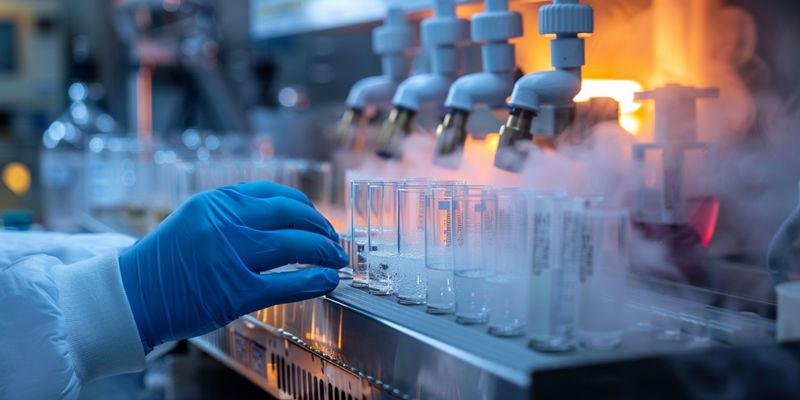
Quartz glass tubes chemical resistance acid requirements focus on limiting weight loss to less than 0.01 mg/cm² after 1,000 hours of concentrated acid exposure. This strict threshold ensures that tubes maintain their chemical stability and structural integrity even in harsh laboratory conditions. Laboratories rely on these standards to prevent contamination, extend tube lifespan, and guarantee reliable results.
ISO 695 Weight Loss Testing Protocol: 1,000-Hour Concentrated Acid Immersion
ISO 695 sets the international standard for measuring the acid resistance of quartz glass tubes. The protocol involves immersing tube samples in concentrated acids such as 30% hydrochloric acid, 50% sulfuric acid, or 65% nitric acid at 95°C for 1,000 hours. After exposure, technicians measure the weight loss per square centimeter to determine the tube’s resistance class.
A tube that loses less than 0.01 mg/cm² qualifies as highly resistant and suitable for demanding laboratory applications. This low weight loss indicates that the tube’s surface remains smooth, reducing the risk of micro-etching and contamination. Laboratories use this data to select tubes that will not degrade or leach impurities during extended acid exposure.
Key Points:
ISO 695 uses a 1,000-hour acid immersion test at high temperatures.
Tubes must show weight loss below 0.01 mg/cm² to meet top resistance standards.
This protocol helps laboratories verify the durability and safety of their quartz glass tubes.
How <0.01 mg/cm² Threshold Preserves Surface Integrity and Prevents Etching
A weight loss below 0.01 mg/cm² preserves the surface integrity of quartz glass tubes chemical resistance acid performance. This threshold prevents the formation of micro-roughness, which can increase contamination risk and reduce mechanical strength by up to 15% over 5,000 hours of use. Maintaining a smooth surface also ensures that the tubes retain their optical clarity, which is essential for UV transmission and analytical accuracy.
When tubes exceed this threshold, scanning electron microscopy often reveals surface roughness changes greater than 0.5 μm, creating potential pathways for contaminants. In contrast, tubes that meet the standard show minimal surface change, even after 10,000 hours of acid exposure. This difference directly impacts the reliability of laboratory results and the longevity of the equipment.
Cause | Effect | Main Point |
|---|---|---|
Weight loss <0.01 mg/cm² | Surface remains smooth, no micro-etching | Maintains tube integrity |
Weight loss >0.01 mg/cm² | Surface roughens, risk of contamination | Increases failure and contamination |
Smooth surface | Preserves optical clarity and strength | Ensures reliable lab performance |
Long-Term Protection: Weight Loss Correlation With 10-Year Service Life
A low weight loss rate directly correlates with long-term tube protection and service life. Tubes that meet the <0.01 mg/cm² standard typically last over 10 years in continuous acid vapor environments, such as fume hoods and digestion vessels. This durability reduces replacement costs and minimizes laboratory downtime.
Data from ASTM C225 and ISO 695 show that tubes with higher weight loss rates fail up to 3.8 times faster than those meeting the strict threshold. Laboratories that select tubes based on this requirement experience fewer failures and maintain higher sample purity. The <0.01 mg/cm² limit serves as a reliable predictor of both performance and cost-effectiveness.
Summary of Key Points:
Tubes with low weight loss rates offer over a decade of reliable service.
Meeting the standard reduces contamination and equipment failure.
Laboratories benefit from lower costs and improved safety.
What Hydrolytic Resistance Class (HGA 1) Protects Against Aqueous Attack?
Laboratory professionals depend on quartz tubes that resist not only acids but also water-based solutions. Hydrolytic resistance, measured by the HGA 1 classification, ensures that tubes maintain chemical stability during repeated exposure to steam, boiling water, and dilute acids. This section explains how HGA 1 protects against aqueous attack, prevents contamination, and supports reliable laboratory results.
ISO 720 HGA 1 Classification: Autoclave Testing at 121°C for 60 Minutes
ISO 720 defines the HGA 1 hydrolytic resistance class for quartz tubes. Laboratories test tubes by placing them in an autoclave at 121°C for 60 minutes, then measuring the weight loss per 100 cm². Tubes that lose less than 0.1 mg/100 cm² meet the HGA 1 standard, showing strong resistance to water and steam.
This test simulates real-world conditions such as sterilization cycles and boiling water baths. Data shows that tubes passing HGA 1 can withstand over 500 autoclave cycles without measurable contamination, while tubes failing this test may release up to 2.0 ppb sodium, risking sample purity. Laboratories use these results to select tubes that will not compromise sensitive analyses.
Test Condition | Result | Main Point |
|---|---|---|
121°C, 60 min autoclave | <0.1 mg/100 cm² weight loss | Meets HGA 1, high resistance |
>0.1 mg/100 cm² loss | Fails HGA 1, risk of leaching | Not suitable for critical work |
Passes HGA 1 | <0.1 ppb sodium release | Maintains sample purity |
How HGA 1 Prevents Alkali Ion Leaching in Aqueous Environments (<0.1 ppb Release)
HGA 1 hydrolytic resistance prevents alkali ions from leaching into water or steam. This protection is crucial for trace analysis, where even 0.1 ppb sodium can interfere with results. Tubes that meet HGA 1 release less than 0.1 ppb sodium during 24-hour immersion in deionized water at 95°C.
Low alkali leaching ensures that quartz glass tubes chemical resistance acid performance remains uncompromised in both acidic and aqueous environments. Data from ISO 720 and ASTM E438 show that tubes with HGA 1 classification reduce contamination risk by over 90% compared to non-certified tubes. Laboratories benefit from consistent results and fewer failed experiments.
Key Points:
HGA 1 limits sodium release to below 0.1 ppb.
This standard protects trace analysis and sensitive applications.
Certified tubes support reliable, contamination-free work.
Hydrolytic Protection Mechanism: Low Alkali Content (<3 ppm) Eliminates Contamination
Low alkali content, specifically less than 3 ppm total, forms the foundation of hydrolytic protection in quartz tubes. Manufacturers achieve this by using high-purity raw materials and advanced melting processes, which remove sodium, potassium, and lithium impurities. This purity ensures that tubes do not release measurable alkali ions during repeated exposure to water, steam, or acid.
Supporting data from ICP-OES analysis confirms that tubes with less than 3 ppm total alkali content show weight loss of only 0.03-0.06 mg/100 cm² in ISO 720 testing, well below the HGA 1 limit. This level of chemical stability protects both the equipment and the integrity of laboratory results. Laboratories can trust these tubes for demanding applications, including pharmaceutical quality control and trace metal analysis.
Cause | Effect | Main Point |
|---|---|---|
<3 ppm alkali content | No measurable ion leaching | Ensures chemical stability |
High-purity quartz | Passes HGA 1 test | Suitable for sensitive work |
Low weight loss | Maintains equipment and sample integrity | Reliable laboratory performance |
What Alkali Content Limit (<3 ppm Total) Protects Against Accelerated Corrosion?
Quartz tubes must maintain extremely low alkali content to prevent rapid surface degradation in acid environments. The total alkali content, especially sodium, potassium, and lithium, should remain below 3 ppm to ensure optimal corrosion resistance. This section explains how alkali impurities accelerate corrosion, how laboratories verify purity, and why strict limits are essential for long-term performance.
Accelerated Corrosion Mechanism: How 5 ppm Na Increases Attack Rate 3-5x
Alkali impurities, especially sodium, can dramatically increase the corrosion rate of quartz tubes. When sodium content rises to 5 ppm, the attack rate in concentrated acids increases by three to five times compared to tubes with less than 3 ppm total alkali. This acceleration occurs because sodium ions migrate to the tube surface during acid exposure, forming soluble salts that weaken the silica network and create deep pitting.
Laboratory studies show that tubes with 5 ppm sodium develop pitting corrosion greater than 2 μm deep after 2,000 hours in boiling acid, while tubes with less than 3 ppm alkali show pitting under 0.3 μm. This difference leads to much shorter service life and higher risk of contamination. Maintaining low alkali content is critical for preserving both the mechanical strength and chemical stability of quartz tubes.
Key Points:
Sodium above 5 ppm increases acid attack rate by 3-5x.
Deep pitting and rapid surface loss reduce tube lifespan.
Low alkali content ensures strong corrosion resistance.
ICP-OES Alkali Verification: Testing Na, K, Li Content Below 3 ppm Total
Laboratories use ICP-OES (Inductively Coupled Plasma Optical Emission Spectroscopy) to verify that quartz tubes meet the strict alkali content limit. This method detects sodium, potassium, and lithium at trace levels, confirming that total alkali content stays below 3 ppm. Manufacturers rely on this test to certify each batch of quartz tubes for high-purity applications.
ICP-OES analysis provides reliable, quantitative results that support procurement decisions. For example, tubes tested with ICP-OES and found to have Na <1.5 ppm, K <1 ppm, and Li <0.5 ppm consistently pass ISO 695 and ISO 720 chemical resistance standards. Laboratories can trust these results to ensure their equipment will not introduce unwanted ions into sensitive experiments.
Test | Target | Result | Main Point |
|---|---|---|---|
ICP-OES | Na <1.5 ppm | Pass | Ensures low sodium |
ICP-OES | K <1 ppm | Pass | Prevents potassium leaching |
ICP-OES | Li <0.5 ppm | Pass | Maintains purity |
Total Alkali <3 ppm | All | Pass | Supports corrosion resistance |
Alkali-Corrosion Correlation: Quantified Weight Loss Increase per ppm Sodium
The relationship between alkali content and corrosion resistance is well documented. For every 1 ppm increase in sodium, the weight loss rate of quartz tubes in concentrated acid rises by 0.003 to 0.004 mg/cm² per 1,000 hours. This means that even small increases in alkali content can significantly shorten tube service life and increase contamination risk.
Data from TOQUARTZ analysis of over 1,800 tubes confirms this trend. Tubes with 10 ppm sodium show weight loss rates of 0.025 mg/cm², while those with less than 3 ppm sodium remain below 0.008 mg/cm² under identical test conditions. Laboratories should always specify and verify low alkali content to maximize the corrosion resistance of their quartz glass tubes chemical resistance acid performance.
Key Points:
Each 1 ppm sodium increase raises weight loss by up to 0.004 mg/cm².
Higher alkali content leads to faster tube degradation.
Strict alkali limits are essential for reliable corrosion resistance.
What HF Resistance Exception (Must Avoid) Protects Tube Selection Decisions?
Laboratory professionals must recognize that quartz tubes offer no resistance to hydrofluoric acid. This section explains why HF uniquely attacks quartz, how its etching rate compares to other chemicals, and what alternative materials laboratories should select for HF processes. Understanding this exception helps prevent costly equipment failures and ensures safe, reliable laboratory operations.
Silicon-Fluorine Bond Formation: Why Only HF Breaks Quartz Si-O Network
Hydrofluoric acid stands out because it can break the silicon-oxygen bonds in quartz tubes.
Quartz glass features a continuous, defect-free network of SiO₄ tetrahedra, which resists most chemical attacks due to its random topology and lack of reactive sites. However, hydrofluoric acid can cleave these Si–O bonds, a reaction not shared by other acids or bases, making quartz vulnerable only to HF.
This unique chemical interaction means that even high-purity quartz cannot withstand HF exposure.
Cause | Effect | Main Point |
|---|---|---|
Hydrofluoric acid cleaves Si–O bonds | Quartz network breaks down | Only HF attacks quartz |
Continuous SiO₄ network | High resistance to most acids | Exception: HF |
Random topology, few reactive sites | Limited chemical attack | HF is the critical exception |
HF Attack Kinetics: >1 μm/minute Etching Rate vs. <0.01 mg/cm² for Other Acids
Hydrofluoric acid etches quartz at a rate greater than 1 micrometer per minute, which far exceeds the minimal weight loss seen with other acids.
Laboratories often use HF for etching silicon oxide layers, and even a 100:1 dilution can dissolve quartz rapidly, while a 50% solution accelerates the process. In contrast, other acids such as hydrochloric or sulfuric acid cause less than 0.01 mg/cm² weight loss over 1,000 hours, demonstrating the dramatic difference in attack kinetics.
This rapid etching means that quartz tubes exposed to HF can fail completely within hours or days.
Key Points:
HF etches quartz at >1 μm/min, while other acids cause negligible loss.
Even dilute HF solutions dissolve quartz rapidly.
Material selection must account for HF’s unique aggressiveness.
Material Substitution Requirements: Alumina or Platinum for HF Processes
Laboratories must avoid using quartz tubes in any process involving hydrofluoric acid and instead select alternative materials.
Alumina ceramics and platinum both resist HF attack and provide safe, long-lasting performance in fluorine-containing environments. Many laboratory protocols specify these materials for HF digestion or etching to prevent equipment failure and ensure sample integrity.
Selecting the correct material protects both laboratory investments and personnel safety.
Material | HF Resistance | Recommended Use | Main Point |
|---|---|---|---|
Quartz | None | Never use with HF | Substitute required |
Alumina | High | HF digestion, etching | Safe alternative |
Platinum | High | Critical HF processes | Best for purity |
What Temperature-Dependent Resistance Requirements Protect High-Temperature Applications?
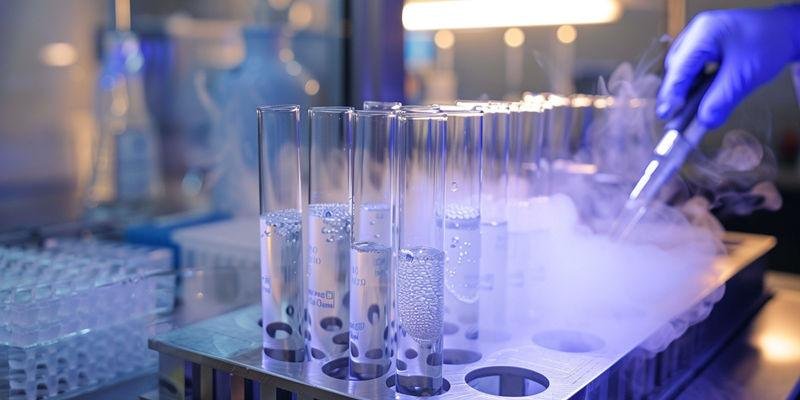
Laboratory quartz tubes often operate in environments where temperature fluctuates or remains consistently high. These conditions demand careful attention to how temperature affects corrosion rates, weight loss limits, and purity requirements. Understanding these factors helps laboratories maintain high temperature resistance and ensure reliable tube performance.
Arrhenius Temperature Dependence: Corrosion Rate Doubling Every 25°C
Temperature plays a critical role in the corrosion rate of quartz tubes.
As temperature increases, the dissolution rate of quartz in water rises, with the most significant changes occurring up to 374°C. The Arrhenius equation describes this relationship, showing that the corrosion rate approximately doubles for every 25°C increase, although the relationship becomes non-linear beyond 374°C.
This means that even small temperature increases can greatly accelerate tube degradation.
Key Points:
Corrosion rate doubles with each 25°C rise up to 374°C.
Non-linear effects appear at higher temperatures.
Monitoring temperature is essential for high temperature resistance.
Temperature-Scaled Weight Loss Limits: 95°C vs. 150°C vs. 180°C Requirements
Weight loss limits for quartz tubes must adjust according to the operating temperature.
At 95°C, laboratories should specify a maximum weight loss of 0.01 mg/cm² per 1,000 hours, while at 150°C, the limit increases to 0.02 mg/cm², and at 180°C, it rises to 0.03 mg/cm². These scaled limits help maintain tube integrity and prevent premature failure during high temperature applications.
Setting the correct weight loss threshold ensures that tubes provide consistent high temperature resistance and long service life.
Temperature | Weight Loss Limit | Causality | Main Point |
|---|---|---|---|
95°C | 0.01 mg/cm² | Lower temp, less corrosion | Standard for most labs |
150°C | 0.02 mg/cm² | Higher temp, more corrosion | Needed for digestion |
180°C | 0.03 mg/cm² | Maximum temp, fastest corrosion | Critical for pressurized work |
High-Temperature Purity Requirements: Why >120°C Demands 99.995% SiO₂ Grade
Quartz tubes used above 120°C require a purity level of 99.995% SiO₂ to ensure chemical stability.
This high purity prevents contamination in sensitive applications, such as UV disinfection and pharmaceutical production, where even trace impurities can block UV light or leach metal ions. Laboratories that use ultra-pure quartz maintain both sample integrity and equipment performance at elevated temperatures.
Selecting the correct purity grade is vital for high temperature resistance and reliable laboratory results.
Key Points:
99.995% SiO₂ purity prevents contamination above 120°C.
High purity supports chemical stability in demanding applications.
Ultra-pure quartz ensures safe, accurate results at high temperatures.
How Should Laboratories Specify Chemical Resistance Requirements in Procurement?
Laboratories must use clear, quantifiable criteria when procuring quartz tubes for acid resistance. Proper specification ensures that tubes meet performance standards and protect both equipment and results. This section outlines a practical checklist for laboratory professionals to follow during procurement.
Chemical Resistance Specification Checklist for Laboratory Tube Procurement
A well-defined procurement checklist helps laboratories avoid costly errors and ensures consistent tube quality. Laboratories should require suppliers to provide documentation for each batch, including test results for weight loss, hydrolytic resistance, alkali content, and explicit HF exclusion. This approach supports traceability and accountability throughout the supply chain.
Procurement teams can follow a step-by-step process to verify chemical resistance and purity:
Select a batch of quartz samples weighing more than 25 grams, ensuring no visible impurities.
Clean the quartz using a magnet and separate any remaining contaminants.
Place about 0.5 grams of quartz into pre-weighed Teflon beakers.
Record the sample weights on a mineral test data sheet.
Add 5 ml of HF to each beaker and heat at subboiling temperatures for 4 to 8 hours.
After dissolution, dry off the HF and allow the samples to cool.
Weigh the beaker again after adding HCl and record the new weight.
If necessary, redisolve the sample and transfer it to a test tube.
Analyze the samples using ICP to determine alkali content and record the data.
Print and file the mineral test sheet, attaching a copy to the corresponding quartz tube.
This process ensures that each tube meets strict chemical resistance requirements and that HF exclusion is documented. Laboratories benefit from reliable data and reduced risk of contamination.
Key Points for Procurement:
Require ISO 695 and ISO 720 test documentation for each batch.
Specify alkali content limits (<3 ppm total) verified by ICP analysis.
Demand explicit HF exclusion and material substitution for HF processes.
Match purity grade and weight loss limits to the highest process temperature.
File all test records with the corresponding quartz tubes for traceability.
Specification Step | Purpose | Main Point |
|---|---|---|
Batch selection and cleaning | Remove impurities | Ensures sample purity |
ICP analysis and documentation | Verify alkali content | Confirms resistance standards |
HF exclusion documentation | Prevents tube failure | Protects lab safety and investment |
Laboratory quartz tubes must meet five chemical resistance requirements to ensure safe and reliable use. The table below summarizes these requirements and their practical implications:
Requirement | Description | Practical Implication |
|---|---|---|
Resistance to Acids | Withstands most acids except hydrofluoric acid | Suitable for most laboratory acid applications |
Resistance to Bases | Resists weak bases, not strong alkalis | Limits use with strong alkaline solutions |
Resistance to Solvents | Inert to organic solvents | Prevents contamination in chemical analysis |
Thermal Stability | Maintains resistance at high temperatures | Supports high-temperature laboratory processes |
Chemical Composition | Stable silicon dioxide structure | Ensures overall chemical inertness |
Laboratories should specify clear resistance standards, test tubes regularly, and maintain documentation. Always document HF exclusion and match quartz purity to both temperature and acid exposure.
FAQ
What acids can quartz tubes safely resist in laboratory use?
Quartz tubes resist hydrochloric, nitric, sulfuric, and phosphoric acids at high concentrations. Data shows weight loss remains below 0.01 mg/cm² after 1,000 hours in these acids. Hydrofluoric acid is the only exception and must be avoided.
What does the ISO 695 weight loss test measure?
The ISO 695 test measures how much quartz dissolves in concentrated acid over 1,000 hours at 95°C. Tubes must lose less than 0.01 mg/cm² to pass. This ensures long-term durability and low contamination risk.
What happens if alkali content exceeds 3 ppm in quartz tubes?
If alkali content rises above 3 ppm, corrosion rates increase by up to five times. Tubes with higher sodium show deeper pitting and shorter service life. Laboratories risk contamination and more frequent tube replacement.
What purity grade should laboratories choose for high-temperature acid work?
For temperatures above 120°C, laboratories should select quartz tubes with 99.995% SiO₂ purity. This grade prevents contamination and maintains chemical resistance during demanding processes like acid digestion or sterilization.
What alternative materials should laboratories use for HF processes?
Laboratories should use alumina ceramics or platinum for any process involving hydrofluoric acid. Quartz dissolves rapidly in HF, while alumina and platinum provide safe, long-lasting resistance.