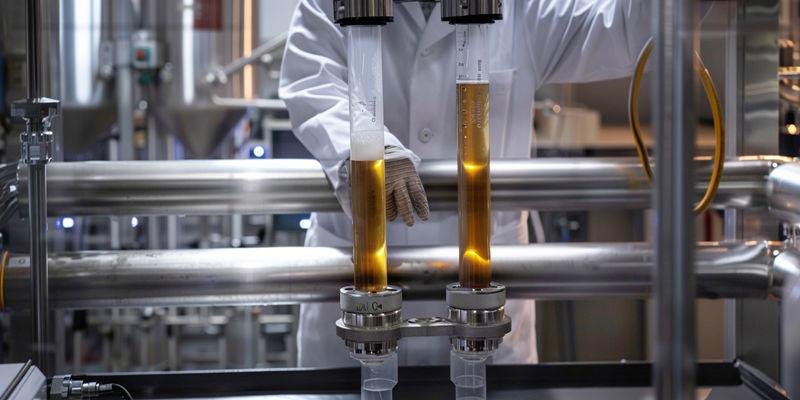
Atmospheric composition quartz tube temperature ratings depend on the specific gases present in the furnace. Different environments change how heat transfers, how quartz reacts chemically, and which failure mechanisms dominate. Users in semiconductor, laboratory, and industrial settings must understand these effects to select quartz tubes for furnace applications safely.
Atmospheric Type | Description and Effects on Quartz Tubes |
|---|---|
Inert Environments | Utilizes nitrogen/argon to prevent oxidation, enhancing quartz tube longevity. |
Reducing Atmospheres | Employs hydrogen-rich gases to remove oxygen, which can affect tube integrity. |
Vacuum Conditions | Operates at low pressure (down to 1 Torr), minimizing contamination risks. |
Quartz tube temperature ratings shift as the atmosphere changes, so operators must match each process zone to the right quartz specification. The type of gas—whether inert, reducing, or vacuum—directly controls quartz tube safety, durability, and service life.
Key Takeaways
Understand the impact of atmospheric composition on quartz tube performance. Different gases like nitrogen, hydrogen, and oxygen affect heat transfer and chemical reactions.
Monitor temperature and gas concentration closely. High temperatures and reactive gases can lead to rapid erosion and failure of quartz tubes.
Apply the strictest derating factor based on the most aggressive atmosphere. This ensures safe operation and protects against unexpected failures.
Control moisture levels in furnace gases. Even small amounts of water vapor can significantly increase erosion rates and compromise quartz integrity.
Select high-purity semiconductor grade quartz tubing. This choice minimizes contamination and supports optimal performance in high-temperature applications.
How Does Vacuum Atmosphere Reduce Quartz Tube Temperature Ratings?
Vacuum atmospheres in high-temperature furnaces change the way quartz tubes handle heat and stress. This shift in atmospheric composition quartz tube temperature ratings results from the removal of gas molecules, which alters thermal transfer and increases the risk of localized damage. Understanding these effects helps operators maintain performance and quality in semiconductor and laboratory furnace applications.
How Eliminating Convection Changes Heat Transfer Mechanisms
Vacuum conditions remove convection as a thermal transfer method in the furnace. The absence of gas means that only radiation can move heat away from the quartz tube, which lowers the overall thermal transfer coefficient from 10-25 W/m²·K (with convection) to just 2-8 W/m²·K (radiation only). This change causes the furnace to rely on less efficient thermal processes, making it harder to keep the quartz tube at a uniform temperature.
The lack of convection leads to uneven heating, which increases the risk of thermal shock and reduces the resistance of the quartz tube to rapid temperature changes. Operators notice that the temperature difference between the hottest and coolest parts of the tube can reach 100-150°C, compared to just 20-40°C in a furnace with atmospheric pressure. This uneven heating can cause the quartz to deform or fail, especially in critical semiconductor processes.
Key points to remember:
Vacuum eliminates convection, leaving only radiation for thermal transfer.
Quartz tubes for furnace applications experience larger temperature gradients.
Uneven heating reduces shock resistance and can lower tube performance.
Why Radiation-Only Cooling Creates Localized Hot Spots
Radiation-only cooling in a vacuum leads to the formation of hot spots on the quartz tube. Experimental studies using focused proton beams have shown that these hot spots can develop quickly, with thermal diffusivity measurements revealing severe localized heating even at moderate temperatures. The absence of gas molecules prevents the rapid dissipation of heat, so certain areas of the tube reach much higher temperatures than the rest.
Localized hot spots increase the risk of exceeding the quartz tube’s thermal expansion coefficient, which can cause cracks or deformation. The optical and structural quality of the tube may decline as these hot spots persist, especially when the furnace operates near its maximum temperature. Operators in high-temperature furnaces must monitor for these effects to maintain sio₂ purity and meet industry standards.
Cause | Effect on Quartz Tubes | Resulting Risk |
|---|---|---|
Radiation-only cooling | Localized hot spots | Deformation, reduced quality |
No convection | Poor heat distribution | Lower resistance, more impurities |
High temperature | Increased thermal gradients | Optical and structural failure |
Temperature-Viscosity Relationship Explaining the 1000°C Vacuum Limit
The relationship between temperature and viscosity sets a clear operational limit for quartz tubes in vacuum. As temperature rises above 1000°C, the viscosity of quartz drops sharply, causing the material to flow more easily and lose its shape. Empirical data shows that at these high temperatures, the breakdown of the Stokes-Einstein relation leads to much higher diffusivity, which means the quartz cannot maintain its structural integrity.
This loss of viscosity explains why the maximum safe temperature for quartz tubes in vacuum is 1000°C, even when the sio₂ purity and optical quality remain high. The process of viscous flow becomes dominant, and the tube’s resistance to deformation drops, making it unsuitable for higher temperature furnace operations. Operators must follow strict standards to avoid exceeding this limit and risking tube failure.
Key points for operators:
Viscosity decreases rapidly above 1000°C in vacuum.
High diffusivity leads to loss of structural resistance.
Maintaining temperature below 1000°C preserves tube performance and quality.
How Do Reducing Atmospheres (H₂, CO) Lower Temperature Ratings Through Chemical Erosion?
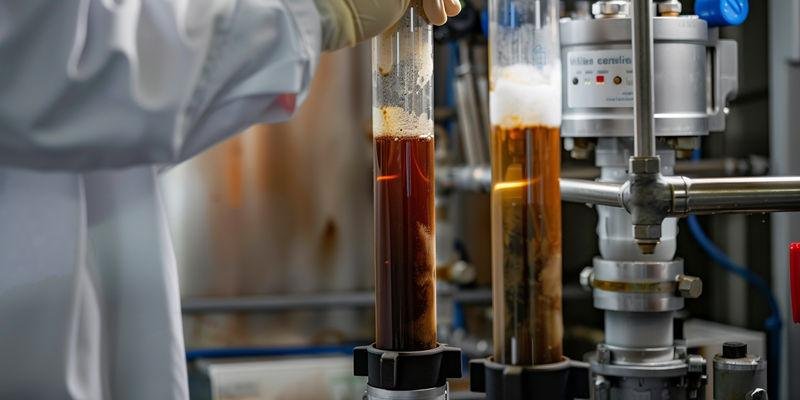
Reducing atmospheres containing hydrogen or carbon monoxide change the way quartz tubes behave in high-temperature furnaces. These gases trigger chemical reactions that erode the quartz surface, lowering the maximum safe temperature for furnace operation. Understanding why this happens helps operators maintain performance and meet industry standards for purity and quality.
Chemical Reduction Reaction Kinetics Above 1000°C
Chemical reduction reactions begin to dominate quartz tube degradation above 1000°C. Hydrogen atoms interact with the quartz surface, breaking Si–O–Si bonds and forming SiH and SiOH groups, which accelerates erosion. The activation energy for this process is about 126 kJ/mol, so the reaction rate increases quickly as temperature rises.
Key points for operators:
Higher temperature boosts the chemical reduction rate.
Hydrogen atoms drive the erosion by attacking quartz bonds.
Erosion is minimal at room temperature but becomes significant in high-temperature furnaces.
This process explains why atmospheric composition quartz tube temperature ratings must be lowered in reducing environments.
How Temperature and H₂ Concentration Interact to Control Erosion Rate
Temperature and hydrogen concentration work together to control how fast quartz tubes erode. When the furnace temperature exceeds 1000°C, higher hydrogen levels cause the etching rate to rise sharply, especially in semiconductor applications where purity matters. The erosion rate can double for every 50°C increase, and higher hydrogen concentrations amplify this effect.
Factor | Effect on Quartz Tubes | Causal Relationship |
|---|---|---|
Temperature | Increases erosion rate | Higher temperature lowers resistance |
H₂ Concentration | Boosts chemical attack | More hydrogen means faster erosion |
Furnace Pressure | Affects reaction kinetics | Lower pressure can speed up reactions |
Operators must monitor both temperature and hydrogen concentration to protect quartz tubes for furnace applications.
Moisture Catalysis: Why Water Vapor Accelerates Erosion 3-4×
Moisture in the gas composition acts as a powerful catalyst for quartz erosion. Water vapor helps transport oxygen and protons, which speeds up the breakdown of the quartz network and prevents protective layers from forming. Even small amounts of water vapor, such as 200 ppm, can accelerate erosion rates by three to four times, reducing sio₂ purity and optical quality.
Summary of moisture effects:
Water vapor increases erosion rate dramatically.
Moisture prevents protective layers from forming on quartz.
Operators must control moisture to maintain resistance and standards.
This moisture-driven acceleration explains why furnace operators must keep gas dry to preserve quartz tube performance and extend service life.
How Do Oxidizing Atmospheres (O₂, Air) Accelerate Devitrification and Reduce Temperature Ratings?
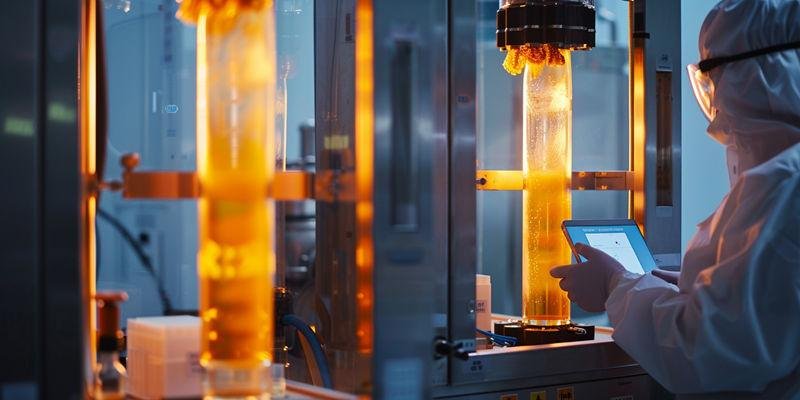
Oxidizing atmospheres in high-temperature furnaces change the way quartz tubes behave and perform. Oxygen and air speed up devitrification, which lowers the maximum safe temperature for quartz tubes for furnace applications. Operators must understand why these changes occur to maintain standards and protect furnace performance.
Oxygen's Role as a Devitrification Catalyst
Oxygen acts as a catalyst for devitrification in quartz tubes. The presence of oxygen increases the rate at which crystalline phases form inside the quartz, especially during repeated exposure in semiconductor furnace processes. Oxygen molecules interact with the quartz network, creating non-bridging oxygen sites that lower the energy needed for nucleation and growth.
Key Points:
Oxygen accelerates devitrification by modifying the quartz structure.
Impurities, including oxygen, increase the kinetics of phase changes.
Repeated oxidizing exposure in furnace environments speeds up devitrification.
Oxygen’s catalytic effect explains why atmospheric composition quartz tube temperature ratings must be reduced in oxidizing atmospheres.
How Oxidizing Atmospheres Lower Nucleation Energy Barriers
Oxidizing atmospheres lower the nucleation energy barrier for devitrification. Oxygen molecules adsorb onto the quartz surface, creating defect sites that make it easier for crystalline phases to form. This process increases the risk of devitrification, which can reduce sio₂ purity and optical quality in high-temperature furnaces.
Cause | Effect | Resulting Risk |
|---|---|---|
Oxygen adsorption | Creates defect sites | Easier nucleation |
Lower energy barrier | Faster crystallization | Reduced resistance |
Increased devitrification | Loss of purity and quality | Shortened service life |
Lower nucleation energy barriers explain why quartz tubes in oxidizing atmospheres have reduced resistance and shorter service intervals.
Temperature-Dependent Acceleration: Why Effect Amplifies Above 1100°C
The acceleration of devitrification in quartz tubes becomes much stronger above 1100°C. Higher temperature increases the rate at which oxygen interacts with the quartz network, causing faster growth of crystalline layers and deeper devitrified zones. This temperature-dependent effect leads to a 20-35% increase in devitrification rate, which shortens service life and raises the risk of optical and structural failure.
Key Points:
Temperature above 1100°C amplifies devitrification in quartz tubes.
Oxygen’s effect grows stronger as thermal energy rises.
Operators must monitor furnace temperature to maintain standards and quality.
Temperature-dependent acceleration explains why furnace operators must lower temperature ratings in oxidizing atmospheres to protect quartz tube performance and maintain sio₂ purity.
How Do Halogen and Corrosive Gases Severely Restrict Temperature Ratings Through Chemical Attack?
Halogen and corrosive gases present the most severe challenge for quartz tubes in high-temperature furnaces. These gases trigger rapid chemical reactions that degrade quartz, forcing operators to set the lowest temperature ratings for safe operation. Understanding why these reactions occur helps maintain furnace performance and meet industry standards for purity and quality.
Halogen Chemical Attack Mechanisms: SiCl₄ and SiF₄ Formation
Halogen gases such as chlorine and fluorine attack quartz through direct chemical reactions. The process converts quartz into volatile compounds like SiCl₄ and SiF₄, which escape from the tube surface and cause rapid material loss. This reaction undermines sio₂ purity and optical quality, especially in semiconductor furnace environments.
Halogen concentration and temperature both influence the rate of attack. Higher concentrations of HCl or F₂ increase corrosion rates, with severe degradation observed at elevated temperatures. The process accelerates when the furnace operates above 900°C, and the presence of impurities like hydroxyl groups can further reduce resistance.
Halogen Gas | Reaction Product | Effect on Quartz Tubes | Causal Relationship |
|---|---|---|---|
Chlorine (Cl₂) | SiCl₄ | Rapid erosion | High halogen concentration increases attack |
Fluorine (F₂) | SiF₄ | Severe loss of material | Elevated temperature amplifies corrosion |
Dual Temperature Sensitivity: Kinetics and Thermodynamics
Temperature affects both the speed and completeness of halogen corrosion in quartz tubes. The reaction kinetics double for every 40-50°C increase, while thermodynamic equilibrium shifts toward more volatile product formation. This dual sensitivity means that even small increases in furnace temperature can cause catastrophic failure and loss of structural resistance.
Operators observe that corrosion rates rise sharply with higher halogen concentrations and temperature. For example, at 900°C, dry HCl causes moderate erosion, but at 1000°C, the rate increases dramatically, and at 1100°C, tubes may fail within 1,500 hours. The interaction between temperature and halogen concentration makes atmospheric composition quartz tube temperature ratings especially critical for quartz tubes for furnace applications.
Key points for operators:
Temperature and halogen concentration amplify corrosion.
Reaction kinetics and thermodynamics both drive rapid quartz degradation.
Maintaining lower furnace temperature preserves tube quality and performance.
Moisture Synergy: Why 100-200 ppm H₂O Accelerates Corrosion 3-4×
Moisture in the furnace gas acts as a powerful catalyst for halogen corrosion. Even small amounts of water vapor, such as 100-200 ppm, can accelerate the breakdown of quartz by three to four times, reducing sio₂ purity and optical resistance. The presence of moisture prevents protective layers from forming and increases the risk of thermal shock and failure.
Operators must control moisture levels to maintain standards and extend service life. Drying the furnace atmosphere to a dewpoint below -40°C helps reduce corrosion rates and preserve the thermal expansion coefficient of quartz. This process ensures that quartz tubes meet purity and optical requirements for semiconductor and laboratory applications.
Summary of moisture effects:
Moisture accelerates halogen corrosion 3-4×.
Water vapor prevents protective layers on quartz.
Strict moisture control maintains furnace performance and quality.
How Should You Adjust Temperature Ratings Based on Your Specific Atmospheric Composition?
Operators must adjust quartz tube temperature ratings to match the specific gas, pressure, and moisture conditions in each furnace. This adjustment is necessary because different atmospheres change the thermal, chemical, and structural behavior of quartz. Understanding why these changes occur helps maintain performance, quality, and safety in high-temperature furnaces.
tmosphere-Specific Derating Factor Application
Atmospheric composition directly determines the safe temperature for quartz tubes. Each gas type—such as vacuum, reducing, oxidizing, or halogen—alters the thermal transfer and chemical resistance of quartz, so operators must apply a derating factor to the standard rating. Using the correct derating factor prevents rapid erosion, deformation, or devitrification, which can compromise sio₂ purity and optical quality.
Operators should always use the most restrictive derating factor when multiple risks are present, as this approach protects against the worst-case scenario. For example, a furnace with both hydrogen and halogen gases must use the lower temperature rating required by halogens, since their chemical attack is more severe. Regular monitoring for erosion and dimensional changes ensures that the quartz maintains its thermal shock resistance and fused quartz properties throughout the process.
Key Points for Derating Application:
Always identify all gas species and moisture levels in the furnace.
Apply the strictest derating factor based on the most aggressive atmosphere.
Monitor quartz tubes for erosion and adjust maintenance intervals as needed.
Multi-Component Atmospheres
Multi-component atmospheres require careful analysis because each gas can affect quartz differently. When several reactive gases are present, their combined effects may lower the safe temperature even further, especially if moisture or pressure changes occur during thermal cycling. Operators must understand why the most aggressive gas sets the limit for temperature and resistance.
Atmospheric Factor | Impact on Quartz Tubes | Causal Relationship |
|---|---|---|
Multiple reactive gases | Increased risk of erosion or devitrification | Most aggressive gas controls temperature rating |
Moisture presence | Accelerates chemical attack | Lowers resistance and service life |
Pressure changes | Alters thermal transfer | Can increase risk of hot spots |
A field study showed that not adjusting temperature ratings for specific atmospheric compositions led to changes in oxide scale morphology and reduced performance, highlighting the importance of atmosphere-specific adjustments.
Semiconductor Grade Fused Quartz Tubing Selection
Selecting semiconductor grade fused quartz tubing requires attention to purity, hydroxyl content, and chemical resistance. High-purity quartz ensures minimal contamination, while controlled hydroxyl content supports performance in infrared and thermal environments. Operators must choose tubing with precise diameter and wall thickness to maintain quality and meet industry standards.
The table below summarizes key requirements for semiconductor grade fused quartz tubing and their importance for furnace applications:
Specification | Requirement/Importance |
|---|---|
Purity Levels | High purity prevents contamination in semiconductor processes |
Hydroxyl Content | Specific hydroxyl content supports infrared and thermal performance |
Chemical Resistance | Withstands various atmospheres without degrading fused quartz properties |
Diameter and Wall Thickness | Ensures effective processing and thermal shock resistance |
Contaminant Levels | Less than 25 ppm total, alkali below 1 ppm, maintains sio₂ purity and quality |
Choosing the right tubing ensures optimal performance and long service life in high-temperature furnaces and quartz tubes for furnace applications.
Atmospheric composition directly affects quartz tube temperature ratings, failure mechanisms, and overall performance in every furnace. Operators must understand how quartz responds to each gas to protect sio₂ purity, resistance, and quality. For safe furnace operation and to maintain the thermal expansion coefficient, users should:
Identify the specific atmosphere in each furnace zone.
Apply the strictest derating for quartz tubes for furnace applications.
Monitor quartz for erosion, shock, and purity loss, especially in semiconductor processes.
These steps help ensure long-lasting quartz and reliable furnace results.
FAQ
Why does vacuum lower the maximum safe temperature for quartz tubes?
Vacuum removes convection, so only radiation cools the tube. This causes hot spots and uneven heating. Quartz softens and deforms above 1000°C in vacuum, which limits safe operation.
Why do halogen gases require the lowest temperature ratings for quartz tubes?
Halogen gases react with quartz to form volatile compounds like SiCl₄ and SiF₄. These reactions accelerate at higher temperatures. Severe erosion occurs above 950°C, so operators must use lower temperature ratings.
Why does moisture in furnace gases accelerate quartz tube erosion?
Moisture acts as a catalyst for chemical reactions. Even 100-200 ppm water vapor can increase erosion rates by three to four times. Dry gas helps maintain quartz tube integrity and service life.
Why should operators always use the most restrictive derating factor?
The most aggressive gas in the atmosphere sets the failure risk. Using the strictest derating factor prevents unexpected tube erosion or deformation. This approach ensures safe and reliable furnace operation.
Why does oxygen speed up devitrification in quartz tubes?
Oxygen creates defect sites on the quartz surface. These sites lower the energy needed for crystals to form. Devitrification happens faster, which shortens tube service life in oxidizing atmospheres.