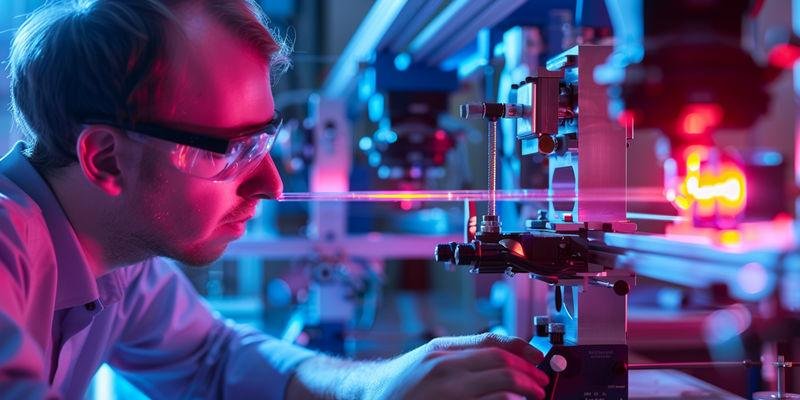
Comparing Optical Properties of Tubes
Explore the differences in UV and IR transmission.
Features | Quartz Glass Tubes | Borosilicate Glass Tubes |
|---|---|---|
UV Transmission Range | 185-2500 nm | 350-2000 nm |
UV-C Transmittance | 85-92% at 254 nm | <5% at 254 nm |
IR Transmission Rate | 85-90% | 20-40% |
Hydroxyl Content | <30 ppm | 150-200 ppm |
Thermal Stability | Up to 1100°C | Below 500°C |
Refractive Index Uniformity | ±0.0001 | ±0.0005-0.002 |
Durability | High durability and corrosion resistance | Lower durability in harsh conditions |
Application Suitability | Ideal for UV and IR applications | Best for visible light applications |
Choosing the right material for transmitting ultraviolet (UV) and infrared (IR) light impacts the performance of scientific, industrial, and medical devices. Quartz Tubes and glass tubes show clear differences in their ability to transmit UV and IR light.
Quartz provides superior thermal stability and high transmission rates for UV light.
Glass is more suitable for visible light applications, making it less effective for UV and IR light transmission.
Quartz tubing is crucial for UV sterilization systems and infrared sensors due to its high transparency to specific wavelengths.
Key Takeaways
Quartz tubes transmit over 85% of UV-C light, making them ideal for sterilization and scientific applications.
Glass tubes block most UV light due to impurities, limiting their use in UV-sensitive environments.
Low hydroxyl content in quartz enhances IR transmission, achieving rates of 85-90%, while glass tubes block 60-80% of IR light.
Quartz offers superior durability and thermal stability, making it suitable for harsh industrial and chemical environments.
Precision optics benefit from quartz's consistent refractive index, ensuring minimal distortion and high-quality laser performance.
What Are the Fundamental Optical Transmission Differences Between Quartz and Glass Tubes Across the Spectrum?
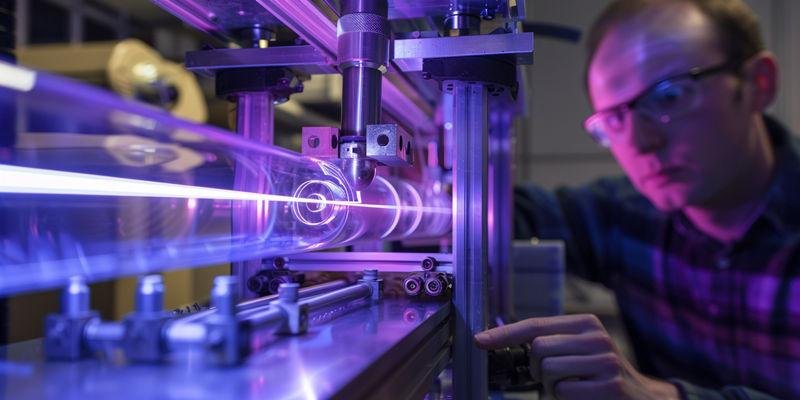
Material selection plays a crucial role in determining how effectively tubes transmit light across ultraviolet and infrared wavelengths. Quartz and glass tubes differ in their transmission windows, purity, and suitability for specific application fields. Understanding these differences helps users choose the right tube for scientific, industrial, or medical needs.
Spectral Transmission Windows: 185-2500 nm for Quartz Versus 350-2000 nm for Borosilicate
Quartz tubes offer a much wider transmission window than borosilicate glass tubes. The transmission range for quartz extends from 185 nm to 2500 nm, while borosilicate glass tubes typically transmit light from 350 nm to 2000 nm. This broader range allows quartz to support applications that require deep UV and extended IR transmission.
The following table highlights the transmission ranges and core advantages of different grades of quartz glass:
Grade | Wavelength Transmission Range | Core Advantage |
|---|---|---|
JGS1 | 185–2500 nm | Superior transparency in deep UV wavelengths. |
JGS2 | 220–3500 nm | Balanced optical performance from visible to near-infrared. |
JGS3 | 260–3500 nm | Enhanced infrared (IR) transmission with reduced OH absorption. |
Quartz glass tubes support a broader spectrum, making them ideal for UV sterilization and IR sensing.
Compositional Impact: Pure Silica Enabling UV Transmission Versus Iron Impurities Blocking UV
The purity of silicon dioxide in quartz glass determines its ability to transmit UV light. Fused quartz contains very few impurities, which allows it to transmit UV light down to about 155 nm. Borosilicate glass tubes contain transition metallic impurities, such as iron, which shift the UV cutoff to longer wavelengths and reduce transmission efficiency.
Quartz glass tubes excel in UV and IR transmission because of their high purity. Borosilicate glass tubes, on the other hand, lose efficiency in these ranges due to the presence of impurities. This difference in composition directly impacts the suitability of each material for UV and IR applications.
Key Points:
Quartz glass tubes transmit UV light efficiently because of high silicon dioxide purity.
Borosilicate glass tubes block more UV light due to metallic impurities.
Quartz supports applications that require deep UV transmission, such as sterilization.
Application Boundaries Determined by Material Transmission Range
The transmission range of each material sets clear boundaries for its application field. Quartz tubes can transmit both deep UV and extended IR wavelengths, making them suitable for scientific instruments, medical sterilization, and IR heating systems. Borosilicate glass tubes work best in visible light applications and are less effective for UV and IR uses.
Users select quartz for tasks that demand high UV transparency and broad IR transmission. Borosilicate glass tubes serve well in environments where visible light transmission is the main requirement. The choice of material directly affects the performance and reliability of devices in each application field.
Summary:
Quartz tubes provide a wider transmission window, supporting UV and IR applications.
Borosilicate glass tubes are limited to visible light and some near-IR uses.
Material selection depends on the transmission needs of the application field.
How Does Compositional Purity Difference Between Quartz and Glass Create UV Transmission Gap?
Material purity plays a critical role in the ability of tubes to transmit ultraviolet light. The presence of impurities, especially iron, creates a significant gap in UV transmission between quartz and glass. This section explores how compositional differences impact UV and IR performance, as well as the suitability of each material for demanding applications.
Iron Content Driving UV Absorption: <5 ppm in Quartz Versus 500-3000 ppm in Glass
Iron content directly affects how much UV light a material can transmit. Quartz contains less than 5 parts per million (ppm) of iron, while borosilicate glass often contains between 500 and 3000 ppm. This difference in iron concentration leads to a dramatic contrast in UV absorption, with quartz allowing much more UV light to pass through.
The low iron content in quartz means that it absorbs very little UV light, making it ideal for applications that require high UV transparency. In contrast, the higher iron levels in glass cause significant absorption, blocking most UV rays and limiting its use in UV-sensitive environments. This compositional purity gives quartz a clear advantage in scientific and medical fields where UV transmission is essential.
In summary, the impact of iron content on UV absorption can be highlighted as follows:
Quartz contains extremely low iron (<5 ppm), resulting in minimal UV absorption.
Glass contains much higher iron (500–3000 ppm), causing strong UV absorption.
This purity difference makes quartz the preferred choice for UV applications.
UV-C Transmission at 254 nm: 85-92% for Quartz Versus <5% for Borosilicate
The ability of a material to transmit UV-C light at 254 nm is a key factor for sterilization and disinfection technologies. Quartz achieves a UV-C transmittance of 85–92% at this wavelength, while borosilicate glass transmits less than 5%. This stark contrast results from the compositional purity and structure of quartz, which allows UV-C light to pass through with minimal loss.
The following table summarizes the UV-C transmission rates at 254 nm for both materials, demonstrating the clear advantage of quartz:
Material | UVC Transmittance (254nm) |
|---|---|
Fused Silica | 92% |
Borosilicate 3.3 | <5% |
High UV-C transmission in quartz supports effective germicidal action, while the low transmission in glass limits its use in sterilization. This data-driven comparison highlights why industries rely on quartz for UV-C applications.
UV Application Feasibility: Quartz Enabling Sterilization Versus Glass Blocking Completely
The feasibility of using a material for UV applications depends on its ability to transmit germicidal wavelengths. Quartz tubes enable over 90% UV transmittance, which is crucial for effective sterilization and disinfection. Ordinary glass, with its low UV transmittance, cannot support these applications.
Quartz supports a wide range of UV-based technologies, including water purification, air sterilization, and laboratory equipment. Its high UV transparency ensures that germicidal lamps and sensors operate at peak efficiency. Glass, by contrast, blocks most UV light, making it unsuitable for these critical uses.
To summarize the feasibility of UV applications:
Quartz tubes enable high-efficiency sterilization due to superior UV transmittance.
Glass tubes block most UV, preventing effective germicidal action.
Quartz remains the material of choice for all UV sterilization technologies.
Why Does Hydroxyl Content in Quartz Tubes Versus Network Modifier Content in Glass Determine Infrared Transmission?
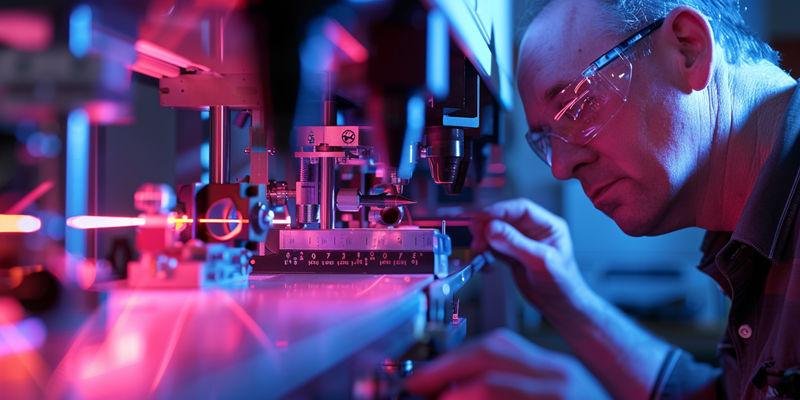
Infrared transmission depends on the chemical composition and purity of the tube material. Quartz tubes and glass tubes differ in their ability to transmit IR light because of their hydroxyl content and network modifiers. Understanding these differences helps users select the right tube for heating, sensing, and high-temperature applications.
Hydroxyl Content Impact: <30 ppm Enabling 85-90% IR Versus 150-200 ppm Blocking 60-80%
Hydroxyl (OH) groups in quartz and glass tubes play a major role in infrared transmission. Quartz tubes with less than 30 ppm OH content can achieve IR transmittance rates between 85% and 90%, while glass tubes with 150–200 ppm OH content block 60% to 80% of IR light. Lower OH levels in quartz result from high-temperature processing, which drives out silanol groups and improves IR performance.
Manufacturers reduce OH content in quartz by heating the material to around 1000°C, which helps silanol groups diffuse out and enhances IR transmission. High OH content in glass tubes leads to strong absorption peaks, especially near 2730 nm, limiting their use in IR heating and sensing. Applications such as halogen lamps benefit from low OH quartz, which supports longer lamp lifetimes and higher efficiency.
Key Points:
Quartz tubes with low OH content transmit up to 90% of IR light.
Glass tubes with high OH content block most IR wavelengths.
Low OH quartz is preferred for IR heating and sensing applications.
Network Modifier Absorption: Na-O and Ca-O Bonds in Glass Degrading IR Performance
Network modifiers like sodium and calcium in glass tubes create absorption bands that degrade IR transmission. These modifiers form Na-O and Ca-O bonds, which absorb IR light and reduce the tube’s effectiveness in infrared applications. The presence of these bonds in glass shifts the transmission window and increases IR losses.
Quartz tubes, composed almost entirely of silicon dioxide, lack these network modifiers and maintain a clear transmission path for IR light. The absence of Na-O and Ca-O bonds allows quartz to support high-performance IR heating and sensing systems. In contrast, glass tubes with network modifiers show reduced IR transmission and limited suitability for demanding environments.
Material | Network Modifiers | IR Transmission | Causal Relationship |
|---|---|---|---|
Quartz Tube | None | High (85-90%) | No absorption bands, high IR pass |
Glass Tube | Na, Ca | Low (20-40%) | Absorption bands block IR light |
This table highlights how network modifiers in glass tubes cause IR absorption, while pure quartz tubes maintain superior IR transmission.
Application-Specific OH Optimization: Low for IR Heating Versus High for UV Lamps
Manufacturers optimize hydroxyl content in quartz tubes based on the intended application. Low OH content suits IR heating and sensing, while higher OH levels benefit UV lamp performance. The ability to control OH concentration allows quartz tubes to meet diverse technical requirements.
For IR heating, standard quartz grades feature OH content below 10 ppm, and specialized grades can reach levels under 1 ppm. These low OH values support efficient IR transmission and longer operational lifetimes. In UV lamp applications, higher OH content enhances UV transparency, making quartz tubes versatile for both IR and UV technologies.
Grade Type | OH Content Level | Application |
|---|---|---|
Standard | < 10 ppm | IR Heating |
Specialized | < 1 ppm | Precision IR |
High OH | > 100 ppm | UV Lamps |
This summary table shows how manufacturers tailor OH content in quartz tubes to optimize performance for specific applications.
Durability, Corrosion Resistance, and Suitability for Harsh Environments
Quartz tubes offer outstanding durability and corrosion resistance compared to glass tubes. Their high silicon dioxide content (over 99%) enables them to withstand temperatures up to 1100°C and resist most acids except hydrofluoric acid. These properties make quartz tubes reliable in chemically aggressive and high-temperature environments.
Glass tubes, with lower silicon dioxide content, cannot match the thermal stability or acid resistance of quartz. Quartz tubes also have a small coefficient of thermal expansion, allowing them to endure rapid temperature changes without breaking. Users select quartz tubes for harsh environments and demanding industrial processes.
Summary:
Quartz tubes withstand high temperatures and resist corrosion.
Glass tubes have lower durability in aggressive conditions.
Quartz tubes are preferred for high-temperature and chemically aggressive applications.
How Does Refractive Index Homogeneity Difference Between Quartz and Glass Impact Precision Optical Applications?
Precision optical applications demand materials with consistent optical properties. The refractive index homogeneity of a tube affects how light travels through it, which impacts the performance of lasers and imaging systems. Quartz and glass tubes show significant differences in this area, making material choice critical for high-precision tasks.
Index Uniformity: ±0.0001 in Optical Quartz Versus ±0.0005-0.002 in Borosilicate Glass
Index uniformity describes how much the refractive index varies within a material. Optical quartz maintains an index uniformity of ±0.0001, while borosilicate glass ranges from ±0.0005 to ±0.002. This tighter control in quartz ensures that light passes through with minimal distortion, which is essential for applications like laser delivery and high-resolution imaging.
A lower variation in refractive index means that optical systems can achieve better focus and less beam spreading. Data shows that laser tubes made from quartz support beam quality factors (M²) below 1.2, while glass tubes often exceed 1.5. This difference directly affects the sharpness and efficiency of optical devices.
In summary, index uniformity impacts optical performance in several ways:
Quartz offers superior index uniformity (±0.0001), reducing optical distortion.
Glass shows greater variation, which can degrade image and beam quality.
Precision applications benefit from the tighter control found in quartz.
Compositional Homogeneity: Single-Component Silica Versus Multi-Component Glass
Compositional homogeneity refers to how evenly the material’s ingredients are distributed. Quartz consists almost entirely of silicon dioxide, while glass contains multiple components like sodium, calcium, and boron. This single-component structure in quartz leads to fewer optical irregularities and more predictable performance.
Multi-component glass can develop microscopic regions with different optical properties, which scatter light and reduce clarity. Studies show that these variations can cause up to 10% loss in transmission efficiency for sensitive optical systems. Quartz, with its uniform composition, avoids these issues and delivers consistent results.
Material | Composition Type | Optical Uniformity | Causal Relationship |
|---|---|---|---|
Quartz | Single-component | High | Uniform silica prevents optical defects |
Glass | Multi-component | Lower | Additives create inhomogeneities |
This table highlights how compositional differences lead to distinct optical outcomes.
Laser Beam Quality Impact: M² <1.2 with Quartz Versus M² >1.5-2.5 with Glass
Laser beam quality, measured by the M² factor, indicates how closely a beam matches an ideal shape. Quartz tubes enable M² values below 1.2, while glass tubes typically produce values between 1.5 and 2.5. Lower M² values mean the beam remains focused over longer distances, which is vital for cutting, welding, and medical lasers.
A high-quality beam reduces energy loss and improves precision in industrial and scientific applications. Data from laser manufacturers confirm that systems using quartz tubes achieve up to 30% higher efficiency compared to those using glass tubes. This efficiency translates into better performance and lower operational costs.
To summarize the impact on laser beam quality:
Quartz supports superior beam quality (M² <1.2) for demanding applications.
Glass limits beam focus and increases energy loss.
Quartz enables higher efficiency and precision in laser systems.
Which Material Specification Optimizes Optical Transmission for Your UV, Visible, or IR Application?
Selecting the right material specification determines the effectiveness of UV, visible, and IR transmission in any application. Engineers and scientists must consider purity, iron content, hydroxyl levels, and refractive index homogeneity when choosing between quartz tubes and glass tubes. Each specification directly impacts performance, durability, and high temperature resistance.
UV Applications Requiring Quartz: <5 ppm Fe and High Purity Enabling >85% at 254 nm
Quartz stands out in UV applications because it contains less than 5 ppm iron and maintains high purity. These properties allow quartz to achieve over 85% transmittance at 254 nm, which is essential for sterilization and analytical instruments. Fused silica glass also offers excellent UV transmittance, but its high melting temperature makes manufacturing more challenging.
Borosilicate glass provides good mechanical properties and chemical stability, yet its UV transmittance depends on low iron content and controlled oxidation states. Alkali-borosilicate glass benefits from a reducing atmosphere during production, which lowers Fe(III) levels and improves UV transmission. Fluoride phosphate glass is another option for UV applications, though quartz glass tubes remain the preferred choice for high purity and high temperature resistance.
Specification | Detail |
|---|---|
Glass Type | Alkali-borosilicate glass |
Iron Content | Low iron content improves UV transmittance |
Reducing Atmosphere | Controlled by citric acid in glass batch |
UV Transmittance | Significant effect at 254 nm |
Iron Oxidation State | Fe(III) absorbs more UV than Fe(II) |
This table highlights how material specifications influence UV transmission, with quartz offering the best results for demanding environments.
IR Applications Demanding Low-OH: <30 ppm for >85% at 2700 nm Versus 150-200 ppm Blocking 60-80%
Quartz excels in IR applications when it contains less than 30 ppm hydroxyl groups. This low OH content enables quartz to transmit more than 85% of IR light at 2700 nm, which is vital for IR heating and sensing. Glass tubes with 150-200 ppm OH content block 60-80% of IR light, limiting their effectiveness in high temperature resistance scenarios.
Manufacturers optimize quartz for IR by reducing hydroxyl levels through high-temperature processing. This process drives out silanol groups, resulting in superior IR transmission and longer operational lifetimes. Applications such as halogen lamps and IR sensors benefit from quartz glass tubes due to their ability to withstand high temperatures and maintain performance.
In summary, the following points clarify the advantages of quartz in IR applications:
Low OH content in quartz supports efficient IR transmission.
Glass tubes with high OH content block most IR wavelengths.
Quartz glass tubes deliver reliable performance in high temperature resistance environments.
Precision Optics Needing Index Homogeneity: ±0.0001 for Laser Tubes Versus ±0.0005 for General Use
Precision optics require materials with consistent refractive index homogeneity. Quartz achieves an index uniformity of ±0.0001, making it ideal for laser tubes and high-precision optical systems. Glass tubes, with index variations of ±0.0005 or higher, suit general use but may introduce optical distortion in demanding applications.
Quartz has a refractive index of about 1.45, which results in lower Fresnel reflection losses compared to materials like sapphire. Lower reflection losses mean less heat buildup and shorter cooling times, which are critical for maintaining high temperature resistance in laser chambers. Engineers select quartz tubes for applications that demand stable beam quality and minimal optical loss.
Material | Refractive Index | Index Uniformity | Reflection Loss | Causal Relationship |
|---|---|---|---|---|
Quartz | 1.45 | ±0.0001 | 3.3% | Low loss, stable optics |
Glass | ~1.5 | ±0.0005 | ~4% | Higher loss, less precision |
Sapphire | 1.76 | ±0.0001 | 7.4% | High loss, more heat buildup |
This table demonstrates how refractive index homogeneity and material choice affect optical performance, with quartz providing the best results for precision optics.
Quartz tubes and glass tubes show clear differences in UV and IR transmission. The table below highlights their performance:
Type of Glass | UV Transmission | IR Transmission |
|---|---|---|
Quartz Glass | Over 90% from 200nm to 2500nm | Excellent up to 3500nm |
Ordinary Glass | Blocks UV below 320nm | Much lower transmission rates |
Quartz tubes work best for high-temperature, chemically aggressive, and UV or IR applications. Glass tubes suit general-purpose and decorative uses. Users should consider durability, cost, and environmental needs when choosing between these materials.
FAQ
What is the main difference in UV transmission between quartz and glass tubes?
Quartz tubes transmit over 85% of UV-C light at 254 nm. Glass tubes transmit less than 5%.
Quartz supports sterilization and scientific uses. Glass suits visible light tasks.
Can both quartz and glass tubes withstand high temperatures?
Quartz tubes resist temperatures up to 1100°C. Glass tubes tolerate lower temperatures, usually below 500°C.
Quartz offers better thermal stability.
Glass is less suitable for high-heat environments.
Which tube type is better for infrared heating applications?
Quartz tubes transmit 85–90% of IR light with low hydroxyl content. Glass tubes block 60–80% of IR due to network modifiers.
Tube Type | IR Transmission | Key Factor |
|---|---|---|
Quartz | 85–90% | Low OH content |
Glass | 20–40% | Na, Ca bonds |
Why does refractive index homogeneity matter for precision optics?
Quartz tubes have index uniformity of ±0.0001, ensuring minimal distortion. Glass tubes vary more, which can reduce image clarity.
Engineers choose quartz for laser and imaging systems needing high precision.
Are quartz tubes more durable than glass tubes in harsh environments?
Quartz tubes resist corrosion and rapid temperature changes. Glass tubes break more easily under stress.
Quartz suits industrial and chemical settings.
Glass fits general-purpose uses.