Le fait de confondre un seuil thermique avec un autre a causé plus de dommages aux composants en quartz que les défaillances matérielles elles-mêmes. Le point de fusion et le point de ramollissement du quartz ont chacun une signification physique bien distincte, et les confondre entraîne des conséquences tangibles.
Cet article clarifie la distinction technique entre le point de fusion et le point de ramollissement du quartz à travers trois dimensions analytiques : la structure atomique, la mécanique des fluides et la sensibilité aux variables externes. Il transpose ensuite ces distinctions aux applications dans le domaine des semi-conducteurs et en laboratoire, où des limites thermiques précises déterminent le choix des matériaux.
Ces deux valeurs — 1 670 °C pour le point de fusion du quartz cristallin et environ 1 665 °C pour le point de ramollissement de la silice fondue — ne s'écartent que de 5 °C l'une de l'autre sur le plan numérique, mais elles décrivent des phénomènes physiques fondamentalement différents dans des catégories de matériaux totalement distinctes. Comprendre pourquoi ces chiffres convergent alors que leurs significations divergent constitue le principal défi technique abordé dans cet article.
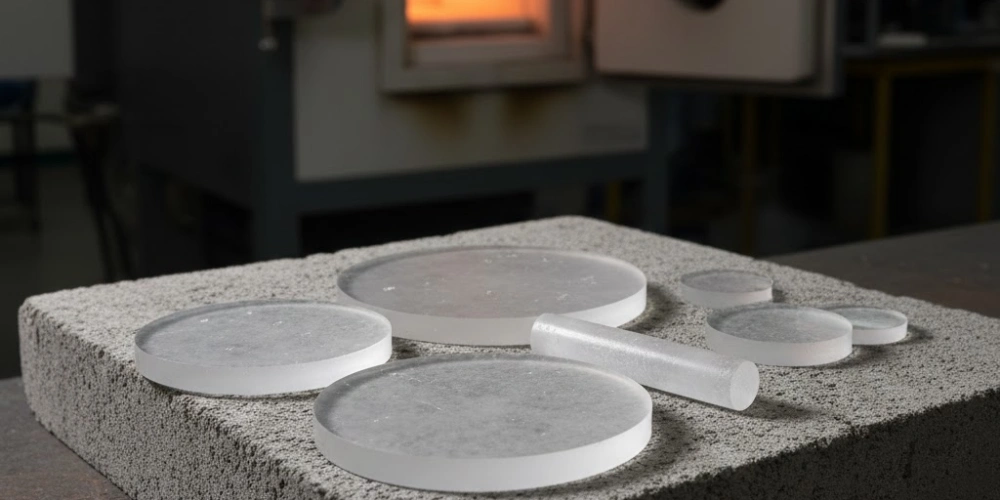
Comportement thermique du quartz, de la température ambiante à l'état fondu
Le quartz ne passe pas de l'état solide à l'état liquide en une seule étape. Entre la température ambiante et son point de fusion, le cristal quartz passe par au moins deux événements thermiques significatifs sur le plan structurel, qui ont chacun des implications techniques distinctes.
Transition de phase alpha-bêta à 573 °C c'est le premier seuil critique. À cette température, l'angle de liaison Si–O–Si se modifie, le réseau cristallin subit une expansion soudaine d'environ 0,451 TP3T en volume, et le matériau devient sensible à la rupture par choc thermique si le changement de température est trop rapide. Il s'agit d'une transition réversible de l'état solide à l'état solide : le cristal revient à sa forme alpha lors du refroidissement.
Point de ramollissement proche de 1 665 °C s'applique exclusivement à la silice fondue (verre de quartz amorphe), et non au quartz cristallin. Elle correspond à la température à laquelle la viscosité chute à 10⁷,⁶ Pa·s, seuil à partir duquel le réseau vitreux commence à se déformer sous son propre poids. En dessous de ce point, la silice fondue conserve une rigidité suffisante pour une utilisation structurelle ; au-dessus, des déformations permanentes s'accumulent.
Point de fusion à 1 670 °C C'est la température à laquelle le quartz cristallin subit une transformation de phase complète de l'état solide à l'état liquide. L'ordre périodique à longue portée du réseau cristallin de SiO₂ s'effondre de manière irréversible pour former une masse fondue désordonnée. Lors du refroidissement, cette masse fondue ne se recristallise pas dans des conditions atmosphériques normales ; elle se solidifie plutôt en verre de silice fondue.
Ces trois phénomènes thermiques sont souvent confondus dans la littérature technique et les fiches techniques des produits, principalement parce que deux d'entre eux — le point de ramollissement et le point de fusion — ne diffèrent que de 5 °C en valeur absolue. Il est indispensable de reconnaître qu'ils concernent des matériaux et des mécanismes physiques différents pour pouvoir réaliser une analyse thermique éclairée des composants en quartz.
Le point de fusion du quartz au niveau atomique
En raison de la nature chimique de sa liaison principale, le comportement thermique du quartz cristallin est plus prévisible — et plus limité — que celui de la plupart des matériaux oxydés. La valeur spécifique de 1 670 °C, qui correspond au point de fusion du quartz, n'est pas une constante matérielle arbitraire ; il s'agit d'une conséquence thermodynamique directe de l'architecture de la liaison Si–O et de la périodicité cristalline.
La silice fondue, bien qu'elle partage la même formule chimique SiO₂, fond à une température nominalement plus élevée (~1 710 °C) et se ramollit par une réduction progressive de sa viscosité plutôt que par une transition de phase discontinue. Ces différences de comportement trouvent leur origine au niveau structurel, et leur analyse jusqu'à leur source atomique permet de comprendre pourquoi ces deux matériaux doivent être évalués par rapport à des points de référence thermiques distincts.
L'énergie de liaison Si–O, source de la résistance thermique du quartz
La liaison covalente Si–O possède une énergie de dissociation d'environ 444 kJ/mol, ce qui le classe parmi les liaisons les plus fortes présentes dans les minéraux oxydés courants. À titre de comparaison, la liaison Si–Si dans le silicium élémentaire a une énergie de liaison d'environ 222 kJ/mol — soit environ la moitié de celle de la liaison Si–O. Cette asymétrie énergétique signifie que la rupture du réseau SiO₂ nécessite beaucoup plus d'énergie thermique que la rupture d'un réseau élémentaire purement covalent.
Chaque atome de silicium du quartz cristallin est coordonné de manière tétraédrique à quatre atomes d'oxygène, et chaque atome d'oxygène relie deux atomes de silicium, formant ainsi un réseau tridimensionnel infini de tétraèdres SiO₄ partageant leurs sommets. C'est l'énergie collective nécessaire pour rompre suffisamment de liaisons Si–O afin de provoquer la fusion en masse qui détermine ce seuil de 1 670 °C. Aucune décomposition thermique ne précède la fusion : le quartz reste chimiquement stable jusqu'à son point de fusion et au-delà, à la pression atmosphérique ambiante, ce qui s'explique par la force de la liaison Si–O.
Concrètement, cette structure de liaison permet au quartz de conserver son intégrité cristalline sur une plage de températures exceptionnellement large. Les composants fabriqués à partir de quartz cristallin de haute pureté conservent une résistance mécanique mesurable jusqu'à environ 1 400 °C, soit plus de 250 °C en dessous du point de fusion — une marge de sécurité rarement égalée par les verres silicatés ou les céramiques à base de polymères.
Effondrement de la structure cristalline à 1 670 °C
La fusion du quartz cristallin est une transition de phase du premier ordre, caractérisée par une variation discontinue de l'enthalpie, du volume et de l'entropie à une température fixe. La chaleur latente de fusion1 pour le quartz cristallin est d'environ 9,4 kJ/mol, qui doit être fournie en plus de la chaleur sensible nécessaire pour porter la température à 1 670 °C.
À ce stade de la transition, l'ordre périodique à longue portée des tétraèdres de SiO₄ — qui définit l'état cristallin — s'effondre complètement. La masse fondue obtenue est un liquide désordonné à haute viscosité dans lequel les liaisons Si–O restent intactes à l'échelle locale, mais où la symétrie de translation répétitive du réseau cristallin a disparu. C'est cette distinction entre la préservation des liaisons locales et l'effondrement de l'ordre à grande échelle qui différencie la fusion du ramollissement : lors du ramollissement, le réseau désordonné de la silice fondue devient simplement moins visqueux ; lors de la fusion, la structure périodique est détruite.
Lorsqu'elle refroidit en dessous de 1 670 °C, cette masse fondue ne se recristallise pas spontanément. La cinétique de la cristallisation du SiO₂ est extrêmement lente à des températures inférieures à environ 1 600 °C et, en pratique, la masse fondue se solidifie en silice fondue amorphe. Cette irréversibilité distingue le point de fusion du quartz de la transition de phase alpha-bêta à 573 °C, qui est entièrement réversible.
Comportement à la fusion du quartz cristallin et de la silice fondue
Bien qu'ils soient tous deux composés de SiO₂, le quartz cristallin et la silice fondue sont des matériaux distincts qui présentent des comportements thermiques différents. Le quartz cristallin fond à 1 670 °C par la transition discrète du premier ordre décrite ci-dessus. La silice fondue, étant amorphe, ne possède pas de point de fusion défini au sens cristallographique du terme — au contraire, il se ramollit progressivement à mesure que la température augmente, son point de fusion conventionnel, situé vers 1 710 °C, correspondant à la température à laquelle sa viscosité chute à environ 10² Pa·s.
Comportement à la fusion du quartz cristallin par rapport à la silice fondue
| Propriété | Quartz cristallin | Silice fondue |
|---|---|---|
| Structure | Ordre périodique à grande échelle | Amorphe, sans ordre périodique |
| Point de fusion (°C) | ~1670 | ~1710 |
| Point de ramollissement (°C) | Non applicable | ~1665 |
| Type de transition | Transition de phase du premier ordre | Réduction continue de la viscosité |
| Réversibilité lors du refroidissement | Irréversible (verre moulé) | Irréversible (reste amorphe) |
| Chaleur latente de fusion (kJ/mol) | ~9.4 | Non défini (pas de transition distincte) |
Cette divergence structurelle est à l'origine de la quasi-totalité des confusions entre le point de fusion et le point de ramollissement dans les contextes industriels. Le point de ramollissement de la silice fondue (~1665 °C) et le point de fusion du quartz cristallin (~1670 °C) sont numériquement quasi identiques, mais ils décrivent des phénomènes physiques distincts se produisant dans des matériaux différents. Toute spécification thermique qui traite ces valeurs comme interchangeables introduit une erreur systématique dans la conception des composants.
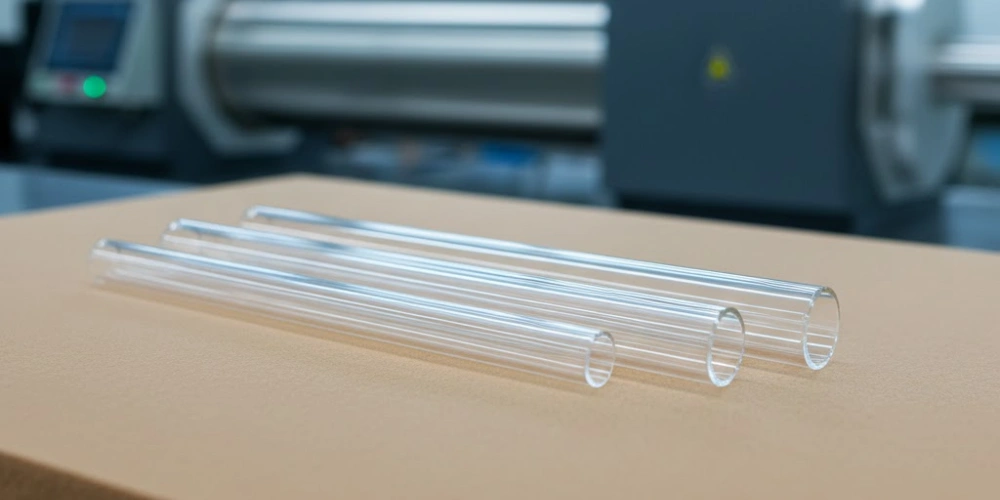
Point de ramollissement de la silice fondue par rapport au point de fusion du quartz : une analyse sous l'angle de la viscosité
La viscosité est la variable mesurable qui permet de distinguer le plus précisément le comportement de ramollissement de la silice fondue de celui de la fusion du quartz cristallin. Alors que le point de fusion du quartz marque un événement thermodynamique discontinu, le point de ramollissement de la silice fondue est entièrement défini par un critère de viscosité — et la distinction entre ces deux cadres a des conséquences importantes sur les spécifications thermiques.
Le quartz cristallin ne subit aucun ramollissement lié à la viscosité avant de fondre. Il reste un solide rigide jusqu'à 1 670 °C, température à laquelle il se transforme brusquement en un liquide à haute viscosité. La silice fondue, en revanche, présente une courbe continue de viscosité en fonction de la température sur plusieurs centaines de degrés, le point de ramollissement ne représentant qu'une coordonnée de référence parmi d'autres sur cette courbe. Ces deux comportements constituent des descriptions physiquement incompatibles d'un même phénomène.
Courbe viscosité-température de la silice amorphe
La viscosité de la silice fondue à température ambiante dépasse 10¹⁸ Pa·s — une valeur si élevée que le matériau se comporte comme un solide rigide à toutes les échelles de temps techniques. À mesure que la température augmente, la viscosité diminue de manière exponentielle selon une relation de type Arrhenius, bien que la courbe réelle s'écarte de l'idéal à des températures plus élevées en raison de la relaxation structurelle du réseau vitreux.
À 1 665 °C, la viscosité atteint 10⁷,⁶ Pa·s, qui correspond à la définition internationalement reconnue du point de ramollissement (point de ramollissement de Littleton). À cette viscosité, une fibre de verre de dimensions standard s'allonge sous son propre poids à une vitesse d'environ 1 mm/min — une vitesse qui marque la limite entre un comportement rigide et une déformation sujette au fluage. En dessous de ce seuil, la silice fondue peut supporter des charges statiques sans changement dimensionnel mesurable sur des durées d'exploitation ; au-dessus, une déformation permanente s'accumule avec le temps et la charge.
Le caractère continu de cette courbe signifie qu'il n'existe pas d'équivalent à une « marge de sécurité au-dessus du point de ramollissement », contrairement à ce dont parlent les ingénieurs lorsqu'ils évoquent un fonctionnement en dessous du point de fusion. Chaque degré au-dessus du point de déformation augmente le risque de fluage, et le point de ramollissement correspond à la température au-delà de laquelle la déformation devient réellement significative, et non plus seulement théorique.
Points de référence de viscosité : du point de déformation au point de fonctionnement
Les spécifications thermiques industrielles de la silice fondue reposent sur une hiérarchie de points de référence de viscosité, chacun étant défini par une valeur de viscosité spécifique et associé à un seuil de comportement distinct. Ces points de référence couvrent, dans leur ensemble, la transition d'un solide rigide à un verre fluide.
Valeurs de référence de la viscosité de la silice fondue
| Point de référence | Température (°C) | Viscosité (Pa·s) | Importance industrielle |
|---|---|---|---|
| Point de contrainte | ~1120 | 10¹⁴,⁵ | Limite inférieure pour la détente des contraintes ; au-delà de cette limite, les contraintes internes peuvent se relâcher |
| Point de recuit | ~1215 | 10¹³ | La détente se produit en quelques minutes ; utilisé pour des cycles de recuit contrôlés |
| Point d'adoucissement | ~1665 | 10⁷,⁶ | Apparition de la déformation sous charge ; limite supérieure d'utilisation pour les éléments de structure |
| Point de fonctionnement | >2000 | 10⁴ | Le verre est suffisamment fluide pour permettre les opérations de formage et de façonnage |
| Point de fusion (silice fondue) | ~1710 | environ 10² | Référence de fusion classique ; le verre s'écoule librement |
L'écart entre le point de ramollissement (~1 665 °C) et le point de mise en forme (> 2 000 °C) explique pourquoi les composants en silice fondue ne peuvent pas être simplement « chauffés au-delà de leur point de ramollissement » pour être mis en forme : la viscosité à 1 665 °C est encore trois ordres de grandeur plus élevé que la viscosité de travail requise pour le formage pratique du verre. Il s'agit là d'une nuance contre-intuitive mais importante sur le plan technique que le cadre de référence du point de fusion ne parvient pas à saisir pleinement.
Pourquoi le point de ramollissement et le point de fusion du quartz ont-ils des valeurs numériques similaires ?
La quasi-identité entre le point de ramollissement de la silice fondue (~1 665 °C) et le point de fusion du quartz cristallin (~1 670 °C) est une coïncidence de composition plutôt que le reflet d'une équivalence physique. Ces deux valeurs sont déterminées par la même variable sous-jacente : la force du réseau de liaisons Si–O. Dans le quartz cristallin, l'énergie de liaison Si–O fixe la température de rupture du réseau cristallin à 1670 °C. Dans la silice fondue, cette même densité de liaisons Si–O détermine la température à laquelle le réseau amorphe devient suffisamment mobile pour atteindre le seuil de viscosité de 10⁷·⁶ Pa·s.
La convergence de ces deux valeurs s'explique essentiellement par le fait que ces deux matériaux sont constitués de réseaux de SiO₂ entièrement réticulés. Tout matériau présentant une connectivité Si–O différente — comme un verre sodocalcique contenant des ions sodium qui modifient la structure du réseau — présenterait un point de ramollissement très éloigné du point de fusion du SiO₂ cristallin.
Il est essentiel de considérer cette convergence comme une coïncidence et non comme un lien de causalité pour définir correctement les spécifications des matériaux. Un ingénieur qui part du principe que le point de ramollissement de la silice fondue et le point de fusion du quartz sont « la même chose exprimée différemment » sous-estimera systématiquement le risque structurel dans les applications approchant les 1 665 °C, car ces deux matériaux atteignent leurs seuils critiques respectifs par des mécanismes physiques totalement différents. Le tableau ci-dessous résume les principales différences entre la viscosité et les dimensions.
Contraste entre la viscosité et la température entre le point de ramollissement et le point de fusion du quartz
| Paramètres | Point de ramollissement de la silice fondue | Point de fusion du quartz cristallin |
|---|---|---|
| Température (°C) | ~1665 | ~1670 |
| Mécanisme physique | La viscosité atteint 10⁷,⁶ Pa·s | Transition solide-liquide de premier ordre |
| Type de matériau | Verre amorphe | Solide cristallin |
| Comportement avant la transition | Baisse continue de la viscosité | Solide rigide ne présentant aucune variation de viscosité |
| Comportement après le seuil | Accélération du fluage et de la déformation | État liquide irréversible |
| Réversibilité | Se solidifie en verre rigide | Refroidissement de la silice fondue amorphe |
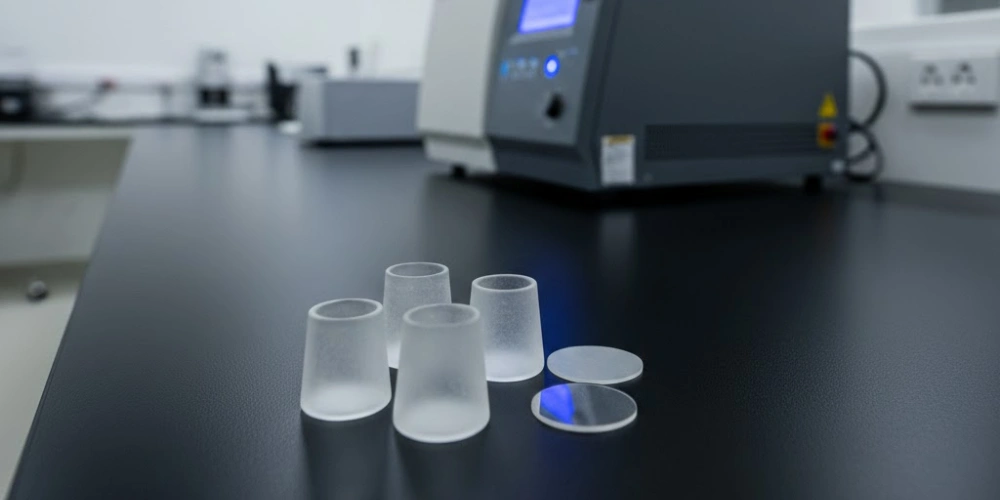
Point de ramollissement et point de fusion du quartz : une perspective sur la transition structurelle
Au-delà de la viscosité, la différence entre le point de ramollissement et le point de fusion du quartz s'étend au type de transition structurelle que chaque valeur représente. Trois événements structurels distincts induits par la chaleur se produisent dans le système SiO₂ à différentes températures, chacun présentant un degré de réversibilité différent, un mécanisme physique différent et un ensemble différent de conséquences techniques. La cartographie de ces trois événements dans un même cadre analytique constitue la voie la plus directe pour éliminer l'ambiguïté qui caractérise les spécifications thermiques des composants en quartz.
Ces trois phénomènes — l'inversion de phase alpha-bêta à 573 °C, le ramollissement défini par la viscosité à environ 1 665 °C et la fusion cristallographique à 1 670 °C — ne constituent pas des points d'un même continuum. Ils relèvent de descriptions physiques de la matière radicalement différentes, et les considérer comme des étapes successives d'un même processus conduit à une interprétation systématiquement erronée du comportement des matériaux.
Inversion de phase alpha-bêta à 573 °C en tant que transition solide-solide réversible
L'inversion de la structure cristalline du quartz (phase alpha vers phase bêta) à 573 °C est une transition de phase par déplacement — dans lequel les atomes changent de position sans rompre ni reformer de liaisons. L'angle de liaison Si–O–Si passe d'environ 144° dans le quartz alpha à environ 155° dans le quartz bêta, ce qui provoque l'expansion de la maille élémentaire et le passage de la symétrie cristalline de trigonale (groupe d'espace P3₁21) à hexagonale (groupe d'espace P6₂22).
Cette variation de l'angle de liaison entraîne une expansion volumétrique d'environ 0.45%, qui se produit pratiquement instantanément à la température de transition. Le phénomène associé variation d'enthalpie2 est d'environ 0,47 kJ/mol — faible par rapport à la chaleur latente de fusion (9,4 kJ/mol), ce qui reflète le caractère de déplacement plutôt que de reconstruction de la transition. Lors du refroidissement jusqu’à 573 °C, le processus s’inverse complètement, et le quartz alpha est récupéré sans dommage structurel — à condition que le changement de température se produise suffisamment lentement pour éviter l’accumulation de contraintes thermiques.
Cette transition est entièrement réversible et n'entraîne aucune modification de la topologie des liaisons chimiques, ce qui la distingue nettement tant du ramollissement de la silice fondue (un processus cinétique lié à la viscosité) que de la fusion du quartz cristallin (une transition thermodynamique irréversible). Ces trois phénomènes concernent le système SiO₂ ; aucun d'entre eux ne repose sur un mécanisme physique commun.
Risque de rupture par choc thermique à environ 573 °C
La discontinuité volumétrique à 573 °C génère des contraintes internes dès lors qu'un gradient thermique existe à travers un composant en quartz pendant la transition. Si la vitesse de chauffage ou de refroidissement est suffisamment élevée pour que la surface extérieure atteigne 573 °C alors que l'intérieur reste en dessous (ou inversement), la dilatation différentielle entre ces zones crée des contraintes de traction pouvant dépasser la ténacité à la rupture du quartz, qui est d'environ 0,7–1,0 MPa·m^(1/2).
L'amplitude des contraintes thermiques est proportionnelle au produit du module d'élasticité, du coefficient de dilatation thermique et de la différence de température. Pour le quartz cristallin à environ 573 °C, le module d'élasticité est compris entre environ 72 et 97 GPa (anisotrope), et le changement brusque du coefficient de dilatation thermique (CTE) lors de la transition amplifie la génération de contraintes bien au-delà de ce que laisserait prévoir la seule dilatation thermique linéaire. Les composants dont l'épaisseur de paroi dépasse environ 5 mm sont particulièrement sensibles, car le gradient thermique à travers la paroi devient suffisamment important, à des vitesses de chauffage modérées, pour générer des contraintes susceptibles de provoquer une rupture.
Dans la pratique, pour que les composants en quartz puissent subir sans risque des cycles thermiques jusqu'à 573 °C, les vitesses de chauffage et de refroidissement doivent être inférieures à environ 5 °C/min dans une plage comprise entre 500 et 620 °C. Cette contrainte revêt une importance opérationnelle : cela signifie que la transition alpha-bêta à 573 °C impose une limitation plus stricte du taux de variation lors de la manipulation des composants en quartz que ne le fait le point de fusion, puisque les composants ne sont jamais chauffés à 1 670 °C en service courant, mais sont régulièrement soumis à des cycles passant par 573 °C.
Irréversibilité de la fusion du quartz vs réversibilité de la transition de phase
Les trois transitions structurales du système SiO₂ se distinguent fondamentalement par leur réversibilité, et cette différence constitue l'élément le plus déterminant pour l'analyse du cycle de vie des composants.
L'inversion alpha-bêta à 573 °C est entièrement réversible. Un composant en quartz cristallin soumis à des cycles de température répétés des milliers de fois retrouvera intégralement sa structure cristalline alpha à chaque cycle de refroidissement, à condition que la vitesse de refroidissement soit correctement contrôlée. La transition en elle-même n'entraîne aucune modification structurelle permanente.
Le ramollissement de la silice fondue au-delà d'environ 1 665 °C est partiellement réversible. Le réseau vitreux, une fois déformé sous une contrainte supérieure au point de ramollissement, conserve sa géométrie déformée lors du refroidissement. Le matériau lui-même reste de la silice fondue amorphe — inchangée sur le plan chimique et structurel — mais la forme macroscopique du composant est modifiée de manière permanente. Si aucune charge n'est appliquée et que la température est contrôlée, de brèves excursions au-dessus du point de ramollissement peuvent être inversées thermiquement sans changement dimensionnel permanent.
La fusion à 1 670 °C est irréversible d'un point de vue cristallographique. Une fois que le quartz cristallin a fondu, le produit obtenu après refroidissement est du verre de silice fondue — et non du quartz cristallin. La recristallisation de la masse fondue de SiO₂ en quartz nécessite un refroidissement extrêmement lent à des températures contrôlées, sur des échelles de temps géologiques, ou des conditions de synthèse hydrothermale spécifiques. Dans tout contexte industriel, la fusion est une transformation irréversible.
Réversibilité des trois transitions structurelles du SiO₂
| Transition | Température (°C) | Type | Réversibilité | Résultats structurels |
|---|---|---|---|---|
| Inversion alpha-bêta | 573 | Displacement solide-solide | Entièrement réversible | Quartz alpha récupéré |
| Ramollissement de la silice fondue | ~1665 | Écoulement induit par la viscosité | Irréversible sur le plan de la forme | Géométrie amorphe et déformée |
| Fusion du quartz cristallin | ~1670 | Phase solide-liquide de premier ordre | Irréversible sur le plan cristallographique | La silice fondue lors du refroidissement |
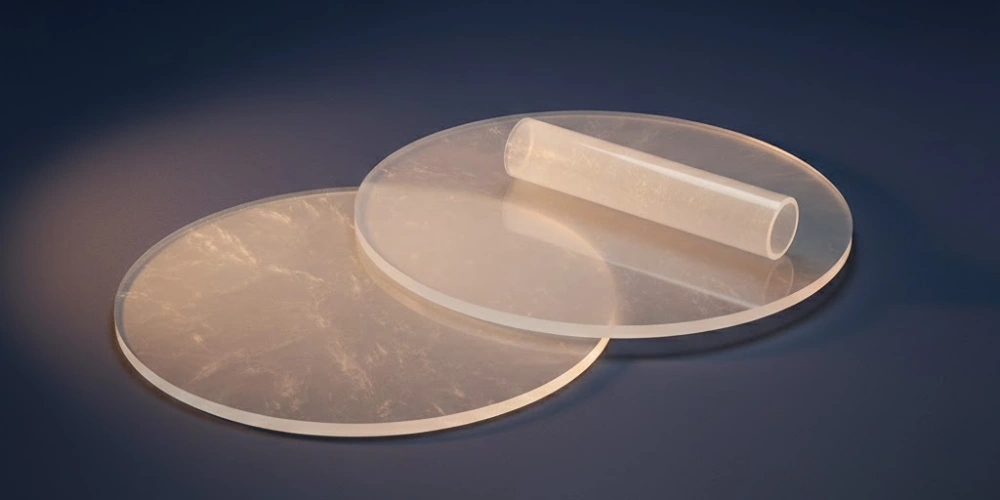
Influence de la pureté et de la pression sur le rapport entre le point de fusion et le point de ramollissement du quartz
Ni le point de fusion du quartz ni le point de ramollissement de la silice fondue ne constituent des constantes immuables. Ces deux valeurs dépendent de la pureté de la composition et de la pression ambiante, bien que les mécanismes et l'ampleur de ces dépendances diffèrent considérablement entre les deux matériaux. La quantification de ces écarts est essentielle pour toute application dans laquelle les spécifications des matériaux sont dérivées de valeurs de référence standard plutôt que de mesures directes.
La nature des effets des impuretés diffère entre les deux systèmes : dans le quartz cristallin, les oligo-éléments abaissent principalement le point de fusion par la formation d'eutectiques, tandis que dans la silice fondue, les ions modifiant le réseau abaissent le point de ramollissement en perturbant la connectivité Si–O. La pression, en revanche, augmente le point de fusion du quartz cristallin par le biais d'une relation thermodynamique bien définie, tandis que son effet sur le point de ramollissement de la silice fondue est d'une ampleur moindre et d'un mécanisme distinct.
Comment la présence d'impuretés fait baisser le point de fusion du quartz
Les impuretés à l'état de traces présentes dans le quartz cristallin — le plus souvent de l'aluminium (Al³⁺ se substituant à Si⁴⁺), du fer (Fe³⁺) et du titane (Ti⁴⁺) — ne se contentent pas de réduire la pureté en tant qu'indicateur abstrait de qualité. Elles modifient l'équilibre thermodynamique du système SiO₂ en introduisant des compositions eutectiques binaires ou ternaires dont les points de fusion sont nettement inférieurs à 1 670 °C.
Le système binaire SiO₂–Al₂O₃ présente un point eutectique à environ 1 587 °C à une composition d'environ 5,5 mol/kg d'Al₂O₃. Un échantillon de quartz cristallin contenant 2 % en poids d'Al₂O₃ sous forme d'impureté dispersée commencera à présenter une formation localisée de liquide aux joints de grains à proximité de cette température eutectique — soit environ 80 °C en dessous du point de fusion nominal du SiO₂ pur. À l'échelle des joints de grains, cette fusion naissante affaiblit l'intégrité mécanique du composant bien avant que la fusion en masse ne se produise.
Le degré de pureté du quartz détermine donc directement la température maximale d'utilisation effective. Quartz synthétique de haute pureté (SiO₂ ≥ 99,9981 %) présente un point de fusion qui s'écarte de la valeur théorique de 1 670 °C de moins de 2 °C environ. Quartz naturel standard (SiO₂ ~99,5–99,91 %) peut présenter un ramollissement mesurable au niveau des joints de grains à partir de températures comprises entre 30 et 80 °C en dessous du point de fusion nominal, en fonction du profil d'impuretés spécifique.
Effets des impuretés sur le point de ramollissement de la silice fondue
Dans la silice fondue, les impuretés les plus critiques sont ions modifiant le réseau — principalement des métaux alcalins (Na⁺, K⁺) et des métaux alcalino-terreux (Ca²⁺, Mg²⁺). Contrairement aux impuretés de substitution présentes dans le quartz cristallin, ces ions ne forment pas d’eutectiques. Au contraire, ils rompent les ponts Si–O–Si, en remplaçant les atomes d'oxygène de pontage par des atomes d'oxygène non pontants coordonnés au cation modificateur. Cette perturbation du réseau réduit la densité effective des liaisons transversales du réseau SiO₂, abaissant ainsi la température à laquelle le seuil de viscosité requis pour le ramollissement est atteint.
Ce phénomène est très sensible à la teneur en alcalis. La silice fondue contenant 1 % en poids de Na₂O présente un point de ramollissement ramené à environ 1 000–1 100 °C — une baisse de 550 à 650 °C par rapport au point de ramollissement de la silice fondue pure, qui est d'environ 1 665 °C. Même à des concentrations de l'ordre de quelques parties par million, la contamination au sodium abaisse sensiblement le point de ramollissement ; c'est pourquoi la silice fondue de qualité semi-conductrice doit présenter une teneur en métaux alcalins inférieure à 0,1 ppm en poids pour les applications nécessitant un fonctionnement prolongé à haute température.
Le contraste entre les mécanismes d'impureté dans ces deux matériaux est instructif. Dans le quartz cristallin, l'abaissement du point de fusion induit par les impuretés résulte de la thermodynamique eutectique et affecte principalement les zones des joints de grains. Dans la silice fondue, la modification du réseau abaisse le point de ramollissement de manière uniforme dans toute la masse, et cet effet est approximativement linéaire par rapport à la concentration du modificateur lorsque les niveaux d'impuretés sont faibles.
Dépendance du point de fusion du quartz par rapport au point de ramollissement en fonction de la pression
La dépendance du point de fusion du quartz par rapport à la pression est régie par la Équation de Clausius-Clapeyron: dT/dP = TΔV/ΔH, où ΔV correspond à la variation de volume lors de la fusion et ΔH à la chaleur latente de fusion. Pour le quartz cristallin, ΔV est positif (la masse fondue est moins dense que le cristal), ce qui donne un dT/dP positif — ce qui signifie que le point de fusion augmente avec la pression.
D'après des mesures expérimentales, la dépendance du point de fusion du quartz par rapport à la pression serait d'environ +57 à 62 °C par GPa. Dans les conditions caractéristiques de la croûte océanique subductée (pression ≈ 3 GPa, température ≈ 1 800 °C), le quartz s’est déjà transformé en coésite — un polymorphe du SiO₂ plus dense — et le diagramme de phases devient plus complexe. Dans la plage de pression accessible aux autoclaves de laboratoire (0–0,5 GPa), l'élévation du point de fusion est d'environ 30 °C, qui est faible mais mesurable par calorimétrie de précision.
Le point de ramollissement de la silice fondue présente une dépendance à la pression plus faible et d'un autre ordre de grandeur. Le ramollissement étant défini par la viscosité plutôt que par la thermodynamique, la pression l'affecte principalement par son influence sur la température de transition vitreuse et la cinétique de relaxation structurelle. Les données publiées indiquent une élévation du point de ramollissement d'environ 15 à 25 °C par GPa pour la silice fondue — soit environ la moitié du taux d'élévation du point de fusion du quartz cristallin — ce qui reflète les différentes structures physiques qui régissent ces deux valeurs.
Effets de la pureté et de la pression sur le point de fusion et le point de ramollissement du quartz
| Variable | Effet sur le point de fusion du quartz | Effet sur le point de ramollissement de la silice fondue |
|---|---|---|
| Mécanisme de l'effet des impuretés | Formation d'un mélange eutectique aux joints de grains | Modification du réseau (clivage du pont Si–O) |
| Al₂O₃ à 2 % en poids | Abaisse le point de fusion à environ 80 °C | Effet négligeable de la modification du réseau |
| Na₂O à 1 % en poids | Formation d'un eutectique mineur | Abaisse le point de ramollissement à environ 550–650 °C |
| Haute pureté (SiO₂ ≥ 99,9981 %) | Point de fusion à environ 2 °C près de 1 670 °C | Point de ramollissement à environ 5 °C près de 1665 °C |
| Coefficient de pression | ~+57–62 °C/GPa | ~+15–25 °C/GPa |
| Effet de la pression à 0,5 GPa | ~+30 °C de dénivelé | ~+10 °C de dénivelé |
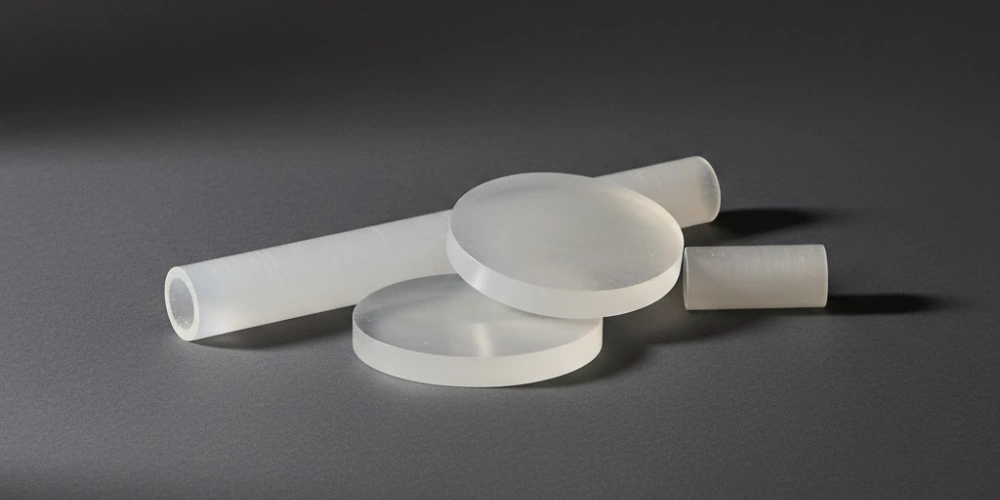
Performances thermiques des creusets en quartz dans la fabrication de semi-conducteurs
Parmi toutes les applications industrielles du quartz, le procédé de croissance de cristaux de silicium par la méthode Czochralski est celui qui impose les exigences les plus strictes en matière de résistance thermique et de stabilité dimensionnelle. Dans ce procédé, des creusets en silice fondue de haute pureté contiennent du silicium fondu à une température d'environ 1 420–1 450 °C pour des durées allant de 20 à plus de 100 heures, en fonction du diamètre du cristal et des paramètres de tirage.
Température de fonctionnement par rapport aux seuils thermiques :
-
Position par rapport au point de ramollissement : La température de service du creuset, comprise entre 1 420 et 1 450 °C, est inférieure d'environ 215 à 245 °C au point de ramollissement de la silice fondue, qui est d'environ 1 665 °C. Cette marge empêche toute déformation aiguë, mais n'élimine pas entièrement le fluage : à des températures supérieures au point de recuit (~1 215 °C), la viscosité est suffisamment faible pour qu'une contrainte prolongée entraîne un changement dimensionnel mesurable sur plusieurs heures.
-
Comportement au fluage sous charge de fusion : Les pression hydrostatique3 La contrainte exercée par le silicium fondu (densité ~2,57 g/cm³ à 1 420 °C) sur la paroi du creuset crée un champ de contraintes dirigé radialement vers l'extérieur. À des viscosités correspondant à des températures comprises entre 1420 et 1450 °C (~10⁹–10¹⁰ Pa·s pour la silice fondue de haute pureté), cette contrainte produit taux de fluage visqueux de l'ordre de 10⁻⁶ à 10⁻⁵ par heure, ce qui, sur un cycle de traction de 50 heures, entraîne une variation dimensionnelle de l'ordre du millimètre dans les grands creusets.
-
Le point de ramollissement comme limite critique, et non le point de fusion : Le point de fusion du quartz, situé à 1 670 °C, est thermiquement inaccessible lors d'un fonctionnement normal du procédé Czochralski : le silicium fondu entrerait en ébullition avant même que la température du creuset n'atteigne cette valeur. La limite thermique pertinente pour le fonctionnement est le point de ramollissement, car il définit le régime de viscosité dans lequel le creuset passe d'un état élastiquement rigide à un état visqueusement souple. Dans ce contexte, le fait de définir un creuset en fonction de son point de fusion ne fournit aucune information utile sur le plan opérationnel.
-
Transition alpha-bêta lors du chauffage et du refroidissement : Les cycles de chargement et de déchargement du creuset passent par une température de 573 °C, ce qui fait que des vitesses de montée en température contrôlées comprises entre 500 et 620 °C constituent une exigence standard du processus. Il a été démontré que des vitesses de chauffage supérieures à environ 3 °C/min dans cette plage provoquent des microfissures dans les parois du creuset, qui se propagent ensuite sous la pression de la masse fondue pendant le cycle de tirage.
Le domaine des semi-conducteurs illustre ainsi un cas où les trois seuils thermiques du SiO₂ — 573 °C, ~1 665 °C et 1 670 °C — sont pertinents sur le plan opérationnel, mais jouent des rôles totalement différents : la transition de phase régit les contraintes de vitesse de montée en température, le point de ramollissement définit le régime de risque de fluage, et le point de fusion est une limite thermique qui n’est jamais atteinte dans la pratique.
Le point de fusion du quartz comme critère de sécurité pour la verrerie de laboratoire
La verrerie de laboratoire en quartz — notamment les tubes de combustion, les fenêtres optiques, les récipients de réaction et les creusets — est conçue et utilisée dans un large éventail d'environnements thermiques, allant des applications cryogéniques aux fours à infrarouge proche. Dans ce contexte, le point de fusion du quartz sert de limite supérieure absolue, mais deux seuils thermiques inférieurs imposent des contraintes opérationnelles bien avant que la température n'approche les 1 670 °C.
Contrainte 1 — Transition alpha-bêta à 573 °C :
La transition de phase à 573 °C concerne les composants en quartz cristallin, notamment les tubes, les tiges et les plaques optiques en quartz monocristallin ou polycristallin. L'insertion rapide d'un composant froid dans un four fonctionnant à plus de 573 °C — ou inversement — soumet le matériau à un gradient thermique transitoire qui provoque une dilatation différentielle à la température de transition simultanément dans différentes zones de la pièce. Dans les applications de tubes de combustion, les pressions internes de gaz s'ajoutent aux contraintes thermiques pour abaisser le seuil de rupture effectif. Un protocole de préchauffage contrôlé dans la plage de 500 à 650 °C à des vitesses ne dépassant pas 5 °C/min constitue la mesure d'atténuation standard pour les composants en quartz cristallin dans cette plage de températures.
Contrainte n° 2 — Point de ramollissement à environ 1 665 °C pour les articles en silice fondue :
La verrerie de laboratoire en silice fondue, qui est amorphe plutôt que cristalline, n'est pas exposée au risque de transition à 573 °C. Sa limite supérieure d'utilisation correspond au point de ramollissement, situé à environ 1 665 °C. En pratique, une utilisation prolongée à des températures supérieures à environ 1 200 °C — soit déjà 465 °C en dessous du point de ramollissement — entraîne une dévitrification superficielle mesurable (cristallisation de cristobalite sur la surface externe), ce qui réduit la résistance aux chocs thermiques et introduit une nouvelle hétérogénéité structurelle. La dévitrification commence à s'accélérer au-delà d'environ 1 100 °C en présence d'une contamination alcaline, et son taux double environ tous les 100 °C d'augmentation de la température.
Contrainte n° 3 — Le point de fusion comme limite absolue non négociable :
À 1 670 °C pour le quartz cristallin (ou environ 1 710 °C pour la silice fondue), le matériau passe de manière irréversible à l'état liquide. Aucun composant de laboratoire n'est conçu pour fonctionner à cette température ou au-delà ; cette valeur constitue donc une limite physique absolue qui définit la frontière extérieure de l'ensemble du champ d'application. La marge de sécurité entre une utilisation typique en laboratoire à haute température (~1 200 °C pour les applications courantes en four à moufle) et le point de fusion du quartz est d'environ 470 °C — une marge qui, historiquement, a favorisé l'utilisation du quartz dans des applications où le risque opérationnel réel réside dans la déformation due au ramollissement ou dans la fracture due à une transition de phase, et non dans la fusion.
Le contexte en laboratoire met en évidence une erreur récurrente dans les spécifications thermiques : invoquer le point de fusion du quartz comme preuve de l'adéquation à une température donnée sans tenir compte des deux seuils inférieurs susceptibles d'imposer des contraintes contraignantes à la température de fonctionnement réelle.
Plages de température du quartz dans la pratique industrielle
En synthétisant les données thermiques présentées dans toutes les sections précédentes, il est possible d'établir une carte complète des zones de température caractérisant le comportement du quartz, qui définit de manière quantitative chaque régime de comportement, de la température ambiante à la fusion complète. Cette vue d'ensemble constitue le cadre de référence principal pour tout ingénieur chargé de spécifier des composants en quartz destinés à une utilisation à haute température.
Zone 1 — Quartz alpha stable (température ambiante à 573 °C) : Le quartz cristallin présente une stabilité mécanique et chimique sur toute cette plage. Sa dilatation thermique suit une relation prévisible, quasi linéaire, avec la température. Le coefficient de dilatation thermique (CTE) du quartz alpha le long de l'axe c est d'environ 7,1 × 10⁻⁶/°C, alors qu'elle est perpendiculaire à l'axe c, elle est d'environ 13,7 × 10⁻⁶/°C — une anisotropie directionnelle qui influe sur la dilatation des composants en quartz polycristallin et dont il faut tenir compte dans les assemblages de précision.
Zone 2 — Zone de risque de transition de phase (540–620 °C) : Cette plage de ±40 °C autour du point d'inversion alpha-bêta à 573 °C constitue la zone à plus haut risque de rupture par choc thermique pour les composants en quartz cristallin. Des vitesses de chauffage et de refroidissement contrôlées inférieures à 5 °C/min sont nécessaires sur toute cette plage.
Zone 3 — Stabilité du quartz bêta (573–870 °C) : Au-dessus de 573 °C et en dessous d'environ 870 °C, le quartz bêta est le polymorphe cristallin stable. À 870 °C, le quartz bêta se transforme en tridymite — une deuxième transition solide-solide, bien que moins brusque et moins dangereuse sur le plan mécanique que l'inversion alpha-bêta. Cette transformation est lente dans le quartz de haute pureté et souvent incomplète à l'échelle des délais industriels.
Zone 4 — Stabilité cristalline à haute température (870–1470 °C) : Entre environ 870 °C et 1 470 °C, divers polymorphes de SiO₂ à haute température (tridymite, puis cristobalite) sont thermodynamiquement stables, bien que les transitions soient cinétiquement lentes. Pour la silice fondue, cette zone correspond à la plage d'utilisation dans les applications de creusets pour semi-conducteurs, avec des valeurs de viscosité comprises entre environ 10¹⁴ Pa·s (aux alentours de 870 °C) et 10⁸ Pa·s (aux alentours de 1 470 °C).
Zone 5 — Phase d'approche de la température de ramollissement (1 470–1 665 °C) : Les composants en silice fondue de cette gamme présentent une sensibilité au fluage qui augmente progressivement. Le point de recuit (~1 215 °C) et le point de déformation (~1 120 °C) ont déjà été dépassés ; La viscosité à 1 470 °C est d'environ 10⁸ Pa·s, ce qui correspond à une vitesse de fluage mesurable sur des cycles industriels s'étendant sur plusieurs heures. L'utilisation de composants en silice fondue dans cette zone nécessite une analyse du fluage plutôt qu'une simple comparaison des températures.
Zone 6 — Ramollissement et fusion (1 665–1 710 °C) : Le point de ramollissement de la silice fondue (~1 665 °C) et le point de fusion du quartz cristallin (~1 670 °C) se situent dans cette fourchette de 45 °C. Cette zone ne correspond pas à une plage de fonctionnement pour l'un ou l'autre de ces matériaux dans des composants structurés — il s'agit d'une zone de transition dans laquelle les matériaux perdent leur intégrité géométrique.
Résumé de la zone thermique de Quartz à titre de référence industrielle
| Zone | Plage de température (°C) | État de la matière | Principale contrainte industrielle |
|---|---|---|---|
| 1 — Alpha stable | Ambiance à 573 | Quartz cristallin alpha | Anisotropie du CTE dans les assemblages de précision |
| 2 — Risque lié à la transition de phase | 540–620 | Frontière alpha-bêta | Vitesse de montée en température ≤ 5 °C/min requise |
| 3 — Stabilité de la version bêta | 573–870 | Quartz cristallin bêta | Une conversion lente de la tridymite est possible |
| 4 — Cristallin haute température | 870-1470 | Stable en tridymite / cristobalite | Le risque de fluage de la silice fondue apparaît à partir d'environ 1 215 °C |
| 5 — Presque ramollissement | 1470-1665 | Silice fondue proche de son point de ramollissement | Une analyse du fluage est nécessaire ; viscosité ≈ 10⁸ Pa·s |
| 6 — Ramollissement et fusion | 1665-1710 | Perte d'intégrité géométrique | Il ne s'agit pas d'une gamme de services opérationnels |
Résumé des propriétés thermiques du quartz et de la silice fondue
| Propriété | Quartz cristallin | Silice fondue |
|---|---|---|
| Point de fusion (°C) | ~1670 | ~1710 |
| Point de ramollissement (°C) | N/A | ~1665 |
| Transition alpha-bêta (°C) | 573 | N/A (amorphes) |
| CTE à 20 °C (×10⁻⁶/°C) | 7,1 (∥axe c) / 13,7 (⊥axe c) | ~0.55 |
| Conductivité thermique à 25 °C (W/m·K) | ~6,2 (∥axe c) | ~1.38 |
| Chaleur latente de fusion (kJ/mol) | ~9.4 | Non défini |
| Température maximale d'utilisation (°C) | ~1400 | ~1 200 (en continu) |
| Résistance à la rupture (MPa·m^(1/2)) | environ 0,7–1,0 | ~0.75 |
Conclusion
Le point de fusion du quartz, à 1 670 °C, et le point de ramollissement de la silice fondue, à environ 1 665 °C, sont séparés par un écart de 5 °C, mais aussi par une distance conceptuelle insurmontable en termes de signification physique. L'un décrit l'effondrement thermodynamique d'un réseau cristallin ; l'autre marque un seuil de viscosité dans un verre amorphe. Entre ces deux valeurs se situe la transition de phase alpha-bêta à 573 °C — un troisième événement thermique qui est réversible, de nature dislocative et qui a des conséquences opérationnelles en soi. Ensemble, ces trois seuils définissent un cadre thermique complet pour les matériaux à base de SiO₂ utilisés dans l'industrie. Appliquer le bon seuil au bon matériau dans le bon contexte — et comprendre que la pureté et la pression modifient toutes deux ces valeurs de référence de manière prévisible et quantifiable — constitue le fondement d'une spécification fiable des composants en quartz.
FAQ
Quel est le point de fusion du quartz ?
Le point de fusion du quartz cristallin est d'environ 1 670 °C (3 038 °F) à la pression atmosphérique normale. Cette valeur correspond à la température à laquelle l'ordre périodique à longue portée du réseau cristallin SiO₄ s'effondre de manière irréversible pour former une masse fondue désordonnée. Lorsqu'il refroidit, ce bain fondu ne se recristallise pas ; il se solidifie en verre de silice fondue.
Quelle est la différence entre le point de fusion et le point de ramollissement du quartz ?
Le point de fusion du quartz (1 670 °C) s'applique au quartz cristallin et correspond à une transition de phase solide-liquide de premier ordre. Le point de ramollissement (~1665 °C) s'applique à la silice fondue (verre de quartz amorphe) et est défini comme la température à laquelle la viscosité atteint 10⁷·⁶ Pa·s — il ne s'agit pas d'une transition de phase, mais d'un seuil de viscosité. Les deux valeurs sont numériquement proches mais physiquement sans rapport.
Le point de fusion du quartz varie-t-il en fonction de sa pureté ?
Oui. Des impuretés à l'état de traces — notamment l'Al₂O₃, le Na₂O et le Fe₂O₃ — peuvent abaisser la température effective de début de fusion du quartz cristallin de 30 à 80 °C en raison de la formation d'eutectiques aux joints de grains. Le quartz synthétique de haute pureté (SiO₂ ≥ 99,9981 %) conserve un point de fusion à environ 2 °C près de la valeur théorique de 1 670 °C.
Que se passe-t-il avec le quartz à 573 °C ?
À 573 °C, le quartz cristallin subit une transition de phase réversible de type « displacif » entre la structure alpha (trigonale) et la structure bêta (hexagonale). Ce phénomène s'accompagne d'une dilatation volumétrique d'environ 0,451 TP3T qui se produit de manière pratiquement instantanée. Un cycle thermique rapide à cette température génère des contraintes internes pouvant entraîner une rupture — un risque opérationnel significatif dans les applications où les composants en quartz sont chauffés et refroidis de manière répétée.
Références :
-
Il explique le concept thermodynamique de la chaleur latente de fusion, c'est-à-dire l'énergie nécessaire pour transformer un solide cristallin en liquide à son point de fusion sans variation de température.↩
-
Ce document traite de la définition thermodynamique de la variation d'enthalpie lors des transitions de phase, fournissant ainsi les bases conceptuelles permettant de comparer les besoins énergétiques de l'inversion de déplacement du quartz et de sa fusion.↩
-
Elle définit la pression hydrostatique et ses effets mécaniques sur les parois des récipients, fournissant ainsi les bases physiques nécessaires au calcul des contraintes dans les creusets en silice fondue contenant du silicium en fusion.↩