Dünya çapındaki laboratuvarlar ve üretim tesisleri, çoğu insanın göz ardı ettiği bir malzemeye güveniyor — ancak bu malzeme olmasaydı, hassas bilim en kritik anlarında durma noktasına gelirdi.
Füzyonlu kuvars cam ürünleri, amorf silikon dioksitten üretilen kaplar, tüpler, potalar ve optik bileşenleri kapsar; bu malzemeler, olağanüstü termal kararlılıkları, geniş spektral geçirgenlikleri ve eşsiz kimyasal inertlikleri ile sıradan camdan ayrılır. Yarı iletken üretimi, analitik kimya, yüksek sıcaklık araştırmaları ve fotonik sistemler gibi alanlarda, bu malzeme sınıfı, ticari olarak uygulanabilir bir alternatifin bulunmadığı durumlarda kullanılır.
Hammaddenin menşei, erimiş kuvarsın performansında en belirleyici tek değişkendir. Bir difüzyon fırını borusunun 1.100 °C’lik döngüye dayanıp dayanmayacağı ya da bir UV küvetinin 200 nm dalga boyunda güvenilir bir şekilde ışık geçirip geçirmeyeceği, cam malzemelerin laboratuvar tezgahına ulaşmasından çok önce, silika tedarik ve eritme aşamasında alınan kararlara neredeyse tamamen bağlıdır.
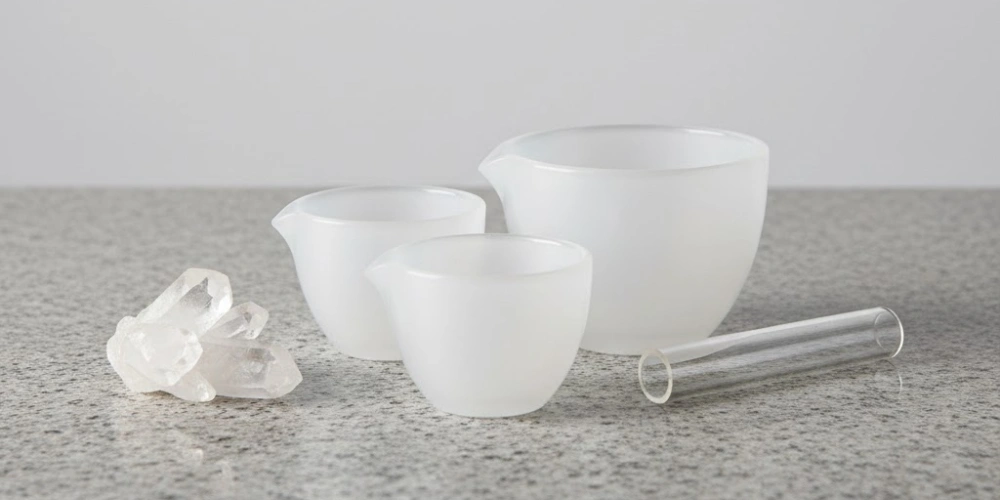
Kuvars Cam Ürünlerinin Arkasında Yatan İki Hammadde
Füzyonlu kuvarsın performansını belirleyen tüm değişkenler arasında, hammaddenin kaynağı en belirleyici faktördür; bu faktör, herhangi bir şekillendirme veya son işlem aşaması başlamadan önce saflık, optik özellikler ve termal dayanıklılık açısından mutlak sınırlar belirler.
Şu kategorinin tamamı: erimiş kuvars cam eşyalar İki temel olarak farklı hammadde kaynağına dayanmaktadır: doğal kuvars kristali ve sentetik silikon dioksit. Her ikisi de eritildiğinde amorf, kristal olmayan bir SiO₂ yapısı oluşturur; ancak ikisi arasındaki safsızlık profilleri, hidroksil içeriği ve ulaşılabilir saflık seviyelerindeki farklılıklar, zorlu uygulamalar için bunları ayrı performans kademelerine yerleştirecek kadar belirgindir.
Doğal Kuvars Kristali — Kökeni, Saflığı ve Yapısal Kısıtlamalar
Doğal kuvars kristali, jeolojik zaman ölçeklerinde hidrotermal süreçler yoluyla oluşur; en yüksek kalitedeki yataklar ise Brezilya, Madagaskar ve Çin’in bazı bölgelerinde yoğunlaşmıştır. Optik ve endüstriyel kullanım amacıyla seçilen ve madenlerden çıkarılan kristaller, “lasca” olarak sınıflandırılır — bunlar, en az miktarda içsel kusur içeren, büyük ve görsel olarak berrak parçalardır — ve toplam kuvars cevheri üretiminin yalnızca küçük bir kısmını oluşturur.
Cam eşya üretiminde kullanılan doğal kuvarsın SiO₂ saflığı genellikle şu aralıkta yer alır: 99,9% ve 99,99%, geri kalan kısmı ise alüminyum (Al³⁺), demir (Fe²⁺/Fe³⁺), titanyum (Ti⁴⁺) ve lityum (Li⁺) gibi eser miktarda yer değiştirici kirliliklerle doludur. Bu elementler, jeolojik kristalleşme sürecinde kristal kafese girer ve fiziksel ayırma veya standart asit yıkama yöntemleriyle tamamen giderilemez. Milyonda birkaç parça kadar düşük konsantrasyonlarda bile, alüminyum ve alkali metal safsızlıkları yüksek sıcaklıklarda viskoziteyi düşürür ve UV aralığında absorpsiyon bantlarına neden olur, bu da yüksek saflıkta ve optik uygulamalarda doğal erimiş kuvarsın performans sınırını doğrudan kısıtlamaktadır.
Doğal kuvars, yapısal açıdan önemli bir özellik olan kristallik özelliğini de taşır. Maden halindeki kuvars, düzenli bir Si–O–Si kafes yapısına sahip kristal bir katıdır. Bu kristal yapının 1.710 °C'nin üzerindeki sıcaklıklarda eritilmesi, onu erimiş kuvarsı tanımlayan düzensiz, amorf cam ağına dönüştürür — bu dönüşüm, normal işleme koşulları altında geri döndürülemez bir süreçtir.
Sentetik Silika — Kimyasal Buhar Biriktirme ve Alevle Erime Yöntemlerinin Açıklaması
Sentetik erimiş silika, yüksek saflıkta kimyasal öncüllerden silikon dioksit oluşturarak jeolojik safsızlık kısıtlamalarını tamamen ortadan kaldırır. Endüstriyel ölçekte iki ana üretim yöntemi kullanılmaktadır ve her biri, optik ve termal performans üzerinde doğrudan etkileri olan farklı hidroksil (OH) içeriğine sahip bir malzeme üretir.
Bu kimyasal buhar biriktirme (CVD) yöntemi — özellikle alev hidrolizi — silikon tetraklorür (SiCl₄) veya oktametilsiklotetrasiloksan (OMCTS) gibi organosilikon bileşiklerinin oksijen-hidrojen alevi içinde yanmasını içerir. Reaksiyon sonucunda oluşan ultra ince SiO₂ kurum parçacıkları, dönen bir mandrel üzerine birikir ve ardından şeffaf bir cam ham parçası haline sinterlenir. Bu işlem, saflığı 99,9999% SiO₂, metalik kirlilik seviyeleri milyarda birin altında bir aralıkta ölçülmektedir. Bununla birlikte, hidrojen alevi cam ağ yapısına önemli miktarda OH katarak, şu şekilde sınıflandırılan bir maddeyi oluşturur: "ıslak" sentetik silika OH konsantrasyonları genellikle 800 ile 1.200 ppm arasındadır.
Bu alev füzyonu (Verneuil tipi) yöntemi yüksek saflıkta SiO₂ tozunu doğrudan bir oksijen-hidrojen brülöründe eriterek malzemeyi bir kristal çubuk haline getirir. Vakumda veya inert atmosferde elektriksel eritme — şu amaçlarla kullanılır: "kuru" sentetik silika — hidrojen maruziyetini ortadan kaldırır ve OH içeriğini 1 ppm’nin altına düşürür. Bu OH farkı sadece görünüşte bir fark değildir: Yüksek OH içeriğine sahip silika, yaklaşık 2.730 nm dalga boyunda kızılötesi ışınımı emer, bu da kuru tiplerin yakın kızılötesi optik uygulamalar için zorunlu hale gelmesine neden olurken, ıslak tipler ise daha düşük metalik kirlilik seviyeleri sayesinde üstün UV şeffaflığı sunar.
Eritilmiş Kuvars ve Eritilmiş Silika — Gerçekten Önemli Olan Fark
"Erimiş kuvars" ve "erimiş silika" terimleri birçok ürün kataloğunda birbirinin yerine kullanılır; ancak malzeme bilimi ve hassas imalat alanlarında bu terimler, kimyasal ve performans açısından birbirinden farklı iki malzemeyi ifade eder. Zorlu bir uygulama için herhangi bir bileşen belirlemeden önce bu ayrımı netleştirmek büyük önem taşır.
Erimiş kuvars doğal kuvars kristalinin eritilmesiyle elde edilir. Saflığı jeolojik kirlilik düzeyleriyle sınırlıdır, OH içeriği orta düzeydedir (genellikle 150–300 ppm) ve UV geçirgenlik kesme noktası yaklaşık olarak 250 nm kalan metalik emiciler nedeniyle. Erimiş silika, buna karşılık, sentetik SiO₂ öncüllerinden üretilir ve ppb altındaki aralıkta metalik saflık seviyelerine ulaşır; UV kesme değerleri ise 150–180 nm OH içeriğine ve sınıfa bağlı olarak.
Her iki malzeme de aynı amorf SiO₂ ağ yapısına, yaklaşık 1.665 °C’lik aynı yumuşama noktasına ve yaklaşık 0,55 × 10⁻⁶/°C’lik aynı termal genleşme katsayısına sahiptir. Aradaki fark, spektral performans ve kontaminasyon riskinde yatmaktadır — bu parametreler, yarı iletken sınıfı yonga plakası işleme ve UV spektroskopik ölçümlerde belirleyici hale gelir; bu uygulamalarda, eser miktarda metalik kontaminasyon veya UV kesme noktasındaki bir kayma bile bir bileşeni kabul edilemez hale getirir.
Eritilmiş Kuvars ve Eritilmiş Silika — Temel Farklılıklar
| Mülkiyet | Erimiş Kuvars (Doğal) | Erimiş Silika (Sentetik) |
|---|---|---|
| SiO₂ Saflığı (%) | 99,9 – 99,99 | 99.9999+ |
| OH İçeriği (ppm) | 150 - 300 | <1 (kuru) / 800–1.200 (ıslak) |
| UV Kesimi (nm) | ~250 | ~150-180 |
| Metalik Safsızlıklar | Düşük (ppm aralığı) | Son derece düşük (ppb altı) |
| Ana Hammadde | Maden ocağından çıkarılan kuvars kristali | SiCl₄ / organosilan |
| Tipik Uygulama Katmanı | Endüstriyel, genel laboratuvar | Yarı iletken, UV optiği |
Kuvars Cam Ürünlerini Ayırt Eden Fiziksel ve Kimyasal Özellikler
Kuvars cam ürünlerinin neyden yapıldığını bilmek, resmin sadece yarısını oluşturur — amorf SiO₂ yapısından kaynaklanan ölçülebilir fiziksel ve kimyasal özellikleri anlamak ise, cam bazlı malzemelerin performans sınırlarına zorlandığı her durumda bu malzemelerin neden vazgeçilmez bir konuma sahip olduğunu tam olarak açıklar.
Füzyonlu kuvarsın bu kadar çeşitli endüstrilerde yaygın olarak benimsenmesinin nedeni, tek başına herhangi bir özelliğe atfedilemez. Aksine, bu malzeme sınıfını yüksek performanslı uygulamalarda borosilikat ve soda-kireç alternatiflerine göre kategorik olarak üstün kılan, aşırı termal kararlılık, UV’den yakın kızılötesine kadar uzanan geniş optik geçirgenlik ve kimyasal olarak agresif ortamlara karşı direncin eşzamanlı birleşimidir. Her bir özellik, diğerlerinin önemini pekiştirir ve birlikte, kuvars cam ürünlerinin çalıştığı performans sınırlarını belirler.
Termal Performans — Çalışma Sıcaklığı ve Termal Şok Dayanımı
Erimiş kuvars, yaklaşık 1.100 °C, erime noktası 1.665 °C — bu değerler, yaklaşık 820 °C’de yumuşayan borosilikat camın çok ötesinde bir performans sergilemektedir. Mekanik yüklerin minimum düzeyde olması koşuluyla, 1.300 °C’ye kadar olan kısa süreli sıcaklık dalgalanmalarına, ciddi deformasyonlar yaşanmadan dayanılabilir.
Erimiş kuvarsın termal şok direnci, yaklaşık olarak 0.55 × 10-⁶/°C — 3,3 × 10⁻⁶/°C değeriyle borosilikat camdan yaklaşık altı kat, 7,5 × 10⁻⁶/°C değeriyle ise standart soda-kireç camından neredeyse on dört kat daha düşüktür. Eritilmiş kuvars tüp, 1.000 °C'de çalışan bir fırından çıkarılıp ortam havasına maruz kaldığında, duvar boyunca oluşan termal gradyan, herhangi bir ticari cam alternatifine kıyasla orantılı olarak daha küçük çekme gerilmeleri oluşturur; bu da hızlı termal döngü altında kırılma olasılığını çok daha düşük hale getirir. Bu düşük CTE davranışı, amorf Si–O–Si ağının yapısal bir sonucudur; söz konusu ağ, sıcaklık değişikliklerini kafes genişlemesi yerine ağın şekil değişimi yoluyla telafi eder.
Tüp fırın uygulamalarında, kuvars reaksiyon tüpleri, yıllarla ölçülen kullanım ömürleri boyunca her gün birçok kez oda sıcaklığı ile 1.000 °C arasında döngüsel olarak çalıştırılır — bu tür bir kullanım koşulu, borosilikat bileşenleri birkaç gün içinde tahrip ederdi.
UV, Görünür Işık ve Kızılötesi Dalga Boylarında Optik Şeffaflık
Eriyik kuvarsın spektral geçirgenlik aralığı yaklaşık olarak Vakum ultraviyole dalga boyu aralığındaki 150 nm’den orta kızılötesi dalga boyu aralığındaki 3.500 nm’ye kadar, hiçbir yaygın oksit camının ulaşamadığı bir aralığı kapsar. Buna karşılık, borosilikat cam, yaklaşık 310 nm, bu da onu UV spektroskopisi, UV fotokimyası ve derin UV lazer optiği için kullanışsız hale getirir.
Bu aralıkta, iletim verimliliği büyük ölçüde OH içeriğine bağlıdır. Islak sentetik silika türleri, 160–180 nm’ye kadar olan UV aralığında verimli bir şekilde ışık geçirir, son derece düşük metalik kirlilik içeriği nedeniyle, ancak yaklaşık olarak merkezli güçlü bir emilim bandı sergilerler 2.730 nm Si–OH gerilme titreşimlerinden kaynaklanan. Kuru sentetik silika türleri, OH içeriğini 1 ppm’nin altına düşürerek bu bandı bastırır ve UV kesme noktasının hafifçe yükselmesini göze alarak geniş bantlı yakın kızılötesi geçirgenlik sağlar. Dolayısıyla, belirli bir dalga boyu aralığı için doğru OH içeriğine sahip türün seçilmesi bir ince ayar değil, temel bir teknik özellik kararınıdır. 250 nm'nin altındaki UV-Vis spektrofotometrisi uygulamalarında, yalnızca metalik safsızlık oranı düşük, yüksek saflıkta sentetik erimiş silika, güvenilir ve tekrarlanabilir bir baz hattı geçirgenliği sağlar.
Doğal erimiş kuvars, görünür ışık aralığı boyunca ve yakın UV bölgesine kadar yeterli düzeyde ışık geçirgenliği sağlayarak orta bir konumda yer alır; bu özelliği sayesinde, optik performansın termal ve kimyasal dirence göre ikincil öneme sahip olduğu yüksek sıcaklıklı laboratuvar çalışmaları için uygundur.
Asitlere, Çözücülere ve Yüksek Saflıkta Proses Sıvılarına Karşı Kimyasal Dayanıklılık
Erimiş kuvars, yüksek sıcaklıklarda neredeyse tüm inorganik asitlere karşı olağanüstü bir direnç gösterir. Hidroklorik asit (HCl), sülfürik asit (H₂SO₄), nitrik asit (HNO₃) ve fosforik asit (H₃PO₄) — 300 °C’ye yaklaşan sıcaklıklardaki konsantre formlar da dahil olmak üzere — kuvars kaplardan ihmal edilebilir düzeyde yüzey çözünmesi veya kirletici maddelerin sızmasına neden olur. Bu kimyasal inertlik, çoğu laboratuvar koşulunda asidik sulu ortamlarda kolayca hidrolize olabilecek bağlar içermeyen, tamamen çapraz bağlanmış Si–O–Si ağından kaynaklanmaktadır.
Füzyon kuvarsın başlıca kimyasal zayıflığı, aşağıdakilerin neden olduğu aşınmadır: hidroflorik asit (HF) ve yaklaşık 100 °C’nin üzerindeki sıcak konsantre alkali çözeltiler (NaOH, KOH) tarafından. HF, silika ile doğrudan reaksiyona girerek çözünür heksaflorosilikik asit (H₂SiF₆)1, sıcak alkali maddeler ise hidroksit katalizli ağ çözünmesini teşvik eder. Her iki etki mekanizması da iyi bilinmekte olup laboratuvar protokollerinde dikkate alınmaktadır — HF içeren akışlar veya kuvvetli bazik sindirim prosedürleri için kuvars asla önerilmez.
Esansiyel element analizinde, kuvars kap duvarlarından kaynaklanan kontaminasyon, borosilikat camdan kaynaklanana göre birkaç mertebe daha düşüktür, burada bor, sodyum ve alüminyum, ölçülebilir konsantrasyonlarda asidik çözeltilere sızmaktadır. ICP-MS ve ICP-OES numune hazırlığı için, arka plan boş numunesinin katkısındaki bu fark doğrudan ölçülebilir ve analitik açıdan önemlidir.
Kuvars Cam Ürünlerinin Termal ve Kimyasal Özellikleri
| Mülkiyet | Erimiş Kuvars | Borosilikat Cam | Soda-Kireç Bardağı |
|---|---|---|---|
| Sürekli Kullanım Sıcaklığı (°C) | 1,100 | 500 | 300 |
| Yumuşama Noktası (°C) | 1,665 | 820 | 730 |
| CTE (×10-⁶/°C) | 0.55 | 3.3 | 7.5 |
| UV Kesimi (nm) | ~250 (doğal) / ~150 (sentetik) | ~310 | ~320 |
| HF Direnci | Zayıf | Zayıf | Zayıf |
| Yüksek Sıcaklıkta Asit Direnci | Mükemmel | İyi | Orta düzeyde |
| Yüksek Sıcaklıkta Alkali Direnci | Zayıf | Orta düzeyde | Zayıf |
Kuvars Cam ile Borosilikat Cam — Özellik Bazında Karşılaştırma
Borosilikat cam, hacim bakımından genel laboratuvar cam malzemelerinin büyük bir kısmını oluşturur; ancak sıcaklık, spektral geçirgenlik veya kirlenme eşikleri borosilikatın kapasite sınırlarını aştığı durumlarda, erimiş kuvars her zaman onun yerini alır.
Termal tavan en belirgin ayırt edici unsurdur. Borosilikat cam, yaklaşık 820 °C’de yumuşar ve standart laboratuvar sınıflarında yaklaşık 500 °C’ye kadar sürekli kullanım için tasarlanmıştır. Kuvars cam malzemeler ise 1.100 °C'de sürekli kullanıma dayanır ve 1.300 °C'ye kısa süreli maruz kalmaya karşı direnç gösterir; bu, borosilikat camın ısıl marjının iki katından fazladır. Bu fark kademeli değil; köklüdür, 600 °C’nin üzerinde gerçekleştirilen herhangi bir işlemde bu iki malzemeyi birbirinden farklı uygulama alanlarına ayırarak.
Spektral geçirgenlik bu da aynı derecede belirleyici bir ayrım oluşturmaktadır. Borosilikat cam, görünür ışığı ve yakın UV ışığını yeterince geçirir, ancak yaklaşık 310 nm’nin altında opak hale gelir. UV geçirgenliği gerektiren her türlü uygulama — 300 nm altındaki spektrofotometri, UV fotokataliz, eksimer lazer optiği — erimiş kuvars veya sentetik erimiş silika kullanımını zorunlu kılar; borosilikatın bu malzemeler için işlevsel bir alternatifi yoktur.
Kimyasal saflık ve sızıntı davranışı Karşılaştırmayı tamamlayalım. Borosilikat cam, sıcak asidik çözeltilere ölçülebilir konsantrasyonlarda bor, sodyum ve silikon salar — bu, ppb altındaki konsantrasyon seviyelerinde yapılan eser element analizlerinde kabul edilemez bir kirlenme kaynağıdır. Eritilmiş kuvars, en agresif asit ortamlarında bile ihmal edilebilir düzeyde iyonik kontaminasyona neden olur ve arka plan boşu bastırmanın birincil analitik hedef olduğu analitik iş akışlarında numune bütünlüğünü korur.
Yaygın Kuvars Cam Ürün Türleri ve Yapısal Özellikleri
Erimiş kuvars, çeşitli standart kap ve bileşen geometrileri şeklinde imal edilir; bunların her biri, estetik kurallardan ziyade belirli işlevsel gereksinimleri karşılamak üzere şekillendirilmiştir.
-
Kuvars potalar Yüksek sıcaklıkta eritme, kalsinasyon ve malzeme eritme işlemleri için kullanılan, kalın cidarlı, silindirik veya konik şekilli açık kaplardır. Cidar kalınlığı, hacme ve termal yüke bağlı olarak genellikle 2 ila 5 mm arasında değişir; laboratuvar sınıfı ürünlerde hacimler ise 10 mL ile birkaç litre arasında değişir.
-
Kuvars beherler ve şişeler Standart borosilikat laboratuvar gereçlerinin şekline benzemekle birlikte, partikül dökülmesini en aza indirmek amacıyla daha sıkı duvar homojenliği toleransları ve ateşle parlatılmış kenar yüzeyleri ile üretilirler. Düz tabanlı ve yuvarlak tabanlı modeller, asit sindirimi ve çözelti hazırlama işlerinde kullanılır.
-
Kuvars tüpler En yüksek hacimli ürün türlerinden birini oluşturur; dış çapları 1 mm’den 300 mm’nin üzerine kadar değişen ve basınç ile termal yüklere göre kalibre edilmiş duvar kalınlıklarına sahip olarak üretilir. Düz borular, dirsek parçaları ve flanşlı tertibatların tümü, çekme veya santrifüj döküm yöntemiyle üretilen boru ham malzemesinden elde edilir.
-
Kuvars çubuklar, diskler ve plakalar kaplar yerine yapısal, optik ve elektriksel yalıtım bileşenleri olarak işlev görürler. Çubuklar karıştırma elemanları veya süseptör destekleri olarak işlev görür; diskler ve plakalar ise fırın ve reaktör düzeneklerinde pencere, alt tabaka ve kapak plakası olarak kullanılır.
-
Kuvars buharlaştırma kapları Yüksek sıcaklıklarda katı numunelerin çözücüyle buharlaştırılması ve asitle çözünmesi için optimize edilmiş, sığ ve geniş çaplı profillere sahiptir. Geniş yüzey-hacim oranı, kontrollü ısıtma koşullarında buharlaşmayı hızlandırır.
Bu formların belirleyici bir yapısal özelliği vardır: cam matrisinde herhangi bir kristal düzenin bulunmaması. Şekli ne olursa olsun, tüm erimiş kuvars bileşenleri amorf ve izotropiktir; ayrıca, aksi takdirde termal ve kimyasal açıdan tercihli aşınmaya maruz kalınacak bölgeler oluşturabilecek tane sınırları da bulunmaz.
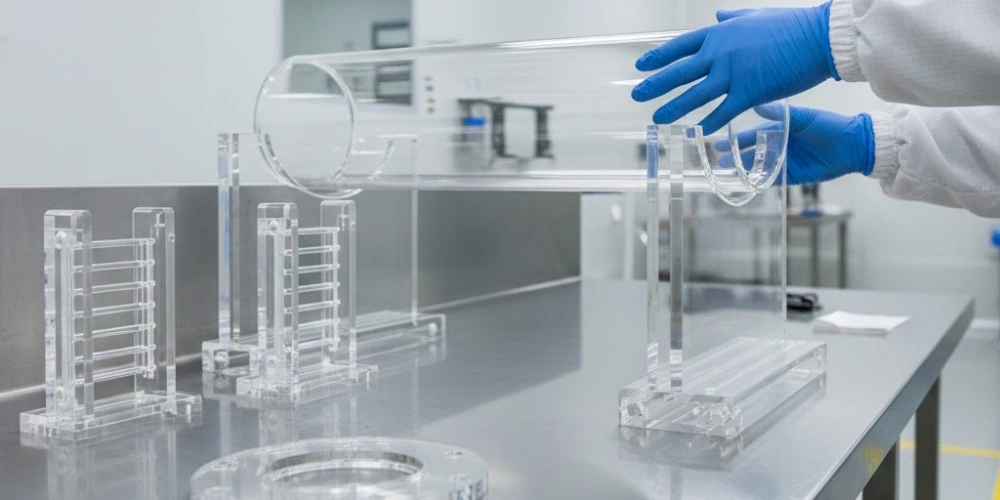
Yarıiletken Üretiminde Kuvars Cam Malzemelerin Kullanım Alanları
Yarı iletken üretiminde malzemeler, aşırı sıcaklık, ultra yüksek saflık gereklilikleri ve agresif kimyasallara maruz kalma gibi faktörlerin birleşimine maruz kalır; bu da camdan yapılmış alternatiflerin neredeyse tamamını eler ve erimiş kuvarsı modern yonga işleme altyapısının hem yapısal hem de kimyasal açıdan merkezine yerleştirir.
Bir silikon yonga üretim tesisinde, kuvars cam gereçler ve kuvars bazlı bileşenler, neredeyse her termal ve ıslak kimyasal işleme aşamasında karşımıza çıkar. Bu bağlamdaki saflık gereklilikleri laboratuvar sınıfı değil, yarı iletken sınıfıdır: tek haneli trilyonda bir (pptr) konsantrasyonlarda bile metalik kirlenme Yonga yüzeylerindeki bu tür kusurlar, taşıyıcı ömürlerini değiştirebilir, geçit oksit kusurlarına yol açabilir ve cihaz verimini düşürebilir. Bu nedenle, yongalarla veya işlem gazlarıyla temas eden her kuvars bileşeni, standart endüstriyel erimiş kuvarsın ötesine geçen ve yarı iletken sınıfı ile elektronik sınıfı sınıflandırmalarına uyan sıkı teknik özelliklere uymak zorundadır.
Yonga İşlemede Difüzyon Fırını Boruları ve Tekne Tertibatları
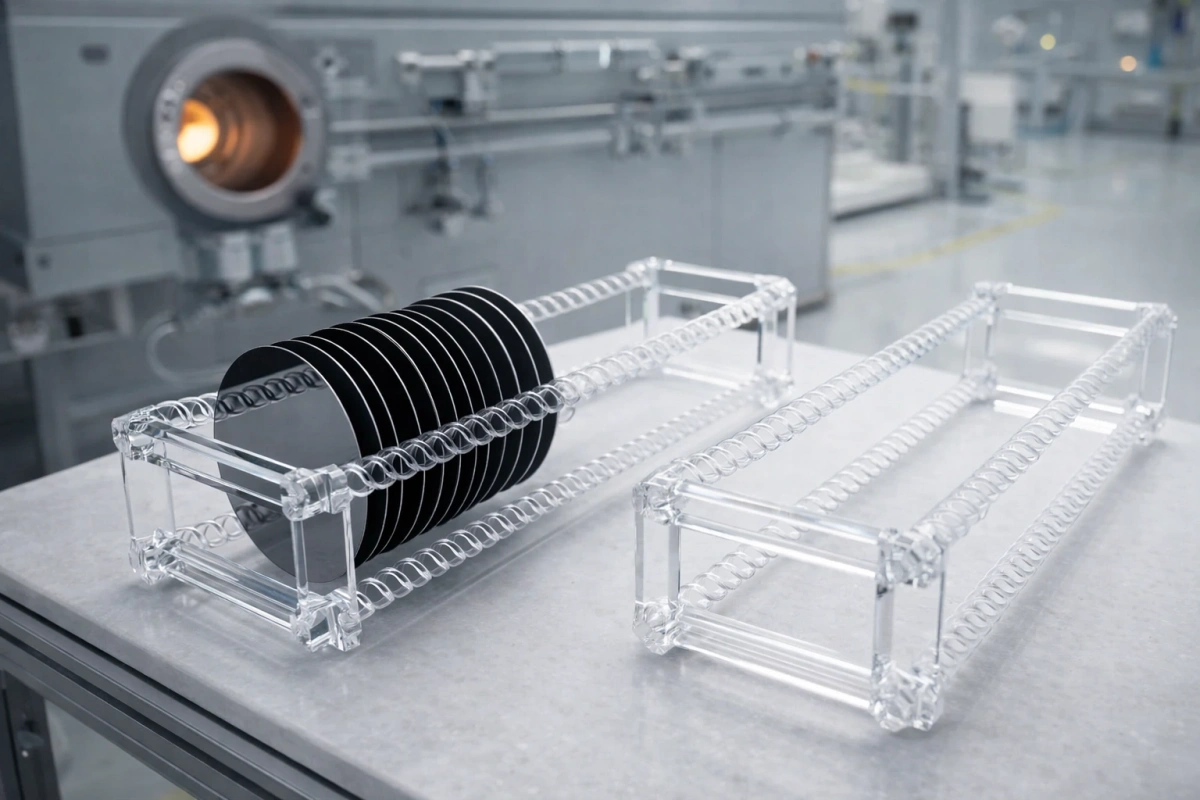
Difüzyon fırını tüpleri, yarı iletken üretiminde kuvars cam malzemelerin en yüksek hacimli ve termal açıdan en zorlu uygulamasını oluşturur. Genellikle 150 mm ile 300 mm arasında dış çapa ve 1.500 mm’ye kadar uzunluğa sahip olan bu geniş çaplı tüpler, termal oksitleme, dopant difüzyonu, ve tavlama işlemleri sırasında silikon yonga plakalarını barındırır.
Yarı iletken difüzyon tüplerinde kullanılan kuvars, elektronik sınıfı saflık şartnamelerine uymak zorundadır, toplam metalik kirlilik içeriği milyarda 20 parçanın altında ve en ileri teknoloji üretim tesislerinde demir, bakır, nikel ve alüminyum gibi kritik elementler için milyarda 5 parçanın altında olmalıdır. Kirlenmiş bir fırın borusu duvarından 1.000 °C'deki bir silikon yongaya difüze olan tek bir demir atomu, azınlık taşıyıcı ömrünü ölçülebilir şekilde bozan derin seviyeli bir tuzak durumu yaratır — bu, malzeme kalitesine doğrudan bağlanabilen bir kusurdur. Yonga tekneleri (tüp içinde yongaları dikey veya yatay diziler halinde tutan taşıyıcılar) da benzer şekilde yüksek saflıkta erimiş kuvarsdan üretilir; yonga aralıklarının tekdüze olmasını ve tekrarlanabilir gaz akışı dağılımını sağlamak için yuva geometrileri mikron düzeyinde toleranslarla işlenir.
Üretim tesislerinde fırın borularının kullanım ömürleri titizlikle takip edilmektedir; zira uzun süreli termal döngüler, kademeli olarak devitrifikasyona yol açmaktadır — bu, süt rengi bir opaklık şeklinde gözlemlenebilen bir yüzey kristalleşme olgusudur — bu durum, partikül dökülme riskini artırmakta ve planlı boru değişimini gerektirmektedir.
Islak Tezgah Aşındırma Tepsileri ve Kimyasallara Dayanıklı İşlem Kapları
Yarı iletken üretiminde “ıslak tezgahlar” olarak bilinen ıslak kimyasal işleme istasyonları, yonga plakalarını sıralı kimyasal banyolara maruz bırakmak için erimiş kuvarsdan imal edilmiş daldırma tankları, taşma setleri ve aktarım tepsileri kullanır. Bu RCA temizliği2 RCA Laboratuvarları’nda geliştirilen ve günümüzde de silikon yüzey hazırlığında temel öneme sahip olan bu işlem dizisi, yonga plakalarını 25 °C ile 80 °C arasındaki sıcaklıklarda SC-1 (NH₄OH/H₂O₂/H₂O), SC-2 (HCl/H₂O₂/H₂O) ve seyreltik HF çözeltilerinden geçirir; bu işlemler 25 °C ile 80 °C arasındaki sıcaklıklarda gerçekleştirilir.
Kuvars tanklar ve taşıyıcılar, iyonik kirlenmeye yol açmadan tüm RCA kimyasal işlem dizisine dayanır temizleme çözeltilerine karşı — bu gereklilik, gaz salınımı ve metalik katkı maddelerinin sızması nedeniyle yüksek sıcaklıklarda çoğu polimer tank malzemesinin kullanımını imkansız hale getirir. 120 °C'yi aşan sıcaklıklardaki sülfürik asit/hidrojen peroksit karışımlarında (SPM veya piranha çözeltisi), kuvars, bu koşullar altında sürekli termal ve oksidatif stres altında yumuşayan ve deforme olan PTFE'ye kıyasla üstün kimyasal direnç gösterir. Çalışma sıcaklığındaki kuvarsın mekanik sertliği, yonga taşıyıcı yuvasının geometrisindeki boyutsal hassasiyeti de korur ve kimyasal daldırma sırasında yongalar arasında teması önler; bu tür bir temas, çapraz kontaminasyona ve verim kaybına yol açabilir.
Temiz oda sınıfı kuvars ıslak tezgah bileşenleri, partikül yapışmasını en aza indirmek ve işlem aşamaları arasında kimyasalların tamamen durulanmasını kolaylaştırmak amacıyla, genellikle 0,8 μm’nin altında olan Ra değerleriyle belirtilen yüzey pürüzlülük seviyelerine sahip olarak üretilmektedir.
CVD ve Epitaksiyel Büyüme Odalarında Kullanılan Kuvars Bileşenleri
Kimyasal buhar biriktirme ve epitaksiyel büyüme süreçleri, yüksek sıcaklıklara, aşındırıcı biriktirme öncü gazlarına ve büyüyen filmin metalik kirliliğinin sıfır olması gerekliliğine aynı anda dayanabilen kuvars bileşenleri gerektirir. Kuvars reaksiyon tüpleri, astar tüpleri ve süseptör bileşenleri, 600 °C ile 1.200 °C arasında çalışan düşük basınçlı CVD (LPCVD), atmosferik basınçlı CVD (APCVD) ve silikon epitaksiyel reaktörlerde yaygın olarak kullanılmaktadır.
LPCVD sistemlerinde, diklorosilan (SiH₂Cl₂) ve amonyak (NH₃) kullanılarak silikon nitrür biriktirilirken veya silan (SiH₄) kullanılarak polisilikon biriktirilirken, kuvars tüp birincil reaksiyon kabı işlevi görür. Tüp, biriktirme öncülleri, taşıyıcı gazlar ve geriye aşındırma kimyasallarına karşı kimyasal olarak inert kalmalıdır birikim döngüleri arasında yerinde temizlik için kullanılan klor ve HCl dahil. Tüp duvarı ile işlem kimyasalları arasında meydana gelebilecek herhangi bir reaksiyon, büyümekte olan filme silikon oksit veya kirletici maddeler katacaktır. Epitaxial büyüme odalarında, kuvars astarlı borular ve çan kapakları, alıcı ve substratın çevresinde temiz, termal olarak şeffaf bir muhafaza sağlar; bu sayede kızılötesi ısıtma lambaları — genellikle tungsten-halojen — kuvars duvarlarından enerjiyi minimum emilim kaybıyla iletebilir.
Yarı İletken Üretim Süreçlerinde Kullanılan Kuvars Cam Ürünler
| Süreç | Kuvars Bileşeni | Çalışma Sıcaklığı (°C) | Saflık Derecesi |
|---|---|---|---|
| Termal Oksidasyon | Difüzyon tüpü | 900-1,100 | Elektronik sınıfı |
| Katkı Maddesi Difüzyonu | Fırın borusu + wafer taşıyıcı | 800-1,200 | Elektronik sınıfı |
| RCA Islak Temizlik | Daldırma tankı, taşıyıcı | 25–80 | Yarı iletken sınıfı |
| SPM Şeridi | İşleme kabı | 120-150 | Yarı iletken sınıfı |
| LPCVD | Reaksiyon tüpü | 600-900 | Yüksek saflık derecesi |
| Epitaksiyel Büyüme | Çan şeklindeki kavanoz, iç boru | 900–1,200 | Elektronik sınıfı |
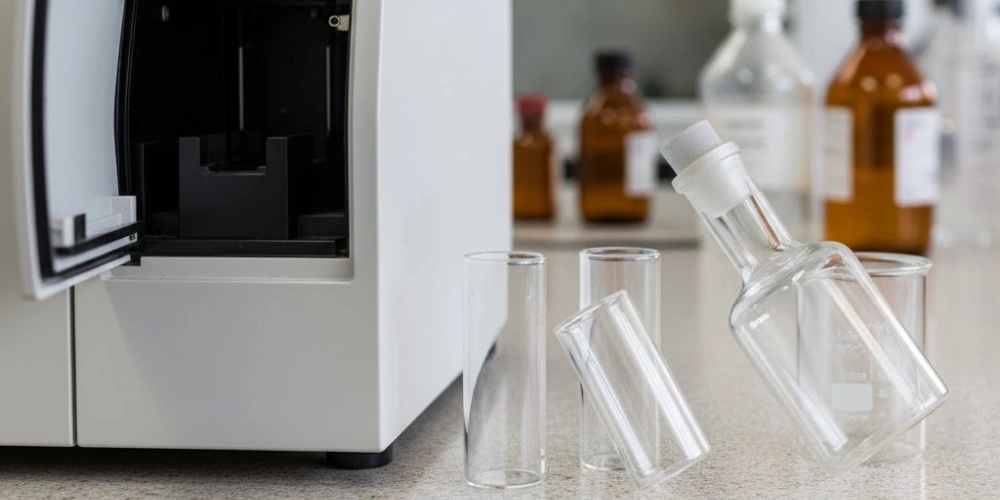
Analitik Kimya ve Spektroskopik Ölçümler için Kuvars Cam Malzemeler
Analitik kimya, cam laboratuvar gereçlerinden iki temel özellik bekler: ölçüm dalga boyu aralığı boyunca spektral şeffaflık ve analit konsantrasyonlarını ultra-eser düzeylerinde koruyacak kadar kimyasal inertlik — bu iki özelliğin birleşimi, cihaz tasarımcılarını ve yöntem geliştiricilerini sürekli olarak erimiş kuvars kullanımına yönlendirmektedir.
Optik özellikler ile analitik performans arasındaki bağlantı doğrudan ve nicel olarak ölçülebilirdir. Ölçüm dalga boyunda UV radyasyonunu emen bir kap, her absorbans okumasına sistematik hata katar; asit matrisine silikon, bor veya sodyum sızdıran bir sindirim şişesi ise analitik boş değerini yükseltir ve tespit sınırlarını düşürür. Eritilmiş kuvars, bu iki arıza türünü aynı anda ortadan kaldırır; bu da, analitik güvenilirliğin numuneyle temas eden her malzemenin davranışına bağlı olduğu UV spektrofotometrisi ve iz element numune hazırlama alanlarında neden zorunlu olarak kullanıldığını açıklar.
UV-Vis Spektrofotometri Küvetleri — Optik Sınıf Kuvarsın Neden Vazgeçilmez Olduğu
UV-Vis spektrofotometrisi, tipik olarak 190 nm ile 900 nm arasında değişen dalga boyları aralığında bir numune çözeltisinden geçen ışığın zayıflamasını ölçerek, emici maddelerin konsantrasyonunu nicel olarak belirler. Işının içinden geçtiği numune hücresi olan küvet, bu aralığın tamamında şeffaf olmalıdır; küvet malzemesinin kendisinden kaynaklanan herhangi bir emilim, her konsantrasyon hesaplamasına doğrudan yansıyan bir taban hatasına neden olur.
Standart optik cam küvetler, yaklaşık 340 nm'nin üzerinde yeterli düzeyde ışık geçirir; bu da görünür ışık aralığını ve uzun dalga boylu yakın UV aralığını kapsar. 310 nm’nin altında, borosilikat cam o kadar güçlü bir şekilde ışığı emer ki işlevsel olarak opak hale gelir, bu da cam küvetlerin aromatik bileşikler, nükleik asitler (260 nm’de emilim zirvesi), proteinler (280 nm’de emilim zirvesi) ve UV yük transferi emilimine sahip geniş bir inorganik iyon sınıfının ölçümleri için uygun olmamasını neden olmaktadır. Erimiş kuvars küvetler, 200 nm'de 80% iletimi yüksek saflıkta sentetik türlerde olup, derin UV aralığı boyunca güvenilir ölçüm yapılmasını sağlar.
Standart analitik kuvars küvetler, ışık yolu uzunluğu 10.000 ± 0,010 mm, optik pencerelerin hassas taşlama ve parlatma işlemleriyle sağlanan bir tolerans. Bu yol uzunluğundan sapmalar, Beer-Lambert yasası hesaplamalarında doğrudan orantılı hatalara yol açar. Optik sınıf sentetik erimiş silika küvetlerde, pencere açıklığı boyunca kırılma indisi homojenliği de belirtilmiştir, ışın yönlendirme kaynaklı bozulmaların görünür absorbansa katkıda bulunmamasını sağlar — bu özellik, cam küvetler için önemsiz olmakla birlikte, yüksek parlaklıklı UV kaynaklarıyla veya kantitatif yapısal biyoloji uygulamalarında kullanılan küvetler için hayati önem taşır.
Eser Element Analizi için Sindirim Kapları ve Asit Çözümleme Şişeleri
ICP-MS ve ICP-OES ile yapılan eser element analizi, numunelerin 80 °C ile 250 °C arasındaki sıcaklıklarda, dakikalar ile birkaç saat arasında değişen süreler boyunca mineral asitlerde — genellikle konsantre HNO₃, HCl veya HNO₃/HCl karışımlarında — çözünmesini gerektirir. Bu sindirim aşaması için kullanılan kap, tüm analitik iş akışında kontaminasyon açısından en kritik unsurdur.
Borosilikat camdan yapılmış sindirim kapları, 50–500 μg/L konsantrasyonlarda bor salar sıcak nitrik asit çözeltilerine sızar; bu, borun kendisinin bir analit olduğu çevresel ve biyolojik numunelerde analitik açıdan önemli bir kirlenme düzeyidir. Cam kaplardan sızan sodyum ve alüminyum, matris karmaşıklığını daha da artırır ve bu elementler için analitik boş değerini yükseltir. Eritilmiş kuvars kaplar, HF içermeyen sıcak asit ortamlarında ölçülebilir konsantrasyonlarda çözeltiye silikon (silisik asit olarak) katar; ancak silikon, çoğu ICP iş akışında bir analit değildir ve kolayca hesaba katılabilir. Diğer tüm elementler için, kuvars matrisinin katkısı μg/L’nin altında bir seviyede ihmal edilebilir düzeydedir, PTFE katkı maddelerinin kontaminasyona yol açtığı elementler için cam veya hatta yüksek kaliteli PTFE kaplarla ulaşılamayacak tespit sınırları sağlar.
Kaya ve mineral numunelerinin jeokimyasal analizinde — ng/g konsantrasyonlarındaki nadir toprak elementleri, geçiş metaller ve platin grubu elementlerinin kesin olarak belirlenmesinin standart olduğu bir alanda — kuvars sindirim kapları, atmosferik basınçta açık kapta asit çözündürme işlemi için kabul edilebilir en düşük seviyeye sahip kap malzemesi olarak kabul edilmektedir.
Analitik Ölçüm Uygulamalarında Kuvars Cam Malzemelerin Performansı
| Uygulama | Temel Gereksinim | Kuvars Teknik Özellikleri | Alternatif Malzeme Kısıtlaması |
|---|---|---|---|
| 200–280 nm aralığında UV-Vis | Şanzıman >80% | Sentetik erimiş silika | Borosilikat, opak <310 nm |
| 280–900 nm aralığında UV-Vis | Şanzıman >90% | Doğal erimiş kuvars | Cam yeterli ancak UV ışınlarını engelleyemiyor |
| ICP-MS sindirimi | Boş <0,1 μg/L | Yüksek saflıkta kuvars şişe | Borosilikat, B, Na ve Al salar |
| ICP-OES sindirimi | Boş <1 μg/L | Kuvars Erlenmeyer şişesi | PTFE uygun olmakla birlikte sıcaklık sınırlaması vardır |
| 300 nm'nin altındaki dalga boylarında floresan | Sıfır arka plan floresansı | UV sınıfı erimiş silika | Cam, UV dalga boyu aralığında floresan ışık yayar |
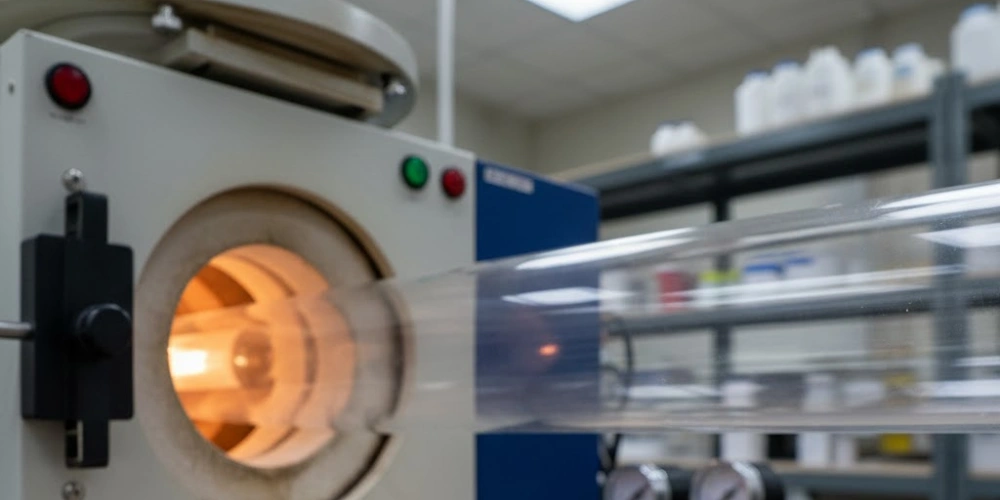
Yüksek Sıcaklıkta Sentez ve Termal Araştırmalarda Kullanılan Kuvars Cam Malzemeler
Yarı iletken ve analitik uygulamaların ötesinde, yüksek sıcaklıkta sentez, termal analiz ve fotokimyasal araştırma alanlarında da aynı derecede zorlu bir dizi malzeme gereksinimi ortaya çıkmaktadır — aşırı sıcaklık, reaktif atmosferler ve optik erişim kısıtlamalarının bir araya geldiği bu ortamlarda, geleneksel cam alternatifleri de aynı kesinlikte devre dışı kalmaktadır.
Malzeme sentezi, termal karakterizasyon ve fotokimyasal deneyler yürüten araştırma laboratuvarları, cam gereçlere yarı iletken ve analitik standartlardan farklı, ancak bunlardan daha az zorlu olmayan yük koşulları uygular. Tek bir deney protokolü kapsamında sıcaklıklar, kriyojenik seviyelerden 1.200 °C’ye kadar değişebilir; atmosfer bileşimleri, inert argon ve azottan oksitleyici oksijene ve hafif indirgeyici hidrojen karışımlarına kadar uzanır; fotokimyasal reaktörler ise hem termal hem de kimyasal gerilmelere aynı anda dayanabilen UV geçirgen kap duvarlarına ihtiyaç duyar. Eritilmiş kuvars, bu üç bağlamın tümünde bir araya gelen bu talepleri karşılamaktadır.
Malzeme Sentezinde Tüp Fırınlar ve Pota Uygulamaları
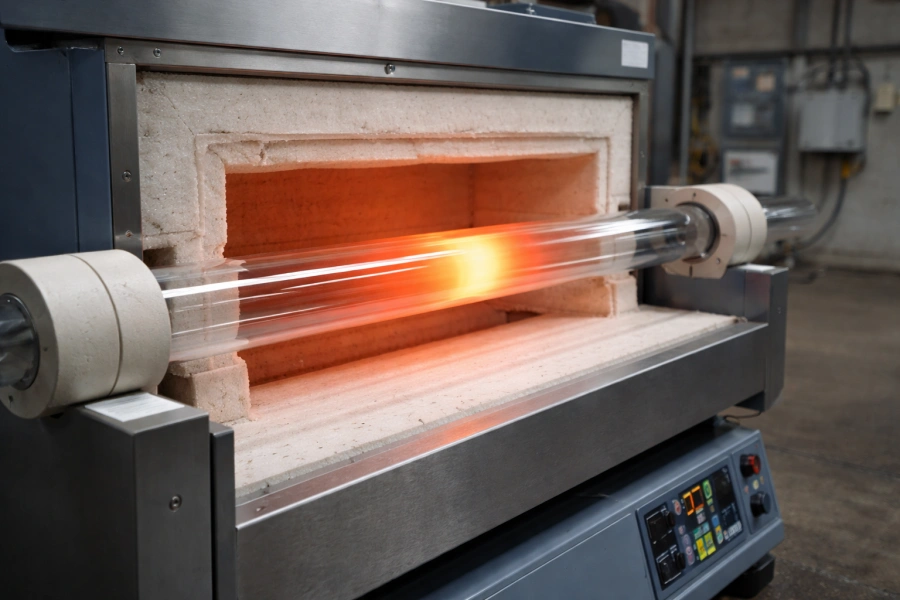
Tüp fırınlar, katı hal kimyası, seramik bilimi ve nanomalzemelerin sentezinde başlıca termal işleme aracıdır. Standart bir yatay tüp fırın, dış çapı 50–100 mm ve ısıtılan uzunluğu 600–1.200 mm olan erimiş kuvars reaksiyon tüpünü barındırır; sentez, tavlama veya faz dönüşümü deneyleri sırasında genellikle 400 °C ile 1.100 °C arasındaki sıcaklıklarda kontrol edilmiş gaz atmosferleri akar.
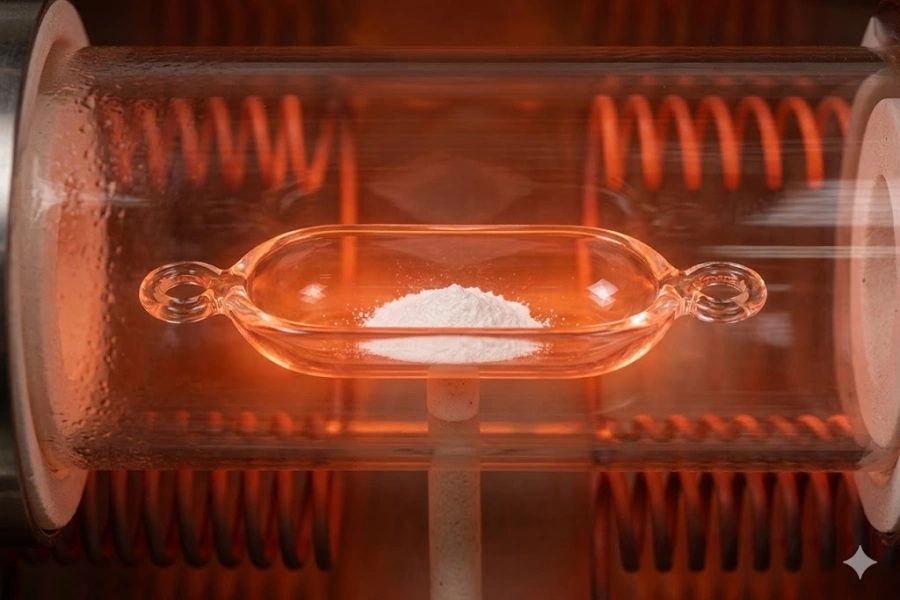
Kuvars reaksiyon tüpleri, oksitleyici (O₂, hava), inert (Ar, N₂) ve hafif indirgeyici (5% H₂/N₂) ortamlarda 1.100 °C’de sürekli çalışmaya dayanır gaz fazıyla ölçülebilir bir reaksiyona girmeden, bu da onları katı hal sentez protokollerinin ezici çoğunluğuyla uyumlu hale getirir. Kimyasal buhar biriktirme yöntemiyle üretilen karbon nanotüpler, termal ayrışmayla sentezlenen metal oksit tozları ve kontrollü kısmi basınçlar altında tavlanan ince film malzemeleri, bu koşullar altında hepsi kuvars tüpün sağlamlığına bağlıdır. Bu tür bir tüpün içine yerleştirilen bir kuvars çanak, reaktif başlangıç maddeleri için doğrudan bir kap görevi görür; numuneyi tüp duvarından izole eder ve termal olarak tetiklenen reaksiyonlar sırasında kütle değişikliklerinin gravimetrik olarak izlenmesini sağlar.
Yüksek sıcaklıkta sentez için kullanılan kuvars potalar, 2–4 mm duvar kalınlığıyla belirtilir ve 10 mL ile 500 mL arası hacimlerde üretilir. 1.100 °C'ye kadar olan sıcaklıklarla uyumlulukları, çoğu geçiş metali oksit, fosfat ve silikatın erime ve sinterleme aralıklarını kapsar — ancak erimiş alkali metal oksitler ve florürler kuvarsı şiddetli bir şekilde aşındırır ve platin veya alümina alternatiflerinin kullanılmasını gerektirir.
Araştırma Ortamlarında Kullanılan Termal Analiz Cihazları ve Reaksiyon Kapları
Termogravimetrik analiz (TGA) ve diferansiyel taramalı kalorimetri (DSC) cihazları, cihazın tüm çalışma aralığı boyunca —yüksek sıcaklık konfigürasyonlarında tipik olarak −150 °C ile 1.600 °C arasında— boyutsal ve kimyasal olarak kararlılığını koruyan numune tutucular ve koruyucu bileşenlere ihtiyaç duyar. Erimiş kuvars numune tüpleri, sarkık tüpler ve terazi kalkanları, yüksek sıcaklıklı TGA cihazlarında hem yapısal hem de koruyucu bileşenler olarak kullanılır.
TGA sistemlerinde, bir kuvars asma tüpü, numune potasını fırın bölgesi içinde asılı tutarken, hassas terazi mekanizmasını sıcak gaz akımından izole eder. Boru, çalışma sıcaklığında sıfır sünme göstermelidir — 500 °C’nin üzerindeki sıcaklıklarda borosilikat camın kullanımını ortadan kaldıran bir gereklilik — ve gaz atmosferini herhangi bir reaksiyona girmeden numuneye eşit bir şekilde iletmelidir. Yüksek sıcaklıklarda SO₂, HCl buharı veya su buharı gibi reaktif atmosferler altında yürütülen TGA deneyleri için, kuvarsın bu maddelere karşı kimyasal inertliği (yaklaşık 1.000 °C’nin altında ve HF hariç), onu cihaz tasarımında varsayılan tüp malzemesi haline getirir.
Yüksek sıcaklıklı otoklav ve sızdırmaz ampul deneylerinde — öncü maddelerin kısmi basınç altında sızdırmaz bir kuvars tüp içine konulduğu ve kristal büyümesini veya faz dönüşümünü teşvik etmek amacıyla ısıtıldığı deneylerde — deney yerinde izleme gerektiriyorsa, kuvars ampul aynı anda basınç kabı, reaksiyon odası ve optik gözlem hücresi işlevlerini yerine getirir.
Fotokimyasal ve UV Destekli Reaksiyon Sistemlerinde Kuvars Cam Malzemeler
Fotokimyasal araştırmalar, UV veya görünür ışık kaynağının, reaktör duvarından kaynaklanan en az zayıflama ile reaksiyona giren çözeltiyi veya gaz fazını aydınlattığı reaktörler gerektirir. Erimiş kuvars reaktörler — silindirik kaplar, daldırma kuyusu reaktörleri ve düz pencereli akış hücreleri — fotokataliz, UV destekli sentez ve aktinometri3 reaksiyon hacmine verilen foton dozunun kesin olarak bilinmesi veya kontrol edilmesi gereken deneyler.
Erimiş kuvarsdan imal edilmiş bir daldırma kuyusu reaktörü, 254 nm, 313 nm ve 365 nm dalga boylarında ışık yayan bir cıva buhar lambasının, duvar emiliminin ihmal edilebilir düzeyde olduğu bir ortamda çevredeki reaksiyon halkasını aydınlatmasına olanak tanır — 254 nm dalga boyunda 2 mm kalınlığındaki bir kuvars duvarından kaynaklanan iletim kayıpları, yüksek saflıkta ürünlerde genellikle 5%’nin altındadır. Aynı lamba altında borosilikat cam reaktörler, 254 nm'de esasen sıfır enerji iletir ve reaksiyonu, 310 nm'lik borosilikat kesme sınırını geçen fotonlarla sınırlar. TiO₂ katalizörünün 365 nm altındaki fotonlarla aktive edildiği fotokatalitik bozunma deneylerinde, kuvars ve cam reaktörler arasında yapılan seçim, katalizör yüzeyinde kategorik olarak farklı foton akısı oranlarına yol açar — bu değişken, reaksiyon hızı verilerini tamamen belirleyen bir faktördür.
Yüksek Sıcaklık ve Fotokimyasal Araştırma Ortamlarında Kullanılan Kuvars Cam Malzemeler
| Uygulama | Kuvars Bileşeni | Sıcaklık Aralığı (°C) | Kullanılan Temel Özellik |
|---|---|---|---|
| Katı hal sentezi | Reaksiyon tüpü | 400–1,100 | Termal kararlılık, gaz inertliği |
| Oksit potasında eritme | Pota | 800–1,100 | Kimyasal inertlik, termal şok direnci |
| TGA analizi | Asma borusu, denge kalkanı | 25–1,500 | Sıfır kayma, kimyasal inertlik |
| Mühürlü ampul sentezi | Erimiş ampul | 200-900 | Basınç dayanımı, optik erişim |
| UV fotokataliz | Daldırma kuyusu reaktörü | 10-80 | 254–365 nm dalga boylarında UV geçirgenliği |
| Fotokimyasal sentez | Akış hücresi, düz pencereli kap | 0–100 | Geniş bant UV şeffaflığı |
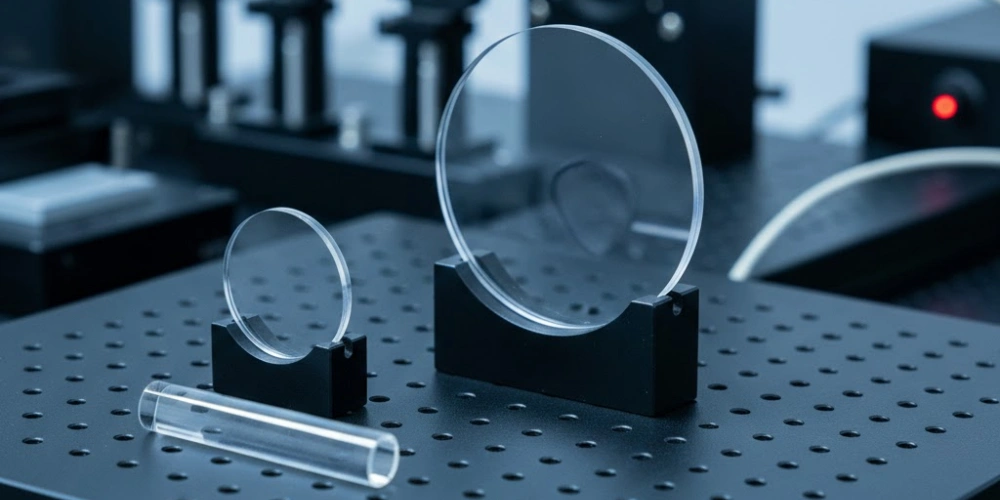
Hassas Kuvars Cam Malzemelerin Optik ve Fotonik Alanlardaki Kullanımları
Dalga boylarının derin UV bölgesine uzandığı ve güç yoğunluklarının her malzemenin hasar eşiğini zorladığı optik mühendisliğin öncü alanlarında, hassas erimiş silika bileşenleri, başka hiçbir oksit camın yerine getiremeyeceği görevleri üstlenir — bu görevlerde kırılma indisi homojenliği, UV geçirgenliği ve lazer kaynaklı hasara karşı direnç, milyonda bir oranında ölçülen toleranslarla belirlenir.
Fotonik ve lazer uygulamaları, standart laboratuvar sınıflarının ötesine geçen malzeme özellikleri gerektirir. Kırılma indisi homojenliği En zorlu litografik ve interferometrik uygulamalarda, 100 mm’lik bir açıklık boyunca bu değer 1 × 10⁻⁶’dan daha iyi bir hassasiyetle kontrol edilmelidir; çift kırılma — kırılma indisinde gerilime bağlı anizotropi — lazer sistemlerinde polarizasyon bozulmasını önlemek için optik sınıf bileşenlerde 2 nm/cm’nin altına indirilmelidir. Bu teknik özellikler, yalnızca sıkı bir şekilde kontrol edilen alev hidrolizi veya plazma CVD süreçleriyle üretilen ve ardından cam ağındaki kalıntı gerilimi gidermek üzere tasarlanmış tavlama döngülerinden geçirilen sentetik erimiş silika ile elde edilebilir.
Yüksek Güçlü Sistemlerde UV Lazer Pencereleri ve Işın İletim Optikleri
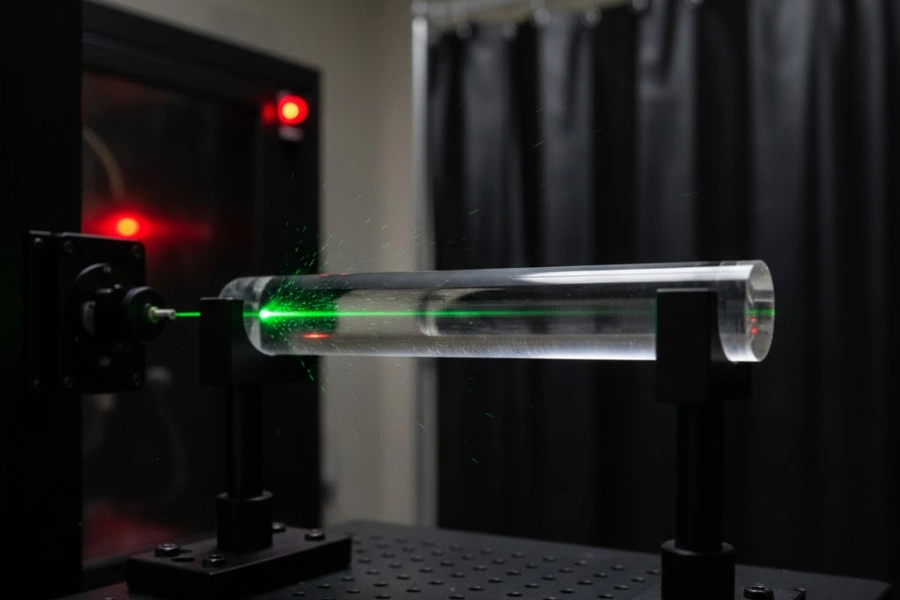
ArF (193 nm) ve KrF (248 nm) dalga boylarında çalışan eksimer lazerler, entegre devre üretiminde fotolitografide ve UV mikrofabrikasyonunda birincil ışık kaynakları olarak işlev görür. Işın iletim yolundaki her optik eleman — pencereler, ışın ayırıcılar, lensler ve homojenleştiriciler — bu dalga boylarında, önceki UV maruziyetinden kaynaklanan emilim, saçılma veya indüklenmiş emilimi en aza indirerek ışığı iletmelidir.
OH içeriği 800 ppm’nin üzerinde olan sentetik erimiş silika 193 nm ve 248 nm optiklerde bu özellik belirtilmiştir; zira yüksek OH dereceleri, lazer kaynaklı sıkışmaya karşı üstün direnç gösterir — bu, derin UV foton emiliminin yol açtığı, cam ağının kalıcı bir şekilde yoğunlaşmasıdır; bu durum, kırılma indisini değiştirir ve milyonlarca lazer darbesine yayılan odak noktası kaymasına neden olur. Üretim litografi tarayıcılarında tipik olarak görülen darbe enerjilerinde (4.000–6.000 Hz tekrarlama hızlarında darbe başına yaklaşık 5–10 mJ/cm²), lens elemanlarına çalışma ömürleri boyunca 10⁹ J/cm²'yi aşan kümülatif fluanslar uygulanır. Yalnızca yüksek OH içeriğine sahip sentetik erimiş silika, bu maruz kalma seviyelerinde kırılma indisi kararlılığını ve geçirgenliği korur — bu gereklilik, standart optik sınıf malzemelerden farklı olarak, kirlilik ve OH değerleri sıkı bir şekilde kontrol edilen, litografik sınıf özel silika malzemelerinin geliştirilmesine yol açmıştır.
532 nm, 355 nm ve 266 nm dalga boylarında harmonik çıkışlar üreten darbeli Nd:YAG lazer sistemlerinde, UV harmonik üretimi ve iletim aşamalarında standart cam bileşenlerin yerine erimiş silika pencereler ve mercekler kullanılır; bu aşamalarda, homojenlikten ziyade hasar eşiği birincil seçim kriterini oluşturur.
Optik Fiber Preform İmalatı ve Silika Bazlı Dalga Kılavuzları
Küresel telekomünikasyon altyapısının temelini oluşturan iletim ortamı olan optik fiber, CVD süreçleriyle üretilen ultra yüksek saflıkta erimiş silika ön kalıplardan imal edilir. Preform, hassas bir şekilde tasarlanmış kırılma indisi profiline sahip silindirik bir cam çubuktur; bu çubuk, yaklaşık 2.000 °C sıcaklıkta fiber haline çekilerek, fiber türüne bağlı olarak 8–62,5 μm çekirdek çapına ve 125 μm dış çapa sahip filamentler üretilir.
Telekomünikasyon fiber ön kalıplarında kullanılan erimiş silika, 1.550 nm dalga boyunda 0,18 dB/km’nin altında bir zayıflama değeri sağlamalıdır — çekirdek bölgesinde toplam OH içeriğinin 0,1 ppb’nin altında olmasını gerektiren bir şartname; zira 2.730 nm’deki OH emilim üst tonu, 1.383 nm’de ("su zirvesi") ölçülebilir bir zayıflama yaratarak eski tip fiber kalitelerinde yoğun dalga boyu bölmeli çoklama (DWDM) performansını bozan ölçülebilir bir zayıflama yaratır. IEC 60793-2-50 Tip B1.3 standardı kapsamında tanımlanan modern düşük su zirvesi fiber sınıfları, kurum birikimi ve sinterleme sırasında nemi titizlikle dışlayan dış buhar biriktirme (OVD) süreçleri sayesinde 1.383 nm’de OH kaynaklı zayıflamayı 0,4 dB/km’nin altında tutar.
Kuvars substrat tüpleri — ultra saf erimiş silikadan yapılmış içi boş silindirler — modifiye kimyasal buhar biriktirme (MCVD) ve plazma CVD (PCVD) ön kalıp imalatında başlangıç mandreli görevi görür; bu süreçte, katı bir ön kalıp çubuğuna dönüşmeden önce, iç boru duvarına arka arkaya katmanlar halinde katkılı SiO₂ biriktirilir. Bu alt tabaka tüplerinin boyutsal toleransları, bitmiş fiberin çekirdek-kaplama geometrisini doğrudan belirler, dış çap toleransları ±0,5 mm olarak tutulurken, boru uzunluğu boyunca duvar kalınlığı homojenliği 1%'den daha iyi bir seviyede korunmaktadır.
Optik Uygulamalarda Kuvars Cam Ürünleri ve Erimiş Silika Teknik Özellikleri
| Uygulama | Dalga Boyu Aralığı | OH İçeriği Gerekli | Önemli Optik Özellikler |
|---|---|---|---|
| ArF litografi mercekleri | 193 nm | >800 ppm (ıslak sınıf) | Δn < 1×10⁻⁶, çift kırılma < 2 nm/cm |
| KrF lazer optiği | 248 nm | >600 ppm | Lazer hasar eşiği >5 J/cm² |
| Nd:YAG 4. harmonik | 266 nm | >400 ppm | UV geçirgenliği >85% |
| UV-Vis laboratuvar optiği | 200–800 nm | 150-400 ppm | İletim homojenliği ±1% |
| Telekom fiber çekirdeği | 1.310–1.550 nm | <0,1 ppb | 1.550 nm'de zayıflama <0,18 dB/km |
| MCVD substrat tüpü | Yok (yapısal) | <1 ppm (kuru sınıf) | Dış çap toleransı ±0,5 mm |
Kritik Uygulamalarda Kuvars Cam Ürünlerin Neden Yerini Hiçbir Şey Alamaz?
Hiçbir alternatif malzeme, erimiş kuvarsın performans profilini sıcaklık, optik ve kimyasal boyutlarda aynı anda tam olarak taklit edememektedir.
Polimerler ve floroplastikler, birçok asit ortamında kuvarsın kimyasal inertliğini eşler veya aşar; ancak 260 °C’nin üzerinde yetersiz kalır ve UV ışınlarına karşı opak olurlar. Alümina ve zirkonyum seramikleri daha yüksek çalışma sıcaklıklarına dayanır; ancak tüm ilgili optik dalga boylarında opak olup, tüp ve kap geometrileri için gerekli duvar kalınlıklarında mekanik olarak kırılgandır. Borosilikat cam, rutin laboratuvar uygulamalarının çoğunu mükemmel bir şekilde karşılar; ancak 500 °C, 310 nm ve eser düzeyde kirlenme eşiklerinde performans sınırlarına ulaşır; oysa kuvars bu sınırları hiçbir ödün vermeden aşar.
1.100 °C’lik sürekli çalışma sıcaklığı, 150 nm ile 3.500 nm arasındaki spektral geçirgenlik, ppb’nin altındaki metalik safsızlık oranı ve HF hariç tüm mineral asitlere karşı direnç özelliklerinin bir arada bulunduğu, kullanışlı boyutlarda borular, kaplar ve optik pencereler haline getirilebilen başka hiçbir malzeme bulunmamaktadır. Tek bir özellik değil, bu özelliklerin bir araya gelmesi, erimiş kuvars cam malzemelerin yarı iletken yonga işleme, UV analitik ölçüm, yüksek sıcaklıkta malzeme araştırmaları ve hassas fotonik sistemler alanlarında vazgeçilmez bir konuma sahip olmasının sebebidir. Bu özelliklerin bir arada gerekli olduğu durumlarda, erimiş kuvars bir tercih meselesi değildir: bu, malzeme açısından bir zorunluluktur.
Sonuç
Eritilmiş kuvars cam ürünlerinin performansı, amorf SiO₂ ağından kaynaklanır — bu yapı, ya doğal kuvarsın eritilmesi ya da sentetik silika CVD yoluyla elde edilebilir; her iki yöntem de farklı uygulama kademelerine uygun kendine özgü saflık ve optik özellikler sunar. 1.100 °C'ye kadar olan termal kararlılığı, UV'den kızılötesine uzanan spektral aralığı ve mineral asitlere karşı kimyasal inertliği, bir araya geldiğinde piyasada bulunan hiçbir cam alternatifi tarafından eşsiz bir performans aralığı oluşturur. Yarı iletken üretimi, analitik spektroskopi, yüksek sıcaklıkta sentez ve lazer fotoniği gibi alanlarda bu özellikler, alternatif malzemelerin aynı anda karşılayamadığı işlevsel gereksinimlere dönüşür; bu da erimiş kuvarsı, hassasiyet, saflık ve termal marjın bir araya geldiği her yerde vazgeçilmez bir malzeme sınıfı haline getirir.
SSS
Erimiş kuvars ile erimiş silika arasındaki fark nedir?
Erimiş kuvars, doğal kuvars kristalinin eritilmesiyle üretilir; bu işlem sonucunda 99,9–99,99% SiO₂ saflığı, 150–300 ppm OH içeriği ve 250 nm civarında bir UV kesme değeri elde edilir. Eritilmiş silika, SiCl₄ gibi sentetik kimyasal öncüllerden üretilir ve 99,9999%'nin üzerinde saflıklara ulaşır; UV kesme dalga boyları ise 150–180 nm'ye kadar uzanır. Her ikisi de aynı yumuşama noktalarına ve termal genleşme katsayılarına sahip amorf SiO₂'dir, ancak spektral performansları ve kirlilik özellikleri önemli ölçüde farklılık gösterir.
Kuvars cam kaplar hangi sıcaklıkta bozulur?
Erimiş kuvars, 1.100 °C’ye kadar sürekli çalışmaya dayanır ve ciddi bir deformasyon olmadan yaklaşık 1.300 °C’ye kısa süreli maruz kalmaya tahammül eder. Yumuşama noktası 1.665 °C’dir. 1.100 °C'nin üzerinde uzun süreli kullanım, kırılganlığı ve partikül oluşumunu artıran bir yüzey kristalleşmesi olan devitrifikasyonu teşvik eder; bu nedenle yarı iletken ve araştırma uygulamalarında, gözle görülür devitrifikasyon ilerlemeden önce tüpler ve kaplar değiştirilir.
Kuvars cam kaplar hidroflorik asit ile kullanılabilir mi?
Kuvars cam kaplar, herhangi bir konsantrasyondaki hidroflorik asit (HF) ile uyumsuzdur. HF, silika ile doğrudan reaksiyona girerek çözünür heksaflorosilikik asit oluşturur ve bu da kuvars kapların duvarlarını hızla aşındırarak inceltir. HF içeren işlemler için PTFE, perfloroalkoksi (PFA) veya florlu etilen propilen (FEP) kaplar standart alternatiflerdir.
UV spektrofotometrisinde neden kuvars küvetler kullanılmalıdır?
Borosilikat ve optik cam küvetler, yaklaşık 310 nm’nin altında etkili bir şekilde opak hale gelir; bu da ölçüm ışınını emerek büyük ve kararsız taban çizgisi hatalarına yol açar. Eritilmiş kuvars küvetler, 200 nm'de 80%'nin üzerinde ışık geçirir; bu sayede 260 nm'de nükleik asitler, 280 nm'de proteinler ve derin UV aralığı boyunca aromatik bileşikler için doğru absorbans ölçümü sağlar. Sentetik erimiş silika sınıfları, en zorlu UV spektroskopik uygulamalar için güvenilir geçirgenliği yaklaşık 180 nm'ye kadar genişletir.
Referanslar:
-
Heksaflorosilikonik asit, hidroflorik asidin silikon dioksit ile reaksiyona girmesiyle oluşan çözünür bir silikon florür bileşiğidir; bu da HF’nin kuvars cam kapların yüzeylerinde neden hızlı ve geri dönüşümsüz bir aşındırma oluşturduğunu açıklar.↩
-
RCA temizliği, RCA Laboratuvarları’nda geliştirilen standartlaştırılmış bir silikon yonga yüzey hazırlama sürecidir; bu süreç, cihaz üretim aşamalarından önce organik kirleri, parçacıkları ve metalik kalıntıları gidermek amacıyla SC-1 ve SC-2 kimyasal banyolarına sırayla daldırma işlemlerinden oluşur.↩
-
Aktinometri, fotokimyasal bir sistemdeki foton akısının, kuantum verimi bilinen kimyasal veya fiziksel bir referans reaksiyonu kullanılarak nicel olarak ölçülmesidir; bu işlem, ışınlama kaynağının üzerinden hassas bir şekilde karakterize edilmiş bir foton dozu ilettiği, UV ışınlarına geçirgen reaktör kaplarının kullanılmasını gerektirir.↩