Catastrophic mid-process failure is among the most costly outcomes in high-temperature industrial and laboratory operations. The precise thermal limits of quartz glass tubing are therefore not a secondary specification — they are a foundational engineering parameter.
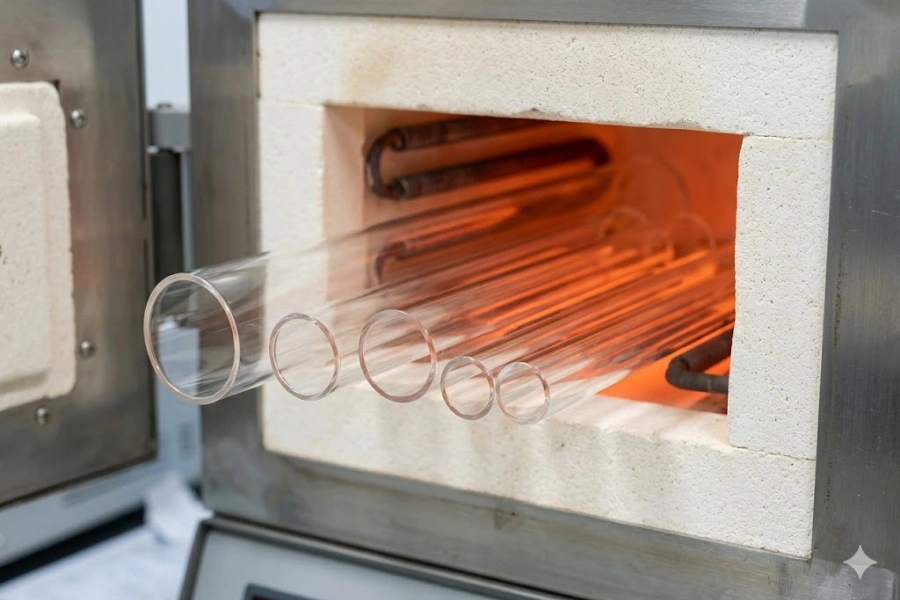
Continuous service temperatures up to 1,150°C and short-term peak exposure up to 1,300°C are achievable with quartz glass tubing, subject to grade, geometry, and surface condition. A complete, data-supported breakdown of every governing thermal parameter — from softening points and devitrification thresholds to thermal shock resistance — is presented across the sections below.
Thermal performance in quartz glass is shaped by the interplay of material purity, tube geometry, surface integrity, and temperature change rate. Each of these variables modifies the effective upper limit independently, and no single figure captures the full operational envelope.
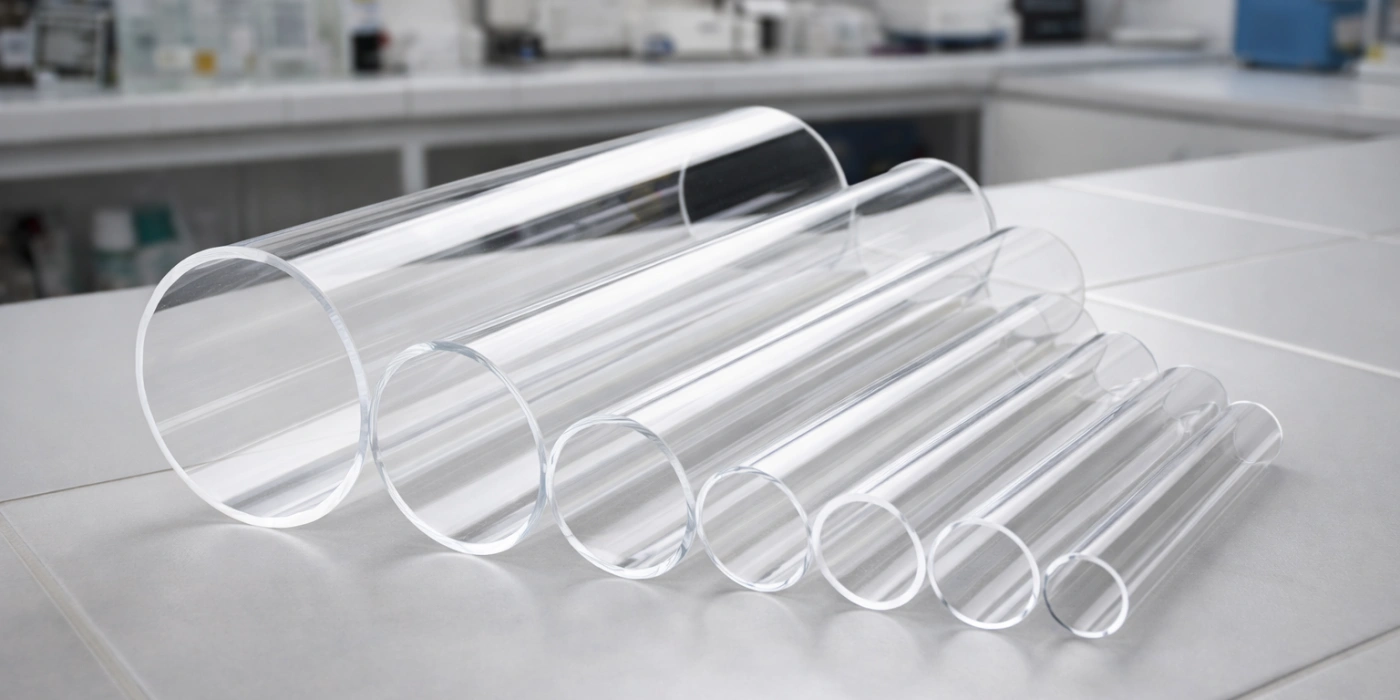
The Material Foundation Behind Quartz Glass Tubing's Heat Tolerance
At the core of трубки из кварцевого стекла's exceptional heat resistance lies a material composition and atomic structure fundamentally different from conventional glass. Grasping these differences makes every temperature figure cited later in this article far more meaningful.
- Silicon Dioxide Purity and Amorphous Network Structure
Quartz glass tubing is manufactured from fused silica — a non-crystalline (amorphous) form of silicon dioxide (SiO₂) produced by melting high-purity quartz sand or synthetic silica at temperatures exceeding 1,700°C. Unlike soda-lime glass, which contains network-modifying oxides such as Na₂O and CaO that weaken the glass network at elevated temperatures, fused silica consists almost entirely of a continuous, three-dimensional SiO₂ network. This uninterrupted covalent bonding structure is what gives quartz glass its resistance to thermal deformation. Standard-grade quartz tubing typically carries SiO₂ purity of 99.9%, while semiconductor-grade material exceeds 99.99%. Each incremental increase in purity raises the softening point and suppresses the onset of viscous flow at high temperatures, making purity a direct proxy for thermal ceiling.
- Thermal Expansion Coefficient: The Physical Basis of Heat Shock Resistance
One of the most consequential physical properties of fused silica is its extraordinarily low coefficient of thermal expansion (CTE): approximately 0.55 × 10-⁶/°C across the range of 0–300°C. By comparison, borosilicate glass registers around 3.3 × 10⁻⁶/°C, and ordinary soda-lime glass sits near 9 × 10⁻⁶/°C. When a material expands and contracts only minimally in response to temperature change, the internal mechanical stresses generated by thermal gradients remain far below the fracture threshold. This low CTE is the primary physical reason quartz glass tubing can be transferred from a 1,000°C furnace into room-temperature air without shattering — a feat entirely impossible with borosilicate or standard laboratory glass.
- Natural Quartz vs. Fused Silica: Why the Distinction Matters
It is worth clarifying a terminology point that frequently causes confusion in procurement and technical specifications. "Natural quartz" refers to crystalline SiO₂ sourced directly from geological deposits, which retains an ordered atomic lattice and undergoes a disruptive phase transition at 573°C (the alpha-to-beta quartz inversion). Commercially produced quartz glass tubing is not made from crystalline quartz in its natural form; it is made from fused silica, where the crystalline order has been destroyed by melting, yielding a glassy, isotropic material with no phase transition below its softening point. This distinction is critical because it means quartz glass tubing does not suffer the abrupt dimensional change that crystalline quartz would exhibit at 573°C, enabling smooth thermal performance across a continuous temperature range.
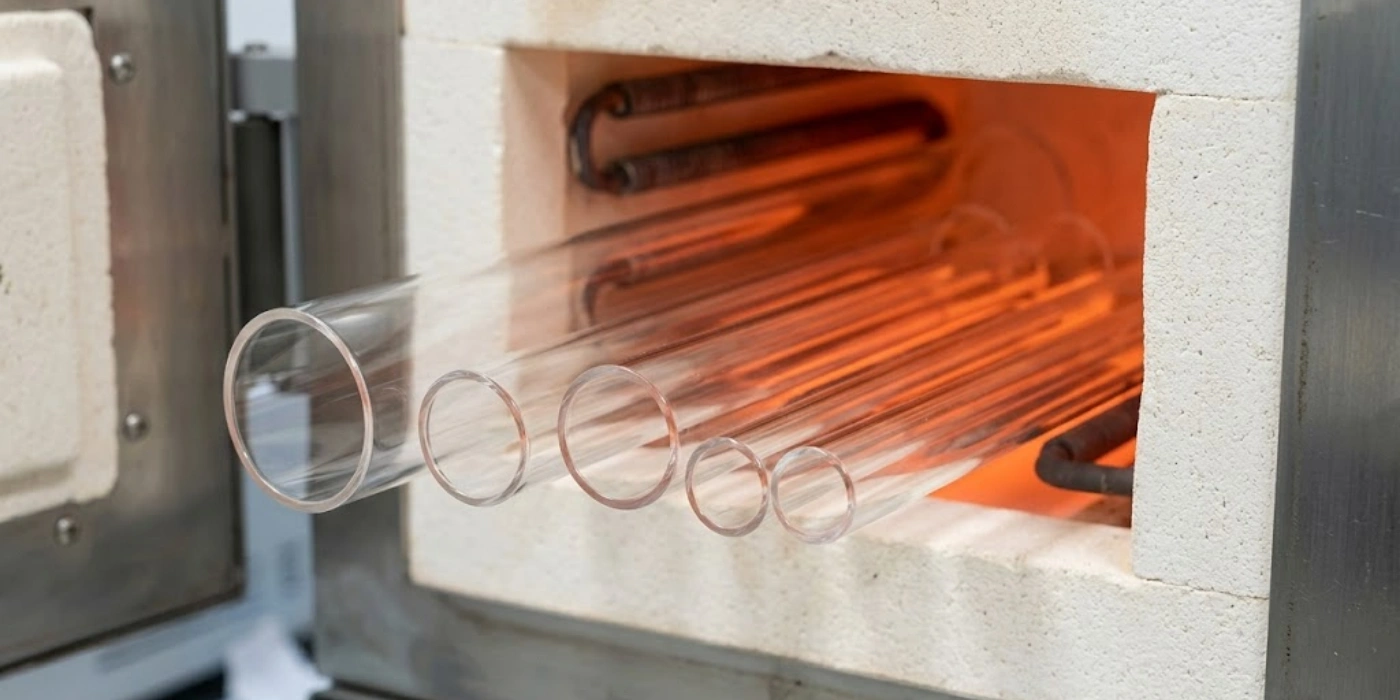
Maximum Temperature Ratings for Quartz Glass Tubing
Of all the technical parameters associated with quartz glass tubing, none are more frequently misunderstood — or more consequential when misapplied — than its temperature ratings. Continuous service temperature, short-term peak temperature, and the various transition points that define material behavior at elevated temperatures each carry distinct engineering significance, and conflating them leads directly to premature tube failure. Furthermore, the ratings differ meaningfully between transparent and opaque grades, and are modified by tube geometry and material purity. The following subsections address each of these dimensions with specific data.
Continuous Service Temperature vs. Short-Term Peak Temperature
The single most important distinction in quartz glass thermal ratings is between continuous service temperature и short-term peak temperature, yet manufacturers' datasheets frequently present only one figure, inviting misinterpretation.
Continuous service temperature refers to the maximum temperature at which a quartz glass tube can operate for extended durations — typically defined as hundreds to thousands of hours — without undergoing structural degradation. For transparent fused silica tubing of standard grade, this ceiling sits at approximately 1,100°C to 1,150°C. Beyond this threshold, viscous flow begins to accumulate over time, causing the tube to slowly deform under its own weight or applied load. In horizontal furnace configurations, this manifests as sagging; in vertical configurations, as elongation.
Short-term peak temperature refers to the upper boundary for brief excursions — generally defined as exposures of 1 to 3 hours — where the tube does not sustain permanent deformation or catastrophic failure. For transparent quartz tubing, this figure is typically cited between 1,250°C and 1,300°C. However, it is critical to understand that repeated cycling to peak temperature — even within the short-term limit — accelerates devitrification and incrementally lowers the effective service ceiling. A tube operated at 1,280°C for a total cumulative duration of 10 hours over multiple sessions will not perform identically to a tube that experienced a single 2-hour excursion to the same temperature. Cumulative thermal exposure above 1,200°C accelerates surface crystallization at an approximately exponential rate, meaning that the marginal degradation imposed by each additional hour at peak temperature increases rather than remains constant. For this reason, process engineers in semiconductor and advanced materials facilities track not only peak temperature but total integrated thermal exposure above defined threshold temperatures, using this metric to schedule preventive tube replacement before structural failure occurs.
Temperature Limits of Transparent Quartz Glass Tubing
Transparent fused silica tubing — produced from highly pure, bubble-free fused silica — exhibits a well-characterized set of thermal transition points that define its behavior across the full temperature spectrum.
Сайт температура размягчения of fused silica is approximately 1,665°C, defined as the temperature at which the viscosity reaches 10⁷·⁶ poise and the material begins to deform rapidly under its own weight. This figure is often cited as the "melting point" colloquially, though fused silica does not have a true crystalline melting point. The точка отжига, where internal stresses are relieved within minutes, lies near 1,140°C (viscosity ≈ 10¹³ poise). The точка деформации, below which permanent stress cannot be introduced by rapid cooling, is approximately 1,070°C (viscosity ≈ 10¹⁴·⁵ poise).
From a practical standpoint, the recommended working upper limit for continuous furnace use is 1,100–1,150°C. This is deliberately set below the annealing point to provide a margin against viscous deformation during extended operation. At temperatures between 1,150°C and 1,300°C, the material remains structurally intact for short durations, but viscosity drops sufficiently that stress relaxation — and therefore dimensional change — becomes non-negligible. Transparent quartz tubing should never be specified at its softening point as an operational limit; that figure describes catastrophic deformation, not safe service.
Key Thermal Transition Points for Transparent Fused Silica Tubing
| Тепловой параметр | Температура (°C) | Вязкость (пуаз) | Practical Significance |
|---|---|---|---|
| Точка деформации | ~1,070 | 10¹⁴·⁵ | Lower limit of stress relief; rapid cooling below this is safe |
| Точка отжига | ~1,140 | 10¹³ | Stresses relieved within minutes; marks upper continuous service zone |
| Recommended Continuous Service Limit | 1,100-1,150 | - | Practical operational ceiling for extended use |
| Short-Term Peak Limit | 1,250–1,300 | - | Maximum for brief excursions (1–3 hours) |
| Точка размягчения | ~1,665 | 10⁷·⁶ | Rapid deformation under own weight; not an operational parameter |
Temperature Limits of Opaque Quartz Glass Tubing
Opaque quartz glass tubing — also referred to as frosted, translucent, or infrared-opaque quartz — is produced by introducing microscopic bubbles or inclusions into the fused silica matrix during manufacture, creating a milky white appearance. This structural modification meaningfully alters the tube's thermal behavior relative to its transparent counterpart.
The continuous service temperature of opaque quartz tubing is generally cited at от 1 050 °C до 1 100 °C, approximately 50°C lower than transparent grade. This modest reduction stems from the bubble inclusions acting as stress concentration points under thermal loading, slightly lowering the effective viscosity threshold at which deformation accumulates. However, opaque quartz tubing offers a distinct thermal advantage in infrared radiation applications: the opaque matrix efficiently absorbs and re-emits thermal radiation across a broad spectral range, making it the preferred material for radiant heating elements and infrared emitter envelopes where uniform thermal emission — rather than optical transparency — is the design objective.
In high-power radiant heating environments where the tube surface temperature may spike transiently during startup, opaque quartz tubing is often more operationally stable than transparent grade, because its diffuse surface absorbs localized radiation more evenly, reducing the thermal gradient across the wall cross-section. Short-term peak temperature for opaque quartz tubing is typically rated at 1,200°C to 1,250°C, approximately 50°C below the transparent grade equivalent.
Transparent vs. Opaque Quartz Tubing Thermal Comparison
| Параметр | Прозрачный кварц | Непрозрачный кварц |
|---|---|---|
| Температура непрерывной работы (°C) | 1,100-1,150 | 1,050-1,100 |
| Краткосрочная пиковая температура (°C) | 1,250–1,300 | 1,200-1,250 |
| Инфракрасная передача | High (UV to near-IR) | Low (broad absorption) |
| Preferred Application | Optical, UV, semiconductor | Radiant heating, IR emitters |
| Devitrification Susceptibility | Умеренный | Slightly higher |
How Wall Thickness and Tube Diameter Affect Thermal Performance
Tube geometry exerts a direct and quantifiable influence on thermal performance, yet it is routinely overlooked in material selection decisions that focus exclusively on grade designation.
Wall thickness governs the temperature gradient across the tube cross-section. For a tube with a wall thickness of 1 mm subjected to a sudden external temperature change, the inner and outer surfaces equilibrate within seconds; for a tube with a 5 mm wall, the lag is considerably longer, and the thermal gradient across the wall generates proportionally higher tensile stress on the cooler surface. As wall thickness increases beyond 3 mm, the practical thermal shock resistance of the tube decreases even though the bulk material properties remain unchanged. This is why heavy-walled quartz tubing, despite being physically more robust mechanically, is more susceptible to thermally induced fracture during rapid heating or cooling cycles.
Outer diameter (OD) compounds this effect. Large-diameter tubes — particularly those exceeding 100 mm OD — develop steeper radial temperature gradients during transient heating events. In horizontal furnace tube configurations with OD values above 120 mm, sagging under gravitational load becomes a practical concern at continuous service temperatures above 1,050°C, necessitating support structures or the use of higher-purity material with elevated viscosity at temperature.
The optimal geometry for maximizing both thermal shock resistance and high-temperature service life is a thin-walled tube with an OD-to-wall-thickness ratio of 10:1 or greater. For example, a tube with a 50 mm OD and a 2 mm wall thickness will outperform a 50 mm OD tube with a 5 mm wall in both rapid thermal cycling and sustained high-temperature service.
Wall Thickness Impact on Thermal Shock and Sag Risk
| Толщина стенок (мм) | Thermal Gradient Risk | Sag Risk at 1,100°C | Recommended Max OD (mm) |
|---|---|---|---|
| 1.0–1.5 | Низкий | Низкий | 30 |
| 2.0–3.0 | Умеренный | От низкого до умеренного | 80 |
| 3.5–5.0 | Высокий | От умеренного до высокого | 100 |
| >5.0 | Очень высокий | Высокий | 120 (with support) |
Semiconductor-Grade vs. Standard-Grade Quartz Tubing Temperature Ratings
Material purity — often treated as a secondary concern in general industrial applications — becomes the dominant variable governing thermal ceiling in ultra-high-temperature semiconductor and advanced materials processing environments.
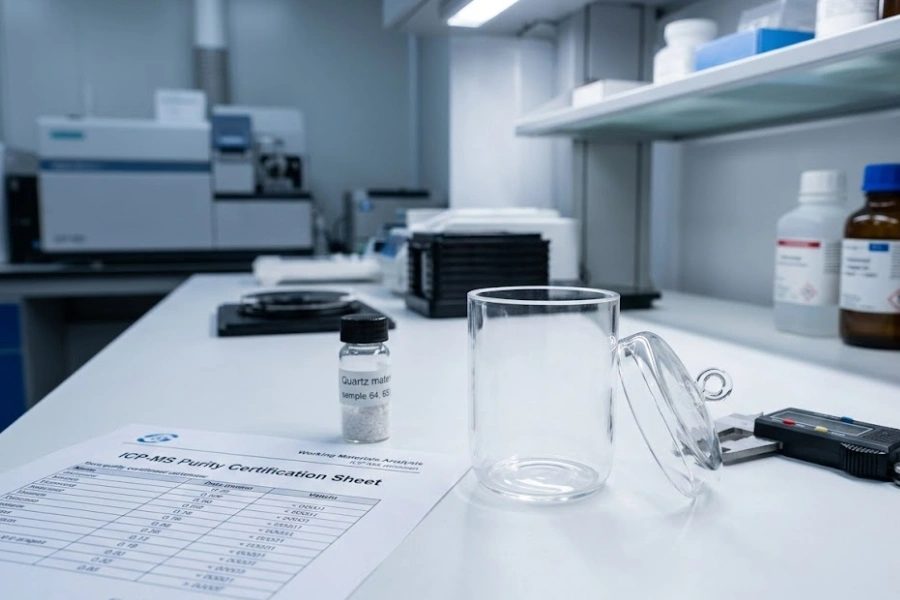
Standard-grade quartz tubing, with SiO₂ purity of approximately 99.9% and total metallic impurity levels below 50 ppm, is rated for continuous service up to 1,150°C. Semiconductor-grade fused silica tubing, manufactured from synthetic silica precursors with SiO₂ purity exceeding 99.99% and total metallic contamination below 1 ppm, carries a continuous service rating of 1,150°C to 1,200°C — a meaningful 50°C advantage in the most demanding thermal regimes. More significantly, semiconductor-grade material exhibits substantially delayed devitrification onset: where standard-grade tubing may begin showing surface crystallization after 100 hours at 1,100°C, semiconductor-grade material often remains visually clear under the same conditions for 300 hours or more.
The thermal advantage of semiconductor-grade material is not solely attributable to purity; the manufacturing process for synthetic fused silica also produces a more homogeneous glass network with fewer structural defects, which translates to higher viscosity at a given temperature and greater resistance to creep. In diffusion furnace applications where tube service life is measured in process cycles rather than calendar time, the per-cycle cost differential between standard and semiconductor-grade tubing is frequently offset by the extended tube replacement interval.
Semiconductor-Grade vs. Standard-Grade Thermal Performance
| Параметр | Стандартный класс | Полупроводниковый класс |
|---|---|---|
| SiO₂ Чистота (%) | ≥99.9 | ≥99.99 |
| Metallic Impurity (ppm) | <50 | <1 |
| Температура непрерывной работы (°C) | 1,100-1,150 | 1,150-1,200 |
| Devitrification Onset (hours at 1,100°C) | ~100 | ~300+ |
| Типовое применение | Lab furnaces, UV lamps | Semiconductor diffusion, CVD |
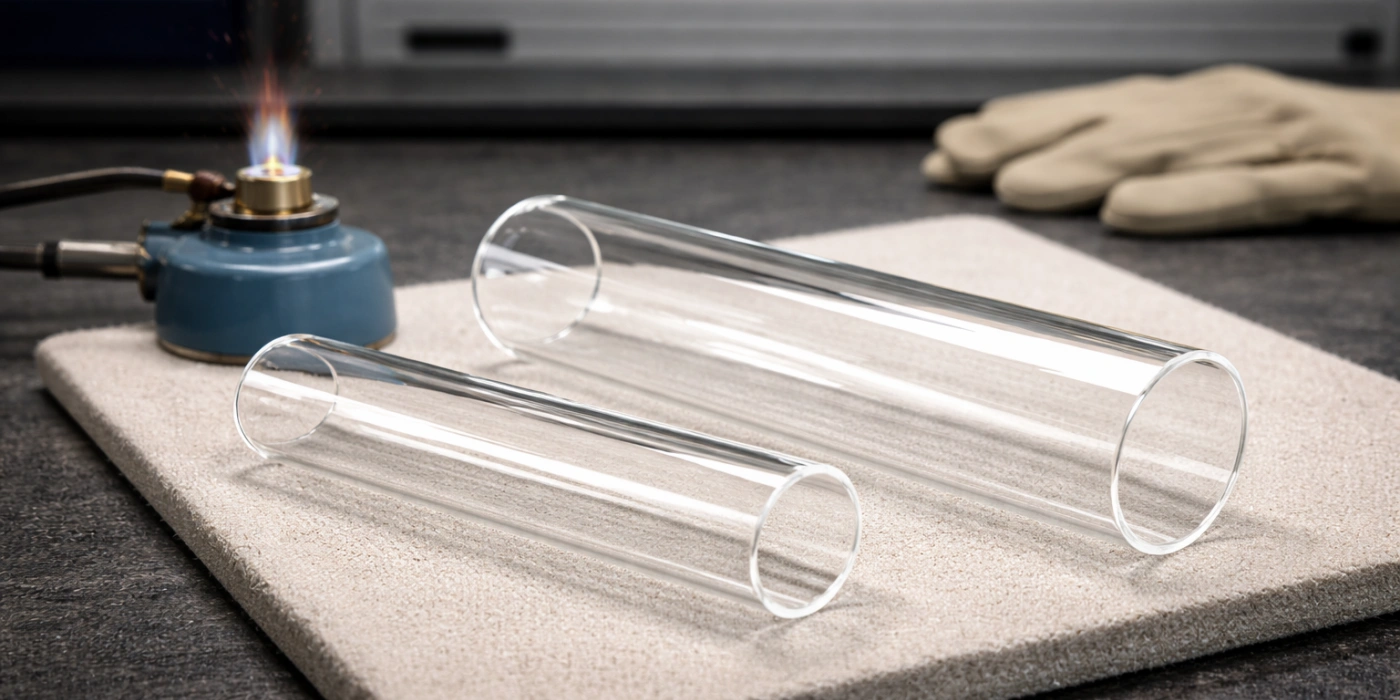
Thermal Shock Resistance of Quartz Glass Tubing
Beyond static temperature ratings, the capacity of quartz glass tubing to withstand rapid temperature transitions — thermal shock — is equally critical in evaluating its suitability for dynamic thermal environments. Thermal shock performance is governed by a different set of physical parameters than maximum service temperature, and understanding both dimensions together provides a complete picture of quartz tube thermal capability.
The Physics of Thermal Shock in Glass Materials
Thermal shock fracture in glass occurs when the thermal stress induced by a temperature gradient exceeds the material's tensile strength. This mechanism operates independently of whether the material is being heated or cooled.
When one surface of a glass tube is exposed to a rapid temperature change while the opposite surface remains at a different temperature, differential thermal expansion generates a stress field across the wall cross-section. The surface undergoing greater thermal contraction (or lesser expansion) is placed in tension; when this tensile stress exceeds the fracture strength of the glass — typically 50–100 MPa for fused silica in pristine condition — crack initiation and propagation occur instantaneously. The critical parameter governing susceptibility to this failure mode is the thermal stress factor, which is proportional to the product of elastic modulus, CTE, and the magnitude of the temperature differential, divided by the thermal conductivity. For fused silica, the combination of an extremely low CTE (0.55 × 10⁻⁶/°C) and adequate thermal conductivity (approximately 1.38 W/m·K at room temperature) yields a material with one of the lowest thermal stress factors among all glass and ceramic materials.
The thermal shock resistance parameter (R) for a material is formally defined as R = σf · λ / (E · α), where σf is fracture strength, λ is thermal conductivity, E is Young's modulus, and α is the thermal expansion coefficient. For fused silica, this parameter is approximately 30 times higher than that of soda-lime glass, which directly explains why quartz glass tubing tolerates thermal transitions that would shatter conventional glass instantaneously.
Quartz Tubing's Thermal Shock Resistance Compared to Other Glass Types
Quantitative comparison of thermal shock resistance across glass types requires examining both CTE and the practical temperature differential each material can withstand without fracture.
Fused silica tubing can typically withstand a sudden temperature differential of up to 1,000°C without fracture — meaning a tube at 1,000°C can be plunged into room-temperature water (20°C) and survive intact, provided the tube surface is free of pre-existing flaws and surface contamination. Borosilicate glass (CTE ≈ 3.3 × 10⁻⁶/°C) tolerates temperature differentials of approximately 160°C before fracture risk becomes significant. Soda-lime glass (CTE ≈ 9 × 10⁻⁶/°C) fractures reliably at temperature differentials as low as 40–60°C.
The 16-fold advantage in CTE between fused silica and borosilicate glass translates not merely to a moderate improvement in thermal shock resistance but to an entirely different operational envelope. Quartz glass tubing can be inserted cold into a pre-heated furnace, removed at process temperature into ambient air, and subjected to sequential heating and cooling cycles that would destroy borosilicate tubes within one or two cycles. This characteristic is what makes quartz tubing the material of choice in processes requiring rapid thermal cycling — flash annealing, rapid thermal processing (RTP), and pulsed UV irradiation systems.
Thermal Shock Resistance Comparison Across Tube Materials
| Материал | CTE (×10-⁶/°C) | Max Safe ΔT (°C) | Practical Cycling Capability |
|---|---|---|---|
| Плавленый диоксид кремния (кварц) | 0.55 | ~1,000 | Excellent — hundreds of cycles |
| Боросиликатное стекло | 3.3 | ~160 | Moderate — limited cycling |
| Стакан с содовой | 9.0 | ~40–60 | Poor — single-use thermal events |
| Глиноземистая керамика | 8.0 | ~200 | Moderate — dependent on microstructure |
Scenarios Where Thermal Shock Can Still Fracture Quartz Tubing
Despite its exceptional thermal shock resistance, quartz glass tubing is not immune to thermally induced fracture. Several specific conditions significantly reduce its effective thermal shock tolerance and must be understood to prevent failure.
Surface flaws and mechanical damage are the most common cause of quartz tube thermal shock fracture in practice. A scratch as shallow as 10–20 μm can act as a stress concentrator that reduces local fracture strength by 50% or more. In furnace environments where tubes are frequently handled, inserted, or repositioned, even minor contact with metallic fixtures leaves surface damage sufficient to lower the thermal shock threshold dramatically. Laboratory environments that accumulate years of use without tube replacement frequently experience fracture failures that are attributed to thermal shock but are in fact caused by accumulated surface damage — the thermal event simply provided the stress necessary to propagate a pre-existing flaw.
Devitrified tubes — those exhibiting surface crystallization after prolonged high-temperature exposure — are particularly vulnerable to thermal shock fracture. The crystalline surface layer (cristobalite) has a CTE of approximately 10 × 10⁻⁶/°C, versus 0.55 × 10⁻⁶/°C for the underlying fused silica. This CTE mismatch of nearly 20-fold generates substantial interfacial stress at every thermal cycle, and once a devitrified layer has formed, the tube's practical thermal shock resistance is drastically reduced. A tube that previously survived thousands of cycles may fracture unpredictably after devitrification has progressed, even under previously benign thermal conditions.
Large-diameter, thick-walled geometries present a third scenario where thermal shock fracture becomes a realistic risk. As wall thickness increases beyond 4–5 mm and OD exceeds 100 mm, the through-wall temperature gradient during rapid heating or cooling creates tensile stresses that approach the fracture threshold even in pristine, high-purity material. For tubes of this geometry, controlled ramp rates — typically no faster than 5°C per minute below 200°C and 10°C per minute in the 200–800°C range — are necessary to maintain wall temperature uniformity and suppress thermally induced cracking. In practice, large-bore quartz tubes used in semiconductor diffusion furnaces are frequently pre-warmed on the furnace flange for 15–30 minutes before full insertion, allowing the tube to equilibrate to furnace ambient temperature before the full thermal gradient is applied. This precaution, while adding process time, reduces the incidence of insertion-related fracture to near zero even for tube geometries that would otherwise be considered thermally vulnerable. The interaction between geometry and thermal shock susceptibility underscores that material selection alone is insufficient — tube geometry must be matched to the thermal cycling demands of the application with equal rigor.
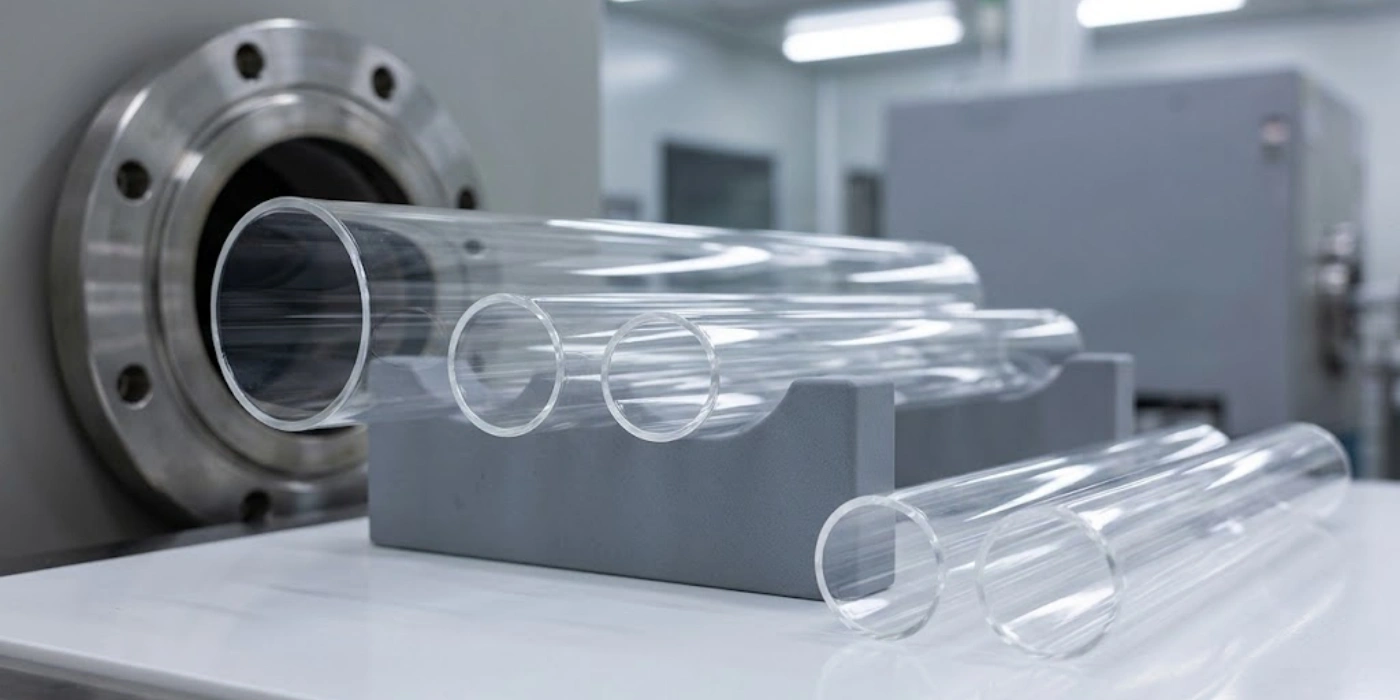
Quartz Glass Tubing in High-Temperature Industrial Applications
Translating thermal data into real-world operational parameters requires mapping each grade and geometry of quartz tubing to the specific temperature regimes encountered across major industries. Each application domain imposes a distinct combination of temperature ceiling, thermal cycling frequency, atmospheric environment, and purity requirement — all of which interact to determine which quartz tubing specification is appropriate.
Semiconductor Diffusion Furnaces and CVD Reactors
Among all industrial users of quartz glass tubing, the semiconductor industry operates the most demanding combination of temperature, purity, and service life requirements simultaneously.
Horizontal diffusion furnaces used for dopant1 drive-in (phosphorus, boron, arsenic) operate at process temperatures between 800°C and 1,150°C, with the most aggressive processes — such as deep boron diffusion for power devices — sustained at 1,100–1,150°C for multiple hours per batch. Chemical vapor deposition (CVD) reactors for polysilicon, silicon nitride, and silicon dioxide deposition operate across a similarly wide band, typically 600–1,100°C depending on the deposition chemistry. In these environments, semiconductor-grade quartz process tubes are specified at SiO₂ purity ≥99.99%, with total metallic contamination below 1 ppm, because trace metals — particularly sodium, potassium, iron, and nickel — diffuse from the tube wall into the silicon wafer stack at process temperature, causing junction leakage, threshold voltage instability, and reduced carrier lifetime.
The tube geometry in diffusion furnace applications is typically a large-diameter configuration: OD values of 100–200 mm with wall thicknesses of 4–6 mm are standard. As noted in the geometry section, this combination creates elevated sag risk at sustained temperatures above 1,050°C, and tube rotation or axial support fixtures are common engineering mitigations. Service life in semiconductor diffusion tubes is typically measured in process cycles rather than calendar time; a tube subjected to 200 cycles at 1,100°C with appropriate cleaning protocols will outperform one cycled 80 times at 1,150°C without cleaning, because surface contamination — not thermal exposure alone — governs devitrification rate and structural degradation.
Semiconductor Application Temperature Parameters
| Процесс | Диапазон температур (°C) | Кварцевый класс | Typical OD (mm) | Dominant Failure Mode |
|---|---|---|---|---|
| Boron Diffusion | 1,050–1,150 | Полупроводник | 150-200 | Devitrification + sag |
| Phosphorus Diffusion | 900–1,050 | Полупроводник | 100–150 | Contamination-driven devitrification |
| CVD (SiO₂, Si₃N₄) | 600-900 | Полупроводник | 100–150 | Deposition buildup, thermal cycling |
| Rapid Thermal Processing | 200–1,200 (ramp) | Полупроводник | 200-300 | Thermal shock (thick wall) |
Laboratory Tube Furnaces and High-Temperature Reaction Vessels
Research and analytical laboratory environments represent the broadest diversity of quartz tubing operating conditions — from cryogenic-to-high-temperature cycling in synthesis reactors to sustained isothermal operation in tube furnaces used for ceramic sintering and catalyst evaluation.
Standard laboratory tube furnaces operate with quartz process tubes in the 600–1,100°C range, with the majority of chemical synthesis and materials processing applications concentrated between 700°C and 950°C. At these temperatures, standard-grade transparent quartz tubing (SiO₂ ≥ 99.9%) provides adequate thermal stability, optical clarity for process observation, and chemical inertness against most reaction environments including hydrogen, nitrogen, argon, and dilute reactive gases. Transparent quartz tubing is specifically preferred over opaque grades in laboratory settings because visual observation of sample color, melt behavior, or gas evolution is frequently an integral part of the experimental protocol. At temperatures above 1,000°C, standard-grade tubes held in sustained isothermal operation for more than 50–100 hours begin to show early-stage devitrification at external surfaces, particularly at hot-zone boundaries where thermal gradients are steepest.
High-temperature reaction vessels — such as those used in solid-state synthesis, quartz-encapsulated ampoule reactions, and catalyst regeneration — often require rapid insertion of a cold tube assembly into a pre-heated furnace zone, subjecting the tube to temperature differentials of 400–700°C at the moment of insertion. This is precisely the thermal shock scenario for which quartz tubing's low CTE is indispensable. In documented laboratory practice, quartz tubes have been routinely inserted at room temperature into furnaces pre-set to 900°C without fracture, a transition impossible with borosilicate glass laboratory ware, confirming that the thermal shock resistance advantage is not merely theoretical but operationally validated across decades of research use.
Laboratory Application Temperature Reference
| Приложение | Рабочая температура (°C) | Рекомендуемый класс | Тип трубки | Typical Service Life |
|---|---|---|---|---|
| Tube furnace (synthesis) | 700–1,000 | Стандарт | Прозрачный | 6-18 месяцев |
| Tube furnace (sintering) | 900-1,100 | Standard/High-purity | Прозрачный | 3–12 months |
| Sealed ampoule reactions | 400–900 | Стандарт | Прозрачный | Single-use to multi-use |
| Catalyst regeneration | 500–800 | Стандарт | Прозрачный | 12-24 месяца |
| Rapid thermal cycling | 200–1,000 | Стандарт | Прозрачный | Cycle-dependent |
UV Lamps, Infrared Heaters and Quartz Envelope Applications
The lamp and photonic heating industry exploits quartz glass tubing for properties beyond temperature resistance alone — specifically, its exceptionally high optical transmission from the deep UV (below 200 nm) through the near-infrared, a spectral range that no borosilicate or soda-lime glass can access.
In mercury UV lamps, the quartz envelope surrounding the arc tube operates at surface temperatures between 700°C and 900°C during sustained operation. The critical requirement is not merely thermal survival but maintenance of UV transmission throughout the lamp's operational life; surface devitrification or contamination-induced opacity would reduce UV output even if the tube remained structurally intact, which is why UV lamp envelopes are invariably manufactured from synthetic fused silica of the highest optical grade, processed under strict cleanroom conditions. In short-arc xenon lamps used in solar simulation and cinema projection, envelope temperatures can reach 900–1,000°C, pushing against the boundary of continuous service limits.
Infrared heating elements for industrial dryers, food processing, curing systems, and thermoforming machines typically use opaque quartz glass tubing as the heater envelope. Operating temperatures at the tube surface depend on heater wattage and airflow conditions but commonly fall in the 850°C to 1,050°C range. In these applications, the opaque tube's broad infrared absorption and re-emission capability is the primary performance attribute; the tube acts as a secondary radiator, absorbing resistive heat from the internal element and re-emitting it as far-infrared radiation toward the product being heated. Opaque quartz tubing in infrared heater applications typically achieves service lives of 5,000–10,000 operating hours when surface contamination is controlled and operating temperature does not persistently exceed 1,050°C.
UV and Infrared Application Temperature Summary
| Приложение | Температура поверхности (°C) | Тип кварца | Key Property Required | Typical Lifetime (hours) |
|---|---|---|---|---|
| Mercury UV lamps | 700–900 | Synthetic, optical grade | Пропускание ультрафиолетовых лучей | 1,000–3,000 |
| Short-arc xenon lamps | 900–1,000 | Synthetic, high-purity | UV/VIS transmission + thermal | 500–1,500 |
| Far-IR industrial heaters | 850-1,050 | Непрозрачный | Broad IR emission | 5,000-10,000 |
| Near-IR halogen heaters | 900–1,150 | Прозрачный | Near-IR transmission + thermal | 2,000-5,000 |
Industrial Heating Systems and Halogen Lamp Protection Tubes
Industrial process heating — spanning food manufacturing, pharmaceutical processing, textile drying, plastics thermoforming, and glass tempering — uses quartz glass tubing extensively as both a structural component and a radiative thermal transfer element.
Halogen lamp protection tubes, used to shield tungsten-halogen lamps in high-bay industrial heaters from mechanical damage and quenching by water spray or wash-down, operate at tube wall temperatures of 700–950°C under continuous duty. Transparent quartz is standard for this application, as it must transmit the near-infrared output of the halogen element with minimal absorption loss. An important thermal consideration in halogen protection tube applications is the localized temperature spike at the tube end seals, where metal-to-glass junctions exist; these junctions must be maintained below 350°C to prevent stress fracture at the seal interface, which is achieved through end-cooling airflow or thermally conductive mounting hardware.
Resistance-heated industrial tube furnaces used in continuous belt-conveyor processing lines — for brazing, sintering of metal injection molded parts, and ceramic firing — employ quartz tubing in muffle tube or protection tube configurations at temperatures from от 800 °C до 1 100 °C. In these high-duty-cycle environments, tubes may be in continuous service for months without removal, making devitrification management the dominant operational concern rather than acute thermal shock. Documented field experience in continuous-belt furnace operations shows that quartz protection tubes maintained in clean, dry atmospheres at 1,000°C can achieve service intervals exceeding 12 months without structural failure, whereas identical tubes in humid or alkali-contaminated atmospheres may require replacement within 3 months due to accelerated surface crystallization.
Devitrification in Quartz Glass Tubing at High Operating Temperatures
Extended high-temperature exposure subjects quartz glass tubing to a structural transformation that progressively undermines its thermal performance — a phenomenon known as devitrification. Recognizing the conditions that trigger this process is essential for understanding the practical service limits described throughout this article.
- What Devitrification Is and at What Temperature It Begins
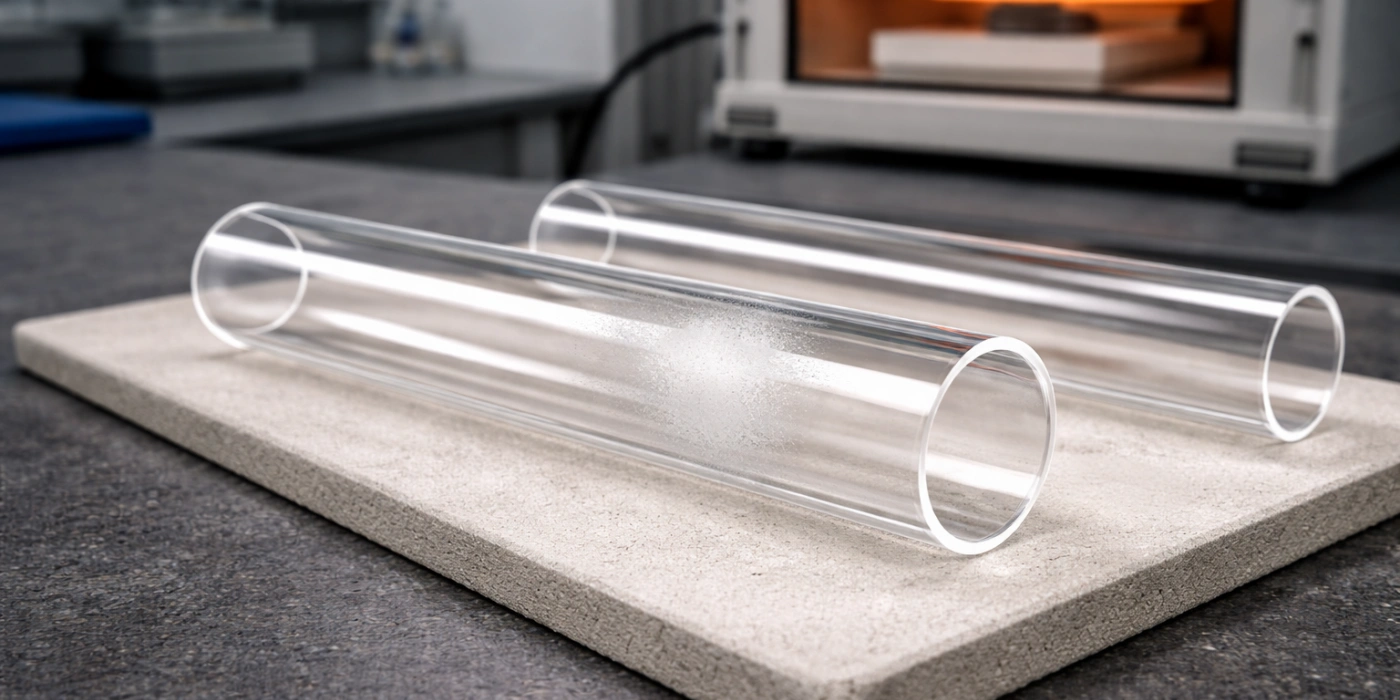
Devitrification is the thermally driven conversion of amorphous fused silica into a crystalline phase — primarily cristobalite (a high-temperature polymorph of SiO₂). Unlike the bulk glass, which has no long-range atomic order, cristobalite forms an ordered crystal lattice that nucleates preferentially at the tube's external surface and propagates inward with continued thermal exposure. Devitrification onset at the surface of standard-grade quartz tubing typically begins after sustained exposure above approximately 1,050°C, and accelerates substantially above 1,100°C. Visually, the process manifests as a milky-white or frosted surface appearance that gradually deepens with continued thermal cycling. Importantly, once devitrification has begun, it is irreversible — no annealing or thermal treatment will restore the amorphous structure.
A natural transition from the onset conditions brings attention to the structural consequences. The cristobalite phase undergoes a reversible displacive phase transition at approximately 220°C (alpha-to-beta cristobalite inversion), accompanied by a ~3% volume change. Every thermal cycle through this inversion temperature imposes compressive and tensile stresses at the interface between the crystalline surface layer and the underlying amorphous glass, progressively introducing microcracks that reduce the tube's mechanical strength and — critically — its resistance to both thermal shock and sustained high-temperature loading. A quartz tube with a fully devitrified surface layer may retain only 30–50% of its original flexural strength, making it susceptible to fracture under thermal conditions it would have survived easily in its original state.
- Загрязнение поверхности как катализатор ускоренной девитрификации
Not all quartz tubes devitrify at the same rate under identical temperature conditions. Surface contamination plays an outsized role as a catalytic accelerant, and this factor is almost entirely within the control of the end user. Alkali metal contaminants — particularly sodium (Na) and potassium (K) — act as network modifiers that locally lower the viscosity of the fused silica network at the glass surface, dramatically accelerating the nucleation and growth of cristobalite crystals. Even nanogram-level deposits of sodium from fingerprints can reduce devitrification onset temperature by 50–100°C and cut the time to visible surface crystallization by a factor of 3 to 5 at a given operating temperature. Similarly, water vapor in the furnace atmosphere catalyzes devitrification by forming hydroxyl groups (Si-OH)2 at the glass surface, which weaken the Si-O-Si network and facilitate structural rearrangement into the crystalline phase. Particulate contamination from furnace insulation, ceramic fiber blankets, and metallic fixtures deposits on the tube surface during processing and introduces additional nucleation sites. Maintaining tube surfaces in a pristine state — through proper handling, regular cleaning, and atmosphere control — is therefore not merely a cosmetic concern but a direct operational strategy for maximizing thermal service life.
Handling Practices That Protect Quartz Glass Tubing's Thermal Integrity
Having established the mechanisms by which quartz glass tubing degrades at high temperatures — particularly through devitrification and thermally induced fracture — the logical extension is to examine the specific handling behaviors that either accelerate or prevent these failure modes. The thermal performance ceiling of any quartz tube is set at manufacture; whether that ceiling is actually reached in service depends entirely on how the tube is handled before, during, and after thermal exposure.
- Bare-Hand Contact and Skin Oil Contamination
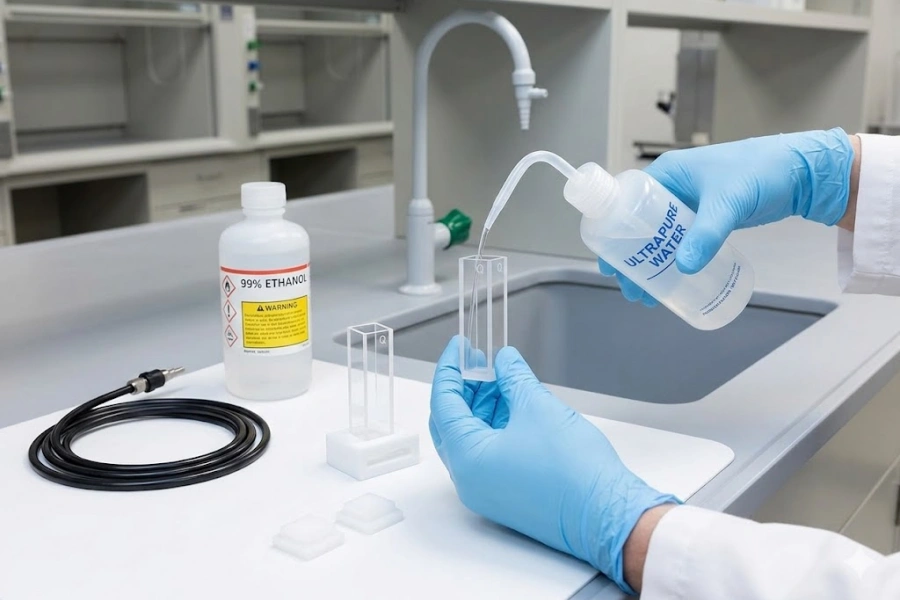
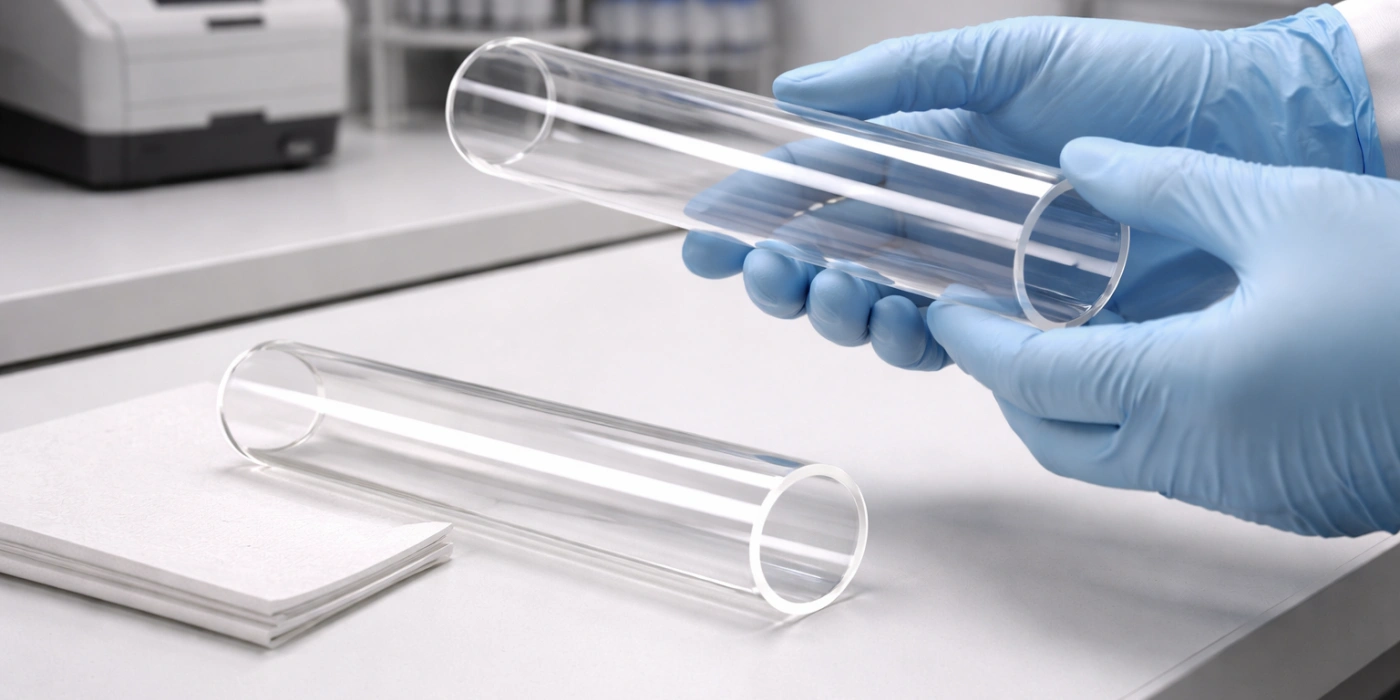
Direct contact with bare skin deposits a thin film of sebaceous oil and perspiration containing sodium, potassium, and other alkali salts onto the quartz surface. As established in the preceding section, even trace-level alkali contamination catalyzes devitrification dramatically. Quartz glass tubing should always be handled with clean lint-free gloves — preferably powder-free nitrile or cotton — from the moment it is removed from packaging to the moment it is installed in the furnace. In semiconductor-grade applications, handling protocols typically mandate full cleanroom gloves and additional alcohol wipe-down of all contacted surfaces prior to installation.
A straightforward field observation illustrates the magnitude of this effect: two identical semiconductor-grade quartz tubes installed simultaneously in the same diffusion furnace, one handled with bare hands and one with clean gloves, will frequently exhibit visible surface devitrification differences within 50 cycles at 1,100°C — the bare-handed tube showing milky surface patches while the gloved-handled tube remains optically clear. This single operational discipline — gloved handling — has a measurable and significant impact on tube service life with zero cost implication.
- Controlled Heating and Cooling Ramp Rates
Thermal shock fracture risk, as described in the physics section, is directly proportional to the rate of temperature change and the wall cross-section geometry. For standard-grade transparent quartz tubing with wall thickness below 2 mm, the low CTE provides sufficient margin to tolerate relatively rapid thermal transitions. However, for tubes with wall thickness above 3 mm or OD above 80 mm, controlled ramp rates are necessary to prevent thermally induced fracture, particularly in the critical temperature ranges where CTE-driven stress amplification is greatest. Recommended practice for thick-walled quartz tubing specifies ramp rates no faster than 3–5°C per minute from room temperature to 200°C (to clear any adsorbed moisture), 5–10°C per minute from 200°C to 600°C, and 10–15°C per minute above 600°C. Cooling ramp rates are equally critical and are frequently more damaging than heating ramps because the glass outer surface cools faster than the interior, placing the surface in tension — precisely the condition that initiates surface crack propagation.
- Installation Clearances and Mechanical Constraint
Quartz glass tubing must be installed with adequate axial and radial clearance to accommodate thermal expansion without generating mechanical constraint stresses. In horizontal tube furnace configurations, end fittings and flanged connections must permit free axial expansion; a 1,000 mm length of quartz tubing heated from 25°C to 1,100°C expands by approximately 0.59 mm (based on the CTE of 0.55 × 10⁻⁶/°C), which, while modest in absolute terms, is sufficient to generate catastrophic compressive fracture if both ends are rigidly constrained. End-seal compression fittings must use compliant sealing materials (graphite rope, PTFE tape at lower temperatures) that accommodate this expansion without generating axial constraint loads. Rigid metal-to-quartz interfaces that seemed satisfactory at room temperature installation become stress concentration points at operating temperature, and are a documented but underappreciated source of quartz tube failure in industrial furnace applications. Furthermore, support saddles or contact points along the tube length should be fabricated from thermally compliant materials such as refractory ceramic fiber or graphite felt; metallic saddles with sharp edges introduce localized bending stresses at the contact line that, combined with the thermal gradient across the tube wall, create compound stress states that substantially reduce the tube's resistance to both mechanical and thermal fracture. Verifying installation geometry at operating temperature — through thermocouple mapping or visual inspection during initial thermal qualification — is a worthwhile investment that prevents the more costly consequence of in-service tube fracture.
Temperature Performance of Quartz Glass Tubing vs. Alternative Tube Materials
With the thermal properties of quartz glass tubing fully established, a comparative analysis against alternative high-temperature tube materials provides the final reference framework for material selection decisions. The comparison below is restricted exclusively to the temperature performance dimension and is based on published material property data.
- Quartz vs. Borosilicate Glass Tubing
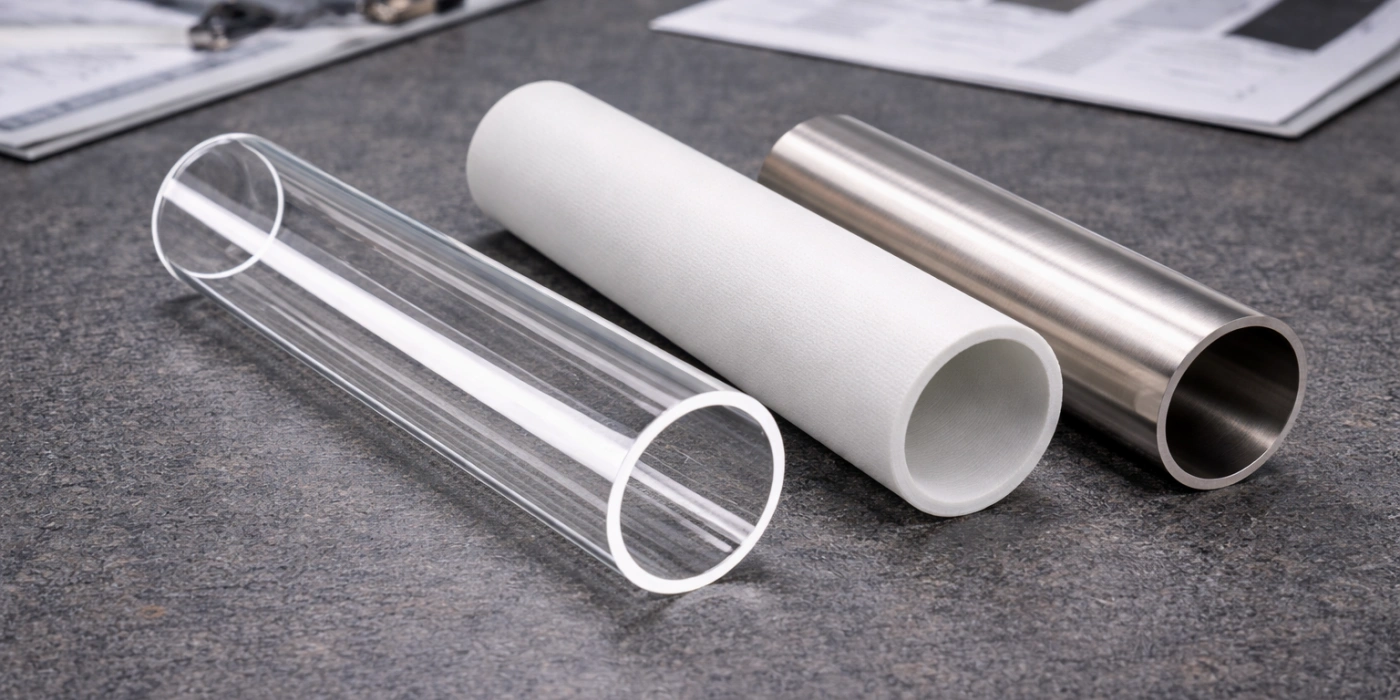
Borosilicate glass (e.g., Pyrex, Duran) is the most common alternative to quartz tubing in laboratory and lower-temperature industrial applications. Its maximum continuous service temperature of около 450-500°C and thermal shock tolerance limit of ~160°C represent a profound capability gap relative to quartz. For any application requiring sustained operation above 500°C, borosilicate glass is entirely unsuitable, and quartz glass tubing has no borosilicate-based competitor in this temperature range. Borosilicate's primary advantage is cost — approximately 5 to 10 times lower than equivalent quartz tubing — making it the correct selection when process temperatures are reliably below 450°C and rapid thermal cycling is not required.
- Quartz vs. Alumina (Al₂O₃) Ceramic Tubing
Alumina ceramic tubing offers the highest continuous service temperature of any common tube material: 1,600–1,800°C for 99.7% Al₂O₃, substantially exceeding quartz in pure thermal ceiling. However, alumina's CTE of approximately 8 × 10⁻⁶/°C — nearly 15 times higher than fused silica — makes it susceptible to thermal shock fracture, limiting practical ramp rates to 3–5°C per minute in most configurations. Additionally, alumina is opaque to UV radiation and has poor optical transmission across the visible and infrared spectrum, making it unsuitable for any application requiring spectral transmission. Alumina is the preferred choice for processes above 1,200°C where optical access is not required; quartz remains superior for all applications below 1,200°C that involve rapid thermal cycling, UV transmission, or spectroscopic observation.
- Quartz vs. Stainless Steel Tubing
Stainless steel (316L, Inconel) tubing is a frequent consideration in industrial process piping and heating applications where mechanical robustness is prioritized. Austenitic stainless steel retains useful mechanical strength to approximately 870°C (316L), while nickel superalloys (Inconel 625) extend service to 980–1,100°C. However, metallic tubes are entirely opaque, introduce potential metallic contamination in high-purity chemical environments, and have CTEs of 16–17 × 10⁻⁶/°C — 30 times higher than fused silica. In applications requiring chemical inertness, UV or optical transparency, or contamination-free atmospheres, stainless steel is not a functional substitute for quartz glass tubing, regardless of its superior mechanical strength. The two materials serve fundamentally different engineering functions and are generally not direct competitors in technically demanding thermal environments.
Comparative Thermal Performance of High-Temperature Tube Materials
| Материал | Максимальная температура непрерывной работы (°C) | Max Thermal Shock ΔT (°C) | CTE (×10-⁶/°C) | UV Transparent | Химическая инертность |
|---|---|---|---|---|---|
| Плавленый диоксид кремния (кварц) | 1,100-1,200 | ~1,000 | 0.55 | Да | Превосходно |
| Боросиликатное стекло | 450-500 | ~160 | 3.3 | Partial (>300 nm) | Хорошо |
| Alumina Ceramic (99.7%) | 1,600–1,800 | ~200 | 8.0 | Нет | Превосходно |
| 316L Stainless Steel | ~870 | No limit (ductile) | 16.0 | Нет | Умеренный |
| Inconel 625 | ~980–1,100 | No limit (ductile) | 12.8 | Нет | Хорошо |
Заключение
Quartz glass tubing sustains continuous service at temperatures up to 1,150°C for standard grade and 1,200°C for semiconductor grade, with short-term peak tolerance reaching 1,300°C under controlled conditions. Its thermal shock resistance — rooted in a coefficient of thermal expansion of just 0.55 × 10⁻⁶/°C — enables temperature differentials of up to 1,000°C without fracture, an advantage unmatched by any glass or most ceramic alternatives. Devitrification, surface contamination, tube geometry, and handling discipline collectively determine whether these theoretical limits are realized in practice. Across semiconductor processing, laboratory furnaces, UV photonics, and industrial heating, the thermal performance envelope of quartz glass tubing remains unmatched within its operational range.
ЧАСТО ЗАДАВАЕМЫЕ ВОПРОСЫ
What is the maximum temperature quartz glass tubing can withstand?
Transparent fused silica quartz tubing is rated for continuous service up to 1,100–1,150°C (standard grade) or 1,150–1,200°C (semiconductor grade). Short-term peak exposure — for durations of 1 to 3 hours — extends to approximately 1,250–1,300°C. These values apply to undamaged tubes in clean condition; devitrification or surface contamination significantly lowers the effective operational ceiling.
Can quartz glass tubing withstand thermal shock?
Yes. The extremely low coefficient of thermal expansion of fused silica (0.55 × 10⁻⁶/°C) enables quartz glass tubing to survive temperature differentials of up to approximately 1,000°C without fracture — far beyond the capability of borosilicate (≈160°C) or soda-lime glass (≈50°C). However, surface damage, devitrification, or large wall thickness reduce this tolerance substantially.
What causes quartz glass tubing to turn white or cloudy at high temperatures?
The milky-white or frosted appearance is caused by devitrification — the conversion of amorphous fused silica into crystalline cristobalite at the tube surface. This process begins after sustained exposure above approximately 1,050°C and is dramatically accelerated by surface contamination from fingerprints, alkali deposits, or water vapor. Devitrification is irreversible and progressively weakens the tube's structural and thermal performance.
What is the difference between transparent and opaque quartz glass tubing in terms of temperature?
Transparent quartz tubing is rated for continuous service up to 1,100–1,150°C and is preferred for optical, UV, and spectroscopic applications. Opaque quartz tubing carries a slightly lower continuous service rating of 1,050–1,100°C but excels in radiant infrared heating applications due to its broad-spectrum thermal emission. Both types are manufactured from fused silica; the difference lies in the microstructure (bubble-free vs. bubble-containing) rather than chemical composition.
Ссылки:
-
A dopant is a trace impurity element intentionally introduced into a semiconductor substrate to modify its electrical properties, and its controlled diffusion into silicon wafers at 800–1,150°C is among the most thermally demanding applications for quartz glass process tubes. ↩
-
Hydroxyl groups (Si-OH) formed at the glass surface by water vapor attack weaken the continuous Si-O-Si network of fused silica, facilitating the structural rearrangement that accelerates devitrification under high-temperature atmospheric exposure. ↩