Точность требует определённого технологического процесса — а кварц требует большей точности, чем практически любой другой промышленный материал. Без строгого поэтапного производственного процесса даже кремнезем высочайшей чистоты приводит к получению деталей, которые выходят из строя под воздействием термических, оптических или размерных нагрузок.
В данной статье рассматривается полный технический процесс производство деталей из кварца — начиная с выбора сырья и проверки его чистоты, через четыре отдельных этапа механической обработки, до контроля качества и, наконец, до графика изготовления продукции TOQUARTZ по индивидуальному заказу. На каждом этапе применяются конкретные параметры, измеримые стандарты и обоснование технологического процесса, основанные на устоявшейся промышленной практике.
В таких областях, как производство полупроводников, оптическое оборудование и оборудование для высокотемпературной обработки, эксплуатационные характеристики готового кварцевого компонента напрямую зависят от решений, принимаемых на каждом этапе производства. Понимание того, что происходит на уровне материала, механической обработки и контроля качества, дает инженерам и специалистам по закупкам техническую основу для правильного определения технических требований к компонентам и уверенной оценки возможностей поставщиков.
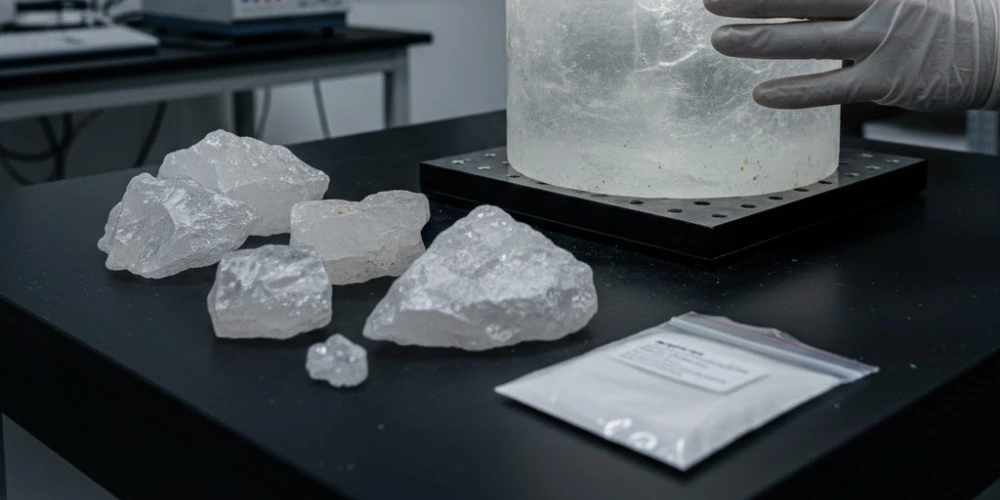
Кварцевое стекло и синтетический кварц в качестве сырья для производства деталей
Среди всех факторов, влияющих на конечные эксплуатационные характеристики компонентов, выбор сырья имеет наибольшее значение на начальных этапах производства — с этим неоднократно сталкиваются опытные инженеры-технологи, когда пытаются установить связь между отказными случаями в эксплуатации и решениями, принятыми на этапе выбора материалов.
Структурные различия между плавленым кремнеземом и синтетическим кварцем
Кварц из плавленого кремнезема и синтетический кварц химически схожи — оба состоят преимущественно из диоксида кремния (SiO₂) — однако в результате их производства получаются материалы с принципиально различными внутренними структурами и составом примесей.
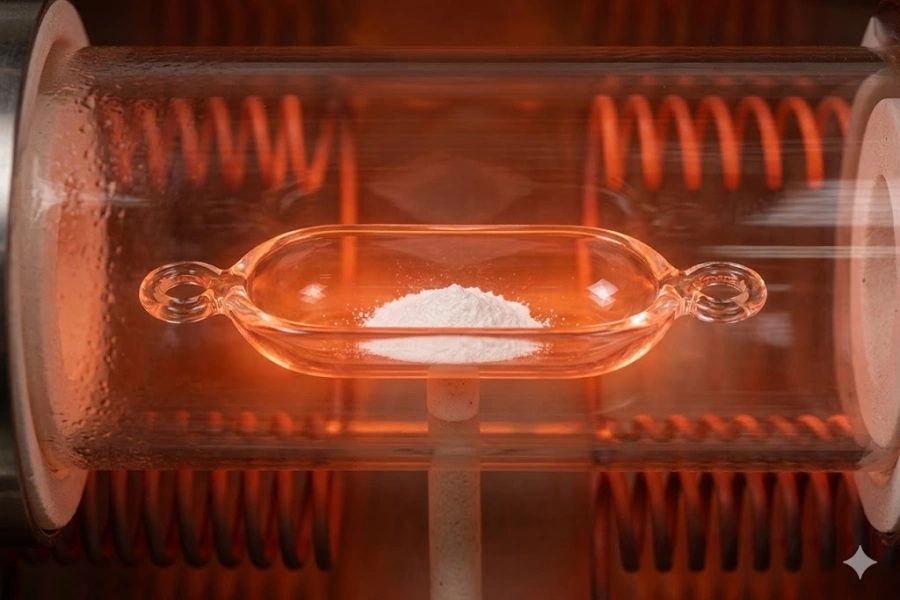
Кварцевое стекло получают путем плавления природного кварцевого песка или кристаллов кварца при температурах, превышающих 1 700 °C, с последующим быстрым охлаждением расплава с образованием аморфного, некристаллического стекла. Поскольку исходным сырьем является природный минерал, плавленый кварц содержит фоновые примеси металлов — железа, алюминия, кальция, натрия — в концентрациях, как правило, в диапазоне от 10 до 50 ppm в зависимости от сорта исходного сырья. Содержание гидроксильных групп (OH) варьируется в зависимости от метода производства: при электроплавлении получается материал с низким содержанием OH (менее 5 ppm), тогда как при пламенном плавлении получаются варианты с высоким содержанием OH (150–400 ppm OH), которые обладают превосходной пропускаемостью УФ-излучения.
Синтетическое кварцевое стекло, напротив, получают путем окисления в паровой фазе или гидролиза тетрахлорида кремния (SiCl₄) или силана (SiH₄) при повышенных температурах — процесс, который по своей сути исключает наличие металлических примесей в исходном сырье. В результате получается материал с общим содержанием металлических примесей менее 1 ppm и исключительной оптической однородностью, что делает его предпочтительной подложкой для оптических элементов в диапазоне глубокого ультрафиолета (DUV) и применений в фотолитографии.
Практические последствия этого структурного расхождения весьма значительны: Синтетический кварц обеспечивает пропускание излучения с длиной волны до 160 нм, в то время как стандартное плавленное кварцевое стекло имеет предел пропускания около 200 нм, и именно это различие напрямую определяет выбор материала для применений, требующих чувствительности к ультрафиолетовому излучению.
Сравнение основных свойств плавленого кремнезема и синтетического кварца
| Недвижимость | Плавленое кварцевое стекло (электроплав) | Плавленое кварцевое стекло (плавление в пламени) | Синтетическое кварцевое стекло |
|---|---|---|---|
| SiO₂ Чистота (%) | 99,95 – 99,99 | 99,95 – 99,99 | > 99,9999 |
| Содержание OH (ppm) | < 5 | 150–400 | 0 – 1 200 (регулируемый) |
| Ультрафиолетовое пропускание (нм) | ~200 | ~170 | ~160 |
| Общее количество металлических примесей (ppm) | 10–50 | 10–50 | < 1 |
| Однородность показателя преломления (ppm) | 2 – 5 | 2 – 5 | < 0.5 |
| Типовое применение | Детали промышленных печей | УФ-лампы, оптические окна | Оптика DUV, фотолитография |
Стандарты классификации по степени чистоты и что включает в себя каждый класс
Классификация по степени чистоты кварцевого сырья осуществляется в соответствии с иерархией сортировки, основанной на содержании SiO₂ и пороговых значениях остаточных металлических примесей, выраженных в частях на миллион (ppm) или частях на миллиард (ppb) в зависимости от чувствительности конкретного сорта.
Материал марки 4N (99,99% SiO₂) допускает общее содержание металлических примесей до примерно 100 ppm, что делает его пригодным для общепромышленных применений, таких как емкости для химических реакций, окна для инфракрасной оптики и стандартная лабораторная стеклянная посуда, где УФ-характеристики и сверхнизкий уровень загрязнения не являются основными требованиями. Марка 5N (99,999% SiO₂) снижает общее содержание металлических примесей до уровня ниже 10 ppm и является стандартным материалом для труб диффузионных печей для производства полупроводников, держателей пластин и компонентов технологических камер, где наличие следовых количеств металлических примесей может негативно повлиять на выход готовой продукции. На самом высоком уровне, Марка 6N (99,9999% SiO₂) обеспечивает уровень содержания металлических примесей в диапазоне менее 1 ppm — в целом ниже 1 ppm — и предназначен для подложек для фотолитографии, окон пропускания глубокого ультрафиолета, а также для любых областей применения, где необходимо эффективно исключить загрязнение, обусловленное материалом, из общего баланса загрязнений.
Помимо общей чистоты, содержание гидроксильных групп является отдельным критерием классификации. Материалы с высоким содержанием OH (OH > 100 ppm) демонстрируют превосходную пропускаемость УФ-излучения и более низкую фиктивную температуру, тогда как материалы с низким содержанием OH (OH < 10 ppm) обладают лучшей термической стабильностью и пониженным поглощением инфракрасного излучения — это различие становится критически важным при выборе материала для лазерной оптики по сравнению с компонентами для высокотемпературных технологических процессов.
Степени чистоты кварцевого сырья и их применение
| Класс | SiO₂ Чистота | Общее содержание металлических примесей | Типичное содержание OH (ppm) | Основные области применения |
|---|---|---|---|---|
| 4N | 99.99% | ≤ 100 ppm | Переменная | Промышленные сосуды, инфракрасные окна, лабораторная стеклянная посуда |
| 5N | 99.999% | ≤ 10 ppm | Низкий или высокий | Трубы для полупроводниковых печей, держатели для пластин |
| 6N | 99.9999% | ≤ 1 стр. | Контролируемый | Оптика DUV, подложки для фотолитографии |
Методы входного контроля сырья и проверки его чистоты
Сертификаты чистоты, предоставляемые поставщиками материалов, служат отправной точкой, однако независимый входной контроль является стандартной практикой в любой производственной среде, где отказ компонентов влечет за собой последствия для технологического процесса или выхода готовой продукции.
Масс-спектрометрия с индуктивно связанной плазмой (ICP-MS) является основным аналитическим методом количественного определения металлических примесей с чувствительностью на уровне ppb. Разложенная проба кварца вводится в аргоновую плазму с температурой примерно 6 000–8 000 К, что приводит к ионизации входящих в состав пробы элементов; полученный ионный пучок проходит через масс-спектрометр, который разделяет отдельные элементы по соотношению массы к заряду, при этом пределы обнаружения достигают 0,001 ppb для таких элементов, как железо, алюминий, натрий и кальций. Данный метод позволяет получить полный элементный профиль, охватывающий 30 и более элементов, за один аналитический цикл.
Инфракрасная спектроскопия с преобразованием Фурье (FTIR) определяет содержание гидроксильных групп путем измерения характерной полосы поглощения OH при длине волны примерно 2,73 мкм. Интегральное значение поглощения в этой полосе в сочетании с толщиной образца позволяет рассчитать концентрацию OH в ppm по закону Бера-Ламберта — это неразрушающий метод измерения, который можно проводить на производственных пробных образцах без расхода материала. В дополнение к химическому анализу, Спектроскопия пропускания в УФ-Вис-диапазоне описывает диапазон оптической пропускаемости каждой партии материала в диапазоне от 160 нм до 2 500 нм, подтверждая, что материал соответствует заданной граничной длине волны для предполагаемого применения. Поляриметрический контроль напряжений, проводимый с использованием перекрещенных поляризаторов и источника белого света, позволяет выявить остаточные внутренние напряжения, пузырьки и полосы в заготовках до начала любой механической обработки, что дает возможность отбраковать бракованный материал до того, как будут понесены затраты на обработку.
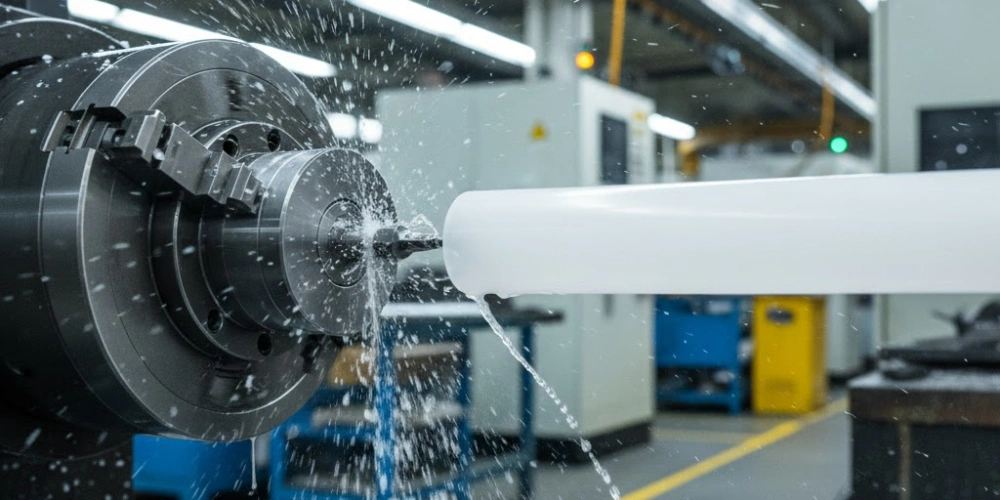
Токарная обработка стекла на токарных станках с ЧПУ при производстве деталей из кварца
Токарная обработка кварца является наиболее широко применяемым методом съемного резания для различных типов деталей, при этом физические особенности резания хрупкого аморфного стекла отличаются от токарной обработки металла, в связи с чем выбор параметров имеет решающее значение для сохранности поверхности.
Как алмазные инструменты удаляют материал с поверхности кварца, не вызывая его разрушения
Поведение аморфного кварца при режущих нагрузках соответствует механике хрупкого разрушения — перед кромкой режущего инструмента формируется поле контактных напряжений по Герцу, и если коэффициент интенсивности напряжений на вершинах трещин превышает вязкость разрушения материала (K₁c ≈ 0,75 МПа·м⁰,⁵), то подповерхностные медианные и поперечные трещины распространяются и пересекают поверхность, приводя к отколу, а не к образованию сплошной стружки.
Обработка в пластическом режиме1 — условие, при котором кварц ведет себя пластически на границе раздела «инструмент-заготовка», — достижимо только в том случае, если толщина недеформированной стружки не превышает критической глубины резания, которая для кварцевого стекла обычно составляет от 0,05 до 0,3 мкм на одно вхождение режущей кромки. Алмазный инструмент позволяет работать в этом режиме благодаря чрезвычайной твёрдости алмаза (твёрдость по Виккерсу ≈ 10 000 HV) и его способности сохранять геометрию острой режущей кромки — радиусы кромки менее 0,5 мкм достижимы с использованием поликристаллических алмазных (ПКД) — позволяют сконцентрировать зону деформации в масштабе, где пластическое течение преобладает над разрушением. Инструменты из цементированного карбида, напротив, не могут поддерживать остроту кромки, необходимую для удержания толщины стружки в пределах пластического режима, что приводит к хрупкому повреждению поверхности при скоростях съема материала, актуальных для промышленности.
Геометрия инструмента также определяет распределение поля напряжений: отрицательные углы наклона от −25° до −45° являются стандартными при токарной обработке кварца, поскольку при этом зона резания подвергается сжимающему, а не растягивающему напряжению, что препятствует образованию трещин на обрабатываемой поверхности.
Параметры геометрии алмазных инструментов для токарной обработки кварца с ЧПУ
| Параметр | Рекомендуемый диапазон | Влияние на качество поверхности |
|---|---|---|
| Угол наклона (°) | от −25 до −45 | Отрицательный угол наклона препятствует хрупкому разрушению |
| Угол прохода (°) | 6–12 | Снижает трение, обеспечивая при этом поддержку по краям |
| Радиус передней кромки инструмента (мм) | 0,4 – 1,6 | Увеличение радиуса снижает шероховатость поверхности Ra |
| Радиус кромки (мкм) | < 0,5 (PCD) | Имеет решающее значение для образования стружки в пластическом режиме |
Параметры резания и выбор смазочно-охлаждающей жидкости для токарной обработки кварца
При токарной обработке кварца скорость вращения шпинделя, скорость подачи и глубина резания взаимодействуют нелинейно, а рабочий диапазон, обеспечивающий получение поверхностей без трещин, более узкий, чем при обработке металлов — этот факт становится очевидным по характеру повреждений поверхности, возникающих даже при отклонении одного из параметров за пределы допустимых значений.
Скорость вращения шпинделя при токарной обработке кварца обычно составляет от 800 до 3 500 об/мин, в зависимости от диаметра заготовки; при больших диаметрах требуется пропорционально меньшая частота вращения, чтобы поддерживать скорость резания по поверхности в диапазоне 30–80 м/мин, что обеспечивает съем материала в пластичном режиме. Скорость подачи поддерживается в диапазоне от 0,01 до 0,05 мм/об. для чистовой обработки, при этом допускаются черновые проходы с глубиной реза до 0,15 мм/об., если целостность поверхности не является приоритетной по сравнению со скоростью съема материала. Глубина реза при чистовой обработке ограничивается значениями 0,02–0,10 мм за проход, чтобы оставаться в пределах поля напряжений под поверхностью, необходимого для резки в пластическом режиме.
Выбор охлаждающей жидкости не допускает взаимозаменяемости. Деионизированная вода или водорастворимые синтетические смазочно-охлаждающие жидкости с низкой концентрацией (концентрация 3–5%) являются стандартными для обработки кварца и выполняют одновременно две функции: терморегулирование в зоне резания — где локальное выделение тепла может вызвать трещины от термического шока в материале с коэффициентом теплового расширения всего 0,55 × 10⁻⁶/°C — и удаление стружки, смывая частицы SiO₂ из зоны резания до того, как они вкрадутся в обрабатываемую поверхность или вызовут абразивный износ при повторной обработке. Маслосодержащие смазочно-охлаждающие жидкости не используются, поскольку остатки углеводородного загрязнения на поверхностях кварца трудно удалить без остатка, что ухудшает качество последующих операций по нанесению связующих слоев, покрытий или проведению оптических измерений.
Параметры токарной обработки с ЧПУ для заготовки из кварцевых трубок и стержней
| Параметр | Диапазон черновой обработки | Ассортимент отделочных материалов | Единица |
|---|---|---|---|
| Скорость вращения шпинделя | 800 – 1 500 | 1 500 – 3 500 | RPM |
| Скорость подачи | 0,05 – 0,15 | 0,01 – 0,05 | мм/об/мин |
| Глубина реза | 0,1 – 0,5 | 0,02 – 0,10 | мм |
| Скорость резки | 30–80 | 30–80 | м/мин |
| Расход охлаждающей жидкости | 8 – 15 | 5–10 | л/мин |
Возможные геометрические формы и допуски на размеры токарных деталей из кварца
Обработка кварца на токарных станках с ЧПУ позволяет изготавливать более широкий спектр осесимметричных форм, чем обычно считается, а возможности по обеспечению допусков значительно улучшились благодаря совершенствованию алмазных режущих инструментов и повышению жесткости станков за последние два десятилетия.
Токарная обработка наружного диаметра (OD) и внутреннего диаметра (ID) При производстве кварцевых трубок и стержней обычно обеспечиваются допуски на размеры ±0,05 мм в серийном производстве и ±0,02 мм в условиях контролируемой финишной обработки с обратной связью по результатам измерений в процессе производства. Конические и конусообразные поверхности поддаются механической обработке с точностью угла в пределах 0,1°, что позволяет использовать их в таких областях, как конические соединения и шлифованные стеклянные конусно-втулочные соединения, применяемые в лабораторном оборудовании. Нарезание резьбы на кварце Это возможно при использовании профилей с крупным шагом (шаг ≥ 2 мм) с помощью одноточечных алмазных инструментов, хотя нарезание резьбы с мелким шагом, как правило, не рекомендуется из-за риска сколов на радиусах основания резьбы менее 0,3 мм. Ступенчатые элементы, фланцевые торцы и углублённые канавки входят в сферу возможностей современных токарных центров с ЧПУ для обработки кварца, оснащённых системой обратной связи по положению с субмикронной точностью.
На токарных станках с ЧПУ компании TOQUARTZ можно обрабатывать кварцевые трубки и стержни с наружным диаметром от 4 мм до 350 мм и длиной до 1 500 мм, что позволяет обеспечить полный диапазон размеров, необходимых для производства оборудования для полупроводниковых технологических процессов, лабораторных приборов и промышленных компонентов.
Возможности обеспечения допусков на размеры токарно обработанных деталей из кварца
| Характеристика | Стандартный допуск | Допуск на точность | Единица |
|---|---|---|---|
| Внешний диаметр | ± 0,05 | ± 0,02 | мм |
| Внутренний диаметр | ± 0,05 | ± 0,02 | мм |
| Длина / торцевая поверхность | ± 0,1 | ± 0,05 | мм |
| Конический полуугол | ± 0,1 | ± 0,05 | ° |
| Шероховатость поверхности Ra | 0,4 – 1,6 | 0,1 – 0,4 | мкм |

Последовательности шлифования и полировки прецизионных кварцевых деталей
Требования к качеству поверхности кварцевых деталей зачастую выходят за рамки возможностей, которые может обеспечить только токарная обработка с ЧПУ, особенно в случае оптических элементов, поверхностей для вакуумной герметизации и плоских поверхностей метрологического класса — в таких случаях переход от токарной обработки к полировке представляет собой значимый порог производительности.
Поэтапное использование абразивов: от грубого шлифования до тонкой притирки
Последовательность удаления материала при обработке поверхности кварца следует четкой схеме использования абразивов, при которой на каждом этапе устраняются повреждения под поверхностью, возникшие на предыдущем этапе с использованием более крупного абразива. Нарушение этого принципа — пропуск промежуточных зернистостей — приводит к появлению остаточных подповерхностных трещин, которые невозможно устранить полировкой.
Грубое измельчение, как правило, с использованием алмазных кругов на связке или абразивных суспензий с размером зерен от #80 до #220 (средний диаметр частиц 60–180 мкм), удаляет избыточный материал, приводя заготовку в пределы 0,1–0,3 мм от конечных размеров и одновременно формируя общую геометрию поверхности. Глубина повреждения под поверхностью на этом этапе составляет 15–40 мкм ниже обрабатываемой поверхности. Промежуточная притирка с использованием суспензии из оксида алюминия или карбида кремния с зернистостью от #400 до #800 (диаметр частиц 15–35 мкм) позволяет снизить шероховатость поверхности Ra с 1–3 мкм, характерных для грубого шлифования, до 0,2–0,5 мкм, одновременно уменьшая глубину подповерхностных трещин до 3–8 мкм. Каждый этап шлифования с использованием определенного зерна требует достаточного времени выдержки — как правило, в 2–4 раза больше времени, необходимого для удаления видимых царапин, оставшихся после предыдущего этапа, — чтобы обеспечить полное устранение более глубоких повреждений перед переходом к следующему этапу.
Тонкая притирка с использованием суспензии оксида церия или оксида алюминия с зернистостью от #1200 до #2000 (диаметр частиц 3–9 мкм) позволяет довести значение Ra до диапазона 0,05–0,15 мкм и уменьшить глубинные повреждения до менее 1 мкм, создавая условия поверхности, при которых полировка позволяет достичь оптического качества.
Зависимость размера абразивных зерен от этапа обработки и результаты обработки поверхности при шлифовании кварца
| Сцена | Тип абразива | Зернистость | Диаметр частиц (мкм) | Достигнутое значение Ra (мкм) | Глубина повреждения под поверхностью (мкм) |
|---|---|---|---|---|---|
| Грубое измельчение | Алмазный круг / суспензия на основе SiC | #80 – #220 | 60 – 180 | 1,0 – 3,0 | 15–40 |
| Промежуточная притирка | Суспензия Al₂O₃ / SiC | #400 – #800 | 15–35 | 0,2 – 0,5 | 3 – 8 |
| Тонкая притирка | Суспензия CeO₂ / Al₂O₃ | #1200 – #2000 | 3 – 9 | 0,05 – 0,15 | < 1 |
| Полировка | Полировальная суспензия CeO₂ | Субмикронный | 0,5 – 2 | < 0.01 | < 0.1 |
Методы механической полировки и CMP для обеспечения качества оптических поверхностей
Оптическая полировка кварца представляет собой процесс удаления материала, происходящий в нанометровом масштабе, при котором механизм удаления переходит от чисто механического истирания к сочетанию механического и химического воздействия — именно этот переход определяет разницу между притирной поверхностью и подлинной оптической поверхностью.
Традиционная механическая полировка Используется полировальная суспензия на основе оксида церия (CeO₂) — с размером частиц 0,5–2 мкм — которая наносится на полировальную подушку из полиуретана или смолы, установленную на вращающейся пластине. Частицы оксида церия абразивно воздействуют на поверхность кварца, одновременно вступая в слабую химическую реакцию с SiO₂ в присутствии воды, образуя слой гидратированного силикагеля, который затем удаляется посредством последующего механического воздействия. Этот комбинированный механизм позволяет достигать значений шероховатости поверхности Ra < 0,5 нм и плоскостности «пик-долина» (P-V) λ/10 (примерно 63 нм при длине волны HeNe 632,8 нм) на плоских оптических окнах в контролируемых технологических условиях. Химико-механическая планаризация (CMP), заимствованная из технологий обработки полупроводниковых пластин, предусматривает подачу химически активной суспензии — как правило, щелочной коллоидной суспензии кремнезема с pH 10–11 — в полировальную головку с контролируемым давлением и скоростью, что позволяет обеспечить превосходную плоскостность на больших плоских поверхностях (диаметром 300 мм и более) с неравномерностью в пределах одной пластины (WIWNU) ниже 5%.
Требования к качеству поверхности оптических кварцевых деталей указываются с помощью Стандарт MIL-PRF-13830B «Scratch-Dig»: обозначение «10-5» означает, что максимально допустимая ширина царапины составляет 10 мкм, а максимально допустимый диаметр вмятины — 0,5 мм; это стандарт, предъявляемый к высокопроизводительной лазерной оптике и окнам для оптических систем. В результате полировки, проводимой компанией TOQUARTZ, достигаются показатели Scratch-Dig от 80-50 для общих оптических применений до 20-10 для прецизионных лазерных компонентов.
Стандарты качества поверхности при оптической полировке кварцевых деталей
| Технические требования к качеству | Ra (нм) | P-V-плоскостность | Скребко-копающий инструмент (MIL-PRF-13830B) | Типовое применение |
|---|---|---|---|---|
| Коммерческая оптика | < 5 | λ/4 | 80-50 | Оптические окна общего назначения |
| Прецизионная оптика | < 1 | λ/10 | 40-20 | Спектроскопия, датчики |
| Лазерный класс | < 0.5 | λ/20 | 20-10 | Лазерная оптика, литография |
| Полупроводниковый класс (CMP) | < 0.3 | < 100 нм TTV | Н/Д | Компоненты на уровне пластин |
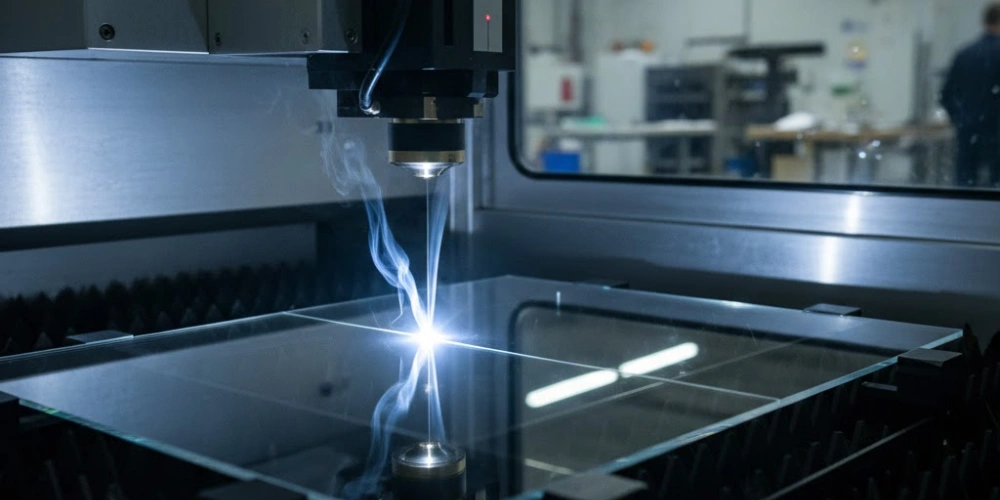
Методы лазерной резки деталей из кварца со сложными профилями
Там, где заканчивается токарная обработка, начинается лазерная — и для кварцевых деталей, требующих некруговых контуров, внутренних вырезов или тонких как пластинка поперечных сечений, лазерная резка CO₂ является единственным практичным способом обеспечения точности размеров без механического повреждения кромок.
Взаимодействие CO₂-лазера с кварцем и механизм термического удаления
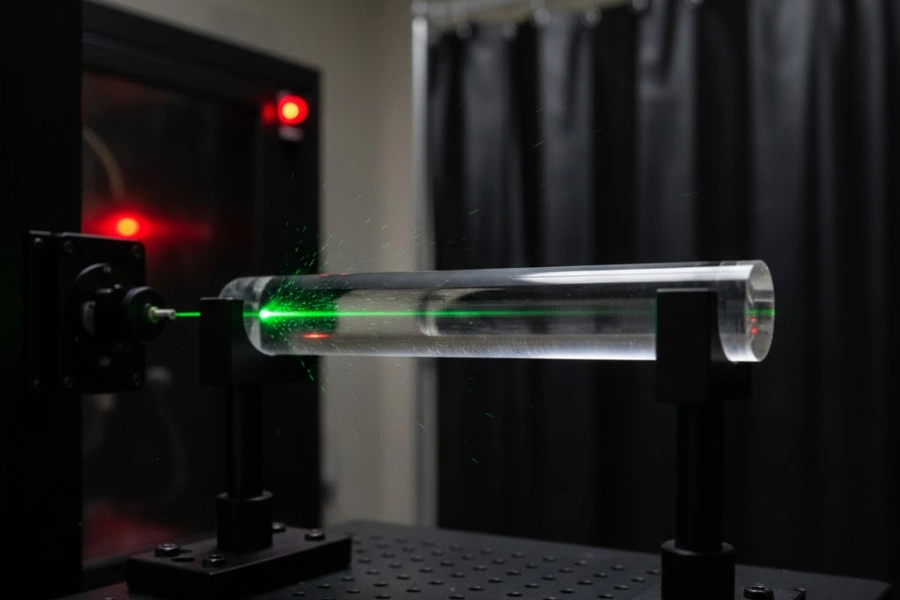
Взаимодействие луча CO₂-лазера (длина волны 10,6 мкм) с плавленым кварцем обусловлено сильным оптическим поглощением: кварц поглощает более 98% падающего излучения длиной волны 10,6 мкм в поверхностном слое толщиной примерно 10–15 мкм, преобразуя энергию фотонов в тепло с пространственной локализацией, которой не может сравниться геометрия ни одного механического инструмента.
В зоне поглощения интенсивность отдачи энергии при импульсном режиме работы достигает от 10⁶ до 10⁸ Вт/см², достаточной для того, чтобы за микросекунды повысить локальную температуру от температуры окружающей среды до температуры испарения SiO₂ (примерно 2 230 °C). Удаление материала происходит преимущественно за счет сублимации и выброса расплава, при этом образуется расплавленный и вновь затвердевший слой (переформованный слой2) толщиной, как правило, 2–15 мкм, остающийся на обрезанном крае в зависимости от параметров процесса. Этот механизм термического удаления устраняет механические контактные силы, вызывающие сколы по краям при резке кварца пилой или струей воды, где герцевские контактные напряжения на фронте резания инициируют хрупкое разрушение точно так же, как и при чрезмерно агрессивной токарной обработке. Механическая нарезка кварцевых пластин толщиной 1 мм Как правило, при этом глубина сколов по краям составляет 20–80 мкм, тогда как при оптимизированной лазерной резке CO₂ с той же геометрией глубина сколов по краям не превышает 5 мкм.
Зона термического влияния (HAZ), окружающая прорезанный канал, простирается на глубину 50–300 мкм вглубь материала в зависимости от энергии импульса и скорости сканирования, что приводит к возникновению остаточных термических напряжений, из-за которых для применений в области оптики или полупроводников, чувствительных к напряжениям, может потребоваться отжиг после резки.
Сравнение методов резки кварца по качеству кромки
| Метод резки | Глубина резания по кромке (мкм) | Ширина HAZ (мкм) | Геометрическая точность (мм) | Подходящий диапазон толщины (мм) |
|---|---|---|---|---|
| Разделка алмазной пилой | 20 – 80 | Нет (механические) | ± 0,05 | 0,3 – 50 |
| Гидроабразивная резка | 50–200 | Нет | ± 0,2 | 1 – 100 |
| Лазерная резка с использованием CO₂-лазера | 2 – 10 | 50–300 | ± 0,05 | 0,1 – 10 |
| Ультразвуковая обработка | 5 – 30 | Нет | ± 0,1 | 0,5 – 30 |
Параметры импульса и стратегии сканирования, влияющие на качество реза
Лазерная резка кварца — это не однопараметрический процесс: взаимодействие между энергией импульса, частотой повторения, скоростью сканирования и положением фокуса определяет, будет ли результатом чистый разрез с минимальной зоной термического влияния или же термически поврежденный край с микротрещинами, распространяющимися вглубь материала.
Пиковая импульсная мощность При импульсной резке кварца с помощью CO₂ мощность обычно колеблется от 200 Вт до 2 000 Вт в зависимости от толщины материала; недостаточная пиковая мощность приводит к неполному удалению материала за один импульс, что требует увеличения количества проходов и приводит к росту совокупного теплового воздействия, в то время как избыточная мощность вызывает выброс расплава за пределы прорези, что приводит к уширению переплавленного слоя. Частота повторения импульсов (PRF) взаимодействует со скоростью сканирования для регулирования перекрытия импульсов — доли области действия каждого импульса, которая перекрывается с предыдущим импульсом. Значения перекрытия импульсов: 60–80% обеспечивают гладкие, непрерывные кромки реза за счет того, что каждая точка на траектории резания получает несколько перекрывающихся импульсов энергии, которые усредняют пространственные колебания интенсивности. Скорость сканирования при резке кварца обычно составляет от 5 до 50 мм/с; при этом более тонкие материалы позволяют использовать более высокие скорости и снижают накопление тепла. Стратегии многопроходной резки — выполнение от 3 до 8 проходов на пониженной мощности вместо одного прохода на высокой мощности — позволяет распределить тепловую нагрузку во времени, обеспечивая частичное рассеивание тепла между проходами и снижая пиковую температуру в зоне термического влияния.
Фокальное положение относительно поверхности материала устанавливается на глубине от 0 до −30% толщины материала ниже поверхности, благодаря чему минимальный диаметр пучка (наибольшая интенсивность) приходится на внутреннюю часть материала, а не на верхнюю поверхность, что позволяет снизить повреждение поверхности при сохранении плотности энергии на переднем крае реза.
Параметры лазерной резки CO₂ для кварца различной толщины
| Толщина материала (мм) | Пиковая мощность (Вт) | PRF (Гц) | Скорость сканирования (мм/с) | Перекрытие импульсов (%) | Пропуска |
|---|---|---|---|---|---|
| 0.5 | 200 - 400 | 500–1 000 | 30–50 | 60 - 70 | 2–3 |
| 1.0 | 400–800 | 300–600 | 15–30 | 65–75 | 3–5 |
| 3.0 | 800 – 1 500 | 200 - 400 | 8 – 15 | 70–80 | 5–8 |
| 5.0 | 1 200 – 2 000 | 100–200 | 5–10 | 75–85 | 6 – 10 |
Применение кварца, вырезанного лазером, в полупроводниковой и оптической промышленности
Сфера применения деталей из кварца, изготовленных методом лазерной резки, тесно связана с отраслями, в которых геометрическая точность, целостность кромок и чистота материала являются одновременными требованиями — именно эти условия делают обработку CO₂-лазером предпочтительным или единственно возможным методом изготовления.
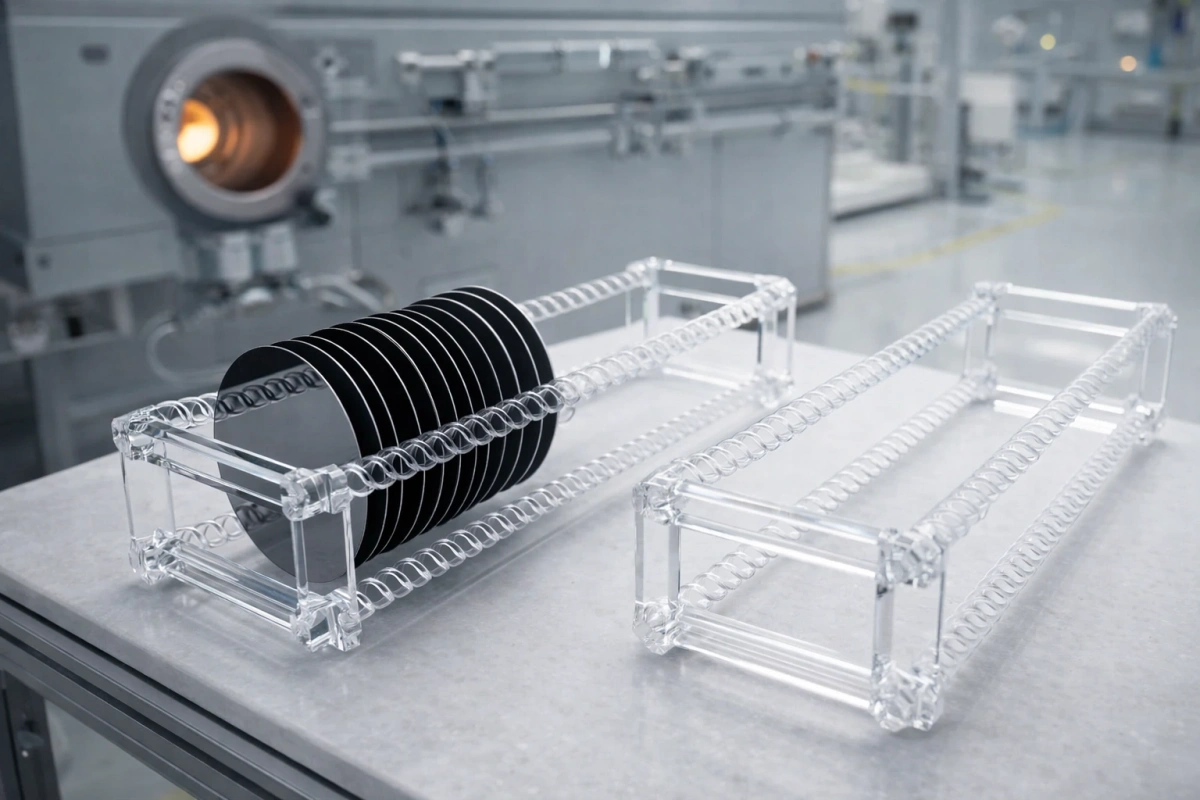
В области входной обработки полупроводниковых сигналов, держатели кварцевых пластин и вставки для лотков с прецизионными профилями пазов изготавливаются методом лазерной резки с допуском по шагу пазов ±0,05 мм и допуском по ширине пазов ±0,03 мм, что обеспечивает постоянное расстояние между пластинами в печах для диффузии и окисления. Качество кромок пазов напрямую влияет на образование твердых частиц: сколы на кромках кварца приводят к попаданию частиц SiO₂ в технологическую среду, что загрязняет поверхности пластин и снижает выход готовых устройств. Области применения фотолитографии требуются кварцевые подложки для ретикулов и рамки для пелликул, вырезанные с допуском на плоскостность менее 5 мкм по показателю TIR (общее показание индикатора) на площади 150 мм × 150 мм, с радиусами углов, контролируемыми с точностью до ±0,1 мм для обеспечения постоянного натяжения мембраны. В оптические приборы, Кварцевые окна нестандартной формы, предназначенные для спектроскопических датчиков, приборов мониторинга окружающей среды и мощных лазерных систем, должны обладать точностью контура в пределах ±0,05 мм и глубиной сколов на кромках менее 5 мкм, чтобы предотвратить концентрацию напряжений при термоциклировании.
Возможности компании TOQUARTZ в области лазерной резки охватывают кварцевые листы и пластины толщиной от 0,2 мм до 8 мм с точностью контура профиля ±0,05 мм, что позволяет обеспечивать как изготовление прототипов, так и серийное производство для применения в полупроводниковой, оптической и научно-измерительной отраслях.
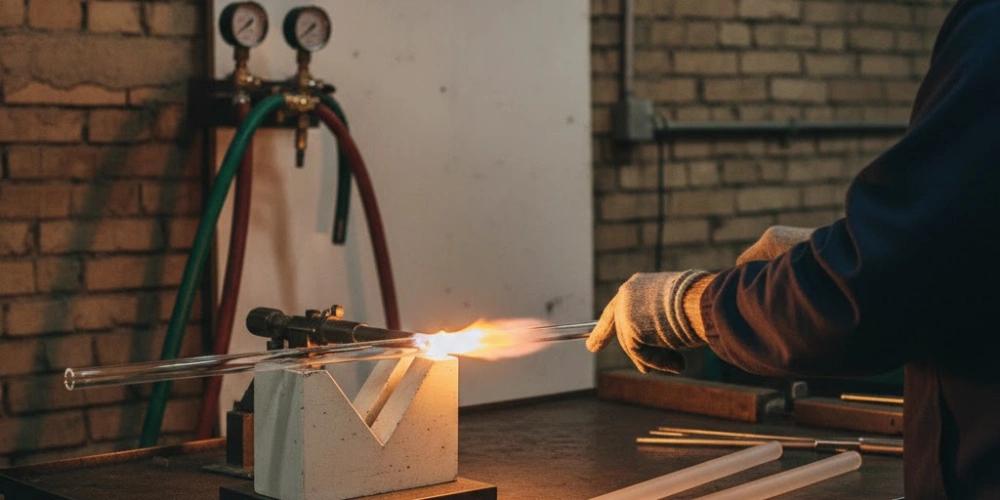
Сварка методом пламенной фузии при изготовлении сложных кварцевых узлов
Помимо отдельных обработанных деталей, многие функциональные кварцевые узлы требуют прочного соединения нескольких элементов в единую герметичную и термостабильную конструкцию — это требование может быть выполнено только с помощью сварки пламенным сплавлением, без использования несовместимых клеящих веществ или материалов для механического крепления.
Поведение кварца при размягчении в кислородно-водородном и газово-кислородном пламени
Технологичность плавленого кварца при обработке пламенем определяется зависимостью его вязкости от температуры, диапазон которой составляет семь порядков величины между комнатной температурой и рабочей температурой, используемой при работе с горелкой.
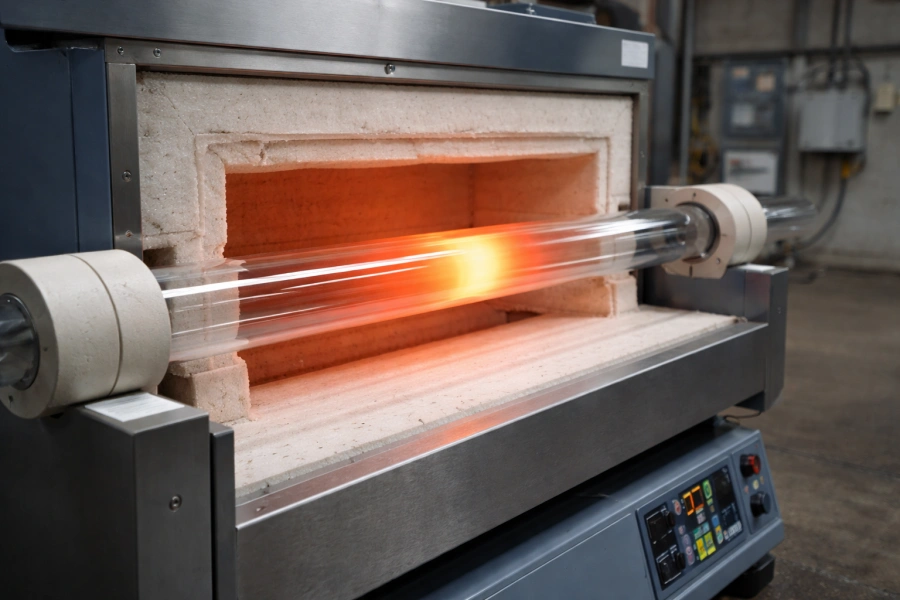
Температура размягчения плавленого кварца составляет примерно 1 665 °C (определяемая как температура, при которой вязкость достигает 10^7,6 Па·с), рабочая точка при температуре примерно 1 800–1 900 °C (вязкость 10^4 Па·с), и точка отжига — примерно 1 140 °C (вязкость 10^13 Па·с). Эти температуры значительно превышают температуры боросиликатного или натриево-кальциевого стекла, что требует температур пламени, которые можно надежно обеспечить только при сгорании кислородно-водородной смеси или кислорода с природным газом. Кислородно-водородные пламена (H₂ + O₂) достигают теоретической адиабатической температуры горения, равной примерно 2 830 °C, и предпочтительны для работы с тонкостенными трубами и выполнения прецизионных соединений, поскольку продуктами сгорания являются исключительно водяной пар, что исключает риск образования углеродных отложений на поверхности кварца. Пламя, образованное смесью природного газа и кислорода (CH₄ + O₂) достигают примерно 2 800 °C, но в качестве продуктов сгорания образуют CO₂ и водяной пар; при этом при правильно выбранном стехиометрическом соотношении нагар, как правило, не представляет проблемы, несколько более низкая плотность энергии делает эти пламена более подходящими для трубных узлов большего диаметра, где распределение тепла по более обширной площади имеет большее значение, чем точечное регулирование температуры.
Чрезвычайно низкий коэффициент теплового расширения плавленого кварца (0,55 × 10⁻⁶/°C, что примерно в 10 раз ниже, чем у боросиликатного стекла) приводит к тому, что температурные градиенты, вызванные локальным нагревом пламенем, создают значительные перепады внутренних напряжений — это свойство делает предварительный нагрев заготовок и контролируемое охлаждение после сварки обязательными этапами технологического процесса.
Сравнение типов пламени при сварке кварцевым горелкой
| Тип пламени | Максимальная температура (°C) | Продукты сгорания | Лучшее приложение | Углеродный риск |
|---|---|---|---|---|
| Окси-водород | ~2,830 | Только H₂O | Тонкостенные трубы, прецизионные соединения | Нет |
| Природный газ и кислород | ~2,800 | CO₂ + H₂O | Узлы большого диаметра | Низкий (скорректированная стехиометрия) |
| Пропан-кислород | ~2,526 | CO₂ + H₂O | Предварительный нагрев, отжиг | Низкий |
Варианты соединений и методы работы с горелкой при монтаже кварцевых трубок
Диапазон геометрических форм соединений, которые можно получить с помощью газопламенной сварки кварца, шире, чем обычно указывается в литературе, и для каждой конфигурации требуется своя последовательность манипуляций с горелкой, чтобы получить соединение без пустот и с концентрическим расположением.
Стыковые соединения Соединение труб одинакового диаметра представляет собой наиболее распространённую конфигурацию, которая выполняется путём одновременного нагрева обоих концов труб до рабочей вязкости при сохранении осевого совмещения в керамическом зажимном приспособлении с V-образной канавкой, после чего оба конца сдвигаются вместе под контролируемым давлением, достаточным для заполнения зазора соединения без деформации внутреннего диаметра трубы. В готовой зоне соединения наблюдается характерный гладкий наружный валик шириной 2–4 мм и соответствующий небольшой внутренний валик, который может потребовать развертки, если однородность внутреннего диаметра имеет критическое значение. Т-образные соединения и соединения с боковым входом — при которых трубка меньшего диаметра вплавляется в стенку трубки большего диаметра — требуют локального воздействия пламени на отверстие, предварительно просверленное или вырезанное лазером в стенке основной трубки, с последующей термической обработкой конца входной трубки для формирования воротника, который сплавляется с периметром отверстия. Для получения герметичного Т-образного соединения необходимо одновременно довести локальную температуру стенок обеих деталей до нужного значения, что требует от оператора опыта, накопленного в ходе сотен повторений. Герметичные торцевые заглушки и съемные уплотнения Используемые в производстве ламп, корпусов датчиков и вакуумных камер технологии предполагают сжатие конца трубки под действием пламени при одновременном создании небольшого положительного давления или вакуума внутри трубки для обеспечения требуемой формы окончательного уплотнения.
Концентричность в сварных стыковых соединениях обеспечивается за счет синхронного вращения обеих заготовок на этапе плавления — типичные скорости вращения составляют 20–60 об/мин — что гарантирует равномерное распределение зоны размягченного стекла по всей окружности, а не ее провисание в одну сторону под действием силы тяжести.
Возможности различных типов соединений и геометрические характеристики при сварке кварца в пламени
| Тип соединения | Типовое применение | Допуск на выравнивание | Равномерность диаметра | Достижимая скорость утечки |
|---|---|---|---|---|
| Стыковое соединение | Удлинитель трубки, реакционная камера | ± 0,3 мм в осевом направлении | Отклонение внутреннего диаметра ± 0,5 мм | < 10⁻⁹ мбар·л/с |
| Т-образный соединитель | Отверстия для подачи газа, патрубки для отбора проб | ± 0,5 мм | Н/Д | < 10⁻⁸ мбар·л/с |
| Уплотнение фланца | Вакуумные фланцы, технологические соединения | ± 0,2 мм | Н/Д | < 10⁻⁹ мбар·л/с |
| Заглушка | Корпуса ламп, корпуса датчиков | ± 0,2 мм | Н/Д | < 10⁻¹⁰ мбар·л/с |
Отжиг после сварки для снятия термических напряжений в соединениях из плавленого кварца
В процессе сварки, при котором соединяются два куска кварца, в зоне соединения неизбежно возникает распределение термических напряжений — и, учитывая предельно малый коэффициент теплового расширения кварца, даже незначительные температурные градиенты при охлаждении приводят к образованию полей напряжений, способных вызвать отложенный разрушение через несколько часов или дней после изготовления.
Физическая природа напряжений, вызванных сваркой заключается в перепаде температур между зоной плавления (при рабочей температуре, ~1 800 °C) и прилегающим объёмным материалом (при температуре окружающей среды или температуре предварительного нагрева, как правило, 200–400 °C после предварительного нагрева). По мере охлаждения зоны плавления через точку отжига (примерно 1 140 °C) и в диапазон температур хрупкости (ниже ~800 °C) вязкая релаксация прекращается, и любой оставшийся температурный градиент закрепляется в стекле в виде постоянного упругого напряжения. Без отжига Уровень остаточного напряжения в зоне соединения может достигать 5–15 МПа — что может привести к самопроизвольному разрушению деталей, подвергающихся впоследствии термоциклированию, нагрузкам давления или даже механическим воздействиям. Отжиг после сварки начинается с перемещения готовой сборки в отжиговую печь, предварительно нагретую до 1 050–1 100 °C, в течение 60 секунд после завершения сварки, что предотвращает прохождение соединения через диапазон хрупких температур до того, как сможет произойти снятие напряжений. Выдержка при температуре 1 050 °C в течение 20–60 минут (продолжительность, пропорциональная толщине стенки — примерно 10 минут на каждый миллиметр толщины стенки) позволяет за счет вязкой релаксации снизить остаточное напряжение до значения ниже 0,5 МПа. Затем осуществляется контролируемое охлаждение со скоростью 2–5 °C/мин в диапазоне отжига (от 1 140 °C до 800 °C) и со скоростью 10–20 °C/мин при температуре ниже 800 °C, при этом общий цикл охлаждения от температуры отжига до комнатной температуры для деталей типовых размеров занимает от 4 до 12 часов.
Эффективность отжига проверяется следующим образом: поляриметрический контроль при использовании скрещенных поляризаторов с натриевым источником света или монохроматическим светодиодом: остаточное напряжение двулучепреломление3 проявляется в виде цветовых ореолов или колебаний интенсивности в зоне соединения, при этом детали, соответствующие техническим требованиям, при данном методе контроля не демонстрируют видимого двулучепреломления при уровне чувствительности, соответствующем задержке оптического пути примерно 5 нм/см. Компания TOQUARTZ проводит поляриметрический контроль после сварки на изделиях 100%, изготовленных методом газопламенной сварки, перед окончательной обработкой и упаковкой.
Параметры отжига после сварки для узлов из плавленого кварца
| Параметр | Технические характеристики | Примечания |
|---|---|---|
| Температура отжига (°C) | 1 050 – 1 100 | Приближение к температуре выше точки отжига, равной 1 140 °C |
| Продолжительность вымачивания (мин/мм толщины стенки) | 10 | Скалировано до максимальной толщины стенки |
| Скорость охлаждения: 1 140–800 °C (°C/мин) | 2 – 5 | Критический диапазон снятия напряжений |
| Скорость охлаждения: ниже 800 °C (°C/мин) | 10–20 | Диапазон хрупкости, допускается более быстрое охлаждение |
| Целевое значение остаточного напряжения (МПа) | < 0.5 | Проверено с помощью поляриметрического контроля двулучепреломления |
| Предельное значение двулучепреломления (нм/см) | < 5 | При контроле с использованием скрещенных поляризаторов |
Контроль размеров и оптический контроль на всех этапах производства кварцевых деталей
Контроль качества при производстве кварцевых компонентов — это не единичная операция, выполняемая в конце производственной линии, а последовательность этапов проверки, интегрированных в производственный процесс, причем каждый этап обеспечивает обратную связь, которая либо подтверждает стабильность процесса, либо инициирует корректировку параметров до того, как некондиционный материал поступит на последующие этапы.
- Контроль с помощью координатно-измерительной машины (КИМ) обеспечивает трехмерную проверку размеров сложных геометрических форм. Контактные щупы с рубиновым шариком диаметром 1–3 мм измеряют критические размеры — диаметры отверстий, перпендикулярность торцевой поверхности фланца, высоту ступеней — с погрешностью ±0,003 мм в условиях калибровки в соответствии с ISO 10360-2. Для цилиндрических элементов измерение округлости на КИМ характеризует неокруглость (OOA) и цилиндричность, которые влияют как на герметичность, так и на посадку при сборке. Пневматический контроль — пневматический измерение размеров — позволяет измерять диаметры отверстий с производственной скоростью с повторяемостью ±0,001 мм, что подходит для измерения на линии во время токарной обработки с ЧПУ.
Измерение текстуры и плоскостности поверхности использует бесконтактную интерферометрию в белом свете (WLI) для поверхностей оптического качества, обеспечивая получение карт шероховатости Ra, Rq и P-V на измеряемых участках размером от 0,1 мм × 0,1 мм до 10 мм × 10 мм с вертикальным разрешением менее 0,1 нм. Контактная щуповая профилометрия служит эталоном калибровки для измерений WLI и предоставляет данные о текстуре поверхностей неоптического назначения, где применение интерферометрии невозможно из-за рассеяния на поверхности.
-
Измерение оптической пропускаемости С помощью УФ-Вид-НИР-спектрофотометрии определяются характеристики спектральной пропускаемости оптических кварцевых компонентов в диапазоне от 160 нм до 2 500 нм с погрешностью измерения не более ±0,31 TP3T пропускания. Интерферометрия Физо позволяет измерить погрешность проходящего волнового фронта (TWE) на оптических окнах и линзах, количественно оценивая разность оптических путей, вызванную изменчением толщины и неоднородностью показателя преломления — это критический параметр для приложений, в которых качество волнового фронта влияет на характеристики системы визуализации. Критерии приемки высокоточных оптических окон, как правило, требуют, чтобы TWE была ниже λ/10 (PV) при 632,8 нм.
-
Контроль внутренних дефектов основывается на измерение поляриметрического двойного лучепреломления для обнаружения остаточных напряжений, возникших в результате ненадлежащего отжига, с использованием поляриметра, откалиброванного на определение уровней задержки до 2 нм/см. Ультразвуковой контроль методом C-сканирования позволяет выявлять подповерхностные трещины, пустоты и включения в деталях с толстыми стенками путем картирования амплитуды отражения сфокусированного ультразвукового луча (обычно 10–50 МГц), сканирующего поверхность детали в конфигурации с водной средой. Проверка чистоты — особенно важная для компонентов полупроводникового качества — включает подсчёт твердых частиц в жидкости для окончательного ополаскивания с целью количественной оценки загрязнения поверхности частицами, а также измерение общего органического углерода (TOC) в ополаскивающей воде для подтверждения отсутствия углеводородных остатков на поверхности.
TOQUARTZ — изготовление на заказ от технического чертежа до поставки
Превращение технических требований к размерам в готовую кварцевую деталь предполагает выполнение ряда скоординированных этапов, на которых обеспечивается сбалансированность оценки технической осуществимости, планирования технологического процесса и проверки качества до того, как деталь поступит к заказчику.
- Подача чертежей поддерживает форматы файлов DWG, PDF и STEP. После отправки заявки проводится техническая экспертиза, в ходе которой проверяются характеристики материалов, геометрические допуски, требования к качеству поверхности, а также любые условия, специфичные для конкретного применения, такие как требования к обращению в условиях чистой комнаты, требования к пропусканию ультрафиолета или совместимость с высоким вакуумом. Техническая экспертиза завершается в течение от 3 до 5 рабочих дней, в ходе которого инженеры компании TOQUARTZ оценивают технологичность изделия с учетом текущих возможностей производственного процесса и предоставляют подробное коммерческое предложение с указанием допусков для каждой детали.
Изготовление прототипов и образцов после утверждения чертежей. Для деталей, изготовление которых входит в рамки стандартной технологической способности — точеные трубы, плоские притертые диски, профили, вырезанные лазером — сроки изготовления прототипов составляют от От 7 до 15 рабочих дней. Сборки, предполагающие сварку пламенным плавлением с последующим отжигом, или детали, требующие полировки до оптического качества с интерферометрической проверкой, охватывают от 15 до 20 рабочих дней с учетом многоэтапной последовательности технологических операций и контрольных точек.
- Сроки выполнения производственных партий зависит от объема заказа и сложности деталей. Изготовление стандартных токарных или лазерно вырезанных деталей партиями от 10 до 100 штук, как правило, занимает от 15 до 25 рабочих дней. Сложные узлы или детали с оптической обработкой в эквивалентных количествах требуют от 25 до 35 рабочих дней, с учетом циклов отжига, последовательностей полировки и полной документации по проверке.
Документация по выпуску продукции прилагается к каждой партии и включает сертификат анализа (COA), подтверждающий марку и чистоту материала, а также возможность отслеживания партии; отчет о проверке размеров с измеренными значениями и статусом приемки по всем указанным допускам; а также сертификат на материал, в котором приводятся ссылки на данные ICP-MS или FTIR поставщика сырья в отношении партии готовых компонентов. Компоненты, предназначенные для использования в полупроводниковых или чистых помещениях, упаковываются в двойной пакет из полиэтиленовой пленки, помещенный в жесткие коробки с антистатической пенопластовой подкладкой; для оптических поверхностей, чувствительных к влажности, в упаковку вкладываются пакеты с осушителем.
Заключение
Производство кварцевых деталей включает в себя последовательность технически взаимосвязанных этапов — от проверки чистоты сырья до токарной обработки с ЧПУ, шлифования и полировки поверхностей, лазерной профильной резки и сварки плавлением в среде газа — каждый из которых определяет исходные условия для следующего этапа. Ни один из этапов процесса не работает автономно: чистота материала ограничивает достижимые оптические характеристики, параметры механической обработки определяют глубину повреждения поверхности, которую необходимо устранить при последующей полировке, а тепловой режим сварки определяет протокол отжига, необходимый для получения соединений без внутренних напряжений. Понимание этой взаимозависимости является основой для правильного определения технических характеристик кварцевых компонентов и оценки того, соответствуют ли технологические возможности партнера-производителя фактическим требованиям конкретного применения. Производственный процесс компании TOQUARTZ предусматривает контроль каждого из этих этапов с помощью задокументированных параметров, межпроцессного контроля и отслеживаемых записей о качестве, что обеспечивает техническую ответственность, требуемую для применений, в которых используется прецизионный кварц.
ЧАСТО ЗАДАВАЕМЫЕ ВОПРОСЫ
В чем заключается разница между плавленым кремнеземом и кварцевым стеклом в контексте производства?
В промышленности и производстве термин «плавленый кремнезем» обычно обозначает аморфный SiO₂, получаемый путем плавления природного кварцевого сырья, тогда как «синтетическое кварцевое стекло» — это SiO₂, получаемый методом химического осаждения из паровой фазы из кремнийсодержащих газов-прекурсоров. Синтетический кварц обладает более высокой чистотой (класс 6N, более 99,9999% SiO₂) и превосходной оптической однородностью по сравнению с плавленым кварцем, что делает его материалом выбора для оптических применений в области глубокого УФ-диапазона. Оба материала используются при производстве кварцевых деталей, причем выбор определяется требованиями к чистоте и характеристиками спектральной пропускаемости.
Какую шероховатость поверхности можно обеспечить на полированных оптических элементах из кварца?
При оптической полировке кварца с использованием суспензии оксида церия на полировальных подушках из полиуретана в контролируемых технологических условиях обычно достигаются значения шероховатости поверхности Ra ниже 0,5 нм. Оптические компоненты лазерного класса, отполированные с использованием технологий CMP, достигают значений Ra ниже 0,3 нм с плоскостностью «пик-долина» в пределах λ/20 при 632,8 нм. Качество поверхности дополнительно оценивается с использованием стандарта MIL-PRF-13830B «Scratch-Dig», при этом для прецизионной лазерной оптики обычно указываются значения 20–10, а для обычных оптических окон — 80–50.
Почему после сварки кварцевых деталей методом газопламенной сварки необходимо проводить отжиг?
Коэффициент теплового расширения плавленого кварца составляет всего 0,55 × 10⁻⁶/°C — примерно в десять раз меньше, чем у боросиликатного стекла. Во время пламенной сварки температура в зоне соединения достигает значений выше 1 800 °C, в то время как температура прилегающего материала остается ниже, что приводит к образованию резкого температурного градиента. По мере охлаждения соединения ниже температуры отжига (примерно 1 140 °C) вязкая релаксация прекращается, и остаточный перепад температур закрепляется в стекле в виде упругого напряжения, которое без отжига может достигать 5–15 МПа — этого достаточно для возникновения отложенного растрескивания. Отжиг после сварки при температуре 1 050–1 100 °C в течение 10 минут на каждый миллиметр толщины стенки снижает остаточное напряжение до значения ниже 0,5 МПа.
Какие форматы файлов поддерживает компания TOQUARTZ для изготовления кварцевых компонентов по индивидуальному заказу?
Компания TOQUARTZ принимает технические чертежи и спецификации компонентов в форматах DWG, PDF и STEP для запросов на изготовление продукции по индивидуальному заказу. После подачи запроса в течение 3–5 рабочих дней проводится оценка технической осуществимости, в ходе которой анализируются выбор марки материала, достижимость геометрических допусков и требования к качеству поверхности с учетом текущих технологических возможностей.
Ссылки:
-
Обработка в пластическом режиме — это условия резания, при которых хрупкие материалы, такие как кварц, подвергаются пластической деформации, а не разрушению на границе раздела «инструмент-заготовка».↩
-
Слой переплавления представляет собой тонкую зону повторно затвердевшего расплавленного материала, образующуюся на кромках, полученных лазерной резкой, а его толщина и степень кристалличности напрямую влияют на механическую прочность и оптическое качество поверхности разреза.↩
-
Двойное лучепреломление — это оптическое свойство, при котором материал демонстрирует разные показатели преломления вдоль разных осей; в кварцевых деталях оно служит измеримым показателем остаточного внутреннего напряжения, сохраняющегося после сварки и отжига.↩