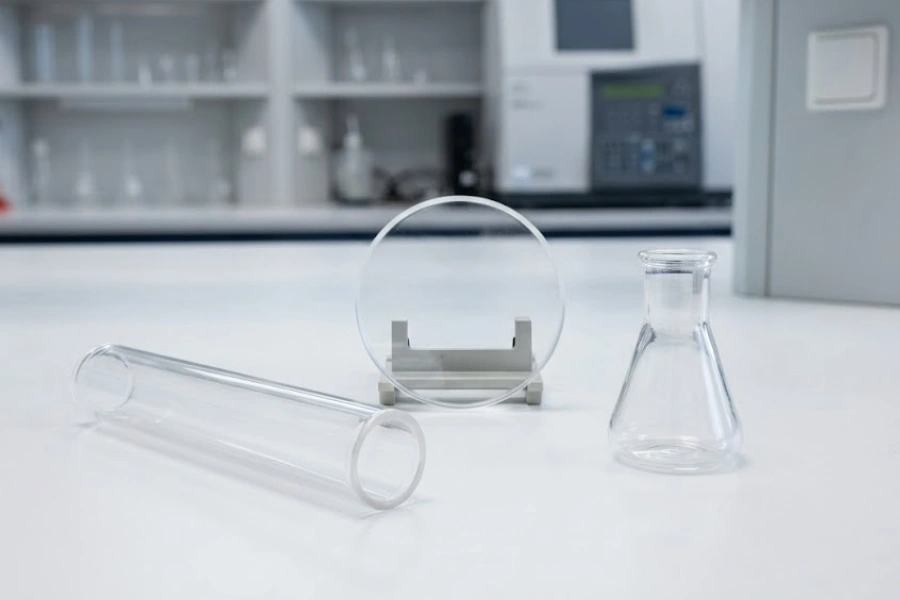
Choosing the wrong tube material causes equipment failure, contaminated results, and costly downtime. Both materials look identical to the untrained eye, yet their performance boundaries diverge dramatically under real working conditions.
This article delivers a complete, data-driven comparison of fused quartz tubes and borosilicate glass tubes across thermal, optical, chemical, and mechanical dimensions. Every major performance parameter is quantified, every application boundary is defined, and a structured selection framework is provided at the close.
Material selection in high-stakes laboratory and industrial environments demands more than surface-level familiarity. Understanding the precise physical and chemical differences between these two tube materials is the foundational step toward making an informed, application-appropriate decision.
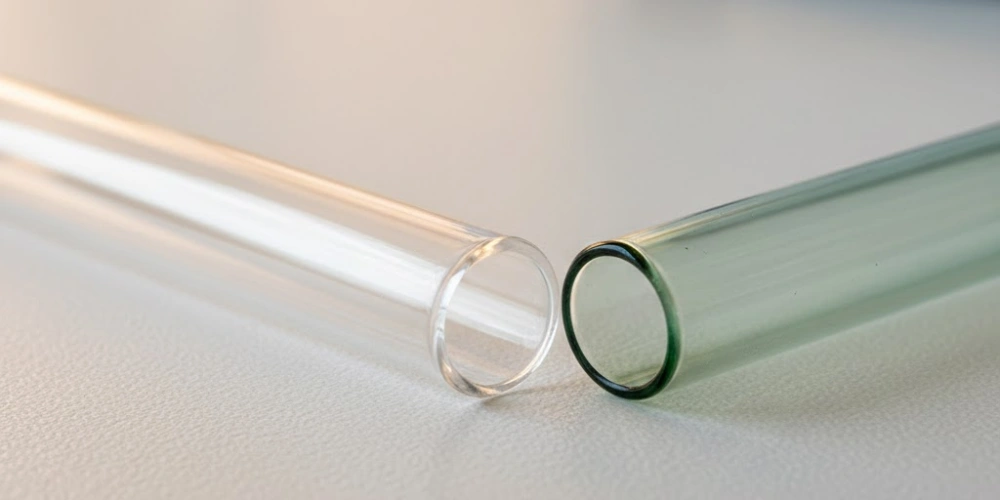
Two Distinct Materials with Fundamentally Different Compositions
Before any performance parameter can be meaningfully compared, the compositional identity of each material must be established with precision, because the atomic structure of a glass determines every downstream property it exhibits.
Fused quartz is produced by melting naturally occurring high-purity quartz crystal or synthetic silicon tetrachloride at temperatures exceeding 1,700 °C, yielding a material composed of greater than 99.9% silicon dioxide (SiO₂) in an amorphous, non-crystalline state. The absence of network modifiers — elements such as boron, sodium, or aluminum — results in an exceptionally tight, homogeneous silica network. This structural purity is the origin of its extreme thermal stability, UV transparency, and chemical inertness. Depending on the raw material source and manufacturing method, fused quartz is further classified into four main types: Type I (electrically fused natural quartz), Type II (flame-fused natural quartz), Type III (synthetic silica from vapor-phase hydrolysis), and Type IV (synthetic silica from oxidation of SiCl₄). Each type carries slightly different hydroxyl (OH) content, which directly influences infrared absorption and UV performance.
Borosilicate glass, by contrast, is a formulated multi-component glass. Its standard composition by weight percentage is approximately 70–80% SiO₂, 7–13% B₂O₃, 4–8% Na₂O or K₂O, and 2–7% Al₂O₃. The boron trioxide network former partially replaces silicon within the glass network, reducing the overall network rigidity compared to pure silica. Sodium and potassium oxides act as network modifiers, introducing ionic mobility into the structure. The most widely recognized borosilicate formulation is Corning's Borofloat 33 and the legacy Pyrex 7740, both sharing a thermal expansion coefficient near 3.3 × 10⁻⁶/°C. The multi-component nature of borosilicate glass makes it significantly more economical to manufacture but simultaneously imposes fundamental performance ceilings that pure silica does not share.
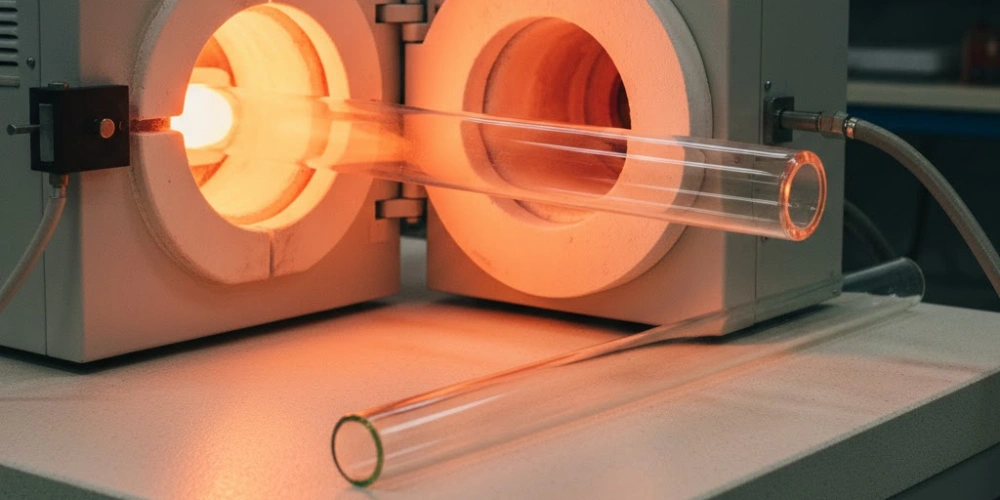
Thermal Performance Boundaries of Fused Quartz Tubes and Borosilicate Glass Tubes
Among all differentiating properties, thermal behavior stands as the most operationally consequential, as the temperature envelope of a tube material directly dictates which processes it can serve without risk of structural failure.
Thermal performance encompasses not only the maximum temperature ceiling but also the rate at which a material responds to temperature change, the point at which it begins to deform under its own weight, and the conditions under which permanent internal stress is introduced. Fused quartz tubes and borosilicate glass tubes diverge sharply on every one of these sub-parameters, making a detailed thermal analysis indispensable for any serious material selection exercise.
Maximum Operating Temperatures and Their Practical Implications
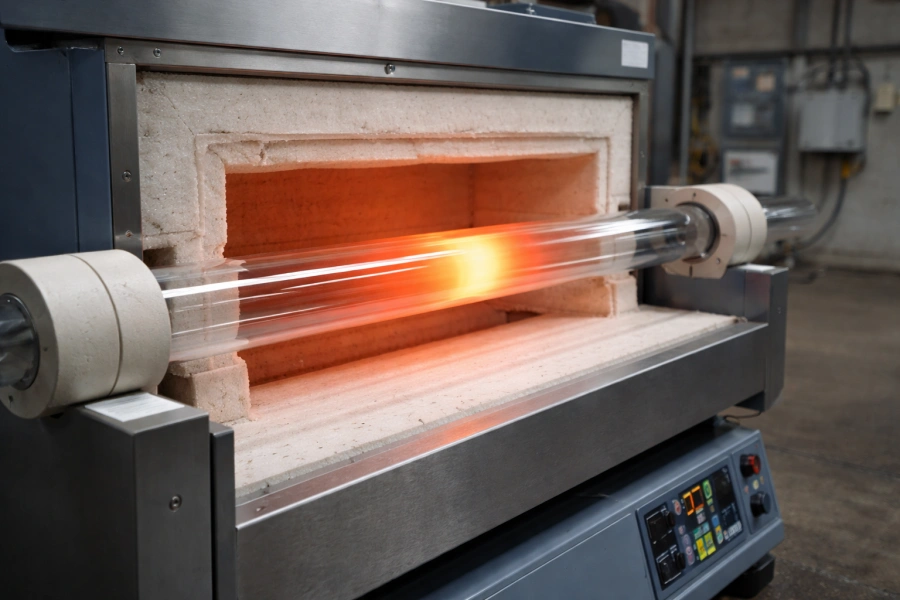
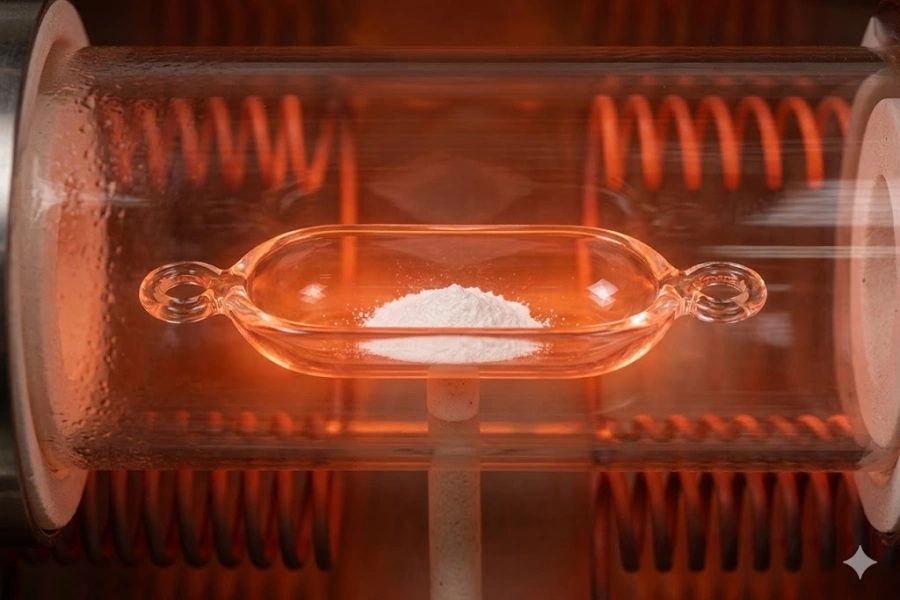
Fused quartz tubes carry a continuous service temperature of approximately 1,050–1,100 °C, with short-term exposure tolerance reaching up to 1,250 °C before viscous flow begins to compromise dimensional integrity. This ceiling is a direct consequence of the high softening point of pure SiO₂, which occurs at approximately 1,665 °C. In practice, semiconductor diffusion furnaces, high-temperature annealing systems, and crystal growth apparatus routinely operate fused quartz tubes at sustained temperatures between 900 °C and 1,100 °C without measurable deformation.
Borosilicate glass tubes, by contrast, exhibit a practical continuous service limit of 450–500 °C. The introduction of network-modifying oxides lowers the softening point to approximately 820 °C, and the annealing point — the temperature at which internal stress is relieved through atomic rearrangement — sits at roughly 560 °C. Operating borosilicate tubes above 500 °C in sustained applications produces slow viscous deformation, even if catastrophic failure does not occur immediately. Exceeding 550 °C in a loaded borosilicate tube configuration risks permanent sagging within hours of exposure.
The practical gap between 500 °C and 1,100 °C represents not merely a numerical difference but an entire category of industrial processes. Tube furnace CVD processes, thermal oxidation of silicon wafers, and high-temperature gas reaction studies all reside in this excluded zone for borosilicate, making fused quartz tubes the only viable candidate in these contexts.
Thermal Shock Resistance as a Structural Differentiator
Thermal shock resistance is quantified through the coefficient of thermal expansion (CTE), which measures the fractional dimensional change per unit temperature increase. Fused quartz exhibits an exceptionally low CTE of approximately 0.55 × 10⁻⁶/°C, one of the lowest values recorded for any inorganic glass or ceramic material. This near-zero expansion means that even when subjected to sudden temperature transitions — such as removing a tube from a 1,000 °C furnace and exposing it to ambient air — the differential thermal strain introduced across the tube wall remains far below the fracture threshold.
Borosilicate glass, while significantly more thermal-shock resistant than soda-lime glass (CTE ≈ 9 × 10⁻⁶/°C), carries a CTE of approximately 3.3 × 10⁻⁶/°C — roughly six times higher than fused quartz. Laboratory protocols involving direct flame contact, rapid autoclave cycling, or sudden immersion in coolant fluids introduce thermal gradients that borosilicate can tolerate within modest limits. However, when temperature differentials across the tube wall exceed approximately 160 °C per centimeter of wall thickness, the tensile stress generated at the cooler surface approaches the material's modulus of rupture, creating fracture risk. Fused quartz, given its CTE, can withstand temperature differentials exceeding 1,000 °C without fracture, a performance envelope that borosilicate cannot approach.
This structural difference manifests repeatedly in field conditions. Quartz tube replacement cycles in high-frequency thermal cycling furnaces are measured in years, whereas borosilicate equivalents in comparable — though lower temperature — cycling environments require replacement on a monthly or quarterly basis.
Softening Point, Annealing Point and Strain Point Data
Three critical thermal landmarks define the safe operational envelope of any glass material: the strain point, the annealing point, and the softening point. Below the strain point, a glass can be cooled at any rate without introducing permanent stress. Between the strain point and the annealing point, stress relief occurs over time. Above the softening point, the material flows under its own weight.
For fused quartz, the strain point is approximately 1,070 °C, the annealing point approximately 1,140 °C, and the softening point approximately 1,665 °C. These values confirm that fused quartz retains full dimensional rigidity well above the operating temperature of most industrial high-temperature processes. For borosilicate glass (Type Borofloat 33 / Pyrex 7740), the strain point is approximately 515 °C, the annealing point approximately 565 °C, and the softening point approximately 820 °C.
The 555 °C gap between the softening points of these two materials is not a marginal engineering tolerance — it is a categorical boundary that separates low-to-medium temperature applications from high-temperature industrial processes.
Key Thermal Property Data
| Тепловые свойства | Плавленый кварц | Боросиликатное стекло |
|---|---|---|
| Max Continuous Service Temp (°C) | 1,050-1,100 | 450-500 |
| Short-Term Peak Tolerance (°C) | ~1,250 | ~550 |
| Температура размягчения (°C) | ~1,665 | ~820 |
| Температура отжига (°C) | ~1,140 | ~565 |
| Точка деформации (°C) | ~1,070 | ~515 |
| CTE (×10-⁶/°C) | ~0.55 | ~3.3 |
| Max Thermal Shock ΔT (°C) | >1,000 | ~160 |
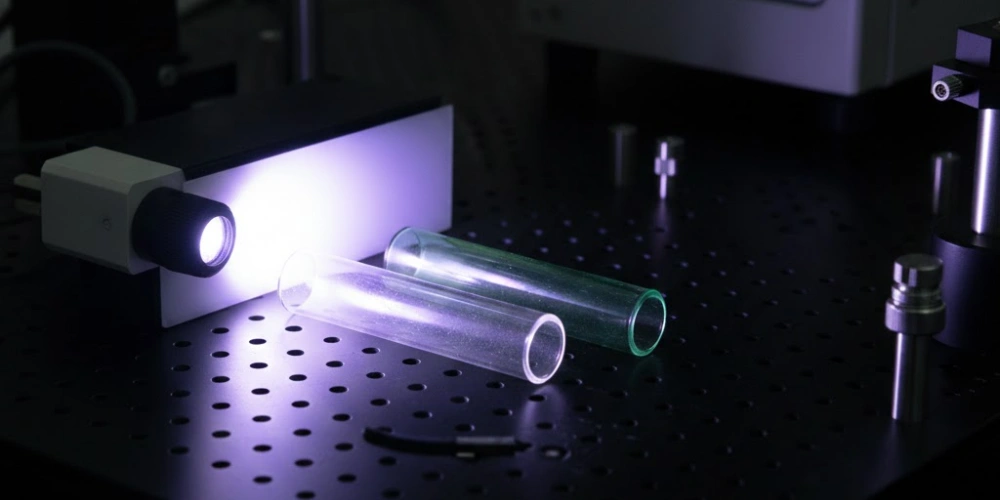
Optical Transmission Profiles Across Fused Quartz Tubes and Borosilicate Variants
Optical performance is rarely the first property mentioned in general materials specifications, yet for photochemical, spectroscopic, and UV-processing applications, it frequently becomes the sole decisive criterion.
The transmission spectrum of a tube material determines whether ultraviolet radiation, visible light, or near-infrared energy can pass through the tube wall with sufficient intensity to serve the intended function. Fused quartz tubes and borosilicate variants occupy fundamentally different portions of the electromagnetic spectrum in terms of practical transmission, and understanding this distinction at the quantitative level is essential for any application involving light-matter interaction.
UV Transmission Windows and Wavelength Cutoff Values
Fused quartz tubes transmit ultraviolet radiation from approximately 150 nm (vacuum UV) to well beyond 4,000 nm in the infrared, with transmission values exceeding 90% across much of this range in standard wall thicknesses. Synthetic fused silica (Type III and IV) achieves even deeper UV penetration, with practical transmission down to approximately 160–170 nm. At 200 nm — a wavelength critical for deep UV sterilization, photolithography alignment systems, and ozone generation lamps — fused quartz transmits approximately 85–90% of incident radiation through a 1 mm wall.
Borosilicate glass presents a fundamentally different spectral profile. The UV cutoff wavelength for standard borosilicate glass occurs at approximately 300–320 nm, meaning that radiation below this threshold is almost entirely absorbed by the glass matrix rather than transmitted. This absorption is caused by the iron oxide impurities inherent in natural raw materials and by the fundamental electronic absorption edge of the borosilicate network itself. At 254 nm — the germicidal UV wavelength used in sterilization and photocatalysis — borosilicate glass transmits less than 1% of incident UV energy through a 1 mm wall, rendering it functionally opaque at this wavelength.
This 150 nm cutoff gap between the two materials defines an unbridgeable performance divide for UV-dependent applications. No surface treatment or wall thickness reduction can extend borosilicate's UV transmission below its fundamental absorption edge.
Infrared and Visible Range Transmission Comparison
In the visible spectrum (400–700 nm), both materials perform comparably, with transmission values in the 90–92% range for typical wall thicknesses of 1–2 mm, excluding surface reflection losses. The slight greenish tint visually observable at the cut ends of borosilicate tubes corresponds to minor absorption bands introduced by iron and other trace oxides, but this has negligible practical impact on most visible-light applications.
In the near-infrared (NIR) range from 700 nm to approximately 2,500 nm, both materials again transmit comparably, with fused quartz maintaining high transmission up to approximately 3,500–4,000 nm before the strong Si–O stretching absorption bands cause significant attenuation. Borosilicate glass exhibits similar NIR transmission up to approximately 2,500 nm, beyond which B–O absorption bands introduce additional losses not present in pure fused silica.
The mid-infrared range (2,500–5,000 nm) marks a significant divergence. Fused quartz, particularly low-OH synthetic variants (Type IV), maintains measurable transmission between 2,700 nm and 3,500 nm with OH absorption bands suppressed, whereas borosilicate glass becomes effectively opaque above 2,500 nm. For thermophotovoltaic systems, infrared gas sensing, or mid-IR spectroscopy, fused quartz is the only viable tube material of the two.
Fluorescence and Autofluorescence Behavior Under Illumination
Autofluorescence1 — the emission of light by a material when excited by radiation — is a critical consideration in fluorescence microscopy, Raman spectroscopy, and any application in which background signal interference must be minimized. Fused quartz exhibits extremely low intrinsic fluorescence, particularly when manufactured from high-purity synthetic silica feedstock. Type III and Type IV fused silica tubes show autofluorescence levels orders of magnitude lower than silicate-based glass compositions when excited at wavelengths between 250 nm and 500 nm.
Borosilicate glass, owing to its multi-component formulation, contains trace quantities of rare earth elements, transition metals, and organic contaminants introduced during raw material processing. These impurities generate measurable background fluorescence when excited by UV or near-UV radiation. At excitation wavelengths of 365 nm, standard borosilicate glass emits fluorescence in the blue-green range with intensities that can mask weak sample signals by factors of 10–100× in sensitive spectroscopic applications.
For Raman spectroscopy flow cells, single-molecule fluorescence assays, and laser-coupled fiber optic systems, this autofluorescence difference alone makes fused quartz the technically mandated choice, regardless of any other parameter comparison.
Optical Transmission Comparison
| Оптические свойства | Плавленый кварц | Боросиликатное стекло |
|---|---|---|
| Длина волны УФ-отсечки (нм) | ~150 (synthetic) | ~300–320 |
| Пропускание при длине волны 200 нм (%) | ~85–90 | <5 |
| Пропускание при 254 нм (%) | ~90 | <1 |
| Передача в видимом диапазоне (%) | ~90–92 | ~90–92 |
| NIR Transmission Upper Limit (nm) | ~3,500–4,000 | ~2,500 |
| Autofluorescence (365 nm excitation) | Очень низкий | Умеренно-высокий |
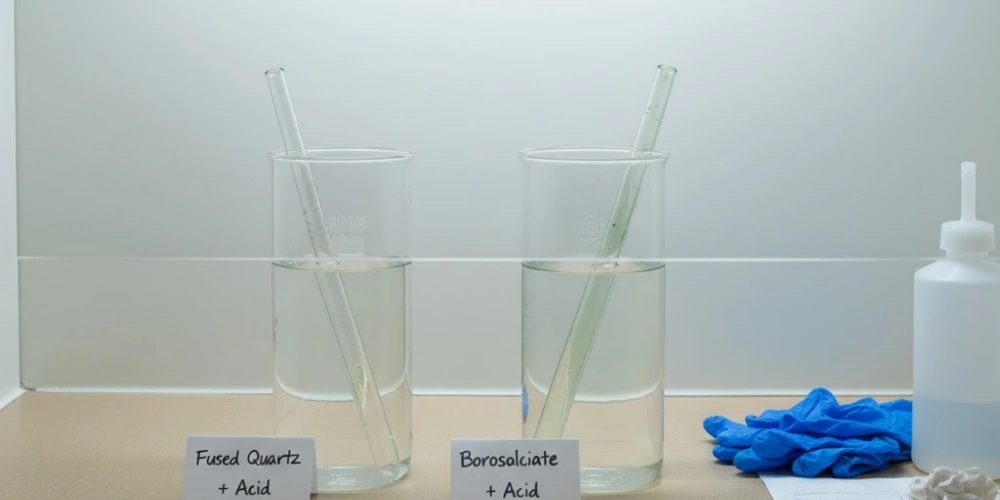
Chemical Durability and Resistance Profiles
Chemical compatibility determines whether a tube material will maintain its structural and surface integrity over time when exposed to the reactive environments present in laboratory reactors, industrial process lines, and high-purity fluid handling systems.
The long-term chemical durability of a tube material is as important as its short-term corrosion resistance. Surface leaching, ion migration, and progressive network dissolution can compromise both the tube itself and the purity of the media it contacts. Fused quartz and borosilicate glass respond to chemical environments through fundamentally different mechanisms, and understanding both the immediate and cumulative effects of chemical exposure is essential for accurate service life prediction.
Resistance to Acids, Bases and Organic Solvents
Fused quartz demonstrates outstanding resistance to virtually all mineral acids, including hydrochloric acid (HCl), sulfuric acid (H₂SO₄), nitric acid (HNO₃), and phosphoric acid (H₃PO₄) across the full concentration range and at elevated temperatures. The single critical exception is hydrofluoric acid (HF) and fluorine-containing compounds, which react directly with the Si–O–Si network, progressively etching the surface at rates that vary with HF concentration and temperature. At 5% HF concentration and 25 °C, fused quartz dissolves at approximately 0.04 µm/min, a rate that accelerates significantly above 50 °C.
Borosilicate glass is similarly resistant to most mineral acids under moderate conditions, but its multi-component composition introduces additional chemical attack pathways. Hydrofluoric acid attacks borosilicate at rates comparable to or faster than those observed for fused quartz, and hot concentrated alkali solutions — particularly NaOH and KOH above 70 °C — leach boron and alkali ions from the glass network at substantially higher rates than observed with fused quartz. Dissolution rates of borosilicate in 10% NaOH at 95 °C can reach 0.5–2 µm/min, approximately 10–50× faster than equivalent attack on fused quartz under the same conditions.
Both materials show broad resistance to organic solvents including acetone, ethanol, toluene, and chlorinated solvents. No significant chemical attack is observed for either material in contact with common organic media at temperatures below their respective service ceilings, making this parameter non-discriminating for most solvent-phase applications.
Behavior Under High-Purity Process Conditions
In semiconductor wafer processing, pharmaceutical manufacturing, and high-purity analytical chemistry, the chemical concern shifts from gross corrosion resistance to trace contamination — specifically, the leaching of metallic ions from the tube wall into the process stream. Fused quartz manufactured to semiconductor-grade specifications contains total metallic impurity levels below 1 ppm by weight, with individual elements such as Al, Fe, Ca, and Na present at concentrations in the range of 1–100 ppb. Under typical process conditions, ion leaching from semiconductor-grade fused quartz into ultrapure water at 80 °C is measured at sub-ppb levels per cm² of tube surface area.
Borosilicate glass, by contrast, leaches measurable quantities of boron, sodium, and potassium ions even under mild aqueous conditions. The rate of boron leaching from standard borosilicate glass into water at 25 °C is approximately 0.02–0.1 µg/cm²·h, a level that is acceptable for general laboratory glassware but entirely unacceptable for semiconductor process tubes, high-performance liquid chromatography (HPLC) systems, or cell culture bioreactor tubes where ion contamination can affect yield or biological response. The sodium content of standard borosilicate glass — typically 4–8 wt% as Na₂O — is a persistent contamination source that cannot be eliminated through cleaning protocols alone.
Pharmaceutical-grade borosilicate glass (Type I, complying with USP, EP, and ISO 4802 standards) is manufactured with tighter compositional control to minimize leaching, and is widely used in parenteral drug packaging. However, even Type I borosilicate glass does not achieve the metallic purity levels of semiconductor-grade fused quartz, and cannot be substituted in process applications where parts-per-trillion contamination limits are enforced.
Long-Term Stability Under Repeated Chemical Exposure
Repeated chemical cleaning cycles — a standard maintenance practice in laboratory and process environments — introduce cumulative surface degradation that differs substantially between the two materials. Fused quartz subjected to repeated piranha solution cleaning (H₂SO₄:H₂O₂, 3:1) cycles shows a surface roughness increase of less than 0.5 nm RMS after 50 cycles, as measured by atomic force microscopy, confirming exceptional surface stability under aggressive oxidative cleaning conditions.
Borosilicate glass under the same cleaning protocol exhibits progressive leaching of boron and alkali modifiers from the outermost surface layer, creating a silica-rich depleted zone. While this depletion layer offers some temporary increase in chemical resistance, it is mechanically fragile and susceptible to spallation under thermal cycling. After 20–30 aggressive cleaning cycles, the interior surface of borosilicate tubes can show measurable increases in ion leaching rates as the depleted layer is physically disrupted. Surface pitting and microcrack initiation at surface defect sites have been reported after 30+ aggressive acid-base alternating cleaning cycles in borosilicate laboratory tubing used in analytical chemistry workflows.
The long-term consequence of this difference is a significantly shorter functional service life for borosilicate tubes in chemically intensive applications, not because of catastrophic failure but because of the gradual accumulation of surface degradation that compromises both tube integrity and process purity over time.
Резюме по химической стойкости
| Химический агент | Резистор из плавленного кварца | Стойкость боросиликатного стекла |
|---|---|---|
| Hydrochloric Acid (all conc.) | Превосходно | Превосходно |
| Sulfuric Acid (all conc.) | Превосходно | Превосходно |
| Фтористоводородная кислота | Poor (attacked) | Poor (attacked) |
| NaOH 10% at 95°C (µm/min) | ~0.01–0.05 | ~0.5–2.0 |
| Органические растворители | Превосходно | Превосходно |
| Boron Ion Leaching | Нет | Moderate (0.02–0.1 µg/cm²·h) |
| Na/K Ion Leaching | Negligible (<ppb) | Измеряемые |
| Resistance After 50 Cleaning Cycles | Surface RMS <0.5 nm | Progressive degradation |
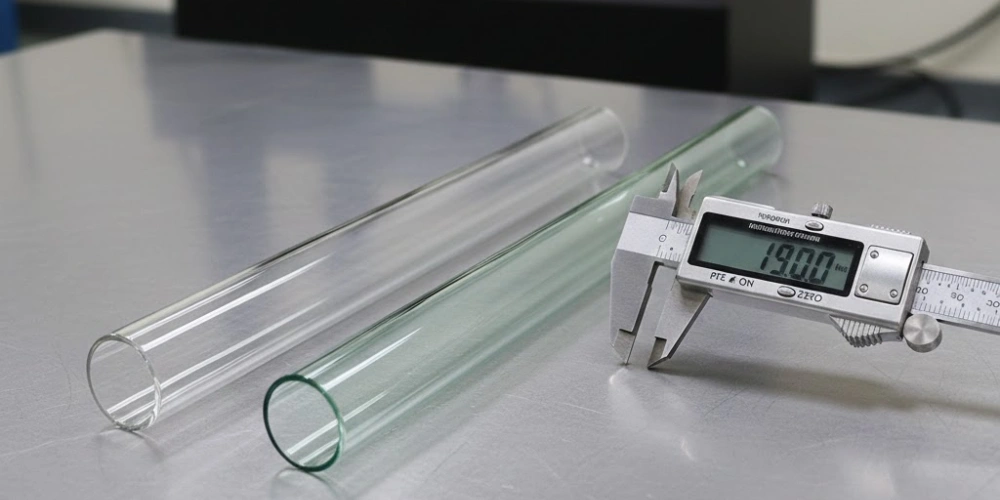
Mechanical Strength and Dimensional Stability
Mechanical performance, while rarely the primary selection criterion for tube materials in thermochemical applications, constitutes a necessary secondary parameter in any system where the tube must bear mechanical load, withstand internal pressure, or maintain precise dimensional tolerances across a service lifetime.
-
Vickers Hardness: Fused quartz registers a Vickers hardness of approximately 600–700 HV, compared to 480–550 HV for borosilicate glass. This higher hardness translates to greater surface scratch resistance and reduced susceptibility to surface flaw initiation during handling, though it simultaneously makes fused quartz somewhat more brittle under point impact loading than the slightly more compliant borosilicate matrix.
Dimensional stability under extended thermal cycling is a related consideration. Fused quartz tubes maintain their specified outer diameter and wall thickness within ±0.1–0.2 mm over thousands of thermal cycles to 1,000 °C, a performance record extensively documented in semiconductor furnace maintenance logs. Borosilicate tubes used in comparable, lower-temperature cycling applications show dimensional drift of ±0.3–0.5 mm after extended service, primarily due to slow stress relaxation in the multi-component glass network.
-
Flexural Strength: The modulus of rupture (flexural strength) of fused quartz is approximately 50–70 MPa under standard test conditions, while borosilicate glass exhibits comparable values of 60–70 MPa. Both materials are brittle and do not exhibit plastic deformation prior to fracture. Surface flaws introduced during fabrication or handling disproportionately reduce effective strength, as both materials follow Griffith fracture mechanics where critical flaw size governs failure stress.
Young's modulus for fused quartz is approximately 72 GPa, nearly identical to borosilicate glass at 63–70 GPa. Poisson's ratio for fused quartz is 0.17, compared to 0.20 for borosilicate. These near-identical elastic properties mean that under equivalent mechanical loading at ambient temperature, the two materials deform at similar rates and exhibit similar deflection characteristics — the mechanical differentiation between them becomes most pronounced only at elevated temperatures where the lower softening point of borosilicate begins to introduce viscoelastic2 compliance.
-
Internal Pressure Resistance: For closed-end tube configurations used in pressure vessels or flow reactors, both materials require safety factor calculations based on wall thickness, tube diameter, and operating pressure. A fused quartz tube with 2 mm wall thickness and 25 mm outer diameter can sustain internal pressures of approximately 1.5–2.5 MPa at ambient temperature, with pressure tolerance decreasing as temperature approaches the softening point. Borosilicate tubes of equivalent geometry perform similarly at ambient temperature but exhibit pressure capacity reduction at significantly lower temperatures than fused quartz, rendering them unsuitable for pressurized high-temperature reactor applications.
At ambient temperature and for purely mechanical load-bearing purposes with no concurrent thermal or chemical demands, borosilicate glass and fused quartz are broadly comparable. The mechanical divergence between these two materials is most consequential in combined loading scenarios — where simultaneous thermal, chemical, and mechanical stresses are applied — and in these scenarios, fused quartz consistently demonstrates superior combined-loading endurance.
Mechanical Property Comparison
| Механические свойства | Плавленый кварц | Боросиликатное стекло |
|---|---|---|
| Твердость по Виккерсу (HV) | 600-700 | 480–550 |
| Flexural Strength / MOR (MPa) | 50-70 | 60-70 |
| Модуль Юнга (ГПа) | ~72 | 63–70 |
| Poisson's Ratio | 0.17 | 0.20 |
| Плотность (г/см³) | 2.20 | 2.23 |
| Dimensional Stability After Thermal Cycling | ±0,1-0,2 мм | ±0.3–0.5 mm |
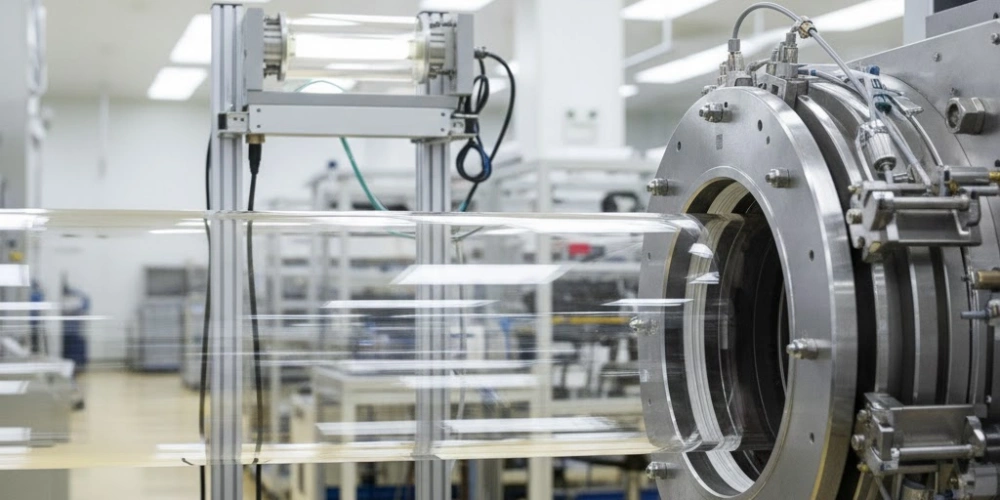
Application Scenarios Where Fused Quartz Tubes Hold a Clear Advantage
The full performance profile of fused quartz tubes — high thermal ceiling, near-zero thermal expansion, UV transparency, and chemical inertness — converges in a set of application domains where borosilicate glass is not merely inferior but functionally disqualified.
These application categories are defined not by preference but by the absolute physical requirements they impose. Each domain described below represents a context in which fused quartz tubes are the technically mandated solution, and in which the use of borosilicate glass would result in either immediate failure or progressive performance degradation that renders the process non-viable.
High-Temperature Furnace Tubes in Semiconductor Diffusion Processes
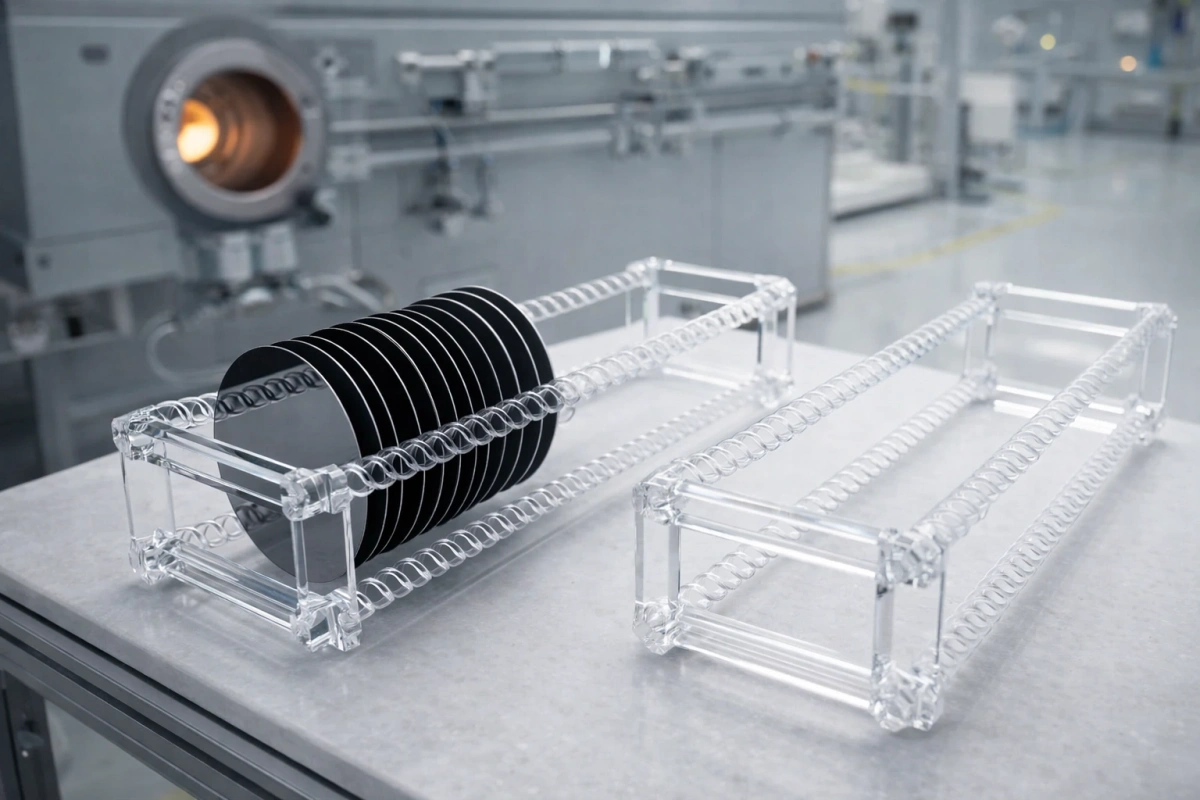
Thermal diffusion furnaces used in semiconductor device fabrication operate at process temperatures between 800 °C and 1,200 °C for dopant diffusion, thermal oxidation, and annealing steps. The process tube — the primary containment vessel surrounding silicon wafers during these steps — must maintain dimensional precision to within fractions of a millimeter across its full length, typically 900–1,500 mm, while sustaining process temperatures continuously for runs lasting 1–12 hours.
Fused quartz tubes are the exclusively used material in this application. Semiconductor-grade fused quartz tubes with outer diameters ranging from 100 mm to 300 mm are specified to total metallic contamination levels below 1 ppm, ensuring that no diffusion of metallic contaminants onto wafer surfaces occurs during processing. The low CTE of 0.55 × 10⁻⁶/°C ensures that the tube bore maintains its cylindrical geometry without sagging or ovalization even after thousands of thermal cycles. Process yield data from leading semiconductor fabrication facilities consistently show quartz tube replacement intervals of 12–24 months under continuous high-temperature duty, a service life that no borosilicate alternative could approach.
The combination of thermal performance, chemical purity, and dimensional stability in semiconductor diffusion furnace tubes represents the application archetype for which the full material capability of fused quartz is simultaneously demanded and validated.
UV Lamp Envelopes and Photochemical Reactor Tubing
Mercury arc UV lamps, excimer UV sources, and pulsed UV sterilization systems all require an envelope material that transmits deep UV radiation with minimal attenuation while withstanding the thermal load generated by high-intensity discharge. Fused quartz tubes used as UV lamp envelopes transmit over 80% of 254 nm radiation at 1 mm wall thickness, making them the standard envelope material for germicidal, photocatalytic, and photolithographic UV sources globally.
In photochemical flow reactors — systems in which chemical reactions are driven by UV irradiation of a flowing liquid reagent — the reactor tube must simultaneously transmit UV light, withstand chemical exposure to photocatalysts and reactive intermediates, and maintain structural integrity at the elevated temperatures generated by high-intensity UV sources. Fused quartz tubing with outer diameters of 10–50 mm and wall thicknesses of 1–3 mm is standard in laboratory-scale and pilot-scale photochemical reactor designs. The synthetic fused silica variant (Type III) is preferred in applications involving wavelengths below 200 nm, as its reduced OH content minimizes absorption in the vacuum UV range.
UV water purification systems employing medium-pressure mercury lamps with fused quartz envelopes achieve log-4 reduction of E. coli (>99.99% inactivation) at UV doses of 40 mJ/cm², a performance benchmark that borosilicate-enveloped lamps cannot meet due to UV absorption below 300 nm.
Plasma and Vacuum System Components
Plasma processing equipment — including plasma etching systems, RF-coupled plasma reactors, and ion beam sources — subjects the process tube to simultaneous exposure to reactive ion bombardment, elevated wall temperatures, and vacuum or low-pressure environments. Fused quartz demonstrates excellent resistance to plasma erosion by fluorine-based (CF₄, SF₆), oxygen-based, and argon plasma species at power densities encountered in research-grade RF plasma systems (10–500 W/cm²).
The low dielectric loss tangent of fused quartz (tan δ ≈ 1 × 10⁻⁴ at 1 MHz, 25 °C) minimizes RF power absorption in the tube wall during inductively coupled plasma generation, ensuring that the majority of the applied RF energy is deposited into the plasma rather than dissipated as heat within the tube structure itself. Borosilicate glass, with a dielectric loss tangent of approximately 3.7 × 10⁻³ at 1 MHz, absorbs substantially more RF energy — a thermal load that accelerates devitrification and mechanical failure at plasma operating conditions.
In vacuum systems, fused quartz outgassing rates at bakeout temperatures of 200–400 °C are measured at 10⁻¹⁰–10⁻¹¹ Torr·L/(s·cm²), compared to borosilicate values of approximately 10⁻⁸–10⁻⁹ Torr·L/(s·cm²) under the same conditions. This two-to-three order of magnitude difference in outgassing makes fused quartz the preferred or required tube material for ultrahigh vacuum (UHV) system components where base pressures below 10⁻⁹ Torr must be maintained.
Fused Quartz Application Performance Parameters
| Приложение | Ключевое требование | Fused Quartz Performance | Borosilicate Suitability |
|---|---|---|---|
| Печь для диффузии полупроводников | 900–1,200 °C, metallic purity <1 ppm | Fully compliant | Disqualified (thermal) |
| UV Lamp Envelope (254 nm) | >80% UV transmission at 1 mm | ~85–90% transmission | <1% transmission |
| Photochemical Flow Reactor | UV + chemical resistance | Fully compliant | Disqualified (UV) |
| RF Plasma Reactor Tube | Low RF loss, plasma resistance | tan δ ≈ 1×10⁻⁴ | tan δ ≈ 3.7×10⁻³ |
| UHV Vacuum Component | Outgassing <10⁻¹⁰ Torr·L/(s·cm²) | Compliant | Non-compliant |
Application Scenarios Where Borosilicate Glass Tubes Remain Sufficient
Beyond the high-performance domains where fused quartz is technically mandated, there exists a broad and well-established category of applications in which the thermal, optical, and chemical requirements fall comfortably within borosilicate glass's performance envelope.
Recognizing this boundary is as important as understanding fused quartz's capabilities. Applying fused quartz tubes indiscriminately to applications that do not require its performance attributes introduces unnecessary material cost without delivering any measurable functional advantage. The application categories below represent contexts where borosilicate glass tubes perform reliably and appropriately.
General Laboratory Glassware and Benchtop Experimentation
Standard chemistry laboratory procedures — including reflux distillation, liquid-liquid extraction, rotary evaporation, and gravity filtration — operate at temperatures well below 300 °C with reagent exposure to acids, bases, and organic solvents under moderate conditions. Borosilicate glass tubes in these applications routinely achieve service lifetimes of 2–5 years under normal handling conditions, provided thermal and mechanical shocks are managed within the material's tolerance range.
The chemical inertness of borosilicate glass across the pH range of 2–12 at temperatures below 80 °C covers the majority of benchtop synthetic chemistry operations. For Soxhlet extraction3, fractional distillation columns, condenser tubing, and reactor vessels operating below 450 °C, borosilicate glass satisfies all functional requirements with a performance margin that makes it the pragmatic and cost-appropriate choice. Laboratory-grade borosilicate glass tubing compliant with ISO 3585 is available in outer diameters from 6 mm to 120 mm, covering virtually the full size range encountered in benchtop laboratory setups.
Lighting Industry and Low-Temperature Heating Applications
Fluorescent lamps, compact fluorescent lamps (CFLs), halogen lamp envelopes operating below 500 °C, and electrical heating element sheaths represent a mature and high-volume application domain for borosilicate glass tubing. Standard T8 and T5 fluorescent lamp tubes use borosilicate glass envelopes with wall temperatures typically not exceeding 80–100 °C during operation, a condition well within the material's performance range. The visible-range transmission of 90–92% ensures minimal light absorption by the tube wall.
Infrared heating tubes for food processing, paint curing, and textile drying applications operate at filament temperatures below 750 °C with outer glass envelope temperatures typically below 400 °C, conditions that borosilicate glass sustains comfortably. The thermal shock resistance of borosilicate — while far inferior to fused quartz — is sufficient for the moderate temperature cycling encountered in industrial heating tube replacement schedules. Borosilicate heating tube assemblies in food processing conveyor systems are documented to achieve 8,000–12,000 hours of operational service before replacement is required.
Pharmaceutical Packaging and Food-Grade Tubing
Type I borosilicate glass, as defined by the United States Pharmacopeia (USP), the European Pharmacopoeia (EP), and ISO 4802, is the global standard material for parenteral drug packaging, including ampoules, vials, cartridges, and prefillable syringes. Type I borosilicate glass achieves a hydrolytic resistance classification of HGA 1, the highest rating under ISO 720, corresponding to a maximum alkalinity release of 0.1 mL of 0.02 M H₂SO₄ per gram of glass crushed to 300–425 µm particle size.
The regulatory framework surrounding pharmaceutical primary packaging explicitly qualifies Type I borosilicate glass for contact with aqueous injectables, lyophilized powders, and biologics at storage temperatures from -80 °C to +121 °C (autoclave sterilization conditions). Fused quartz, despite its superior inertness, is not an approved or practically viable material for pharmaceutical packaging due to its significantly higher manufacturing cost and the absence of established regulatory qualification pathways for this specific use case. Annual global production of borosilicate glass pharmaceutical packaging exceeds 10 billion units, reflecting its entrenched position as the material of choice in this regulated application domain.
Borosilicate Glass Application Performance Parameters
| Приложение | Максимальная рабочая температура (°C) | Срок службы | Regulatory Standard |
|---|---|---|---|
| Lab Distillation Tubing | <300 | 2–5 years | ISO 3585 |
| Fluorescent Lamp Envelope | <100 (outer wall) | 8,000–15,000 hrs | IEC 60081 |
| Halogen Lamp Envelope | <500 | 2,000–4,000 hrs | IEC 60432 |
| IR Heating Tube (industrial) | <400 | 8,000–12,000 hrs | - |
| Pharmaceutical Ampoule / Vial | -80 to +121 | Per USP/EP shelf life | USP, ISO 4802 |
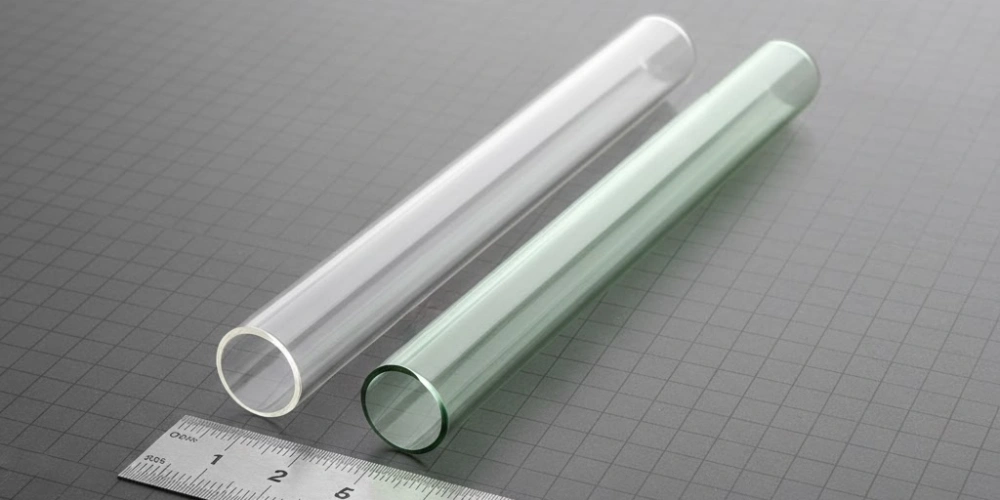
A Side-by-Side Property Comparison Between the Two Materials
A consolidated quantitative comparison provides a direct reference framework for all properties analyzed in the preceding sections, eliminating the need to cross-reference individual data tables when evaluating both materials against a specific application requirement.
-
Thermal properties represent the most operationally significant performance domain, where fused quartz's maximum continuous service temperature of 1,050–1,100 °C dwarfs borosilicate's 450–500 °C ceiling, and where the CTE difference of approximately 6× determines the viability of thermal cycling applications.
-
Оптические свойства constitute the decisive differentiator for UV and photonic applications. Fused quartz's UV cutoff at ~150 nm versus borosilicate's ~300–320 nm defines a 150 nm transmission window that borosilicate cannot access under any conditions, making the optical comparison essentially binary for deep UV applications.
-
Химическая стойкость shows nuanced differentiation: both materials resist most mineral acids, but fused quartz's near-zero ion leaching rate and alkali resistance at elevated temperatures represents a qualitative step change in performance for semiconductor and pharmaceutical-grade process applications.
Consolidated Material Property Comparison
| Недвижимость | Плавленый кварц | Боросиликатное стекло |
|---|---|---|
| Содержание SiO₂ (wt%) | >99.9 | 70-80 |
| Max Continuous Service Temp (°C) | 1,050-1,100 | 450-500 |
| Температура размягчения (°C) | ~1,665 | ~820 |
| CTE (×10-⁶/°C) | ~0.55 | ~3.3 |
| Max Thermal Shock ΔT (°C) | >1,000 | ~160 |
| Длина волны УФ-отсечки (нм) | ~150 | ~300–320 |
| Пропускание при 254 нм (%) | ~90 | <1 |
| Refractive Index (589 nm) | 1.458 | 1.473 |
| Твердость по Виккерсу (HV) | 600-700 | 480–550 |
| Прочность на изгиб (МПа) | 50-70 | 60-70 |
| Модуль Юнга (ГПа) | ~72 | 63–70 |
| Плотность (г/см³) | 2.20 | 2.23 |
| Dielectric Loss Tangent (1 MHz) | ~1×10⁻⁴ | ~3.7×10⁻³ |
| Na/K Ion Leaching | Незначительный | Измеряемые |
| Hydrolytic Resistance Class | Superior | HGA 1 (Type I) |
| Typical Outgassing Rate (Torr·L/s·cm²) | 10⁻¹⁰–10⁻¹¹ | 10⁻⁸–10⁻⁹ |
Selection Criteria Based on Specific Working Conditions
With all technical parameters quantified and application domains mapped, the selection decision reduces to a structured evaluation of the working conditions a tube will encounter in service. No single property determines this choice in isolation; rather, the combination of thermal regime, optical requirement, chemical environment, and purity constraint collectively identifies the appropriate material.
Temperature is typically the first and most disqualifying criterion. Any application requiring sustained tube operation above 500 °C eliminates borosilicate glass unconditionally and mandates fused quartz or an alternative high-silica material. Applications operating below 300 °C with no UV or high-purity requirements are well served by borosilicate glass across all other performance dimensions.
UV transmission requirements constitute the second binary decision point. Any application requiring transmission below 300 nm — regardless of operating temperature — requires fused quartz. Borosilicate glass is functionally transparent to visible and near-UV radiation above 320 nm but becomes progressively opaque below this threshold, with no technical remedy available through material modification or surface treatment.
Chemical purity and ion leaching thresholds represent the third evaluation axis. Applications in which the tube wall contacts process streams with sub-ppb metallic contamination limits — semiconductor wet cleaning systems, high-purity gas handling, analytical HPLC flow cells — require fused quartz. Applications where regulatory frameworks specify Type I borosilicate glass — pharmaceutical primary packaging, food-contact tubing — should follow the applicable standard rather than substituting fused quartz.
Mechanical and vacuum performance considerations, while secondary in frequency, can be independently decisive. RF plasma reactor tubes require the low dielectric loss tangent of fused quartz. Ultrahigh vacuum systems require fused quartz's two-to-three order of magnitude lower outgassing rate. Pressure-bearing reactor tubes at elevated temperatures require fused quartz to avoid viscoelastic creep in the tube wall.
A pragmatic selection framework therefore proceeds as follows: if the operating temperature exceeds 500 °C, or if UV transmission below 300 nm is required, or if metallic contamination limits are in the sub-ppb range, or if plasma or UHV conditions are present — fused quartz tubes are the specified material. If none of these conditions are met, and the application is a general laboratory, lighting, heating, or pharmaceutical packaging context, borosilicate glass provides reliable and fully adequate performance.
Selection Decision Framework
| Working Condition | Порог | Рекомендуемый материал |
|---|---|---|
| Рабочая температура | >500 °C | Плавленый кварц |
| Рабочая температура | <450 °C | Боросиликатное стекло |
| UV Transmission Required | <300 nm | Плавленый кварц |
| UV Transmission Required | >320 nm | Либо |
| Metallic Ion Contamination Limit | <1 ppb | Плавленый кварц |
| Pharmaceutical Packaging | USP/EP regulated | Type I Borosilicate |
| RF Plasma Environment | Любой | Плавленый кварц |
| UHV System (<10⁻⁹ Torr) | Любой | Плавленый кварц |
| General Lab Use (<300 °C) | Стандарт | Боросиликатное стекло |
| Thermal Shock Cycling | ΔT > 200 °C | Плавленый кварц |
Заключение
The comparison between fused quartz and borosilicate glass tubes is not a matter of one material being universally superior. It is a question of technical alignment between material properties and application demands. Fused quartz delivers unmatched thermal tolerance above 500 °C, UV transmission below 300 nm, near-zero ion leaching, and vacuum-grade outgassing — properties that are non-negotiable in semiconductor processing, UV photonics, plasma systems, and high-purity analytical applications. Borosilicate glass, conversely, serves general laboratory, pharmaceutical packaging, and low-temperature heating applications with established reliability, regulatory compliance, and sufficient performance across all relevant parameters. The structured selection framework provided in this article enables a direct, defensible material selection decision based on quantified working conditions rather than general assumptions.
ЧАСТО ЗАДАВАЕМЫЕ ВОПРОСЫ
What is the maximum temperature difference that fused quartz tubes can withstand without fracturing?
Fused quartz tubes can withstand temperature differentials exceeding 1,000 °C without fracture, owing to their coefficient of thermal expansion of approximately 0.55 × 10⁻⁶/°C. This makes them suitable for applications involving rapid thermal cycling, direct flame contact, and sudden immersion in coolant environments where borosilicate glass would fail.
At what UV wavelength does borosilicate glass become effectively opaque?
Standard borosilicate glass exhibits a UV cutoff at approximately 300–320 nm, transmitting less than 1% of incident radiation at 254 nm through a 1 mm wall thickness. Applications requiring UV transmission below 300 nm — including germicidal sterilization, deep UV photolithography, and Raman spectroscopy — require fused quartz, which transmits UV radiation from approximately 150 nm.
Why are fused quartz tubes required in semiconductor diffusion furnaces rather than borosilicate glass?
Semiconductor diffusion furnaces operate at 800–1,200 °C, a temperature range that exceeds borosilicate glass's maximum continuous service temperature of 450–500 °C. Additionally, semiconductor-grade fused quartz tubes maintain total metallic impurity levels below 1 ppm, preventing metal contamination of silicon wafers during thermal processing. Borosilicate glass leaches measurable sodium, potassium, and boron ions that would compromise wafer purity and device yield.
Can borosilicate glass tubes be used in UV water purification systems?
Borosilicate glass tubes are not suitable for UV water purification systems that rely on 254 nm germicidal radiation, as they transmit less than 1% of UV energy at this wavelength. Fused quartz tubes, transmitting approximately 85–90% of 254 nm radiation at 1 mm wall thickness, are the standard envelope material for UV water treatment systems achieving log-4 bacterial inactivation at doses of 40 mJ/cm².
Ссылки:
-
It describes how intrinsic fluorophores within a material emit light upon excitation, directly relevant to understanding background signal interference in fluorescence microscopy and spectroscopic applications involving glass tubing. ↩
-
It defines viscoelastic behavior as the time-dependent deformation response of materials under sustained load, directly explaining the dimensional drift observed in borosilicate glass tubes during extended service near their softening point. ↩
-
It describes the continuous solvent extraction technique widely used in analytical chemistry and natural product isolation, representing a standard benchtop laboratory application for which borosilicate glass tubing is a fully adequate and established material. ↩