
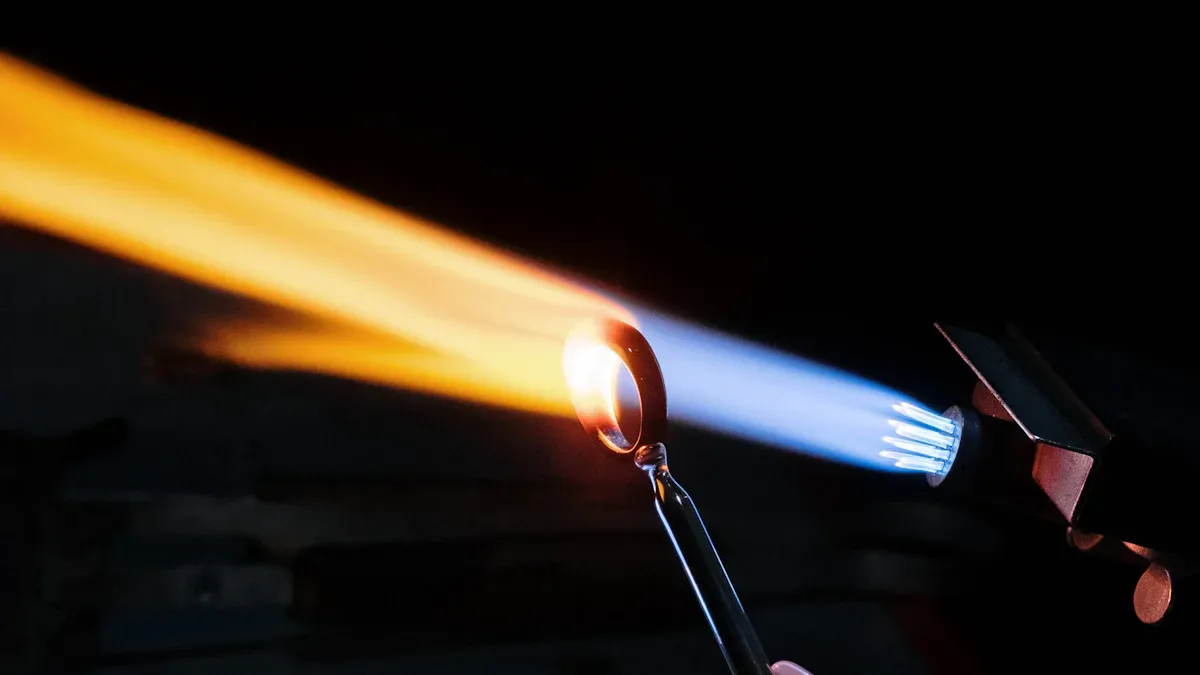
De nombreux ingénieurs et scientifiques se demandent pourquoi les tubes en quartz échouent dans les applications à haute température. La réponse tient à deux facteurs principaux : la dévitrification et les limites thermiques. La dévitrification modifie la structure du quartz, tandis que les limites thermiques définissent la température maximale de sécurité avant le début des dommages. La compréhension de ces mécanismes aide les utilisateurs à prévenir les défaillances inattendues et à améliorer la fiabilité des équipements.
Principaux enseignements
La dévitrification affaiblit les tubes de quartz à haute température. La compréhension de ce processus permet d'éviter des défaillances inattendues.
La contamination de la surface, même en petites quantités, peut accélérer considérablement la dévitrification. Un nettoyage régulier et une manipulation soigneuse sont essentiels.
Les cycles thermiques introduisent des contraintes internes qui peuvent entraîner des microfissures. Le contrôle des taux de chauffage et de refroidissement peut prolonger la durée de vie des tubes de quartz.
Le dépassement des limites thermiques entraîne des changements structurels rapides dans le quartz. La connaissance de ces limites permet aux utilisateurs d'éviter les dommages et de maintenir la stabilité.
Pourquoi la dévitrification provoque-t-elle la rupture des tubes en quartz à haute température ?

La dévitrification est l'une des principales raisons pour lesquelles les tubes en quartz échouent dans les applications à haute température. Ce processus modifie la structure interne du quartz, réduisant sa stabilité à haute température et sa résistance mécanique. Comprendre les étapes de la dévitrification et les contraintes qui en résultent permet d'expliquer en détail le mécanisme de défaillance.
Le processus de dévitrification en deux étapes : Nucléation et croissance
Dévitrification en tubes de quartz commence par la nucléation, suivie de la croissance des cristaux.
La contamination de la surface, en particulier par les métaux alcalins, initie la nucléation en fournissant des sites où la phase cristalline peut commencer à se former. La croissance des cristaux de cristobalite se fait ensuite vers l'intérieur, avec des taux influencés par la température, la viscosité du quartz et la présence de groupes hydroxyles.
Ce processus en deux étapes explique pourquoi les tubes de quartz perdent leur stabilité et développent des points faibles lors d'une exposition prolongée à la chaleur.
Points clés :
La nucléation commence sur les surfaces contaminées, en particulier avec les métaux alcalins.
Le taux de croissance dépend de la température et de la composition du quartz.
La dévitrification réduit la stabilité à haute température et entraîne des défaillances.
Pourquoi l'inadéquation de la dilatation thermique crée-t-elle des contraintes catastrophiques ?
Le décalage d'expansion thermique entre le quartz dévitrifié et le quartz amorphe génère une augmentation des contraintes internes.
Cristobalitela phase cristalline, a un coefficient de dilatation thermique 12 à 16 fois supérieur à celui du quartz, ce qui entraîne une concentration de contraintes à l'interface. Les changements rapides de température ou les impuretés amplifient cette contrainte, ce qui rend les fissures et les ruptures plus probables.
Les contraintes dues à ce décalage dépassent souvent la résistance des fibres de quartz, ce qui entraîne une rupture soudaine.
Cause | Effet | Causalité |
|---|---|---|
Inadéquation de la dilatation thermique | Augmentation du stress interne | La contrainte dépasse la résistance du quartz, ce qui provoque des fissures |
Impuretés présentes | Concentration de contraintes plus élevée | Les impuretés agissent comme des amplificateurs de stress |
Changement rapide de température | Casse plus fréquente | Les changements rapides aggravent les effets du stress |
Comment la transformation de la phase de la cristobalite à 270°C déclenche-t-elle la rupture ?
La transformation de la phase cristobalite à 270°C déclenche un changement soudain de volume.
Lorsque les tubes de quartz refroidissent à cette température, la transformation β à α de la cristobalite provoque un déplacement de volume de 5-10%, créant des microfissures à l'interface. Des cycles thermiques répétés jusqu'à cette température entraînent la formation de fissures et, finalement, une défaillance structurelle.
Cette transformation explique pourquoi les tubes de quartz perdent leur stabilité à haute température après dévitrification.
Points clés :
La cristobalite se transforme à 270°C, entraînant un changement de volume.
Des microfissures se forment et s'agrandissent à chaque cycle thermique.
Des cycles répétés entraînent une défaillance et une perte de stabilité.
Pourquoi la contamination de surface accélère-t-elle la rupture à haute température ?
La contamination de surface joue un rôle essentiel dans l'échec des tubes de quartz dans les applications à haute température. Même de petites quantités d'impuretés peuvent perturber la stabilité à haute température et déclencher une défaillance rapide dans des environnements à haute température. La compréhension des mécanismes de contamination aide les utilisateurs à protéger les propriétés mécaniques et la stabilité des tubes en silice de haute pureté.
Pourquoi les métaux alcalins abaissent-ils les barrières de nucléation de la cristobalite ?
Les métaux alcalins tels que le sodium et le potassium abaissent la barrière énergétique pour la nucléation de la cristobalite dans le quartz. Ces éléments se substituent au réseau de silice, créant des points faibles qui permettent à la phase cristalline de se former plus facilement. Ce processus réduit la stabilité à haute température des fibres de quartz et augmente le risque de défaillance.
La présence de métaux alcalins accélère la dévitrification jusqu'à 50 fois par rapport aux surfaces propres. Même un niveau de contamination aussi faible que 5-10 ppm peut entraîner une forte augmentation des taux de nucléation, conduisant à une croissance rapide des cristaux et à une perte des propriétés mécaniques. Cela explique pourquoi même une contamination à l'état de traces peut compromettre la stabilité de la silice de haute pureté dans des conditions exigeantes.
Facteur | Effet | Causalité |
|---|---|---|
Métaux alcalins | Barrière énergétique de nucléation plus faible | Formation plus facile de cristobalite |
Augmentation de la nucléation | Dévitrification plus rapide | Stabilité réduite à haute température |
Croissance rapide des cristaux | Échec précoce | Perte des propriétés mécaniques |
Sources de contamination à l'origine d'une défaillance prématurée
De nombreuses sources contribuent à la contamination des surfaces dans les laboratoires et les environnements industriels. Les huiles, les graisses et les résidus des processus de nettoyage, ainsi que les polluants atmosphériques tels que les pluies acides, les embruns marins et les poussières industrielles, peuvent tous déposer des impuretés sur les surfaces en quartz. Les objets du quotidien tels que les blouses de laboratoire, le maquillage, le parfum, les bijoux et même la poussière des matériaux de construction introduisent également des contaminants.
Ces contaminants agissent comme des sites de nucléation pour la cristobalite, rendant le quartz plus vulnérable à la dévitrification et au stress. L'aluminium provenant de la verrerie de laboratoire et des produits cosmétiques peut encore réduire la stabilité de la silice de haute pureté, augmentant le risque de défaillance dans les environnements à haute température. Un nettoyage régulier et une manipulation soigneuse permettent de préserver la stabilité et les propriétés mécaniques des tubes de quartz.
Les sources de contamination les plus courantes sont les suivantes
Polluants atmosphériques et industriels
Huiles, graisses et résidus de nettoyage
Poussière, rouille et matériaux de construction
Blouses de laboratoire, maquillage, parfum et bijoux
Aluminium provenant de la verrerie et des cosmétiques
L'effet exponentiel : comment une contamination de 5 à 10 ppm accélère les défaillances de 10 à 50 fois
Même une faible augmentation de la contamination peut avoir un effet dramatique sur les performances des tubes de quartz. Lorsque la contamination de la surface atteint seulement 5 à 10 ppm, le taux d'absorption de l'oxygène par le tube de quartz augmente. dévitrification s'accélère de 10 à 50 fois, entraînant une perte rapide de la stabilité à haute température. Cet effet exponentiel signifie que même des défauts mineurs de propreté peuvent entraîner une défaillance précoce.
Des seuils de température clés définissent les limites d'un fonctionnement sûr. Le début de la dévitrification se produit au-dessus de 1665°C, tandis que le point de ramollissement de la silice de haute pureté se situe également à 1665°C, ce qui marque la température à laquelle l'écoulement commence à être significatif et les propriétés mécaniques changent. Le dépassement de ces limites entraîne une déformation rapide ou une défaillance, quelle que soit la qualité du matériau, car la physique du verre de quartz rend ces seuils absolus.
Seuil | Température (°C) | Importance |
|---|---|---|
Début de dévitrification | 1665 | Augmentation du risque de cristallisation |
Point de ramollissement | 1665 | Les propriétés mécaniques changent, l'écoulement commence |
Pourquoi le cyclage thermique provoque-t-il des dommages cumulatifs conduisant à une défaillance ?
Les cycles thermiques sont l'une des principales raisons pour lesquelles les tubes de quartz échouent dans les applications à haute température. Chaque cycle de chauffage et de refroidissement introduit de nouvelles contraintes qui affaiblissent progressivement le matériau. Comprendre pourquoi ces cycles provoquent des dommages cumulatifs aide les utilisateurs à améliorer la stabilité à haute température et à prolonger la durée de vie.
Pourquoi les gradients de température génèrent-ils des contraintes de traction dommageables ?
Les gradients de température pendant les cycles thermiques créent des contraintes de traction dommageables dans les tubes de quartz.
Les différentes régions du tube se dilatent ou se contractent à des rythmes différents lorsqu'elles sont exposées à la chaleur, ce qui entraîne une dilatation thermique inégale. Cette dilatation inégale entraîne une contrainte interne, qui passe souvent de la compression à la traction lors d'un refroidissement rapide, ce qui entraîne la formation de microfissures qui menacent la stabilité.
La tension exercée par ces gradients peut dépasser la résistance des fibres de quartz, ce qui favorise la formation de fissures.
Points clés :
Une expansion inégale provoque des tensions internes.
Un refroidissement rapide augmente les contraintes de traction et les microfissures.
Les cycles thermiques affaiblissent les tubes de quartz au fil du temps.
Mécanismes de fatigue cumulée : Comment chaque cycle consomme la durée de vie des matériaux
Chaque cycle thermique consomme une partie de la durée de vie du tube de quartz.
Le chauffage et le refroidissement répétés génèrent des microfissures qui s'agrandissent à chaque cycle, en particulier lorsque la différence de température est importante. Au fil du temps, ces fissures se rejoignent, réduisant la stabilité à haute température du tube et conduisant à une défaillance éventuelle.
Ce processus explique pourquoi les tubes de quartz soumis à des cycles fréquents ont une durée de vie plus courte.
Mécanisme | Effet | Causalité |
|---|---|---|
Croissance des microfissures | Stabilité réduite | Chaque cycle augmente la taille des fissures |
Cyclisme répété | Durée de vie plus courte | L'accumulation de dommages conduit à une défaillance |
Grandes variations de température | Fatigue plus rapide | Une contrainte plus importante accélère la formation de fissures |
Pourquoi les taux de chauffage/refroidissement contrôlent-ils directement les délais de défaillance ?
Les taux de chauffage et de refroidissement contrôlent directement le moment de la défaillance du tube de quartz.
Changements rapides de température augmentent la probabilité de rupture parce que le matériau ne peut pas s'adapter rapidement, ce qui entraîne des contraintes plus élevées et des microfissures plus fréquentes. Des vitesses plus lentes permettent au tube de répartir la chaleur plus uniformément, ce qui réduit les contraintes et prolonge la durée de vie.
Un contrôle minutieux des taux de chauffage et de refroidissement permet de maintenir la stabilité et de prévenir les défaillances précoces.
Points clés :
Un chauffage/refroidissement rapide augmente le risque de défaillance.
Les taux plus lents améliorent la stabilité à haute température.
Les taux contrôlés prolongent la durée de vie des tubes de quartz.
Pourquoi les limites thermiques définissent-elles des températures de fonctionnement maximales sûres ?
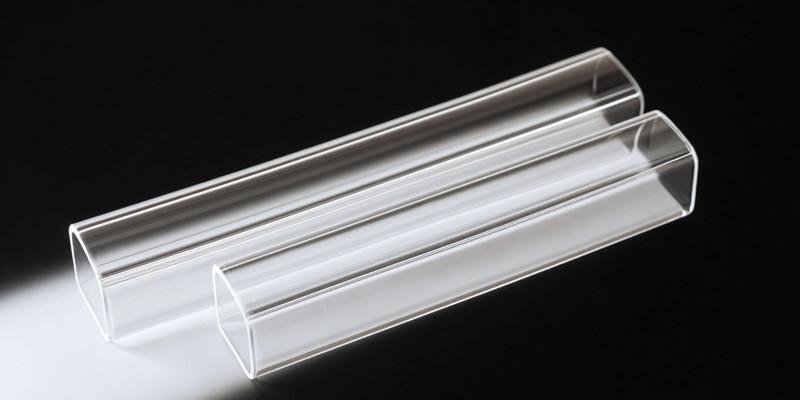
Les limites thermiques fixent les frontières pour un fonctionnement sûr dans les tubes de quartz. Ces limites existent parce que les propriétés des matériaux changent rapidement à certaines températures, entraînant une perte de stabilité et de résistance mécanique. Comprendre pourquoi ces limites sont importantes aide les utilisateurs à prévenir les dommages et à prolonger la durée de vie des tubes.
Pourquoi la cinétique de dévitrification s'accélère-t-elle de façon exponentielle au-dessus de 1100°C ?
La cinétique de dévitrification augmente rapidement au-dessus de 1100°C parce que l'énergie nécessaire à la croissance des cristaux diminue fortement. À ces températures, le taux de formation de cristobalite augmente d'un facteur 10 pour chaque augmentation de 50°C, ce qui signifie que même de petites augmentations de température peuvent entraîner des changements structurels rapides. Cette croissance exponentielle de la dévitrification entraîne un risque de défaillance beaucoup plus élevé, en particulier en cas de contamination de la surface.
Points clés :
Les taux de dévitrification augmentent de 10 fois pour chaque 50°C au-dessus de 1100°C.
De faibles augmentations de température peuvent déclencher une croissance rapide des cristaux.
La contamination de la surface accélère encore ce processus.
Le point de ramollissement : Pourquoi la déformation visqueuse commence au-dessus de 1400°C
Les tubes de quartz commencent à se déformer au-dessus du point de ramollissement, qui se situe généralement autour de 1 400 °C pour la silice de haute pureté. À cette température, la viscosité du matériau diminue, ce qui permet à la gravité ou aux charges mécaniques de provoquer un affaissement ou un effondrement. Le point de ramollissement marque le seuil à partir duquel le tube ne peut plus conserver sa forme, même s'il reste chimiquement stable.
Type de verre | Point de ramollissement (°C) |
|---|---|
Bullseye Transparent | 677 |
Opales Bullseye | 688 |
Or Rose Transparent | 638 |
Les tubes de quartz conçus pour la stabilité à haute température doivent rester en dessous de ce seuil pour éviter une déformation permanente. Le point de ramollissement sert de limite stricte pour un fonctionnement sûr.
Pourquoi les changements de propriétés des matériaux rendent les limites thermiques absolues
Les changements de propriétés des matériaux rendent les limites thermiques absolues car ils modifient la façon dont le quartz réagit à la chaleur et aux contraintes. À mesure que la température augmente, des propriétés telles que la dilatation thermique, la pureté, l'épaisseur de la paroi et la qualité de la surface influencent la capacité du tube à résister à la fissuration et à la déformation. Ces facteurs ne peuvent être modifiés par les seules procédures d'exploitation, de sorte que le dépassement des limites thermiques entraîne toujours une défaillance.
Facteur | Description |
|---|---|
Faible dilatation thermique | Réduit le stress thermique et aide à maintenir la stabilité. |
Pureté des matériaux | La silice de haute pureté résiste aux chocs thermiques ; les impuretés créent des points faibles. |
Épaisseur de la paroi | Les parois plus épaisses répartissent les contraintes mais peuvent chauffer de manière inégale. |
Taux de chauffage/refroidissement | Les changements progressifs réduisent le risque de choc thermique. |
Qualité de surface | Les surfaces lisses et sans défaut résistent à la fissuration. |
Les limites thermiques restent fixes car elles dépendent de la physique et de la chimie fondamentales du matériau.
Conseil : Pour maximiser la durée de vie du tube, il faut le nettoyer rigoureusement, le manipuler avec des gants et l'inspecter régulièrement. Régler les taux de rampe thermique entre 1-3°C/min pour une utilisation généraleet sélectionnez de la silice de haute pureté dont l'épaisseur de paroi est adaptée à votre environnement.
Comment la compréhension de ces mécanismes de défaillance peut-elle prévenir la rupture prématurée des tubes ?
Reconnaître les raisons de la défaillance des tubes de quartz permet aux ingénieurs de prendre des mesures ciblées qui prolongent la durée de vie. En se concentrant sur le contrôle de la contamination et l'optimisation du profil thermique, les utilisateurs peuvent maintenir stabilité à haute température et préserver les propriétés mécaniques. Ces stratégies permettent de prévenir les pannes précoces et de garantir des performances constantes.
Contrôle de la contamination : Prévention de la dévitrification accélérée
Le contrôle de la contamination joue un rôle essentiel dans le maintien de la stabilité et la prévention de la dévitrification dans les tubes de quartz.
Les ingénieurs réduisent les taux de dévitrification en adoptant des tubes en quartz synthétique de très haute pureté dont les impuretés métalliques sont inférieures à 0,1 ppm et en remplaçant les brides métalliques par des alternatives en céramique ou recouvertes de platine. Ils utilisent également des joints toriques doubles et des tests d'étanchéité à l'hélium pour sceller les systèmes, ce qui bloque les contaminants et maintient l'intégrité de l'échantillon. La sélection de tubes en quartz ou dopés au Ti de haute pureté et le contrôle des taux de chauffage et de refroidissement inférieurs à 5°C par minute limitent encore le stress thermique et la dévitrification.
Ces mesures protègent les propriétés mécaniques du tube et contribuent à maintenir la stabilité à haute température.
Mesure de contrôle de la contamination | Mesures prises | Causalité |
|---|---|---|
Tubes de quartz ultra-haute pureté | Impuretés métalliques <0,1 ppm | Réduit les sites de nucléation pour la dévitrification |
Brides en céramique/platine | Remplacer les sources de vapeur métallique | Empêche la contamination des brides |
Double joint torique + test à l'hélium | Colmater les fuites | Bloque les contaminants externes |
Chauffage/refroidissement contrôlé | ≤5°C/min | Limite la dévitrification due au stress thermique |
Optimisation du profil thermique : Minimiser les dommages causés par le cyclage
L'optimisation du profil thermique permet de minimiser les dommages causés par les cycles et de prolonger la durée de vie des tubes en quartz.
Les opérateurs choisissent des tubes de quartz opaques à forte émissivité (0,9-0,95) pour favoriser un chauffage uniforme et réduire les points chauds, tandis que les faibles coefficients de dilatation thermique préservent la géométrie du tube pendant les cycles. Le fonctionnement continu à une température proche de 1000-1100°C, avec seulement de courtes excursions à des températures plus élevées, maintient la stabilité et prévient une fatigue rapide.
Ces pratiques garantissent que le tube résiste à la fissuration et à la déformation, même dans des environnements exigeants.
Les stratégies clés sont les suivantes :
Utiliser des tubes à haute émissivité pour un chauffage uniforme
Choisir des matériaux à faible dilatation thermique pour réduire les contraintes
Limiter les écarts de température pour maintenir la stabilité
Contrôler les tubes par des essais non destructifs et capteurs acoustiques
Appliquer le TTBT pour une détection précoce des fuites et des défaillances
Les tubes en quartz sont souvent défaillants à haute température parce que la dévitrification, la contamination, les cycles thermiques et le dépassement des limites thermiques compromettent l'intégrité structurelle. Chaque facteur peut provoquer une surchauffe localisée ou une perte de résistance thermique, ce qui réduit l'intégrité du tube. Les ingénieurs qui comprennent ces risques et suivent les directives spécifiques à l'environnement peuvent prolonger la durée de vie et améliorer la sécurité dans les processus à haute température.
FAQ
Pourquoi les tubes en quartz se troublent-ils après une utilisation à haute température ?
Les tubes de quartz deviennent troubles parce que la dévitrification forme de minuscules cristaux de cristobalite. Ces cristaux diffusent la lumière, ce qui rend le tube opaque. Le trouble indique que le tube a perdu une partie de sa résistance mécanique d'origine.
Pourquoi la manipulation de tubes de quartz à mains nues augmente-t-elle le risque de défaillance ?
Les mains nues laissent des huiles et des sels sur la surface du quartz. Ces contaminants agissent comme des sites de nucléation pour la dévitrification. Même de petites quantités peuvent accélérer la croissance des cristaux et réduire la durée de vie des tubes.
Pourquoi un chauffage ou un refroidissement rapide est-il nocif pour les tubes de quartz ?
Les changements rapides de température créent d'importants gradients thermiques. Ces gradients provoquent des tensions internes qui entraînent des microfissures. Au fil du temps, les cycles répétés augmentent le risque de rupture du tube.
Pourquoi une pureté plus élevée ne peut-elle pas à elle seule empêcher la défaillance d'un tube de quartz à haute température ?
Une pureté élevée réduit le risque de contamination mais ne peut modifier les limites thermiques de base du quartz. Le dépassement de ces limites entraîne toujours une dévitrification ou une déformation. Les propriétés des matériaux fixent des limites absolues pour une utilisation sûre.
Pourquoi les tubes en quartz tombent-ils en panne plus rapidement dans le vide ou dans des atmosphères réductrices ?
Le vide et les atmosphères réductrices limitent la dissipation de la chaleur et peuvent attaquer chimiquement le quartz. Ces conditions abaissent la température maximale de sécurité. Dans ces environnements, les tubes se déforment ou s'érodent souvent plus rapidement que dans l'air.