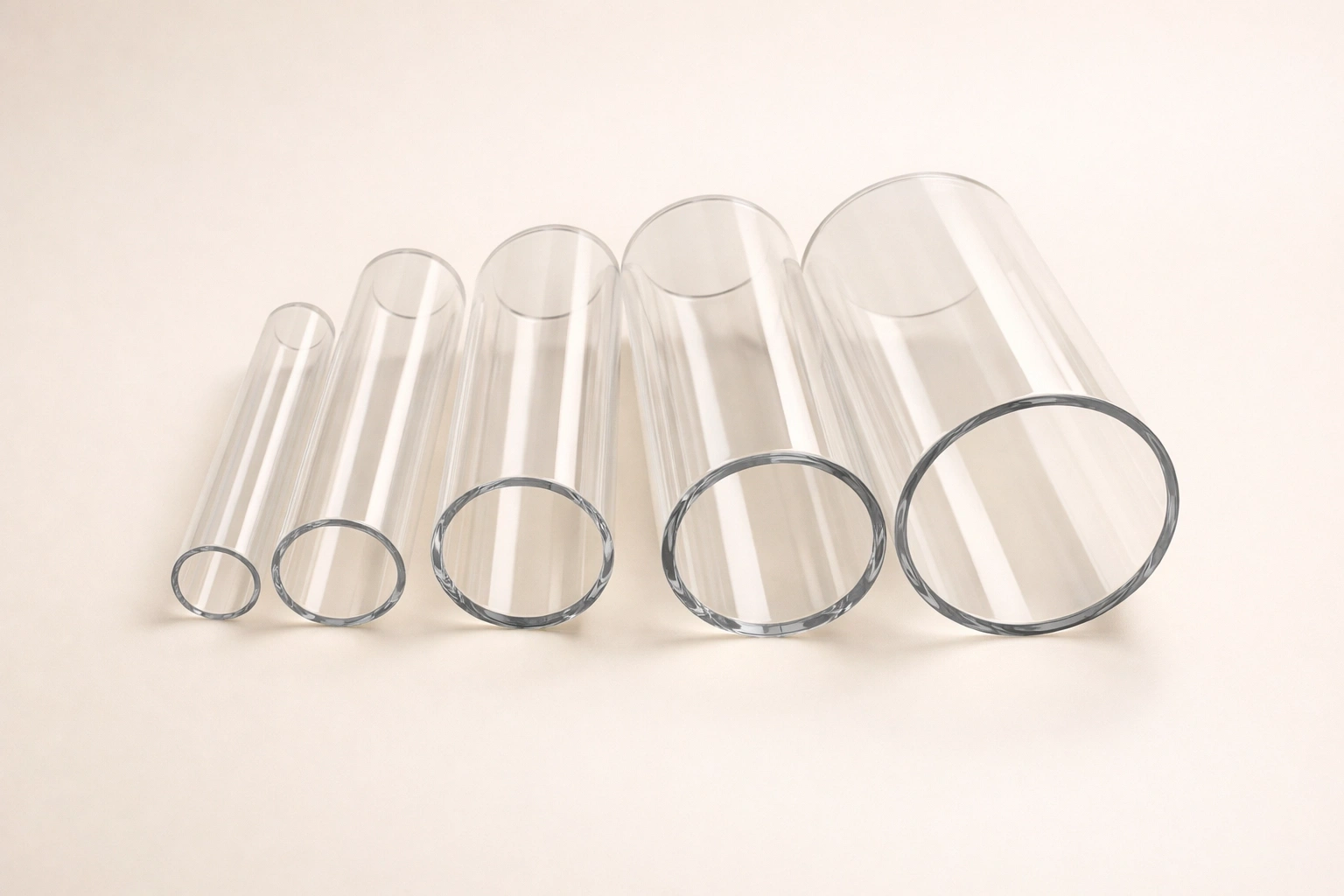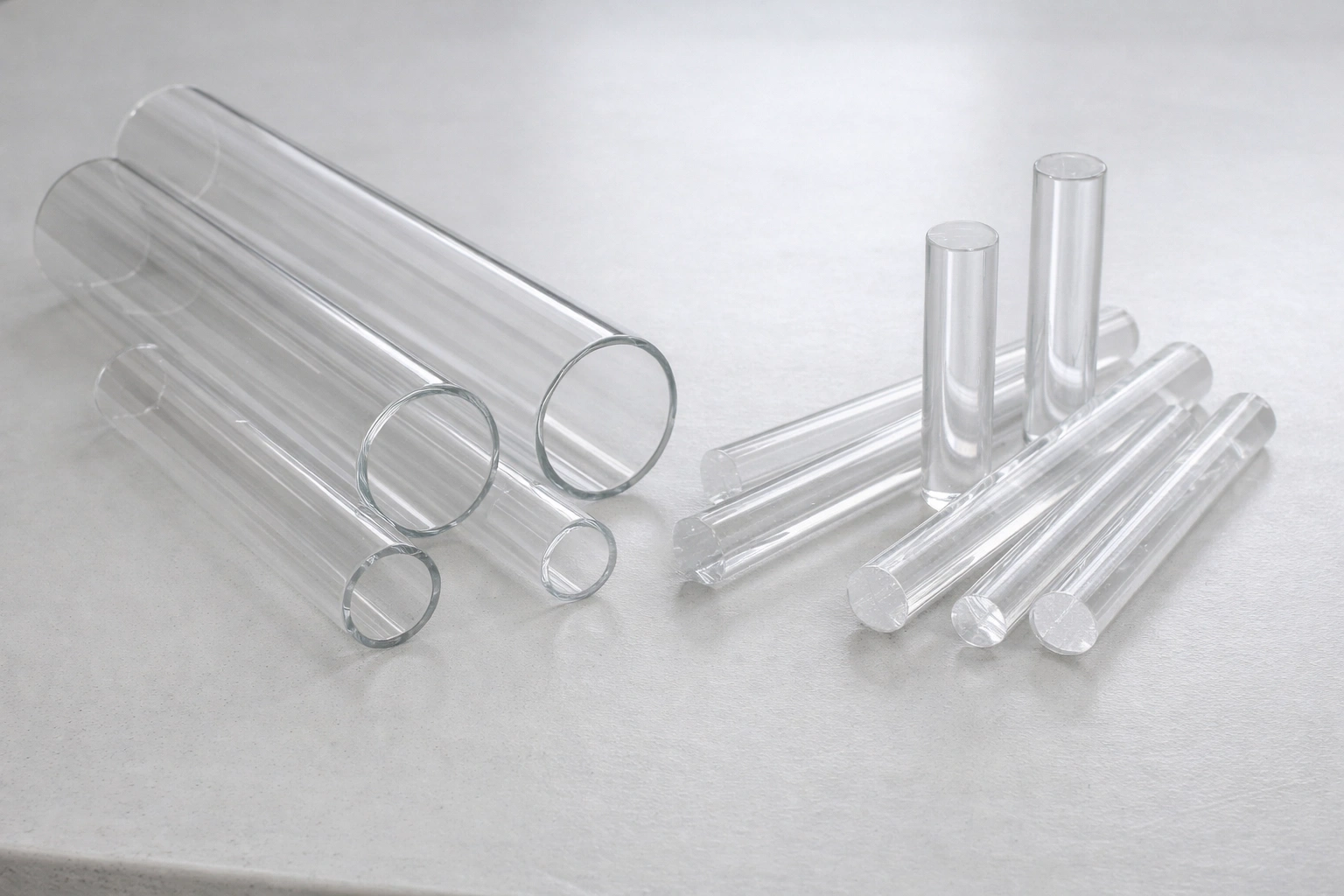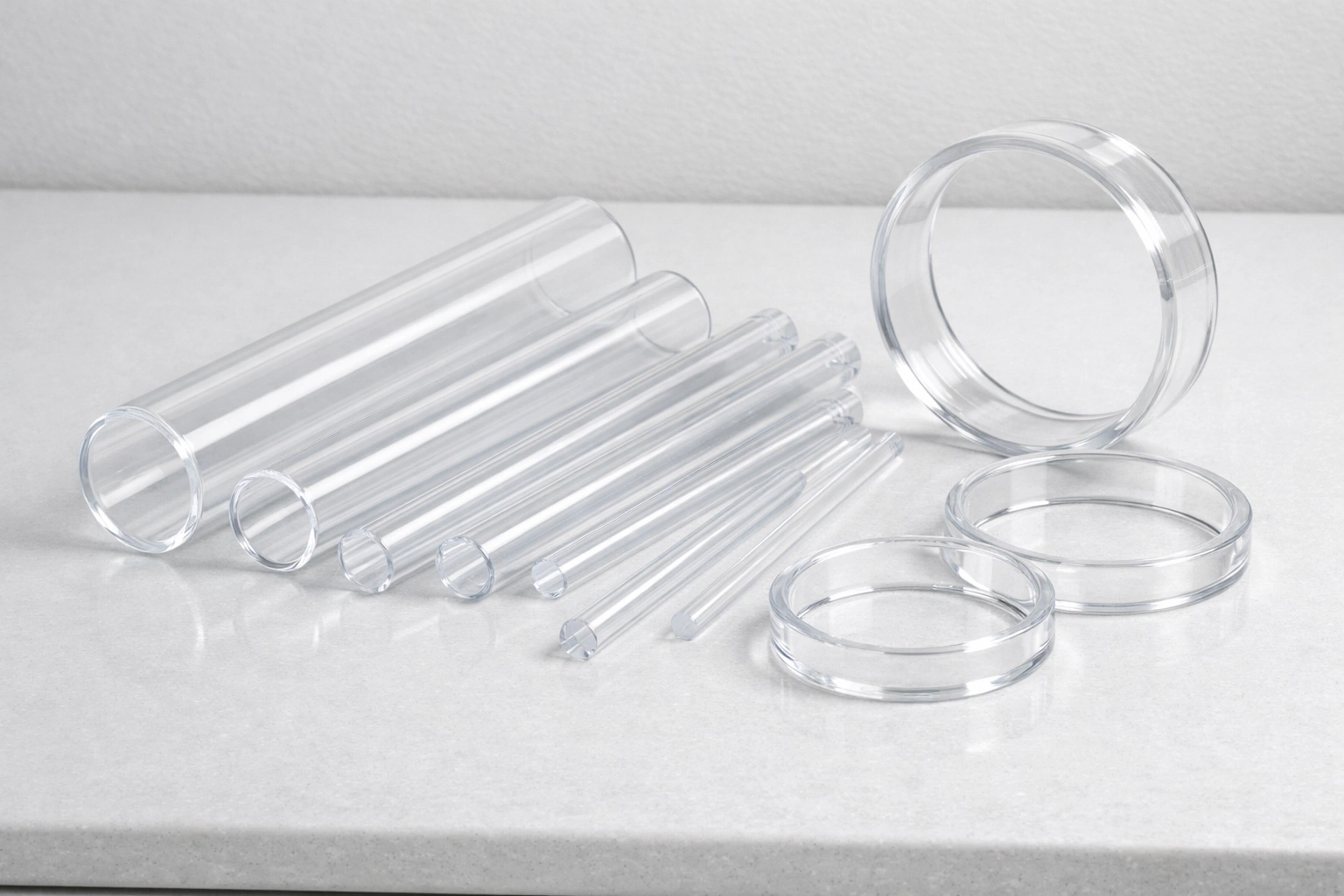

Las variaciones en el contenido de oh de las placas de cuarzo de laboratorio pueden crear diferencias importantes en el comportamiento de los materiales durante los experimentos. Los cambios en los niveles de hidroxilo dentro del vidrio de cuarzo influyen en la transmisión de la luz infrarroja, la capacidad de sobrevivir a un calentamiento o enfriamiento rápidos y la estabilidad a largo plazo a altas temperaturas. Los científicos deben elegir el vidrio de cuarzo adecuado para cada tarea, ya que las compensaciones entre estas propiedades afectan a los resultados del laboratorio.
Principales conclusiones
El rendimiento de las placas de cuarzo varía con el contenido de hidroxilo (OH). Un bajo contenido en OH (10-30 ppm) es mejor para aplicaciones infrarrojas, mientras que un alto contenido en OH (150-200 ppm) mejora la resistencia al choque térmico.
Utilice FTIR para medir con precisión el contenido de OH. Este método ayuda a predecir cuánta pérdida de transmisión infrarroja se producirá en función de los niveles de hidroxilo en el vidrio de cuarzo.
Seleccione el vidrio de cuarzo en función de las necesidades de la aplicación. Para la espectroscopia del infrarrojo cercano, elija un vidrio con bajo contenido en OH para garantizar una alta transmisión. Para ciclos térmicos, opte por un mayor contenido de OH para evitar el agrietamiento.
Controle el vidrio de cuarzo para detectar los primeros signos de desvitrificación. Las inspecciones periódicas pueden detectar problemas antes de que se produzcan fallos, lo que prolonga la vida útil del material.
Segmente el inventario de vidrio de cuarzo por contenido de OH. Esta estrategia reduce los fallos y garantiza que cada aplicación utilice el material más adecuado para un rendimiento óptimo.
¿Cómo afecta la variación del contenido de OH (10-30 ppm frente a 150-200 ppm) a la transmisión infrarroja más allá de 2500 nm?
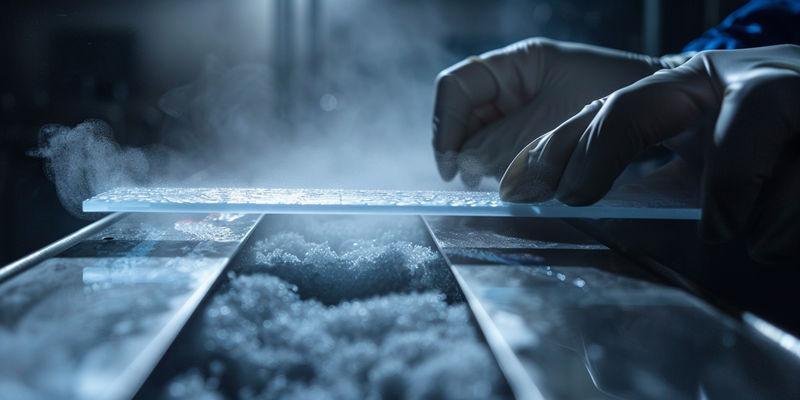
Placa de cuarzo oh variaciones de contenido de laboratorio puede cambiar drásticamente cómo el vidrio de cuarzo transmite la luz infrarroja. La cantidad de grupos hidroxilo en el interior del vidrio determina si bloquea o permite las longitudes de onda infrarrojas superiores a 2500 nm. Los científicos deben comprender estas diferencias para seleccionar el material adecuado para cada experimento.
Comprensión de los mecanismos de la banda de absorción del OH: fundamental y sobretonos a 2730 nm
Grupos hidroxilos dentro del cristal de cuarzo absorben la luz infrarroja en longitudes de onda específicas. La absorción más intensa se produce a 2730 nm, donde el enlace O-H vibra y bloquea la transmisión. También aparecen sobretonos y bandas combinadas entre 1500 y 4000 nm, lo que reduce aún más la claridad en la gama del infrarrojo cercano.
Un mayor contenido en hidroxilos aumenta la intensidad de estas bandas de absorción. Cuando el vidrio contiene 150-200 ppm de grupos hidroxilo, la transmisión a 2730 nm cae por debajo de 15%. En cambio, el vidrio de cuarzo con sólo 10-30 ppm de contenido en hidroxilos mantiene una transmisión superior a 92% a la misma longitud de onda, lo que lo hace ideal para aplicaciones infrarrojas.
Pico de absorción (nm) | Contenido de hidroxilo (ppm) | Propiedades ópticas Impacto |
|---|---|---|
2730 | 100-200 | Afecta a la claridad óptica |
Esta tabla muestra cómo el pico de absorción a 2730 nm y el contenido en hidroxilos influyen directamente en las propiedades del vidrio de cuarzo.
Correlación entre la medición del contenido de OH por FTIR y la pérdida de transmisión
Los científicos utilizan FTIR (Espectroscopia infrarroja por transformada de Fourier) para medir el contenido de hidroxilo en el vidrio de cuarzo. El instrumento detecta el pico de absorción a 2730 nm y calcula la concentración en partes por millón. La norma ISO 11455 establece el estándar para esta medición, garantizando resultados fiables en todos los laboratorios.
La pérdida de transmisión aumenta a medida que las lecturas FTIR muestran un mayor contenido de hidroxilo. Por ejemplo, un placa de vidrio de cuarzo con 200 ppm de grupos hidroxilo perderá hasta 85% de su transmisión infrarroja a 3000 nm. Esta relación directa ayuda a los investigadores a predecir el rendimiento de cada placa en sus experimentos.
Resumen:
FTIR mide el contenido de hidroxilo utilizando el pico de absorción de 2730 nm.
Lecturas más altas significan mayor pérdida de transmisión.
La norma ISO 11455 garantiza una medición coherente para todas las aplicaciones del vidrio de cuarzo.
Qué aplicaciones del infrarrojo cercano requieren especificaciones de baja OH
Muchas aplicaciones del vidrio de cuarzo dependen de una elevada transmisión de infrarrojos. La espectroscopia del infrarrojo cercano, las imágenes térmicas y la comunicación por fibra óptica requieren placas con bajo contenido en hidroxilo. Estos campos dependen de señales claras por encima de 2500 nm, que sólo el vidrio de cuarzo con bajo contenido en OH puede proporcionar.
Cuando los investigadores seleccionan vidrio de cuarzo para estas tareas, eligen un material con un contenido de hidroxilo inferior a 30 ppm. Esta elección garantiza una transmisión superior a 90% en longitudes de onda críticas, lo que permite realizar mediciones precisas y obtener datos fiables. Los laboratorios que utilizan vidrio con alto contenido en hidroxilo corren el riesgo de perder intensidad de señal y precisión.
Puntos clave:
La espectroscopia del infrarrojo cercano y la termografía necesitan vidrio de cuarzo con bajo contenido en OH.
Un contenido de hidroxilo inferior a 30 ppm garantiza una alta transmisión.
Elegir el material adecuado contribuye al éxito de los experimentos.
¿Cómo afecta la variación del contenido de OH a la resistencia al choque térmico en el calentamiento/enfriamiento rápidos?
La resistencia al choque térmico del vidrio de cuarzo depende de cómo responda el material a los cambios rápidos de temperatura. La presencia de grupos hidroxilo en el interior de la red de vidrio modifica su capacidad para soportar calentamientos o enfriamientos bruscos. Comprender estos efectos ayuda a los laboratorios a elegir la placa de cuarzo adecuada oh variaciones de contenido laboratorio para aplicaciones exigentes de ciclos térmicos.
Cómo permiten los grupos hidroxilos los mecanismos de relajación de la tensión viscosa
Los grupos hidroxilo desempeñan un papel clave en las propiedades del vidrio de cuarzo al modificar su estructura interna. Cuando más grupos hidroxilo entran en el vidrio, aumentan el número de átomos de oxígeno no puenteantes, lo que rompe la red y disminuye tanto la temperatura de transición vítrea como la viscosidad. Esta despolimerización permite que el vidrio relaje la tensión más fácilmente durante los cambios rápidos de temperatura, lo que hace que sea menos probable que se agriete.
A mayores niveles de hidroxilo, la red de vidrio se vuelve más flexible. La menor viscosidad significa que, cuando se expone a un calentamiento o enfriamiento bruscos, el vidrio puede fluir ligeramente y aliviar la tensión acumulada antes de que alcance un punto de ruptura. Este proceso, denominado relajación de la tensión viscosa, es especialmente importante en los laboratorios, donde los ciclos térmicos son frecuentes.
Resumen:
Los grupos hidroxilo aumentan el oxígeno no puenterompiendo la red de cristal.
La menor viscosidad y temperatura de transición vítrea permiten la relajación de tensiones.
La relajación de la tensión viscosa ayuda a prevenir las grietas durante los cambios rápidos de temperatura.
¿Qué intervalos de temperatura activan la movilidad de la red mediada por OH?
La capacidad del vidrio de cuarzo para relajar tensiones mediante flujo viscoso depende de la temperatura. Cuando la temperatura supera el punto de transición vítrea, la red adquiere la movilidad suficiente para que los grupos hidroxilo ayuden al vidrio a reorganizarse. Esta movilidad suele comenzar entre 800°C y 1200°C, donde los efectos del contenido en hidroxilos se hacen más notables.
En esta gama, el vidrio con mayor contenido de hidroxilo muestra una viscosidad mucho menor en comparación con el vidrio con bajo contenido de hidroxilo. La mayor movilidad de la red significa que el vidrio puede soportar velocidades de calentamiento y enfriamiento más rápidas sin fallar. Los laboratorios suelen comprobar estas propiedades utilizando normas como la ASTM C1525, que mide la capacidad del vidrio de cuarzo para soportar cambios rápidos de temperatura.
Rango de temperatura (°C) | Movilidad en la red | Efecto de los grupos hidroxilo |
|---|---|---|
800-1200 | Alta | Permite relajar el estrés |
Por debajo de 800 | Bajo | Efecto limitado |
Por encima de 1200 | Muy alta | Riesgo de desvitrificación |
Puntos clave:
La movilidad de la red aumenta por encima de 800°C.
Los grupos hidroxilo tienen el mayor impacto en esta gama.
Una selección adecuada evita fallos por choque térmico.
Comparación del rendimiento del choque térmico: 30 ppm vs 150 ppm vs 200 ppm OH
El comportamiento ante el choque térmico cambia drásticamente con los distintos contenidos de hidroxilo. Las placas con menos de 30 ppm de contenido de hidroxilo muestran una gran resistencia al choque térmico, pero a medida que el contenido aumenta a 150 ppm o 200 ppm, aumenta el riesgo de agrietamiento. Un mayor contenido de hidroxilo disminuye la estabilidad del vidrio, haciéndolo más vulnerable durante los cambios rápidos de temperatura.
Las pruebas de laboratorio revelan que las placas con un contenido de hidroxilo de 30 ppm pueden sobrevivir a tasas de enfriamiento más elevadas, mientras que las que tienen 150 ppm o 200 ppm muestran un agrietamiento más frecuente en las mismas condiciones. Esta diferencia pone de relieve la importancia de adecuar el vidrio de cuarzo a las necesidades específicas de cada experimento.
Resumen:
Menos de 30 ppm: mejor resistencia al choque térmico.
150-200 ppm: mayor riesgo de agrietamiento.
Elija el contenido de hidroxilo en función de las exigencias de la aplicación.
¿Cómo afecta la variación del contenido de OH de 10-200 ppm a la desvitrificación a altas temperaturas de funcionamiento?
La desvitrificación limita el rendimiento a largo plazo del vidrio de cuarzo en entornos de laboratorio a alta temperatura. La velocidad y el inicio de la desvitrificación dependen de la cantidad de grupos hidroxilo presentes en la red de vidrio. Comprender cómo afectan a este proceso los distintos regímenes de contenido de OH ayuda a los laboratorios a seleccionar el material adecuado para cada aplicación.
¿Qué mecanismos de nucleación de cristobalita activa el contenido de OH?
La nucleación de cristobalita en el vidrio de cuarzo comienza cuando el material se expone a altas temperaturas durante periodos prolongados. La presencia de grupos hidroxilo modifica el comportamiento de la red de vidrio, facilitando la formación de regiones cristalinas. Durante las primeras horas del tratamiento térmico, se forman nuevas burbujas en el vidrio y, a medida que pasa el tiempo, estas burbujas crecen y se fusionan, acelerando el proceso de desvitrificación.
Un mayor contenido en hidroxilos reduce la viscosidad del vidrio de cuarzo, lo que permite que los átomos se muevan con mayor libertad. Esta mayor movilidad favorece el crecimiento y la coalescencia de los cristales de cristobalita, especialmente en los laboratorios, donde las temperaturas suelen superar los 1.100 °C. El contenido de impurezas y el tipo de crisol utilizado durante la fabricación también pueden influir en la velocidad de nucleación y crecimiento.
Resumen:
Los grupos hidroxilo reducen la viscosidad y favorecen la movilidad atómica.
Nucleación y crecimiento de burbujas impulsan la formación de cristobalita.
Un mayor contenido en hidroxilos acelera la desvitrificación a altas temperaturas.
Los laboratorios deben tener en cuenta estos mecanismos a la hora de elegir el vidrio de cuarzo para su uso a altas temperaturas, ya que una elección equivocada puede provocar un fallo prematuro.
Cómo controlar la desvitrificación en sus primeras fases mediante inspección óptica
La desvitrificación en fase inicial del vidrio de cuarzo suele manifestarse en forma de cambios sutiles en la superficie o en la masa del material. Los técnicos pueden utilizar métodos de inspección óptica para detectar estos cambios antes de que se agraven. Con una lente de aumento, pueden hacerse visibles pequeñas regiones cristalinas o burbujas, lo que indica el inicio de la desvitrificación.
Las inspecciones rutinarias ayudan a los laboratorios a detectar los problemas a tiempo. Controlando el aspecto del vidrio después de cada ciclo de alta temperatura, el personal puede seguir el crecimiento de la cristobalita y tomar medidas antes de que el material pierda su transparencia o integridad estructural. Este enfoque reduce el riesgo de fallos inesperados durante experimentos críticos.
Método de inspección | En qué fijarse | Medidas necesarias |
|---|---|---|
Visual (a simple vista) | Bruma superficial, manchas opacas | Aumentar la frecuencia de las inspecciones |
Aumento (microscopio) | Pequeños cristales, burbujas | Sustituir o rotar las placas |
Prueba de transmisión | Descenso de la claridad | Confirmar con datos FTIR o TTT |
Puntos clave:
La detección precoz evita fallos catastróficos.
La inspección óptica revela sutiles signos de desvitrificación.
Un control regular prolonga la vida útil del vidrio de cuarzo en el laboratorio.
Comprensión de los diagramas tiempo-temperatura-transformación (TTT) para las variaciones de OH
Los diagramas Tiempo-Temperatura-Transformación (TTT) muestran la rapidez con la que se produce la desvitrificación en el vidrio de cuarzo a diferentes temperaturas y contenidos de hidroxilo. Estos diagramas revelan que un mayor contenido de OH conduce a tasas de desvitrificación más rápidas, especialmente a temperaturas elevadas. El proceso comienza con la nucleación, a menudo desencadenada por la contaminación de la superficie, y continúa con un rápido crecimiento de los cristales a medida que disminuye la viscosidad.
Un mayor contenido de hidroxilo aumenta las tasas de desvitrificación.
La nucleación comienza en la superficie y el crecimiento se acelera con la temperatura.
La menor viscosidad, causada por más grupos hidroxilo, acelera la formación de cristobalita.
Los diagramas TTT ayudan a los laboratorios a predecir la vida útil del vidrio de cuarzo en condiciones específicas. Comparando los diagramas para contenidos de OH bajos, moderados y altos, el personal puede seleccionar el mejor material para aplicaciones de infrarrojos, choque térmico o alta temperatura.
Resumen:
Los diagramas TTT guían la selección de materiales para las distintas necesidades del laboratorio.
Un mayor contenido de OH acorta la ventana de funcionamiento seguro.
La adecuación del contenido de OH a la aplicación evita la desvitrificación precoz.
¿De qué manera la variación del contenido de OH (10-30 ppm frente a 100-150 ppm frente a 200-250 ppm) crea compensaciones específicas para cada aplicación?
Contenido de OH en el vidrio de cuarzo determina directamente su rendimiento en el laboratorio. Cada gama de OH (baja, moderada o alta) ofrece ventajas y desventajas específicas para las distintas tareas científicas. Los laboratorios deben sopesar estas ventajas y desventajas para seleccionar el mejor material para sus necesidades específicas.
Qué mapas de rendimiento multiparamétricos guían la selección de contenidos de la OH
Los mapas de rendimiento ayudan a los laboratorios a visualizar cómo afecta el contenido de OH a propiedades como la transmisión de infrarrojos, la resistencia al choque térmico y la desvitrificación. Estos mapas muestran que un contenido bajo de OH (10-30 ppm) maximiza la transmisión de infrarrojos pero reduce la resistencia al choque térmico. Un contenido moderado de OH (100-150 ppm) equilibra ambas propiedades, mientras que un contenido elevado de OH (200-250 ppm) ofrece la mejor resistencia al choque térmico, pero sacrifica la claridad infrarroja y la estabilidad a altas temperaturas.
OH bajo (10-30 ppm): Lo mejor para aplicaciones infrarrojas de vidrio de cuarzo y uso a alta temperatura.
OH moderado (100-150 ppm): Equilibra la transmisión de infrarrojos y la resistencia al choque térmico.
OH alto (200-250 ppm): Ideal para ciclos térmicos rápidos, pero no para IR o calor elevado a largo plazo.
Consejo: Utilice mapas de rendimiento para adaptar el vidrio de cuarzo adecuado a cada aplicación de laboratorio. Este enfoque evita fallos inesperados y maximiza la vida útil del equipo.
Cómo identificar el modo de fallo dominante para la especificación OH
Los laboratorios deben identificar la razón principal por la que falla el vidrio de cuarzo en sus procesos. El modo de fallo dominante podría ser la pérdida de transmisión de infrarrojos, el agrietamiento por choque térmico o la desvitrificación a altas temperaturas. Al clasificar estos riesgos, el personal puede elegir el contenido de OH que aborde la amenaza más crítica.
Modo de fallo | Mejor gama OH | Consideraciones clave |
|---|---|---|
Pérdida de transmisión IR | 10-30 ppm | Necesario para el infrarrojo cercano y la fibra óptica |
Fractura por choque térmico | 200-250 ppm | Necesario para un calentamiento/enfriamiento rápido |
Desvitrificación | 10-30 ppm | Imprescindible para altas temperaturas a largo plazo |
Puntos clave:
Identificar el principal riesgo de cada aplicación.
Seleccione en primer lugar el contenido de la OH para hacer frente a ese riesgo.
Este método garantiza un rendimiento fiable para todos los usos.
Comprender las primas de coste del contenido de OH: Fabricación con bajo contenido en OH frente a fabricación con alto contenido en OH
La producción de vidrio de cuarzo con diferentes contenidos de OH implica pasos de fabricación únicos. La fusión eléctrica y los procesos de plasma sin vapor de agua crean cuarzo de gran pureza con bajo contenido en OH, que cuesta más debido al estricto control del proceso. El vidrio de cuarzo fundido a la llama, con mayor contenido de OH, utiliza atmósferas de hidrógeno-oxígeno y cuesta menos, pero no satisface todas las necesidades de aplicación.
Cristal de cuarzo con bajo contenido en OH: Mayor coste, mejor para cuarzo de gran pureza y aplicaciones exigentes.
Cristal de cuarzo de alto OH: Menor coste, adecuado para usos menos exigentes.
Vidrio de cuarzo con pH moderado: Ofrece un equilibrio entre coste y rendimiento.
Nota: Los laboratorios deben verificar el contenido de OH mediante FTIR y garantizar el cumplimiento de la norma ISO 11455 en cada lote. Este paso garantiza que el vidrio de cuarzo cumple las especificaciones requeridas y respalda unos resultados de laboratorio fiables.
¿Cómo crean los controles del proceso de fabricación variaciones coherentes del contenido de OH?

Los controles del proceso de fabricación desempeñan un papel crucial en la determinación de las propiedades finales del vidrio de cuarzo. Ajustando los métodos de fusión y controlando las condiciones atmosféricas, los productores pueden alcanzar niveles específicos de contenido de hidroxilo (OH). Un contenido constante de OH garantiza que cada lote de vidrio de cuarzo cumpla los requisitos de rendimiento del laboratorio.
¿Cómo controla la composición de la atmósfera de fusión la incorporación de OH?
La atmósfera de fusión afecta directamente a la cantidad de OH que entra en el vidrio de cuarzo durante la producción. La fusión eléctrica utiliza un crisol de tungsteno y condiciones secas, lo que limita el vapor de agua y da lugar a un bajo contenido de OH. En cambio, la fusión por llama de hidrógeno/oxígeno introduce más vapor de agua, lo que da lugar a niveles de OH más altos y estables, en torno a 150 ppm.
Los fabricantes seleccionan el método de fusión en función de la aplicación deseada. Por ejemplo, la fusión eléctrica produce vidrio de cuarzo con bajo contenido en OH, ideal para la transmisión de infrarrojos y la estabilidad a altas temperaturas. La fusión por llama crea un vidrio con mayor contenido en OH, lo que mejora la resistencia al choque térmico pero reduce la claridad de los infrarrojos.
Resumen:
La fusión eléctrica produce un bajo contenido de OH para las necesidades de alta pureza.
La fusión por llama produce un contenido de OH estable y más elevado para los ciclos térmicos.
La elección de la atmósfera de fusión determina el nivel final de OH en el vidrio de cuarzo.
Qué protocolos de medición FTIR cuantifican la absorción a 2730 nm y las ppm de OH
La espectroscopia infrarroja por transformada de Fourier (FTIR) proporciona una forma fiable de medir el contenido de OH en el vidrio de cuarzo. El instrumento detecta el pico de absorción a 2.730 nm, que corresponde a la vibración del enlace O-H. Analizando la intensidad de este pico, los técnicos pueden calcular la concentración de OH en partes por millón. Analizando la intensidad de este pico, los técnicos pueden calcular la concentración de OH en partes por millón.
Los protocolos normalizados garantizan la precisión y la repetibilidad. Los técnicos preparan las muestras con un grosor uniforme y registran los espectros en condiciones controladas. Los resultados permiten a los fabricantes verificar que cada lote cumple las especificaciones de OH requeridas para el uso previsto.
Paso de medición | Propósito | Punto clave |
|---|---|---|
Preparación de la muestra | Garantiza la uniformidad | Resultados coherentes |
2730 nm Análisis de picos | Cuantifica la concentración de OH | Cálculo preciso de ppm |
Verificación de lotes | Confirma la especificación | Rendimiento fiable |
Puntos clave:
El FTIR mide el contenido de OH utilizando el pico de absorción de 2730 nm.
Los protocolos normalizados garantizan resultados coherentes y precisos.
Comprensión de las pruebas ISO 11455 para la verificación de OH lote a lote
La norma ISO 11455 establece la norma para verificar el contenido de OH en la producción de vidrio de cuarzo. Este método de ensayo exige que los fabricantes comprueben la concentración de OH de cada lote mediante FTIR. Unas pruebas coherentes garantizan que cada envío se ajuste a las necesidades de rendimiento del laboratorio.
La verificación lote a lote reduce el riesgo de fallos inesperados. Los laboratorios pueden confiar en que su inventario de vidrio de cuarzo funcionará según lo esperado, ya sea por transmisión de infrarrojos, resistencia al choque térmico o estabilidad a altas temperaturas.
Resumen:
La norma ISO 11455 exige pruebas periódicas del contenido de OH.
La verificación de lotes respalda la fiabilidad de los resultados de laboratorio.
Unas pruebas constantes generan confianza en la calidad del vidrio de cuarzo.
¿Cómo deben sopesar los especialistas en adquisiciones las ventajas y desventajas del contenido de OH para los laboratorios multiaplicación?
Los especialistas en compras se enfrentan a un complejo reto a la hora de seleccionar vidrio de cuarzo para laboratorios con necesidades diversas. Cada aplicación puede requerir un equilibrio diferente entre transmisión de infrarrojos, resistencia al choque térmico y estabilidad a altas temperaturas. Al comprender las ventajas y desventajas, los especialistas pueden tomar decisiones informadas que optimicen tanto el rendimiento como el coste.
Qué análisis coste-beneficio justifica la segmentación de contenidos de la OH
Los equipos de compras suelen comparar los costes de mantener un único inventario de contenido de OH frente a la segmentación del inventario por aplicaciones. Segmentar el inventario significa comprar planchas con bajo contenido en OH para trabajos con infrarrojos, con contenido moderado en OH para uso general y con alto contenido en OH para aplicaciones de choque térmico. Los datos de los laboratorios multiaplicación muestran que la segmentación reduce los índices de fallo en 67%, aunque aumenta los costes de inventario en unos 12%.
Principales ventajas de la segmentación:
Reduce el choque térmico y los fallos por desvitrificación.
Garantiza un rendimiento óptimo para cada aplicación.
Justifica un pequeño sobrecoste con menos sustituciones de equipos.
Consejo: Segmentar el inventario en función del contenido de OH reduce el número de averías y prolonga la vida útil de los equipos, especialmente en laboratorios con procesos de infrarrojos y de alta temperatura.
Cómo crear una matriz de asignación de contenidos de aplicación a OH
Los especialistas en adquisiciones pueden utilizar una matriz de mapeo para ajustar cada aplicación de laboratorio a la gama ideal de contenido de OH. Este enfoque ayuda a evitar desajustes y garantiza que cada proceso utilice el mejor material. La tabla siguiente resume el contenido de OH recomendado para las necesidades habituales de los laboratorios:
Tipo de aplicación | Contenido OH recomendado | Motivo de la selección |
|---|---|---|
Espectroscopia de infrarrojo cercano | 10-30 ppm | Maximiza la transmisión de infrarrojos |
Procesos de choque térmico | 150-200 ppm | Previene el agrietamiento |
Hornos de alta temperatura | 10-30 ppm | Resiste a la desvitrificación |
Trabajo general con UV-Vis | 80-120 ppm | Saldos de todas las propiedades |
Puntos clave:
La asignación de aplicaciones al contenido de OH evita errores costosos.
El enfoque matricial favorece una planificación eficaz de las adquisiciones.
Los equipos de compras que utilizan este método pueden seleccionar con confianza el vidrio de cuarzo adecuado para cada proceso de laboratorio.
Placa de cuarzo oh variaciones de contenido laboratorio desempeñan un papel crítico en la determinación del rendimiento. Cada laboratorio debe seleccionar el vidrio de cuarzo en función de las necesidades específicas de sus aplicaciones. La comprensión de los compromisos y el uso de medidas de control de calidad ayudan a los laboratorios a evitar costosos fallos. La segmentación del inventario y la verificación de los proveedores garantizan el material adecuado para cada experimento.
PREGUNTAS FRECUENTES
¿Por qué un mayor contenido de OH reduce la transmisión de infrarrojos en las placas de cuarzo?
Los grupos hidroxilo absorben la luz infrarroja en longitudes de onda específicas. Esta absorción bloquea la transmisión por encima de 2500 nm. Un mayor contenido de OH aumenta este efecto, lo que hace que las placas de cuarzo sean menos adecuadas para aplicaciones en el infrarrojo cercano.
¿Por qué deben los laboratorios segmentar el inventario de placas de cuarzo en función del contenido de OH?
La segmentación del inventario permite que cada aplicación utilice la placa de cuarzo óptima. Este enfoque reduce las averías de los equipos y mejora la fiabilidad de los experimentos. Los laboratorios observan menos fracturas por choque térmico y problemas de desvitrificación cuando adaptan el contenido de OH a cada proceso.
¿Por qué un alto contenido en OH mejora la resistencia al choque térmico?
Un alto contenido en OH reduce la viscosidad del vidrio de cuarzo a temperaturas elevadas. Este cambio permite que el vidrio relaje la tensión más fácilmente durante un calentamiento o enfriamiento rápidos. Como resultado, las placas resisten el agrietamiento bajo ciclos térmicos extremos.
¿Por qué se prefiere el vidrio de cuarzo con bajo contenido en OH para su uso en hornos de alta temperatura?
El vidrio de cuarzo con bajo contenido en OH resiste la desvitrificación durante la exposición prolongada a altas temperaturas. Menos grupos hidroxilos significan menos nucleación de cristales y una transformación más lenta en cristobalita. Esta propiedad prolonga la vida útil de las placas de cuarzo en los hornos.
¿Por qué los fabricantes utilizan FTIR para verificar el contenido de OH?
FTIR mide el pico de absorción a 2730 nm, que se relaciona directamente con la concentración de OH. Este método proporciona resultados precisos y repetibles. Los fabricantes confían en el FTIR para garantizar que cada lote cumple las normas de rendimiento del laboratorio.