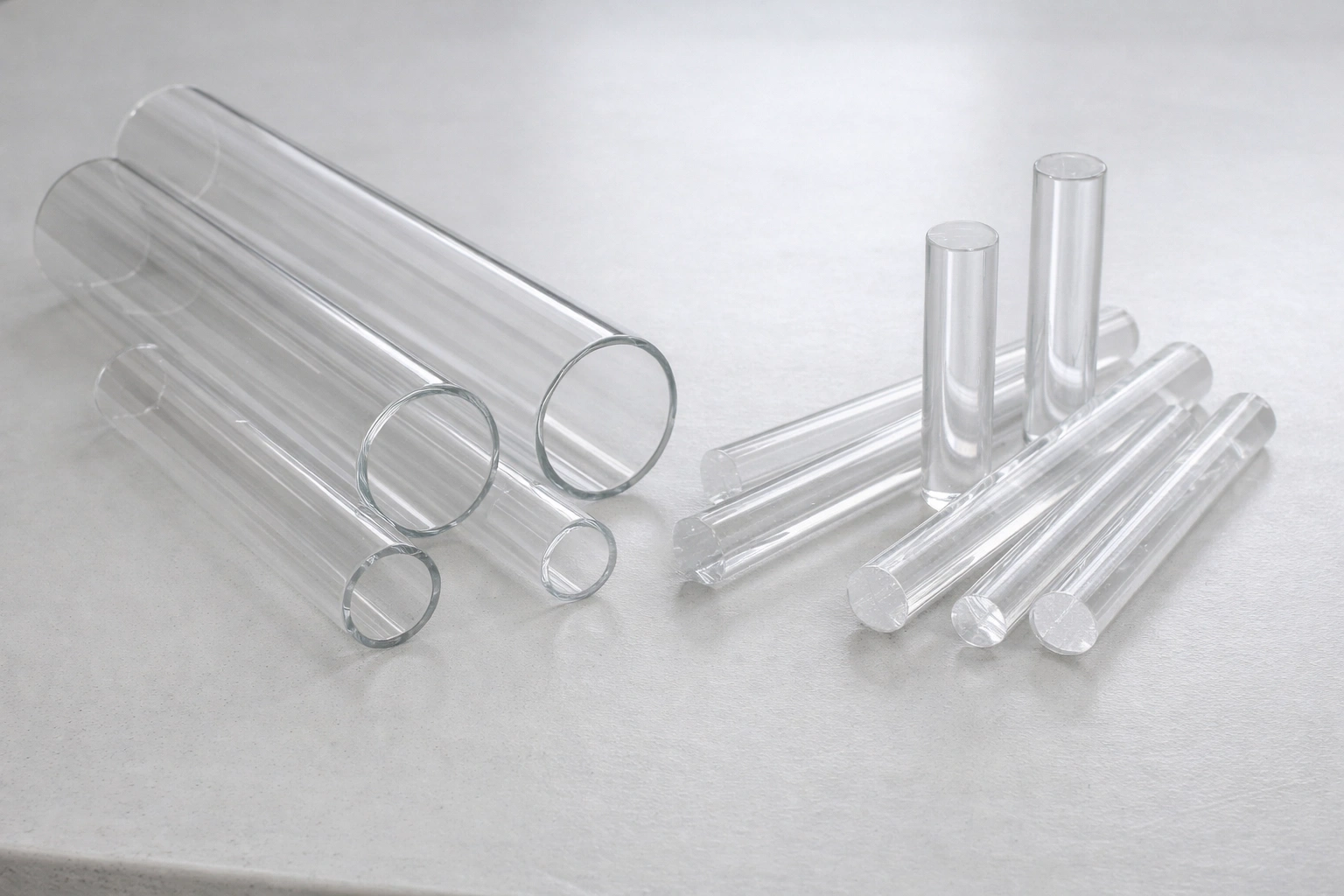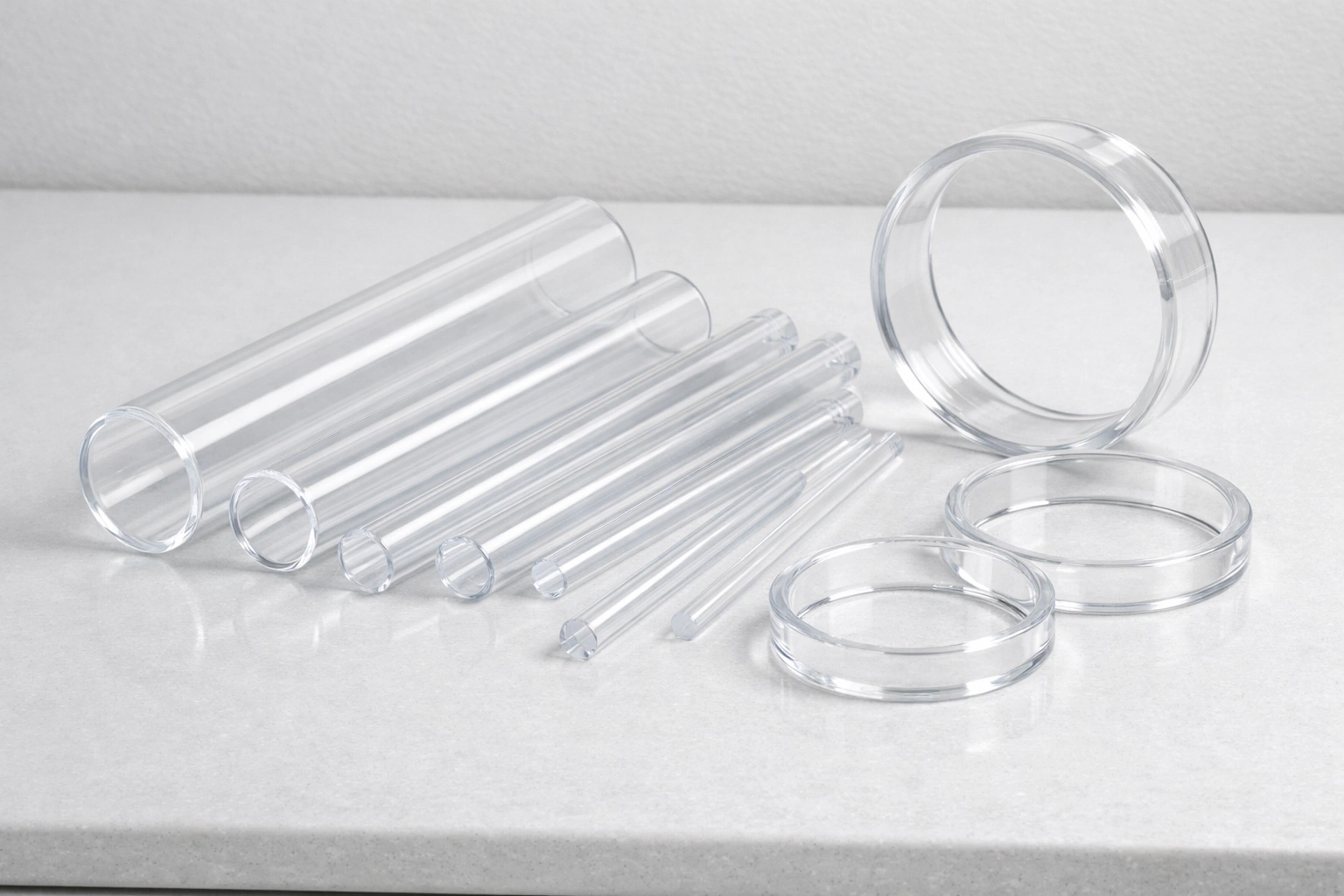

Los discos de cuarzo de los equipos láser de alta potencia deben cumplir estrictos requisitos de umbral de daño láser. Para sistemas de 1 a 3 kW, el umbral recomendado es de al menos 10 J/cm², mientras que los niveles de potencia superiores exigen una durabilidad aún mayor. La selección del umbral de daño láser correcto para los discos de cuarzo de equipos de alta potencia garantiza un funcionamiento fiable y reduce los costosos tiempos de inactividad en entornos industriales.
Principales conclusiones
Seleccione discos de cuarzo con un umbral de daño láser de al menos 10 J/cm² para sistemas de 1-3 kW para garantizar un funcionamiento fiable.
Utilice un margen de seguridad de 2,5-3× por encima de la densidad de potencia calculada para protegerse de daños inesperados y prolongar la vida útil de los discos de cuarzo.
Comprenda que los pulsos láser más cortos requieren valores de LIDT más altos debido al aumento de la intensidad pico, lo que aumenta el riesgo de daños.
Elija cuarzo de alta pureza (≥ 99,99% SiO₂) para minimizar la absorción de impurezas y mejorar la resistencia del disco a los daños del láser.
Implementar pruebas S-on-1 para validar el LIDT en condiciones reales, garantizando que los discos de cuarzo puedan soportar aplicaciones de alta potencia.
¿Cuáles son los valores LIDT requeridos de los discos de cuarzo para distintos niveles de potencia láser?
Discos de cuarzo en ópticas láser de alta potencia deben cumplir requisitos específicos para evitar daños durante el funcionamiento. El umbral correcto de daño inducido por láser depende de la potencia del láser, el perfil del haz y el tiempo de funcionamiento del equipo. Comprender estos factores ayuda a los usuarios a seleccionar los discos de cuarzo adecuados para un funcionamiento fiable y seguro.
Métodos de cálculo de la densidad de potencia para distintos perfiles de haz
La densidad de potencia láser indica cuánta energía incide sobre un disco de cuarzo en una zona determinada. El cálculo varía en función de la forma del haz láser. Un rayo gaussiano tiene la mayor parte de su potencia en el centro, mientras que un rayo Flat Top distribuye la potencia uniformemente.
Los ingenieros calculan la densidad de potencia pico de un haz gaussiano dividiendo la potencia total del láser por el área definida por el diámetro 1/e². En el caso de los haces Flat Top, el cálculo es más sencillo porque la potencia se propaga uniformemente, pero la densidad de potencia pico suele ser el doble que la de un haz gaussiano con el mismo diámetro. Esta diferencia significa que los discos de cuarzo de los equipos láser de alta potencia deben tener un umbral de daño láser más elevado cuando se utilizan con haces Flat Top, especialmente al mismo nivel de potencia.
Puntos clave que hay que recordar:
Haces gaussianos: Densidad de potencia máxima en el centro, calculada con 1/e² de diámetro.
Vigas planas: Potencia uniforme, densidad de pico aproximadamente 2 veces superior a la gaussiana.
Cálculo correcto: Garantiza que el umbral de daño inducido por láser del disco de cuarzo coincida con las condiciones del mundo real.
Elegir el método de cálculo adecuado ayuda a evitar daños inesperados y prolonga la vida útil del disco de cuarzo. Este paso es esencial para todas las aplicaciones de óptica láser de alta potencia.
Requisitos de LIDT para láseres pulsados frente a láseres de onda continua
Los láseres pulsados y de onda continua (CW) plantean retos diferentes a los discos de cuarzo. Los láseres pulsados suministran energía en ráfagas cortas, mientras que los láseres de onda continua proporcionan una salida constante. El umbral de daño inducido por el láser en los discos de cuarzo varía en función del tipo de láser utilizado.
Las duraciones de pulso más cortas en los láseres pulsados crean intensidades de pico más altas. Esto aumenta el riesgo de daños, aunque la potencia media sea la misma que la de un láser de onda continua. Por el contrario, los láseres de onda continua tienen una salida más estable, por lo que el umbral de daño depende más de cuánto calor pueda soportar el disco de cuarzo a lo largo del tiempo. Los discos de cuarzo de los equipos láser de alta potencia deben cumplir valores de LIDT más elevados para los láseres pulsados, especialmente a potencias pico elevadas.
Tipo láser | Requisito LIDT | Relación causa-efecto |
|---|---|---|
Pulsado | Más alto | Pulsos cortos = mayor intensidad de pico = más riesgo de daños |
Onda continua | Baja | Potencia constante = acumulación de calor = riesgo de daños térmicos |
Seleccionar el disco de cuarzo adecuado para cada tipo de láser protege contra daños repentinos y a largo plazo. Esta elección mejora la fiabilidad y reduce los costosos tiempos de inactividad.
Determinación del margen de seguridad en función de la duración de la explotación
Los ingenieros utilizan márgenes de seguridad para asegurarse de que los discos de cuarzo duren durante un funcionamiento prolongado del láser. Un margen de seguridad significa elegir un disco con un umbral de daño láser superior a la potencia máxima prevista. Esto ayuda a evitar daños por pequeños defectos o picos de potencia inesperados.
Pequeñas imperfecciones en la superficie del disco pueden reducir el umbral de daño en más de 40%. Incluso un solo defecto de alta absorción puede provocar un fallo prematuro. La limpieza y la calidad de la superficie son fundamentales para las ópticas láser de alta potencia, especialmente cuando el equipo funciona durante muchas horas al día.
Resumen de las mejores prácticas en materia de márgenes de seguridad:
Utilice un margen de seguridad de 2,5-3 veces por encima de la densidad de potencia calculada.
Inspeccionar en busca de defectos y mantener limpias las superficies.
Elija un LIDT más alto para tiempos de funcionamiento más largos o entornos más duros.
Siguiendo estos pasos, los usuarios pueden ampliar el tiempo medio hasta el fallo y evitar paradas inesperadas. Unos márgenes de seguridad adecuados protegen tanto el equipo como la inversión en equipos de alta potencia de discos de cuarzo con umbral de daño inducido por láser.
¿Cómo cambia la duración del pulso de los discos de cuarzo a diferentes niveles de potencia los requisitos de LIDT?
La duración del pulso desempeña un papel fundamental en la determinación del umbral de daño láser que deben cumplir los equipos de alta potencia de los discos de cuarzo. La duración de cada pulso láser, combinada con el nivel de potencia, afecta directamente a cómo y cuándo se producen los daños. Comprender estas relaciones ayuda a los usuarios a seleccionar los discos de cuarzo adecuados para un funcionamiento seguro y fiable.
Leyes de escalado de la duración de los impulsos: Del femtosegundo a la onda continua
Los pulsos láser más cortos requieren valores de umbral de daño inducido por láser mucho más altos para los discos de cuarzo. A medida que la duración del pulso disminuye de microsegundos a femtosegundos, la energía suministrada en cada pulso se concentra más. Esta concentración aumenta el riesgo de daños, incluso si la potencia media se mantiene igual.
Los ingenieros utilizan una ley de escala para predecir cómo cambia el umbral con la duración del pulso. La relación sigue una regla de raíz cuadrada: LIDT(τ) = LIDT(10ns) × (τ/10ns)^0,5. Por ejemplo, un pulso de 1 ns necesita aproximadamente tres veces el umbral de un pulso de 10 ns. Esta regla ayuda a los usuarios a ajustar los requisitos de LIDT para diferentes sistemas láser.
Puntos clave que hay que recordar:
Los pulsos más cortos necesitan un LIDT más alto.
Ley de escala: El LIDT aumenta a medida que disminuye la duración del impulso.
Un cálculo adecuado evita daños inesperados.
Transiciones del mecanismo de daño: Ionización vs. Térmico a diferentes niveles de potencia
Los discos de cuarzo sufren distintos tipos de daños en función de la duración y la potencia del impulso. Los impulsos más largos, como los microsegundos o la onda continua, causan principalmente daños térmicos. El disco se calienta, y la temperatura puede sobrepasar los límites de seguridad, provocando grietas o fusión.
Cuando el láser utiliza pulsos más cortos, como femtosegundos o picosegundos, el mecanismo de daño cambia. Los efectos no térmicos, como la ionización, adquieren mayor importancia. Estos efectos rompen los enlaces en el cuarzo sin mucho calentamiento, provocando fracturas limpias y menos residuos.
Resumen de las transiciones de daños:
Pulsos largos: Predominan los daños térmicos.
Pulsos cortos: Predominan los efectos de ionización y no térmicos.
Transición: A medida que se acorta la duración del pulso, cambia el principal mecanismo de daño.
Este cambio significa que los usuarios deben ajustar el LIDT del disco de cuarzo al tipo de daño previsto para cada aplicación láser.
Conversión de especificaciones LIDT: Fluencia (J/cm²) frente a densidad de potencia (W/cm²)
Los valores del umbral de daño inducido por láser utilizan diferentes unidades en función del tipo de láser. Los láseres pulsados utilizan la fluencia, medida en julios por centímetro cuadrado (J/cm²). Los láseres de onda continua utilizan la densidad de potencia, medida en vatios por centímetro cuadrado (W/cm²).
La conversión entre estas unidades depende de la duración del pulso y la tasa de repetición. Para los láseres pulsados, los ingenieros multiplican la energía por pulso por el número de pulsos y lo dividen por el área. En el caso de los láseres de onda continua, utilizan la potencia constante sobre el área del disco. Esta conversión garantiza que el umbral coincida con la exposición real al láser.
Tipo láser | Unidad LIDT | Cómo calcular | Riesgo de daños principales |
|---|---|---|---|
Pulsado | J/cm | Energía por pulso/área | Ionización/térmica |
Onda continua | W/cm | Potencia/área | Térmico |
La especificación LIDT correcta protege los discos de cuarzo de los daños repentinos y a largo plazo inducidos por el láser.
¿Cómo modifica la longitud de onda de funcionamiento de los discos de cuarzo los requisitos de LIDT en distintos rangos de potencia?
La longitud de onda de funcionamiento de un láser modifica la respuesta de los discos de cuarzo a la exposición de alta potencia. Las distintas longitudes de onda provocan diferentes tipos de daños, por lo que los ingenieros deben ajustar el umbral de daño láser que requieren los discos de cuarzo de los equipos de alta potencia. Comprender estos efectos ayuda a los usuarios a seleccionar los discos adecuados para cada aplicación.
Efectos de la energía fotónica: UV multifotón vs. IR daño térmico
Los láseres ultravioleta tienen una elevada energía fotónica. Estos fotones pueden romper los enlaces atómicos en el cuarzo a través de la absorción multifotónica, causando daños inducidos por láser incluso a una potencia media más baja. Los láseres infrarrojos tienen una energía fotónica menor, por lo que causan principalmente daños térmicos al calentar el cuarzo.
Los ingenieros observan que los láseres UV crean más centros de color y defectos en el cuarzo. Este proceso aumenta el riesgo de daños, especialmente en las ópticas láser de alta potencia. En cambio, los láseres IR suelen provocar fusión o agrietamiento por acumulación de calor, que depende de la energía total suministrada.
Puntos clave que hay que recordar:
Láseres UV: Causan daños multifotónicos y formación de centros de color.
Láseres IR: Provocar daños térmicos y fusión.
Energía fotónica: Determina el principal mecanismo de daño.
Estas diferencias demuestran por qué la longitud de onda es importante a la hora de establecer el umbral de daño inducido por láser para los discos de cuarzo.
Factores de escala LIDT específicos de la longitud de onda para ajustes del nivel de potencia
El umbral necesario para el daño inducido por láser cambia con la longitud de onda. Los láseres UV necesitan discos de cuarzo con valores LIDT más altos que los láseres IR a la misma potencia. Por ejemplo, un láser UV de 3 kW a 355 nm requiere un umbral de 27-30 J/cm², mientras que un láser IR de 3 kW a 1.064 nm sólo necesita 18 J/cm².
Los ingenieros utilizan factores de escala para ajustar los valores de LIDT a las distintas longitudes de onda. Multiplican el umbral de referencia por 1,5-2,0 para el UV y lo reducen por 0,8-0,9 para el IR lejano. Este ajuste garantiza que el disco de cuarzo pueda soportar la energía láser específica y evitar daños.
Longitud de onda | Factor de escala LIDT | Tipo de daño principal |
|---|---|---|
UV (<400 nm) | 1.5-2.0× | Centro multifotón/color |
Visible/IR | 1.0× | Mixto |
IR lejano (>5.000 nm) | 0.8-0.9× | Térmico |
Esta tabla destaca cómo afecta la longitud de onda al umbral y el tipo de daño que puede producirse.
Formación de centros de color en sistemas UV de alta potencia
Los láseres UV de alta potencia pueden crear centros de color en los discos de cuarzo. Estos centros de color son defectos que absorben más energía láser, lo que disminuye la resistencia del disco a nuevos daños. Con el tiempo, este proceso puede provocar fallos rápidos en las ópticas láser de alta potencia.
Los ingenieros comprueban la formación del centro de color mediante métodos como el escaneado de trama y la prueba S-on-1. El el escaneado de trama detecta defectos poco frecuentes y mide cómo cambia la densidad del daño con la exposición. Las pruebas S-on-1 exponen el disco a repetidos pulsos de láser para encontrar el verdadero umbral de daño.
Resumen de las mejores prácticas:
Controlar el crecimiento del centro de color en sistemas UV.
Utilice el escaneado de trama y las pruebas S-on-1 para una medición precisa del umbral.
Seleccionar discos de cuarzo con probada resistencia a la formación de centros de color.
Unas pruebas y una selección de materiales adecuadas ayudan a mantener el umbral de daño inducido por láser y a prolongar la vida útil de los discos de cuarzo en equipos de alta potencia.
¿Qué niveles de pureza del material de los discos de cuarzo permiten alcanzar altos valores de LIDT en distintos rangos de potencia?
La pureza del material desempeña un papel vital a la hora de determinar la resistencia de los discos de cuarzo a la exposición a láseres de alta potencia. La presencia de impurezas puede reducir el umbral de daño láser y aumentar el riesgo de fallo. Seleccionar el nivel de pureza adecuado garantiza que los discos de cuarzo satisfagan las exigencias de los equipos de umbral de daño láser de discos de cuarzo de alta potencia.
Absorción mediada por impurezas: Cálculos de calentamiento en función de la potencia
Las impurezas del cuarzo absorben la energía láser y generan un calentamiento localizado. Este calentamiento puede causar daños aunque la potencia total parezca segura. El riesgo aumenta a medida que aumenta la potencia del láser.
El cuarzo fundido de gran pureza, con al menos 99,99% SiO₂, reduce la absorción de impurezas y mantiene la temperatura estable. Una pureza menor permite que los iones metálicos absorban más energía, lo que provoca puntos calientes y daños prematuros. Los ingenieros calculan el efecto de calentamiento multiplicando la concentración de impurezas por la intensidad del láser, lo que demuestra que incluso pequeñas cantidades de metal pueden aumentar el riesgo.
Puntos clave para los ingenieros:
Su gran pureza reduce la absorción y los daños.
El calentamiento por impurezas crece con la potencia.
Los cálculos precisos evitan fallos inesperados.
Impurezas metálicas críticas: Límites de concentración de Fe, Ti y Al por nivel de potencia
El hierro, el titanio y el aluminio son las impurezas más perjudiciales para los discos de cuarzo de los sistemas láser. Incluso trazas de estos metales pueden reducir el umbral de daño y acortar la vida útil del disco. Los láseres de alta potencia requieren límites más estrictos para estos elementos.
A menor potencia, el cuarzo estándar con hasta 80 ppm de metales totales puede funcionar bien. A medida que aumenta la potencia, la concentración permitida se reduce a menos de 10 ppm para cada metal. Esta reducción garantiza que el cuarzo resista los daños inducidos por el láser y mantenga su rendimiento a lo largo del tiempo.
Pureza del material (SiO₂) | Requisito |
|---|---|
Cuarzo fundido de gran pureza | ≥ 99,99% |
Esta tabla pone de manifiesto la relación directa entre la pureza y la capacidad de soportar la exposición a láseres de alta potencia.
Análisis coste-beneficio: Prima de pureza frente a capacidad de potencia
Elegir cuarzo de mayor pureza aumenta el coste, pero también la resistencia del disco a los daños. Los usuarios deben sopesar el precio con la necesidad de fiabilidad en aplicaciones de alta potencia. El equilibrio adecuado depende de la potencia del láser y de las horas de funcionamiento previstas.
Los discos de cuarzo de pureza ultra alta cuestan más, pero ofrecen una vida útil más larga y menos sustituciones. Por ejemplo, un disco de sílice fundida GE214 de alta precisión cuesta $18-$20 por pieza, mientras que un disco estándar de grado UV oscila entre $4,50 y $10. La inversión adicional se amortiza reduciendo los tiempos de inactividad y evitando costosas averías.
Resumen de consideraciones clave:
A mayor pureza, mayor coste, pero mayor resistencia a los daños.
La mayor vida útil compensa el precio inicial.
Seleccionar la pureza adecuada protege tanto el equipo como el presupuesto.
¿Cómo deben las pruebas de producción validar la LIDT para aplicaciones de potencia específicas?
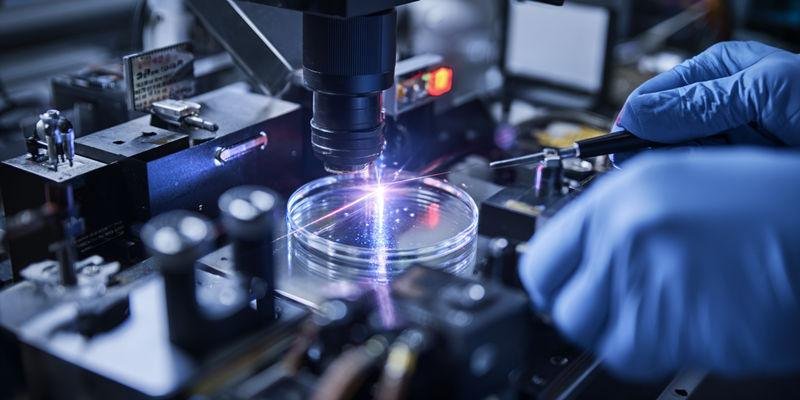
Las pruebas de producción garantizan que los discos de cuarzo cumplen el umbral de daño láser requerido para cada aplicación de potencia. Los ingenieros utilizan protocolos específicos para adaptarse a las condiciones reales de los sistemas láser de alta potencia. Una cuidadosa validación ayuda a evitar fallos prematuros y favorece la fiabilidad a largo plazo.
Matriz de selección de protocolos de ensayo por nivel de potencia
Los protocolos de prueba varían en función del nivel de potencia del láser y de la aplicación. Los sistemas de baja potencia suelen utilizar pruebas de disparo único, mientras que los sistemas de alta potencia requieren protocolos de disparo múltiple más rigurosos. Cada método pretende revelar el verdadero LIDT en condiciones realistas.
Los ingenieros seleccionan los protocolos adaptando la prueba a la potencia del láser y al entorno operativo. Por ejemplo, un sistema de 1 a 3 kW puede utilizar pruebas 1 a 1 a 1,25 veces la fluencia esperada, mientras que los sistemas de 3 a 8 kW se benefician de las pruebas S a 1 con miles de disparos por emplazamiento. Los sistemas de potencia ultraelevada superiores a 8 kW exigen pruebas de exposición en rampa y de larga duración, a menudo combinadas con controles ambientales.
En el cuadro siguiente se resumen los principales enfoques de las pruebas:
Nivel de potencia | Tipo de prueba | Enfoque clave | Impacto en la fiabilidad |
|---|---|---|---|
1-3 kW | 1 contra 1 | Un solo disparo, comprobación rápida | Fiabilidad básica |
3-8 kW | S-on-1 | Multidisparo, probabilidad | Mayor fiabilidad |
>8 kW | R-on-1, largo | En rampa, larga exposición | Máxima fiabilidad |
Pruebas de incubación S-on-1 para sistemas pulsados de alta FRP
Las pruebas de incubación S-on-1 desempeñan un papel fundamental en la validación de discos de cuarzo para láseres pulsados de alta tasa de repetición. Este método expone cada zona de prueba a miles de pulsos láser, revelando cómo la exposición repetida puede reducir el LIDT con el tiempo.
Los ingenieros observan que los sistemas de alta FRP suelen mostrar una reducción de 20-40% en el LIDT en comparación con las pruebas de disparo único. Este descenso se debe a los efectos de incubación, en los que los pequeños defectos acumulan daños con cada pulso. Las pruebas S-on-1 ayudan a identificar estos puntos débiles antes de que los discos entren en servicio, garantizando que sólo los materiales robustos pasen la calificación.
Antes de pasar al siguiente paso, ten en cuenta estos puntos clave:
Las pruebas S-on-1 detectan puntos débiles ocultos.
Los láseres de alta FRP requieren una validación más estricta.
Los efectos de la incubación pueden reducir el LIDT hasta 40%.
Las pruebas rutinarias S-on-1 mejoran la fiabilidad a largo plazo.
Imágenes térmicas durante las pruebas: Detección de anomalías de absorción
La termografía es una potente herramienta para detectar anomalías de absorción durante los ensayos LIDT. Los ingenieros utilizan cámaras de infrarrojos para controlar la temperatura de los discos de cuarzo en tiempo real mientras se someten a la exposición láser.
Este método revela los puntos calientes causados por impurezas o defectos superficiales, que pueden no aparecer en las inspecciones visuales estándar. Al identificar estas zonas con antelación, los ingenieros pueden evitar fallos inesperados y seleccionar solo los discos con mejor rendimiento para aplicaciones de alta potencia.
Un resumen de las mejores prácticas para los controles de calidad en curso incluye:
Un mantenimiento regular evita el polvo y el desgaste de los componentes ópticos.
La calibración rutinaria mantiene el rendimiento del láser dentro de los parámetros establecidos.
El control ambiental gestiona la temperatura y la humedad, reduciendo el riesgo.
Las pruebas de estabilidad a largo plazo realizan un seguimiento de la fiabilidad a lo largo del tiempo.
Las imágenes térmicas, combinadas con estas prácticas, garantizan que los discos de cuarzo ofrezcan un rendimiento constante en entornos láser exigentes.
Seleccionar el umbral de daño láser correcto para los discos de cuarzo garantiza un funcionamiento seguro y fiable en equipos láser de alta potencia. Los ingenieros deben tener en cuenta varios factores para hacer la mejor elección:
Nivel de potencia: Haga coincidir la clasificación del disco con la salida del láser.
Duración del impulso y longitud de onda: Ajuste LIDT para diferentes tipos de láser.
Pureza del material y pruebas: Elija cuarzo de gran pureza y verifíquelo con las pruebas adecuadas.
Márgenes de seguridad: Utilice valores conservadores y compruebe los datos del proveedor.
Una selección cuidadosa protege los equipos, reduce los costes y favorece el rendimiento a largo plazo.
PREGUNTAS FRECUENTES
¿Cuál es el principal factor que determina el LIDT de un disco de cuarzo?
El factor principal es la densidad de potencia del láser sobre el disco. Una mayor densidad de potencia aumenta el riesgo de daños. La pureza del material, la duración del pulso y la longitud de onda también desempeñan un papel importante.
¿Qué ocurre si el LIDT de un disco de cuarzo es demasiado bajo para el sistema láser?
Un disco con un LIDT bajo puede agrietarse, fundirse o fallar antes de tiempo. Esto puede causar costosos tiempos de inactividad y daños a otros componentes del láser. Los usuarios deben seleccionar siempre discos con un margen de seguridad adecuado.
¿Qué grado de pureza deben tener los discos de cuarzo para los láseres de alta potencia?
Los discos de cuarzo para láseres de alta potencia deben tener una pureza mínima del 99,99% SiO₂. Los niveles más bajos de impurezas, especialmente en metales como Fe, Ti y Al, ayudan a evitar el calentamiento localizado y los fallos prematuros.
Consejo: Compruebe siempre la certificación de pureza del proveedor antes de comprar.
¿Cuál es la diferencia entre LIDT para láseres pulsados y de onda continua?
Los láseres pulsados requieren valores de LIDT más altos porque los pulsos cortos crean intensidades de pico más altas. Los láseres de onda continua se centran en la manipulación térmica. El LIDT correcto depende del tipo de láser y de la aplicación.
Tipo láser | Enfoque LIDT | Riesgo principal |
|---|---|---|
Pulsado | Intensidad máxima | Daños repentinos |
CW | Gestión del calor | Calentamiento gradual |
¿Qué método de ensayo valida mejor la LIDT para uso industrial?
Las pruebas S-on-1 con miles de pulsos por emplazamiento son las que mejor simulan las condiciones industriales reales. Este método revela puntos débiles que las pruebas de un solo disparo pueden pasar por alto, lo que garantiza un rendimiento fiable en entornos de producción.