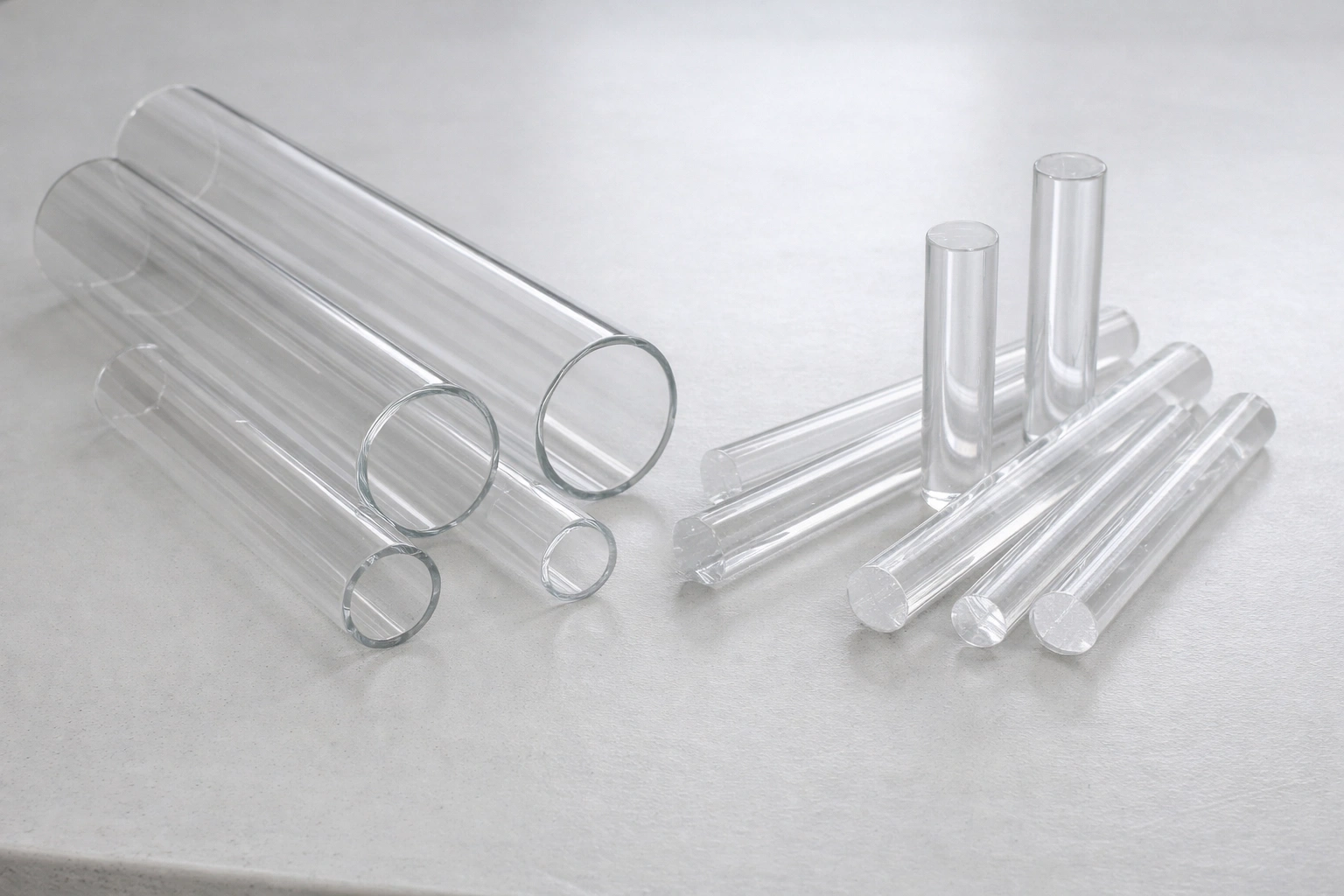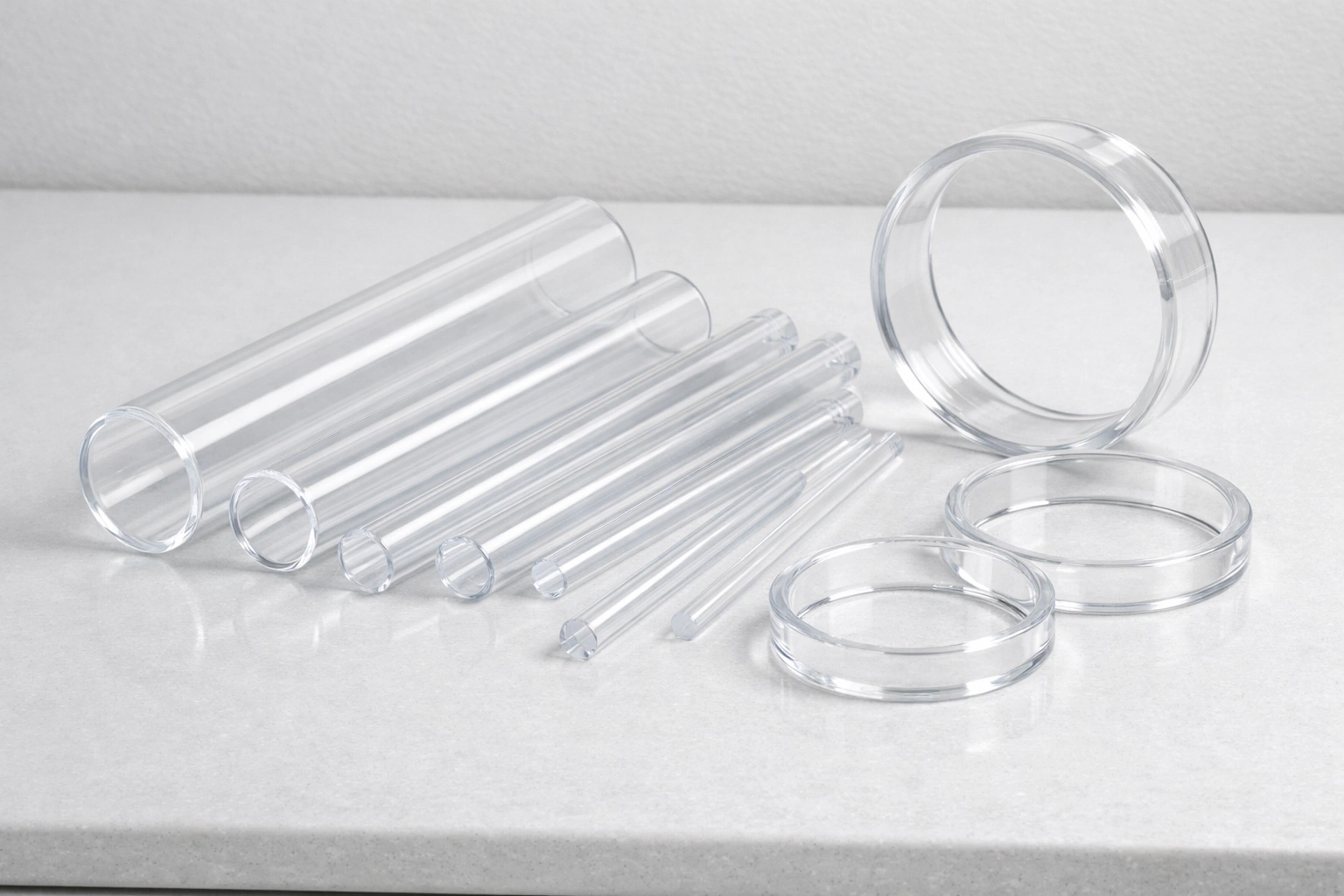

El grosor óptimo del revestimiento antirreflectante que requieren los discos de cuarzo suele ser igual a un cuarto de longitud de onda de la luz de diseño, ajustado al índice de refracción del material de revestimiento. Este espesor maximiza la transmisión de la luz al minimizar la reflexión superficial por interferencia destructiva. Los valores prácticos varían en función de la longitud de onda, el material de revestimiento, como el fluoruro de magnesio, y la aplicación, ya sea láser u óptica de banda ancha. Los diseños avanzados y las tolerancias de fabricación precisas pueden mejorar aún más la eficacia de la transmisión.
Principales conclusiones
El grosor óptimo del revestimiento antirreflectante es un cuarto de longitud de onda de la luz de diseño, ajustada al índice de refracción del revestimiento.
Los revestimientos antirreflectantes reducen significativamente los reflejos superficiales, aumentando la transmisión de la luz y mejorando el rendimiento óptico.
Seleccionar el material de revestimiento adecuado, como el fluoruro de magnesio, es crucial para maximizar la transmisión y minimizar la reflexión.
Las estrategias de diseño avanzadas, incluidos los algoritmos computacionales, mejoran el rendimiento de los revestimientos multicapa para mejorar la transmisión.
La supervisión en tiempo real durante la fabricación garantiza un grosor preciso del revestimiento, esencial para lograr una transmisión óptima.
¿Cómo aumentan fundamentalmente la transmisión los revestimientos antirreflectantes de los discos de cuarzo fundido?

Los revestimientos antirreflectantes desempeñan un papel crucial en la mejora de las prestaciones ópticas de discos de cuarzo fundido. Estos revestimientos reducen los reflejos superficiales no deseados y aumentan la cantidad de luz que atraviesa el disco. Comprender los mecanismos físicos que subyacen a este proceso ayuda a ingenieros y científicos a diseñar sistemas ópticos más eficientes.
Mecanismos de reflexión Fresnel en interfaces dieléctricas
Al pasar del aire al cuarzo fundido, la luz experimenta un cambio en su índice de refracción, lo que provoca que parte de la luz se refleje en la interfaz. El coeficiente de reflexión de Fresnel, que depende de los índices de refracción de ambos materiales, determina cuánta luz se refleja y cuánta se transmite. Los revestimientos antirreflectantes disminuyen esta reflexión introduciendo una fina capa que crea interferencias destructivas, reduciendo el coeficiente de reflexión de Fresnel y aumentando la transmisión.
La eficacia de este proceso depende de la diferencia de índices de refracción y del grosor del revestimiento. Por ejemplo, el cuarzo fundido sin recubrimiento refleja aproximadamente 3,4% de luz incidente por superficie, pero un recubrimiento antirreflectante correctamente diseñado puede reducirlo a menos de 0,5%. Esta importante reducción de la reflexión se traduce en un aumento apreciable de la transmisión total a través del disco.
Puntos clave:
La luz se refleja en interfaces con diferentes índices de refracción.
Los revestimientos antirreflectantes utilizan la interferencia para reducir la reflexión.
Una menor reflexión significa una mayor transmisión para los sistemas ópticos.
Relaciones de desfase en la interferencia de capas finas
La interferencia de capas finas se basa en desplazamientos de fase precisos entre las ondas luminosas reflejadas por las distintas superficies del revestimiento. El sitio desfase total necesario para la interferencia destructiva sigue la ecuación φ12 + φ23 + φpro = 2mπ, donde cada término representa una contribución de fase específica de la estructura del revestimiento. Cuando el espesor del revestimiento antirreflectante de cuarzo coincide con un cuarto de la longitud de onda dividida por el índice de refracción, las ondas reflejadas se anulan entre sí, minimizando la reflexión.
Esta relación de fase garantiza que las ondas de luz reflejadas estén desfasadas 180 grados, lo que provoca una interferencia destructiva. Los ingenieros utilizan este principio para diseñar revestimientos que maximicen la transmisión a una longitud de onda específica, consiguiendo a menudo una transmisión superior a 99% en sistemas optimizados. La eficacia de este enfoque depende de que se mantenga un estricto control sobre el grosor del revestimiento y el índice de refracción durante la fabricación.
Componente de desplazamiento de fase | Papel en las interferencias | Efecto causal |
|---|---|---|
φ12 | Desplazamiento de fase en la película superior (absorción) | Altera la fase total para interferencias |
φ23 | Desplazamiento de fase en la película inferior (reflexión) | Ajusta la cancelación de la luz reflejada |
φpro | Desplazamiento de fase de propagación en dieléctrico | Determina la interferencia destructiva |
Requisitos de coincidencia del índice de refracción para una transmisión máxima
La elección del material de revestimiento y su índice de refracción son fundamentales para lograr la máxima transmisión. El revestimiento antirreflectante ideal tiene un índice de refracción cercano a la raíz cuadrada del producto de los índices de refracción del aire y el cuarzo fundido. En la práctica, materiales como el fluoruro de magnesio, con un índice de refracción de aproximadamente 1,38, se acercan a este ideal y ofrecen un rendimiento excelente.
La selección del material adecuado y el control de su grosor garantizan que el revestimiento antirreflectante minimice la reflexión en toda la gama de longitudes de onda deseada. Los datos reales de las instalaciones TOQUARTZ muestran que la optimización de estos parámetros puede mejorar la eficiencia del sistema hasta 20% en configuraciones ópticas multipaso. Esta mejora demuestra la importancia de un cuidadoso ajuste del índice de refracción en los diseños ópticos avanzados.
Resumen:
La selección del material afecta a la adaptación del índice de refracción.
Una adaptación adecuada maximiza la transmisión y minimiza la reflexión.
Los revestimientos optimizados pueden aumentar la eficiencia del sistema hasta 20%.
¿Qué cálculos de la teoría del cuarto de longitud de onda determinan el espesor óptimo del revestimiento AR de los discos de cuarzo?
La teoría del cuarto de longitud de onda constituye la columna vertebral de los cálculos del espesor del revestimiento antirreflectante de cuarzo para discos de cuarzo fundido. Este enfoque utiliza fórmulas matemáticas para determinar el espesor ideal para una transmisión máxima en una longitud de onda específica. Los ingenieros se basan en estos cálculos para diseñar revestimientos que minimicen la reflexión y optimicen el rendimiento óptico.
Métodos de conversión de grosor físicos frente a ópticos
Los ingenieros deben distinguir entre grosor físico y grosor óptico a la hora de diseñar revestimientos. El grosor físico se refiere al grosor real medido de la capa de revestimiento, mientras que el grosor óptico tiene en cuenta el índice de refracción del material. La relación entre estos dos valores garantiza que el revestimiento produzca el desplazamiento de fase correcto para la interferencia destructiva.
El espesor óptimo del revestimiento antirreflectante de cuarzo se calcula mediante la fórmula d1 = λ0 / (4 * n1), donde λ0 es la longitud de onda de diseño en el espacio libre y n1 es el índice de refracción del recubrimiento. Por ejemplo, un revestimiento de fluoruro de magnesio (MgF₂) con n1 = 1,38 a una longitud de onda de 633 nm da como resultado un grosor físico de aproximadamente 115 nm. Este cálculo garantiza que el espesor óptico sea igual a un cuarto de la longitud de onda, lo que es esencial para minimizar la reflexión.
Un cuadro recapitulativo aclara el proceso de conversión:
Parámetro | Definición | Papel en el cálculo |
|---|---|---|
λ0 | Longitud de onda de diseño (en nm) | Establece el objetivo de las interferencias |
n1 | Índice de refracción del revestimiento | Ajusta el grosor físico |
d1 | Espesor físico (en nm) | Capa a depositar en el disco de cuarzo |
Algoritmos de optimización del grosor de la pila multicapa
Los diseños de revestimiento antirreflectante multicapa de banda ancha utilizan algoritmos avanzados para optimizar el grosor de cada capa. Estos algoritmos tienen en cuenta los índices de refracción y los grosores de múltiples materiales para conseguir una alta transmisión en una amplia gama de longitudes de onda. Los ingenieros suelen utilizar herramientas de software para simular y perfeccionar estos diseños.
Una pila multicapa típica alterna materiales de alto y bajo índice, como TiO₂ y SiO₂, con el grosor de cada capa calculado para crear interferencias constructivas y destructivas en distintas longitudes de onda. Por ejemplo, un sistema de tres capas podría utilizar una combinación de grosores ópticos de cuarto de onda y media onda para ampliar el ancho de banda de baja reflectancia. Los datos de la producción de TOQUARTZ muestran que los revestimientos multicapa optimizados pueden alcanzar una transmisión superior a 99% en todo el espectro visible, superando a los diseños de una sola capa.
Los puntos clave que hay que recordar son:
Las pilas multicapa permiten un rendimiento de banda ancha.
Los algoritmos de optimización ajustan cada capa para conseguir la máxima transmisión.
Las simulaciones de software ayudan a conseguir las especificaciones deseadas con eficacia.
Compensación del coeficiente de temperatura en el diseño de revestimientos
Los cambios de temperatura pueden afectar al índice de refracción y al grosor de los materiales de revestimiento, lo que repercute en el rendimiento. Los ingenieros deben tener en cuenta estas variaciones para mantener un grosor óptimo del revestimiento antirreflectante de cuarzo en entornos con temperaturas fluctuantes. Las estrategias de compensación garantizan una transmisión uniforme incluso en condiciones difíciles.
Por ejemplo, los revestimientos de óxido como el MgF₂ presentan un cambio del índice de refracción de aproximadamente 1×10-⁵ por grado Kelvin. Un cambio de temperatura de 50 °C puede alterar el grosor óptimo en aproximadamente 0,5 nm, lo que puede reducir la transmisión si no se corrige. Los diseñadores suelen ajustar el grosor inicial o seleccionar materiales con coeficientes de temperatura más bajos para minimizar estos efectos.
La tabla siguiente muestra el impacto de la temperatura en el diseño del revestimiento:
Factor | Efecto sobre el revestimiento | Respuesta del diseño |
|---|---|---|
Aumento de la temperatura | Aumenta ligeramente el índice de refracción | Ajustar el grosor inicial a la baja |
Ampliación del espesor | Altera la longitud del camino óptico | Compensar con tolerancias más estrictas |
Variación medioambiental | Desplaza la longitud de onda óptima | Utilizar materiales con propiedades estables |
En resumen, un cálculo cuidadoso y la compensación de los efectos de la temperatura ayudan a mantener una transmisión elevada y un rendimiento fiable en aplicaciones reales.
¿Cómo validan las mediciones espectroscópicas el rendimiento de la transmisión a través de los espesores de revestimiento de los discos de cuarzo?
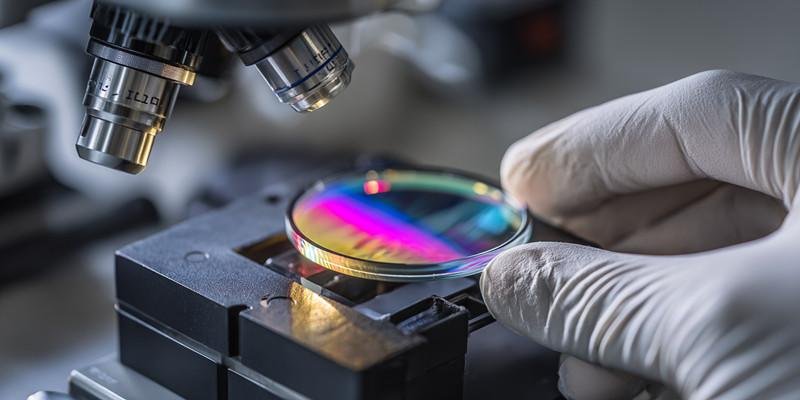
Las mediciones espectroscópicas proporcionan una validación esencial del rendimiento óptico de los discos de cuarzo recubiertos. Estos protocolos ayudan a los ingenieros a confirmar que los revestimientos cumplen las especificaciones de diseño y alcanzan los niveles de transmisión deseados. Mediante el uso de métodos estandarizados, los fabricantes garantizan una calidad constante y unos resultados fiables.
Protocolos de medición con espectrofotómetro según ASTM E903
La espectrofotometría es la herramienta principal para medir la transmisión de los discos de cuarzo recubiertos. La norma ASTM E903 guía el proceso, exigiendo el uso de un espectrofotómetro de esfera integradora para escanear longitudes de onda de 300 a 2500 nm. Las muestras deben tener un grosor y un acabado superficial uniformes para garantizar resultados precisos.
Los ingenieros siguen los protocolos ASTM E903 para obtener valores de transmitancia ponderada solar, que reflejan el rendimiento en el mundo real. El procedimiento se aplica tanto a materiales especulares como difusos, por lo que resulta adecuado para una amplia gama de revestimientos ópticos. La preparación coherente de las muestras garantiza que las mediciones reflejen el verdadero impacto del espesor del revestimiento antirreflectante de cuarzo en la transmisión.
La siguiente tabla resume los aspectos clave de la norma ASTM E903:
Aspecto | Descripción |
|---|---|
Estándar | ASTM E903-20 |
Propósito | Mide la transmitancia ponderada solar |
Gama espectral | 300 a 2500 nm |
Instrumentación | Espectrofotómetro de esfera integradora |
Ejemplos de requisitos | Espesor y acabado superficiales uniformes |
Interferometría láser para la verificación de espesores a escala nanométrica
La interferometría láser permite medir con precisión el grosor del revestimiento a escala nanométrica. Esta técnica utiliza patrones de interferencia creados por haces láser reflejados para determinar el grosor físico del revestimiento antirreflectante. Los ingenieros confían en la interferometría para verificar que los revestimientos se ajustan a las especificaciones de diseño.
Los fabricantes suelen utilizar la interferometría de Fizeau para analizar los patrones de franjas en la superficie del disco. Con este método se consigue una precisión del espesor de ±0,5 nm, lo que es fundamental para mantener una transmisión óptima. Los datos de los lotes de producción demuestran que los revestimientos con una variación de espesor inferior a ±2 nm ofrecen sistemáticamente valores de transmisión superiores a 99,2%.
Los puntos clave de la interferometría láser incluyen:
Verificación del espesor a escala nanométrica
Garantiza que los revestimientos cumplan los objetivos de diseño
Admite un alto rendimiento de transmisión
Análisis elipsométrico de las propiedades ópticas del revestimiento
La elipsometría ofrece un potente enfoque para analizar las propiedades ópticas de los discos de cuarzo recubiertos. Este método mide los cambios en la polarización a medida que la luz se refleja en el revestimiento, revelando tanto el grosor como el índice de refracción. Los ingenieros utilizan la elipsometría para validar las constantes ópticas necesarias para una transmisión máxima.
La elipsometría espectroscópica de ángulo variable (VASE) permite determinar simultáneamente el espesor, el índice de refracción y el coeficiente de extinción. Este exhaustivo análisis ayuda a los fabricantes a confirmar que el espesor del revestimiento antirreflectante de cuarzo se ajusta a los objetivos de diseño. Los resultados coherentes de la elipsometría respaldan un rendimiento fiable en aplicaciones ópticas exigentes.
Medición | Efecto causal | Resultado |
|---|---|---|
Espesor | Determina el desplazamiento de fase | Controla la transmisión |
Índice de refracción | Se ajusta a los requisitos de diseño | Minimiza los reflejos |
Coeficiente de extinción | Indica las pérdidas por absorción | Garantiza una alta transmisión |
La validación espectroscópica mediante estos métodos garantiza que los discos de cuarzo revestidos ofrecen una transmisión óptima y satisfacen las rigurosas exigencias de los sistemas ópticos avanzados.
¿Qué tolerancias de fabricación y compensaciones afectan al logro de la transmisión máxima?
Las tolerancias de fabricación y los controles del proceso desempeñan un papel decisivo en el rendimiento de los revestimientos antirreflectantes de los discos de cuarzo fundido. Pequeñas desviaciones en el grosor o la uniformidad pueden desplazar la longitud de onda de reflexión mínima y reducir la transmisión global. Comprender estas compensaciones ayuda a los ingenieros a seleccionar el proceso y el diseño adecuados para cada aplicación óptica.
Sistemas de control de la tasa de deposición y supervisión en tiempo real
El control preciso de la velocidad de deposición garantiza que el espesor del revestimiento antirreflectante de cuarzo se mantenga dentro de tolerancias estrictas. Los sistemas de control en tiempo real, como los controladores de microbalanza de cristal de cuarzo (QCM), proporcionan información inmediata sobre la velocidad de deposición y el espesor total. Estos sistemas permiten realizar ajustes automáticos durante el proceso de revestimiento, lo que resulta esencial para lograr revestimientos uniformes y precisos.
Las avanzadas tecnologías de supervisión, incluidos los cristales de cuarzo INFICON y los controladores SQM-160, mejoran aún más la fiabilidad del proceso. Proporcionan mediciones de alta precisión que ayudan a mantener una calidad de revestimiento uniforme en grandes lotes. Este nivel de control reduce el riesgo de variación del espesor, que de otro modo podría provocar incoherencias en el rendimiento.
En resumen, la supervisión en tiempo real y los sistemas de control avanzados permiten a los fabricantes conseguir un grosor de revestimiento óptimo y maximizar la transmisión.
Los monitores QCM proporcionan información en tiempo real para un control preciso del espesor.
Los ajustes automáticos garantizan un recubrimiento uniforme.
Los sistemas de alta precisión mejoran la coherencia entre lotes.
Impacto de la tolerancia de grosor en el ancho de banda espectral
La tolerancia de grosor afecta directamente al ancho de banda espectral y a la eficacia de los diseños de revestimiento antirreflectante. Incluso pequeñas desviaciones del espesor objetivo pueden desplazar la longitud de onda de reflexión mínima, estrechando el ancho de banda efectivo y reduciendo la transmisión en longitudes de onda fuera de pico. Este efecto se acentúa en los revestimientos de banda ancha y multicapa.
Los fabricantes deben equilibrar la necesidad de tolerancias estrictas con la eficacia y el coste de producción. Por ejemplo, una desviación de espesor de ±5% puede reducir la transmisión máxima de 99,5% a 98,5% y desplazar la longitud de onda de reflectancia mínima en unos 15 nm. Estos cambios pueden degradar el rendimiento en aplicaciones que requieren un control preciso de la longitud de onda, como la óptica láser.
Factor de tolerancia | Efecto causal | Impacto resultante |
|---|---|---|
Desviación del espesor ±5% | Desplaza la longitud de onda de reflectancia mínima ±15 nm | Reduce el pico de transmisión en ~1% |
Rugosidad de la superficie | Aumenta la dispersión y la absorción | Reduce la transmisión y el LIDT |
Afecta a la uniformidad del revestimiento | Influye en el rendimiento óptico general |
Gestión del estrés térmico en diseños de revestimientos multicapa
Las diferencias de dilatación térmica entre las capas y el sustrato pueden provocar tensiones térmicas en los revestimientos multicapa. Esta tensión puede provocar microfisuras o deslaminación, sobre todo cuando los revestimientos son gruesos o están expuestos a ciclos de temperatura. Los ingenieros deben gestionar estas tensiones para preservar la integridad del revestimiento y mantener una alta transmisión.
La selección de materiales con propiedades térmicas compatibles y la optimización del grosor de la capa pueden reducir la acumulación de tensiones. Las técnicas de preparación basadas en soluciones, como sol-gel, permiten el recubrimiento simultáneo de ambas caras y pueden mejorar la distribución de la tensión. Estas opciones ayudan a mantener la durabilidad y el rendimiento óptico del disco recubierto.
Las consideraciones clave para la gestión del estrés térmico incluyen:
La compatibilidad de materiales reduce el riesgo de delaminación.
El grosor optimizado evita las microfisuras.
El método de preparación influye en la distribución de las tensiones.
Al gestionar cuidadosamente el estrés térmico, los fabricantes garantizan que los revestimientos multicapa ofrezcan un rendimiento fiable a lo largo del tiempo.
¿Qué estrategias avanzadas de diseño optimizan el espesor del revestimiento AR de los discos de cuarzo para lograr la máxima transmisión?
Los ingenieros siguen superando los límites del diseño de revestimientos antirreflectantes para discos de cuarzo fundido. En la actualidad, las estrategias avanzadas combinan algoritmos computacionales, ingeniería de campos eléctricos y estructuras de índice graduado para lograr un revestimiento antirreflectante de alta transmisión. Estos métodos ayudan a maximizar la transmisión de la luz, minimizar la reducción de la reflexión y responder a las exigencias de la óptica moderna.
Algoritmos de optimización computacional para el diseño multicapa
Los algoritmos de optimización computacional han transformado la forma en que los ingenieros diseñan los revestimientos antirreflectantes multicapa. Técnicas de aprendizaje automático y aprendizaje profundo permiten ahora simular y predecir con rapidez el grosor óptimo de las capas, lo que se traduce en una mejora significativa de la transmitancia. Los algoritmos genéticos, los procesos de decisión de Markov y las redes neuronales profundas han contribuido a maximizar la transmisión y reducir las pérdidas de transmisión en sistemas complejos.
Muchos equipos de investigación utilizan algoritmos genéticos para hacer evolucionar los diseños de los revestimientos, logrando hasta 99,8% de transmitancia máxima mediante el ajuste fino de cada capa. El aprendizaje Q profundo y las redes generativas profundas mejoran aún más la precisión de estas simulaciones, especialmente cuando se combinan con software avanzado como FIMMPROP. Las capacidades de modelado 3D de FIMMPROP permiten realizar ajustes precisos en el grosor del revestimiento, lo que se traduce en mejoras cuantificables en el rendimiento del revestimiento de los discos de cuarzo fundido.
En resumen, las herramientas computacionales avanzadas proporcionan:
Simulación y optimización rápidas de revestimientos multicapa
Predicción precisa del rendimiento óptico
Mayor flexibilidad para aplicaciones personalizadas
Ingeniería de distribución del campo eléctrico para mejorar el LIDT
La ingeniería de distribución del campo eléctrico desempeña un papel clave en el aumento del umbral de daño inducido por láser (LIDT) de los revestimientos antirreflejos. Ajustando el grosor y la secuencia de las capas, los ingenieros pueden alejar el pico de campo eléctrico de las interfaces vulnerables, reduciendo el riesgo de daños durante el funcionamiento a alta potencia. Este enfoque no sólo mejora la durabilidad, sino que también mantiene una alta transmisión para las exigentes ópticas láser.
El software de simulación ayuda a visualizar la intensidad del campo eléctrico dentro de cada capa, guiando la colocación de materiales de alto y bajo índice. Los datos de estudios recientes muestran que la reducción del grosor de determinadas capas en 5-10% puede aumentar el LIDT hasta 40%, con sólo una pequeña disminución de la transmisión. Este equilibrio entre durabilidad y rendimiento óptico es esencial para aplicaciones en las que importan tanto la fiabilidad como la eficacia.
Factor de diseño | Efecto causal | Resultado |
|---|---|---|
Ajuste del grosor de las capas | Desplaza la distribución del campo eléctrico | Aumenta LIDT |
Secuencia de materiales | Minimiza el campo en las interfaces | Reduce el riesgo de fallo del revestimiento |
Guía de simulación | Optimiza la durabilidad y la transmisión | Equilibra rendimiento y vida útil |
Técnicas de apodización de banda ancha mediante estructuras de índice graduado
Las técnicas de apodización de banda ancha utilizan estructuras de índice graduado para ampliar el ancho de banda efectivo de los revestimientos antirreflectantes. Los ingenieros diseñan estos revestimientos variando gradualmente el índice de refracción en varias capas, lo que suaviza la transición entre el aire y el cuarzo y reduce la reflexión en una amplia gama espectral. Este método permite obtener revestimientos antirreflectantes de alta transmisión para aplicaciones que requieren una amplia cobertura de longitudes de onda.
Los diseños de índice graduado suelen incluir entre 8 y 12 capas, cada una de ellas con un grosor y un índice de refracción cuidadosamente controlados. Las herramientas de simulación como RP Coating y FIMMPROP permiten una parametrización y optimización completas, lo que permite a los usuarios definir figuras de mérito personalizadas para sus necesidades específicas. Estas estrategias han demostrado una transmisión media superior a 98% en todo el espectro UV a casi IR, con una pérdida de transmisión mínima incluso con grandes ángulos de incidencia.
Las principales ventajas de la apodización de banda ancha son:
Reducción superior de la reflexión en amplios rangos espectrales
Diseños personalizables para requisitos exclusivos de rendimiento óptico
Aumento fiable de la transmitancia para óptica avanzada
El espesor preciso del revestimiento antirreflectante maximiza la transmisión en los discos de cuarzo fundido. La teoría del cuarto de longitud de onda, la cuidadosa selección de materiales y las estrictas tolerancias de fabricación desempeñan un papel fundamental. Para aplicaciones especializadas, los expertos recomiendan:
Compensación de tensiones en revestimientos multicapa para evitar la deformación del sustrato
Aplicación de revestimientos AR en la cara posterior para suprimir los reflejos no deseados
Igualación del grosor de las capas de alto y bajo índice en ambas caras para lograr el equilibrio
Consideración de diseños multicapa complejos para lograr un control óptimo de la tensión
Los ingenieros deben consultar a expertos o utilizar herramientas de diseño avanzadas cuando trabajen con sistemas ópticos exigentes.
PREGUNTAS FRECUENTES
¿Cuál es el grosor típico del revestimiento antirreflectante de los discos de cuarzo fundido?
La mayoría de los discos de cuarzo fundido utilizan un grosor de revestimiento de unos 115 nm para la luz de 633 nm con fluoruro de magnesio. Este valor procede de la fórmula del cuarto de longitud de onda: espesor = longitud de onda / (4 × índice de refracción).
¿Qué mejora de la transmisión pueden aportar los revestimientos antirreflectantes?
Los revestimientos antirreflectantes pueden aumentar la transmisión de 92% (sin revestimiento) a más de 99,5% (con revestimiento) por disco. Según los datos de campo de TOQUARTZ, los sistemas multipaso pueden aumentar su eficacia entre 15 y 20%.
¿Qué ocurre si el grosor del revestimiento se desvía del valor óptimo?
Una desviación de espesor de ±5% puede reducir el pico de transmisión de 99,5% a 98,5%. La longitud de onda de reflectancia mínima puede desplazarse unos 15 nm, lo que puede afectar al rendimiento del sistema láser.
Desviación del espesor | Transmisión (2 superficies) | Desplazamiento de la longitud de onda |
|---|---|---|
0% (óptimo) | 99.4% | 0 nm |
±5% | 97.6% | ±15 nm |
¿Qué materiales se utilizan habitualmente para los revestimientos antirreflectantes del cuarzo?
Los ingenieros suelen elegir fluoruro de magnesio (MgF₂, n=1,38) o dióxido de silicio (SiO₂, n=1,46). Estos materiales ofrecen baja reflectancia y alta durabilidad para la mayoría de las aplicaciones ópticas.
¿Qué métodos de medición verifican el grosor y la transmisión del revestimiento?
Los fabricantes utilizan espectrofotometría, interferometría láser y elipsometría. Estos métodos confirman un espesor de ±2 nm y una transmisión superior a 99,2%, cumpliendo las normas ISO 9211-3.