Muchos ingenieros y científicos se preguntan por qué los tubos de cuarzo fallan en las aplicaciones de alta temperatura. La respuesta radica en dos factores principales: la desvitrificación y los límites térmicos. La desvitrificación modifica la estructura del cuarzo, mientras que los límites térmicos definen la temperatura máxima de seguridad antes de que se produzcan daños. Comprender estos mecanismos ayuda a los usuarios a prevenir fallos inesperados y mejorar la fiabilidad de los equipos.
Principales conclusiones
La desvitrificación debilita los tubos de cuarzo a altas temperaturas. Entender este proceso ayuda a prevenir fallos inesperados.
La contaminación de la superficie, incluso en pequeñas cantidades, puede acelerar considerablemente la desvitrificación. La limpieza periódica y una manipulación cuidadosa son esenciales.
Los ciclos térmicos introducen tensiones internas que pueden provocar microfisuras. Controlar las velocidades de calentamiento y enfriamiento puede alargar la vida de los tubos de cuarzo.
Superar los límites térmicos provoca rápidos cambios estructurales en el cuarzo. Conocer estos límites ayuda a los usuarios a evitar daños y mantener la estabilidad.
¿Por qué la desvitrificación provoca fallos en los tubos de cuarzo a altas temperaturas?

La desvitrificación es una de las principales razones por las que los tubos de cuarzo fallan en aplicaciones de alta temperatura. Este proceso modifica la estructura interna del cuarzo, reduciendo su estabilidad a altas temperaturas y su resistencia mecánica. Comprender las etapas de la desvitrificación y la tensión resultante ayuda a explicar en detalle el mecanismo de fallo.
El proceso de desvitrificación en dos etapas: Nucleación y crecimiento
Desvitrificación en tubos de cuarzo comienza con la nucleación, seguida del crecimiento de los cristales.
La contaminación de la superficie, especialmente por metales alcalinos, inicia la nucleación proporcionando lugares donde la fase cristalina puede empezar a formarse. A continuación, los cristales de cristobalita crecen hacia el interior, a un ritmo que depende de la temperatura, la viscosidad del cuarzo y la presencia de grupos hidroxilo.
Este proceso en dos etapas explica por qué los tubos de cuarzo pierden estabilidad y desarrollan puntos débiles durante una exposición prolongada al calor.
Puntos clave:
La nucleación comienza en las superficies contaminadas, especialmente con metales alcalinos.
La velocidad de crecimiento depende de la temperatura y de la composición del cuarzo.
La desvitrificación reduce la estabilidad a altas temperaturas y provoca fallos.
Por qué el desajuste de la expansión térmica crea tensiones catastróficas
El desajuste de la expansión térmica entre el cuarzo desvitrificado y el amorfo genera un aumento de la tensión interna.
Cristobalita, la fase cristalina, tiene un coeficiente de dilatación térmica entre 12 y 16 veces superior al del cuarzo, lo que provoca una concentración de tensiones en la interfaz. Los cambios rápidos de temperatura o las impurezas amplifican esta tensión, lo que aumenta la probabilidad de grietas y roturas.
La tensión de este desajuste suele superar la resistencia de las fibras de cuarzo, lo que provoca un fallo repentino.
Causa | Efecto | Causalidad |
|---|---|---|
Desajuste de la dilatación térmica | Aumento de la tensión interna | La tensión supera la resistencia del cuarzo, provocando grietas |
Impurezas presentes | Mayor concentración de tensiones | Las impurezas actúan como amplificadores de tensión |
Cambio rápido de temperatura | Roturas más frecuentes | Los cambios rápidos empeoran los efectos del estrés |
Cómo la transformación de fase de la cristobalita a 270°C desencadena el fallo
La transformación de fase de la cristobalita a 270°C provoca un cambio brusco de volumen.
Cuando los tubos de cuarzo se enfrían a esta temperatura, la transformación β a α de la cristobalita provoca un desplazamiento de volumen 5-10%, creando microfisuras en la interfaz. Los ciclos térmicos repetidos a través de este punto provocan el crecimiento de grietas y, finalmente, el fallo estructural.
Esta transformación explica por qué los tubos de cuarzo pierden estabilidad a altas temperaturas tras la desvitrificación.
Puntos clave:
La cristobalita se transforma a 270°C, provocando un cambio de volumen.
Las microfisuras se forman y crecen con cada ciclo térmico.
Los ciclos repetidos provocan fallos y pérdida de estabilidad.
¿Por qué la contaminación superficial acelera los fallos a alta temperatura?
La contaminación superficial desempeña un papel fundamental en los fallos de los tubos de cuarzo en aplicaciones de alta temperatura. Incluso pequeñas cantidades de impurezas pueden alterar la estabilidad a altas temperaturas y provocar fallos rápidos en entornos de alta temperatura. Comprender los mecanismos que subyacen a la contaminación ayuda a los usuarios a proteger las propiedades mecánicas y la estabilidad de los tubos de sílice de gran pureza.
Por qué los metales alcalinos reducen las barreras de nucleación de la cristobalita
Los metales alcalinos como el sodio y el potasio disminuyen la barrera energética para la nucleación de la cristobalita en el cuarzo. Estos elementos se sustituyen en la red de sílice, creando puntos débiles que permiten que la fase cristalina se forme más fácilmente. Este proceso reduce la estabilidad a altas temperaturas de las fibras de cuarzo y aumenta el riesgo de fallo.
La presencia de metales alcalinos acelera la desvitrificación hasta 50 veces en comparación con las superficies limpias. Incluso un nivel de contaminación tan bajo como 5-10 ppm puede hacer que las tasas de nucleación aumenten bruscamente, provocando un rápido crecimiento de los cristales y la pérdida de propiedades mecánicas. Esto explica por qué incluso las trazas de contaminación pueden socavar la estabilidad de la sílice de gran pureza en condiciones exigentes.
Factor | Efecto | Causalidad |
|---|---|---|
Metales alcalinos | Barrera de energía de nucleación más baja | Formación más fácil de cristobalita |
Aumento de la nucleación | Desvitrificación más rápida | Menor estabilidad a altas temperaturas |
Rápido crecimiento de los cristales | Fracaso prematuro | Pérdida de propiedades mecánicas |
Fuentes de contaminación que provocan fallos prematuros
Son muchas las fuentes que contribuyen a la contaminación de las superficies en laboratorios y entornos industriales. Los aceites, las grasas y los residuos de los procesos de limpieza, así como los contaminantes atmosféricos como la lluvia ácida, las salpicaduras marinas y el polvo industrial, pueden depositar impurezas en las superficies de cuarzo. Los objetos cotidianos, como las batas de laboratorio, el maquillaje, los perfumes, las joyas e incluso el polvo de los materiales de construcción, también introducen contaminantes.
Estos contaminantes actúan como lugares de nucleación de la cristobalita, haciendo que el cuarzo sea más vulnerable a la desvitrificación y a la tensión. El aluminio de la cristalería de laboratorio y los cosméticos pueden reducir aún más la estabilidad de la sílice de gran pureza, aumentando el riesgo de fallo en entornos de altas temperaturas. Una limpieza regular y una manipulación cuidadosa ayudan a mantener la estabilidad y las propiedades mecánicas de los tubos de cuarzo.
Las fuentes comunes de contaminación incluyen:
Contaminantes atmosféricos e industriales
Aceites, grasas y residuos de limpieza
Polvo, óxido y materiales de construcción
Batas de laboratorio, maquillaje, perfume y joyas.
Aluminio de la cristalería y los cosméticos
El efecto exponencial: cómo una contaminación de 5-10 ppm acelera el fallo entre 10 y 50 veces
Incluso un pequeño aumento de la contaminación puede tener un efecto dramático en el rendimiento de los tubos de cuarzo. Cuando la contaminación superficial alcanza sólo 5-10 ppm, la tasa de desvitrificación se acelera entre 10 y 50 veces, provocando una rápida pérdida de estabilidad a altas temperaturas. Este efecto exponencial significa que incluso pequeños descuidos en la limpieza pueden provocar un fallo prematuro.
Los umbrales de temperatura clave definen los límites para un funcionamiento seguro. El inicio de la desvitrificación se produce por encima de los 1665°C, mientras que el punto de reblandecimiento de la sílice de gran pureza también es de 1665°C, lo que marca la temperatura a la que comienza un flujo significativo y cambian las propiedades mecánicas. Superar estos límites provoca una rápida deformación o fallo, independientemente de la calidad del material, porque la física del vidrio de cuarzo hace que estos umbrales sean absolutos.
Umbral | Temperatura (°C) | Significado |
|---|---|---|
Inicio de la desvitrificación | 1665 | Aumenta el riesgo de cristalización |
Punto de reblandecimiento | 1665 | Cambian las propiedades mecánicas, comienza el flujo |
¿Por qué los ciclos térmicos provocan daños acumulativos que conducen al fallo?
Los ciclos térmicos son una de las principales razones por las que los tubos de cuarzo fallan en aplicaciones de alta temperatura. Cada ciclo de calentamiento y enfriamiento introduce nuevas tensiones que debilitan gradualmente el material. Entender por qué estos ciclos causan daños acumulativos ayuda a los usuarios a mejorar la estabilidad a altas temperaturas y prolongar la vida útil.
Por qué los gradientes de temperatura generan tensiones de tracción perjudiciales
Los gradientes de temperatura durante los ciclos térmicos crean tensiones de tracción perjudiciales en los tubos de cuarzo.
Las distintas regiones del tubo se expanden o contraen a ritmos diferentes cuando se exponen al calor, lo que provoca una expansión térmica desigual. Esta expansión desigual provoca tensiones internas, que a menudo pasan de compresión a tracción durante el enfriamiento rápido, lo que da lugar a la formación de microgrietas que amenazan la estabilidad.
La tensión de tracción de estos gradientes puede superar la resistencia de las fibras de cuarzo, lo que aumenta la probabilidad de que se formen grietas.
Puntos clave:
Una expansión desigual provoca tensiones internas.
El enfriamiento rápido aumenta la tensión de tracción y las microfisuras.
Los ciclos térmicos debilitan los tubos de cuarzo con el tiempo.
Mecanismos de fatiga acumulativa: Cómo consume cada ciclo la vida del material
Cada ciclo térmico consume una parte de la vida útil del material del tubo de cuarzo.
El calentamiento y enfriamiento repetidos generan microfisuras que crecen con cada ciclo, especialmente cuando la diferencia de temperatura es grande. Con el tiempo, estas grietas se aglutinan, reduciendo la estabilidad del tubo a altas temperaturas y provocando un fallo final.
Este proceso explica por qué los tubos de cuarzo sometidos a ciclos frecuentes tienen una vida útil más corta.
Mecanismo | Efecto | Causalidad |
|---|---|---|
Crecimiento de microfisuras | Estabilidad reducida | Cada ciclo aumenta el tamaño de la grieta |
Ciclismo repetido | Vida útil más corta | Los daños acumulados conducen al fracaso |
Grandes oscilaciones de temperatura | Fatiga más rápida | Una mayor tensión acelera la formación de grietas |
Por qué las tasas de calentamiento/enfriamiento controlan directamente el tiempo de fallo
Las velocidades de calentamiento y enfriamiento controlan directamente el momento en que se produce el fallo del tubo de cuarzo.
Cambios rápidos de temperatura aumentan la probabilidad de rotura porque el material no puede ajustarse con rapidez, lo que provoca mayores tensiones y microfisuras más frecuentes. Las velocidades más lentas permiten que el tubo distribuya el calor de forma más uniforme, lo que reduce la tensión y prolonga la vida útil.
Un control cuidadoso de las velocidades de calentamiento y enfriamiento ayuda a mantener la estabilidad y a evitar fallos prematuros.
Puntos clave:
El calentamiento/enfriamiento rápido aumenta el riesgo de avería.
Las velocidades más lentas mejoran la estabilidad a altas temperaturas.
Las tasas controladas prolongan la vida útil del tubo de cuarzo.
¿Por qué los límites térmicos definen las temperaturas máximas de funcionamiento seguro?
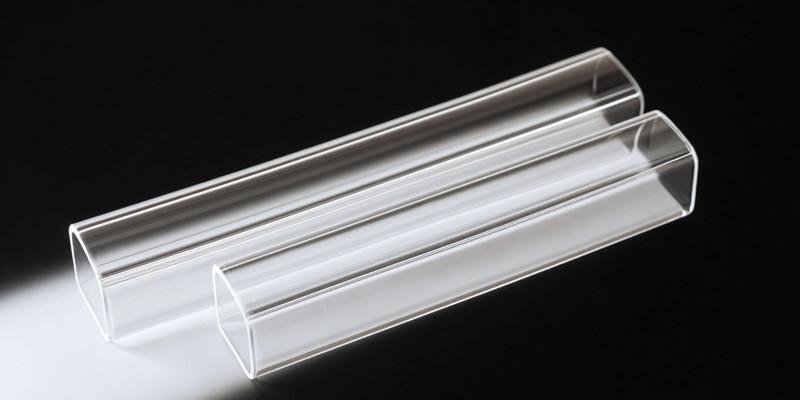
Los límites térmicos marcan las fronteras para un funcionamiento seguro en tubos de cuarzo. Estos límites existen porque las propiedades de los materiales cambian rápidamente a determinadas temperaturas, lo que provoca una pérdida de estabilidad y resistencia mecánica. Entender por qué son importantes estos límites ayuda a los usuarios a prevenir daños y prolongar la vida útil de los tubos.
Por qué la cinética de desvitrificación se acelera exponencialmente por encima de 1100°C
La cinética de desvitrificación aumenta rápidamente por encima de 1100°C porque la energía necesaria para el crecimiento de los cristales disminuye bruscamente. A estas temperaturas, la tasa de formación de cristobalita se multiplica por diez por cada 50°C de aumento, lo que significa que incluso pequeños incrementos de temperatura pueden provocar rápidos cambios estructurales. Este crecimiento exponencial de la desvitrificación conlleva un riesgo mucho mayor de fallo, especialmente cuando hay contaminación superficial.
Puntos clave:
Los índices de desvitrificación aumentan 10 veces por cada 50°C por encima de 1100°C.
Pequeños aumentos de temperatura pueden desencadenar un rápido crecimiento de los cristales.
La contaminación superficial acelera aún más este proceso.
El punto de reblandecimiento: Por qué la deformación viscosa comienza por encima de 1400°C
Los tubos de cuarzo empiezan a deformarse por encima del punto de reblandecimiento, que suele rondar los 1400 °C para la sílice de gran pureza. A esta temperatura, la viscosidad del material disminuye, lo que permite que la gravedad o las cargas mecánicas provoquen su hundimiento o colapso. El punto de reblandecimiento marca el umbral en el que el tubo ya no puede mantener su forma, aunque siga siendo químicamente estable.
Tipo de vidrio | Punto de reblandecimiento (°C) |
|---|---|
Bullseye Transparente | 677 |
Ópalos de diana | 688 |
Oro Rosa Transparente | 638 |
Los tubos de cuarzo diseñados para la estabilidad a altas temperaturas deben permanecer por debajo de este umbral para evitar deformaciones permanentes. El punto de reblandecimiento actúa como límite duro para un funcionamiento seguro.
Por qué los cambios en las propiedades de los materiales hacen que los límites térmicos sean absolutos
Los cambios en las propiedades de los materiales hacen que los límites térmicos sean absolutos porque alteran la forma en que el cuarzo responde al calor y la tensión. A medida que aumenta la temperatura, propiedades como la dilatación térmica, la pureza, el grosor de la pared y la calidad de la superficie influyen en la capacidad del tubo para resistir grietas y deformaciones. Estos factores no pueden modificarse únicamente mediante procedimientos operativos, por lo que superar los límites térmicos siempre conduce al fallo.
Factor | Descripción |
|---|---|
Baja expansión térmica | Reduce el estrés térmico y ayuda a mantener la estabilidad. |
Pureza del material | La sílice de gran pureza resiste los choques térmicos; las impurezas crean puntos débiles. |
Espesor de pared | Las paredes más gruesas distribuyen la tensión, pero pueden calentarse de forma desigual. |
Tarifas de calefacción/refrigeración | Los cambios graduales reducen el riesgo de choque térmico. |
Calidad de la superficie | Las superficies lisas y sin defectos resisten el agrietamiento. |
Los límites térmicos permanecen fijos porque dependen de la física y la química fundamentales del material.
Consejo: Para maximizar la vida útil de los tubos, realice una limpieza rigurosa, manipúlelos con guantes e inspecciónelos periódicamente. Establecer velocidades de rampa térmica entre 1-3°C/min para uso generaly seleccione sílice de gran pureza con el grosor de pared adecuado para su entorno.
¿Cómo puede la comprensión de estos mecanismos de fallo prevenir la rotura prematura de los tubos?
Reconocer las causas de los fallos de los tubos de cuarzo permite a los ingenieros tomar medidas específicas para prolongar su vida útil. Centrándose en el control de la contaminación y la optimización del perfil térmico, los usuarios pueden mantener estabilidad a altas temperaturas y preservar las propiedades mecánicas. Estas estrategias ayudan a evitar averías prematuras y garantizan un rendimiento constante.
Control de la contaminación: Prevención de la desvitrificación acelerada
El control de la contaminación desempeña un papel vital en el mantenimiento de la estabilidad y la prevención de la desvitrificación en los tubos de cuarzo.
Los ingenieros reducen los índices de desvitrificación cambiando a tubos de cuarzo sintético de pureza ultra alta con impurezas metálicas inferiores a 0,1 ppm y sustituyendo las bridas metálicas por alternativas cerámicas o recubiertas de platino. También utilizan juntas tóricas dobles y pruebas de estanqueidad con helio para sellar los sistemas, lo que bloquea los contaminantes y mantiene la integridad de la muestra. La selección de tubos de cuarzo de gran pureza o dopados con Ti y el control de las velocidades de calentamiento y enfriamiento por debajo de 5 °C por minuto limitan aún más el estrés térmico y la desvitrificación.
Estas medidas protegen las propiedades mecánicas del tubo y ayudan a mantener la estabilidad a altas temperaturas.
Medida de control de la contaminación | Medidas adoptadas | Causalidad |
|---|---|---|
Tubos de cuarzo de pureza ultra alta | Impurezas metálicas <0,1 ppm | Reduce los lugares de nucleación para la desvitrificación |
Bridas de cerámica/platino | Sustituir fuentes de vapor metálicas | Evita la contaminación de las bridas |
Doble junta tórica + prueba de helio | Sellar fugas | Bloquea los contaminantes externos |
Calefacción/refrigeración controladas | ≤5°C/min | Limita la desvitrificación por estrés térmico |
Optimización del perfil térmico: Minimización de los daños causados por los ciclos
La optimización del perfil térmico ayuda a minimizar los daños causados por los ciclos y prolonga la vida útil de los tubos de cuarzo.
Los operadores seleccionan tubos de cuarzo opacos con alta emisividad (0,9-0,95) para favorecer un calentamiento uniforme y reducir los puntos calientes, mientras que los bajos coeficientes de dilatación térmica preservan la geometría del tubo durante los ciclos. El funcionamiento continuo a temperaturas cercanas a los 1.000-1.100 °C, con sólo breves excursiones a temperaturas superiores, mantiene la estabilidad y evita la fatiga rápida.
Estas prácticas garantizan que el tubo resista el agrietamiento y la deformación, incluso en entornos exigentes.
Entre las estrategias clave figuran:
Utiliza tubos de alta emisividad para un calentamiento uniforme
Elija materiales de baja dilatación térmica para reducir la tensión
Limitar las variaciones de temperatura para mantener la estabilidad
Control de tubos mediante ensayos no destructivos y sensores acústicos
Aplicar TTBT para la detección precoz de fugas y averías
Los tubos de cuarzo suelen fallar a altas temperaturas porque la desvitrificación, la contaminación, los ciclos térmicos y la superación de los límites térmicos comprometen la integridad estructural. Cada factor puede provocar un sobrecalentamiento localizado o una pérdida de resistencia térmica, lo que reduce la integridad del tubo. Los ingenieros que comprenden estos riesgos y siguen las directrices específicas del entorno pueden prolongar la vida útil y mejorar la seguridad en los procesos de alta temperatura.
PREGUNTAS FRECUENTES
¿Por qué se enturbian los tubos de cuarzo después de utilizarlos a altas temperaturas?
Los tubos de cuarzo se enturbian porque la desvitrificación forma pequeños cristales de cristobalita. Estos cristales dispersan la luz, haciendo que el tubo parezca opaco. El enturbiamiento indica que el tubo ha perdido parte de su resistencia mecánica original.
¿Por qué la manipulación de tubos de cuarzo con las manos desnudas aumenta el riesgo de fallo?
Las manos desnudas dejan aceites y sales en la superficie de cuarzo. Estos contaminantes actúan como núcleos de desvitrificación. Incluso pequeñas cantidades pueden acelerar el crecimiento de cristales y reducir la vida útil del tubo.
¿Por qué el calentamiento o enfriamiento rápidos son perjudiciales para los tubos de cuarzo?
Los cambios rápidos de temperatura crean grandes gradientes térmicos. Estos gradientes provocan tensiones internas, que dan lugar a microfisuras. Con el tiempo, los ciclos repetidos hacen que el tubo sea más propenso a romperse.
¿Por qué una mayor pureza no puede evitar por sí sola el fallo de los tubos de cuarzo a altas temperaturas?
La alta pureza reduce el riesgo de contaminación, pero no puede modificar los límites térmicos básicos del cuarzo. Superar estos límites sigue provocando desvitrificación o deformación. Las propiedades del material establecen límites absolutos para un uso seguro.
¿Por qué los tubos de cuarzo fallan antes en el vacío o en atmósferas reductoras?
El vacío y las atmósferas reductoras limitan la disipación del calor y pueden atacar químicamente al cuarzo. Estas condiciones reducen la temperatura máxima de seguridad. Los tubos en estos ambientes suelen deformarse o erosionarse más rápido que en el aire.