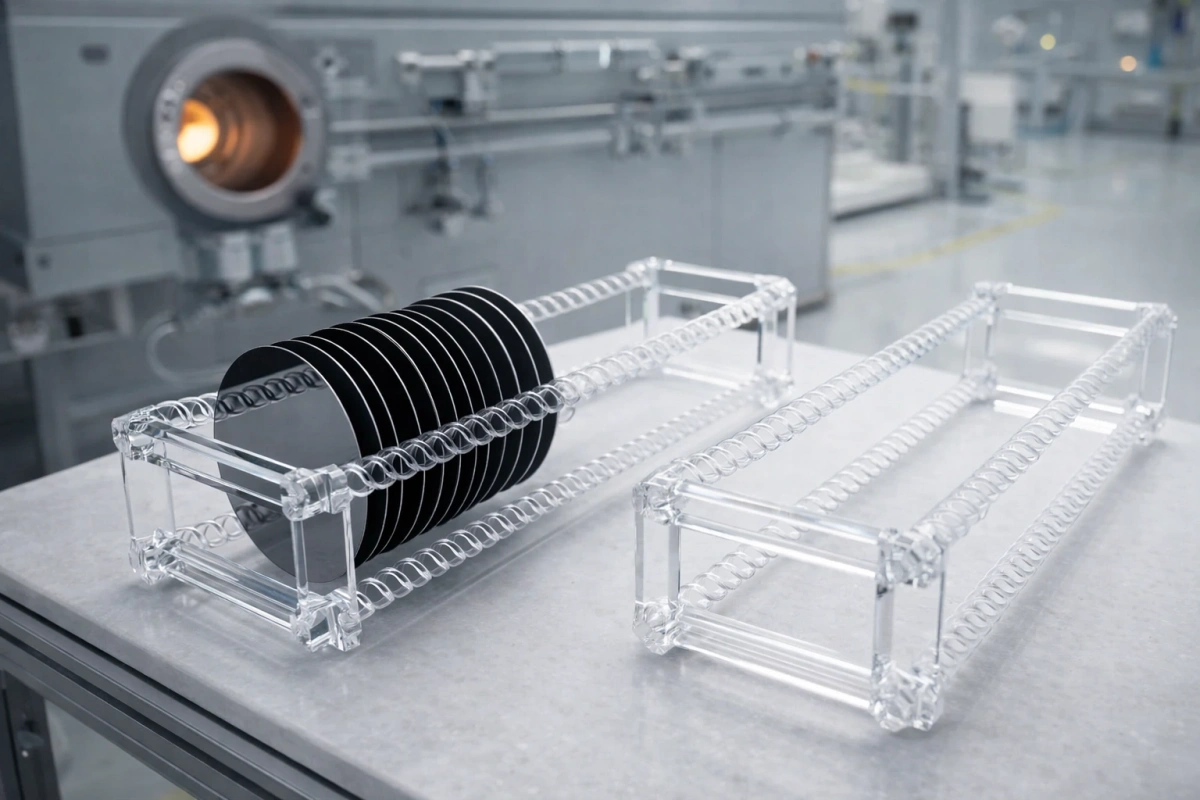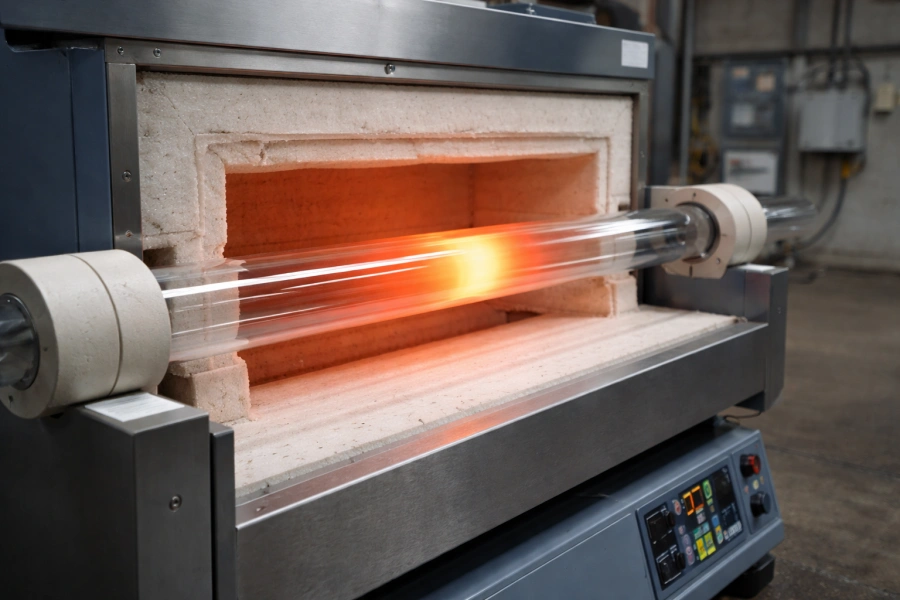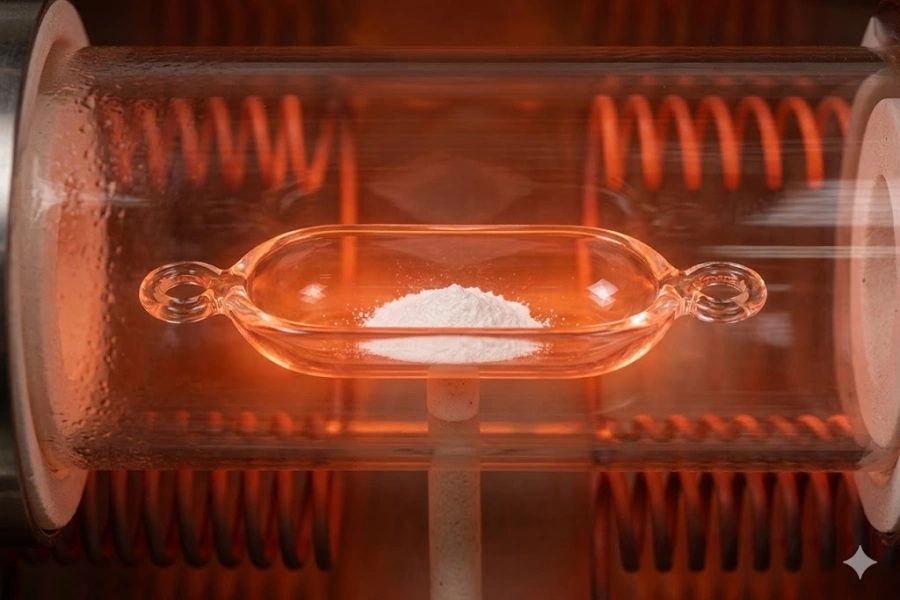
Semiconductor fabrication demands measurement precision that most industrial environments never encounter. When temperature deviates by even a few degrees, entire wafer batches fail — and the protection tube surrounding the thermocouple is the last line of defense.
Across diffusion furnaces, oxidation tubes, and CVD reactors, quartz thermocouple tubes have become the material of choice for engineers who cannot afford contamination, structural failure, or measurement drift. This article presents a complete technical reference covering material properties, structural configurations, thermocouple pairings, performance parameters, and process-specific applications — everything needed to evaluate fused silica protection tubes for semiconductor-grade thermal measurement.
Understanding why quartz outperforms every competing material begins with understanding the environment it operates in.
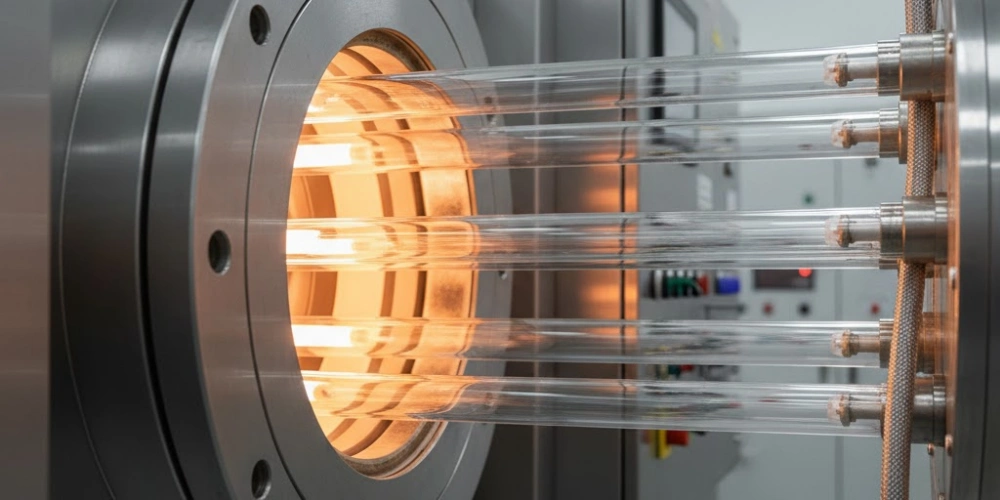
The Semiconductor Thermal Environment and Its Demands on Protection Tubes
Across the full spectrum of semiconductor fabrication processes, temperature measurement is not a supplementary function — it is the process itself. The protection tube housing the thermocouple must survive conditions that disqualify nearly every conventional material.
Temperature Regimes Across Core Semiconductor Thermal Processes
Semiconductor thermal processes span a wide and demanding temperature range, and each process zone places distinct mechanical and chemical loads on any inserted protection tube.
Horizontal diffusion furnaces used for boron or phosphorus doping typically operate between 900°C and 1100°C, with some advanced oxidation cycles reaching 1200°C in localized hot zones. Low-pressure chemical vapor deposition (LPCVD) processes for silicon nitride or polysilicon deposition run between 600°C and 900°C, while atmospheric-pressure oxidation furnaces sustain 950°C to 1100°C continuously for hours per cycle. Rapid thermal processing (RTP) systems, though using different sensor architectures, create peak temperatures exceeding 1250°C within seconds.
Thermal uniformity tolerances in production furnaces are typically held within ±0.5°C to ±1.0°C across the tube length. Any protection tube that introduces thermal mass inconsistency, geometric distortion, or localized emissivity variation will corrupt zone-temperature readings — making dimensional stability at operating temperature a non-negotiable specification.
Temperature Ranges Across Semiconductor Thermal Processes
| Prozess | Temperaturbereich (°C) | Atmosphäre | Typical Duration |
|---|---|---|---|
| Boron / Phosphorus Diffusion | 900 – 1100 | N₂ / O₂ | 30 – 120 min |
| Atmospheric Oxidation | 950 – 1100 | O₂ / H₂O | 20 – 180 min |
| LPCVD (Si₃N₄, Poly-Si) | 600 – 900 | SiH₄, NH₃, N₂ | 60 – 240 min |
| Annealing (RTA / Furnace) | 800 – 1150 | N₂ / Ar | 10 – 90 min |
| HCl Gettering / Cleaning | 950 – 1050 | HCl / O₂ | 15 – 45 min |
Contamination Sensitivity in High-Purity Wafer Processing
Silicon wafers processed at elevated temperatures are extraordinarily sensitive to metallic contamination, and the protection tube — positioned millimeters from the process atmosphere — is a primary contamination vector if incorrect materials are selected.
Alkali metal ions such as sodium (Na⁺) are mobile at temperatures above 300°C and can migrate through oxide layers into the silicon lattice, creating interface states that degrade transistor threshold voltage stability. Iron (Fe), nickel (Ni), and copper (Cu) introduce deep-level traps in silicon, reducing minority carrier lifetime and accelerating leakage current in finished devices. A protection tube that outgasses even trace quantities of these elements at process temperature constitutes a yield-limiting contamination source.
Industry contamination specifications for semiconductor furnace components typically require total metallic impurity levels below 50 ppb by mass, with alkali metals (Na, K, Li) held below 5 ppb individually. This threshold directly constrains material selection for any component — including protection tubes — that enters or contacts the furnace process zone.
Allowable Metallic Impurity Thresholds for Semiconductor Furnace Components
| Element | Maximum Allowable Concentration (ppb) | Verunreinigung Wirkung |
|---|---|---|
| Natrium (Na) | ≤ 5 | Gate oxide degradation, threshold shift |
| Eisen (Fe) | ≤ 20 | Carrier lifetime reduction |
| Kupfer (Cu) | ≤ 10 | Deep-level trap formation |
| Nickel (Ni) | ≤ 20 | Leakage current increase |
| Kalium (K) | ≤ 5 | Mobile ion contamination |
| Metalle insgesamt | ≤ 50 | Combined yield impact |
Atmospheric Conditions Inside Semiconductor Furnace Tubes
Beyond temperature and contamination, the chemical atmosphere inside semiconductor furnace tubes imposes a third category of demands on any inserted protection component.
Oxidizing atmospheres containing dry or wet O₂ are used extensively in gate oxide and field oxide growth. Reducing atmospheres with hydrogen (H₂) or forming gas (H₂/N₂ mixtures) appear in anneal and gettering steps. HCl gas at concentrations of 1–5% by volume is periodically introduced during cleaning cycles to volatilize metallic contaminants from furnace walls — an environment that corrodes most ceramic and metal materials but leaves high-purity fused silica chemically unaffected. Inert purge gases (N₂, Ar) dominate ambient-control steps, creating no chemical load but still requiring dimensional stability from any inserted tube.
A protection tube that reacts with any of these atmospheres — through oxidation, reduction, or acid attack — becomes a contamination source rather than a contamination barrier. Chemical inertness across all process atmospheres is therefore as critical as thermal stability, and it is precisely this combination of properties that positions fused silica as the semiconductor industry's default protection tube material.
What Makes Quartz the Preferred Material for Thermocouple Tubes
Given the compound demands of semiconductor thermal environments — extreme temperature, ultra-low contamination thresholds, and chemically aggressive atmospheres — material selection for protection tubes is a multi-variable optimization. Fused silica satisfies all constraints simultaneously, which explains its widespread adoption across quartz thermocouple tube specifications in this industry.
Thermal Stability and Low Coefficient of Thermal Expansion in Fused Quartz
The thermal expansion behavior of a protection tube material directly determines its resistance to thermally induced stress — both from rapid temperature changes and from sustained differential heating across the tube wall.
Fused silica exhibits a coefficient of thermal expansion (CTE) of approximately 0.55 × 10⁻⁶/°C, measured across the range of 20°C to 1000°C. This value is among the lowest of any oxide material used in industrial applications. By comparison, alumina (Al₂O₃) carries a CTE of 7.2 × 10⁻⁶/°C, and mullite reaches 5.0 × 10⁻⁶/°C — both more than eight times higher than fused silica. When a furnace tube undergoes a thermal cycle from ambient to 1000°C and back, the dimensional change in a fused silica component is almost negligible, whereas alumina or ceramic tubes accumulate significant internal stress.
The practical consequence of this low CTE is exceptional Temperaturwechselbeständigkeit. Fused silica protection tubes can be transferred from ambient temperature into a 1000°C furnace environment without fracture, a behavior that is operationally significant during furnace loading sequences. This property is quantified by the thermal shock resistance parameter (R'), and for fused silica, R' values typically exceed 1000°C under rapid quench conditions — a figure unmatched by any alumina or silicon carbide alternative in the sub-1200°C range.
CTE Comparison of Protection Tube Materials
| Material | WAK (×10-⁶/°C) | Maximale Betriebstemperatur (°C) | Widerstandsfähigkeit gegen thermische Schocks |
|---|---|---|---|
| Quarzglas (synthetisch) | 0.55 | 1100 (kontinuierlich) | Ausgezeichnet |
| Fused Silica (Natural) | 0.55 | 1050 (continuous) | Ausgezeichnet |
| Alumina (99.7%) | 7.2 | 1700 | Mäßig |
| Mullite | 5.0 | 1600 | Mäßig |
| Silicon Carbide (SiC) | 4.0 | 1600 | Gut |
| Stainless Steel (310S) | 16.0 | 1050 | Schlecht |
Chemical Inertness of Quartz Thermocouple Tubes Under Process Atmospheres
Across all standard semiconductor process atmospheres, the chemical behavior of the protection tube material is critical — not only for tube longevity but for the purity integrity of the wafer environment.
Fused silica is chemically inert in O₂, N₂, Ar, H₂, HCl, and most acid vapors at semiconductor process temperatures. It does not oxidize further in oxidizing atmospheres because it is already fully oxidized as SiO₂. In reducing H₂ atmospheres below 1200°C, fused silica remains structurally and chemically stable, showing no measurable reduction reaction under standard LPCVD or anneal conditions. HCl atmospheres at concentrations used in furnace cleaning (1–5% at 900–1050°C) produce no measurable attack on high-purity fused silica, whereas alumina tubes show surface pitting and grain boundary etching under similar conditions.
The critical exception is hydrofluoric acid (HF) and its vapor phase equivalent. HF attacks SiO₂ rapidly at any temperature, and quartz thermocouple tubes must not be used in HF-containing atmospheres or post-HF wet-bench environments without prior neutralization. Outside this specific exception, the chemical compatibility profile of fused silica protection tubes covers essentially the entire spectrum of semiconductor thermal process chemistries.
Chemical Compatibility of Fused Silica with Semiconductor Process Atmospheres
| Atmosphäre | Kompatibilität | Anmerkungen |
|---|---|---|
| Dry O₂ | ✓ Fully compatible | No reaction; already fully oxidized |
| Wet O₂ / H₂O vapor | ✓ Kompatibel | Minor surface hydroxylation at >1000°C |
| N₂ / Ar (inert) | ✓ Fully compatible | No reaction at any process temperature |
| H₂ / Forming Gas | ✓ Compatible to 1200°C | No reduction below 1200°C |
| HCl (1–5%) | ✓ Kompatibel | No measurable surface attack |
| HF vapor | ✗ Nicht kompatibel | Rapid SiO₂ etching; avoid entirely |
| SiH₄ / NH₃ (CVD) | ✓ Kompatibel | No reaction with tube exterior |
Purity Grades and Trace Metal Contamination Control
Not all fused silica is manufactured to equivalent purity, and the distinction between natural and synthetic grades is functionally significant in semiconductor applications.
Synthetisches Quarzglas, produced by flame hydrolysis or plasma oxidation of high-purity silicon tetrachloride (SiCl₄), achieves SiO₂ content of ≥99.999% (5N) with total metallic impurities typically below 20 ppb by mass. Individual alkali metals (Na, K, Li) are held below 1–2 ppb in premium semiconductor-grade material. Natural fused silica, derived from high-purity quartz crystal feedstock, achieves SiO₂ content of approximately 99.9% with total metal impurities in the range of 50–200 ppb — sufficient for many industrial applications but marginal for advanced CMOS or memory device fabrication.
The operational impact of purity grade selection is most visible in high-temperature oxidation and diffusion steps, where Na contamination from a substandard protection tube can shift MOS transistor threshold voltages by 50–200 mV — a variation that causes functional failures in devices with tight voltage margin specifications. Semiconductor-grade quartz thermocouple tubes should be sourced with full material certificates including spectrographic analysis of trace metal content, specifically for Na, K, Fe, Cu, and Ni.
Purity Grade Comparison for Semiconductor Thermocouple Protection Tubes
| Klasse | SiO₂-Gehalt (%) | Total Metals (ppb) | Na + K (ppb) | Empfohlene Anwendung |
|---|---|---|---|---|
| Synthetic (5N) | ≥ 99.999 | < 20 | < 2 | Advanced CMOS, memory, gate oxide |
| Synthetic (4N) | ≥ 99.99 | < 50 | < 5 | Standard diffusion, LPCVD |
| Natural Fused Silica | ≥ 99.9 | 50 – 200 | 10 – 50 | Annealing, non-critical processes |
| Standard Industrial Quartz | ≥ 99.5 | > 200 | > 50 | Non-semiconductor applications |
Optical Transparency and Its Functional Relevance
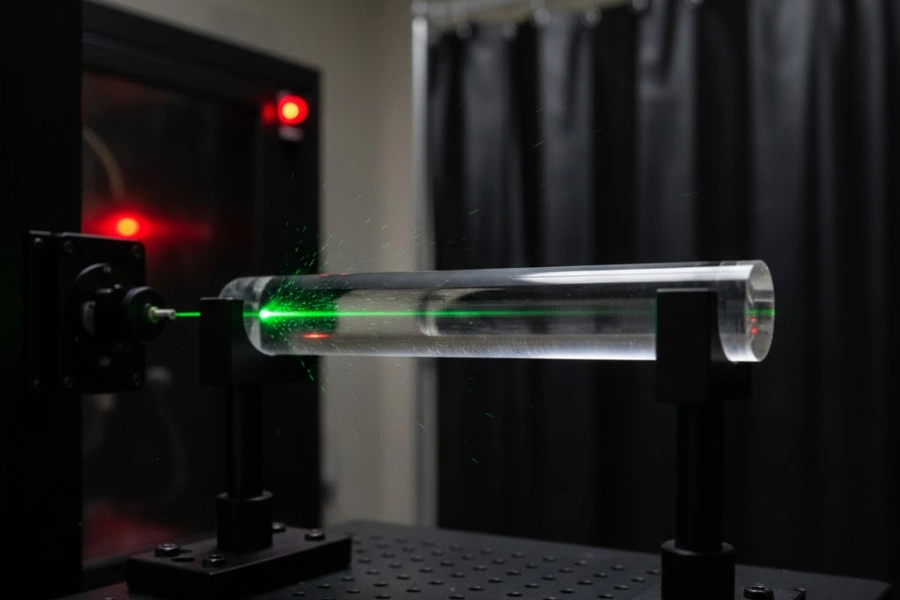
Transparent fused silica transmits radiation across a broad spectral range — from ultraviolet (UV) through near-infrared (NIR) — and this property carries practical significance beyond aesthetics in semiconductor furnace environments.
Transparent quartz thermocouple tubes allow direct visual inspection of the thermocouple junction and wire condition without tube removal. In high-value production environments where unplanned furnace openings cause both yield loss and thermal disturbance, the ability to visually assess wire oxidation state, junction integrity, or debris accumulation through the tube wall represents a meaningful operational advantage. Additionally, in processes where optical pyrometry or radiation thermometry is used as a secondary temperature reference, a transparent protection tube introduces no optical obstruction between the pyrometer and the process zone.
Opaque (translucent white) fused silica tubes, produced from fused natural quartz with controlled bubble content, offer marginally higher mechanical strength and reduced infrared transmission — making them preferable in applications where radiant heat management or near-infrared stray light suppression is required. The selection between transparent and opaque tube variants is therefore a process-specific decision, and in most semiconductor applications where contamination control and visual inspection access are primary concerns, transparent synthetic fused silica is the standard.
Structural Configurations of Quartz Thermocouple Tubes for Semiconductor Use
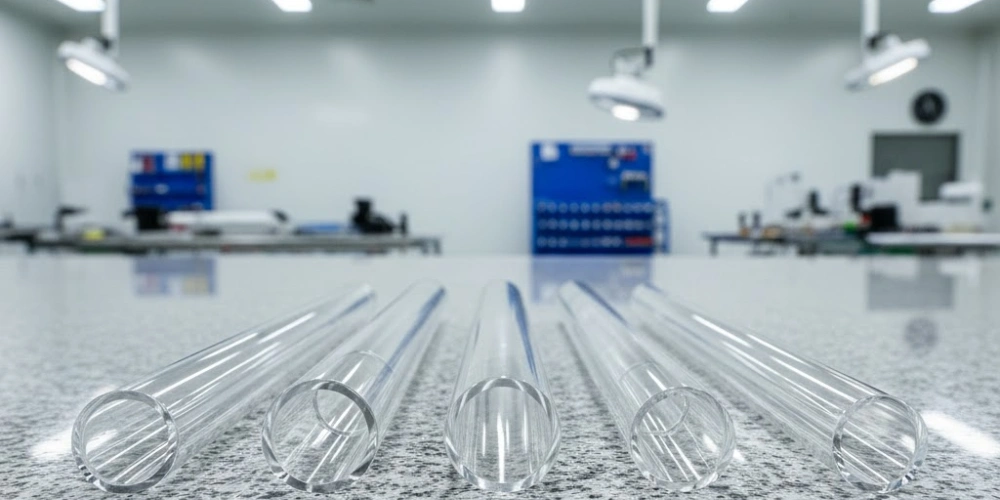
For engineers specifying protection tubes for semiconductor furnaces, material composition alone is insufficient — the geometric and structural form of the quartz thermocouple tube determines its functional compatibility with specific furnace architectures and measurement requirements.
Single-Bore and Multi-Bore Tube Geometries
The internal bore configuration of a protection tube defines how many thermocouple elements it can accommodate and how those elements are thermally and electrically isolated from one another.
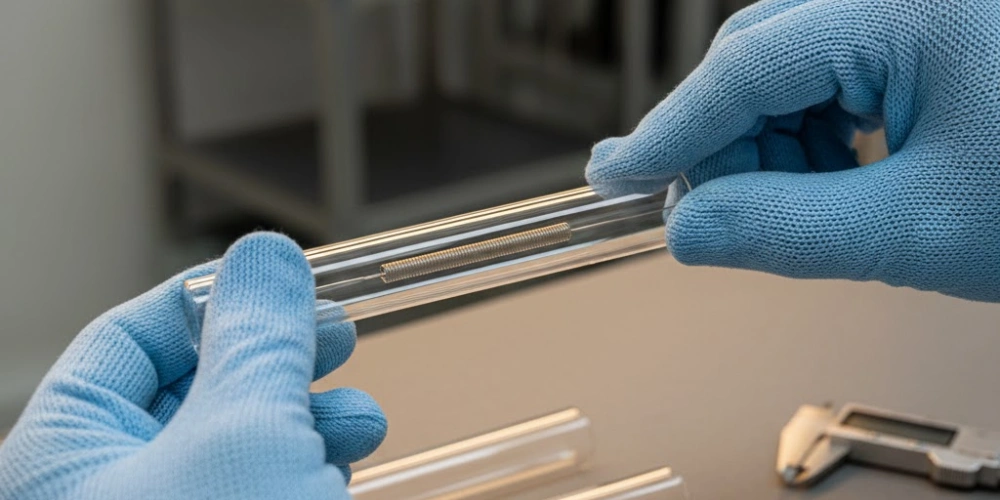
Single-bore quartz tubes are the most widely used configuration in semiconductor furnaces, accommodating one thermocouple pair with the two thermocouple wires typically threaded through a separate dual-bore alumina insulator rod seated inside the quartz shell. This arrangement maintains electrical isolation while the quartz tube provides chemical and thermal protection. Standard single-bore outer diameters for semiconductor use range from 4 mm to 12 mm, with bore diameters from 2 mm to 8 mm.
Multi-bore tubes — most commonly dual-bore (two parallel channels within a single quartz body) or four-bore configurations — allow multiple independent thermocouple pairs to occupy a single inserted assembly. This is particularly useful in multi-zone furnaces where spatial constraints limit the number of independent tube insertions, or where a primary and redundant thermocouple pair must share a single entry port. Bore-to-bore wall thickness in multi-bore quartz tubes is typically 0.8 mm to 1.5 mm, and maintaining this wall integrity at temperature requires high-quality fused silica with low internal bubble content.
Standard Bore Configurations for Semiconductor-Grade Protection Tubes
| Configuration | Bore Count | Typical OD Range (mm) | Typical Bore ID (mm) | Primäre Anwendung |
|---|---|---|---|---|
| Single-bore | 1 | 4 – 12 | 2 – 8 | Standard zone measurement |
| Dual-bore | 2 | 8 – 16 | 2 – 4 per bore | Redundant thermocouple pairs |
| Four-bore | 4 | 14 – 22 | 1.5 – 3 per bore | Multi-element compact assemblies |
Dimensional Tolerances and Wall Thickness Specifications
Dimensional precision in quartz thermocouple tubes is not a secondary concern — in semiconductor furnaces where tubes must pass through precision-machined flanges, align with multi-zone probe assemblies, and maintain consistent radial clearances at temperature, tight tolerances are operationally essential.
Outer diameter tolerances for semiconductor-grade fused silica tubes are typically held at ±0.10 mm to ±0.15 mm, compared to ±0.3 mm or greater for standard industrial quartz tubing. Wall thickness uniformity is specified to within ±0,1 mm to ensure symmetric radial heat transfer and prevent thermally induced bending under sustained loading. Length tolerances are typically ±1.0 mm to ±2.0 mm for tubes in the 300 mm to 1500 mm range, reflecting practical cutting and fire-polishing limitations.
Wall thickness selection directly affects both mechanical durability and thermal response time. Thinner walls (1.0–1.5 mm) reduce thermal mass and allow the thermocouple junction to respond more rapidly to furnace temperature changes — a characteristic that improves zone control responsiveness. Thicker walls (2.0–3.0 mm) increase resistance to handling damage and extend service life under cyclic loading but introduce a modest lag in thermal response. In most semiconductor diffusion and oxidation applications, wall thicknesses of 1.5 mm to 2.0 mm represent the standard design range, balancing response speed with mechanical robustness.
Dimensional Specification Ranges for Semiconductor-Grade Quartz Tubes
| Parameter | Halbleiterqualität | Standard Industrial Grade |
|---|---|---|
| OD Tolerance (mm) | ± 0.10 – 0.15 | ± 0.30 – 0.50 |
| Wanddickentoleranz (mm) | ± 0.10 | ± 0.20 – 0.30 |
| Wall Thickness Range (mm) | 1,0 – 3,0 | 1.0 – 5.0 |
| Length Tolerance (mm) | ± 1.0 – 2.0 | ± 2.0 – 5.0 |
| Bore Concentricity (mm) | ± 0.05 – 0.10 | ± 0.15 – 0.30 |
Closed-End vs Open-End Tube Configurations
The terminal geometry of a quartz thermocouple protection tube — whether closed or open at the measuring end — has direct implications for chemical protection of the thermocouple junction and for the thermal measurement characteristics of the assembly.
Closed-end tubes feature a fused, sealed tip at the measuring end, creating a fully enclosed environment for the thermocouple junction. This prevents direct contact between process atmosphere gases and the thermocouple wire, which is critical in HCl-containing cleaning atmospheres, in CVD environments with reactive precursor gases, and in any process where the thermocouple alloy would be chemically attacked by direct gas exposure. The closed-end configuration is the standard specification for semiconductor furnace thermocouple assemblies, and junction-to-tube-tip clearances of 5 mm to 15 mm are typically maintained to ensure good thermal coupling between the process atmosphere and the measurement point.
Open-end tubes allow direct exposure of the thermocouple junction to the process atmosphere, yielding faster thermal response and eliminating the tip-conduction lag inherent in closed-end designs. However, this configuration is only appropriate when the process atmosphere is non-reactive with the thermocouple alloy — primarily in inert or mildly oxidizing N₂ and Ar environments. Open-end fused silica tubes see limited use in semiconductor applications, largely confined to research furnaces operating under controlled inert atmospheres where measurement speed outweighs contamination risk.
Thermocouple Types Paired with Quartz Protection Tubes in Semiconductor Furnaces
Material compatibility between the thermocouple wire alloy and the fused silica protection tube must be confirmed alongside the material selection process. Within quartz thermocouple tube assemblies, the thermocouple type determines the usable temperature ceiling, accuracy class, and long-term stability behavior of the measurement system.
Type K and Type N Thermocouples in Sub-1100°C Semiconductor Applications
Among base-metal thermocouple types, K and N are the most widely deployed in semiconductor furnace applications operating below 1100°C, and both are routinely housed within fused silica protection tubes.
Type K thermocouples (Chromel-Alumel, Ni-Cr/Ni-Al) cover a measurement range of -200°C to 1260°C, with standard accuracy of ±2.2°C or ±0.75% above 375°C (IEC 60584 Class 1). They exhibit a Seebeck coefficient1 of approximately 41 µV/°C at 1000°C — the highest among standard base-metal types — which supports excellent signal resolution in data acquisition systems. However, Type K thermocouples are susceptible to "green rot" oxidation in low-oxygen partial pressure atmospheres above 800°C, where chromium selectively oxidizes within the Chromel wire. This limits their suitability in forming gas or N₂ purge environments without adequate oxygen content.
Type N thermocouples (Nicrosil-Nisil) were specifically developed to address the oxidation instability of Type K, and they show significantly improved drift resistance above 800°C. Drift in Type N thermocouples at 1000°C is typically below 0.5°C per 100 hours of continuous service, compared to 1–3°C per 100 hours for Type K under equivalent conditions. This stability makes Type N the preferred base-metal thermocouple in semiconductor annealing furnaces where calibration intervals must be minimized and process reproducibility is tightly controlled. Both K and N types are chemically compatible with fused silica tube interiors at their operating temperatures.
Performance Comparison of Base-Metal Thermocouple Types in Fused Silica Tubes
| Eigentum | Type K | Type N |
|---|---|---|
| Temperaturbereich (°C) | -200 to 1260 | -200 to 1300 |
| IEC Accuracy (Class 1) | ±2.2°C or ±0.75% | ±2.2°C or ±0.75% |
| Seebeck Coefficient at 1000°C (µV/°C) | ~41 | ~36 |
| Drift at 1000°C (°C/100 hr) | 1 – 3 | < 0.5 |
| Green Rot Susceptibility | High (> 800°C, low pO₂) | Niedrig |
| Compatibility with Fused Silica | ✓ Kompatibel | ✓ Kompatibel |
Type S, R, and B Thermocouples for High-Temperature Diffusion and Oxidation Furnaces
For semiconductor processes operating above 1100°C — including high-temperature oxidation, deep diffusion, and some LPCVD processes — precious metal thermocouple types housed within fused silica tubes provide the combination of high-temperature capability and contamination protection required.
Type S (Pt-10%Rh / Pt) and Type R (Pt-13%Rh / Pt) thermocouples operate reliably to 1600°C in continuous service, with IEC Class 1 accuracy of ±1.0°C or ±0.25% above 1100°C. In semiconductor furnace practice, these types are used in the 1050°C–1200°C range where base-metal thermocouples approach their drift limits. The platinum-rhodium alloys are susceptible to rhodium migration and grain growth above 1300°C, and to contamination by silicon vapors, phosphorus, and boron — all of which are present as dopant species in diffusion furnace atmospheres. The fused silica protection tube is therefore functionally indispensable for Type S and R elements in semiconductor environments: it isolates the platinum wire from reactive process species while maintaining the measurement assembly within 5–15 mm of the process zone.
Type B (Pt-30%Rh / Pt-6%Rh) extends the upper measurement limit to 1820°C, with usable output below 600°C being negligibly small due to near-zero Seebeck coefficient at low temperatures. In semiconductor furnace practice, Type B is used in specialized ultra-high-temperature annealing applications. Its rhodium content renders it less susceptible to rhodium depletion drift than Type S or R, and it shows improved resistance to silicon contamination. Fused silica tube protection remains standard for Type B up to the tube's service temperature limit of approximately 1100°C continuous; above this, alternative protection media must be considered.
Precious Metal Thermocouple Types Used with Fused Silica Protection Tubes
| Typ | Zusammensetzung | Range (°C) | Accuracy (IEC Class 1) | Key Limitation |
|---|---|---|---|---|
| S | Pt-10%Rh / Pt | 0 – 1600 | ±1.0°C or ±0.25% | Rh migration > 1300°C |
| R | Pt-13%Rh / Pt | 0 – 1600 | ±1.0°C or ±0.25% | Rh migration > 1300°C |
| B | Pt-30%Rh / Pt-6%Rh | 600 – 1820 | ±0.25% (> 1050°C) | Low output < 600°C |
Performance Parameters for Quartz Thermocouple Tubes in Process Conditions
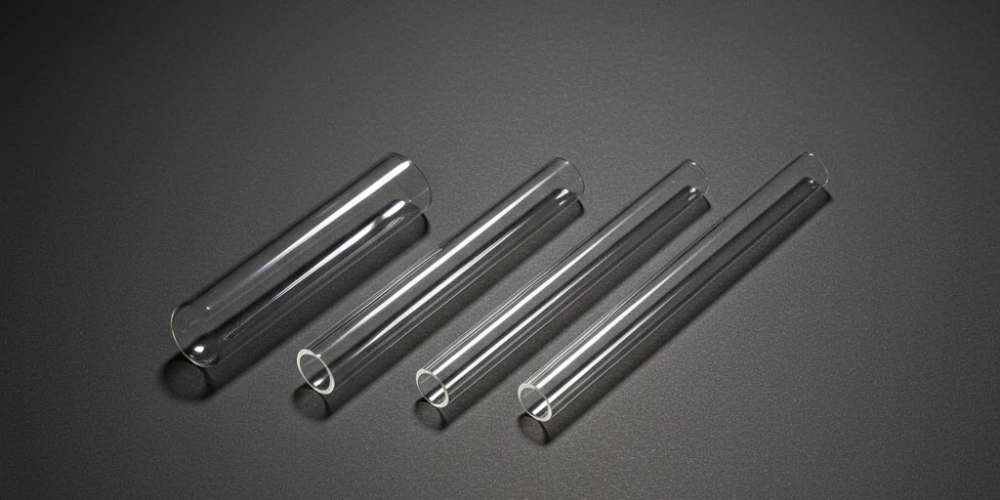
Selecting a protection tube on material identity alone is insufficient for semiconductor-grade applications. Quantified performance parameters — particularly those governing maximum service temperature, thermal shock tolerance, mechanical load resistance, and gas-tightness — must be evaluated against the specific process conditions the tube will encounter.
Maximum Service Temperature Limits for Fused Silica Tubes
The maximum continuous service temperature of a fused silica quartz thermocouple tube is not a fixed single value — it depends on tube form, atmosphere, load, and duration of exposure.
Transparent synthetic fused silica tubes carry a continuous service rating of approximately 1100°C in oxidizing or inert atmospheres. Short-term excursions to 1250°C are tolerable for durations under 1 hour, provided the tube is not under mechanical load and atmospheric conditions remain non-reducing. At temperatures above approximately 1050–1100°C, devitrification begins — the progressive conversion of amorphous fused silica into crystalline cristobalite. This phase transformation produces surface opacity, volume change, and a reduction in mechanical strength, ultimately limiting tube service life.
Natural fused silica tubes carry a somewhat lower continuous service ceiling of approximately 1000–1050°C, reflecting the slightly higher impurity content that catalyzes devitrification at lower temperatures. In semiconductor diffusion furnaces where process temperatures are tightly controlled and rarely exceed 1100°C, synthetic fused silica tubes provide an adequate margin of approximately 50–100°C above peak process temperature — sufficient to sustain prolonged service life under normal operating cycles.
Maximum Service Temperature for Fused Silica Tube Variants
| Rohr Typ | Continuous Service (°C) | Kurzfristiger Spitzenwert (°C) | Beginn der Entglasung (°C) |
|---|---|---|---|
| Transparent Synthetic | 1100 | 1250 | 1050 – 1100 |
| Opaque Synthetic | 1050 | 1200 | 1000 – 1050 |
| Natural Fused Silica | 1000 – 1050 | 1150 | 950 – 1000 |
Thermal Shock Resistance and Cyclic Heating Behavior
The ultra-low CTE of fused silica translates directly into a thermal shock resistance that no competing oxide ceramic can match, and this characteristic is particularly consequential in semiconductor furnaces where tubes experience hundreds of thermal cycles over their service life.
Fused silica protection tubes can withstand direct quenching from 1000°C to ambient temperature without fracture — a condition that would catastrophically shatter alumina or mullite tubes of equivalent wall thickness. This behavior is quantified by the critical temperature differential (ΔT_c) at which fracture probability exceeds 50%: for fused silica, ΔT_c exceeds 1000°C, compared to approximately 200°C for alumina (99.5%) und 350°C for mullite. In furnace loading operations where cold tube assemblies are inserted into preheated furnaces — a routine procedure in batch diffusion tools — this thermal shock tolerance eliminates the tube-fracture failure mode that represents one of the most common causes of unplanned process interruption with ceramic alternatives.
Over extended cyclic service, fused silica tubes maintain dimensional stability through thousands of heat-cool cycles without the progressive microcracking or grain boundary migration that limits the cyclic life of polycrystalline ceramics. Accelerated life testing at 50 cycles per day between 25°C and 1000°C has demonstrated fused silica tube integrity beyond 2,000 cycles without measurable dimensional change or structural degradation — a figure that supports service lives of multiple years under normal semiconductor furnace operation schedules.
Thermal Shock Resistance Comparison
| Material | Critical ΔT_c (°C) | WAK (×10-⁶/°C) | Cyclic Life (25–1000°C cycles) |
|---|---|---|---|
| Fused Silica | > 1000 | 0.55 | > 2,000 |
| Alumina (99.5%) | ~200 | 7.2 | 200 – 500 |
| Mullite | ~350 | 5.0 | 300 – 700 |
| Silicon Carbide | ~400 | 4.0 | 500 – 1000 |
Mechanical Strength and Pressure Resistance Under Operating Loads
Despite its outstanding thermal and chemical performance, fused silica has lower intrinsic mechanical strength than alumina or silicon carbide, and this must be accounted for in installation design and tube dimension selection.
The modulus of rupture (MOR) for transparent fused silica is approximately 50–65 MPa at room temperature, declining to approximately 40–55 MPa at 1000°C — roughly half the MOR of alumina (99.7%) under equivalent conditions. This means fused silica tubes are more susceptible to fracture from point-loading, handling impact, or installation stress than their polycrystalline ceramic counterparts. Wall thickness selection is the primary engineering lever for managing mechanical risk: increasing wall thickness from 1.5 mm to 2.5 mm approximately doubles the tube's cross-sectional moment of inertia2, substantially improving resistance to deflection under self-weight in horizontal furnace installations.
Long-term horizontal installation at temperatures above 900°C introduces the risk of viscous creep (sagging) in fused silica tubes. For tubes longer than 600 mm installed horizontally at temperatures approaching 1100°C, sag can become measurable over service periods exceeding several months. Supporting the tube at multiple points along its length — or using a slightly larger outer diameter to increase section modulus — mitigates this behavior. In vertical furnace configurations, gravitational load is axial rather than bending, and creep risk is substantially reduced.
Mechanical Properties of Fused Silica vs Competing Materials
| Eigentum | Fused Silica | Alumina (99.7%) | SiC |
|---|---|---|---|
| Modulus of Rupture at RT (MPa) | 50 – 65 | 300 – 380 | 400 - 500 |
| Modulus of Rupture at 1000°C (MPa) | 40 – 55 | 250 – 320 | 350 – 450 |
| Elastizitätsmodul (GPa) | 73 | 370 | 410 |
| Vickers Hardness (GPa) | 9 | 15 | 25 |
| Dichte (g/cm³) | 2.20 | 3.90 | 3.10 |
Gas Permeability and Hermetic Integrity at Elevated Temperatures
The gas barrier function of a thermocouple protection tube is often overlooked in material selection discussions, yet it is operationally critical — a tube that permits process gas ingress exposes the thermocouple wire to chemical attack and compromises measurement system integrity.
Fused silica exhibits extremely low gas permeability at temperatures below 1000°C, with helium permeability of approximately 10⁻¹⁰ cm³·cm/(cm²·s·cmHg) at room temperature — the lowest of any common oxide glass. For heavier diatomic gases such as O₂ and N₂, permeability is orders of magnitude lower, making a properly manufactured closed-end fused silica tube effectively hermetic under semiconductor process conditions. This hermetic integrity is contingent on freedom from internal bubbles, surface cracks, and fusing defects at the closed end — all of which are quality attributes that must be verified through supplier inspection protocols.
The notable exception is hydrogen at temperatures above 900°C. H₂ is a small molecule with high thermal velocity, and its permeability through fused silica increases significantly above 900°C, reaching levels where measurable hydrogen ingress into the tube interior can occur over extended process times. In furnace atmospheres containing H₂ at concentrations above approximately 5% by volume at temperatures exceeding 900°C, the hydrogen diffusion rate through the tube wall may be sufficient to alter the local atmosphere around the thermocouple junction over time periods of several hours. Specifying increased wall thickness (≥ 2.0 mm) and monitoring thermocouple calibration drift at regular intervals are the standard engineering responses to this specific limitation.

Application-Specific Use of Quartz Thermocouple Tubes Across Semiconductor Processes
Across the production flow of a modern semiconductor fab, quartz thermocouple tubes appear at multiple process nodes — each with distinct functional requirements shaped by the specific thermal and chemical conditions of that step.
-
Diffusionsöfen represent the highest-volume application for protection tubes in semiconductor manufacturing. In both horizontal and vertical batch diffusion tools, quartz thermocouple tubes are installed in each control and monitor zone, typically at three to five positions along the furnace length. At operating temperatures of 900°C to 1100°C in mixed O₂/N₂ or N₂/dopant atmospheres, synthetic fused silica tubes rated to ≥ 99.99% SiO₂ purity are standard. Tube lengths in horizontal furnaces commonly range from 800 mm to 1500 mm, requiring careful attention to sag resistance — particularly in older furnace designs where support provisions are limited. The combination of high thermal cycle frequency (multiple wafer batches per day), HCl cleaning exposures, and strict contamination requirements makes this application the most comprehensive test of a protection tube's capability.
-
Oxidation furnaces operating in wet or dry O₂ atmospheres present a chemically aggressive environment for all furnace components, yet fused silica performs exceptionally well in pure oxidizing conditions at process temperatures. Closed-end transparent synthetic fused silica tubes are the universal specification for oxidation furnace thermocouple assemblies, providing both visual inspection access and full chemical compatibility with steam-containing atmospheres.
-
LPCVD furnaces introduce an additional dimension: reactive precursor gases (SiH₄, NH₃, Si₂H₆, WF₆) at reduced pressures of 0.1–2.0 Torr. At these pressures, gas-phase diffusion rates are elevated, increasing the importance of tube hermetic integrity. Closed-end synthetic fused silica tubes with wall thicknesses of ≥ 1.5 mm are specified to minimize precursor gas ingress. Deposition on tube exterior surfaces is an expected occurrence in LPCVD environments; periodic cleaning with dilute HF-free etchants (such as HNO₃/H₂O₂ solutions) restores tube clarity without attacking the fused silica body.
-
Annealing furnaces — including both conventional batch furnaces and rapid thermal annealing (RTA) systems using lamp heating — use quartz thermocouple tubes in the conventional batch format. In RTA tools, the speed of thermal cycling (ramp rates of 50–200°C/s) places peak demands on thermal shock resistance, reinforcing the suitability of fused silica over any polycrystalline alternative.
Devitrification in Quartz Thermocouple Tubes and How It Affects Service Life
One of the most important failure mechanisms affecting quartz thermocouple tubes in sustained high-temperature service is devitrification — the irreversible transformation of amorphous fused silica into crystalline cristobalite.
-
Mechanism and onset conditions: Devitrification initiates at surface imperfections, contamination sites, or areas of elevated local stress, and propagates inward at rates governed by temperature and time. The process becomes thermodynamically favorable above approximately 1000°C for natural fused silica und 1050°C for high-purity synthetic grades. Visually, devitrification appears as a white, opaque, crystalline surface layer — colloquially described as the tube "going milky." Structurally, the cristobalite phase has a different density than amorphous fused silica (2.33 g/cm³ vs 2.20 g/cm³), and the volume change associated with the phase transition introduces internal stress that progressively reduces tube mechanical integrity. At temperatures above ~220°C, cristobalite undergoes a reversible α-β phase transformation accompanied by a 2–3% volume change, which induces cyclic cracking in heavily devitrified regions. A tube that has developed extensive devitrification should be replaced before it reaches a state where fracture risk compromises furnace safety or process continuity.
-
Accelerating factors: Several conditions accelerate devitrification beyond the baseline temperature-dependent rate. Alkali metal surface contamination — from handling without cleanroom gloves, from process gas impurities, or from adjacent furnace components — acts as a flux that lowers the crystallization activation energy and dramatically accelerates devitrification onset. Sodium contamination at even 1–5 ppm surface concentration can reduce the effective devitrification threshold by 50–100°C. Water vapor at high temperatures also accelerates the process through formation of silanol (Si-OH)3 surface groups that facilitate structural reorganization. Operating tubes in wet oxidation atmospheres near or above 1050°C without adequate service-life monitoring is a well-documented cause of premature devitrification in semiconductor fabs.
-
Service life management: The practical approach to devitrification management involves establishing a tube inspection interval based on process temperature and atmosphere. In processes running continuously above 1000°C in oxidizing atmospheres, visual inspection for onset of surface opacity at every furnace preventive maintenance interval — typically every 4 to 8 weeks — is recommended. Tubes showing devitrification coverage exceeding 20–30% of the heated zone length should be replaced proactively rather than run to failure. Maintaining clean tube handling protocols — including cleanroom glove use, storage in sealed polyethylene bags, and avoidance of direct skin contact — extends service life measurably by eliminating the primary surface contamination source.
Quartz Thermocouple Tubes Compared with Alumina and Silicon Carbide Alternatives
In semiconductor thermal metrology, fused silica is the dominant protection tube material, but engineers evaluating system specifications will inevitably encounter alumina and silicon carbide as alternatives. Each material occupies a distinct performance envelope, and understanding where fused silica is superior — and where it is not — supports sound engineering judgment.
-
Alumina (Al₂O₃, 99.7%) protection tubes offer substantially higher mechanical strength (MOR ~350 MPa vs ~55 MPa for fused silica) and can sustain continuous service to 1700°C — well beyond the fused silica ceiling of 1100°C. For semiconductor applications where process temperatures exceed 1100°C, alumina becomes the necessary alternative. However, alumina's CTE of 7.2 × 10⁻⁶/°C makes it vulnerable to thermal shock at the rapid temperature transitions characteristic of semiconductor batch furnace loading, and its susceptibility to HCl attack at elevated temperatures — where grain boundary etching generates Al₂O₃ particulate contamination — limits its suitability in furnaces with routine HCl cleaning cycles. Alumina also carries higher total metallic impurity levels (typically 200–500 ppm versus < 50 ppb for synthetic fused silica), which precludes its use in contamination-critical zones of advanced CMOS or memory fabrication processes.
-
Silicon carbide (SiC) protection tubes provide exceptional mechanical strength (MOR ~450 MPa) and a maximum service temperature exceeding 1600°C. SiC is widely used as furnace tube material in high-temperature processes, but as a thermocouple protection tube specifically, it introduces several complications in semiconductor environments. SiC is electrically conductive, which requires careful electrical isolation of the thermocouple assembly to prevent measurement error through induced EMF or ground loops. Additionally, SiC undergoes passive oxidation at temperatures above 800°C in O₂, forming a SiO₂ surface layer that introduces dimensional variability and, more critically, generates silicon oxide vapors that can deposit on wafer surfaces. The semiconductor industry's widespread use of SiC as a structural furnace component does not translate to its suitability as a thermocouple protection tube material in contamination-sensitive process zones.
-
The competitive position of fused silica quartz thermocouple tubes within the sub-1100°C semiconductor process space is therefore well-established: no competing material matches the combination of ultra-low contamination potential, chemical inertness across all standard process atmospheres, thermal shock resistance, and optical transparency. For the specific application domain of semiconductor diffusion, oxidation, and LPCVD furnace temperature measurement, fused silica is not simply a convenient choice — it is the materials-based optimum.
TOQUARTZ Quartz Thermocouple Tubes for Semiconductor-Grade Requirements
For semiconductor fabs and equipment manufacturers requiring protection tubes that meet the full specification envelope described throughout this article, material certification, dimensional precision, and purity traceability are non-negotiable.
-
TOQUARTZ manufactures quartz thermocouple tubes from synthetic fused silica with SiO₂ purity of ≥ 99.99% and total metallic impurity levels verified below 50 ppb by ICP-MS analysis. Each production batch is accompanied by a material certification report covering Na, K, Fe, Cu, Ni, and Al content — the trace elements of primary concern in semiconductor furnace environments. This documentation supports the material traceability requirements of ISO/TS 16949 and SEMI standards applicable to semiconductor process component qualification.
-
Dimensional manufacturing capability at TOQUARTZ covers outer diameters from 4 mm to 100 mm with OD tolerances of ±0,10 mm, wall thickness tolerances of ±0,10 mm, and bore concentricity within ±0,05 mm — meeting or exceeding the semiconductor-grade dimensional specifications outlined in earlier sections of this article. Both closed-end and open-end configurations are available in single-bore and multi-bore geometries, with custom lengths produced to ±1.0 mm. Fire-polished ends, precision-ground flanges, and surface-treated variants for enhanced devitrification resistance are available for process-specific requirements.
-
Technical application support for tube specification — including selection of appropriate purity grade, wall thickness, bore configuration, and end-form for specific semiconductor process conditions — is available directly through TOQUARTZ engineering. For fabrication processes at the intersection of temperature, atmosphere, and contamination constraints that this article has detailed, specification accuracy at the outset prevents tube-related process disruptions downstream.
Schlussfolgerung
Quartz thermocouple tubes occupy a technically defined and functionally irreplaceable role in semiconductor thermal manufacturing. Their ultra-low thermal expansion, chemical inertness across all standard process atmospheres, sub-50 ppb metallic impurity content, and exceptional thermal shock tolerance collectively address the compound demands of diffusion, oxidation, LPCVD, and annealing furnace environments in a way no other single material achieves. Understanding the performance envelope — including devitrification limits, mechanical strength constraints, hydrogen permeability behavior, and thermocouple type compatibility — enables engineers to specify, install, and maintain fused silica protection tube systems that deliver reliable, contamination-free temperature measurement across the full service life of semiconductor furnace equipment.
FAQ
What is the maximum temperature for a quartz thermocouple tube in semiconductor furnaces?
Transparent synthetic fused silica tubes carry a continuous service rating of approximately 1100°C, with short-term excursions to 1250°C tolerable for under one hour. Devitrification onset — the primary life-limiting mechanism — begins at approximately 1050°C to 1100°C for high-purity synthetic grades. Natural fused silica tubes have a somewhat lower ceiling of 1000°C to 1050°C continuous.
Why is fused silica preferred over alumina for thermocouple protection in semiconductor diffusion furnaces?
Fused silica provides metallic impurity levels below 50 ppb — more than three orders of magnitude lower than alumina — eliminating the risk of alkali metal and transition metal contamination of processed wafers. Additionally, fused silica's CTE of 0.55 × 10⁻⁶/°C gives it thermal shock resistance far exceeding alumina, which is critical in furnaces subject to HCl cleaning cycles and frequent batch loading.
What causes a quartz thermocouple tube to turn white or opaque during service?
Surface opacity is the visual signature of devitrification — the conversion of amorphous fused silica into crystalline cristobalite. This transformation is accelerated by sustained temperatures above 1050°C, alkali metal surface contamination (including from ungloved handling), and water vapor in oxidizing atmospheres. Tubes showing extensive surface opacity should be replaced proactively, as the associated volume change introduces cyclic cracking risk during cool-down.
Which thermocouple type is most compatible with quartz protection tubes in high-temperature semiconductor oxidation processes?
For semiconductor oxidation furnaces operating between 1050°C and 1200°C, Type S (Pt-10%Rh/Pt) and Type R (Pt-13%Rh/Pt) thermocouples are standard, offering IEC Class 1 accuracy of ±1.0°C or ±0.25%. The fused silica protection tube isolates the platinum-rhodium wire from boron, phosphorus, and silicon vapors present in diffusion atmospheres — contamination that would otherwise degrade thermocouple output within hours of direct exposure.
Referenzen:
-
The Seebeck coefficient expresses the magnitude of thermoelectric voltage generated per unit temperature difference across a thermocouple junction, and it directly governs the signal resolution and measurement sensitivity of a given thermocouple type within a data acquisition system. ↩
-
The moment of inertia of a cross-sectional profile is a geometric property that quantifies a structural member's resistance to bending deflection, and it is directly relevant to predicting the sag behavior of horizontally installed protection tubes under self-weight loading. ↩
-
Silanol refers to silicon hydroxyl groups (Si-OH) formed on fused silica surfaces through interaction with water vapor, and their presence at elevated temperatures is a known catalytic factor in accelerating structural reorganization and devitrification. ↩