يؤدي اختيار مادة الأنابيب غير المناسبة في الأنظمة الصناعية التي تعمل في درجات حرارة عالية أو تتطلب دقة عالية إلى فقدان الطاقة والتلوث وتعطل المعدات قبل الأوان. وتساعد أنابيب الكوارتز غير الشفافة في حل هذه المشكلات في خمسة قطاعات تتسم بمتطلبات صارمة.
تُصنع أنابيب الكوارتز غير الشفافة من ثاني أكسيد السيليكون المصهور (SiO₂ ≥ 99.9%)، وتتميز بالتوحيد الحراري، والخلو من التفاعل الكيميائي، والانبعاث المتحكم فيه للأشعة تحت الحمراء، وهي ميزات لا يمكن للبدائل الشفافة محاكاتها. يتناول هذا المقال كل مجال من مجالات التطبيق الرئيسية بتعمق تقني كامل، ويغطي معلمات التشغيل، وتوافق المواد، وتكوينات المعدات في مجالات معالجة أشباه الموصلات، والتدفئة الصناعية، والمعالجة بالأشعة فوق البنفسجية، والعلاج الطبي، وتصنيع الأغذية.
في جميع القطاعات الخمسة التي سيتم مناقشتها أدناه، لا تكمن الميزة الأساسية للأنابيب الكوارتزية غير الشفافة في خاصية واحدة، بل في تلاقي عدة خصائص تعزز بعضها بعضًا — وهو تلاقي لا يتجلى إلا عند دراسة كل بيئة تطبيق على حدة وفقًا لمعاييرها التقنية الخاصة.
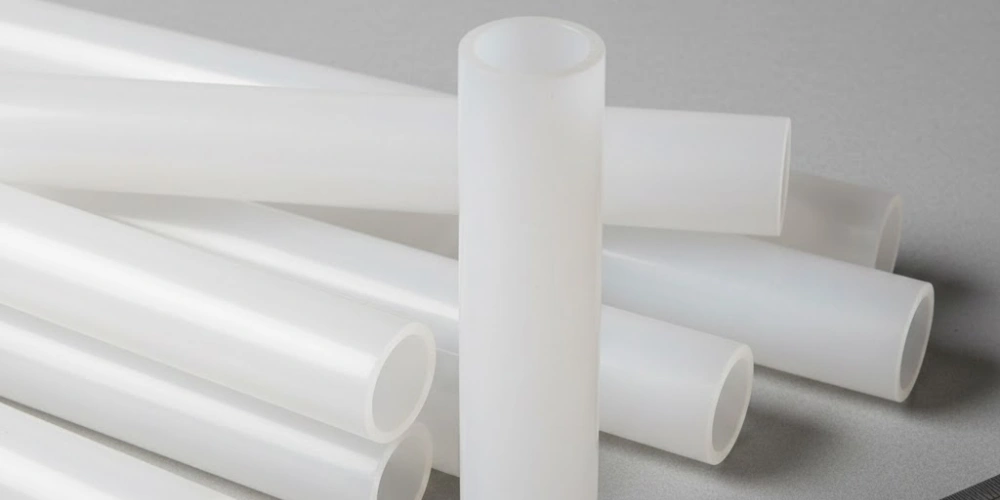
ما هو أنبوب الكوارتز غير الشفاف؟
من بين الأشكال المختلفة لمنتجات السيليكا المذابة المتاحة للمهندسين الصناعيين، يحتل النوع غير الشفاف مكانة مميزة وغالبًا ما يُساء فهمها؛ لذا فإن فهم طبيعة هذه المادة الحقيقية أمرٌ ضروري قبل تقييم مدى ملاءمتها لأي بيئة عملية محددة.
-
تركيب المواد: أنابيب كوارتز غير شفافة يتم تصنيعها من ثاني أكسيد السيليكون المصهور عالي النقاء، حيث يبلغ محتوى SiO₂ عادةً 99.9% أو أكثر. والمادة الأساسية مطابقة كيميائيًا لزجاج الكوارتز الشفاف؛ ويُعزى الاختلاف الهيكلي بالكامل إلى عملية التصنيع، وليس إلى إضافة أصباغ أو طلاءات أو شوائب من أي نوع.
-
سبب التعتيم: ينتج المظهر الأبيض الحليبي غير الشفاف عن التوزيع المنظم للفراغات المجهرية المملوءة بالغاز — وعادةً ما تكون فقاعات هواء أو ثاني أكسيد الكربون — المدمجة بشكل متجانس داخل مصفوفة السيليكا المنصهرة خلال مرحلة الصهر باللهب أو الصهر الكهربائي. تعمل هذه الفراغات الداخلية على تشتيت الضوء الساقط عبر الطيف المرئي بأكمله، مما ينتج عنه المظهر غير الشفاف المميز. ونظرًا لأن الفراغات محصورة داخل شبكة الزجاج، فإنها لا تضر بالسلامة الميكانيكية ولا تفتح مسارات للتلوث الكيميائي.
-
الفرق بينه وبين الكوارتز الشفاف: في أنابيب الكوارتز الشفافة، تكون مصفوفة السيليكا المذابة خالية من الفقاعات وشفافة بصريًّا، وتسمح بمرور نطاق واسع من الطيف الكهرومغناطيسي1 من الأشعة فوق البنفسجية العميقة وصولاً إلى الأشعة تحت الحمراء القريبة. وعلى النقيض من ذلك، فإن الأنابيب غير الشفافة تمنع مرور الضوء المرئي والأشعة فوق البنفسجية، بينما تُظهر انبعاثية أعلى بكثير في نطاق الأشعة تحت الحمراء — وهي خاصية لها آثار هندسية مباشرة على كل تطبيق من التطبيقات التي تمت مناقشتها في هذه المقالة.
وتتمثل الآثار العملية لهذا الاختلاف الهيكلي في أن أنابيب الكوارتز غير الشفافة والشفافة غير قابلة للتبادل: فقد تم تحسين كل منها لتتوافق مع تفاعل كهرومغناطيسي يختلف جوهريًّا مع بيئة تشغيلها. ومن شأن استبدال أحدهما بالآخر دون مراعاة السلوك الإشعاعي والاستجابة الطيفية ومتطلبات التوحيد الحراري أن يؤدي إلى حدوث قصور ملموس في الأداء في أي عملية تتطلب الدقة.
الخصائص الفيزيائية التي تحدد مدى ملاءمة الاستخدام الصناعي
قبل دراسة مجالات التطبيق الفردية، فإن وضع إطار مرجعي موحد للمعلمات الفيزيائية الرئيسية لأنابيب الكوارتز غير الشفافة يتيح تقييم كل قسم لاحق وفقًا لمعيار تقني ثابت، بدلاً من تكرار أساسيات المواد بشكل منفصل.
-
الانبعاثية بالأشعة تحت الحمراء: تُظهر أنابيب الكوارتز غير الشفافة انبعاثية سطحية (ε) تبلغ تقريبًا 0.90 إلى 0.95 عبر طيف الأشعة تحت الحمراء المتوسطة (2.5 ميكرومتر إلى 25 ميكرومتر)، حيث يقترب من سلوك المشع الجسم الأسود. وتعد هذه الانبعاثية العالية نتيجة مباشرة للبنية الداخلية الفارغة، التي تزيد من تشتت الفونونات وتعزز كفاءة الانبعاث الإشعاعي مقارنةً بالكوارتز الشفاف (ε ≈ 0.6–0.75 في نفس النطاق).
-
حدود التشغيل الحرارية: تبلغ درجة حرارة التشغيل المستمر لأنابيب السيليكا المذابة غير الشفافة حوالي من 1,050 درجة مئوية إلى 1,100 درجة مئوية, ، مع السماح برحلات قصيرة الأمد تصل مدتها إلى 1,200°C. تقع نقطة التلدين بالقرب من 1,120 درجة مئوية, ، وتبلغ درجة التليين حوالي 1,650°C — وهو أعلى بكثير من زجاج البورسليكات (820 درجة مئوية)، ولا يضاهي الألومينا الكثيفة إلا عند النظر إلى فترات التعرض القصيرة.
-
مقاومة الصدمات الحرارية: يبلغ معامل التمدد الحراري (CTE) للسيليكا المنصهرة تقريبًا 0.55 × 10-⁶/°C, ، وهو من بين أدنى القيم مقارنة بأي مادة أخرى تُستخدم في صناعة الأنابيب المتاحة تجاريًّا. ويتيح هذا السلوك التمددي القريب من الصفر للأنابيب الكوارتزية غير الشفافة أن تتحمل الدورات الحرارية السريعة — من درجة حرارة الغرفة إلى 1,000 درجة مئوية والعكس — دون أن تتعرض للكسر، وهي خاصية تُستغل بشكل روتيني في عمليات تحميل وتفريغ الأفران.
-
الخمول الكيميائي: السيليكا المذابة مقاومة للتآكل الناتج عن معظم الأحماض المعدنية (HCl، H₂SO₄، HNO₃) عند درجات الحرارة المرتفعة، ولا تظهر سوى تفاعل ضئيل مع الأجواء المؤكسدة (O₂، بخار H₂O) حتى الحد الأقصى لدرجة حرارة التشغيل. حمض الهيدروفلوريك (HF) وحمض الفوسفوريك المركز الساخن (H₃PO₄) وهي الاستثناءات الكيميائية الرئيسية. في الأجواء المختزلة التي تحتوي على الهيدروجين أو أول أكسيد الكربون عند درجات حرارة تزيد عن 1,000 درجة مئوية، قد تتسارع عملية إزالة الزجاجية السطحية، وهو عامل مهم في اختيار أنابيب عملية الترسيب الكيميائي للبخار (CVD).
-
محتوى الهيدروكسيل (OH): يؤثر تركيز مجموعات الهيدروكسيل الهيكلية داخل شبكة السيليكا المدمجة تأثيرًا حاسمًا على الأداء في درجات الحرارة العالية. الدرجات منخفضة المحتوى من الهيدروكسيل (< 30 جزء في المليون) تُظهر مقاومة فائقة للتبلور (التحجر) عند درجات حرارة تزيد عن 1,000 درجة مئوية، وتُفضل استخدامها في التطبيقات الخاصة بأشباه الموصلات. توفر الدرجات ذات المحتوى العالي من OH (> 150 جزء في المليون) نفاذية أفضل للأشعة فوق البنفسجية، لكنها تتحلل بسرعة أكبر عند التعرض لدرجات حرارة مرتفعة ومستمرة — وهو مفاضلة تحدد اختيار درجة المادة عبر مجالات التطبيق الخمسة التي سيتم استعراضها أدناه.
تشكل هذه المعلمات مجتمعةً الأساس الهندسي الذي يُبنى عليه كل تطبيق صناعي لأنابيب الكوارتز غير الشفافة. ولا تعمل أي خاصية بمفردها؛ بل إن الجمع بين الانبعاثية العالية، والتمدد الحراري المنخفض للغاية، والاستقرار الكيميائي، ومحتوى OH المتحكم فيه هو ما يجعل هذه الفئة من المواد مناسبة بشكل فريد للبيئات التي تكون فيها الدقة والمتانة والتحكم في التلوث أمورًا لا غنى عنها في آن واحد.
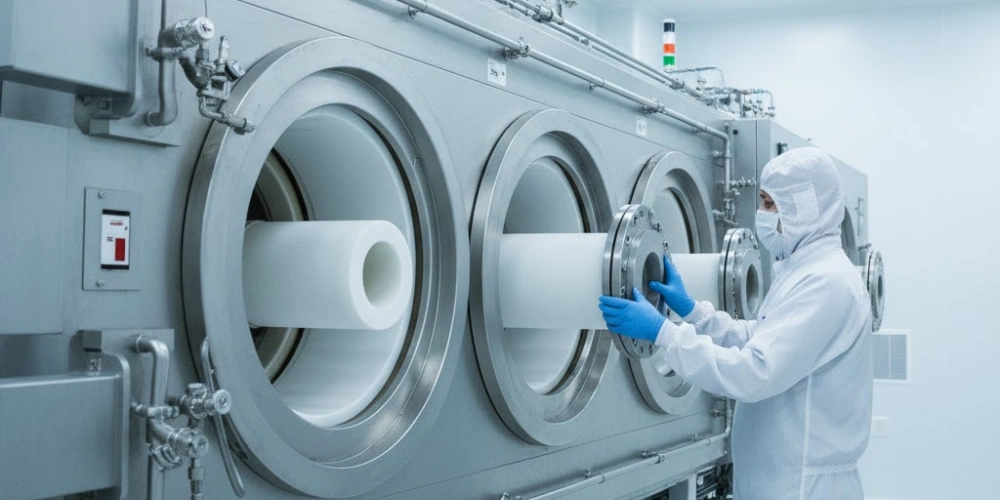
أفران الانتشار لأشباه الموصلات التي تعتمد على أنابيب الكوارتز غير الشفافة
تُعد المعالجة الحرارية في صناعة أشباه الموصلات من بين أكثر بيئات التطبيق صرامةً بالنسبة لأي مكون أنبوبي، حيث يمكن أن تؤدي الانحرافات في درجة الحرارة التي تُقاس بكسور من الدرجة والتلوث المعدني بمعدل أجزاء في المليار إلى إتلاف دفعات كاملة من رقائق السيليكون. أصبحت أنابيب الكوارتز غير الشفافة هي الخيار القياسي للمواد المستخدمة في أنابيب عمليات أفران الانتشار، وذلك تحديدًا لأن خصائصها الفيزيائية تعالج هذين النوعين من الأعطال في آن واحد. تتناول الأقسام التالية بالتفصيل المتطلبات الفنية المحددة لكل بيئة فرعية من بيئات المعالجة.
متطلبات التوحيد الحراري داخل أنابيب أفران الانتشار
يُعد توحيد درجة الحرارة عبر منطقة الرقاقة في فرن الانتشار أو الأكسدة أهم معلمة عملية على الإطلاق في المرحلة الأولية من تصنيع أشباه الموصلات.
أفران الانتشار الأفقية والرأسية المستخدمة في عمليات الأكسدة والتلدين و LPCVD2 تتطلب هذه العمليات توحيد درجة الحرارة في منطقة الرقاقة ضمن من ±1 درجة مئوية إلى ±2 درجة مئوية على طول منطقة مسطحة يبلغ 400 ملم إلى 800 ملم. عند استخدام أنابيب معالجة شفافة من الكوارتز، يؤدي النفاذ الجزئي للأشعة تحت الحمراء القريبة من عناصر التسخين في الفرن إلى تكوين نقاط ساخنة موضعية في مواقع تتوافق مع المسافة بين العناصر — وهي ظاهرة موثقة جيدًا في تقارير تأهيل الأفران. تُزيل الأنابيب غير الشفافة هذا التباين الإشعاعي عن طريق تشتيت الأشعة تحت الحمراء الواردة قبل أن تتمكن من اختراق جدار الأنبوب وتسبب تسخيناً متفاوتاً على سطح الرقاقة.
يبلغ القطر الخارجي لأنابيب المعالجة المستخدمة في أفران الرقائق مقاس 200 ملم عادةً من 220 ملم إلى 240 ملم, ، في حين تتطلب أفران رقائق السيليكون مقاس 300 ملم أنابيب يبلغ قطرها الخارجي 320 ملم إلى 360 ملم, ، حيث تتراوح أطوالها بين من 1,200 ملم إلى 2,000 ملم حسب سعة القارب. وعادةً ما يكون سمك الجدار من 5 ملم إلى 8 ملم, ، وهو بعد يتم موازنته مع متطلبات الكتلة الحرارية وقدرة تحمل الأحمال الميكانيكية عند درجات الحرارة المختلفة.
تتجاوز عواقب عدم التوحيد الحراري الكافي حدود خطوات العملية الفردية: ففي نمو أكسيد البوابة، على سبيل المثال، أ تدرج حراري قدره 1 درجة مئوية عبر رقاقة يبلغ قطرها 300 ملم يمكن أن يؤدي إلى تباينات في سماكة الأكسيد تصل إلى من 0.3 آنجستروم إلى 0.8 آنجستروم, ، وهو ما يُترجم مباشرةً إلى تباين جهد العتبة في مصفوفات ترانزستورات MOSFET. ولذلك، تعمل هندسة الأنبوب غير الشفاف كعامل تجانس حراري سلبي، مما يقلل من العبء الهندسي الملقى على خوارزميات التحكم في المنطقة النشطة في وحدة التحكم في درجة حرارة الفرن.
معايير النقاء الخاصة بأنابيب درجة أشباه الموصلات
يُعد التلوث المعدني الناتج عن أنبوب المعالجة أحد أنماط الفشل المستمرة والتي غالبًا ما يتم التقليل من شأنها في عمليات أفران الانتشار.
يجب أن تستوفي أنابيب الكوارتز غير الشفافة المخصصة لأغراض أشباه الموصلات مواصفات الشوائب المعدنية الإجمالية التي تُعدّ أكثر صرامةً بكثير من تلك المطبقة على السيليكا المصهورة المخصصة للأغراض الصناعية أو صناعة المصابيح. وتركيزات الفلزات القلوية الفردية — ولا سيما الصوديوم (Na)، والبوتاسيوم (K)، والليثيوم (Li) — يجب أن يظل أقل من 20 جزء في المليون بالوزن, ، حيث تنتشر هذه الأيونات بسهولة عبر SiO₂ عند درجات حرارة المعالجة وتُدخل شحنة متحركة إلى طبقات أكسيد البوابة. المعادن الانتقالية، بما في ذلك الحديد (Fe)، والكروم (Cr)، والنيكل (Ni) يجب أن يظل كل منها أقل من 10 أجزاء في المليار, ، حيث إن حتى التركيزات النزرة تؤدي إلى تكوين مصائد عميقة داخل فجوة النطاق في السيليكون، مما يؤدي إلى تدهور عمر حاملات الشحنة من الأقلية وخصائص التسرب في الوصلة.
السيليكا المذابة منخفضة المحتوى من الهيدروكسيل (OH < 30 جزء في المليون) وهو أمر إلزامي بالنسبة للأنابيب المخصصة للاستخدام عند درجات حرارة تزيد عن 1,000 درجة مئوية في عمليات المعالجة الحرارية المستمرة. عند درجات حرارة تتجاوز 900 درجة مئوية، يخضع السيليكا المصهور عالي المحتوى من OH إلى استرخاء هيكلي متسارع مصحوبًا بتزجيج سطحي — وهو تحويل ثاني أكسيد السيليكون (SiO₂) غير المتبلور إلى كريستوباليت بلوري — مما يولد تلوثًا جسيميًا يترسب على أسطح الرقائق ويؤدي إلى ظهور مواقع تكوين عيوب بلورية. تُظهر الأنابيب التي يقل محتوى الـ OH فيها عن 30 جزء في المليون درجات حرارة بداية إزالة التزجيج تبلغ تقريبًا 150 درجة مئوية أعلى مقارنةً بالمواد ذات الجودة القياسية، مما يطيل العمر التشغيلي من حوالي من 50 إلى 80 دورة حرارية (الدرجة القياسية) إلى 200 إلى 400 دورة (درجة أشباه الموصلات منخفضة المحتوى من الهيدروكسيل) قبل أن يؤدي تدهور السطح إلى الحاجة إلى استبدال الأنبوب.
عادةً ما يقوم مصنع الأنابيب بالتحقق من الامتثال لمعايير النقاء باستخدام مطياف الكتلة بالبلازما المقترنة حثياً (ICP-MS), ، مع توفير وثائق شهادة المطابقة مع كل شحنة من الأنابيب. وتقوم مصانع أشباه الموصلات بشكل روتيني بإجراء فحص جودة الواردات باستخدام تقنية التألق بالأشعة السينية بالانعكاس الكلي (TXRF) على عينات مأخوذة من سطح الأنابيب قبل إدخال المكون إلى بيئة غرفة الأبحاث النظيفة.
التوافق الجوي في عمليات الترسيب الكيميائي من الغاز (CVD) وعمليات الأكسدة
تعد الاستقرار الكيميائي لأنابيب الكوارتز غير الشفافة في ظل الأجواء الغازية المحددة السائدة في أفران الانتشار وأفران الترسيب الكيميائي للبخار (CVD) أمرًا لا يقل أهمية عن خصائصها الحرارية وخصائص نقاوتها.
تُعرِّض عمليات الأكسدة الحرارية الجزء الداخلي للأنبوب إلى الأكسجين الجاف، الأكسجين الرطب (بخار مولد بالحرارة عند 900 درجة مئوية – 1,100 درجة مئوية)، أو تركيبات مع حمض الهيدروكلوريك (1%–3% حسب الحجم) يُستخدم في عملية إزالة الغازات من أنابيب الأفران. والسيليكا المذابة مستقرة من الناحية الديناميكية الحرارية ضد الأكسدة بحكم تعريفها — فهي في الأصل سيليكون مؤكسد بالكامل — ولا تظهر أي تفاعل قابل للقياس مع أي من هذه الأنواع المؤكسدة عند درجات حرارة العملية. دورات التنظيف باستخدام حمض الهيدروكلوريك, ، وعلى وجه الخصوص، تعمل على تخميل التلوث المعدني النزوي الموجود على الجدار الداخلي للأنبوب بشكل فعال من خلال تكوين كلوريدات معدنية متطايرة يتم طردها مع تدفق غاز العادم، وهي آلية تنقية تدعمها أنابيب الكوارتز غير الشفافة دون أن تتعرض لهبوط في جودتها الهيكلية.
في بيئات LPCVD، تشمل غازات المعالجة ما يلي: السيلان (SiH₄)، ثنائي كلورو السيلان (SiH₂Cl₂)، الأمونيا (NH₃), ، والسلائف العضوية المعدنية مثل TEOS (أورثوسيليكات رباعي إيثيل). عند ضغوط تشغيل LPCVD تبلغ من 0.1 تور إلى 2 تور ودرجات الحرارة التي تبلغ من 550 درجة مئوية إلى 900 درجة مئوية, ، تتعرض جدران أنابيب السيليكا المذابة لكل من غازات السلائف التفاعلية ونواتج الترسيب الثانوية. وتضمن الخمول الكيميائي للسيليكا المذابة غير الشفافة عدم مشاركة أي مادة من مكونات الأنبوب في تفاعلات الترسيب الطفيلية أو إحداث مسارات تحلل تحفيزي من شأنها أن تغير انتظام معدل الترسيب.
من الاعتبارات العملية المهمة في إدارة أنابيب CVD ما يلي: تراكم طبقة مترسبة على الجدار الداخلي للأنبوب على مدار دورات التصنيع المتتالية. تؤدي طبقات البوليسيليكون، ونيتريد السيليكون، وأكسيد TEOS المترسبة على جدار الأنبوب إلى حدوث إجهاد حراري أثناء التبريد نتيجة عدم تطابق معاملات التمدد الحراري. أما أنابيب الكوارتز غير الشفافة، التي يبلغ معامل التمدد الحراري (CTE) الخاص بها ما يقارب الصفر، فيبلغ 0.55 × 10-⁶/°C, ، وتقلل من تركيز الإجهاد عند السطح الفاصل بين الطبقة والأنبوب، مما يقلل من خطر حدوث حالات تفتت الطبقة التي تولد جسيمات أثناء معالجة الرقاقة. ويتم إجراء التنظيف الرطب المجدول (النقش باستخدام حمض الهيدروفلوريك) للطبقات المتراكمة على فترات زمنية تُحدد بناءً على مراقبة سماكة الطبقة، وعادةً كل من 20 إلى 50 دورة تشغيل حسب معدل الترسيب ونوع الطبقة.
ملخص معلمات تطبيقات أشباه الموصلات
| المعلمة | المواصفات |
|---|---|
| تجانس درجة الحرارة في منطقة الرقاقة | من ±1 درجة مئوية إلى ±2 درجة مئوية |
| القطر الخارجي للأنبوب — رقاقة قطرها 300 مم | 320 ملم إلى 360 ملم |
| طول الأنبوب | من 1,200 ملم إلى 2,000 ملم |
| نقاء ثاني أكسيد السيليكون (درجة أشباه الموصلات) | ≥ 99.991.99% |
| محتوى الهيدروكسيل (درجة منخفضة من الهيدروكسيل) | < 30 جزء في المليون |
| حد التلوث بـ Na و K و Li | < 20 جزء في المليار لكل منها |
| حد التلوث بالحديد (Fe) والكروم (Cr) والنيكل (Ni) | < 10 أجزاء في المليار لكل منها |
| العمر التشغيلي — الدرجة القياسية OH | من 50 إلى 80 دورة حرارية |
| عمر الخدمة — درجة منخفضة من الهيدروكسيل (OH) | 200 إلى 400 دورة حرارية |
| تركيز مادة امتصاص حمض الهيدروكلوريك | من 1% إلى 3% من حيث الحجم |
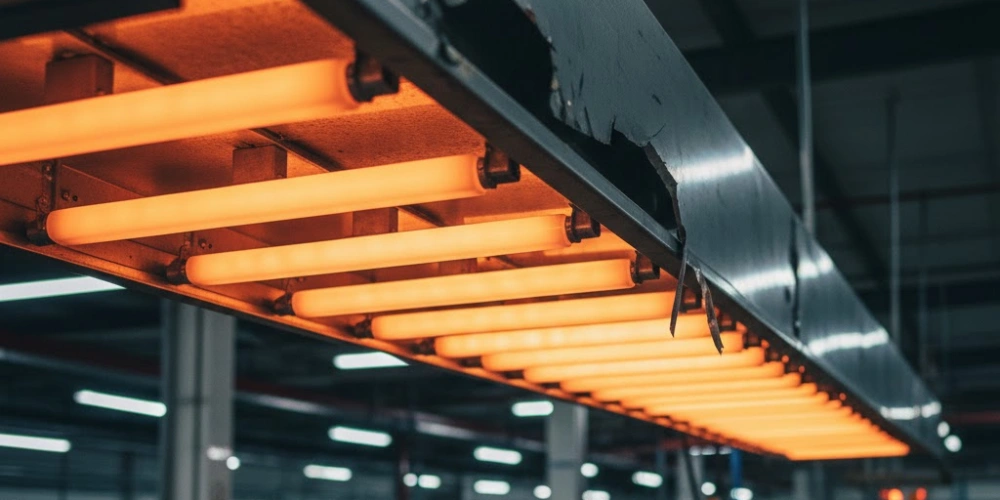
أنظمة التسخين الصناعية بالأشعة تحت الحمراء المزودة بأنابيب كوارتز غير شفافة
يمثل التسخين الصناعي بالأشعة تحت الحمراء أوسع نطاق للاستخدام التجاري لأنابيب الكوارتز غير الشفافة من حيث حجم الوحدات المركبة، حيث يمتد هذا الاستخدام ليشمل صناعات السيارات، والمنسوجات، وتجهيز الأخشاب، وتشكيل الزجاج، والتعبئة والتغليف، التي تشغّل مجتمعةً عشرات الآلاف من وحدات التسخين بالأشعة تحت الحمراء على مستوى العالم. وتستند الحجة الهندسية لاستخدام الأنابيب غير الشفافة في هذا السياق إلى فيزياء الإشعاع التي تميزها بشكل قاطع عن البدائل المصنوعة من الكوارتز الشفاف، وعن عناصر التسخين المعدنية المقاومة التي تعمل في نفس نطاق درجات الحرارة. ويتناول كل قسم فرعي من الأقسام التالية بعدًا تقنيًّا متميزًا لهذا التطبيق.
طيف انبعاث الأشعة تحت الحمراء وكفاءة التسخين
يحدد الناتج الكهرومغناطيسي لأنبوب الكوارتز غير الشفاف المسخن كلاً من كفاءة نقل الطاقة إلى قطعة العمل وعمق الاختراق الحراري في المادة قيد المعالجة.
أنبوب كوارتز غير شفاف يعمل عند درجة حرارة سطح تبلغ من 800 درجة مئوية إلى 1,100 درجة مئوية يصدر إشعاعًا بشكل أساسي في الأشعة تحت الحمراء قصيرة الموجة (SWIR: 1.0–2.5 ميكرومتر) والأشعة تحت الحمراء متوسطة الموجة (MWIR: 2.5–5.0 ميكرومتر) النطاقات الطيفية، مع تحول طول موجة الذروة للانبعاث من حوالي 2.0 ميكرومتر عند 900 درجة مئوية إلى 1.6 ميكرومتر عند 1,100 درجة مئوية وفقًا لقانون الإزاحة لـ «فيين». ويتطابق هذا الناتج الطيفي بشكل جيد مع نطاقات الامتصاص للعديد من المواد الصناعية: الماء (امتصاص قوي عند 1.9 ميكرومتر و2.7 ميكرومتر)، وطلاءات البوليمرات العضوية (نطاقات امتصاص عند 3.0–3.5 ميكرومتر)، والأغشية الكربونية، فجميعها تمتص بكفاءة في نطاق الأشعة تحت الحمراء المتوسطة الموجية (MWIR)، مما يتيح اقترانًا مباشرًا وسريعًا للطاقة دون الحاجة إلى نقل حراري حراري حراري حراري حراري حراري حراري حراري حراري حراري حراري حراري حراري حراري حراري حراري حراري حراري حراري حراري حراري حراري حراري حراري حراري حراري حراري حراري حراري حراري حراري حراري حراري حراري حراري حراري حراري حراري حراري حراري حراري حراري حراري حراري حراري حراري حراري حراري حراري حراري حراري حراري حراري حراري حراري حراري حراري حراري حراري حراري حراري حراري حراري حراري حراري حراري حراري حراري حراري حراري حراري حراري حراري حراري حراري حراري حراري حراري حراري حراري حراري حراري حراري حراري حراري حراري حراري حراري حراري حراري حراري حراري حراري حراري حراري حراري حراري حراري حراري حراري حراري حراري حراري حراري حراري حراري حراري حراري حراري حراري حراري حراري حراري حراري حراري حراري حرار.
أنابيب كوارتز شفافة تُمرر الأنابيب التي تحتوي على نفس عنصر التسخين الداخلي جزءًا كبيرًا من إشعاع SWIR دون امتصاصه، مما يسمح فعليًّا للطاقة الإشعاعية بالمرور عبر جدار الأنبوب والانتشار إلى ما وراء منطقة التسخين المقصودة. على النقيض من ذلك، تمتص الأنابيب غير الشفافة هذا الإشعاع داخل جدار الأنبوب وتعيد إطلاقه بفضل الانبعاثية العالية (ε ≈ 0.90–0.95) التي يتميز بها السطح الخارجي للأنبوب، مما يؤدي إلى سطح إشعاعي أسطواني موحد الذي ينتج مجال إشعاع متجانس مكانيًّا حول محيط الأنبوب.
يمكن قياس النتيجة العملية لهذا التمييز في بيئات الإنتاج: فقد ثبت أن استبدال أنابيب التسخين الكوارتزية الشفافة بنظائرها غير الشفافة في تطبيق تجفيف اللفائف المستمر يؤدي إلى تقليل استهلاك الطاقة من 12% إلى 18% مع الحفاظ على نفس معدل الإنتاجية، وذلك بفضل التخلص من الإشعاع المنبعث الذي يتجاوز شريط المنتج ويتم امتصاصه دون فائدة داخل غلاف الجهاز.
التكوينات الهيكلية في معدات التسخين الصناعية
يتبع الترتيب المادي لأنابيب الكوارتز غير الشفافة داخل حاويات معدات التسخين عدة تكوينات معتمدة، تم تحسين كل منها لتلائم هندسة عملية معينة ومتطلبات كثافة الطاقة الخاصة بها.
سخانات الأشعة تحت الحمراء الكوارتزية أحادية الطرف (يُعرف أيضًا باسم تنسيق المصابيح T3 أو R7s) تتكون من ملف تنغستن محكم الإغلاق داخل أنبوب كوارتز غير شفاف أحادي الطرف، حيث توجد التوصيلات الكهربائية في أحد طرفيه. ويُعد هذا التنسيق هو المعيار المستخدم في سخانات الألواح ووحدات الكاسيت ذات القوى الاسمية التي تبلغ من 1 كيلوواط إلى 4 كيلوواط لكل أنبوب عند درجات حرارة سطح الأنبوب التي تبلغ من 800 درجة مئوية إلى 950 درجة مئوية. سخانات أنبوبية ذات طرفين (التصميم الخطي مع الوصلات في كلا الطرفين) تُستخدم في التطبيقات عالية الطاقة التي تتطلب مخرجات تبلغ من 4 كيلوواط إلى 15 كيلوواط لكل أنبوب, ، حيث تصل درجات الحرارة السطحية إلى من 1,050 درجة مئوية إلى 1,150 درجة مئوية, ، وهي الشكل السائد في أفران التجفيف ذات الشريط العريض وأفران معالجة طلاء السيارات.
يتم تركيب أنابيب الكوارتز غير الشفافة في وحدات التسخين مع عاكسات من الألومنيوم المصقول أو الفولاذ المقاوم للصدأ المطلي بالذهب يتم وضعها خلف كل أنبوب، حيث تعمل على تركيز الطاقة المشعة نحو سطح المنتج واستعادة الإشعاع المنبعث من الربع الخلفي للأنبوب، والذي كان سيضيع لولا ذلك في هيكل الوحدة. وتحدد هندسة العاكس — سواء كان مكافئًا أو بيضاويًا أو مسطحًا — توزيع الإشعاع على مستوى المنتج، حيث تنتج العواكس المكافئة شعاعًا متوازيًا، بينما توفر العواكس المسطحة تغطية واسعة الزاوية منتشرة.
يؤثر اتجاه التركيب — الأفقي مقابل الرأسي — على العمر التشغيلي للأنبوب من خلال الإجهاد الحراري التفاضلي. في التركيب الأفقي, ، تؤدي الجاذبية إلى حدوث ترهل في الأنابيب الطويلة (> 600 مم) التي تعمل عند درجات حرارة تزيد عن 1,000 درجة مئوية، حيث يزداد الانحراف مع ارتفاع درجة حرارة التشغيل وطول الأنبوب. أقصى مسافة مسموح بها للامتداد غير المدعوم عند 1,050 درجة مئوية تعادل ما يقارب 400 مم إلى 500 مم بالنسبة لأنبوب يبلغ قطره الخارجي 25 ملم وسماكة جداره 2 ملم؛ وتتطلب المسافات الأطول استخدام مساند خزفية وسيطة لمنع حدوث تشوه بلاستيكي أثناء التشغيل المستمر.
القطاعات الصناعية النموذجية التي تستخدم سخانات الكوارتز التي تعمل بالأشعة تحت الحمراء
يمتد استخدام سخانات الأشعة تحت الحمراء ذات الأنابيب الكوارتزية غير الشفافة ليشمل مجموعة واسعة من الصناعات التحويلية، حيث تستفيد كل صناعة منها من جانب معين من سلوك الإشعاع الخاص بهذه المادة.
خطوط طلاء السيارات استخدم سخانات أنبوبية غير شفافة ذات طرفين وعالية الطاقة تبلغ قدرتها من 6 كيلوواط إلى 12 كيلوواط لكل أنبوب في أفران تجفيف الطلاء التي تعمل عند درجات حرارة لسطح المنتج تبلغ 140 درجة مئوية إلى 180 درجة مئوية. استجابة حرارية سريعة — من البرودة إلى درجة حرارة التشغيل القصوى في من 8 إلى 15 ثانية — يتيح التنشيط منطقةً تلو الأخرى بشكل متزامن مع حركة هياكل المركبات على خط الإنتاج، مما يقلل من استهلاك الطاقة خلال الفواصل الزمنية بين الهياكل مقارنةً بالأفران الحرارية التي تعمل بالطاقة بشكل مستمر.
تجفيف الأخشاب والألواح الهندسية (MDF، ألواح الخشب المضغوط، وركائز الأرضيات المصفحة) تعتمد على انبعاث الأشعة تحت الحمراء المتوسطة الموجية (MWIR) من أنابيب غير شفافة لتبخير الرطوبة السطحية والقريبة من السطح بشكل تفضيلي، دون إحداث ارتفاع مفرط في درجة حرارة لب ألياف الخشب — وذلك نتيجة الامتصاص الانتقائي لجزيئات الماء عند 1.9 ميكرومتر و2.7 ميكرومتر، مما يؤدي إلى تركيز الطاقة في الطبقة السطحية الغنية بالرطوبة. تعمل مصفوفات الأنابيب النموذجية في أنفاق تجفيف الألواح عند من 3 كيلوواط إلى 6 كيلوواط لكل أنبوب, ، مع تباعد بين الأنابيب يبلغ من 80 ملم إلى 120 ملم لتحقيق كثافة إشعاع موحدة على طول عرض الألواح البالغ من 1,200 ملم إلى 2,400 ملم.
تشكيل الزجاج وتقويته تستخدم العمليات سخانات أنبوبية من الكوارتز غير الشفافة لتسخين قطع الزجاج الخام مسبقًا قبل تشكيلها بالضغط، وللحفاظ على الزجاج عند درجة حرارة التشكيل خلال تسلسلات الضغط متعددة المراحل. يمتص الزجاج بقوة في نطاق الأشعة تحت الحمراء المتوسطة الموجية (MWIR) (فوق 3 ميكرومتر)، مما يجعل أطياف انبعاث الأنابيب غير الشفافة فعالة بشكل خاص في المعالجة الحرارية للزجاج مقارنة بمصادر الأشعة تحت الحمراء القريبة التي تمر جزئيًا عبر الأجزاء الزجاجية الرقيقة.
ملخص معلمات التسخين الصناعي بالأشعة تحت الحمراء
| المعلمة | المواصفات |
|---|---|
| درجة حرارة تشغيل سطح الأنبوب | من 800 درجة مئوية إلى 1,150 درجة مئوية |
| القدرة المقدرة للسخان أحادي الطرف | من 1 كيلوواط إلى 4 كيلوواط |
| القدرة المقدرة للسخان ثنائي الأطراف | من 4 كيلوواط إلى 15 كيلوواط |
| الانبعاثية الأنبوبية (ε) | 0.90 إلى 0.95 |
| طول الموجة القصوى للانبعاث عند 900 درجة مئوية | ~2.0 ميكرومتر |
| زمن الاستجابة الحرارية (من حالة البرودة إلى حالة التشغيل) | من 8 إلى 15 ثانية |
| أقصى طول أفقي غير مدعوم (قطر خارجي 25 مم، 1,050 درجة مئوية) | 400 ملم إلى 500 ملم |
| توفير الطاقة مقارنةً بالأنبوب الشفاف | من 12% إلى 18% |
| درجة حرارة سطح منتج المعالجة المستخدم في صناعة السيارات | 140 درجة مئوية إلى 180 درجة مئوية |
| المسافة بين الأنابيب في مجفف الألواح | من 80 ملم إلى 120 ملم |
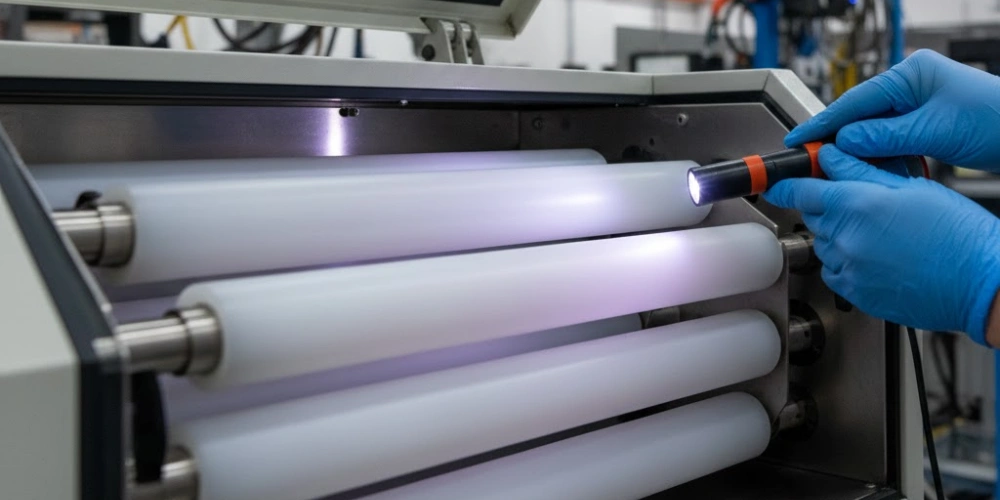
أنظمة المعالجة بالأشعة فوق البنفسجية التي تتضمن مكونات من أنابيب الكوارتز غير الشفافة
UV curing technology depends on the precise directional delivery of photon flux at specific wavelengths to photoinitiator3 molecules embedded in coatings, adhesives, and inks — a requirement that imposes demands on lamp housing materials that go beyond simple thermal resistance. Opaque quartz tubes perform a fundamentally different function in UV curing systems than in thermal heating applications: rather than acting as primary emitters, they serve as optical and thermal control components that shape the radiation field and protect the lamp assembly from process-generated heat.
The Function of Opaque Tubes as Reflective Housings in UV Lamps
Within medium-pressure mercury UV lamp assemblies used for industrial curing, opaque quartz tube sleeves are positioned coaxially around the primary lamp tube as outer reflective enclosures.
The inner surface of an opaque quartz sleeve reflects UV radiation originating from the mercury plasma arc back toward the lamp axis and forward toward the substrate, functioning as a cylindrical diffuse reflector with reflectance values of approximately 60% to 75% in the UV-A and UV-B spectral bands. This reflection geometry collects backward-directed UV flux — which in an open lamp assembly would be absorbed by the lamp housing or dissipated laterally — and redirects it toward the curing zone, increasing effective UV irradiance at the substrate surface by 15% to 25% compared to bare lamp operation in a non-reflective enclosure.
The opaque sleeve simultaneously protects the elliptical or parabolic primary reflector (typically electroformed aluminum or dichroic-coated glass) from direct exposure to the plasma arc, which operates at temperatures of 600°C to 900°C at the lamp wall. Without the protective sleeve, thermal degradation of the primary reflector surface reduces its UV reflectance over time, producing a gradual and often undetected decline in process UV dose that manifests as incomplete cure in coatings and adhesives.
Spectral Filtration Characteristics Relevant to Curing Wavelengths
Not all UV radiation produced by a mercury arc plasma contributes beneficially to photopolymerization, and opaque quartz tubes provide passive spectral management that complements active lamp power control.
Medium-pressure mercury lamps emit across a broad spectrum from 200 nm (UV-C) through 450 nm (visible violet), with principal emission lines at 254 nm, 313 nm, 365 nm, and 405 nm. For most coating cure applications, the 365 nm (UV-A) line is the primary photoinitiator activation wavelength, while 254 nm (UV-C) radiation contributes to surface cure of thin coatings but also generates ozone (O₃) from atmospheric oxygen if not filtered. Opaque quartz tubes with wall thicknesses of 2 mm to 3 mm attenuate transmission below 240 nm to near-zero levels while maintaining adequate transmission in the UV-A and UV-B bands, effectively creating an integrated ozone-suppression filter without additional optical components.
Selective wavelength filtration is exploited in UV curing of pressure-sensitive adhesives (PSA) and thick clear coatings, where deep UV (< 280 nm) causes surface yellowing in transparent substrates (polycarbonate, acrylic) without contributing to through-cure of the bulk adhesive. Specifying an opaque quartz sleeve with controlled UV-C attenuation allows the lamp system to deliver effective bulk-cure doses in the 320–400 nm band while limiting surface degradation of UV-sensitive substrates — a spectral management function that would otherwise require expensive dichroic bandpass filters.
Thermal Management of UV Lamp Systems
High-power UV curing lamps generate substantial thermal output that must be managed to prevent premature lamp failure and protect temperature-sensitive substrates passing through the curing zone.
Medium-pressure UV curing lamps rated at 3 kW to 30 kW per lamp dissipate approximately 30% to 40% of input power as infrared and convective heat, with the lamp wall temperature reaching 600°C to 900°C during operation. Opaque quartz tube sleeves positioned 5 mm to 15 mm coaxially outside the lamp tube create an air gap that serves as a thermal break, reducing heat flux conducted toward the primary reflector and lamp housing by approximately 40% to 60% relative to direct contact configurations. This thermal isolation effect extends the service life of primary reflector coatings from approximately 500 hours (unprotected) to 1,500 hours or more in properly designed sleeve configurations.
Forced air cooling — delivered through the annular gap between the lamp tube and the opaque quartz sleeve — is the standard thermal management approach in high-power UV systems. Cooling air flows of 20 to 80 m³/hour per lamp are typical for lamps in the 6 kW to 15 kW range, with the air entering at one end of the annular gap and exiting at the opposite end, carrying heat away from both the lamp and the sleeve outer surface. Maintaining the opaque quartz sleeve below 900°C during operation prevents the onset of surface devitrification and ensures dimensional stability of the sleeve bore, which must remain circular to maintain the coaxial gap geometry critical to uniform UV flux distribution.
UV Curing System Parameter Summary
| المعلمة | المواصفات |
|---|---|
| Lamp wall temperature during operation | 600°C to 900°C |
| Opaque sleeve reflectance (UV-A/UV-B bands) | 60% to 75% |
| UV irradiance gain vs. bare lamp | +15% to +25% |
| UV-C attenuation onset (2–3 mm wall) | < 240 nm |
| Lamp rated power range | 3 kW to 30 kW |
| Thermal break heat flux reduction | 40% to 60% |
| Cooling air flow (6–15 kW lamps) | 20 to 80 m³/hour |
| Primary reflector service life — unprotected | ~500 hours |
| Primary reflector service life — sleeve protected | ≥ 1,500 hours |
| Coaxial gap between lamp and sleeve | 5 mm to 15 mm |
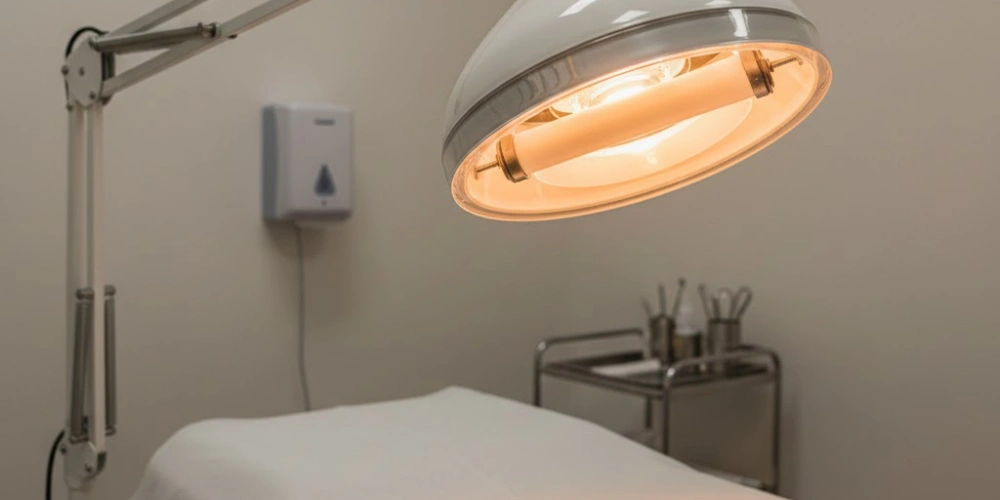
Medical and Therapeutic Devices Built Around Opaque Quartz Tubes
Medical and therapeutic equipment imposes a distinct combination of performance requirements on heating and irradiation components — among them, controlled radiation output, surface temperature safety, chemical purity at the point of patient proximity, and long-term stability under repeated thermal cycling. Opaque quartz tubes address this combination of requirements in two separate medical application categories: infrared therapy heating and UV germicidal irradiation, each exploiting different aspects of the material's physical behavior.
Infrared Therapy Lamps and Tissue Penetration Depth
The therapeutic mechanism of infrared radiation depends on the depth to which photon energy penetrates biological tissue, a parameter directly governed by the emission wavelength of the infrared source.
Near-infrared radiation in the 780 nm to 1,400 nm band penetrates human skin to depths of 5 mm to 10 mm below the dermal surface, reaching the subcutaneous tissue layer, small blood vessels, and superficial muscle. This penetration depth is sufficient to produce localized vasodilation, increased local circulation, and reduction of muscle tension — therapeutic effects documented in clinical physical therapy practice. Medium-wave infrared (1,400 nm to 3,000 nm) is absorbed primarily within the superficial dermis (< 1 mm), producing surface warming with minimal deep tissue effect. Opaque quartz tubes operating at surface temperatures of 500°C to 750°C emit radiation distributed across both NIR and MWIR bands, providing a combined surface warming and moderate deep-tissue stimulation effect appropriate for musculoskeletal therapy applications.
The spatial uniformity of irradiance at the treatment area surface is a critical safety and efficacy parameter in therapy lamp design. البقع الساخنة الموضعية, produced by the uneven emission of poorly positioned or partially devitrified quartz tube surfaces, can cause superficial burns if the lamp-to-skin distance is reduced below recommended minimums — typically 30 cm to 50 cm for therapy lamps rated at 150 W to 500 W. The scattering-induced emission uniformity of opaque tubes reduces peak-to-average irradiance ratio at the treatment plane, providing a more homogeneous dose distribution than transparent tube equivalents at equivalent lamp power.
Therapy lamps in clinical and home use settings typically operate for 15 to 30 minutes per treatment session, with tube surface temperatures stabilizing within 60 to 120 seconds of switch-on. The low thermal mass of thin-wall opaque quartz tubes (wall thickness 1.5 mm to 2.5 mm, typical OD 15 mm to 30 mm) contributes to rapid thermal equilibration, ensuring consistent irradiance output throughout the treatment duration without extended warm-up delay.
Sterilization Equipment Using Opaque Quartz Enclosures
UV-C germicidal lamp systems used in medical environments exploit a different functional role for opaque quartz tube components than infrared therapy applications — one focused on radiation directionality and biological safety rather than therapeutic delivery.
Low-pressure mercury germicidal lamps emit primarily at 253.7 nm (UV-C), a wavelength at which nucleic acid absorption is near maximum, producing pyrimidine dimer formation in bacterial and viral DNA that inactivates replication. In sterilization chamber and air purification unit designs, opaque quartz tube enclosures are fitted coaxially around germicidal lamp tubes to direct UV-C output toward the intended sterilization target zone while blocking stray UV-C radiation from reaching adjacent surfaces, personnel, or material components that would degrade under UV-C exposure. Polymer components, adhesive seals, and painted metal surfaces all undergo accelerated UV-C photodegradation at 253.7 nm, and enclosure designs that rely on open-frame lamp mounting without opaque shielding experience measurable material aging within 500 to 1,000 hours of cumulative lamp-on time.
Ozone-generating versus ozone-free germicidal lamp selection is directly linked to the quartz tube material used for the lamp envelope, and by extension influences the material selection for any associated opaque enclosure or sleeve. Standard fused quartz lamp envelopes transmit UV radiation below 200 نانومتر, allowing photodissociation of atmospheric O₂ to atomic oxygen and subsequent O₃ formation — useful in applications where ozone itself contributes to surface sterilization, but hazardous in occupied spaces. Ozone-free germicidal lamps use titanium-doped quartz envelopes that attenuate transmission below 240 nm; opaque quartz sleeves fitted to these lamps perform consistent UV-C directional control without modifying the lamp's inherent ozone-free characteristic.
The chemical purity requirements for fused silica components in medical sterilization environments align closely with those for semiconductor applications: total metallic impurity levels below 50 ppm are standard, and the absence of any surface contamination that could be mobilized by UV-C photon energy and deposited on the sterilization chamber walls is verified through pre-installation cleaning and passivation procedures.
Heat Lamp Standards and Safety Specifications in Medical Contexts
Compliance with internationally recognized safety standards governs the design parameters of opaque quartz tube heating components used in medical equipment.
IEC 60601-1 (Medical Electrical Equipment — General Requirements for Basic Safety) and its collateral standards impose surface temperature limits on accessible parts of medical devices, and these limits directly constrain the design of infrared therapy lamps. Accessible external surfaces of patient-applied medical equipment must not exceed 41°C under normal operating conditions at patient contact points — a requirement satisfied in infrared lamp designs by maintaining prescribed lamp-to-skin distances rather than by reducing lamp power to sub-therapeutic levels.
The low coefficient of thermal expansion of fused silica (0.55 × 10-⁶/°C) provides a measurable safety advantage in medical lamp applications: the resistance of opaque quartz tubes to thermal shock fracture from rapid temperature changes — such as contact with moisture or sudden air current exposure during clinical use — reduces the risk of lamp breakage events that could expose patients to glass fragments or uncontrolled UV-C radiation. Service life ratings for medical-grade opaque quartz therapy lamp tubes typically range from 2,000 to 5,000 hours of cumulative operating time, with devitrification-induced performance degradation defining the end-of-life criterion rather than catastrophic failure.
Medical Device Parameter Summary
| المعلمة | المواصفات |
|---|---|
| NIR tissue penetration depth | 5 mm to 10 mm |
| Therapy lamp rated power | 150 W to 500 W |
| Lamp-to-skin minimum distance | 30 cm to 50 cm |
| Treatment session duration | 15 to 30 minutes |
| Warm-up time to stable output | 60 to 120 seconds |
| Tube OD (therapy lamps) | 15 mm to 30 mm |
| Wall thickness (therapy lamps) | 1.5 mm to 2.5 mm |
| Germicidal UV-C emission wavelength | 253.7 nm |
| UV-C-induced material aging threshold | 500 to 1,000 hours |
| Medical-grade tube service life | 2,000 to 5,000 hours |
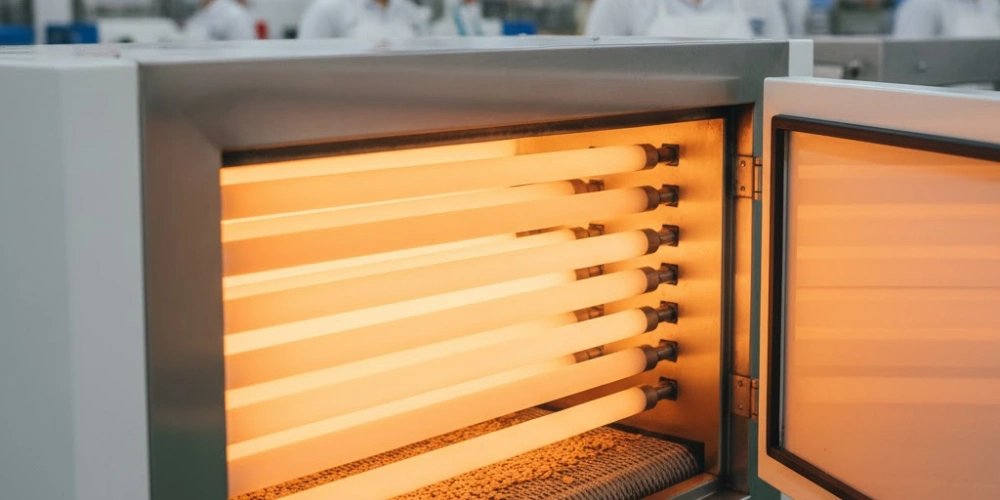
Food Processing and Packaging Lines Utilizing Opaque Quartz Tubes
Food manufacturing environments place constraints on heating system components that extend beyond thermal performance into food safety, hygienic design, and regulatory compliance — a combination that significantly narrows the field of viable tube materials for infrared heating applications. Opaque quartz tubes satisfy food industry requirements through a convergence of radiative efficiency, chemical inertness, and cleanability that positions them as the standard choice for infrared heating in continuous food production lines.
Infrared Drying and Roasting in Food Production Lines
The spectral match between MWIR infrared emission and the absorption characteristics of water and organic food matrices is the fundamental physical basis for the efficiency advantage of opaque quartz tube infrared heating in food drying and roasting processes.
Water molecules exhibit strong vibrational absorption at 1.94 µm, 2.73 µm, and 6.27 µm, all within the MWIR emission envelope of opaque quartz tubes operating at surface temperatures of 700°C to 950°C. This spectral overlap allows infrared energy to couple directly to the moisture-bearing surface layers of food products — grain kernels, cracker dough, nut surfaces — without the intermediate heat transfer step required by convective hot-air drying. In comparative production trials with wheat grain drying, infrared drying using opaque tube emitter arrays has been demonstrated to reduce moisture content from 18% to 12% in 40 to 60 seconds of exposure at an irradiance of 15 kW/m², a drying rate approximately 3 to 4 times faster than equivalent-area convective tunnel dryers at the same product outlet moisture specification.
Surface roasting and color development in baked products and nuts depends on Maillard reaction kinetics, which are strongly temperature-dependent. Opaque tube infrared arrays deliver surface heating rates of 10°C to 30°C per second at product surface irradiances of 20 kW/m² to 50 kW/m², enabling controlled surface browning without conductive or convective heat penetration that would over-cook the product interior. This surface-selective heating characteristic is exploited in cracker and flatbread glazing lines, where a 2 to 5 second exposure under a multi-tube opaque quartz array produces the desired surface color and crunch without measurable increase in core temperature.
Continuous food production lines using opaque quartz tube infrared heaters are configured as tunnel ovens with multiple independently controlled heating zones, each zone containing an array of 4 to 12 parallel tubes spaced 80 mm to 150 mm apart across the conveyor width. Zone independence allows the thermal profile along the product travel direction to be shaped — typically a high-intensity entry zone for rapid surface heating, a moderate mid-zone for moisture equilibration, and a lower-intensity exit zone for surface setting — in a manner that fixed-profile convective ovens cannot replicate.
Heat-Shrink Packaging and Sealing Applications
Infrared heat-shrink packaging represents a high-throughput application of opaque quartz tube heating where rapid thermal response and spectral specificity are more critical than absolute maximum temperature.
Polyolefin (POF), polyethylene (PE), and polyvinyl chloride (PVC) shrink films absorb strongly in the 1.7 µm to 2.5 µm NIR range, with each polymer exhibiting characteristic absorption peaks corresponding to C–H stretch overtone and combination bands. Opaque quartz tubes operating at surface temperatures of 700°C to 850°C emit a spectrum with significant NIR content overlapping these polymer absorption bands, enabling efficient energy coupling to the film without heating the packaged product to temperatures that would damage heat-sensitive foods — fresh produce, chocolate-coated confectionery, or refrigerated products.
Shrink tunnel configurations for food packaging typically use opaque quartz tube arrays mounted above and below the conveyor belt, with tubes oriented perpendicular to product travel. Tunnel lengths of 500 mm to 1,500 mm and conveyor speeds of 15 to 60 m/min define the product residence time within the heating zone — typically 0.5 to 3 seconds for full circumferential shrink of standard POF film thicknesses of 15 µm to 25 µm. The rapid cold-to-operating response time of opaque quartz tubes (< 2 seconds) is essential for maintaining uniform film shrink quality at high line speeds, where delayed heater response during product gaps would create temperature transients that produce inconsistent shrink quality on the leading and trailing faces of the subsequent package.
Thermal output density in shrink tunnel applications ranges from 15 kW/m² to 35 kW/m² at the film plane, with the precise value determined by film type, thickness, and conveyor speed. Independent zone control of tube power — using phase-angle or zero-cross switching thyristor controllers — allows real-time adjustment of tunnel thermal profile to accommodate product size and film specification changes without mechanical reconfiguration of the tunnel geometry.
Hygienic Material Requirements in Food-Grade Environments
The regulatory and hygienic requirements of food manufacturing environments impose material selection criteria on heating components that are qualitatively different from those applied in semiconductor or UV curing applications.
Fused silica (SiO₂) is chemically inert under all food processing conditions and does not release extractable chemical species — volatile organic compounds, metallic ions, or decomposition products — at temperatures encountered during normal infrared heating operation. This chemical inertness places opaque quartz tubes in a favorable position relative to metal-sheath heating elements (Inconel, stainless steel), which can release trace nickel, chromium, or iron at elevated temperatures in oxidizing food atmospheres, and relative to ceramic infrared emitters (cordierite, mullite), which may contain intentional or adventitious flux components that are mobilized at high firing temperatures.
In European Union food processing environments, materials in contact with or in proximity to food must comply with EU Regulation No. 10/2011 (plastic materials) and its broader framework under the EU Food Contact Materials Regulation (EC) No. 1935/2004. Fused quartz, as an inorganic glass of defined composition, is generally recognized as compliant with the inertness requirements of these frameworks when no surface coatings or binding agents are present — a condition met by standard unfused tube products without any additional processing. In the United States, compliance with FDA 21 CFR regulations for indirect food additives governs material suitability, and high-purity fused silica is consistently evaluated as non-reactive and non-contributing to food composition under normal use conditions.
Cleaning and sanitization protocols in food factories include alkaline CIP (clean-in-place) solutions (NaOH, 1%–3%, 70°C–80°C) and acidic rinse cycles (HNO₃, 0.5%–1.5%) applied to food contact surfaces. While opaque quartz tube outer surfaces are not typically direct food contact surfaces in enclosed infrared tunnel configurations, splash and condensate exposure is routine. The resistance of fused silica to alkaline and dilute acid cleaning agents at the concentrations used in food plant sanitation is well-established, with no measurable surface etching or contamination leaching occurring at the chemical concentrations and temperatures described.
Food Processing Parameter Summary
| المعلمة | المواصفات |
|---|---|
| Tube operating surface temperature | 700°C to 950°C |
| Water absorption wavelengths matched | 1.94 µm, 2.73 µm, 6.27 µm |
| Grain moisture reduction (infrared) | 18% to 12% in 40–60 seconds |
| Infrared vs. convective drying speed | 3× to 4× faster |
| Surface heating rate | 10°C to 30°C per second |
| Product surface irradiance (roasting) | 20 kW/m² to 50 kW/m² |
| Shrink tunnel irradiance | 15 kW/m² to 35 kW/m² |
| Shrink tunnel conveyor speed | 15 to 60 m/min |
| Film residence time in tunnel | 0.5 to 3 seconds |
| POF/PE film thickness range | 15 µm to 25 µm |
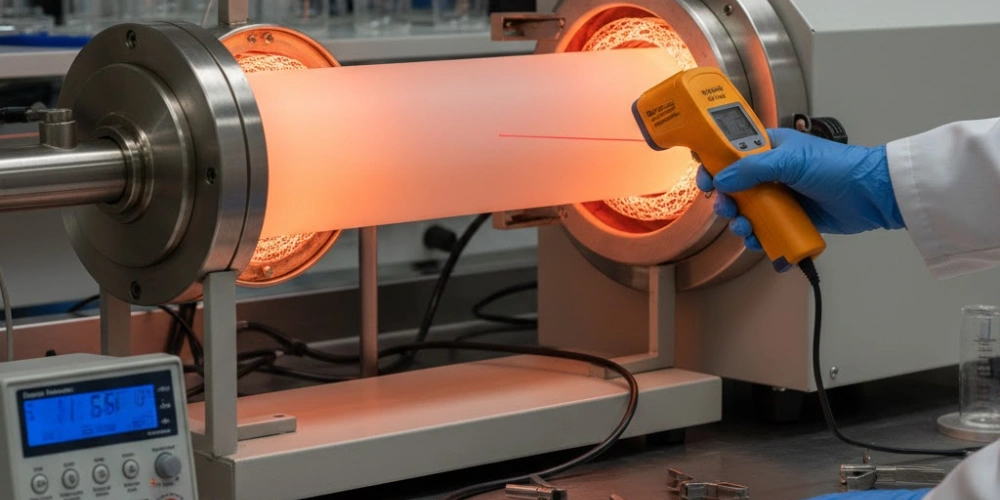
Performance Comparison with Alternative High-Temperature Tube Materials
Across the five application domains examined in this article, the selection of opaque quartz tubes over competing tube materials follows from measurable performance differentials rather than convention. A structured comparison across the most commonly considered alternatives clarifies the specific engineering dimensions in which fused silica opaque tubes hold decisive advantages.
-
Transparent quartz tubes: The most direct alternative shares identical base chemistry with opaque fused silica but differs fundamentally in radiative behavior. Transparent quartz transmits 80% to 90% of incident NIR and visible radiation rather than absorbing and re-emitting it, which produces heating non-uniformity and directional radiation leakage in all five applications examined. Where uniform circumferential irradiance, spatial homogeneity, or UV-C directionality is required, transparent quartz tubes are functionally unsuitable regardless of purity or dimensional equivalence. In UV curing applications, the reflective and filtering roles performed by opaque sleeves cannot be replicated by transparent alternatives without entirely different component geometries.
-
Alumina ceramic tubes (Al₂O₃): High-density alumina (99.5% Al₂O₃) supports continuous service temperatures of 1,400°C to 1,600°C — substantially higher than opaque fused silica — and is the preferred choice for applications exceeding 1,200°C. However, alumina has a CTE of 7.4 × 10⁻⁶/°C, approximately 13 times higher than fused silica, making it highly susceptible to thermal shock fracture in rapid-cycling applications such as semiconductor furnace loading and infrared heating zone activation. Alumina also exhibits lower chemical purity than semiconductor-grade fused silica, with metallic impurity concentrations in standard grades typically in the 50 ppm to 500 ppm range — two to three orders of magnitude above the ppb-level specifications of diffusion furnace process tubes. Machining tolerance control for alumina tubes is also considerably less precise than for fused silica, making close-tolerance bore applications (such as wafer-loaded furnace tubes) more difficult to specify.
-
Borosilicate glass tubes: Borosilicate (Pyrex-type) offers a practical upper service temperature of approximately 500°C to 550°C (annealing point ~560°C), restricting its use to low-temperature laboratory and process applications. In infrared heating, UV curing, and semiconductor processing contexts — all of which involve tube wall temperatures of 600°C or above — borosilicate glass is outside its safe operating range. Its CTE of approximately 3.3 × 10-⁶/°C is six times higher than fused silica, and its UV transmission is significantly attenuated below 300 نانومتر due to boron oxide absorption — eliminating it from UV-C sterilization and curing applications where sub-300 nm flux control is required.
-
Stainless steel tubes: Metal tubes (316L, 310S, Inconel 600) offer mechanical robustness and high-temperature capability to 900°C to 1,100°C in oxidizing atmospheres, but are opaque to both infrared and UV radiation by absorption rather than by scattering — emitting infrared as thermal radiation with emissivity values of 0.2 to 0.5 (polished to oxidized surface states respectively), substantially below the 0.90 إلى 0.95 characteristic of opaque quartz. In semiconductor applications, the metallic contamination risk of stainless steel tubes in process atmospheres is prohibitive; even passivated 316L steel releases iron and chromium under HCl or hydrogen atmospheres at temperatures above 700°C, creating unacceptable wafer contamination. In UV curing and medical sterilization applications, metal tube walls offer no UV transparency whatsoever, eliminating them from any application requiring UV transmission or spectral filtration.
Tube Material Property Comparison
| الممتلكات | كوارتز غير شفاف | كوارتز شفاف | الألومينا (99.5%) | بوروسيليكات | 316L Steel |
|---|---|---|---|---|---|
| Max continuous service temp (°C) | 1,100 | 1,100 | 1,600 | 500 | 900 |
| CTE (× 10 - ⁶/ درجة مئوية) | 0.55 | 0.55 | 7.4 | 3.3 | 16.0 |
| IR emissivity (ε) | 0.90-0.95 | 0.60–0.75 | 0.85–0.95 | 0.90-0.95 | 0.20–0.50 |
| NIR/visible transmission | < 5% | 80–90% | < 5% | 70–85% | 0% |
| UV-C transmission (254 nm) | Low (< 10%) | High (> 70%) | لا يوجد | لا يوجد | لا يوجد |
| SiO₂ or metal purity (semi-grade) | ≥ 99.991.99% | ≥ 99.991.99% | 99.5% | غير متاح | غير متاح |
| مقاومة الصدمات الحرارية | ممتاز | ممتاز | فقير | معتدل | جيد |
| Chemical inertness (HCl/O₂ atm.) | ممتاز | ممتاز | جيد | معتدل | فقير |
| Machining tolerance control | عالية | عالية | معتدل | عالية | عالية |
الخاتمة
Across semiconductor diffusion furnaces, industrial infrared heating, UV curing systems, medical therapy devices, and food processing lines, opaque quartz tubes deliver a combination of high infrared emissivity, ultra-low thermal expansion, chemical inertness, and controlled spectral behavior that no single alternative material replicates across all five domains simultaneously. Each application exploits a specific subset of these properties — thermal uniformity in semiconductor processing, radiative efficiency in industrial heating, spectral filtration in UV curing, emission homogeneity in medical therapy, and chemical safety in food manufacturing — but the underlying material platform remains consistent. Understanding which property dominates in a given process environment is the essential starting point for any tube selection decision, and the technical parameters documented in this article provide the reference framework for making that determination with engineering precision.
الأسئلة الشائعة
What is the maximum operating temperature of an opaque quartz tube?
The continuous service temperature for opaque fused silica tubes is approximately 1,050°C to 1,100°C, with short-term excursions permissible up to 1,200°C. The softening point is approximately 1,650°C. For applications requiring sustained temperatures above 1,200°C, alumina ceramic tubes are the appropriate alternative, though they sacrifice the thermal shock resistance and ultra-low CTE of fused silica.
How does an opaque quartz tube differ from a transparent quartz tube in infrared heating performance?
Transparent quartz tubes transmit 80% to 90% of near-infrared radiation rather than absorbing and re-emitting it, which produces localized hot spots and directional radiation leakage in heating applications. Opaque quartz tubes absorb incoming radiation within the tube wall and re-emit it uniformly from the outer surface with an emissivity of 0.90 to 0.95, creating a spatially homogeneous irradiance field that improves heating uniformity by 12% to 18% in energy efficiency terms in comparable production environments.
What OH content specification is required for semiconductor-grade opaque quartz tubes?
Semiconductor-grade opaque quartz tubes require OH content below 30 ppm (low-OH grade) to prevent accelerated devitrification above 1,000°C. High-OH tubes (> 150 ppm) undergo structural relaxation and cristobalite crystallization at sustained process temperatures, generating particulate contamination and reducing service life from 200 to 400 thermal cycles (low-OH) to 50 to 80 cycles (standard OH), making OH content specification one of the most critical material parameters in diffusion furnace tube selection.
Can opaque quartz tubes be used in direct food contact applications?
Opaque quartz tubes are not typically configured as direct food contact surfaces in industrial infrared heating installations — they are mounted above or around conveyor belts within enclosed tunnel structures. As an inorganic fused silica glass, the material is chemically inert under all food processing conditions and does not release extractable substances under applicable regulatory frameworks including EU Regulation EC No. 1935/2004 and FDA 21 CFR indirect food additive provisions. Outer surface exposure to food plant cleaning agents — alkaline CIP solutions and dilute acid rinses — produces no measurable surface degradation or contaminant leaching at standard sanitation concentrations.
المراجع:
-
The electromagnetic spectrum describes the full range of frequencies of electromagnetic radiation, from radio waves through visible light to gamma rays, providing the physical context for understanding infrared and UV transmission behavior. ↩
-
Low-pressure chemical vapor deposition (LPCVD) is a thin-film deposition technique widely used in semiconductor manufacturing, in which gaseous precursors react at reduced pressure inside a heated furnace tube to deposit uniform films on silicon wafers. ↩
-
A photoinitiator is a chemical compound that absorbs UV radiation and generates reactive species — typically free radicals or cations — that initiate polymerization in UV-curable coatings, inks, and adhesives. ↩